
Europe Intelligent Temperature Control Electric Kettle Market - Outlook 2025-2034
Europe Intelligent Temperature Control Electric Kettle Market is segmented by Type (Cordless Electric Kettles, Corded Electric Kettles, Smart Kettles with IoT Connectivity, Variable Temperature Electric Kettles, Rapid Boil Electric Kettles), Application (Home Use, Commercial Use, Healthcare Sector, Hospitality Industry, Retail Outlets), Material Type (Stainless Steel, Glass, Plastic, Ceramic), Distribution Channel (Online Retail, Specialty Stores, Supermarkets and Hypermarkets, Direct Sales), and Geography (Germany, France, The United Kingdom, BeNeLux, Spain, Italy, NORDIC, CEE, Others)
Pricing
Report Overview
Executive Summary
- •The Europe Intelligent Temperature Control Electric Kettle market includes innovative electric kettles that allow precise selection and maintenance of water temperature using advanced sensor and microprocessor technologies. This market covers multiple types such as cordless, corded, smart IoT-enabled, variable temperature, and rapid boil kettles, serving diverse applications including home, commercial, healthcare, hospitality, and retail sectors. The importance of this market lies in its ability to meet growing consumer demand for convenience, energy efficiency, and safety in beverage preparation. The technological sophistication of these kettles improves beverage quality while reducing energy consumption, aligning with Europe’s focus on sustainability and smart home integration. These products enhance user experience by providing customizable temperature settings suitable for different beverages such as tea, coffee, and baby formula, thereby broadening their adoption across various consumer segments. The market is driven by rising health consciousness, increasing disposable incomes, and expanding smart home ecosystems across European countries, positioning intelligent temperature control electric kettles as essential modern kitchen appliances.
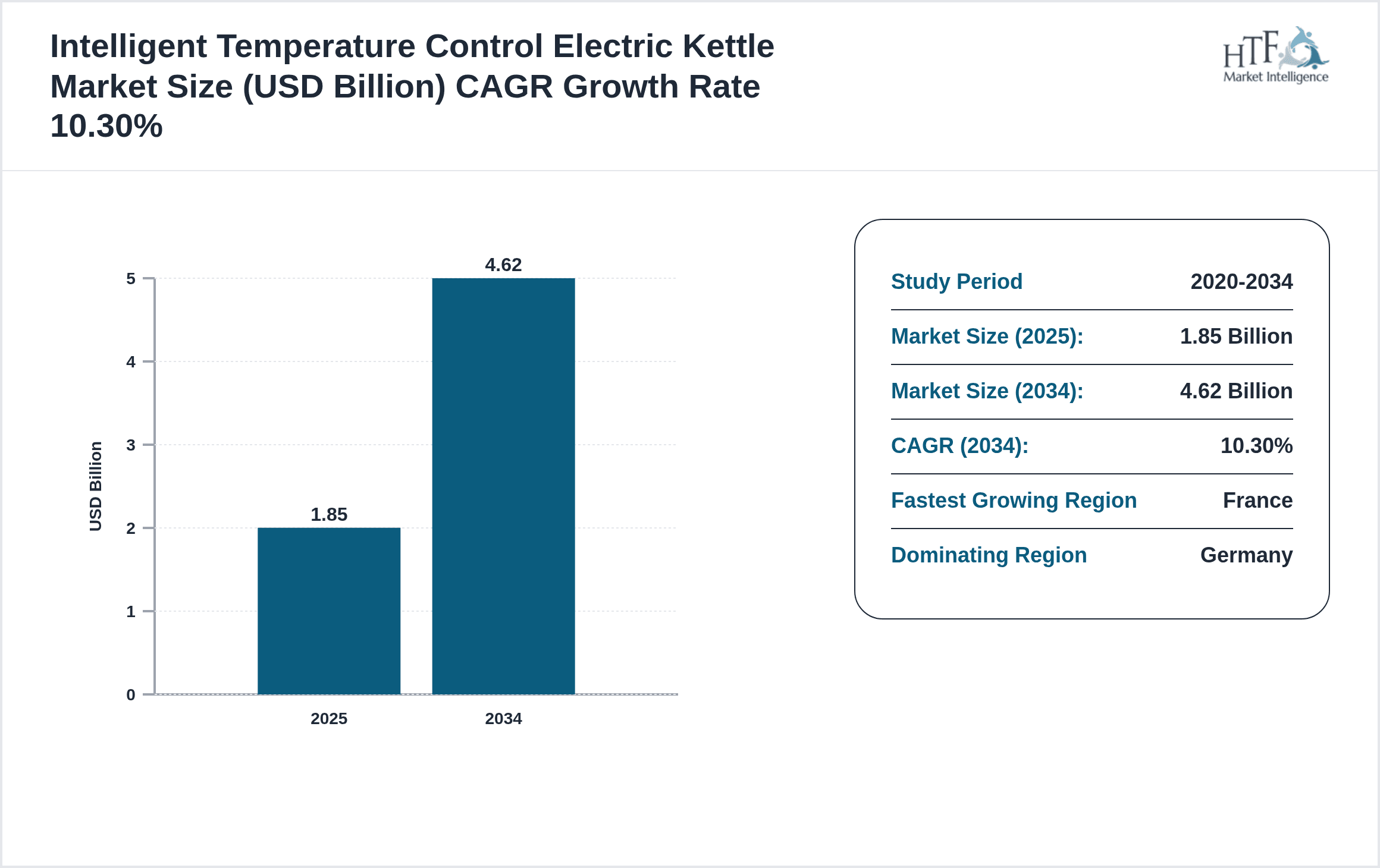
- •Key highlights of the Europe Intelligent Temperature Control Electric Kettle market include a base market size of USD 1.85 Billion in 2025, forecasted to reach USD 4.62 Billion by 2034, reflecting a robust CAGR of 10.3%. Germany leads the market in size and share, while France exhibits the highest growth rate among European countries. Smart kettles dominate the product segment due to their IoT connectivity and customizable features, whereas variable temperature kettles are the fastest growing category driven by consumer preference for precise temperature controls. Home use remains the dominant application segment, supported by increasing urbanization and lifestyle changes. The market benefits from technological innovations, strategic partnerships, and growing consumer awareness about energy-efficient appliances, contributing to steady year-on-year growth.
- •The Europe Intelligent Temperature Control Electric Kettle market holds strategic importance for manufacturers, retailers, and technology providers targeting the smart home and kitchen appliance sectors. The ability to offer enhanced user control, improved safety features, and energy savings aligns with European Union directives on energy efficiency and consumer protection. This market enables stakeholders to capitalize on trends toward connected devices and sustainability, fostering innovation and competitive differentiation. Moreover, it supports hospitality and healthcare industries by providing reliable, precise heating solutions that improve service quality and operational efficiency. As digital transformation reshapes consumer lifestyles, intelligent temperature control electric kettles represent a high-potential segment that integrates seamlessly with smart home ecosystems, providing long-term growth opportunities across Europe.
Competitive Landscape
The Europe Intelligent Temperature Control Electric Kettle market demonstrates a highly competitive environment where companies adopt multifaceted strategies to enhance market presence and sustain growth. Leading players invest heavily in research and development to innovate advanced temperature control technologies, enhancing product differentiation. Strategic partnerships with technology firms accelerate integration of IoT and smart home capabilities, broadening product appeal. Global expansion initiatives focus on strengthening distribution networks across key European countries, facilitating better market penetration. Companies emphasize sustainability by incorporating energy-efficient designs and complying with regional environmental standards to meet evolving consumer preferences and regulatory requirements. Competitive pricing strategies and product bundling are employed to attract diverse consumer segments, while continuous upgrades and feature enhancements maintain consumer interest. Mergers and acquisitions further consolidate market positions, enabling access to new technologies and markets. These strategic approaches collectively drive innovation, customer engagement, and long-term competitiveness in the Europe intelligent temperature control electric kettle industry.
Prominent Players in Intelligent Temperature Control Electric Kettle Market
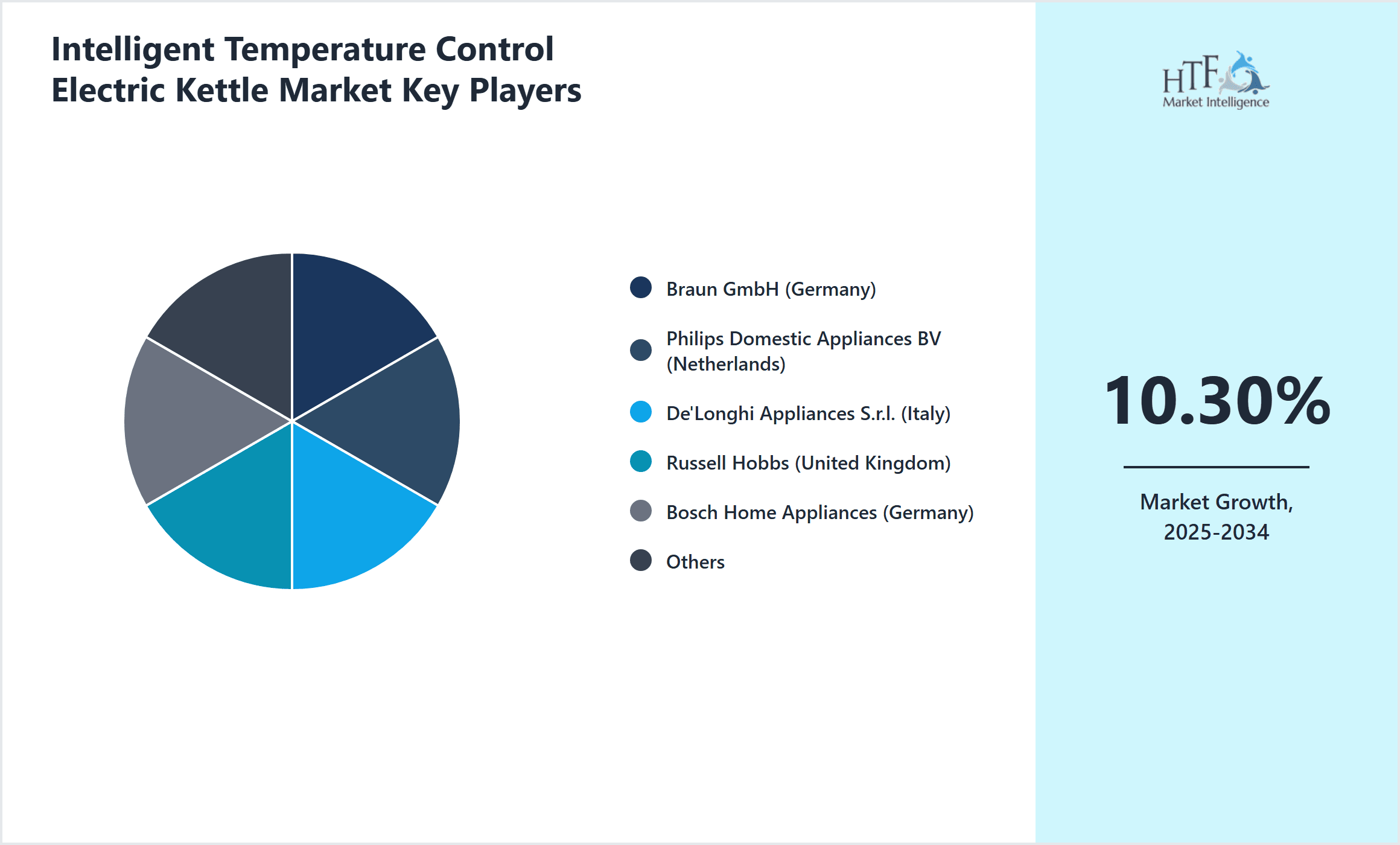
- •Braun GmbH (Germany)
- •Philips Domestic Appliances BV (Netherlands)
- •De'Longhi Appliances S.r.l. (Italy)
- •Russell Hobbs (United Kingdom)
- •Bosch Home Appliances (Germany)
- •Morphy Richards (United Kingdom)
- •Tefal (France)
- •Siemens AG (Germany)
- •Smeg S.p.A. (Italy)
- •Kenwood Limited (United Kingdom)
- •Krups GmbH (Germany)
- •Dualit Limited (United Kingdom)
- •Cuisinart (United Kingdom)
- •KitchenAid (United Kingdom)
- •Breville Group Limited (United Kingdom)
- •Beko plc (Turkey)
- •Gorenje d.o.o. (Slovenia)
- •Electrolux AB (Sweden)
- •Vitek (Czech Republic)
- •Russell Hobbs Germany GmbH (Germany)
Market Breakdown
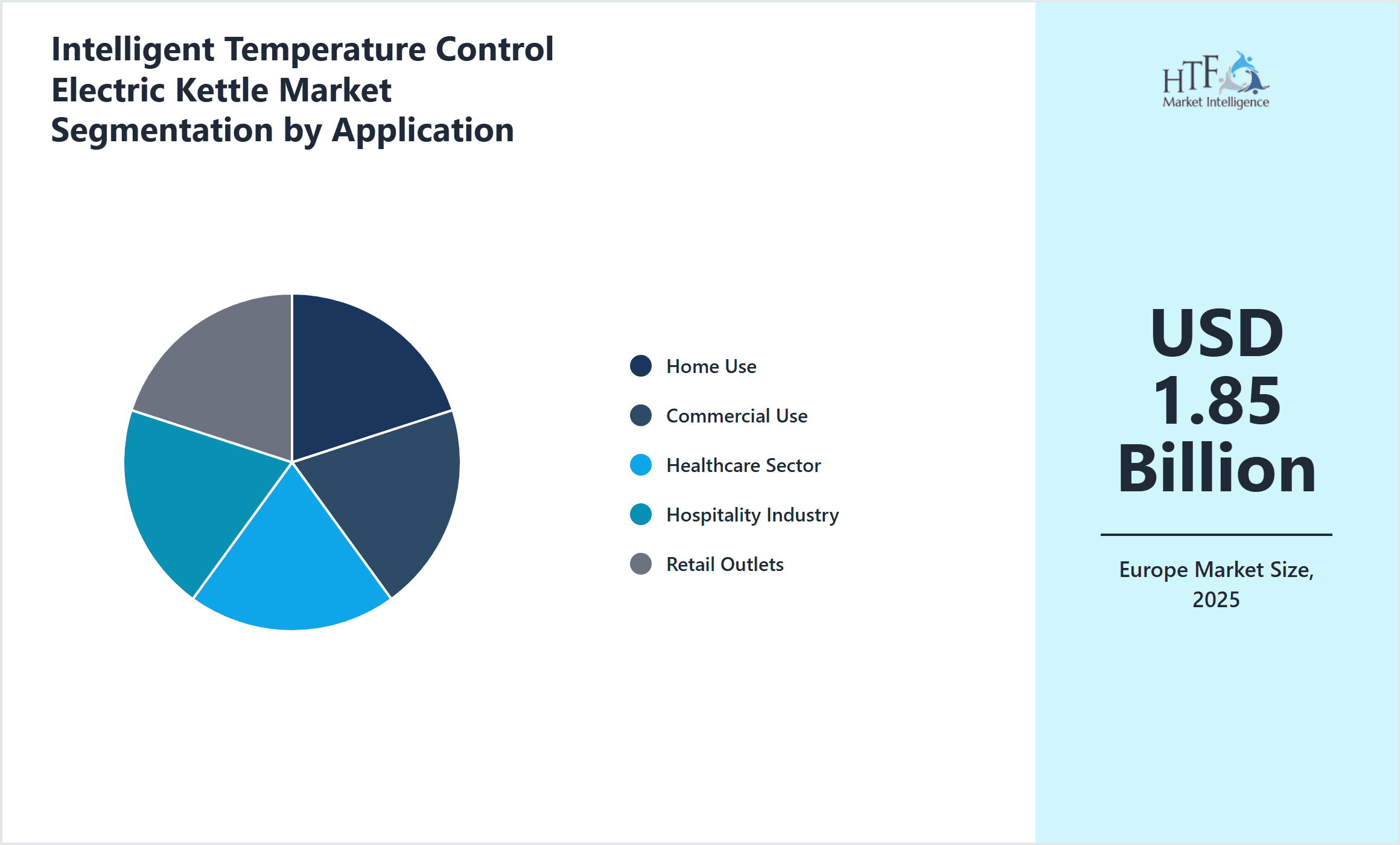
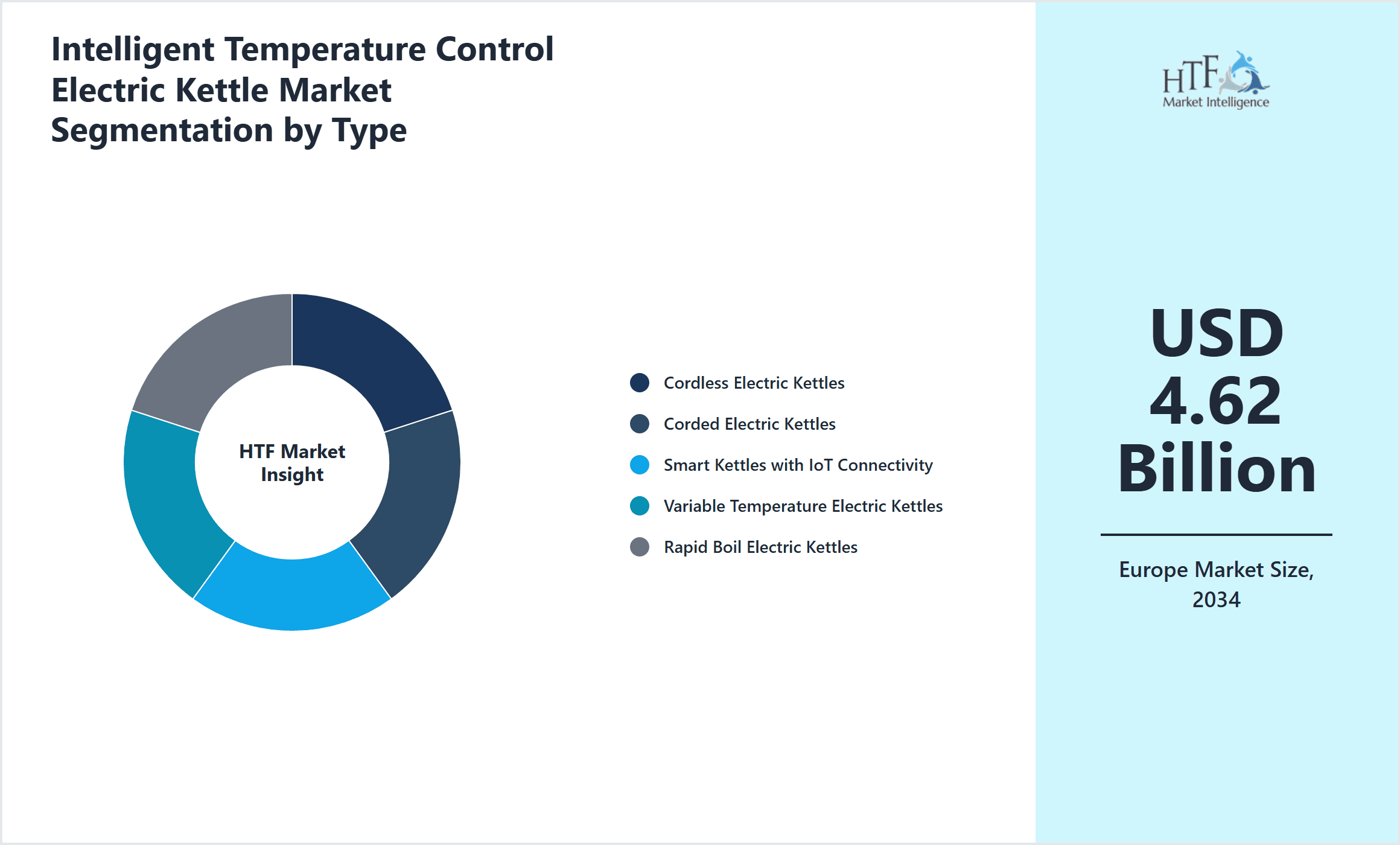
- •By Type
- ◦Cordless Electric Kettles
- ◦Corded Electric Kettles
- ◦Smart Kettles with IoT Connectivity
- ◦Variable Temperature Electric Kettles
- ◦Rapid Boil Electric Kettles
- •By Application
- ◦Home Use
- ◦Commercial Use
- ◦Healthcare Sector
- ◦Hospitality Industry
- ◦Retail Outlets
- •By Material Type
- ◦Stainless Steel
- ◦Glass
- ◦Plastic
- ◦Ceramic
- •By Distribution Channel
- ◦Online Retail
- ◦Specialty Stores
- ◦Supermarkets and Hypermarkets
- ◦Direct Sales
Growth Dynamics
- •Technological advancements in sensor accuracy and microprocessor integration have significantly enhanced the precision of temperature control in electric kettles, enabling users to prepare various beverages at optimal temperatures. This innovation improves beverage quality and user experience, driving increased adoption across European households and commercial sectors. For instance, Philips recently launched smart kettles featuring Bluetooth connectivity allowing remote temperature management, adding convenience and functionality.
- •Increasing consumer preference for energy-efficient appliances aligns with stringent European Union regulations on energy consumption and sustainability. Intelligent temperature control electric kettles optimize heating cycles, reducing energy waste and supporting environmental goals. This alignment with policy and consumer values stimulates market expansion as households and businesses prioritize eco-friendly products.
- •Rising health consciousness among European consumers boosts demand for precise temperature control kettles, which preserve the flavor and nutritional value of beverages like green tea and baby formula. Market leaders such as Braun have introduced models with customizable temperature presets catering to health-focused segments, reinforcing the value proposition.
- •Expansion of smart home ecosystems in Europe fosters integration of intelligent electric kettles with voice assistants and mobile applications, enhancing usability and attracting tech-savvy consumers. Partnerships between appliance manufacturers and technology firms enable seamless connectivity, exemplified by Bosch's collaboration with Amazon Alexa for voice-activated kettle controls.
- •Growth in the hospitality and commercial sectors, including cafes and hotels, fuels demand for reliable and efficient temperature control kettles that ensure consistent beverage quality. These sectors emphasize operational efficiency and customer experience, adopting advanced kettles to meet service standards and differentiate offerings.
- •Rising disposable incomes and urbanization across Europe expand the consumer base for premium smart kettles with enhanced features. Affluent consumers seek products combining aesthetics, functionality, and smart technology, motivating manufacturers to innovate and diversify product portfolios to capture this segment.
- •Government incentives promoting smart appliance adoption and energy efficiency further stimulate demand. Subsidies and awareness campaigns encourage consumers and businesses to upgrade to intelligent kettles, accelerating market penetration and fostering sustainable consumption patterns.
Market Trends
- •The Europe Intelligent Temperature Control Electric Kettle market is witnessing a shift towards enhanced connectivity and automation, with manufacturers embedding IoT capabilities for remote operation and personalized user experiences. This trend is exemplified by recent product launches integrating smartphone apps enabling temperature customization and brewing schedules, reflecting consumer demand for convenience and smart home compatibility.
- •Sustainability is becoming a defining trend, with market players focusing on eco-friendly materials, recyclable components, and energy-saving technologies. Companies like Tefal and Morphy Richards are developing kettles with reduced plastic usage and improved insulation, catering to environmentally conscious consumers and regulatory frameworks.
- •Customization and multi-functionality gain traction as consumers seek kettles capable of preparing diverse beverages requiring different temperature settings. Variable temperature kettles offering presets for tea types, coffee, and baby formula are increasingly popular, driving product innovation and differentiation in the market.
- •Integration with voice assistants and smart home platforms advances rapidly, enabling hands-free operation and seamless user interfaces. Leading manufacturers collaborate with technology giants to embed Alexa, Google Assistant, and Apple HomeKit compatibility, enhancing product appeal to digitally connected households.
- •The online retail channel continues to expand as a preferred purchasing platform, supported by detailed product information, user reviews, and competitive pricing. E-commerce growth allows manufacturers to reach wider audiences and implement direct-to-consumer strategies, optimizing market access and profitability.
- •Collaborations between appliance brands and beverage companies emerge as innovative marketing approaches, promoting specialized kettles designed for signature drinks. These partnerships enhance brand visibility and consumer engagement, fostering new revenue streams and market expansion.
- •Emerging trends include the development of kettles with enhanced safety features such as automatic shutoff, boil-dry protection, and child-lock mechanisms. These features address consumer concerns about appliance safety and compliance with stringent European safety standards, reinforcing product reliability and trust.
Market Opportunities
- •The Europe Intelligent Temperature Control Electric Kettle market presents significant growth opportunities driven by rising demand for smart kitchen appliances incorporating AI and machine learning for enhanced user experience. Companies investing in these technologies can offer kettles that learn user preferences and optimize heating cycles, creating personalized beverage preparation and improving energy efficiency.
- •Expansion into underpenetrated Eastern European markets offers substantial potential due to increasing urbanization, rising disposable incomes, and growing awareness of smart home technologies. Manufacturers focusing on localized marketing and affordable product variants can capitalize on these emerging markets to broaden their customer base.
- •Innovations in materials science enabling lightweight, durable, and eco-friendly kettle designs open pathways for product differentiation and appeal to sustainability-conscious consumers. The development of biodegradable plastics and improved insulation materials can reduce environmental impact and production costs, enhancing market competitiveness.
- •Collaboration opportunities with hospitality chains and healthcare providers to supply tailored intelligent kettles can unlock niche market segments. Customized solutions addressing specific operational requirements such as rapid boil times and hygiene standards can strengthen B2B relationships and revenue streams.
- •Integration of renewable energy compatibility, such as solar-powered kettles or energy harvesting features, aligns with Europe’s green energy initiatives. This innovation attracts environmentally aware consumers and supports government sustainability targets, positioning manufacturers as industry leaders in eco-innovation.
- •Increasing online penetration and social media marketing facilitate direct consumer engagement, enabling personalized promotions and feedback-driven product development. Leveraging digital platforms can boost brand recognition and accelerate adoption of intelligent temperature control kettles across diverse demographics.
- •Rising interest in specialty beverages creates demand for kettles with precise temperature control for artisanal tea and coffee preparation. Capitalizing on this trend by partnering with beverage brands and barista communities can enhance product relevance and market share.
Market Challenges
- •High production costs associated with advanced sensor technology and IoT integration increase retail prices, limiting accessibility for price-sensitive consumers in several European countries. This challenge requires manufacturers to balance innovation with cost optimization to maintain market competitiveness and affordability.
- •Fragmented regulatory landscape across European countries complicates compliance processes, with varying standards for electrical safety, energy efficiency, and data privacy. Companies must navigate these complex requirements, increasing operational overhead and potentially delaying product launches.
- •Consumer concerns about data security and privacy related to connected smart kettles hinder adoption among certain user segments. Recent incidents of IoT device vulnerabilities have made consumers cautious, necessitating robust cybersecurity measures and transparent data policies by manufacturers.
- •Intense competition from low-cost imports and generic brands pressures established players to continuously innovate and differentiate. This dynamic increases marketing and R&D expenditures, squeezing profit margins and challenging smaller manufacturers’ sustainability.
- •Supply chain disruptions and component shortages, exacerbated by geopolitical tensions and global logistics constraints, impact production schedules and inventory availability. For example, semiconductor scarcity affects smart kettle manufacturing timelines, leading to delayed deliveries and lost sales opportunities.
- •Limited consumer awareness about the benefits of intelligent temperature control features restricts market penetration, especially in less urbanized regions. Education and targeted marketing campaigns are necessary to overcome knowledge gaps and stimulate demand.
- •Sustainability expectations impose design constraints as manufacturers strive to reconcile product durability, recyclability, and cost-effectiveness while adhering to environmental regulations. Balancing these factors remains a significant challenge in product development.
Regulatory Framework
- •Between 2020 and 2025, the European Union implemented the Ecodesign Directive revision targeting electric appliances, including intelligent kettles, mandating strict energy efficiency standards and reduction in standby power consumption. These regulations require manufacturers to optimize kettle designs to minimize environmental impact while maintaining performance, fostering innovation in energy-saving technologies.
- •The GDPR enforcement since 2018 continues to affect smart kettle manufacturers by imposing stringent data privacy and protection requirements on IoT-enabled products. Compliance with these regulations necessitates secure data management practices and transparent user consent protocols, influencing product design and software development.
- •The Low Voltage Directive update in 2022 introduced enhanced safety requirements for electrical appliances sold within the EU, including mandatory testing of intelligent temperature control kettles for electrical hazards and user safety mechanisms. Compliance ensures consumer protection and product reliability.
- •Various country-specific regulations in Germany, France, and the UK have emerged focusing on recycling and waste management of electrical appliances, compelling manufacturers to implement take-back programs and use recyclable materials in kettle production. These policies support circular economy initiatives and reduce environmental footprint.
- •The European Commission’s Smart Appliances Regulation proposal in 2024 aims to standardize connectivity protocols and interoperability requirements for household smart devices, including intelligent kettles, facilitating seamless integration into smart home systems and enhancing consumer experience across member states.
Market Intelligence
- •Recent market developments and strategic initiatives are continuously tracked through industry publications, company announcements, and regulatory filings. For the most current information, stakeholders are advised to monitor official corporate communications and recognized market intelligence platforms.
- •Recent market developments and strategic initiatives are continuously tracked through industry publications, company announcements, and regulatory filings. For the most current information, stakeholders are advised to monitor official corporate communications and recognized market intelligence platforms.
- •Recent market developments and strategic initiatives are continuously tracked through industry publications, company announcements, and regulatory filings. For the most current information, stakeholders are advised to monitor official corporate communications and recognized market intelligence platforms.
- •Recent market developments and strategic initiatives are continuously tracked through industry publications, company announcements, and regulatory filings. For the most current information, stakeholders are advised to monitor official corporate communications and recognized market intelligence platforms.
Regional Outlook
The Germany currently holds a significant share of the market, primarily due to several key factors: increasing consumption rates, a burgeoning population, and robust economic momentum. These elements collectively drive demand, positioning this region as a leader in the market. On the other hand, France is rapidly emerging as the fastest-growing area within the industry. This remarkable growth can be attributed to swift infrastructure development, the expansion of various industrial sectors, and a marked increase in consumer demand. These dynamics make this region a crucial player in shaping future market growth.
In our report, we cover a comprehensive analysis of the following regions and countries:
- Germany
- France
- The United Kingdom
- BeNeLux
- Spain
- Italy
- NORDIC
- CEE
- Others
| Feature | Details |
|---|---|
| Base Year Market Size | USD 1.85 Billion |
| Forecast Year Market Size | USD 4.62 Billion |
| CAGR | 10.3% |
| Forecast Period | 2026 to 2033 |
| YoY Growth | 10.5% |
| Scope of Report | Market is segmented by Type (Cordless Electric Kettles, Corded Electric Kettles, Smart Kettles with IoT Connectivity, Variable Temperature Electric Kettles, Rapid Boil Electric Kettles), Application (Home Use, Commercial Use, Healthcare Sector, Hospitality Industry, Retail Outlets), Material Type (Stainless Steel, Glass, Plastic, Ceramic), Distribution Channel (Online Retail, Specialty Stores, Supermarkets and Hypermarkets, Direct Sales) |
| Regions Covered | Germany, France, The United Kingdom, BeNeLux, Spain, Italy, NORDIC, CEE, Others |
| Key Companies | Braun GmbH (Germany), Philips Domestic Appliances BV (Netherlands), De'Longhi Appliances S.r.l. (Italy), Russell Hobbs (United Kingdom), Bosch Home Appliances (Germany), Morphy Richards (United Kingdom), Tefal (France), Siemens AG (Germany), Smeg S.p.A. (Italy), Kenwood Limited (United Kingdom), Krups GmbH (Germany), Dualit Limited (United Kingdom), Cuisinart (United Kingdom), KitchenAid (United Kingdom), Breville Group Limited (United Kingdom), Beko plc (Turkey), Gorenje d.o.o. (Slovenia), Electrolux AB (Sweden), Vitek (Czech Republic), Russell Hobbs Germany GmbH (Germany) |
Europe Intelligent Temperature Control Electric Kettle Market - Outlook 2025-2034 - Table of Contents
Frequently Asked Questions (FAQ):
The Compact Track Loaders market is projected to grow at a CAGR of 6.8% from 2025 to 2030, driven by increasing demand in construction and agricultural sectors.
North America currently leads the market with approximately 45% market share, followed by Europe at 28% and Asia-Pacific at 22%. The remaining regions account for 5% of the global market.
Key growth drivers include increasing construction activities, rising demand for versatile equipment in agriculture, technological advancements in track loader design, and growing preference for compact equipment in urban construction projects.