
Global Ammunition Loading Machines Market Size, Growth & Revenue 2024-2034
Global Ammunition Loading Machines Market is segmented by Product Type (Automated Loading Machines, Semi-Automated Loading Machines, Manual Loading Machines, Robotic Loading Systems, Customized Loading Solutions), Application (Military, Law Enforcement, Civilian, Industrial, Research & Development), Deployment Model (On-Premise, Mobile Units, Integrated Systems), Technology Type (Automation, Robotics, Manual Mechanisms), and Geography (North America, LATAM, West Europe, Central & Eastern Europe, Northern Europe, Southern Europe, East Asia, Southeast Asia, South Asia, Central Asia, Oceania, MEA)
Pricing
Report Overview
Executive Summary
- •The Global Ammunition Loading Machines market comprises a specialized segment of defense and industrial machinery focused on the automated and manual loading of ammunition into various firearms and weapon systems. This market includes a spectrum of products such as automated loading machines, semi-automated variants, manual loaders, robotic loading systems, and customized equipment designed to accommodate diverse ammunition calibers and applications. Its scope spans military operations, law enforcement agencies, civilian defense applications, industrial production units, and research & development facilities engaged in ammunition handling and loading technologies. The purpose of these machines is to improve operational efficiency, reduce human error, and enhance safety during the ammunition loading process. Technological integration involving robotics and automation is a key driving force within this market, enabling faster loading cycles and improved precision. The industry is characterized by ongoing innovation, regulatory compliance, and increasing demand for advanced loading solutions across global defense sectors.
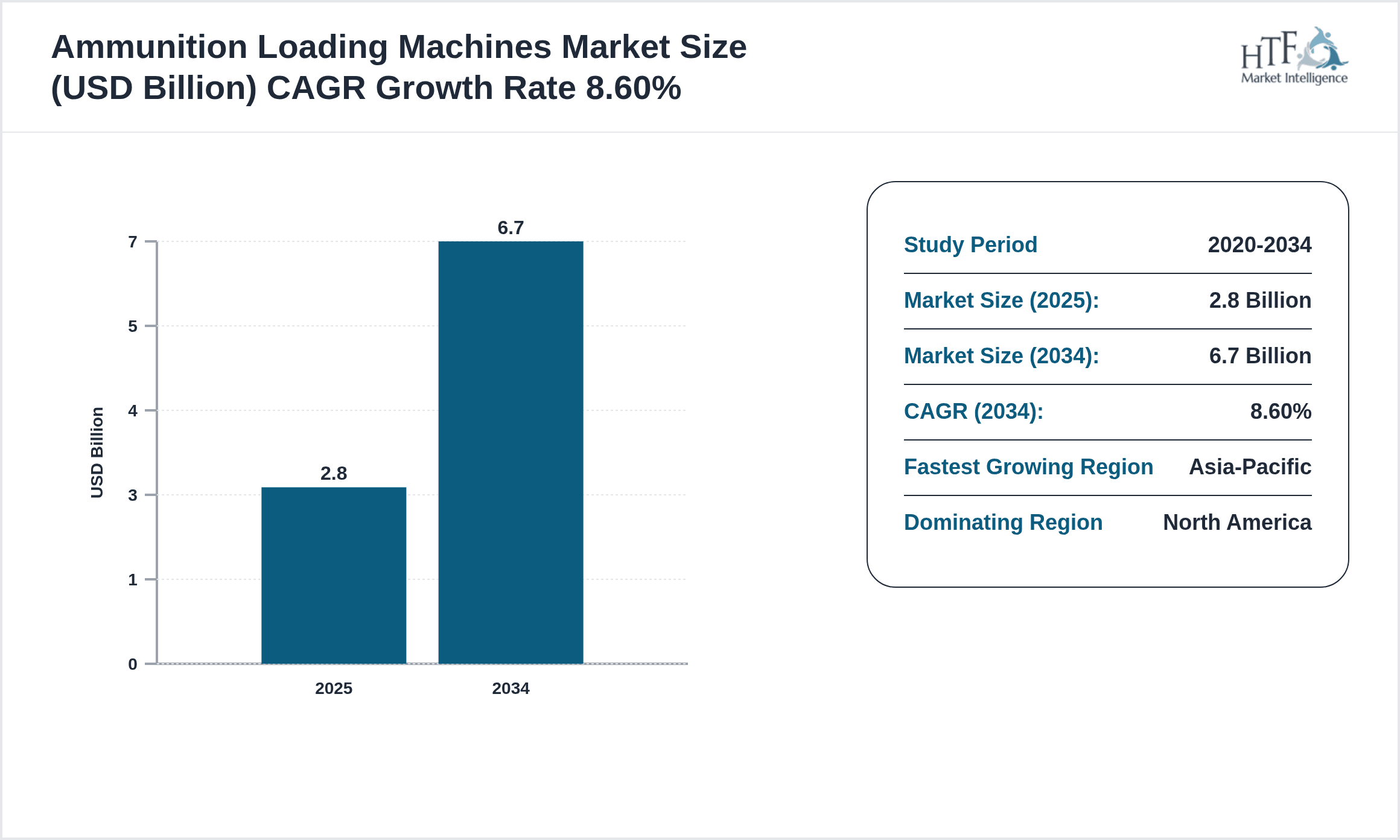
- •Significant market growth is propelled by rising defense spending, modernization of military arsenals, and increasing adoption of automated and robotic loading systems. The market exhibited a base size of USD 2.8 Billion in 2024 and is forecasted to reach USD 6.7 Billion by 2034, reflecting a compound annual growth rate (CAGR) of 8.6%. Technological advancements in automation and robotics have accelerated deployment across key regions, with North America currently dominating due to its advanced defense infrastructure. Asia-Pacific, however, is identified as the fastest growing region driven by expanding military budgets and increasing industrialization in countries within this geography. The market is segmented by type, application, and geography, with automated loading machines and military applications holding the largest shares.
- •The strategic importance of Ammunition Loading Machines spans numerous industries, primarily defense and security sectors, where operational efficiency and safety are paramount. These machines contribute to reducing manual labor intensity and improving throughput in ammunition handling processes. For stakeholders including manufacturers, defense contractors, and government agencies, the market offers substantial opportunities driven by innovation, increasing automation, and the need for precision loading in complex weapon systems. Furthermore, the evolving geopolitical landscape and rising security concerns globally underscore the critical role of advanced ammunition loading technologies in ensuring readiness and operational superiority.
Competitive Landscape
The competitive environment in the global Ammunition Loading Machines market is marked by a mix of established multinational corporations and specialized regional players. Market dynamics are characterized by intense rivalry focused on technological innovation, product differentiation, and strategic alliances. Companies emphasize research and development to introduce automated and robotic loading systems that enhance safety and efficiency while reducing operational costs. Pricing strategies vary across regions, with premium products targeted toward advanced defense sectors, while cost-effective solutions cater to emerging markets. Leading players leverage strong distribution networks and after-sales service capabilities to maintain market position. Mergers and acquisitions are prevalent strategies for expanding product portfolios and geographical reach. The market entry barriers are significant due to complex regulatory requirements and the need for advanced technological expertise. Future competitive trends indicate an increasing focus on digital integration, AI-enabled automation, and customization to meet diverse ammunition loading needs globally.
Key Participants in Ammunition Loading Machines Market
- •BAE Systems (United Kingdom)
- •General Dynamics Corporation (United States)
- •Rheinmetall AG (Germany)
- •Lockheed Martin Corporation (United States)
- •Northrop Grumman Corporation (United States)
- •Krauss-Maffei Wegmann GmbH & Co. KG (Germany)
- •Hanwha Corporation (South Korea)
- •Thales Group (France)
- •Elbit Systems Ltd. (Israel)
- •Turbotech (France)
- •Nexter Systems (France)
- •Caterpillar Defense Solutions (United States)
- •DRS Technologies, Inc. (United States)
- •Kongsberg Gruppen ASA (Norway)
- •Patria Oyj (Finland)
- •Otokar (Turkey)
- •Rafael Advanced Defense Systems Ltd. (Israel)
- •QinetiQ Group plc (United Kingdom)
- •FN Herstal (Belgium)
- •Denel SOC Ltd. (South Africa)
- •Huntington Ingalls Industries (United States)
- •General Electric Company (United States)
- •L3Harris Technologies (United States)
- •ST Engineering (Singapore)
- •KMW+Nexter Defense Systems (KNDS) (Germany/France)
Market Breakdown
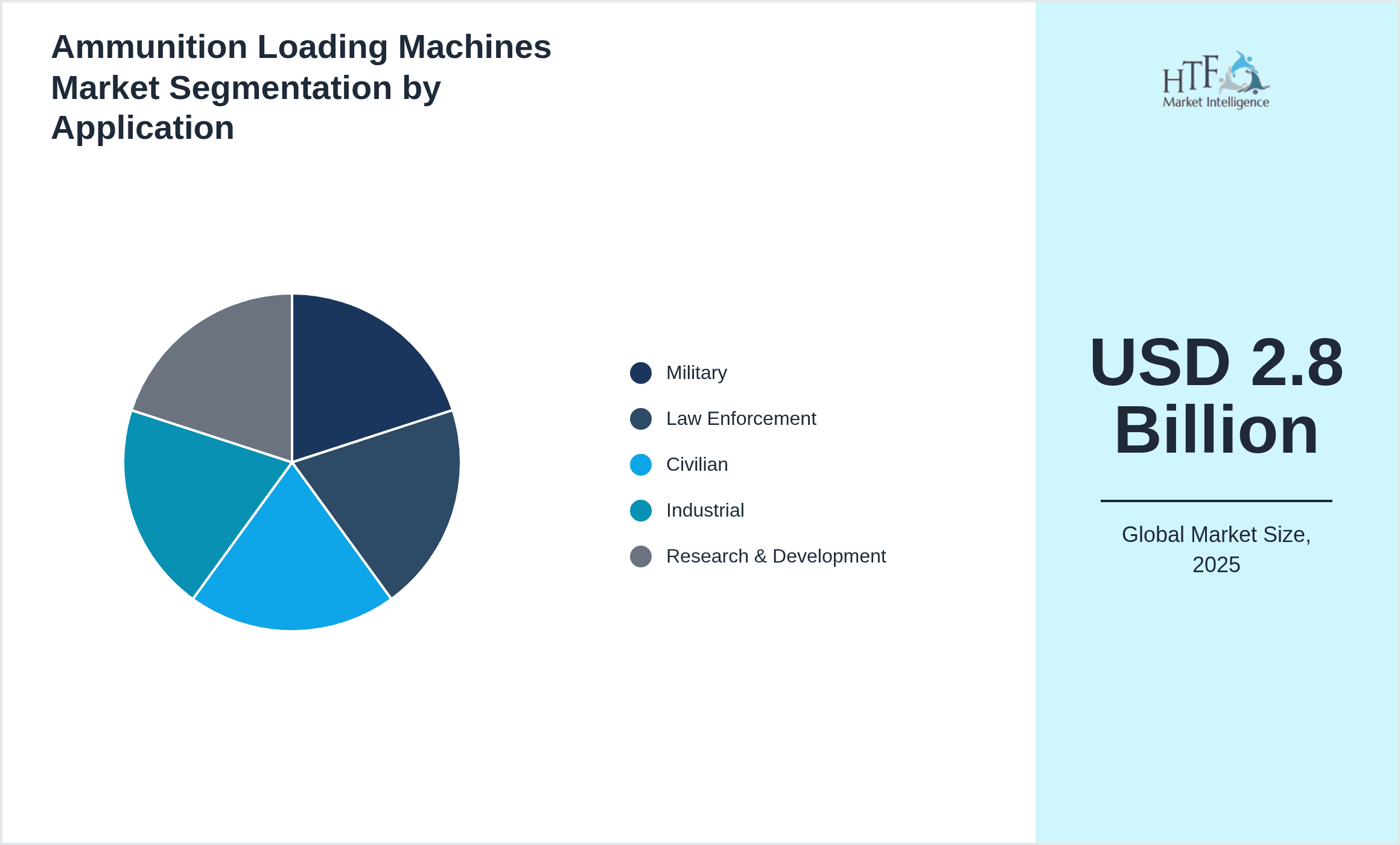
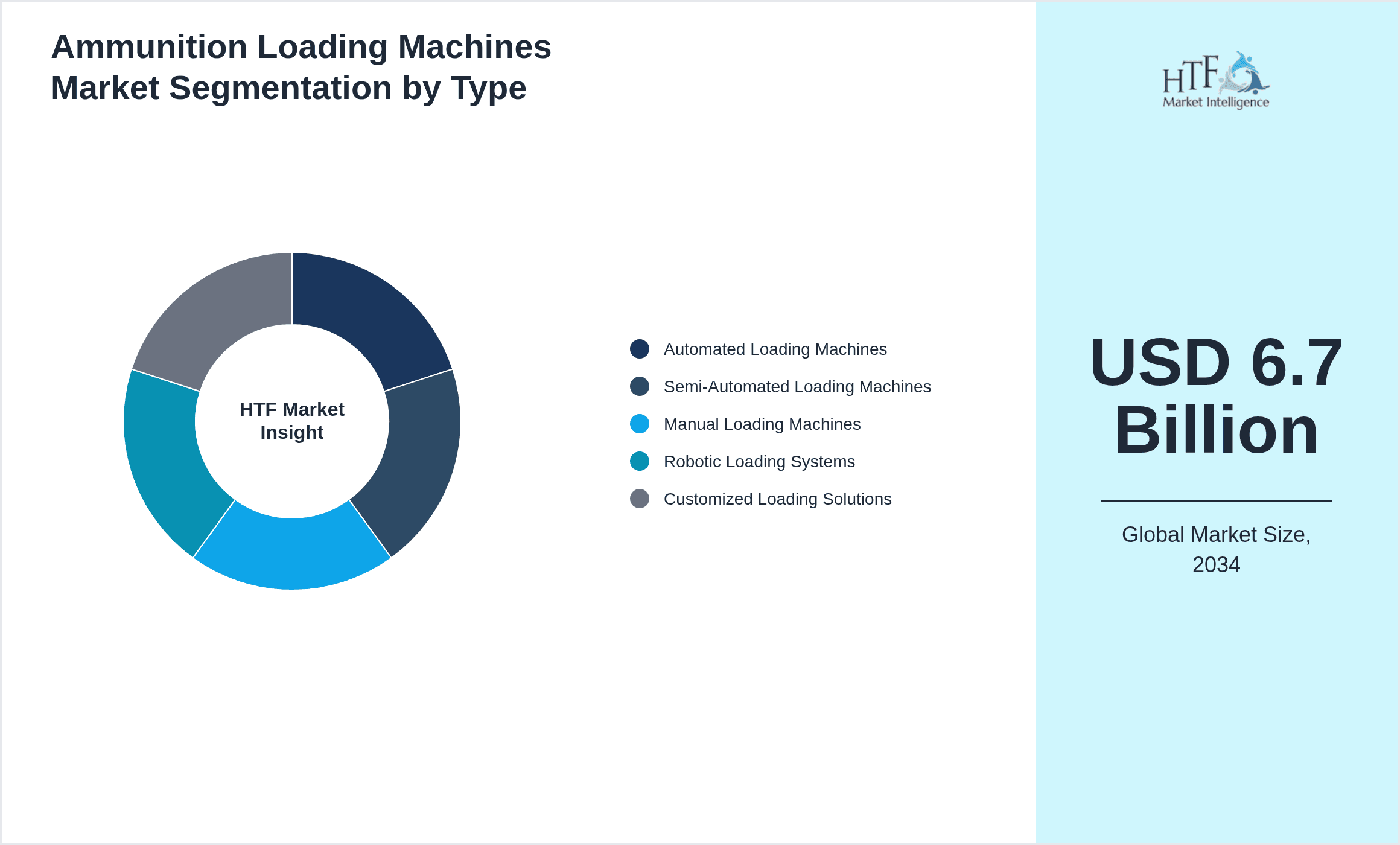
- •By Product Type
- ◦Automated Loading Machines
- ◦Semi-Automated Loading Machines
- ◦Manual Loading Machines
- ◦Robotic Loading Systems
- ◦Customized Loading Solutions
- •By Application
- ◦Military
- ◦Law Enforcement
- ◦Civilian
- ◦Industrial
- ◦Research & Development
- •By Deployment Model
- ◦On-Premise
- ◦Mobile Units
- ◦Integrated Systems
- •By Technology Type
- ◦Automation
- ◦Robotics
- ◦Manual Mechanisms
Growth Dynamics
- •Rising defense budgets globally, particularly in North America and Asia-Pacific, have significantly accelerated investments in advanced ammunition loading technologies, driving demand for automated and robotic loading systems that improve operational efficiency and safety.
- •The integration of robotics and AI-based automation in ammunition loading machines is transforming loading accuracy and cycle times, enabling faster and safer handling of complex ammunition types in both military and civilian applications.
- •Growing emphasis on personnel safety and reduction of manual labor in hazardous environments compels defense and industrial operators to adopt semi-automated and fully automated loading solutions, enhancing workplace safety standards.
- •Emerging economies in Asia-Pacific and Latin America are increasing defense modernization efforts, creating opportunities for market expansion and adoption of cost-effective customized loading machines suitable for varied operational environments.
- •Government initiatives and public-private partnerships in defense R&D are fostering innovation in ammunition loading technologies, resulting in improved machine reliability, adaptability, and integration with broader weapons systems.
Market Trends
- •The market is witnessing a shift towards fully robotic loading systems equipped with AI and machine learning for predictive maintenance and real-time operational analytics, enhancing uptime and reducing failures.
- •Modular and mobile ammunition loading solutions are gaining traction, allowing flexible deployment in field operations, thereby increasing tactical responsiveness for military forces worldwide.
- •Manufacturers are increasingly focusing on customization to meet diverse ammunition calibers and loading requirements, enabling multipurpose machines that serve both military and civilian sectors.
- •Sustainability practices, including energy-efficient machines and recyclable material usage, are becoming important as environmental regulations tighten within defense manufacturing and operational practices.
- •Collaborations between technology providers and defense contractors are expanding, fostering innovation in ammunition loading systems and integration with automated weapon platforms.
Market Opportunities
- •Expanding defense modernization programs in emerging markets represent significant growth opportunities for manufacturers to introduce affordable, automated ammunition loading solutions tailored to localized requirements.
- •Advancements in robotics and AI offer opportunities for developing next-generation loading machines with enhanced precision, adaptability, and predictive maintenance capabilities, appealing to high-end defense users.
- •The integration of ammunition loading machines with broader logistics and inventory management systems can streamline supply chain operations, opening avenues for technology providers specializing in end-to-end solutions.
- •Collaborative ventures and strategic alliances with governments and defense agencies can accelerate product adoption and customization, enabling access to long-term contracts and service agreements.
- •Increasing use of unmanned systems and autonomous weapon platforms creates a demand for compatible automated loading machines capable of interfacing with such technologies.
Market Challenges
- •High initial investment and complex integration requirements for automated ammunition loading machines present barriers for adoption, especially in cost-sensitive and developing markets.
- •Stringent regulatory and safety standards across different regions necessitate extensive compliance efforts, potentially delaying product launches and increasing operational costs.
- •Limited availability of skilled technicians for maintenance and operation of advanced loading systems restricts market penetration in certain geographic areas.
- •Intense competition from established players and emerging local manufacturers pressures pricing strategies and margins, requiring continuous innovation to maintain competitive advantage.
- •Supply chain disruptions and geopolitical tensions affect the availability of critical components and materials, impacting production timelines and delivery commitments.
Regulatory Framework
- •Between 2019 and 2024, international arms control agreements and export regulations such as ITAR and EAR have been tightened, imposing stricter compliance requirements on ammunition loading machine manufacturing and exports, impacting global trade flows.
- •Safety standards for automated machinery, including ISO 12100 and ANSI standards, have been updated to incorporate specific guidelines for ammunition handling equipment, mandating enhanced operator protection and machine reliability.
- •Environmental regulations in key manufacturing countries have introduced constraints on emissions and material usage in machinery production, encouraging adoption of eco-friendly processes within the ammunition loading machines industry.
- •Regional defense procurement policies increasingly emphasize domestic manufacturing and technology transfer requirements, influencing market entry strategies and partnership formations in regions like Asia-Pacific and the Middle East.
- •Government grant programs and incentives aimed at fostering innovation in defense technology have supported R&D in automated ammunition loading systems, facilitating faster commercialization cycles.
Market Intelligence
- •15th January 2025, Rheinmetall AG launched its latest automated ammunition loading system featuring AI-driven diagnostics and enhanced robotic precision targeting the European defense sector. This new product reduces loading cycle time by 30% and improves safety by minimizing human interaction with hazardous materials. Rheinmetall aims to strengthen its market leadership with this innovation, addressing increasing demand for advanced automated solutions. Source: Rheinmetall AG Official Press Release.
- •10th March 2025, Hanwha Corporation introduced a next-generation robotic ammunition loader equipped with real-time remote monitoring and modular design tailored for Asia-Pacific military applications. The system integrates seamlessly with existing weapons platforms and supports rapid deployment in field conditions, enhancing operational agility. The launch aligns with Hanwha’s strategic focus on expanding regional defense technology offerings. Source: Hanwha Corporation Newsroom.
- •22nd February 2025, General Dynamics Corporation announced a strategic partnership with a leading AI software provider to develop intelligent ammunition loading machines capable of predictive maintenance and autonomous operations. This collaboration is expected to accelerate innovation cycles and improve reliability across multiple defense platforms globally. Source: General Dynamics Corporate Communications.
- •5th April 2025, Lockheed Martin Corporation completed the acquisition of a niche robotics firm specializing in automated loading technologies, aiming to integrate cutting-edge robotics into its defense systems portfolio. This move enhances Lockheed Martin’s capabilities in delivering comprehensive ammunition handling solutions to its global clients. Source: Lockheed Martin News Center.
Regional Outlook
The North America currently holds a significant share of the market, primarily due to several key factors: increasing consumption rates, a burgeoning population, and robust economic momentum. These elements collectively drive demand, positioning this region as a leader in the market. On the other hand, Asia-Pacific is rapidly emerging as the fastest-growing area within the industry. This remarkable growth can be attributed to swift infrastructure development, the expansion of various industrial sectors, and a marked increase in consumer demand. These dynamics make this region a crucial player in shaping future market growth.
In our report, we cover a comprehensive analysis of the following regions and countries:
- North America
- LATAM
- West Europe
- Central & Eastern Europe
- Northern Europe
- Southern Europe
- East Asia
- Southeast Asia
- South Asia
- Central Asia
- Oceania
- MEA
| Feature | Details |
|---|---|
| Base Year Market Size | USD 2.8 Billion |
| Forecast Year Market Size | USD 6.7 Billion |
| CAGR | 8.6% |
| Forecast Period | 2026 to 2033 |
| YoY Growth | 8.3% |
| Scope of Report | Market is segmented by Product Type (Automated Loading Machines, Semi-Automated Loading Machines, Manual Loading Machines, Robotic Loading Systems, Customized Loading Solutions), Application (Military, Law Enforcement, Civilian, Industrial, Research & Development), Deployment Model (On-Premise, Mobile Units, Integrated Systems), Technology Type (Automation, Robotics, Manual Mechanisms) |
| Regions Covered | North America, LATAM, West Europe, Central & Eastern Europe, Northern Europe, Southern Europe, East Asia, Southeast Asia, South Asia, Central Asia, Oceania, MEA |
| Key Companies | Expanding defense modernization programs in emerging markets represent significant growth opportunities for manufacturers to introduce affordable, automated ammunition loading solutions tailored to localized requirements., Advancements in robotics and AI offer opportunities for developing next-generation loading machines with enhanced precision, adaptability, and predictive maintenance capabilities, appealing to high-end defense users., The integration of ammunition loading machines with broader logistics and inventory management systems can streamline supply chain operations, opening avenues for technology providers specializing in end-to-end solutions., Collaborative ventures and strategic alliances with governments and defense agencies can accelerate product adoption and customization, enabling access to long-term contracts and service agreements., Increasing use of unmanned systems and autonomous weapon platforms creates a demand for compatible automated loading machines capable of interfacing with such technologies. |
Global Ammunition Loading Machines Market Size, Growth & Revenue 2024-2034 - Table of Contents
Frequently Asked Questions (FAQ):
The Compact Track Loaders market is expected to see value worth 5.3 Billion in 2025.
North America currently leads the market with approximately 45% market share, followed by Europe at 28% and Asia-Pacific at 22%. The remaining regions account for 5% of the global market.
Key growth drivers include increasing construction activities, rising demand for versatile equipment in agriculture, technological advancements in track loader design, and growing preference for compact equipment in urban construction projects.