
Global Demo Automation Software Market Size, Growth & Revenue 2024-2034
Global Demo Automation Software Market is segmented by Demo Automation Software Type (Cloud-based Demo Automation Software, On-premise Demo Automation Software, Hybrid Demo Automation Software, AI-powered Demo Automation Software, Scripted Demo Automation Software), Application Area (Sales Enablement, Customer Training, Product Demonstrations, Marketing Campaigns, Technical Support), Deployment Model (Cloud-based, On-premise, Hybrid), Integration Capability (CRM Integration, Marketing Automation Integration, Analytics and Reporting Integration), and Geography (North America, LATAM, West Europe, Central & Eastern Europe, Northern Europe, Southern Europe, East Asia, Southeast Asia, South Asia, Central Asia, Oceania, MEA)
Pricing
Report Overview
Executive Summary
- •The Global Demo Automation Software market is a dynamic and rapidly expanding sector focused on delivering automated solutions for product and service demonstrations. It integrates technologies such as artificial intelligence, cloud computing, and scripting to enable businesses to create immersive, interactive demos that enhance customer engagement and streamline sales processes. The market caters to diverse applications including sales enablement, customer training, product launches, marketing campaigns, and technical support, enabling organizations to improve operational efficiencies and reduce time-to-market. Deployment options range from cloud-based to on-premise and hybrid models, supporting scalability and customization. Key market drivers include digital transformation initiatives, increasing demand for personalized customer experiences, and the need for efficient training tools. The competitive landscape features a mix of established software vendors and innovative startups, leveraging AI and analytics to differentiate offerings. The market's global reach spans major regions such as North America, Europe, Asia-Pacific, Latin America, and the Middle East & Africa, each contributing uniquely to growth dynamics and adoption trends.
- •Key highlights reveal a robust CAGR of 14.9% from 2024 to 2034, with the market projected to grow from USD 2.5 billion in 2024 to USD 9.7 billion by 2034. North America currently dominates due to early adoption and technological advancements, while Asia-Pacific exhibits the highest growth potential driven by digital transformation and expanding enterprise IT infrastructure. Cloud-based software leads the product type segment, favored for scalability and lower upfront costs, whereas AI-powered solutions are the fastest-growing, offering enhanced personalization and automation capabilities. Sales enablement remains the largest application area, supported by increasing sales teams' reliance on automated demos to accelerate buyer decisions. Market challenges include integration complexities, data privacy concerns, and the need for continuous innovation to meet evolving customer expectations.
- •The Global Demo Automation Software market offers significant strategic value to enterprises aiming to optimize their sales, marketing, and support functions. By automating demo processes, organizations enhance customer engagement, reduce training costs, and accelerate sales cycles, directly impacting revenue growth. Stakeholders including software developers, system integrators, and end-users benefit from advances in AI and cloud technologies that enable flexible, scalable, and data-driven solutions. The market's growth trajectory underscores the increasing importance of digital customer experience and operational efficiency in competitive landscapes. Strategic investments in R&D, partnerships, and geographic expansion are pivotal for market players to capitalize on emerging opportunities and sustain competitive advantages in this evolving ecosystem.

Competitive Landscape
The competitive environment of the Global Demo Automation Software market is characterized by intense rivalry among established technology firms and nimble startups innovating rapidly to capture market share. Leading companies focus on differentiation through advanced AI capabilities, seamless integrations with CRM and marketing platforms, and user-friendly interfaces that enhance demonstration interactivity. Strategic partnerships and acquisitions are prevalent as players seek to broaden their technological portfolios and geographic reach. Pricing strategies vary from subscription-based cloud models to enterprise licensing, catering to diverse customer segments. Innovation in automation scripting, analytics, and personalization features remains a key competitive lever to meet evolving client demands. Market entry barriers include high development costs and the need for continuous technological upgrades, which favor incumbents while challenging new entrants. Regional competition also intensifies as providers tailor solutions to local market needs and regulatory environments. Future trends suggest consolidation and increased focus on AI-driven demo personalization will shape competitive dynamics.
Key Participants in Demo Automation Software Market
- •Salesforce Inc. (United States)
- •Adobe Inc. (United States)
- •Oracle Corporation (United States)
- •SAP SE (Germany)
- •HubSpot Inc. (United States)
- •Showpad (Belgium)
- •Demodesk GmbH (Germany)
- •Consensus (United States)
- •Brainshark Inc. (United States)
- •Seismic Software Inc. (United States)
- •Allego (United States)
- •Mediafly (United States)
- •Chorus.ai (United States)
- •Gong.io (United States)
- •Vidyard (Canada)
- •Outreach.io (United States)
- •ClearSlide (United States)
- •Highspot (United States)
- •Kaltura Inc. (United States)
- •Brightcove Inc. (United States)
- •Zoho Corporation (India)
- •Tiled (United States)
- •Bigtincan Holdings Limited (Australia)
- •Prezi (Hungary)
- •Loom (United States)
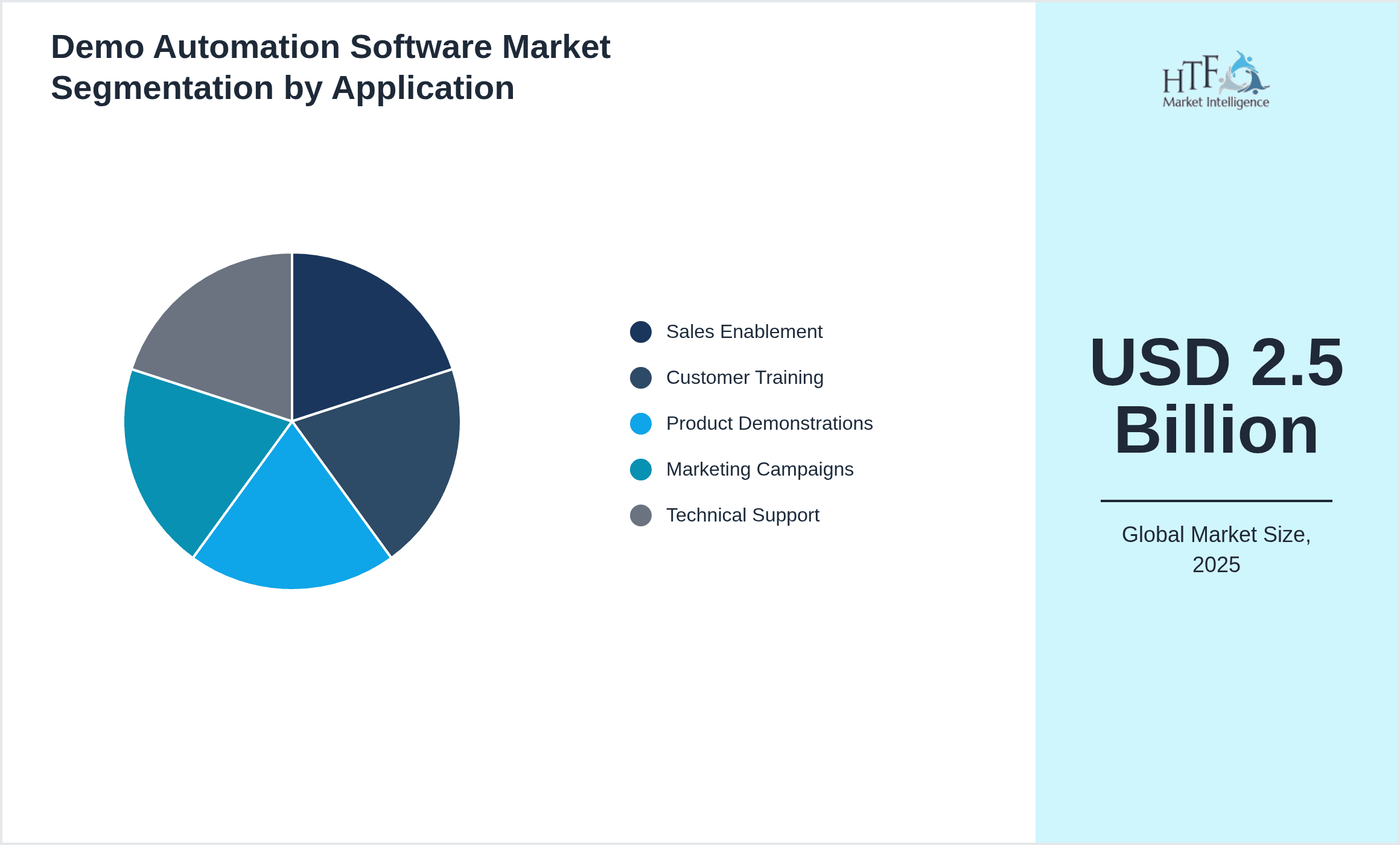
Market Breakdown
- •By Demo Automation Software Type
- ◦Cloud-based Demo Automation Software
- ◦On-premise Demo Automation Software
- ◦Hybrid Demo Automation Software
- ◦AI-powered Demo Automation Software
- ◦Scripted Demo Automation Software
- •By Application Area
- ◦Sales Enablement
- ◦Customer Training
- ◦Product Demonstrations
- ◦Marketing Campaigns
- ◦Technical Support
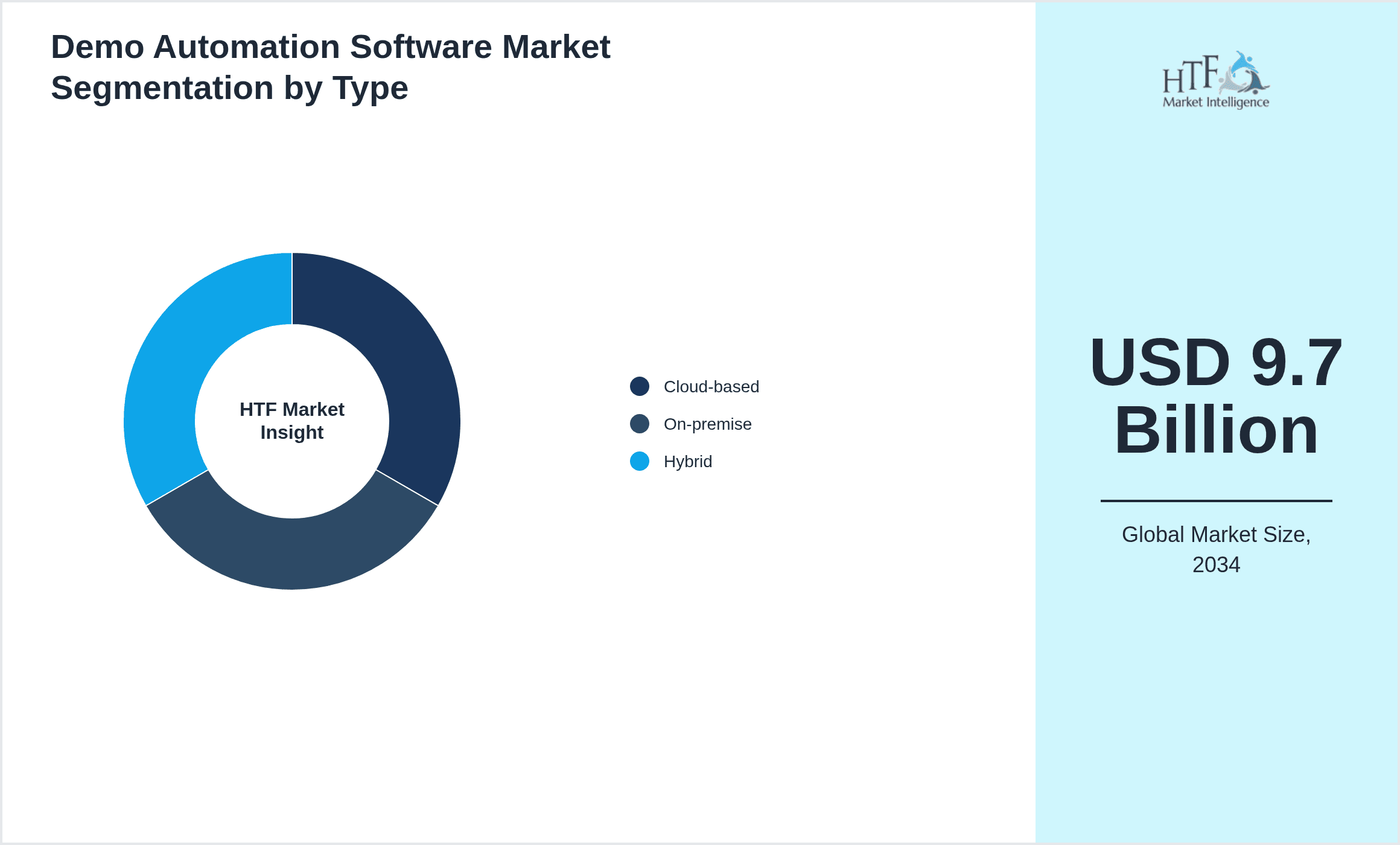
- •By Deployment Model
- ◦Cloud-based
- ◦On-premise
- ◦Hybrid
- •By Integration Capability
- ◦CRM Integration
- ◦Marketing Automation Integration
- ◦Analytics and Reporting Integration
Growth Dynamics
The Global Demo Automation Software market is propelled by the increasing adoption of digital transformation initiatives across industries, where organizations seek to enhance sales and customer engagement efficiencies. Cloud computing advancements enable scalable and cost-effective deployment, making demo automation accessible to SMBs and large enterprises alike. The growing demand for personalized customer experiences drives the integration of AI technologies within demo platforms, providing intelligent interactions and adaptive content delivery. Additionally, the shift towards remote work and virtual selling environments amplifies the need for automated demos that can be accessed anytime, anywhere, facilitating seamless buyer journeys. Integration with CRM and marketing tools further fuels growth by allowing data-driven insights and streamlined workflows. These factors collectively create a favorable environment for sustained market expansion, with technology innovation and increasing user awareness acting as critical enablers.
Market Trends
Emerging trends in the Global Demo Automation Software market include the widespread adoption of AI and machine learning to enhance demo personalization and automate content adaptation based on user behavior. Vendors are increasingly offering cloud-native platforms with robust analytics to provide actionable insights into demo effectiveness and customer engagement. The integration of video and interactive media into demos is gaining traction to improve user experience and conversion rates. Moreover, subscription-based pricing models dominate, enabling flexible access and scalability. Strategic partnerships between software providers and CRM platforms are becoming more common to deliver seamless end-to-end sales enablement solutions. Sustainability and digital accessibility considerations also influence product development, aligning with broader corporate responsibility goals.
Market Opportunities
Significant opportunities exist in expanding the adoption of AI-powered demo automation solutions in emerging markets, where digital transformation is accelerating. Developing multi-lingual and region-specific demo content can address diverse global customer bases, enhancing market penetration. Integration with emerging technologies such as augmented reality (AR) and virtual reality (VR) presents avenues for creating immersive demo experiences, differentiating offerings in competitive landscapes. Additionally, growing demand from sectors like healthcare, education, and manufacturing for automated training and product demonstrations opens new vertical markets. Strategic collaborations with CRM and marketing automation providers can unlock cross-selling opportunities and bundled service offerings, driving revenue growth. Furthermore, small and medium-sized enterprises represent an underexploited segment requiring cost-effective and easy-to-use demo automation tools.
Market Challenges
Key challenges hindering the Global Demo Automation Software market include integration complexities with legacy systems, which can delay deployment and increase costs. Data privacy and security concerns, especially with cloud-based platforms, pose regulatory and compliance risks that may restrict adoption in sensitive industries. High initial investment requirements and the need for skilled personnel to manage sophisticated AI-driven demos limit accessibility for smaller organizations. Additionally, rapidly evolving customer expectations necessitate continuous innovation, imposing pressure on vendors to maintain technological leadership. Market fragmentation with numerous competitors offering overlapping features creates challenges in differentiation and customer acquisition. Resistance to change within traditional sales and marketing teams can further slow adoption rates. Addressing these obstacles through robust support, security enhancements, and user-friendly designs is critical for sustained market growth.
Regulatory Framework
From 2023 to 2024, the Global Demo Automation Software market has been influenced by data protection regulations such as the EU's General Data Protection Regulation (GDPR) and the California Consumer Privacy Act (CCPA), mandating stringent controls on customer data handling within demo platforms. Compliance requirements include secure data storage, user consent management, and transparent data usage disclosures, impacting software design and deployment strategies. Additionally, industry-specific standards, particularly in healthcare and finance sectors, impose operational guidelines to ensure confidentiality and integrity of demo content involving sensitive information. Governments across regions have also introduced cybersecurity mandates that require vendors to implement robust security protocols and conduct regular audits. These regulatory developments encourage the adoption of privacy-by-design and security-by-default principles, shaping product roadmaps and market entry strategies. Vendors must stay abreast of evolving legislation to maintain compliance and build customer trust.
Market Intelligence
- •15th January 2024, Salesforce Inc. launched an AI-powered demo automation module integrated within its Sales Cloud platform, designed to enhance real-time personalization and predictive analytics for sales teams. This innovative offering aims to streamline demo creation workflows and improve conversion rates by leveraging machine learning to adapt content dynamically based on customer interactions and preferences, targeting enterprises seeking to modernize sales enablement processes. Salesforce’s strategic focus on AI integration underscores its commitment to maintaining leadership in CRM-enabled demo automation solutions. Source: Official Salesforce Press Release
- •22nd March 2023, Showpad announced the release of its latest cloud-based demo automation platform featuring advanced video interactivity and analytics capabilities. The update facilitates deeper engagement insights and enables sales reps to customize demos more efficiently, supporting hybrid and remote selling environments. This launch positions Showpad competitively within the growing market for intelligent demo software, responding to increasing demands for scalable, data-driven sales tools. Source: Showpad Corporate Website
- •Recent market developments and strategic initiatives are continuously tracked through industry publications, company announcements, and regulatory filings. For the most current information, stakeholders are advised to monitor official corporate communications and recognized market intelligence platforms.
- •Recent market developments and strategic initiatives are continuously tracked through industry publications, company announcements, and regulatory filings. For the most current information, stakeholders are advised to monitor official corporate communications and recognized market intelligence platforms.
Regional Outlook
The North America currently holds a significant share of the market, primarily due to several key factors: increasing consumption rates, a burgeoning population, and robust economic momentum. These elements collectively drive demand, positioning this region as a leader in the market. On the other hand, Asia-Pacific is rapidly emerging as the fastest-growing area within the industry. This remarkable growth can be attributed to swift infrastructure development, the expansion of various industrial sectors, and a marked increase in consumer demand. These dynamics make this region a crucial player in shaping future market growth.
In our report, we cover a comprehensive analysis of the following regions and countries:
- North America
- LATAM
- West Europe
- Central & Eastern Europe
- Northern Europe
- Southern Europe
- East Asia
- Southeast Asia
- South Asia
- Central Asia
- Oceania
- MEA
| Feature | Details |
|---|---|
| Base Year Market Size | USD 2.5 Billion |
| Forecast Year Market Size | USD 9.7 Billion |
| CAGR | 14.9% |
| Forecast Period | 2026 to 2033 |
| YoY Growth | 13.3% |
| Scope of Report | Market is segmented by Demo Automation Software Type (Cloud-based Demo Automation Software, On-premise Demo Automation Software, Hybrid Demo Automation Software, AI-powered Demo Automation Software, Scripted Demo Automation Software), Application Area (Sales Enablement, Customer Training, Product Demonstrations, Marketing Campaigns, Technical Support), Deployment Model (Cloud-based, On-premise, Hybrid), Integration Capability (CRM Integration, Marketing Automation Integration, Analytics and Reporting Integration) |
| Regions Covered | North America, LATAM, West Europe, Central & Eastern Europe, Northern Europe, Southern Europe, East Asia, Southeast Asia, South Asia, Central Asia, Oceania, MEA |
| Key Companies | Significant opportunities exist in expanding the adoption of AI-powered demo automation solutions in emerging markets, where digital transformation is accelerating. Developing multi-lingual and region-specific demo content can address diverse global customer bases, enhancing market penetration. Integration with emerging technologies such as augmented reality (AR) and virtual reality (VR) presents avenues for creating immersive demo experiences, differentiating offerings in competitive landscapes. Additionally, growing demand from sectors like healthcare, education, and manufacturing for automated training and product demonstrations opens new vertical markets. Strategic collaborations with CRM and marketing automation providers can unlock cross-selling opportunities and bundled service offerings, driving revenue growth. Furthermore, small and medium-sized enterprises represent an underexploited segment requiring cost-effective and easy-to-use demo automation tools. |
Global Demo Automation Software Market Size, Growth & Revenue 2024-2034 - Table of Contents
Research enthusiast focused on transforming data uncovering into actionable insights through data-driven decision-making.
Frequently Asked Questions (FAQ):
The Compact Track Loaders market is projected to grow at a CAGR of 6.8% from 2025 to 2030, driven by increasing demand in construction and agricultural sectors.
North America currently leads the market with approximately 45% market share, followed by Europe at 28% and Asia-Pacific at 22%. The remaining regions account for 5% of the global market.
Key growth drivers include increasing construction activities, rising demand for versatile equipment in agriculture, technological advancements in track loader design, and growing preference for compact equipment in urban construction projects.