
EMEA Medicine Rapid Mixer Granulator Market Scope & Changing Dynamics 2024-2034
EMEA Medicine Rapid Mixer Granulator Market is segmented by Type (High-Shear Mixer Granulator, Fluidized Bed Mixer Granulator, Double Cone Mixer Granulator, Planetary Mixer Granulator, Sigma Mixer Granulator), Application (Tablet Manufacturing, Capsule Filling, Granule Preparation, Powder Blending, Specialized Formulations), End User (Pharmaceutical Manufacturers, Contract Manufacturing Organizations (CMOs), Research Institutes), Technology (Batch Processing, Continuous Processing, Hybrid Processing), and Geography (Germany, France, Italy, United Kingdom, Nordics, Rest of Europe, South Africa, Egypt, Turkey, United Arab Emirates, Israel, Saudi Arabia, Rest of EMEA)
Pricing
Report Overview
Executive Summary
- •The EMEA Medicine Rapid Mixer Granulator Market represents a crucial segment within pharmaceutical manufacturing, focusing on equipment that blends powders and granulates rapidly to produce uniform and stable solid dosage forms. This market includes various product types like high-shear and fluidized bed mixer granulators, which are essential for efficient drug formulation processes. Predominantly serving pharmaceutical companies across Europe, the Middle East, and Africa, the market supports applications ranging from tablet manufacturing to specialized formulations. The scope extends to innovations in mixing technology, compliance with regional regulatory standards, and integration with automated manufacturing lines. Key drivers include increasing demand for high-quality oral medications, advancements in process efficiency, and the need for scalable production solutions. This market's growth is tightly linked to the expansion of pharmaceutical industries in Germany, the UK, and France, where stringent quality controls and rising R&D investments foster adoption of advanced granulation equipment.
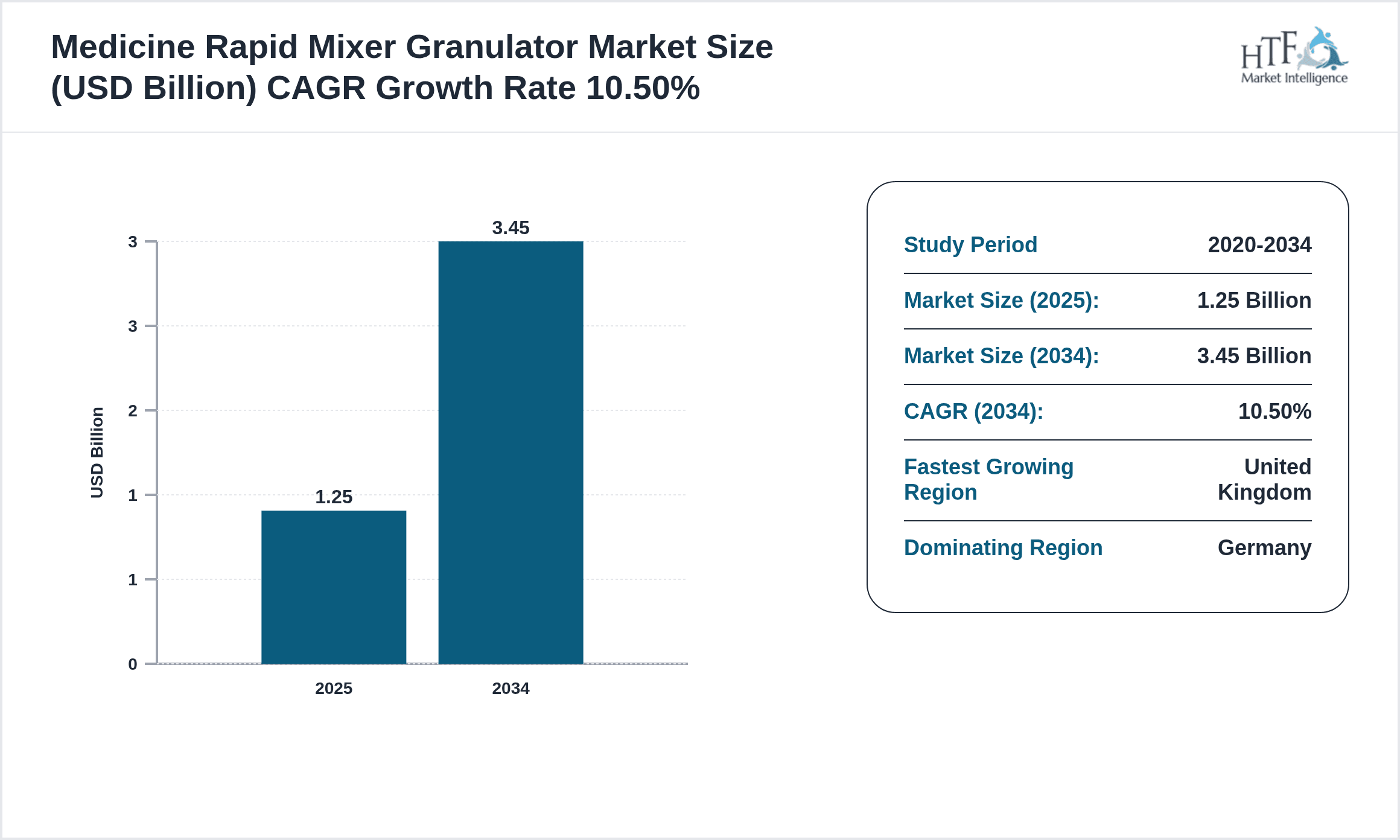
- •Significant highlights in this market include a projected compound annual growth rate (CAGR) of approximately 10.5% through 2034, with the market size expected to reach USD 3.45 billion by that year, up from USD 1.25 billion in 2024. The high-shear mixer granulator segment leads in adoption owing to its efficiency and versatility, while fluidized bed mixer granulators are the fastest growing due to their superior drying and granulating capabilities. Geographically, Germany dominates the market, reflecting its strong pharmaceutical manufacturing base, whereas the United Kingdom is the fastest-growing country, driven by robust innovation and investment. These indicators demonstrate a dynamic market poised for expansion influenced by technological progress and regulatory developments.
- •The medicine rapid mixer granulator market offers a compelling value proposition by enabling pharmaceutical manufacturers in EMEA to enhance product quality, reduce processing times, and comply with regulatory standards. It serves as a strategic enabler for companies aiming to scale manufacturing capabilities and meet increasing demand for oral solid drugs. Stakeholders including equipment manufacturers, pharmaceutical producers, and regulatory bodies benefit from this market's growth through improved operational efficiencies and innovation adoption. The integration of advanced mixer granulator technologies supports drug development pipelines and commercialization strategies, making it a vital component in the pharmaceutical supply chain across the EMEA region.
Competitive Landscape
The competition within the EMEA Medicine Rapid Mixer Granulator Market is characterized by a mix of global pharmaceutical equipment manufacturers and specialized regional players focusing on innovation and customization. Market leaders emphasize continuous product development, incorporating automation, advanced control systems, and materials that enhance granulation efficiency and consistency. Strategic collaborations and expansion into emerging markets within EMEA intensify rivalry, while companies differentiate through after-sales support, compliance certifications, and integration capabilities with broader manufacturing lines. Pricing strategies are competitive but balanced with quality and technological superiority to maintain market share. Barriers to entry include high capital requirements, complex regulatory landscapes, and the need for specialized technical expertise. Future competitive trends point towards digitalization, IoT-enabled equipment, and sustainable manufacturing practices to gain advantage.
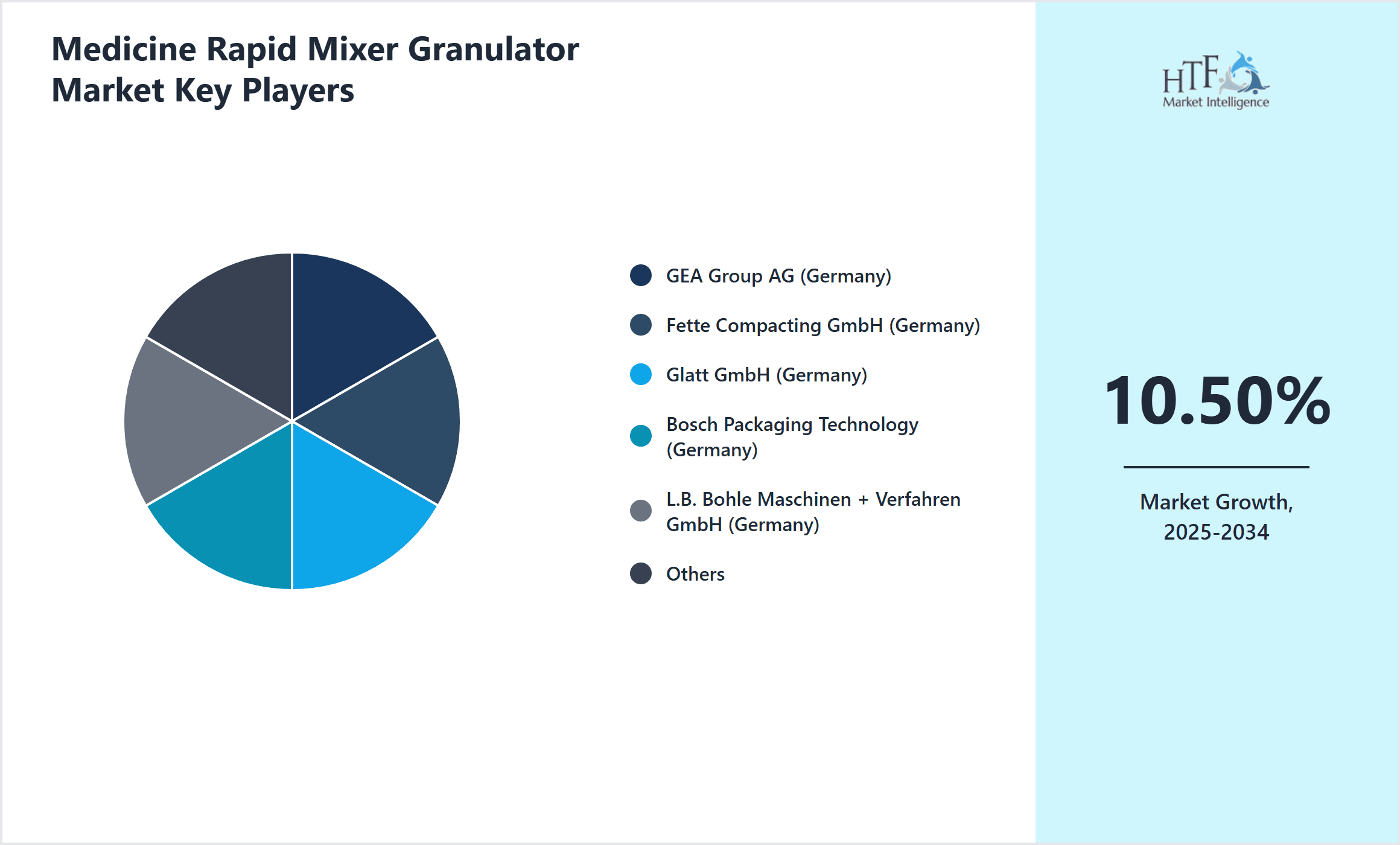
Leading Companies in Medicine Rapid Mixer Granulator Market
- •GEA Group AG (Germany)
- •Fette Compacting GmbH (Germany)
- •Glatt GmbH (Germany)
- •Bosch Packaging Technology (Germany)
- •L.B. Bohle Maschinen + Verfahren GmbH (Germany)
- •Alexanderwerk AG (Germany)
- •Korsch AG (Germany)
- •Schenk Process (Switzerland)
- •Patterson-Kelley Europe (United Kingdom)
- •Freund-Vector Corporation (United Kingdom)
- •Ishida Europe Ltd. (United Kingdom)
- •SaintyCo (France)
- •IMA Group (Italy)
- •Marchesini Group (Italy)
- •Fitzpatrick Engineering (United Kingdom)
- •Bosch Packaging Technology (United Kingdom)
- •Charles Ross & Son Company (United Kingdom)
- •Niro PharmaSystems (Denmark)
- •Schenck Process Europe GmbH (Germany)
- •Freund-Vector Europe GmbH (Germany)
- •Groninger & Co. GmbH (Germany)
- •Fitzpatrick Company (UK)
- •APV Manufacturing (Germany)
- •Bühler Group (Switzerland)
- •Coperion GmbH (Germany)

Market Breakdown
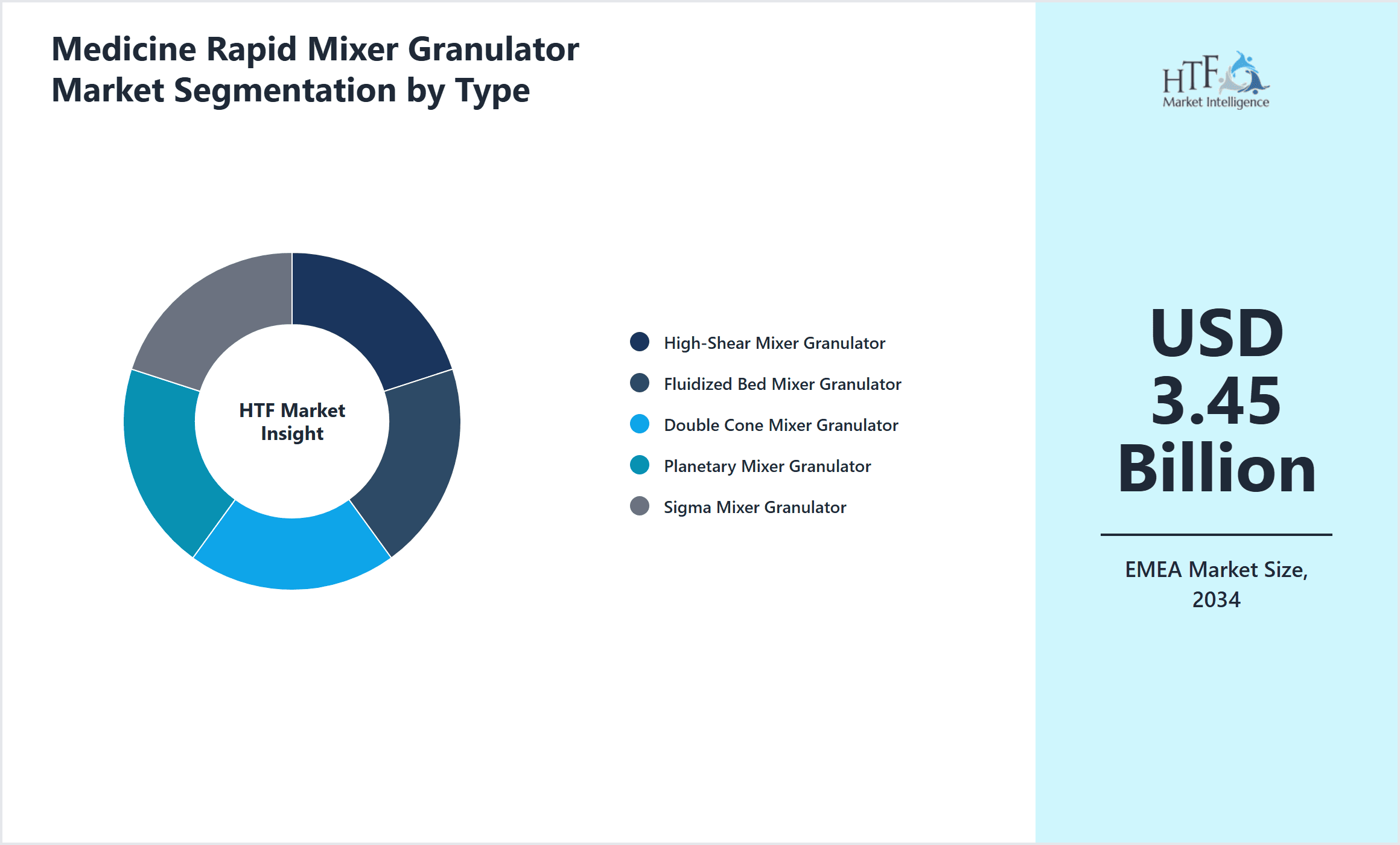
- •By Type
- ◦High-Shear Mixer Granulator
- ◦Fluidized Bed Mixer Granulator
- ◦Double Cone Mixer Granulator
- ◦Planetary Mixer Granulator
- ◦Sigma Mixer Granulator
- •By Application
- ◦Tablet Manufacturing
- ◦Capsule Filling
- ◦Granule Preparation
- ◦Powder Blending
- ◦Specialized Formulations
- •By End User
- ◦Pharmaceutical Manufacturers
- ◦Contract Manufacturing Organizations (CMOs)
- ◦Research Institutes
- •By Technology
- ◦Batch Processing
- ◦Continuous Processing
- ◦Hybrid Processing
Growth Dynamics
- •Increasing demand for oral solid dosage forms across EMEA countries drives the adoption of rapid mixer granulators, enabling manufacturers to meet production efficiency and regulatory standards simultaneously.
- •Technological advancements such as integration of process analytical technology (PAT) and automation in mixer granulators enhance product consistency and reduce time-to-market for pharmaceutical products.
- •Growth in pharmaceutical R&D investments within countries like Germany and the UK fuels demand for versatile granulation equipment capable of handling specialized formulations.
- •Increasing focus on continuous manufacturing processes in the pharmaceutical industry encourages the adoption of continuous processing technologies within the rapid mixer granulator market.
- •Government initiatives promoting local pharmaceutical production and quality compliance in Middle East and African countries support market expansion through modernized equipment procurement.
- •Rising prevalence of chronic diseases demands efficient and scalable production of tablets and capsules, propelling growth in mixer granulator adoption across the EMEA region.
- •Growing awareness about sustainable and energy-efficient manufacturing drives the development and use of eco-friendly rapid mixer granulator technologies in pharmaceutical facilities.
Market Trends
- •The adoption of digital twin technology in mixer granulator equipment is revolutionizing process optimization by enabling virtual simulation and predictive maintenance, improving operational efficiency.
- •Increased customization and modularity of granulator designs allow pharmaceutical companies to adapt quickly to varying batch sizes and formulations, enhancing flexibility in manufacturing lines.
- •Collaborations between equipment manufacturers and pharmaceutical companies are fostering co-development of advanced granulation solutions tailored to specific drug characteristics, accelerating innovation cycles.
- •Sustainability trends are driving manufacturers to adopt granulation equipment with reduced energy consumption and improved waste management capabilities to comply with environmental regulations.
- •The integration of IoT and Industry 4.0 principles in mixer granulators enables real-time monitoring and data analytics, supporting proactive quality control and regulatory compliance.
- •Growing emphasis on speed-to-market is encouraging adoption of continuous processing mixer granulators, reducing batch times and increasing throughput for pharmaceutical production.
- •Rising demand for personalized medicine is influencing the development of flexible granulator technologies capable of producing smaller, specialized batches efficiently.
Market Opportunities
- •Expanding pharmaceutical manufacturing in emerging EMEA markets such as Middle East and Africa presents untapped opportunities for rapid mixer granulator suppliers to establish local presence.
- •Integration of AI-driven process controls in mixer granulators offers potential for enhanced precision and reduced operational costs, attracting investment in smart manufacturing technologies.
- •Collaborative innovation between equipment manufacturers and pharmaceutical R&D centers can lead to development of next-generation granulators tailored for novel drug delivery systems.
- •Growing contract manufacturing and outsourcing trends in EMEA create demand for versatile mixer granulators capable of handling diverse formulations and batch sizes efficiently.
- •Regulatory encouragement for continuous manufacturing processes opens avenues for adoption of continuous processing granulation equipment, boosting market growth.
- •Sustainability regulations offer opportunities for developing energy-efficient and waste-minimizing granulation technologies, appealing to environmentally conscious manufacturers.
- •Digitalization and Industry 4.0 adoption in pharmaceutical production lines create demand for connected and data-enabled mixer granulator systems, enhancing operational transparency.
Market Challenges
- •High capital investment requirements for advanced rapid mixer granulator equipment limit adoption among small and medium pharmaceutical enterprises in certain EMEA regions.
- •Stringent and varying regulatory standards across EMEA countries complicate compliance and prolong equipment approval cycles, impacting market entry speed.
- •Technical complexities involved in integrating new granulation technologies with existing production lines pose operational challenges and require skilled personnel.
- •Raw material supply fluctuations and increasing costs affect the manufacturing and pricing of mixer granulator equipment, influencing procurement decisions adversely.
- •Competition from low-cost equipment manufacturers outside the EMEA region pressures pricing and profit margins for local and established suppliers.
- •Limited awareness and adoption of continuous processing technology in some EMEA sub-regions slow down the transition from traditional batch processes.
- •Maintenance and downtime risks associated with high-complexity mixer granulators require robust service infrastructure, which may be lacking in emerging markets.
Regulatory Framework
- •Between 2019 and 2024, the European Medicines Agency (EMA) reinforced Good Manufacturing Practice (GMP) guidelines emphasizing process validation and equipment qualification, mandating stricter compliance for mixer granulator manufacturers.
- •The introduction of the EU Medical Device Regulation (MDR) in 2021 impacted pharmaceutical equipment classification, requiring enhanced safety and performance documentation for mixer granulator systems.
- •In 2023, several EMEA countries updated environmental regulations targeting energy efficiency and waste reduction in pharmaceutical manufacturing, pushing for adoption of greener granulation technologies.
- •Regulatory bodies in Middle East nations implemented new import and certification requirements for pharmaceutical machinery between 2020 and 2023, affecting equipment market access and compliance timelines.
- •Ongoing harmonization efforts under the Pharmaceutical Inspection Co-operation Scheme (PIC/S) between 2019 and 2024 have streamlined quality standards across multiple EMEA countries, facilitating cross-border equipment deployment.
Market Intelligence
- •15th January 2025, GEA Group AG launched its latest high-efficiency fluidized bed mixer granulator designed for continuous processing applications, featuring enhanced energy savings and integrated digital controls to optimize tablet production workflows across EMEA pharmaceutical plants. This innovation aims to reduce batch times and improve granule uniformity, aligning with industry trends towards continuous manufacturing and sustainability. The product launch reinforces GEA’s commitment to technological leadership in pharmaceutical equipment and supports manufacturers in meeting stringent quality standards.
- •10th March 2025, Bosch Packaging Technology unveiled a modular rapid mixer granulator platform with IoT-enabled sensors and AI-driven process analytics, enabling real-time monitoring and predictive maintenance. Targeted at pharmaceutical manufacturers in Europe and the Middle East, the solution facilitates faster scale-up and minimizes downtime, improving operational efficiencies. This strategic development highlights Bosch’s focus on digital transformation and adaptability to evolving pharmaceutical production requirements.
- •22nd July 2024, Fette Compacting GmbH announced a strategic partnership with a leading UK-based pharmaceutical firm to co-develop customized granulation solutions for specialized formulations. This collaboration accelerates innovation cycles and supports the growing demand for personalized medicine manufacturing capabilities in the EMEA region. The alliance emphasizes collaborative innovation as a key growth factor in the medicine rapid mixer granulator market.
- •30th October 2024, Glatt GmbH completed expansion of its manufacturing facility in Germany to increase production capacity of advanced mixer granulators. The upgrade includes incorporation of automated assembly lines and enhanced quality control systems, positioning Glatt to meet rising demand across Europe and Africa. This expansion reflects the company’s strategic focus on scalability and operational excellence.
- •Source: Official company press releases and industry publications
Regional Outlook
The Germany currently holds a significant share of the market, primarily due to several key factors: increasing consumption rates, a burgeoning population, and robust economic momentum. These elements collectively drive demand, positioning this region as a leader in the market. On the other hand, United Kingdom is rapidly emerging as the fastest-growing area within the industry. This remarkable growth can be attributed to swift infrastructure development, the expansion of various industrial sectors, and a marked increase in consumer demand. These dynamics make this region a crucial player in shaping future market growth.
In our report, we cover a comprehensive analysis of the following regions and countries:
- Germany
- France
- Italy
- United Kingdom
- Nordics
- Rest of Europe
- South Africa
- Egypt
- Turkey
- United Arab Emirates
- Israel
- Saudi Arabia
- Rest of EMEA
| Feature | Details |
|---|---|
| Base Year Market Size | USD 1.25 Billion |
| Forecast Year Market Size | USD 3.45 Billion |
| CAGR | 10.5% |
| Forecast Period | 2026 to 2033 |
| YoY Growth | 10% |
| Scope of Report | Market is segmented by Type (High-Shear Mixer Granulator, Fluidized Bed Mixer Granulator, Double Cone Mixer Granulator, Planetary Mixer Granulator, Sigma Mixer Granulator), Application (Tablet Manufacturing, Capsule Filling, Granule Preparation, Powder Blending, Specialized Formulations), End User (Pharmaceutical Manufacturers, Contract Manufacturing Organizations (CMOs), Research Institutes), Technology (Batch Processing, Continuous Processing, Hybrid Processing) |
| Regions Covered | Germany, France, Italy, United Kingdom, Nordics, Rest of Europe, South Africa, Egypt, Turkey, United Arab Emirates, Israel, Saudi Arabia, Rest of EMEA |
| Key Companies | GEA Group AG (Germany), Fette Compacting GmbH (Germany), Glatt GmbH (Germany), Bosch Packaging Technology (Germany), L.B. Bohle Maschinen + Verfahren GmbH (Germany), Alexanderwerk AG (Germany), Korsch AG (Germany), Schenk Process (Switzerland), Patterson-Kelley Europe (United Kingdom), Freund-Vector Corporation (United Kingdom), Ishida Europe Ltd. (United Kingdom), SaintyCo (France), IMA Group (Italy), Marchesini Group (Italy), Fitzpatrick Engineering (United Kingdom), Bosch Packaging Technology (United Kingdom), Charles Ross & Son Company (United Kingdom), Niro PharmaSystems (Denmark), Schenck Process Europe GmbH (Germany), Freund-Vector Europe GmbH (Germany), Groninger & Co. GmbH (Germany), Fitzpatrick Company (UK), APV Manufacturing (Germany), Bühler Group (Switzerland), Coperion GmbH (Germany) |
EMEA Medicine Rapid Mixer Granulator Market Scope & Changing Dynamics 2024-2034 - Table of Contents
Multidisciplinary researcher with 10+ years of experience uncovering insights across diverse domains focused on uncovering insights that drive informed decisions.
Frequently Asked Questions (FAQ):
The Market market is projected to grow at a steady CAGR from 2025 to 2030, driven by increasing demand and expansion in various applications.
North America currently leads the market, followed by Europe and Asia-Pacific.
Key growth drivers include increasing activities, rising demand for innovative solutions, technological advancements, and growing preference for efficient products.