
Dihydroquercetin Market - Global Size & Outlook 2020-2033
Global Dihydroquercetin Market is segmented by Application (Pharmaceuticals, Supplements, Cosmetics, Nutraceuticals, Functional Foods), Type (Polyphenols, Flavonoids, Antioxidants, Plant Extracts, Natural Products), and Geography (North America, LATAM, West Europe, Central & Eastern Europe, Northern Europe, Southern Europe, East Asia, Southeast Asia, South Asia, Central Asia, Oceania, MEA)
Pricing
Report Overview
Industry Overview
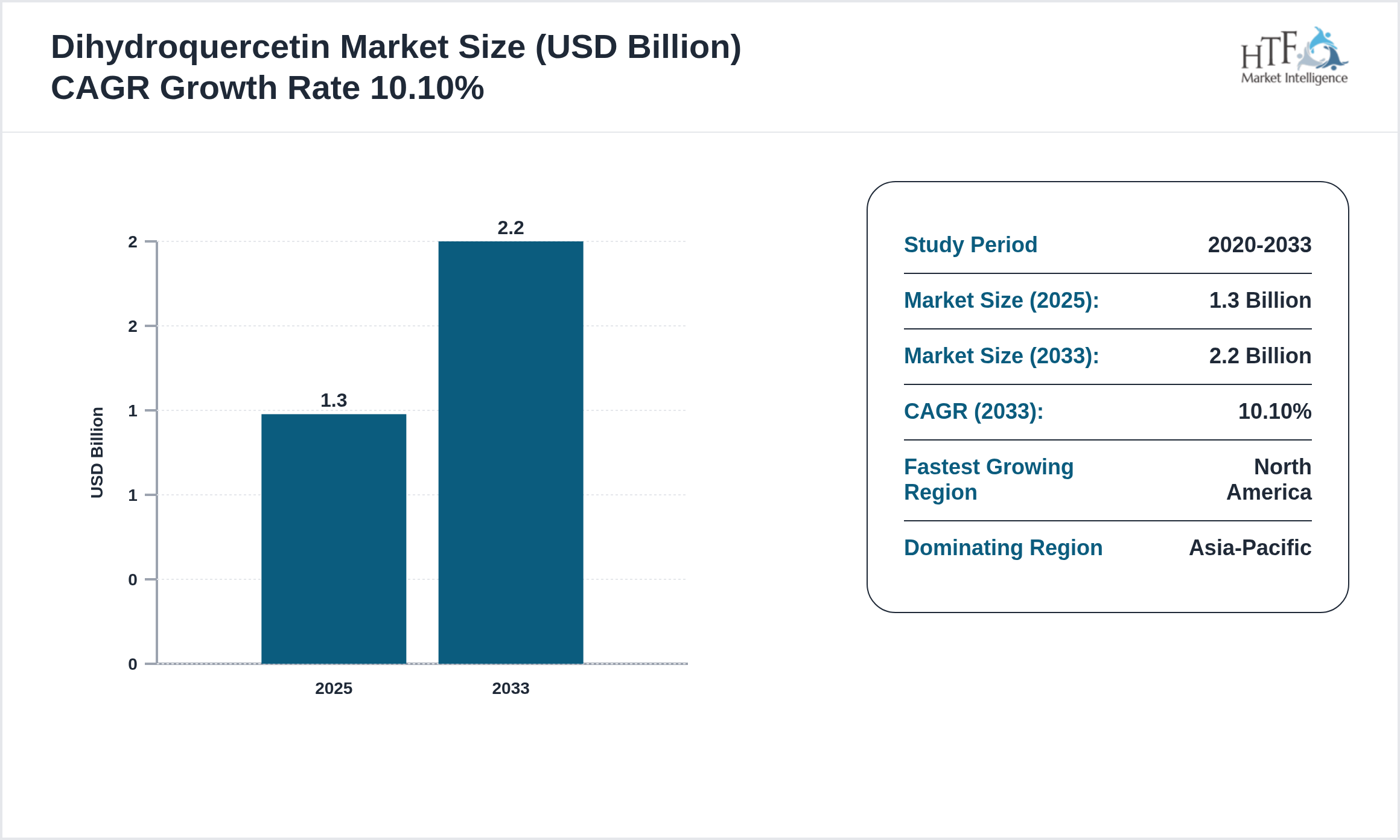
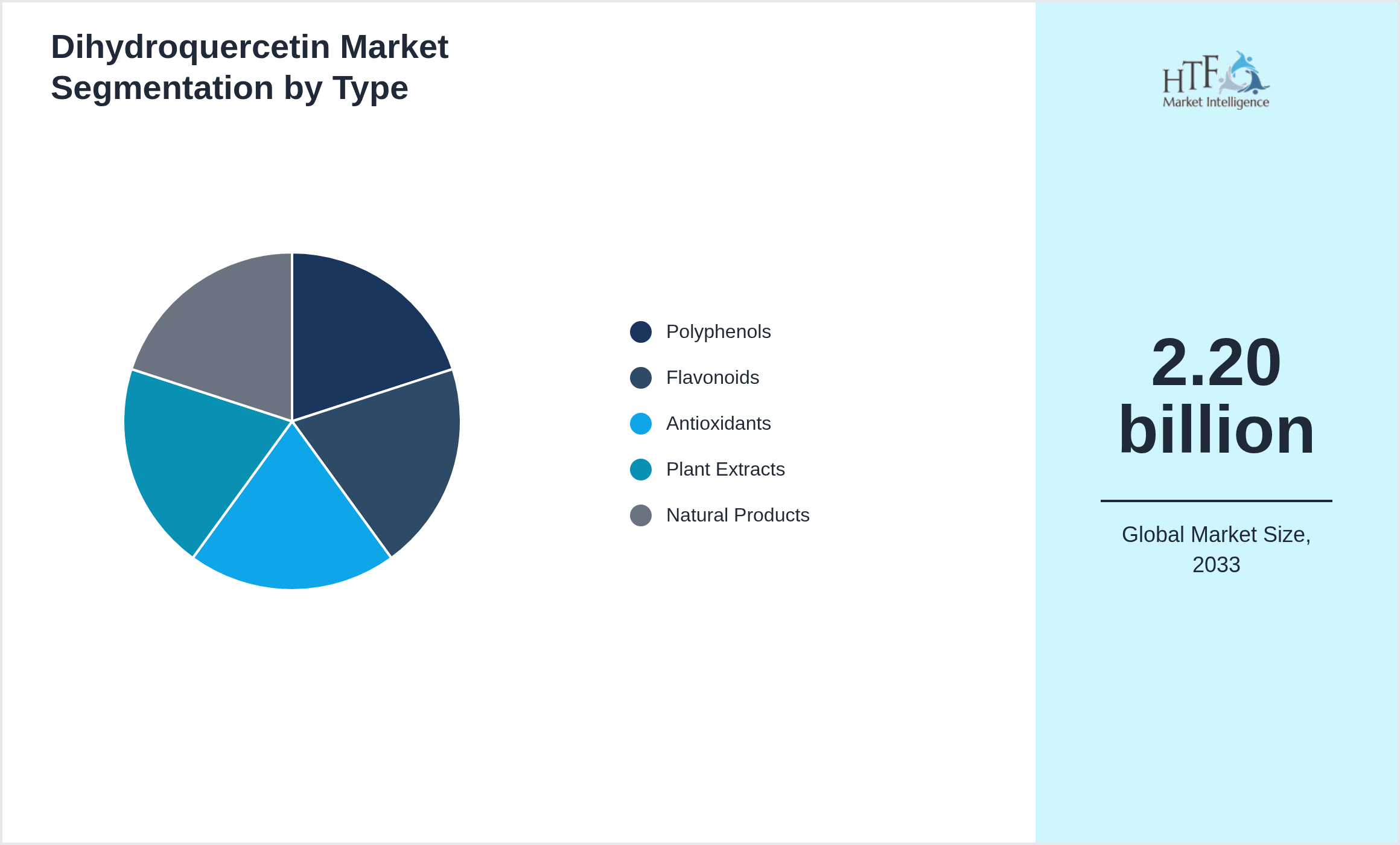
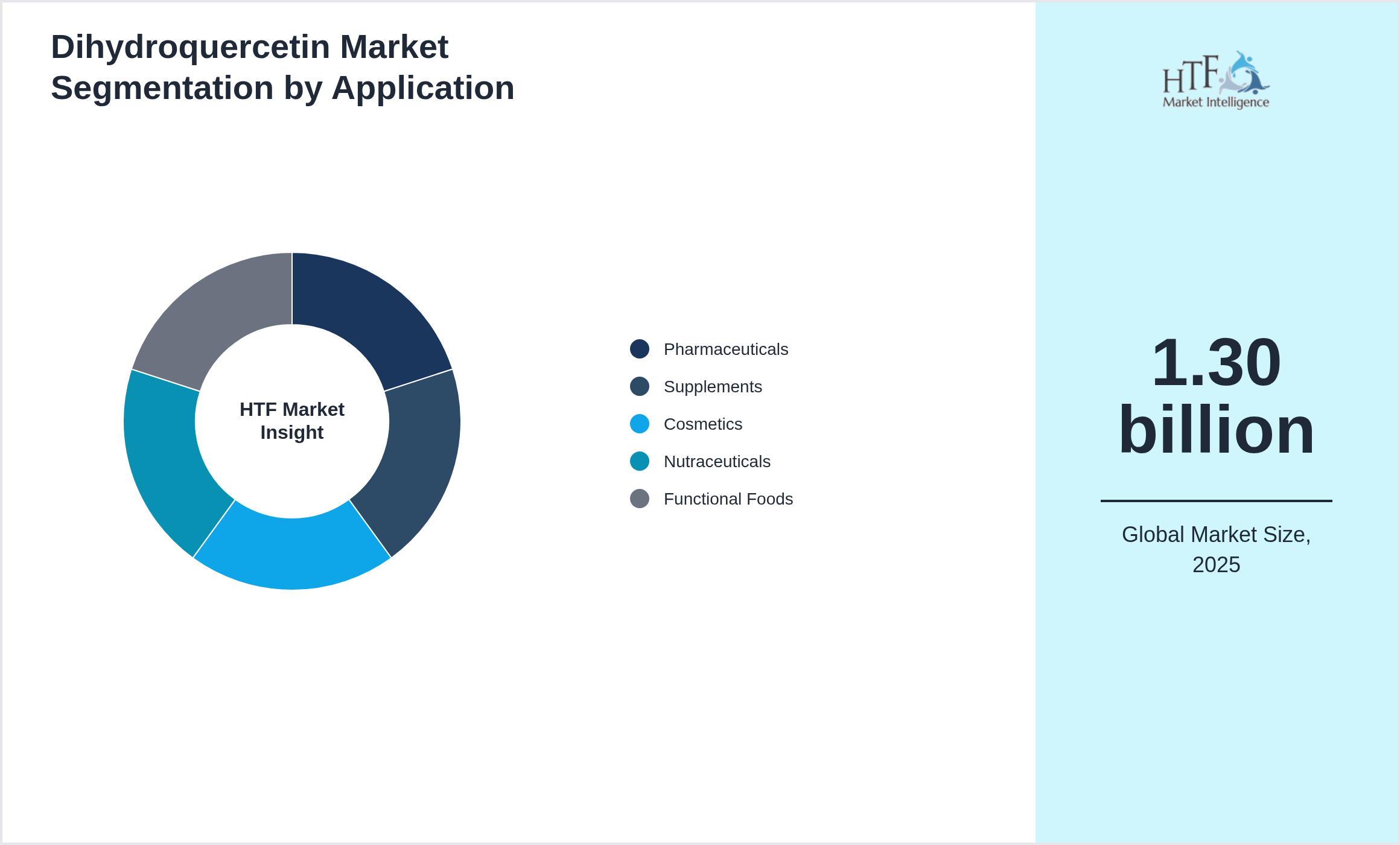
The Dihydroquercetin is at USD 1.30 billion in 2025 and is expected to reach 2.20 billion by 2033. The Dihydroquercetin is driven by increasing demand in end-use industries, technological advancements, research and development (R&D), economic growth, and global trade.
Dihydroquercetin (taxifolin) is a flavonoid extracted primarily from Dahurian larch wood renowned for antioxidant anti-inflammatory and hepatoprotective properties. Applications span nutraceutical capsules functional beverages cosmetics and food preservatives replacing synthetic BHA/BHT. Market expansion is propelled by clean-label antioxidants sports-nutrition demand for vascular support and Chinese Pharmacopoeia inclusion. Manufacturers optimize resin adsorption and crystallization purity to exceed 98% assay backed by GRAS status and EU novel-food approval. Sustainability strategies leverage saw-mill by-products and FSC-certified forestry. Scientific research into collagen stabilization and UV-damage mitigation positions taxifolin as a versatile bioactive in dermo-cosmetics and active-aging formulations worldwide.
Source: HTF Market Intelligence (HTF MI)
Competitive landscape
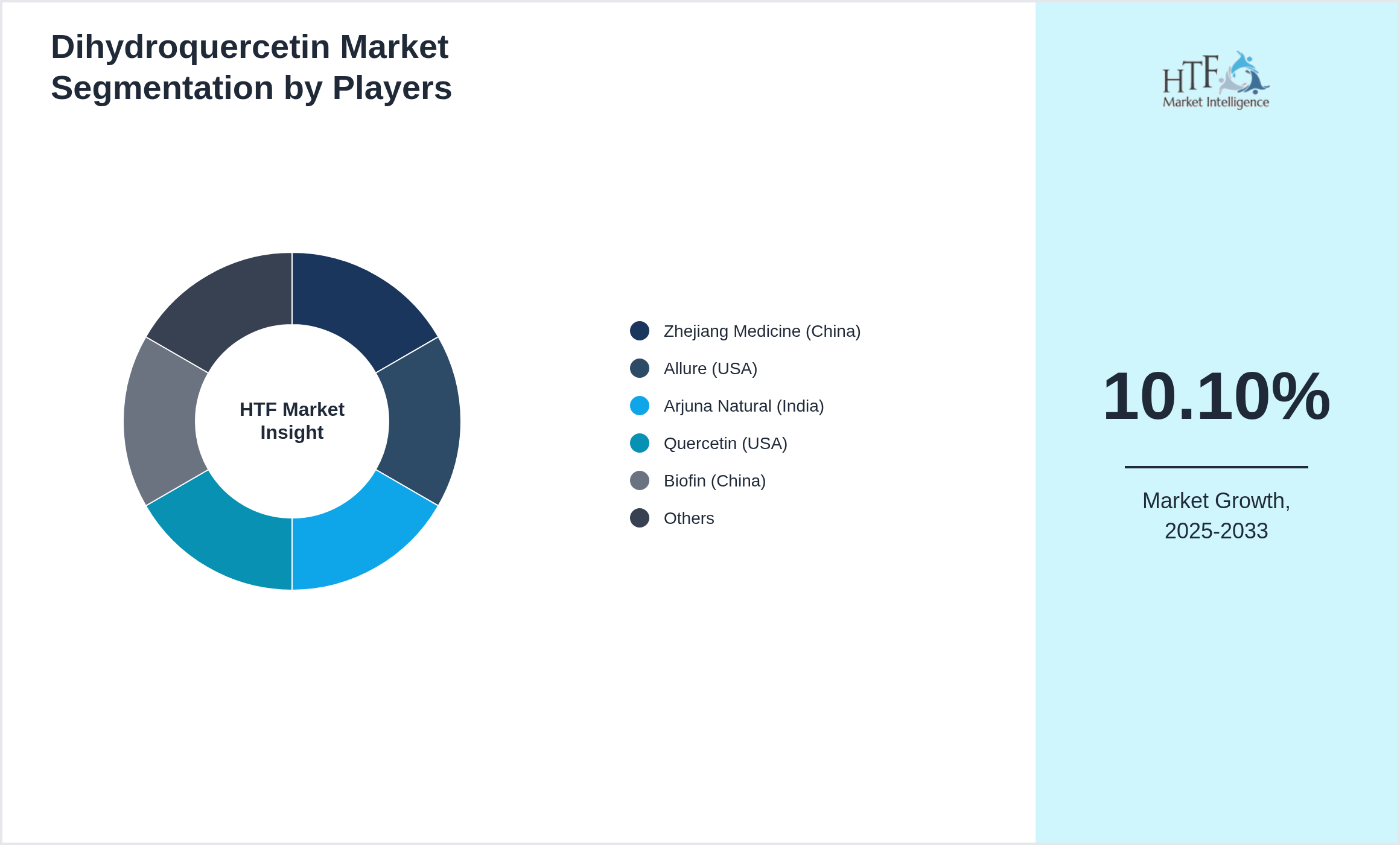
The companies highlighted in this profile were selected based on insights from primary experts and an evaluation of their market penetration, product offerings, and geographical reach:
- • Zhejiang Medicine (China)
- • Allure (USA)
- • Arjuna Natural (India)
- • Quercetin (USA)
- • Biofin (China)
- • Qingdao Vland Biotech (China)
- • Nutra Green Biotechnology (Taiwan)
- • Biotec Pharmacon (Norway)
- • Natrion (USA)
- • Sabinsa (India)
- • Chemtrade (USA)
- • Suzhou Tianma Bio-Pharmaceutical (China)
- • KEMIN (USA)
- • Carotech (Malaysia)
- • Herbal Bio (India)
- • Hunan Jinfeng (China)
- • Nature's Way (USA)
- • Ningbo Zhonglian (China)
- • Evonik (Germany)
- • Sandoz (Switzerland)
- • Indena (Italy)
- • Bristol-Myers Squibb (USA)
- • Green Organics (Australia)
- • EcoBiologics (USA)
- • Eastern Chemical Corporation (China)
Market Drivers:
Challenge Factor:
Opportunities:
Important Trend:
Regulatory Framework
- • Regulatory pressure is increasing around emissions reduction safety validation and digital documentation. Authorities are tightening audits and compliance timelines while offering fiscal incentives for clean production automation adoption and localization of strategic manufacturing activities
Regional Insight
The Asia-Pacific leads the market share, largely due to rising consumption, a growing population, and strong economic momentum that boosts demand. In contrast, the North America is emerging as the fastest-growing area, driven by rapid infrastructure development, the expansion of industrial sectors, and heightened consumer demand, making it a critical factor for future market growth. The regions covered in the report are
- North America
- LATAM
- West Europe
- Central & Eastern Europe
- Northern Europe
- Southern Europe
- East Asia
- Southeast Asia
- South Asia
- Central Asia
- Oceania
- MEA
Regional Analysis
- • Asia-Pacific continues to expand rapidly due to manufacturing relocation infrastructure investments and export-oriented production. North America shows steady growth supported by technology upgrades while Europe focuses on replacement demand driven by sustainability targets and regulatory modernization initiatives
Market Segmentation
Segmentation by Type
- • Polyphenols
- • Flavonoids
- • Antioxidants
- • Plant Extracts
- • Natural Products
Segmentation by Application
- • Pharmaceuticals
- • Supplements
- • Cosmetics
- • Nutraceuticals
- • Functional Foods
Key Development Activities
Market Entropy
- • Jan 2026: Stabilized dihydroquercetin ingredient launches for antioxidant nutraceutical formulations.
Merger & Acquisition
- • Mar 2026 – BioFlavonoid Labs acquired SiberianExtract Co to expand antioxidant production. Aug 2025 – NutraActive Group merged with PhytoHealth Ingredients to strengthen supply.
Regulatory Landscape
- • Regulatory pressure is increasing around emissions reduction safety validation and digital documentation. Authorities are tightening audits and compliance timelines while offering fiscal incentives for clean production automation adoption and localization of strategic manufacturing activities
Patent Analysis
- • Patent filings increasingly target incremental efficiency improvements advanced materials and integrated system designs. Large firms hold broad portfolios while SMEs file application-specific patents. Asia leads filing volumes while Western regions dominate patent quality and enforcement
Investment and Funding Scenario
- • Capital allocation is focused on efficiency gains capacity rationalization and sustainability upgrades. Strategic investors favor long-term contracts and resilient demand. Public funding supports technology transition while private equity targets consolidation and operational improvement strategies
Report Details
| Report Features | Details |
| Base Year | 2025 |
| Based Year Market Size (2025) | 1.30 billion |
| Historical Period | 2020 to 2025 |
| CAGR (2025 to 2033) | 10.10% |
| Forecast Period | 2026 to 2033 |
| Forecasted Period Market Size (2033) | 2.20 billion |
| Scope of the Report | Polyphenols, Flavonoids, Antioxidants, Plant Extracts, Natural Products, Pharmaceuticals, Supplements, Cosmetics, Nutraceuticals, Functional Foods |
| Companies Covered | Zhejiang Medicine (China), Allure (USA), Arjuna Natural (India), Quercetin (USA), Biofin (China), Qingdao Vland Biotech (China), Nutra Green Biotechnology (Taiwan), Biotec Pharmacon (Norway), Natrion (USA), Sabinsa (India), Chemtrade (USA), Suzhou Tianma Bio-Pharmaceutical (China), KEMIN (USA), Carotech (Malaysia), Herbal Bio (India), Hunan Jinfeng (China), Nature's Way (USA), Ningbo Zhonglian (China), Evonik (Germany), Sandoz (Switzerland), Indena (Italy), Bristol-Myers Squibb (USA), Green Organics (Australia), EcoBiologics (USA), Eastern Chemical Corporation (China) |
| Customization Scope | 15% Free Customization |
| Delivery Format | PDF and Excel through Email |
Research Methodology
The research methodology involves several key steps to ensure comprehensive and accurate insights. First, the objectives of the research are clearly defined, focusing on aspects such as market size, growth trends, and competitive dynamics. Data collection is conducted through both primary and secondary methods. Primary research includes interviews with industry experts, surveys, and focus groups to gather firsthand information, while secondary research involves analyzing existing reports, government publications, and company filings.
The collected data is then subjected to rigorous analysis, with quantitative methods used to evaluate market size and trends and qualitative methods applied to understand industry dynamics and consumer behavior. Findings are compiled into a detailed report featuring key insights, data visualizations, and strategic recommendations. Validation is achieved through data verification and peer reviews to ensure accuracy.
Finally, the research concludes with actionable insights and recommendations, along with suggestions for future studies to address emerging trends and gaps. This methodology provides a structured approach to understanding the {keywords} and guiding strategic decisions.