
United States Warehouse Order Picking Software Market - Outlook 2024-2034
United States Warehouse Order Picking Software Market is segmented by Type (Voice-Directed Picking Systems, Pick-to-Light Systems, RF Barcode Scanning Solutions, Automated Guided Vehicles (AGVs), Paper-Based Picking), Application (Automotive, Retail & E-commerce, Food & Beverage, Pharmaceuticals, Electronics), Deployment Model (Cloud-based, On-premise, Hybrid), End-User Industry (Third-Party Logistics Providers (3PL), Manufacturers, Distributors, Retailers), and Geography (Northeast, Southwest, The South, The Midwest)
Pricing
Report Overview
Executive Summary
- •The United States Warehouse Order Picking Software market comprises advanced software solutions engineered to enhance the efficiency and accuracy of order picking processes in warehouses and distribution centers. This market covers multiple technologies including voice-directed picking, pick-to-light systems, RF barcode scanning, and automated guided vehicles, integrated within warehouse management systems to streamline workflow and inventory management. Its applications span critical industries such as automotive, retail and e-commerce, food and beverage, pharmaceuticals, and electronics, reflecting the broad utility of these solutions in optimizing supply chains. The market is driven by the continuous push toward warehouse automation, labor cost reduction, and the growing demand for faster order fulfillment fueled by the e-commerce boom. Market offerings range from cloud-based platforms to on-premise deployments, suitable for businesses with varying operational scales and complexity. Increasing labor shortages and the need for improved accuracy have accelerated adoption, making the United States a pivotal region for innovation and investment in warehouse order picking software.
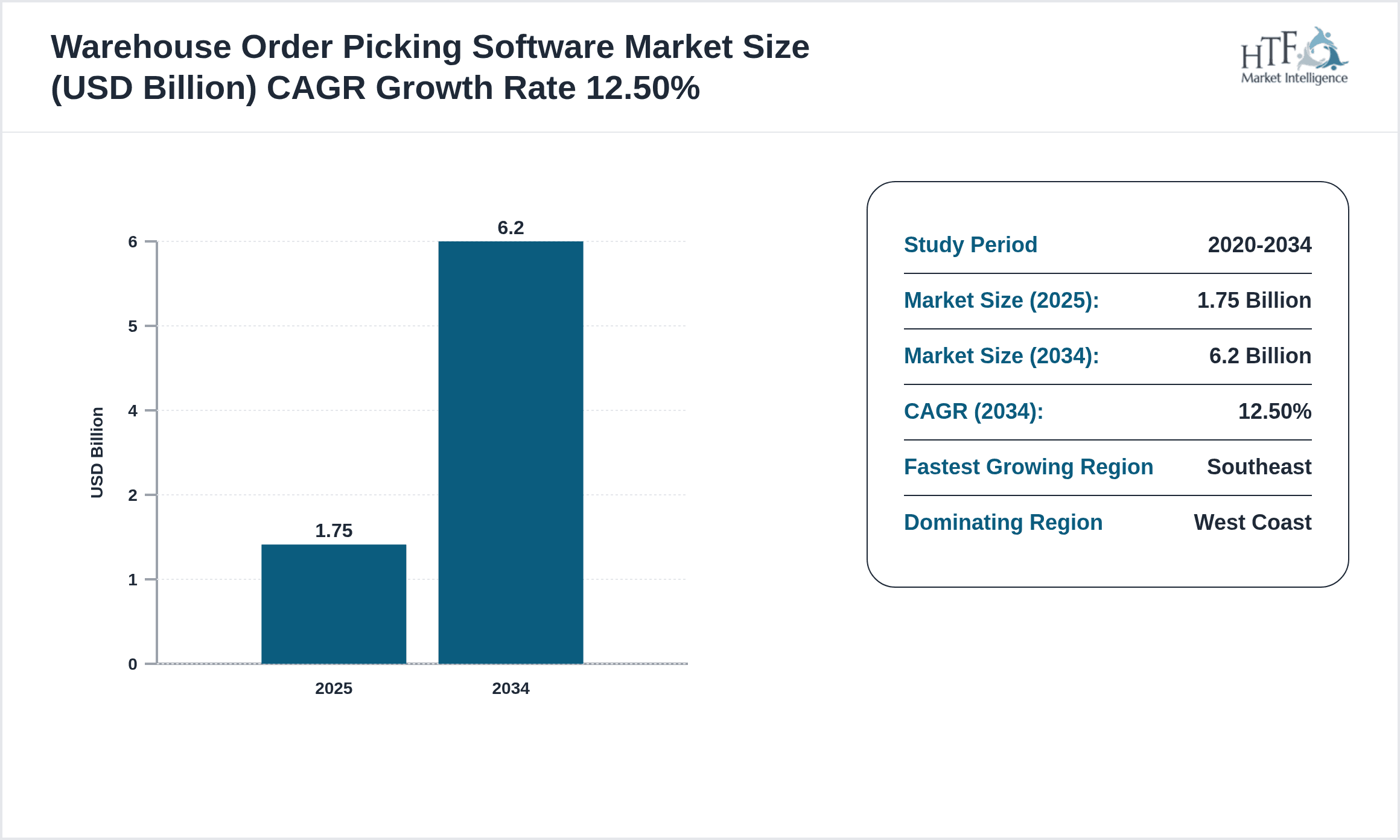
- •Key highlights reveal a robust CAGR of 12.5% forecasted from 2024 to 2034, with market size growing from USD 1.75 Billion in 2024 to an estimated USD 6.20 Billion by 2034. Voice-directed picking remains the dominant product type, while automated guided vehicles demonstrate the fastest growth trajectory. The West Coast leads the market in share, supported by strong logistics infrastructure, with the Southeast region emerging as the fastest-growing sub-region due to expanding e-commerce and distribution facilities. Major industry players are investing heavily in R&D to innovate and expand their product portfolios, driving competitive dynamics and technological advancements.
- •This market holds strategic importance for supply chain stakeholders by enabling improved operational efficiency, reduced labor costs, and enhanced order accuracy. It plays a critical role in addressing labor shortages and supporting the scalability of warehouse operations amid rising e-commerce demand. The integration of these software solutions with broader warehouse management and enterprise systems provides actionable insights and real-time data, empowering businesses to optimize resources and meet consumer expectations on delivery speed and reliability. Consequently, warehouse order picking software is a key enabler of supply chain digital transformation and competitive advantage across the United States logistics landscape.
Competitive Landscape
The United States Warehouse Order Picking Software market features intense competition characterized by rapid technological innovation, strategic partnerships, and evolving customer requirements. Market participants differentiate themselves through software capabilities such as real-time data analytics, integration flexibility, and user-friendly interfaces. Innovation approaches include incorporation of AI-driven optimization, robotics integration, and cloud-based solutions that enhance scalability and accessibility. Rivalry is heightened by the presence of both established global vendors and emerging niche players focusing on specialized applications and industry verticals. Companies engage in aggressive pricing strategies, service customization, and robust after-sales support to capture market share. The competitive dynamics are influenced by the growing importance of seamless integration with warehouse management systems and the expansion of e-commerce logistics. Barriers to entry include high R&D costs and the need for extensive client support infrastructure. Future competition will likely center on advanced automation capabilities, AI integration, and strategic alliances to broaden solution offerings and geographic reach.
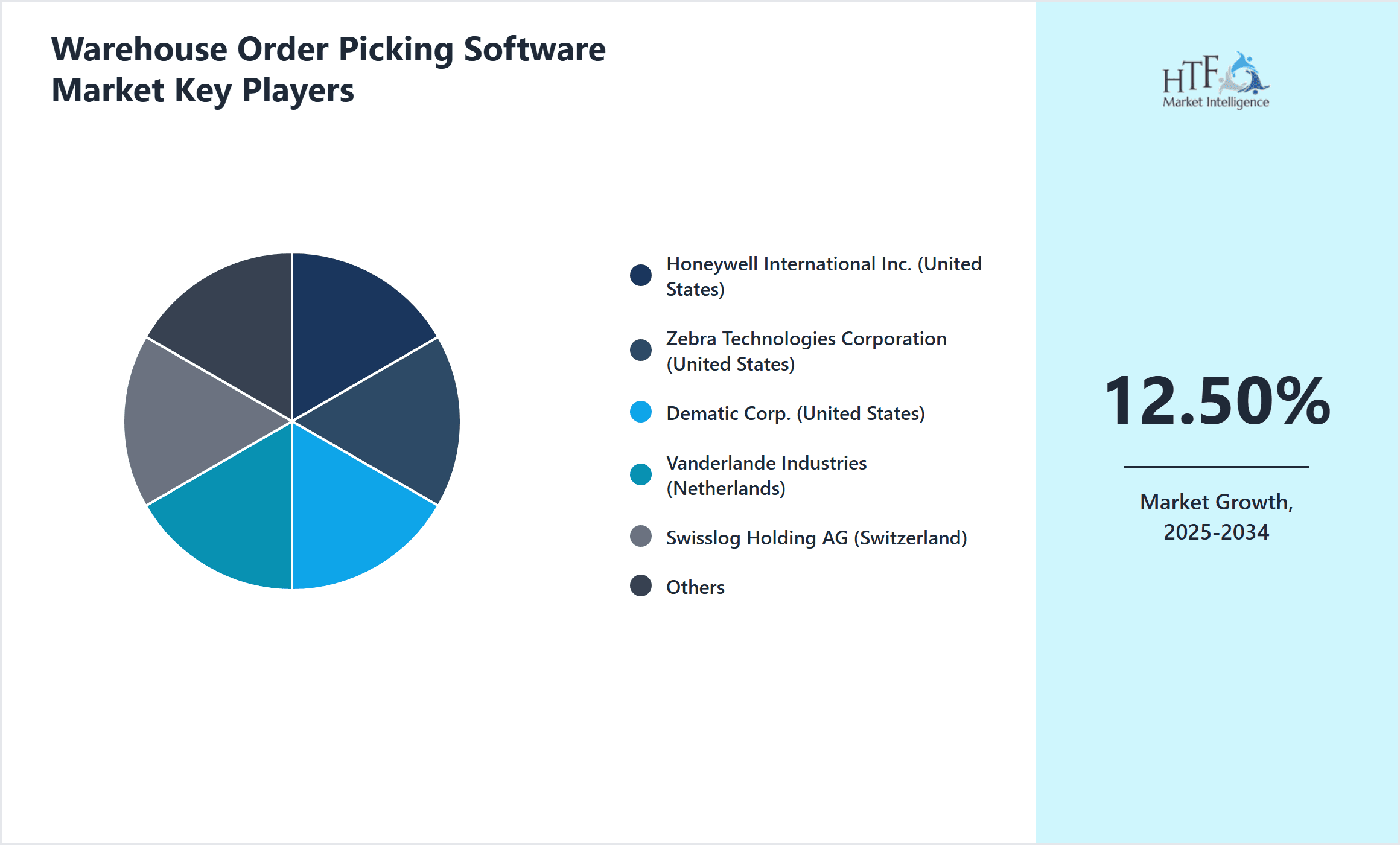
Leading Companies in Warehouse Order Picking Software Market
- •Honeywell International Inc. (United States)
- •Zebra Technologies Corporation (United States)
- •Dematic Corp. (United States)
- •Vanderlande Industries (Netherlands)
- •Swisslog Holding AG (Switzerland)
- •Honeywell Intelligrated (United States)
- •Knapp AG (Austria)
- •Manhattan Associates, Inc. (United States)
- •SSI Schaefer (Germany)
- •JDA Software Group, Inc. (United States)
- •Blue Yonder Group, Inc. (United States)
- •Infor (United States)
- •Tecsys Inc. (Canada)
- •Oracle Corporation (United States)
- •SAP SE (Germany)
- •Körber AG (Germany)
- •Made4net (United States)
- •HighJump (United States)
- •Locus Robotics (United States)
- •Fetch Robotics (United States)
- •6 River Systems (United States)
- •GreyOrange (Singapore)
- •AutoStore AS (Norway)
- •Knexus Research Corporation (United States)
- •Llamasoft Inc. (United States)
Market Breakdown
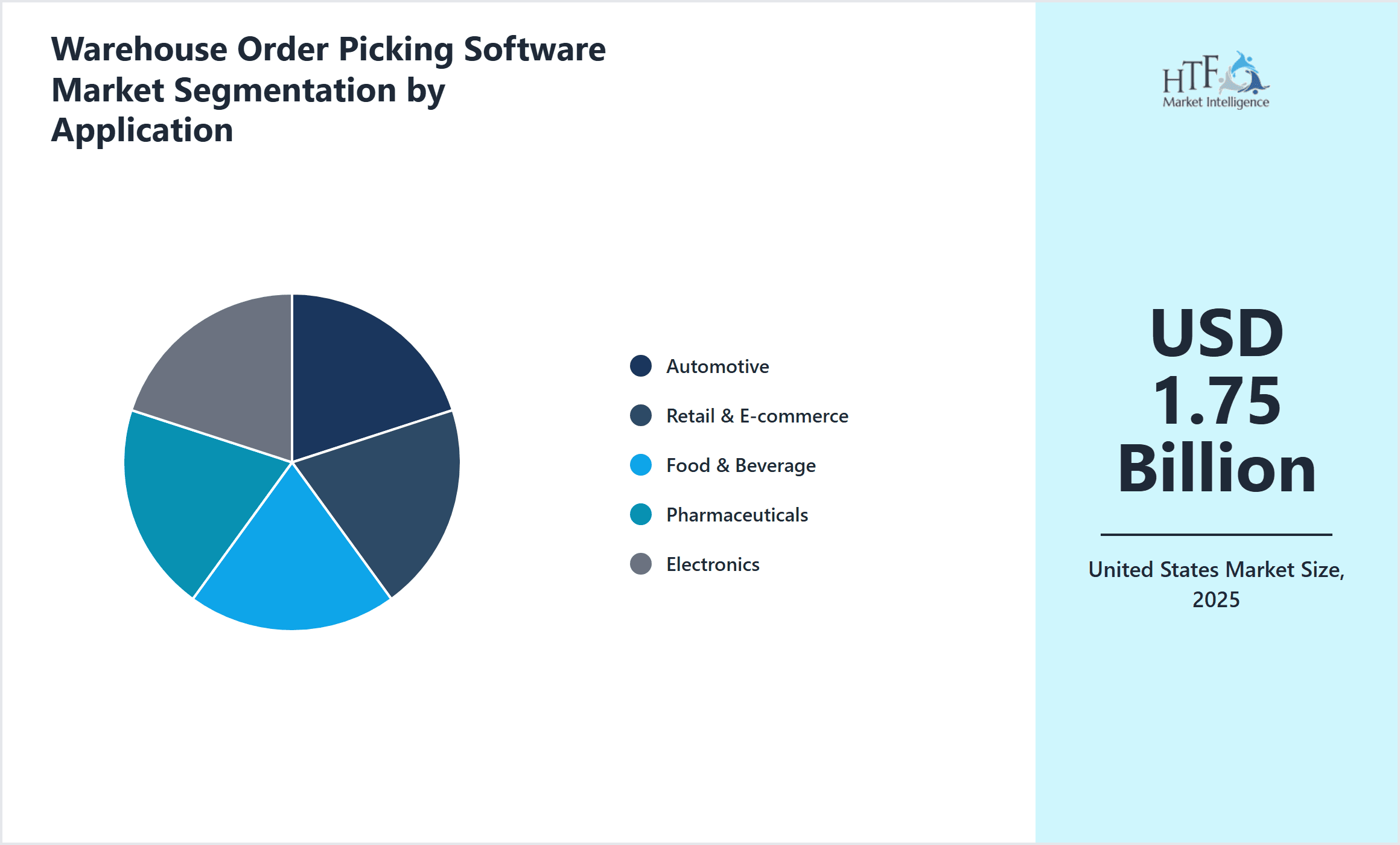
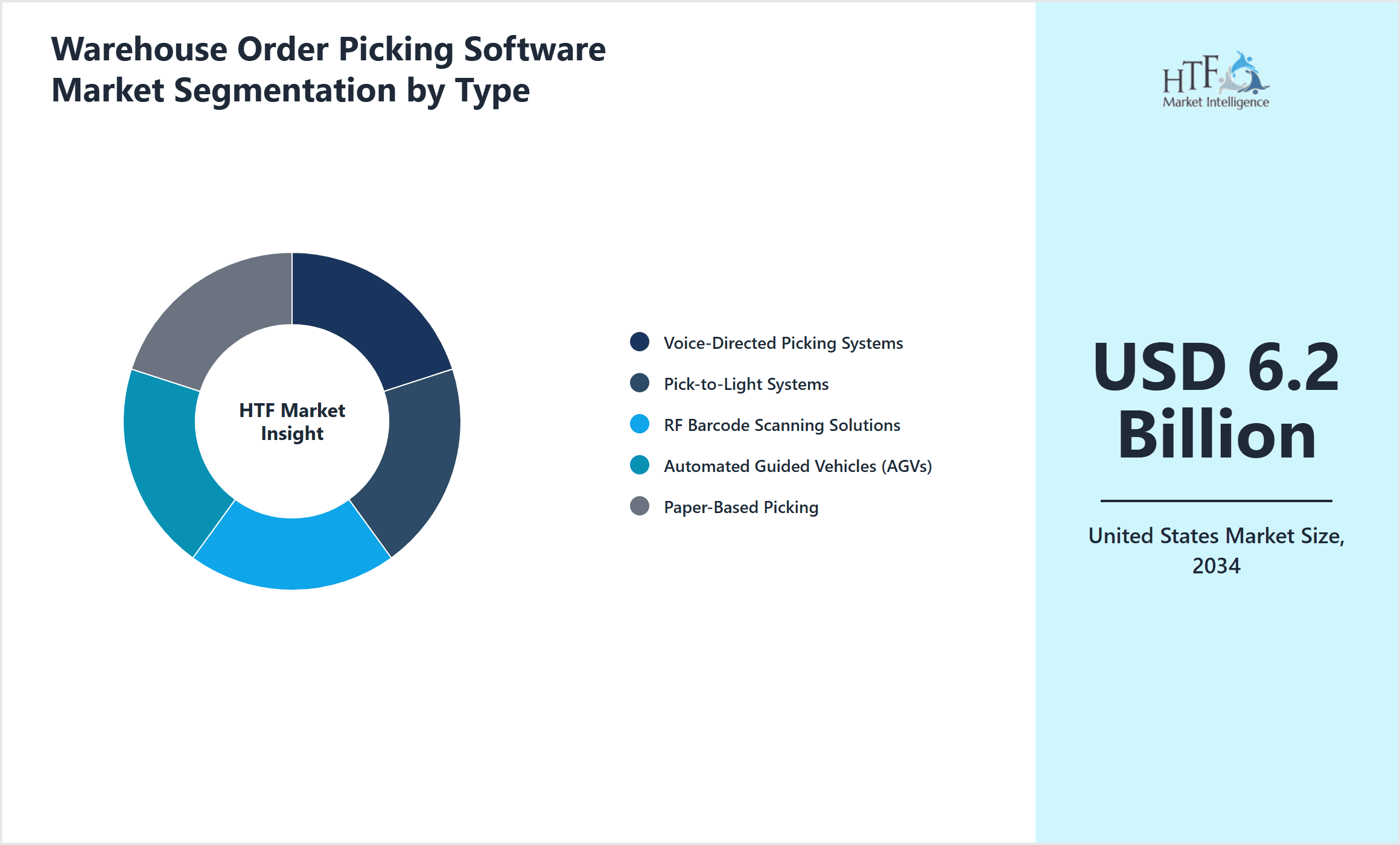
- •By Type
- ◦Voice-Directed Picking Systems
- ◦Pick-to-Light Systems
- ◦RF Barcode Scanning Solutions
- ◦Automated Guided Vehicles (AGVs)
- ◦Paper-Based Picking
- •By Application
- ◦Automotive
- ◦Retail & E-commerce
- ◦Food & Beverage
- ◦Pharmaceuticals
- ◦Electronics
- •By Deployment Model
- ◦Cloud-based
- ◦On-premise
- ◦Hybrid
- •By End-User Industry
- ◦Third-Party Logistics Providers (3PL)
- ◦Manufacturers
- ◦Distributors
- ◦Retailers
Growth Drivers
The United States Warehouse Order Picking Software market is propelled by the rapid expansion of e-commerce, which demands faster and more accurate order fulfillment. Increasing labor shortages in warehouse operations have spurred adoption of automation technologies such as voice-directed picking and AGVs to improve productivity. Technological advancements in AI and machine learning enable more precise inventory management and workflow optimization, enhancing operational efficiency. Integration capabilities with existing warehouse management and ERP systems facilitate seamless data flow and decision-making. Furthermore, rising investments by logistics companies in digital transformation initiatives strengthen the market growth trajectory, as businesses seek scalable, flexible solutions to meet growing consumer expectations for speed and accuracy.
Market Trends
A prominent trend in the United States market is the increasing deployment of automated guided vehicles (AGVs) and autonomous mobile robots (AMRs) to augment traditional picking methods, driven by technological maturation and cost reductions. Cloud-based order picking software solutions are gaining traction due to their scalability, real-time analytics, and ease of integration across multi-site operations. Additionally, voice-directed picking remains a preferred technology for its hands-free operation and accuracy improvements. The convergence of IoT sensors and advanced data analytics is enabling predictive maintenance and enhanced labor management. Sustainability considerations are prompting deployment of energy-efficient systems and optimization algorithms to reduce operational carbon footprints. These trends collectively enhance warehouse agility and responsiveness amid fluctuating market demands.
Market Restraints
High initial capital investment and complex integration processes pose significant barriers to adoption for many small and medium-sized warehouse operators in the United States. The requirement for skilled personnel to manage and maintain sophisticated software and automation hardware limits penetration in less technologically advanced facilities. Data security and privacy concerns related to cloud-based solutions can deter adoption among enterprises with stringent compliance requirements. Additionally, resistance to change from traditional manual picking processes and potential disruptions during system implementation create operational challenges. Market growth is also restrained by variability in warehouse sizes and layouts, necessitating customized solutions that increase deployment complexity and costs.
Market Opportunities
Emerging opportunities in the United States warehouse order picking software market include expanding adoption in small-to-medium enterprises seeking cost-effective automation solutions. The integration of AI-driven analytics offers prospects for enhanced labor productivity and predictive supply chain management. Growing demand for omnichannel fulfillment capabilities is prompting development of versatile software adaptable to diverse order profiles and delivery timelines. Strategic partnerships between software providers and robotics manufacturers enable comprehensive turnkey solutions. Furthermore, increasing regulatory emphasis on workplace safety encourages adoption of hands-free and automated picking technologies, opening avenues for innovative product offerings customized for regulatory compliance.
Market Challenges
The United States warehouse order picking software market faces challenges such as interoperability issues between diverse warehouse management systems and newer picking software platforms, complicating seamless integrations. The rapid pace of technological evolution demands continuous investment in software updates and employee training, increasing operational expenses. Variability in warehouse infrastructure and workflows necessitates tailored implementations, slowing deployment timelines. Cybersecurity threats targeting cloud-based systems require robust safeguards, deterring some organizations from full digital adoption. Additionally, market fragmentation with numerous niche players complicates vendor selection for end-users, leading to longer evaluation cycles and delayed decisions.
Regulatory Framework
The United States warehouse order picking software market operates within a regulatory environment emphasizing occupational safety, data security, and compliance with industry standards. The Occupational Safety and Health Administration (OSHA) enforces strict guidelines to ensure the safety of warehouse personnel, influencing software designs that support hands-free and automated operations to minimize physical strain and accidents. Data privacy regulations such as the California Consumer Privacy Act (CCPA) impact cloud-based software providers by mandating stringent data protection and user consent protocols. Additionally, cybersecurity frameworks like NIST guidelines encourage adoption of secure software architectures. Compliance with environmental regulations promoting energy efficiency and waste reduction further shapes market offerings. These regulations collectively drive innovation towards safer, secure, and sustainable warehouse order picking solutions.
Market Intelligence
- •15th January 2024, Honeywell International Inc. launched an upgraded version of its voice-directed order picking software integrating AI-enabled analytics and real-time labor management tools aimed at improving warehouse throughput and accuracy. The platform supports hybrid cloud deployment, enhancing scalability for large distribution centers. This launch positions Honeywell to capitalize on growing demand for intelligent warehouse automation in the United States logistics sector. Source: Honeywell Official Website
- •10th September 2023, Manhattan Associates, Inc. introduced a new cloud-native order picking solution featuring advanced pick-to-light integration and enhanced mobile device support. Designed to optimize multi-site warehouse operations, the product targets retail and e-commerce customers seeking rapid deployment and operational flexibility. This innovation underscores the trend toward cloud adoption and user-centric software design in the United States warehouse order picking software market. Source: Manhattan Associates Press Release
- •Recent market developments and strategic initiatives are continuously tracked through industry publications, company announcements, and regulatory filings. For the most current information, stakeholders are advised to monitor official corporate communications and recognized market intelligence platforms.
- •Recent market developments and strategic initiatives are continuously tracked through industry publications, company announcements, and regulatory filings. For the most current information, stakeholders are advised to monitor official corporate communications and recognized market intelligence platforms.
Regional Outlook
The West Coast currently holds a significant share of the market, primarily due to several key factors: increasing consumption rates, a burgeoning population, and robust economic momentum. These elements collectively drive demand, positioning this region as a leader in the market. On the other hand, Southeast is rapidly emerging as the fastest-growing area within the industry. This remarkable growth can be attributed to swift infrastructure development, the expansion of various industrial sectors, and a marked increase in consumer demand. These dynamics make this region a crucial player in shaping future market growth.
In our report, we cover a comprehensive analysis of the following regions and countries:
- Northeast
- Southwest
- The South
- The Midwest
| Feature | Details |
|---|---|
| Base Year Market Size | USD 1.75 Billion |
| Forecast Year Market Size | USD 6.2 Billion |
| CAGR | 12.5% |
| Forecast Period | 2026 to 2033 |
| YoY Growth | 12.5% |
| Scope of Report | Market is segmented by Type (Voice-Directed Picking Systems, Pick-to-Light Systems, RF Barcode Scanning Solutions, Automated Guided Vehicles (AGVs), Paper-Based Picking), Application (Automotive, Retail & E-commerce, Food & Beverage, Pharmaceuticals, Electronics), Deployment Model (Cloud-based, On-premise, Hybrid), End-User Industry (Third-Party Logistics Providers (3PL), Manufacturers, Distributors, Retailers) |
| Regions Covered | Northeast, Southwest, The South, The Midwest |
| Key Companies | Honeywell International Inc. (United States), Zebra Technologies Corporation (United States), Dematic Corp. (United States), Vanderlande Industries (Netherlands), Swisslog Holding AG (Switzerland), Honeywell Intelligrated (United States), Knapp AG (Austria), Manhattan Associates, Inc. (United States), SSI Schaefer (Germany), JDA Software Group, Inc. (United States), Blue Yonder Group, Inc. (United States), Infor (United States), Tecsys Inc. (Canada), Oracle Corporation (United States), SAP SE (Germany), Körber AG (Germany), Made4net (United States), HighJump (United States), Locus Robotics (United States), Fetch Robotics (United States), 6 River Systems (United States), GreyOrange (Singapore), AutoStore AS (Norway), Knexus Research Corporation (United States), Llamasoft Inc. (United States) |
United States Warehouse Order Picking Software Market - Outlook 2024-2034 - Table of Contents
Frequently Asked Questions (FAQ):
The Compact Track Loaders market is expected to see value worth 5.3 Billion in 2025.
North America currently leads the market with approximately 45% market share, followed by Europe at 28% and Asia-Pacific at 22%. The remaining regions account for 5% of the global market.
Key growth drivers include increasing construction activities, rising demand for versatile equipment in agriculture, technological advancements in track loader design, and growing preference for compact equipment in urban construction projects.