
Global Swimwear Swimsuit Market Size, Growth & Revenue 2025-2034
Global Swimwear Swimsuit Market is segmented by Swimwear Product Type (Bikinis, One-piece Swimsuits, Tankinis, Swim Shorts, Rash Guards), Application Area (Beachwear, Competitive Swimming, Leisurewear, Fitness Activities, Resort Wear), Distribution Channel (Offline Retail, Online Retail, Specialty Stores, Department Stores), Material Technology (Quick-Dry Fabric, UV Protection Fabric, Sustainable/Eco-Friendly Fabric), and Geography (North America, LATAM, West Europe, Central & Eastern Europe, Northern Europe, Southern Europe, East Asia, Southeast Asia, South Asia, Central Asia, Oceania, MEA)
Pricing
Report Overview
Executive Summary
- •The global swimwear swimsuit market encompasses a diverse range of swimwear products designed for various applications including beachwear, competitive swimming, leisurewear, fitness activities, and resort wear. Key product types include bikinis, one-piece swimsuits, tankinis, swim shorts, and rash guards, which cater to different consumer preferences and functional requirements. The market's value chain integrates raw material sourcing, manufacturing, distribution, and retailing through both traditional and e-commerce channels. Innovations in textile technologies such as moisture-wicking, UV protection, and eco-friendly fabrics are driving product differentiation and consumer appeal. Geographically, the market spans North America, Europe, Asia-Pacific, Latin America, and the Middle East & Africa, each characterized by unique market dynamics and consumer behaviors. Factors such as increasing health consciousness, rising disposable incomes, and the influence of social media and fashion trends are accelerating market growth. The swimwear segment serves a broad end-user base, including professional athletes, fitness enthusiasts, and casual consumers, reflecting evolving lifestyle patterns and demand for functional yet stylish swimwear options. The market is highly competitive with numerous global and regional players focusing on product innovation, sustainability, and strategic partnerships to enhance their market presence. Overall, the market trajectory indicates robust growth driven by expanding applications, technological advancements, and increasing consumer penetration worldwide.
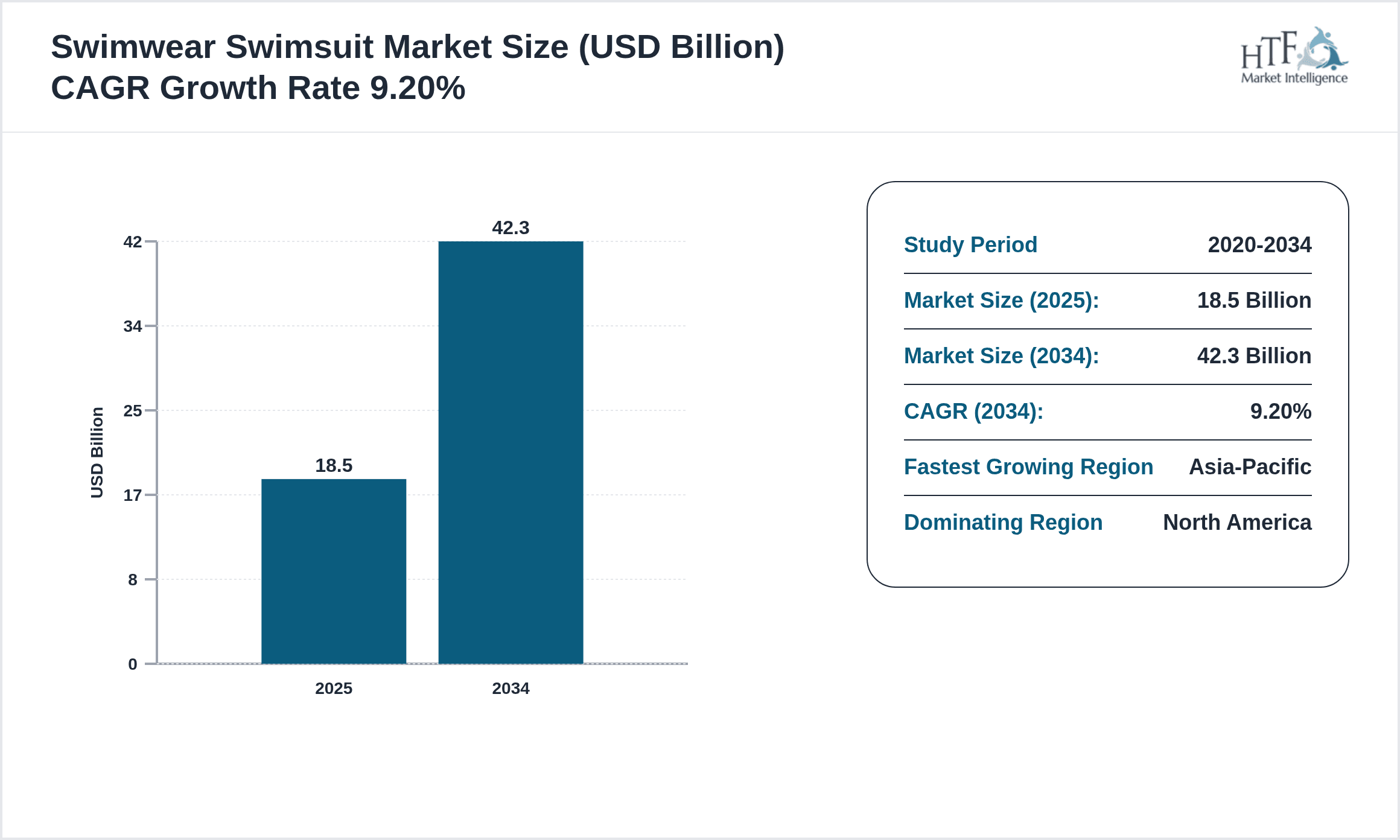
- •Market highlights include a base market size of USD 18.5 Billion in 2025, projected to reach USD 42.3 Billion by 2034, registering a CAGR of 9.2%. North America currently dominates the market due to high consumer spending and established brand presence, while Asia-Pacific emerges as the fastest growing region fueled by rising disposable incomes and growing awareness of health and fitness. Bikinis lead the product segment by market share, whereas rash guards exhibit the fastest growth owing to their increasing adoption in watersports and outdoor activities. Key growth indicators include technological fabric innovations, expanding e-commerce penetration, and consumer demand for sustainable swimwear. The market is poised to benefit from expanding participation in aquatic sports and rising tourism activities globally.
- •The swimwear swimsuit market offers significant value propositions across fashion, sports, and leisure industries. Its strategic importance lies in catering to diverse consumer needs through continuous innovation in design, comfort, and sustainability. For stakeholders including manufacturers, retailers, and investors, the market presents opportunities for product diversification, brand differentiation, and global expansion. Leveraging digital marketing and influencer collaborations further enhances consumer engagement and market penetration. The sector’s alignment with growing health consciousness and lifestyle trends underscores its long-term growth potential and relevance across multiple industry verticals.
Competitive Landscape
The global swimwear swimsuit market exhibits a highly competitive landscape characterized by the presence of numerous multinational corporations alongside emerging regional players. Market dynamics are shaped by continuous product innovation focusing on fabric technology enhancements such as quick-dry, UV protection, and eco-friendly materials. Competitive strategies include aggressive marketing campaigns, celebrity endorsements, and collaborations with sports entities to enhance brand visibility and consumer loyalty. Market positioning varies from luxury and premium brands targeting fashion-conscious consumers to value-oriented brands catering to mass markets. Strategic partnerships and acquisitions are frequently employed to consolidate market share and diversify product portfolios. Pricing strategies are tailored to regional purchasing power, with increasing penetration of online retail channels enabling wider reach and cost efficiencies. The market faces entry barriers related to brand recognition, technological know-how, and distribution network establishment. Regional competition is influenced by cultural preferences and climate conditions, necessitating localized product offerings. Future trends indicate intensified innovation, sustainability focus, and digital transformation driving competitive advantages and market leadership.
Leading Companies in Swimwear Swimsuit Market
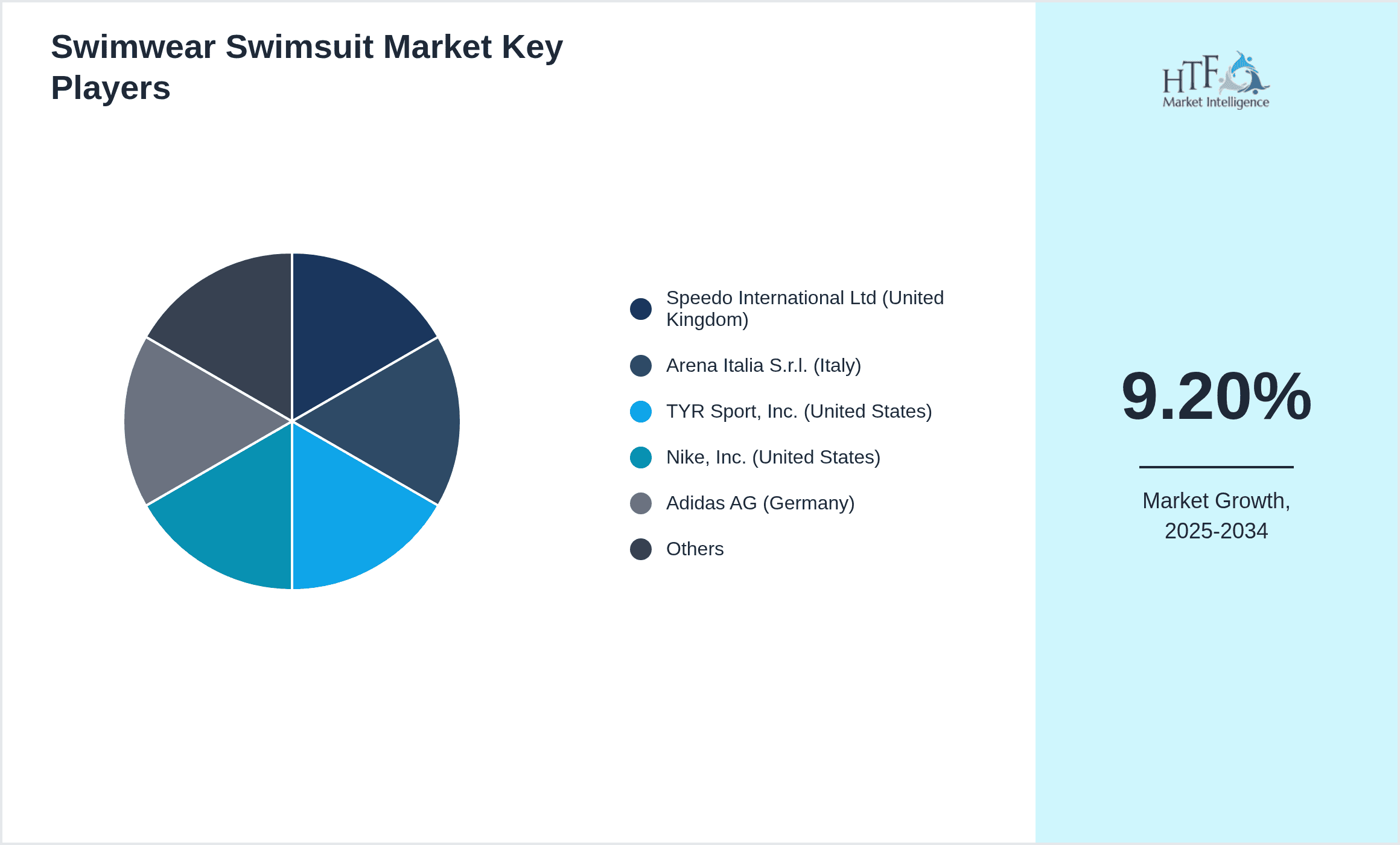
- •Speedo International Ltd (United Kingdom)
- •Arena Italia S.r.l. (Italy)
- •TYR Sport, Inc. (United States)
- •Nike, Inc. (United States)
- •Adidas AG (Germany)
- •Lululemon Athletica Inc. (Canada)
- •Calzedonia S.p.A. (Italy)
- •Roxy (Australia)
- •Billabong International Limited (Australia)
- •Quiksilver, Inc. (United States)
- •H&M Group (Sweden)
- •Zara (Spain)
- •Victoria's Secret (United States)
- •Speedo Australia Pty Ltd (Australia)
- •Maui and Sons (United States)
- •Seafolly Australia Pty Ltd (Australia)
- •Patagonia, Inc. (United States)
- •O'Neill (United States)
- •Lascana GmbH (Germany)
- •Dolfin Swimwear (United States)
- •Sunseeker International (United Kingdom)
- •Arena USA (United States)
- •Jantzen (United States)
- •TYR Australia (Australia)
- •Billabong Europe (France)
Market Breakdown
- •By Swimwear Product Type
- ◦Bikinis
- ◦One-piece Swimsuits
- ◦Tankinis
- ◦Swim Shorts
- ◦Rash Guards
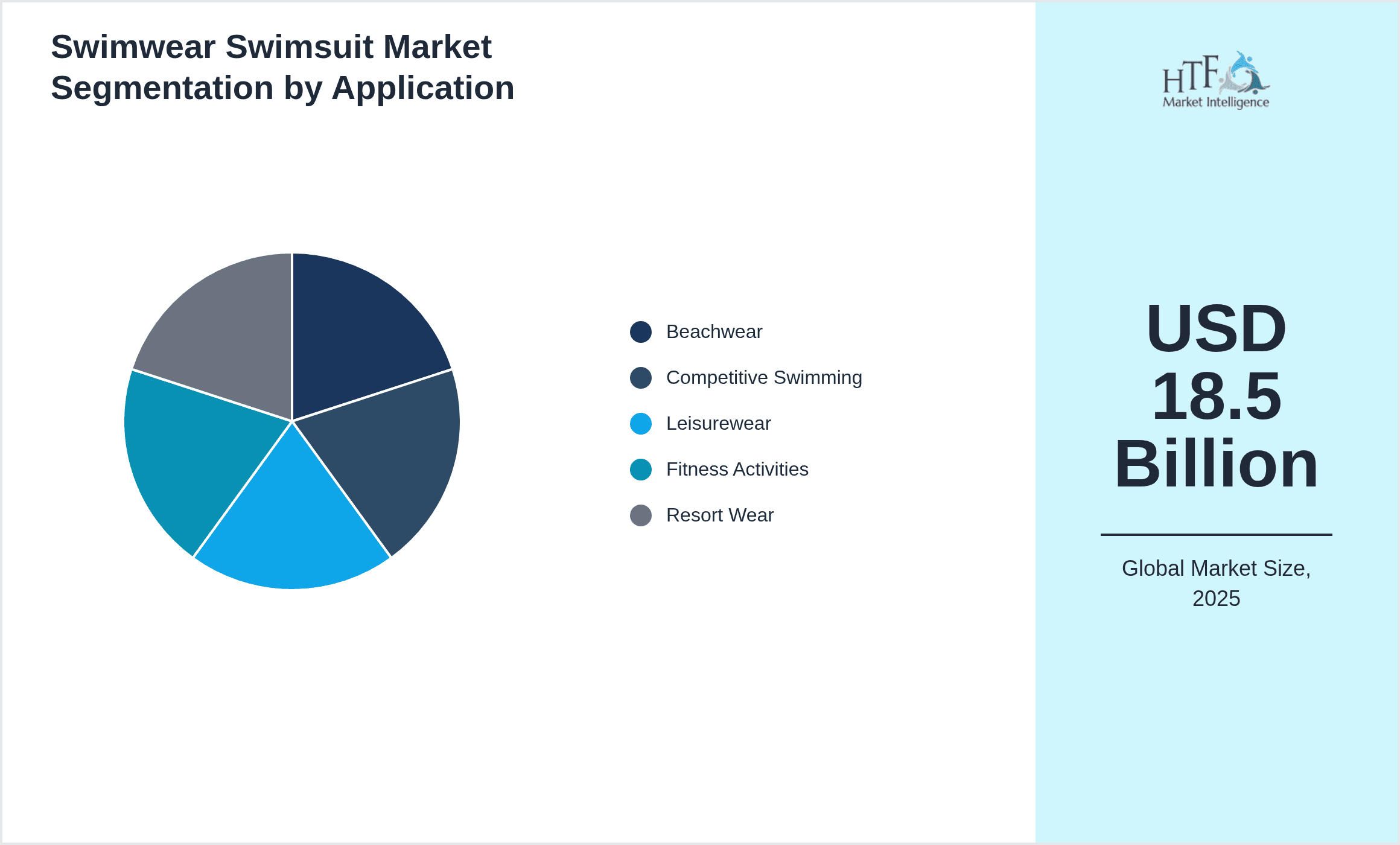
- •By Application Area
- ◦Beachwear
- ◦Competitive Swimming
- ◦Leisurewear
- ◦Fitness Activities
- ◦Resort Wear
- •By Distribution Channel
- ◦Offline Retail
- ◦Online Retail
- ◦Specialty Stores
- ◦Department Stores
- •By Material Technology
- ◦Quick-Dry Fabric
- ◦UV Protection Fabric
- ◦Sustainable/Eco-Friendly Fabric
Growth Dynamics
- •Rising health and fitness awareness globally has led to increased participation in aquatic and outdoor activities, driving demand for functional swimwear such as rash guards and swim shorts with advanced fabric technologies. This trend is notably strong in Asia-Pacific and North America, significantly contributing to market expansion.
- •Innovations in sustainable and eco-friendly materials have gained traction as consumers increasingly prefer environmentally responsible products. Brands investing in recycled fabrics and biodegradable textiles are capturing new customer segments and enhancing brand loyalty.
- •Expansion of e-commerce platforms has democratized access to diverse swimwear styles worldwide, enabling brands to penetrate emerging markets with tailored offerings and competitive pricing. Digital marketing and influencer partnerships further amplify consumer reach and engagement.
- •Growing tourism and leisure industries globally, especially in Asia-Pacific and Latin America, have stimulated demand for fashionable and comfortable swimwear, boosting market revenues and encouraging product diversification aligned with regional preferences.
- •The resurgence of competitive swimming and water sports at professional and amateur levels has increased demand for high-performance swimwear, driving research and development in fabric technologies that enhance durability, hydrodynamics, and comfort.
- •Celebrity endorsements and social media influence have played a pivotal role in shaping consumer preferences and trends, leading to rapid adoption of new swimwear styles and increased seasonal sales spikes during peak vacation periods.
- •Investment in smart textiles incorporating UV protection and antimicrobial properties is anticipated to create new growth avenues by addressing consumer concerns around health and outdoor safety, further differentiating product offerings.

Market Trends
- •The adoption of sustainable swimwear made from recycled ocean plastics and biodegradable fibers is becoming mainstream, reflecting the broader environmental consciousness among consumers and regulatory encouragement in Europe and North America.
- •Digital transformation including virtual fitting rooms and AI-driven personalized shopping experiences is enhancing customer engagement and reducing return rates, making online swimwear shopping more attractive and reliable.
- •A surge in athleisure and multifunctional swimwear that can transition from poolside to casual wear underscores a shift towards versatile fashion, expanding the market beyond traditional swimwear use cases.
- •Collaborations between swimwear brands and influencers or designers are increasingly common, driving limited edition collections and exclusive product launches that generate buzz and higher profit margins.
- •The growing popularity of gender-neutral and inclusive swimwear designs is shaping product innovation, catering to a broader demographic and reflecting evolving social norms around fashion and identity.
- •Advancements in fabric technologies such as chlorine resistance and enhanced elasticity improve product lifespan and user comfort, becoming key differentiators among premium swimwear brands.
- •Sustainability certifications and transparent supply chain disclosures are increasingly influencing consumer purchase decisions, prompting brands to adopt greener manufacturing practices and ethical sourcing.
Market Opportunities
- •There is substantial growth potential in emerging markets across Asia-Pacific and Latin America where rising disposable incomes and increasing beach tourism are driving first-time swimwear purchases and brand awareness.
- •Development of innovative swimwear with integrated wearable technology such as UV sensors or fitness trackers can meet rising consumer demand for health monitoring and smart apparel, opening new product categories.
- •Expanding direct-to-consumer (DTC) online sales channels provides brands with opportunities to build closer customer relationships, offer customization, and improve margins by bypassing traditional retail intermediaries.
- •Collaborations with resorts, gyms, and aquatic sports organizations can drive co-branded swimwear lines, enhancing market penetration and brand credibility in targeted consumer segments.
- •Increasing demand for plus-size and adaptive swimwear offers an underserved market segment, providing opportunities for product diversification and inclusive brand positioning.
- •Investment in circular economy initiatives, such as take-back programs and swimwear recycling, can strengthen brand sustainability credentials and attract eco-conscious consumers.
- •The growing trend of personalized and customizable swimwear styles using digital technologies can enhance customer experience and loyalty, driving repeat purchases and premium pricing.
Market Challenges
- •Intense competition and market saturation in developed regions such as North America and Europe create significant pricing pressures, impacting profit margins and necessitating continuous innovation to maintain differentiation.
- •High dependence on seasonal demand results in inventory management challenges and fluctuating cash flows for manufacturers and retailers, requiring agile supply chain strategies.
- •Sourcing sustainable raw materials at scale remains a challenge due to cost constraints and limited availability, hindering widespread adoption of eco-friendly swimwear products.
- •Counterfeit products and intellectual property infringement diminish brand equity and consumer trust, particularly in online marketplaces lacking stringent enforcement mechanisms.
- •Changing consumer preferences and fashion trends require rapid product development cycles, increasing operational complexity and risk of unsold inventory.
- •Regulatory compliance related to chemical use in fabrics and labeling standards varies across regions, complicating global market entry and increasing costs for manufacturers.
- •Logistical disruptions and rising transportation costs impact global supply chains, affecting timely delivery and pricing competitiveness.
Regulatory Framework
- •The EU REACH regulation, enforced between 2020 and 2025, mandates strict control over chemicals used in textile manufacturing, compelling swimwear producers to comply with safety and environmental standards, which impacts production processes and market entry in Europe.
- •In the United States, the Consumer Product Safety Improvement Act (CPSIA) implemented during 2020-2025 requires rigorous testing and certification of children's swimwear for harmful substances, ensuring consumer safety and influencing manufacturing compliance.
- •Various countries across Asia-Pacific have introduced labeling regulations focusing on fiber content and country of origin disclosure from 2020 to 2025, enhancing transparency and aiding consumer decision-making in fast-growing markets.
- •Environmental regulations targeting microplastic release during textile washing, initiated in Europe and North America from 2023 onwards, encourage the adoption of sustainable fabrics and innovative washing technologies within the swimwear industry.
- •Government initiatives promoting sustainable fashion, such as tax incentives and grants for eco-friendly textile innovation, have been adopted in several regions including Europe and Asia-Pacific between 2022 and 2025, fostering industry investment in green technologies.
Market Intelligence
- •15th February 2025, Speedo International Ltd announced the launch of its new eco-conscious swimwear line made from 100% recycled ocean plastics. The collection targets environmentally aware consumers and aims to reduce marine pollution. Featuring advanced quick-dry and UV protection fabrics, the product line is set to enhance Speedo’s sustainability credentials and expand its presence in the Asia-Pacific and European markets. Strategic marketing campaigns emphasize both performance and environmental responsibility to attract a broader demographic. Source: Official Speedo Press Release
- •10th April 2025, Nike, Inc. introduced a smart swimwear prototype integrated with UV monitoring sensors and biometric tracking capabilities. Designed for competitive swimmers and outdoor enthusiasts, the innovation aims to provide real-time health data to improve performance and safety. Nike plans to conduct pilot testing in North America with a commercial launch anticipated by 2026. This development represents a significant leap in wearable swimwear technology, potentially disrupting traditional product categories and opening new revenue streams. Source: Nike Corporate Announcements
- •22nd June 2025, Adidas AG completed the acquisition of a leading sustainable textile startup specializing in biodegradable fabrics. This strategic move enhances Adidas’s ability to develop eco-friendly swimwear and apparel, aligning with global sustainability trends and regulatory demands. The acquisition is expected to accelerate product innovation cycles and strengthen Adidas’s competitive positioning in the premium swimwear segment worldwide. Source: Adidas Investor Relations
- •3rd September 2025, Lululemon Athletica Inc. launched an exclusive swimwear collection emphasizing inclusive sizing and gender-neutral designs. The collection has received positive consumer feedback for its comfort, aesthetics, and social inclusivity. Lululemon’s initiative reflects broader industry trends toward diversity and personalization, enhancing brand reputation and expanding its market share in North America and Europe. Source: Lululemon Press Center
Regional Outlook
The North America currently holds a significant share of the market, primarily due to several key factors: increasing consumption rates, a burgeoning population, and robust economic momentum. These elements collectively drive demand, positioning this region as a leader in the market. On the other hand, Asia-Pacific is rapidly emerging as the fastest-growing area within the industry. This remarkable growth can be attributed to swift infrastructure development, the expansion of various industrial sectors, and a marked increase in consumer demand. These dynamics make this region a crucial player in shaping future market growth.
In our report, we cover a comprehensive analysis of the following regions and countries:
- North America
- LATAM
- West Europe
- Central & Eastern Europe
- Northern Europe
- Southern Europe
- East Asia
- Southeast Asia
- South Asia
- Central Asia
- Oceania
- MEA
| Feature | Details |
|---|---|
| Base Year Market Size | USD 18.5 Billion |
| Forecast Year Market Size | USD 42.3 Billion |
| CAGR | 9.2% |
| Forecast Period | 2026 to 2033 |
| YoY Growth | 8.9% |
| Scope of Report | Market is segmented by Swimwear Product Type (Bikinis, One-piece Swimsuits, Tankinis, Swim Shorts, Rash Guards), Application Area (Beachwear, Competitive Swimming, Leisurewear, Fitness Activities, Resort Wear), Distribution Channel (Offline Retail, Online Retail, Specialty Stores, Department Stores), Material Technology (Quick-Dry Fabric, UV Protection Fabric, Sustainable/Eco-Friendly Fabric) |
| Regions Covered | North America, LATAM, West Europe, Central & Eastern Europe, Northern Europe, Southern Europe, East Asia, Southeast Asia, South Asia, Central Asia, Oceania, MEA |
| Key Companies | Speedo International Ltd (United Kingdom), Arena Italia S.r.l. (Italy), TYR Sport, Inc. (United States), Nike, Inc. (United States), Adidas AG (Germany) |
Global Swimwear Swimsuit Market Size, Growth & Revenue 2025-2034 - Table of Contents
Frequently Asked Questions (FAQ):
The Compact Track Loaders market is projected to grow at a CAGR of 6.8% from 2025 to 2030, driven by increasing demand in construction and agricultural sectors.
North America currently leads the market with approximately 45% market share, followed by Europe at 28% and Asia-Pacific at 22%. The remaining regions account for 5% of the global market.
Key growth drivers include increasing construction activities, rising demand for versatile equipment in agriculture, technological advancements in track loader design, and growing preference for compact equipment in urban construction projects.