
Global Leather Floor Market - Outlook 2024-2034
Global Leather Floor Market is segmented by Leather Type (Aniline Leather, Semi-Aniline Leather, Pigmented Leather, Nubuck Leather, Suede Leather), Application Sector (Residential Flooring, Commercial Flooring, Automotive Interiors, Hospitality, Others), End User Segment (Individual Homeowners, Corporate Offices, Automotive Manufacturers, Hotels & Resorts, Retail Outlets), Distribution Channel (Direct Sales, Dealerships and Distributors, Online Retail, Specialty Stores), and Geography (North America, LATAM, West Europe, Central & Eastern Europe, Northern Europe, Southern Europe, East Asia, Southeast Asia, South Asia, Central Asia, Oceania, MEA)
Pricing
Report Overview
Executive Summary
- •The Global Leather Floor market is a specialized segment of the flooring industry focused on the use of leather as a premium flooring material. It includes a variety of leather types such as aniline, semi-aniline, pigmented, nubuck, and suede, catering to diverse aesthetic and functional needs across residential, commercial, automotive, and hospitality applications. Leather flooring is prized for its durability, natural texture, and luxury appeal, offering an eco-friendly alternative to synthetic flooring solutions. The market extends from raw material processing to finished product manufacturing and distribution, supported by ongoing innovations in finishing techniques that enhance stain resistance and longevity. Growing consumer preference for sustainable and high-quality interior solutions is driving adoption globally. Increasing urbanization and rising disposable income in emerging regions further expand the demand for leather flooring. Stakeholders include manufacturers, distributors, architects, and end-users who prioritize design quality and environmental responsibility in flooring choices.
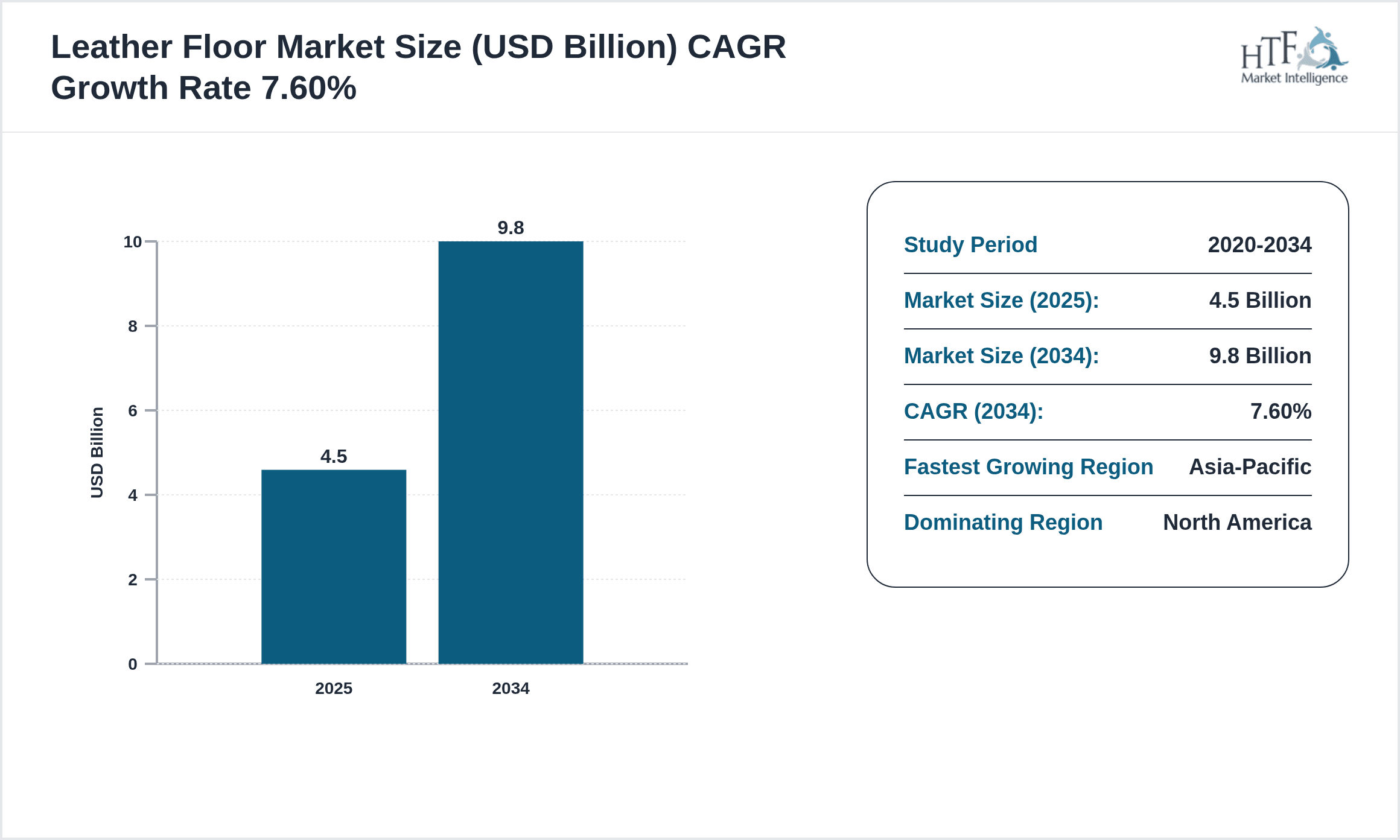
- •Key market highlights include a projected CAGR of 7.6% from 2024 to 2034, with the market size expected to more than double from USD 4.5 billion in 2024 to USD 9.8 billion by 2034. North America currently dominates the market, driven by high adoption in residential and commercial sectors, while Asia-Pacific is poised for the fastest growth due to rising construction activities and increasing luxury housing developments. Aniline leather remains the leading product type due to its premium finish, while semi-aniline leather is gaining traction as the fastest growing segment owing to its balance of durability and aesthetic appeal. Residential flooring holds the largest application share, with automotive interiors and hospitality sectors contributing significant demand growth. Technological innovations and sustainability trends are key growth enablers in this market landscape.
- •The leather floor market offers substantial value propositions to industries such as real estate, automotive, and hospitality by providing durable, stylish, and eco-conscious flooring solutions that enhance property value and user experience. Its strategic importance lies in meeting the growing consumer demand for premium interior materials with low environmental impact. Manufacturers benefit from expanding global demand, while end-users gain access to versatile, high-performance flooring options. Advancements in leather processing and finishing technologies allow for customization and improved resistance to wear and stains, creating new application possibilities. The market's growth is further supported by increasing awareness of sustainable building materials and the rising trend of luxury interiors, making leather flooring an attractive choice for modern developments worldwide.
Competitive Landscape
The global leather floor market is characterized by intense competition among key players focusing on product innovation, quality enhancement, and geographic expansion to secure market share. Companies invest significantly in developing advanced tanning and finishing technologies that offer superior durability, stain resistance, and eco-friendly attributes. Competitive strategies include diversifying product portfolios to cater to residential, commercial, automotive, and hospitality segments, while maintaining premium quality standards. Strategic partnerships and collaborations are common, enabling players to strengthen supply chains and reach emerging markets effectively. Market rivalry is further intensified by the entry of regional manufacturers capitalizing on local raw material availability and cost advantages. Pricing strategies balance premium positioning with accessibility, targeting mid to high-end market segments. The competitive environment fosters continuous innovation, with companies emphasizing sustainability and customization to differentiate their offerings and meet evolving consumer preferences globally.
Prominent Players in Leather Floor Market
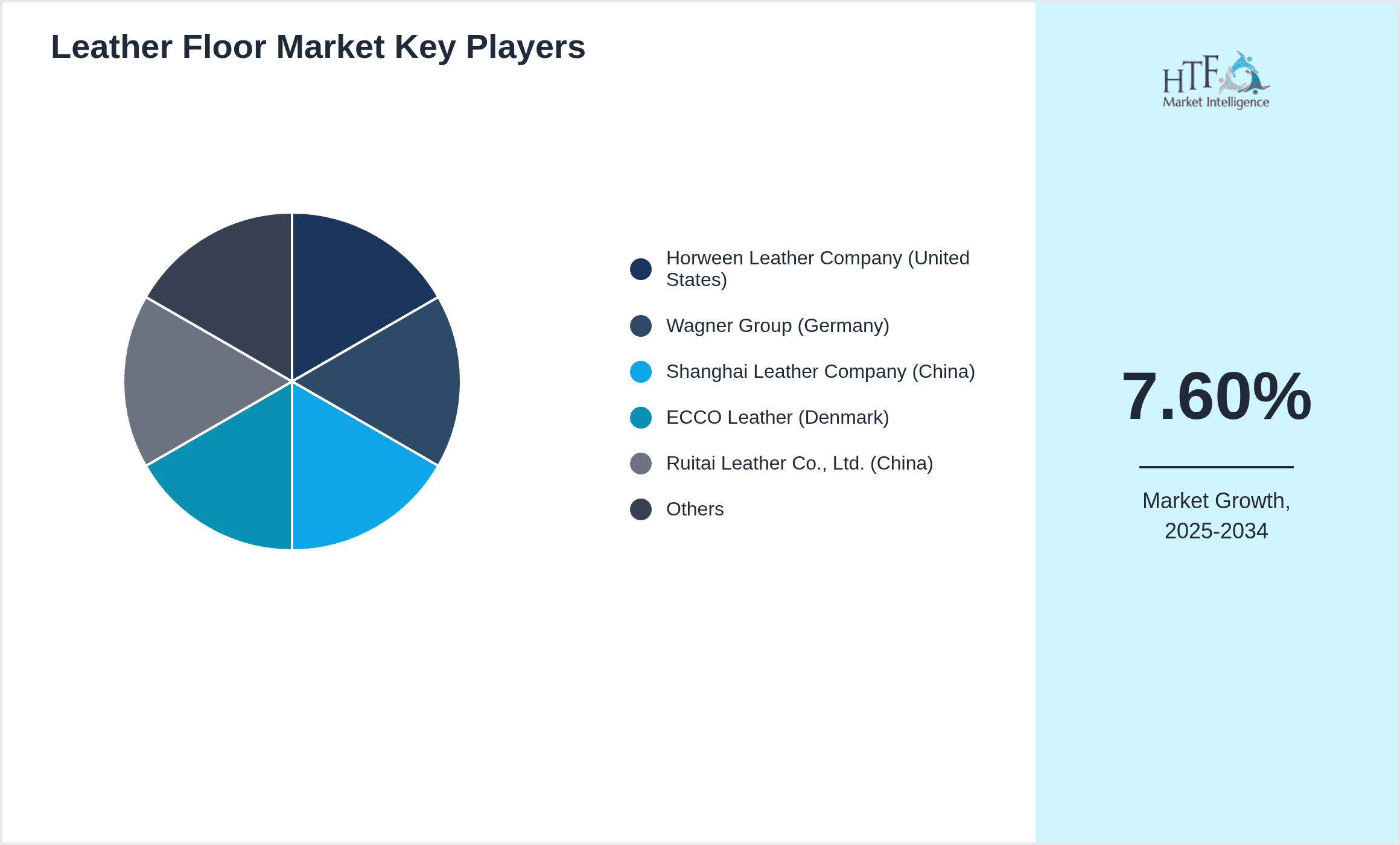
- •Horween Leather Company (United States)
- •Wagner Group (Germany)
- •Shanghai Leather Company (China)
- •ECCO Leather (Denmark)
- •Ruitai Leather Co., Ltd. (China)
- •Muirhead Leather (United Kingdom)
- •PrimeAsia Leather Group (India)
- •Red Wing Shoes Leather Division (United States)
- •Tandy Leather Factory (United States)
- •Poli-Farbe Leder GmbH (Germany)
- •Italian Leather Group (Italy)
- •Sims Leather Company (Australia)
- •Kangaroo Leather Products (South Korea)
- •Tanning Technologies Inc. (Canada)
- •Jiangsu Leather Group (China)
- •Huntsman Corporation (Switzerland)
- •Pellami Leather (France)
- •PT Leather Indonesia (Indonesia)
- •Fiorentini + Baker (Italy)
- •American Leather Inc. (United States)
- •Stalwart Leatherworks (United Kingdom)
- •Bovino Leather Company (Brazil)
- •Napa Leather Co. (United States)
- •TFL Leather (Russia)
- •LeatherTech Solutions (Japan)
Market Breakdown
- •By Leather Type
- ◦Aniline Leather
- ◦Semi-Aniline Leather
- ◦Pigmented Leather
- ◦Nubuck Leather
- ◦Suede Leather
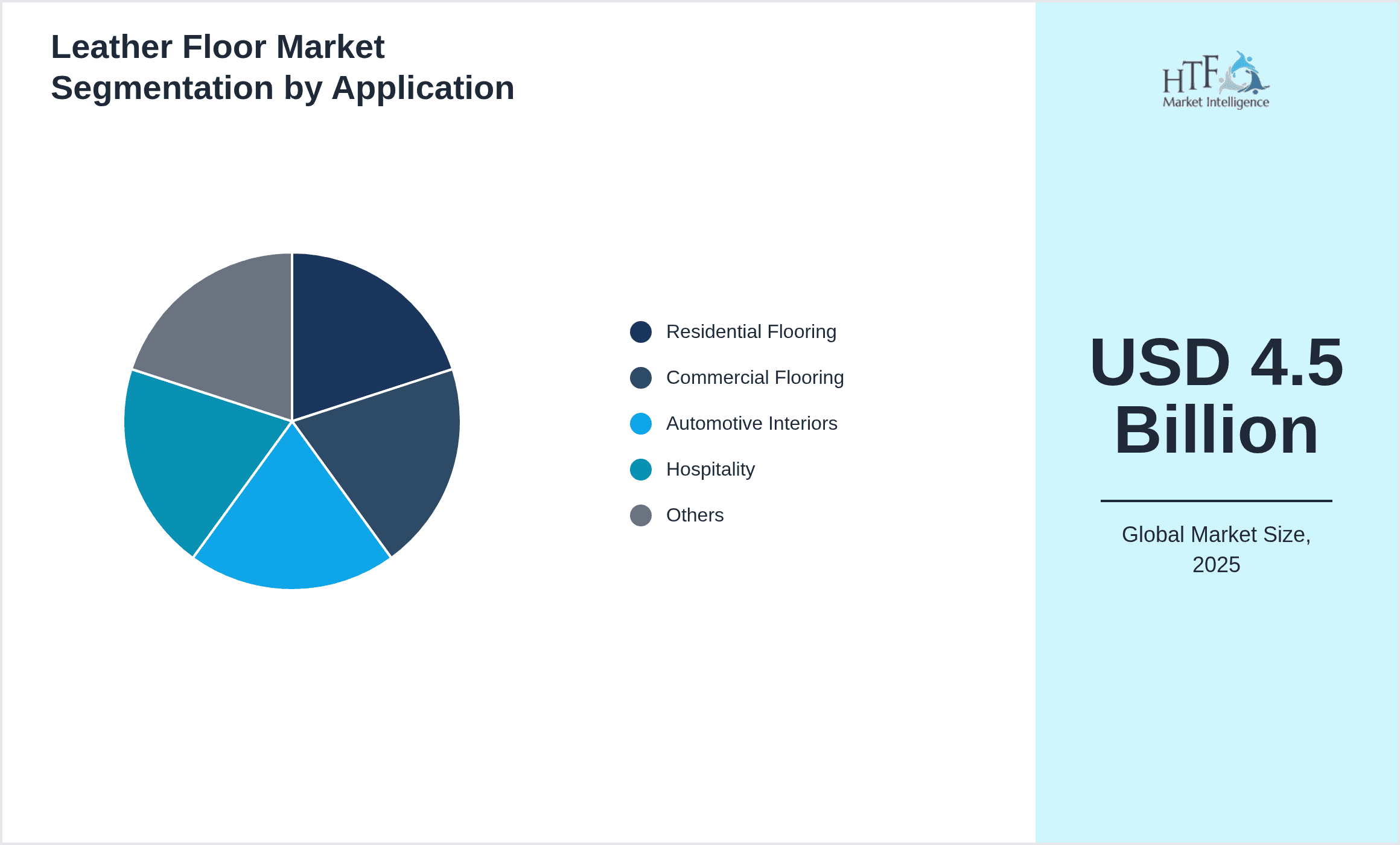
- •By Application Sector
- ◦Residential Flooring
- ◦Commercial Flooring
- ◦Automotive Interiors
- ◦Hospitality
- ◦Others
- •By End User Segment
- ◦Individual Homeowners
- ◦Corporate Offices
- ◦Automotive Manufacturers
- ◦Hotels & Resorts
- ◦Retail Outlets
- •By Distribution Channel
- ◦Direct Sales
- ◦Dealerships and Distributors
- ◦Online Retail
- ◦Specialty Stores
Growth Dynamics
The leather floor market benefits from rising consumer preference for luxury and sustainable flooring solutions, driving demand in both developed and emerging economies. Increasing urbanization and growth in construction activities, especially in residential and commercial real estate, fuel market expansion. Technological advancements in leather finishing improve durability and stain resistance, enhancing product appeal. Additionally, the growing automotive industry’s focus on premium interiors supports leather floor adoption in vehicles. The market is also propelled by rising disposable incomes and changing lifestyle trends favoring eco-friendly materials. Manufacturers’ investments in sustainable sourcing and production methods resonate with environmentally conscious consumers, further stimulating growth globally. These factors collectively reinforce the leather floor market’s robust expansion trajectory over the forecast period.
Market Trends
Emerging trends in the leather floor market include the integration of eco-friendly tanning processes reducing chemical usage, thus aligning with global sustainability goals. The adoption of digital printing techniques allows for customized textures and finishes, enhancing design flexibility. Additionally, hybrid flooring solutions combining leather with other materials such as wood or vinyl are gaining popularity for improved durability and aesthetic appeal. A shift towards semi-aniline leather is observed due to its balanced properties of natural feel and resistance to wear. The market is also witnessing increased collaborations between leather manufacturers and designers to create innovative flooring concepts tailored for luxury real estate and premium commercial spaces. These trends underscore the market’s evolution towards sustainability, innovation, and customization.
Market Opportunities
Opportunities in the leather floor market arise from expanding construction activities in emerging regions, where demand for premium interior materials is growing. Rising awareness and government incentives for sustainable building materials create openings for eco-friendly leather flooring solutions. Innovation in leather finishing technologies presents avenues for product line expansion targeting high-traffic commercial and automotive applications. The development of hybrid leather flooring combining durability and aesthetics also opens new market segments. Additionally, increasing online retail penetration offers manufacturers direct access to end-users, enhancing market reach and profitability. Strategic partnerships with real estate developers and automotive companies further amplify growth prospects by integrating leather flooring in new projects and models.
Market Challenges
The leather floor market faces challenges including the high cost of premium leather materials compared to synthetic alternatives, which limits adoption among price-sensitive consumers. Environmental concerns related to traditional tanning processes, including chemical waste and water usage, pose regulatory and reputational risks. Supply chain complexities involving raw material sourcing and processing delays can disrupt timely delivery and increase costs. Additionally, leather’s sensitivity to moisture and maintenance requirements reduce its appeal in certain climates and applications. Market players must also navigate fluctuating raw material prices and stringent environmental regulations that impact production costs and scalability. These challenges necessitate innovation in sustainable processing and cost-effective manufacturing to sustain growth and competitiveness.
Regulatory Framework
Between 2019 and 2024, regulations emphasizing environmental sustainability have significantly influenced the leather floor market. Key mandates include restrictions on hazardous chemicals used in tanning, such as chromium and formaldehyde, compelling manufacturers to adopt eco-friendly tanning agents. Several regions implemented stringent wastewater treatment requirements to minimize industrial pollution. Compliance with REACH regulations in Europe, California Proposition 65 in the United States, and similar laws globally has raised production standards. Governments have also introduced incentives for sustainable manufacturing practices, encouraging the use of biodegradable and recyclable materials. These regulatory developments have driven innovation in green technologies and sustainable leather processing, shaping product development and market entry strategies worldwide.
Market Intelligence
- •15th April 2024, Horween Leather Company launched a new line of eco-friendly aniline leather flooring products featuring vegetable tanning processes and enhanced stain resistance. Targeting luxury residential and commercial projects, this innovation responds to growing demand for sustainable, premium flooring solutions. The product line integrates advanced finishing technologies to improve durability without compromising the natural look and feel of leather. Horween’s strategic move reinforces its position as a market leader committed to environmental stewardship and innovation, anticipating increased market share in regions prioritizing green building materials. Source: Official company release
- •10th October 2023, ECCO Leather unveiled a semi-aniline leather flooring collection designed for automotive interiors, combining softness with enhanced abrasion resistance. This product addresses automotive manufacturers’ requirements for luxury and durability, aiming to penetrate the expanding electric vehicle segment. ECCO’s launch leverages innovative dyeing and finishing techniques to reduce environmental impact while meeting stringent automotive standards. The initiative highlights the growing integration of leather flooring in vehicle design, signaling new growth avenues. Source: Industry publication
- •20th March 2024, Shanghai Leather Company announced a strategic partnership with a leading real estate developer to supply pigmented leather flooring for upscale residential projects across Asia-Pacific. This collaboration aims to leverage Shanghai Leather’s manufacturing capabilities and the developer’s extensive market reach, facilitating accelerated adoption of premium leather flooring solutions. The partnership focuses on sustainability and design customization to meet evolving consumer preferences, strengthening the company’s regional presence. Source: Company website
- •5th December 2023, Muirhead Leather expanded its distribution network to include online retail platforms, enhancing accessibility of its nubuck and suede leather floor products globally. This expansion aligns with shifting consumer purchase behaviors favoring digital channels, enabling direct engagement and tailored service offerings. Muirhead’s strategy supports increased market penetration in emerging markets and provides data-driven insights for future product development. Source: Industry news portal
Regional Outlook
The North America currently holds a significant share of the market, primarily due to several key factors: increasing consumption rates, a burgeoning population, and robust economic momentum. These elements collectively drive demand, positioning this region as a leader in the market. On the other hand, Asia-Pacific is rapidly emerging as the fastest-growing area within the industry. This remarkable growth can be attributed to swift infrastructure development, the expansion of various industrial sectors, and a marked increase in consumer demand. These dynamics make this region a crucial player in shaping future market growth.
In our report, we cover a comprehensive analysis of the following regions and countries:
- North America
- LATAM
- West Europe
- Central & Eastern Europe
- Northern Europe
- Southern Europe
- East Asia
- Southeast Asia
- South Asia
- Central Asia
- Oceania
- MEA
| Feature | Details |
|---|---|
| Base Year Market Size | USD 4.5 Billion |
| Forecast Year Market Size | USD 9.8 Billion |
| CAGR | 7.6% |
| Forecast Period | 2026 to 2033 |
| YoY Growth | 7.3% |
| Scope of Report | Market is segmented by Leather Type (Aniline Leather, Semi-Aniline Leather, Pigmented Leather, Nubuck Leather, Suede Leather), Application Sector (Residential Flooring, Commercial Flooring, Automotive Interiors, Hospitality, Others), End User Segment (Individual Homeowners, Corporate Offices, Automotive Manufacturers, Hotels & Resorts, Retail Outlets), Distribution Channel (Direct Sales, Dealerships and Distributors, Online Retail, Specialty Stores) |
| Regions Covered | North America, LATAM, West Europe, Central & Eastern Europe, Northern Europe, Southern Europe, East Asia, Southeast Asia, South Asia, Central Asia, Oceania, MEA |
| Key Companies | Horween Leather Company (United States), Wagner Group (Germany), Shanghai Leather Company (China), ECCO Leather (Denmark), Ruitai Leather Co., Ltd. (China), Muirhead Leather (United Kingdom), PrimeAsia Leather Group (India), Red Wing Shoes Leather Division (United States), Tandy Leather Factory (United States), Poli-Farbe Leder GmbH (Germany), Italian Leather Group (Italy), Sims Leather Company (Australia), Kangaroo Leather Products (South Korea), Tanning Technologies Inc. (Canada), Jiangsu Leather Group (China), Huntsman Corporation (Switzerland), Pellami Leather (France), PT Leather Indonesia (Indonesia), Fiorentini + Baker (Italy), American Leather Inc. (United States), Stalwart Leatherworks (United Kingdom), Bovino Leather Company (Brazil), Napa Leather Co. (United States), TFL Leather (Russia), LeatherTech Solutions (Japan) |
Global Leather Floor Market - Outlook 2024-2034 - Table of Contents
Multidisciplinary researcher with 10+ years of experience uncovering insights across diverse domains focused on uncovering insights that drive informed decisions.
Frequently Asked Questions (FAQ):
The Compact Track Loaders market is expected to see value worth 5.3 Billion in 2025.
North America currently leads the market with approximately 45% market share, followed by Europe at 28% and Asia-Pacific at 22%. The remaining regions account for 5% of the global market.
Key growth drivers include increasing construction activities, rising demand for versatile equipment in agriculture, technological advancements in track loader design, and growing preference for compact equipment in urban construction projects.