
Global Secure Email Services Market - Outlook 2020-2034
Global Secure Email Services Market is segmented by Secure Email Service Type (Encryption-based Secure Email Services, Authentication-based Secure Email Services, Anti-Phishing Solutions, Data Loss Prevention Services, Secure Email Gateways), Application Segment (Corporate Communication, Government Communications, Healthcare, Financial Services, Legal Services), Deployment Model (Cloud-based Secure Email Services, On-premise Secure Email Solutions, Hybrid Deployment Models), Service Type (Managed Secure Email Services, Consulting and Integration Services, Support and Maintenance Services, Training and Compliance Services), and Geography (North America, LATAM, West Europe, Central & Eastern Europe, Northern Europe, Southern Europe, East Asia, Southeast Asia, South Asia, Central Asia, Oceania, MEA)
Pricing
Report Overview
Executive Summary
- •The Global Secure Email Services market involves a comprehensive suite of software and services dedicated to protecting email communications against cyber threats such as interception, phishing, malware, and data leakage. The market includes encryption technologies, authentication protocols, anti-phishing defenses, data loss prevention tools, and secure gateways that collectively ensure confidentiality, authenticity, and integrity of email exchanges. Applications cover a broad spectrum from enterprise corporate communication, government and defense correspondence, healthcare data privacy compliance, financial services security, to legal documentation protection. The value chain is composed of technology vendors providing software and cloud services, system integrators for deployment, managed security service providers offering ongoing monitoring and support, and end-users across industries demanding high-security standards. Growing cyberattacks targeting email systems, stringent data protection regulations like GDPR and HIPAA, and the rapid shift to cloud-based email platforms have fueled the market’s expansion. Furthermore, the escalation in remote work and digital collaboration has increased email traffic volume, heightening the necessity for robust secure email solutions. This market is critical to maintaining business continuity, securing sensitive information, and adhering to compliance requirements, making it indispensable in modern digital communication infrastructures.
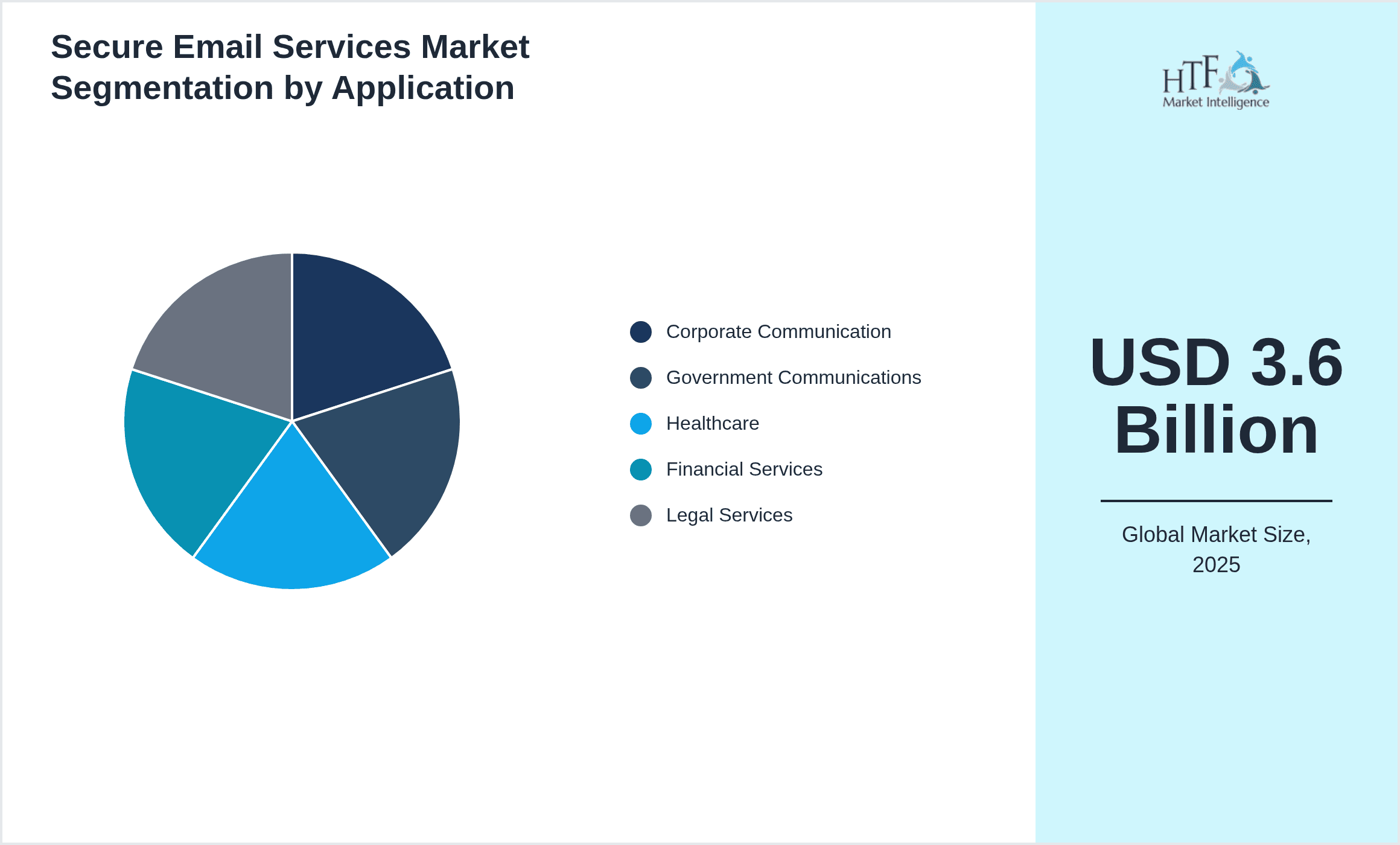
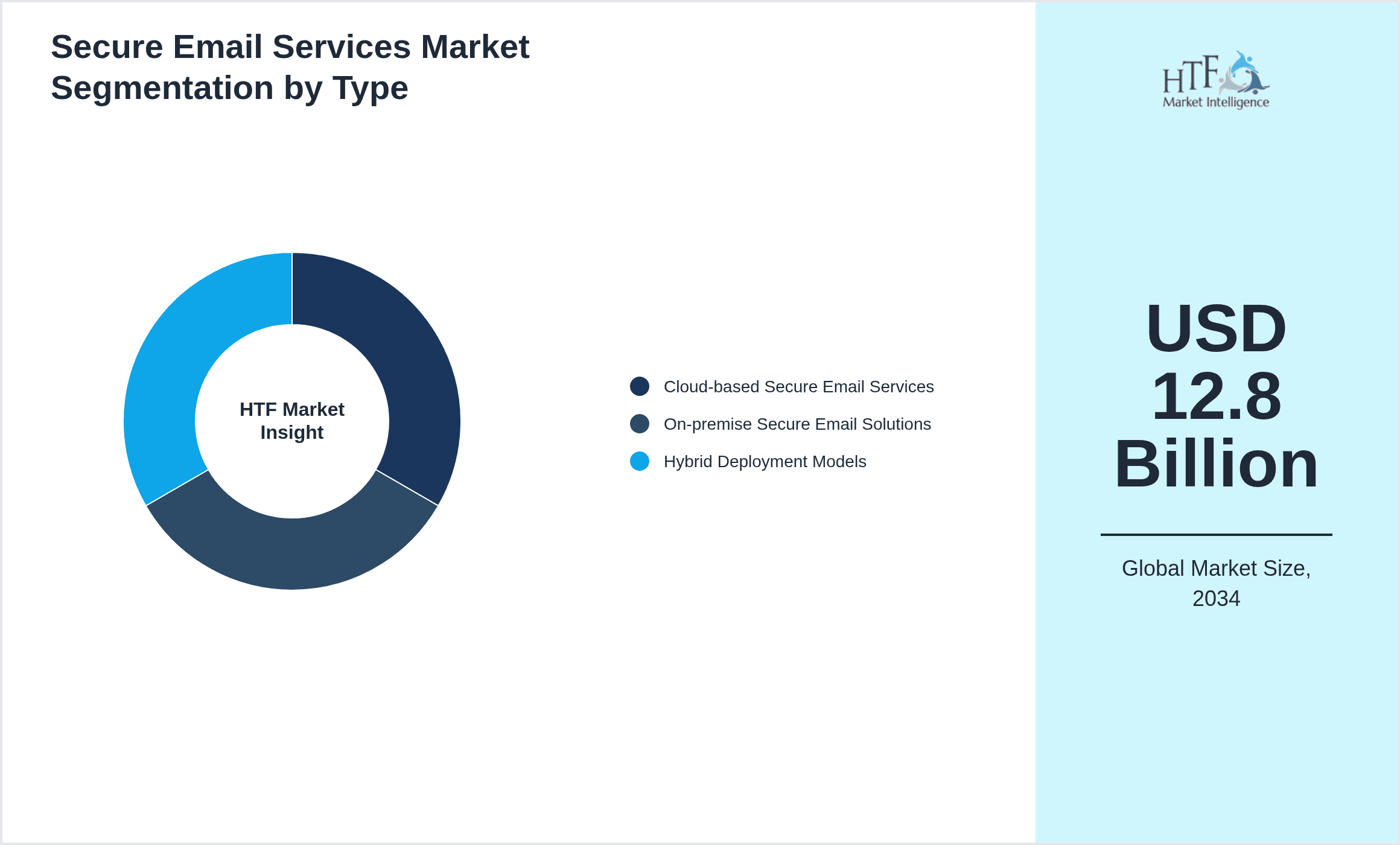
- •Key market highlights reveal a base market size of USD 3.6 Billion in 2025, with projections reaching USD 12.8 Billion by 2034, reflecting a strong CAGR of 14.3%. The growth is supported by the increasing adoption of advanced encryption standards and multi-factor authentication in email systems. Regional analysis indicates North America as the dominating region due to early adoption and regulatory pressures, while Asia-Pacific emerges as the fastest growing region driven by digital transformation and rising cyber threats. Innovations in data loss prevention and integration of artificial intelligence in threat detection are notable growth catalysts. Year-on-year growth averages approximately 14%, underscoring sustained demand and market momentum.
- •The value proposition of secure email services lies in their ability to protect sensitive communications, prevent data breaches, and ensure compliance with international privacy regulations. These services empower organizations to mitigate risks associated with cyberattacks targeting email systems, which remain a primary vector for malware and social engineering attacks. For stakeholders including enterprises, government agencies, and cloud service providers, secure email solutions offer strategic advantages such as enhanced trust, operational resilience, and reduced financial and reputational risks. The market’s strategic importance is further amplified by increasing regulatory scrutiny and the growing reliance on digital communication channels across all sectors.

Competitive Landscape
The competitive environment in the global Secure Email Services market is characterized by intense rivalry among established cybersecurity firms, innovative startups, and cloud service providers expanding their security portfolios. Market players adopt strategic initiatives including product innovation, mergers and acquisitions, and partnerships to enhance their technology offerings and geographical reach. Differentiation strategies focus on integrating AI-driven threat intelligence, enhancing user experience, and providing comprehensive, scalable solutions that address evolving cyber threats. Pricing strategies vary from subscription-based models for cloud services to enterprise licensing, enabling flexibility for diverse customer segments. Distribution channels emphasize direct enterprise sales complemented by managed security service providers and channel partners. Barriers to entry include high R&D costs, stringent regulatory compliance, and the need for continuous innovation to combat sophisticated cyber threats. Regional competition reflects maturity in North America and Europe, while Asia-Pacific sees rapid market penetration by both global and local vendors. Future trends indicate increased adoption of zero-trust architectures, convergence of email security with broader cybersecurity platforms, and expansion of managed secure email services.
Leading Companies in Secure Email Services Market
- •Microsoft Corporation (United States)
- •Cisco Systems, Inc. (United States)
- •Symantec Corporation (United States)
- •Proofpoint, Inc. (United States)
- •Trend Micro Incorporated (Japan)
- •Mimecast Limited (United Kingdom)
- •Sophos Group plc (United Kingdom)
- •Barracuda Networks, Inc. (United States)
- •Google LLC (United States)
- •Check Point Software Technologies Ltd. (Israel)
- •FireEye, Inc. (United States)
- •Fortinet, Inc. (United States)
- •Zix Corporation (United States)
- •AppRiver, Inc. (United States)
- •McAfee Corp. (United States)
- •Trend Micro Incorporated (Japan)
- •Sophos Group plc (United Kingdom)
- •Forcepoint LLC (United States)
- •ESET, spol. s r.o. (Slovakia)
- •Google LLC (United States)
- •Amazon Web Services, Inc. (United States)
- •Proofpoint, Inc. (United States)
- •Cisco Systems, Inc. (United States)
- •Microsoft Corporation (United States)
- •Barracuda Networks, Inc. (United States)
Market Breakdown
- •By Secure Email Service Type
- ◦Encryption-based Secure Email Services
- ◦Authentication-based Secure Email Services
- ◦Anti-Phishing Solutions
- ◦Data Loss Prevention Services
- ◦Secure Email Gateways
- •By Application Segment
- ◦Corporate Communication
- ◦Government Communications
- ◦Healthcare
- ◦Financial Services
- ◦Legal Services
- •By Deployment Model
- ◦Cloud-based Secure Email Services
- ◦On-premise Secure Email Solutions
- ◦Hybrid Deployment Models
- •By Service Type
- ◦Managed Secure Email Services
- ◦Consulting and Integration Services
- ◦Support and Maintenance Services
- ◦Training and Compliance Services
Growth Dynamics
- •The rising frequency and sophistication of cyberattacks targeting email communications have been a primary driver for the secure email services market. Organizations increasingly adopt encryption and authentication technologies to safeguard sensitive information from interception and unauthorized access, thus mitigating financial and reputational risks.
- •Regulatory requirements such as GDPR, HIPAA, and other data privacy laws globally compel enterprises to implement secure email solutions to ensure compliance, avoid penalties, and protect customer data, reinforcing market growth.
- •The growing adoption of cloud-based email platforms and the increasing prevalence of remote and hybrid work models have expanded the attack surface, necessitating advanced secure email services integrated with cloud security architectures.
- •Advancements in artificial intelligence and machine learning enable proactive threat detection and automated response within secure email solutions, enhancing effectiveness and operational efficiency for end-users.
- •Strategic investments and partnerships among cybersecurity providers and cloud service platforms facilitate product innovation, broader market access, and improved service delivery, driving competitive dynamics and market expansion.
- •Increased awareness among small and medium enterprises about cyber risks and the availability of scalable, cost-effective secure email services contribute significantly to market penetration in emerging economies.
- •The integration of secure email services with broader enterprise security frameworks and identity management solutions creates value-added offerings that enhance customer retention and attract new clients.
Market Trends
- •There is a growing trend towards adopting cloud-native secure email solutions, which offer scalability, ease of deployment, and seamless integration with existing cloud infrastructures, facilitating rapid adoption across various sectors.
- •The incorporation of AI-driven threat intelligence and behavioral analytics within secure email platforms enables real-time detection and mitigation of sophisticated phishing and spear-phishing attacks, improving overall security posture.
- •Enterprises increasingly prefer unified security platforms that integrate secure email services with endpoint protection, identity management, and data loss prevention, simplifying management and enhancing security coherence.
- •Sustainability and data privacy concerns drive innovation in secure email services, with vendors enhancing encryption standards and adopting privacy-by-design principles to align with evolving regulations and customer expectations.
- •Collaborations and strategic alliances between cybersecurity firms and cloud providers are becoming commonplace, enabling bundled service offerings that deliver comprehensive secure email and cloud security solutions.
- •The market witnesses increased segmentation with tailored secure email services designed for verticals such as healthcare, finance, and government, addressing specific compliance and security requirements.
- •Emerging markets in Asia-Pacific and Latin America witness accelerated adoption due to rising cyber threats, digital transformation initiatives, and increased investment in cybersecurity infrastructure.

Market Opportunities
- •Expanding cloud adoption across industries opens significant opportunities for cloud-native secure email service providers to capture growing demand for scalable and flexible security solutions.
- •The increasing number of data privacy and cybersecurity regulations worldwide creates a continuous need for compliant secure email services, enabling service providers to innovate and tailor solutions for regulatory adherence.
- •Small and medium enterprises represent an untapped segment with growing awareness and budget allocation for cybersecurity, offering fertile ground for affordable and managed secure email service offerings.
- •Integration of AI and machine learning capabilities into secure email services offers opportunities for enhanced threat intelligence, predictive analytics, and automated incident response, attracting security-conscious customers.
- •Emerging technologies such as quantum-resistant encryption present future growth avenues for secure email providers aiming to address next-generation cyber threats.
- •Geographical expansion into high-growth regions such as Asia-Pacific and Middle East & Africa, supported by localized service offerings and partnerships, could significantly increase market share.
- •Growing demand for integrated security ecosystems combining secure email with endpoint and network security services creates cross-selling and bundling opportunities.
Market Challenges
- •High implementation and operational costs for advanced secure email solutions can deter SMEs and budget-constrained organizations from adoption, limiting market penetration.
- •The rapid evolution of cyber threats requires continuous product innovation and updates, posing resource and technical challenges for vendors to maintain efficacy and relevance.
- •Complex regulatory environments with varying compliance requirements across regions increase the burden on service providers to customize solutions accordingly, complicating market expansion.
- •User resistance and lack of cybersecurity awareness can hinder adoption of secure email practices, necessitating extensive training and change management efforts.
- •Integration challenges with legacy email systems and existing IT infrastructure can delay deployment and reduce operational efficiencies.
- •Market fragmentation with numerous vendors and overlapping offerings creates competitive pressure and pricing challenges.
- •Potential latency and user experience issues arising from encryption and security layers may impact productivity and customer satisfaction.
Regulatory Framework
- •The General Data Protection Regulation (GDPR) enacted in 2018 has been pivotal in shaping email security requirements across Europe, mandating stringent data protection and breach notification standards that drive secure email adoption worldwide.
- •The Health Insurance Portability and Accountability Act (HIPAA) in the United States imposes strict rules on healthcare data confidentiality and transmission security, necessitating specialized secure email services in the healthcare vertical.
- •The California Consumer Privacy Act (CCPA), effective from 2020, enhances consumer privacy rights and forces organizations to implement robust email security measures to prevent unauthorized data exposure.
- •Various regional regulations such as the Personal Data Protection Act (PDPA) in Singapore and the Cybersecurity Law in China enforce data sovereignty and protection mandates, influencing secure email service deployment strategies in Asia-Pacific.
- •Government cybersecurity frameworks like NIST Cybersecurity Framework and ISO/IEC 27001 provide guidelines and standards for implementing secure email solutions, promoting industry best practices and interoperability.
Market Intelligence
- •15th January 2025, Microsoft Corporation launched an advanced cloud-based secure email service integrating AI-powered threat detection and automated incident response capabilities. This new offering targets enterprise customers seeking enhanced protection against sophisticated phishing and malware attacks within Microsoft 365 environments. The solution features multi-layer encryption, real-time threat analytics, and seamless integration with identity and access management systems, aiming to reduce breach risks and compliance overhead. Microsoft’s strategic objective is to leverage its cloud dominance to expand secure email adoption globally, particularly in regulated industries such as finance and healthcare. Early deployments indicate substantial improvements in threat mitigation efficiency and user experience. Source: Microsoft Official Press Release
- •10th March 2025, Proofpoint, Inc. introduced a next-generation secure email gateway leveraging machine learning algorithms to detect emerging phishing campaigns and zero-day exploits. The platform offers adaptive security policies, contextual email risk scoring, and integration with endpoint protection solutions. This innovation positions Proofpoint to address growing demand for intelligent email defense mechanisms amid increasing cybercriminal sophistication. The product launch is aligned with the company’s vision to provide comprehensive, AI-enhanced cybersecurity services across cloud and on-premises environments, enhancing customer trust and retention. Source: Proofpoint Corporate Announcement
- •22nd May 2025, Cisco Systems, Inc. announced a strategic partnership with Amazon Web Services to deliver scalable, cloud-native secure email solutions optimized for AWS infrastructure. The collaboration aims to provide enterprises with integrated security and compliance tools embedded within their cloud email workflows. Cisco’s offering includes advanced encryption, automated threat remediation, and detailed compliance reporting, designed to streamline security management in hybrid cloud environments. This initiative is expected to accelerate secure email adoption by addressing the challenges of cloud migration and regulatory compliance. Source: Cisco and AWS Joint Press Release
- •Recent market developments and strategic initiatives are continuously tracked through industry publications, company announcements, and regulatory filings. For the most current information, stakeholders are advised to monitor official corporate communications and recognized market intelligence platforms.
Regional Outlook
The North America currently holds a significant share of the market, primarily due to several key factors: increasing consumption rates, a burgeoning population, and robust economic momentum. These elements collectively drive demand, positioning this region as a leader in the market. On the other hand, Asia-Pacific is rapidly emerging as the fastest-growing area within the industry. This remarkable growth can be attributed to swift infrastructure development, the expansion of various industrial sectors, and a marked increase in consumer demand. These dynamics make this region a crucial player in shaping future market growth.
In our report, we cover a comprehensive analysis of the following regions and countries:
- North America
- LATAM
- West Europe
- Central & Eastern Europe
- Northern Europe
- Southern Europe
- East Asia
- Southeast Asia
- South Asia
- Central Asia
- Oceania
- MEA
| Feature | Details |
|---|---|
| Base Year Market Size | USD 3.6 Billion |
| Forecast Year Market Size | USD 12.8 Billion |
| CAGR | 14.3% |
| Forecast Period | 2026 to 2033 |
| YoY Growth | 14% |
| Scope of Report | Market is segmented by Secure Email Service Type (Encryption-based Secure Email Services, Authentication-based Secure Email Services, Anti-Phishing Solutions, Data Loss Prevention Services, Secure Email Gateways), Application Segment (Corporate Communication, Government Communications, Healthcare, Financial Services, Legal Services), Deployment Model (Cloud-based Secure Email Services, On-premise Secure Email Solutions, Hybrid Deployment Models), Service Type (Managed Secure Email Services, Consulting and Integration Services, Support and Maintenance Services, Training and Compliance Services) |
| Regions Covered | North America, LATAM, West Europe, Central & Eastern Europe, Northern Europe, Southern Europe, East Asia, Southeast Asia, South Asia, Central Asia, Oceania, MEA |
| Key Companies | Microsoft Corporation (United States), Cisco Systems, Inc. (United States), Symantec Corporation (United States), Proofpoint, Inc. (United States), Trend Micro Incorporated (Japan) |
Global Secure Email Services Market - Outlook 2020-2034 - Table of Contents
Frequently Asked Questions (FAQ):
The Compact Track Loaders market is expected to see value worth 5.3 Billion in 2025.
North America currently leads the market with approximately 45% market share, followed by Europe at 28% and Asia-Pacific at 22%. The remaining regions account for 5% of the global market.
Key growth drivers include increasing construction activities, rising demand for versatile equipment in agriculture, technological advancements in track loader design, and growing preference for compact equipment in urban construction projects.