
Global Blended Learning Market Size, Growth & Revenue 2025-2034
Global Blended Learning Market is segmented by Type (Online Learning, Instructor-Led Training, Virtual Classroom, Self-Paced Learning, Mobile Learning), Application (Corporate Training, Higher Education, K-12 Education, Professional Certification, Government Training), Deployment Model (Cloud-based, On-premise, Hybrid), End User (Educational Institutions, Corporate Organizations, Government Agencies, Individual Learners), and Geography (North America, LATAM, West Europe, Central & Eastern Europe, Northern Europe, Southern Europe, East Asia, Southeast Asia, South Asia, Central Asia, Oceania, MEA)
Pricing
Report Overview
Executive Summary
- •The global blended learning market integrates digital and traditional instructional methods to deliver enriched educational experiences. This market spans diverse formats including online learning platforms, instructor-led sessions, virtual classrooms, self-paced learning, and mobile-based modules. Its applications cover corporate training, higher education, K-12 schooling, professional certifications, and government training programs. The scope extends to technologies such as Learning Management Systems and interactive multimedia tools, facilitating flexible and personalized learning. This fusion of technology and pedagogy enables organizations and institutions to enhance learner engagement, improve knowledge retention, and scale educational delivery globally. The market’s significance is underscored by growing demand for continuous upskilling and flexible education models that accommodate diverse learner needs across geographies and sectors. The evolving digital landscape and adoption of advanced learning solutions are pivotal in shaping the future of blended learning worldwide.
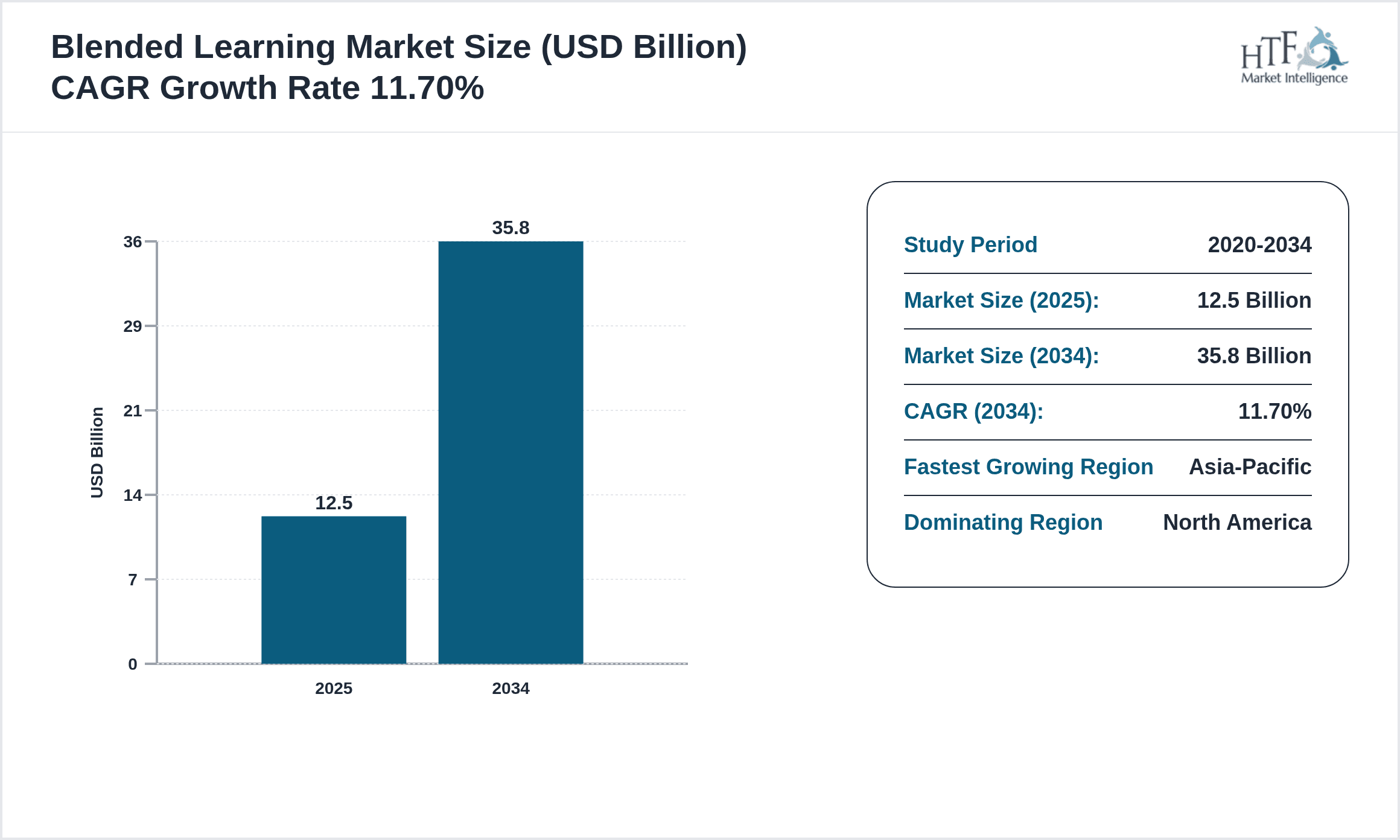
- •Market highlights reveal robust growth driven by rising adoption of digital tools in education and corporate sectors. With a base market size of USD 12.5 Billion in 2025, the forecast anticipates growth to USD 35.8 Billion by 2034, reflecting a CAGR of 11.7%. North America leads the market in revenue share, while Asia-Pacific exhibits the fastest growth trajectory fueled by expanding internet penetration and government initiatives supporting digital education. Online learning remains the dominant product type due to its scalability and accessibility, whereas mobile learning is rapidly gaining traction as a flexible solution for learners on the move. Corporate training and higher education continue to be the primary application segments, leveraging blended learning to enhance skill development and academic outcomes. These dynamics underscore the strategic importance of the blended learning market in transforming global education and training landscapes.
- •The value proposition of blended learning lies in its ability to combine the strengths of conventional and digital learning, offering personalized, cost-effective, and scalable educational solutions. It supports diverse stakeholders including educational institutions, corporate training departments, government agencies, and certification bodies by enabling efficient knowledge delivery and improved learner engagement. The strategic importance is reflected in enhanced learner outcomes, reduced training costs, and flexibility in course delivery. As digital transformation accelerates across industries, blended learning emerges as a critical enabler for continuous professional development and lifelong learning, positioning itself as a cornerstone in the future of education globally.
Competitive Landscape
The competitive landscape in the global blended learning market is shaped by companies leveraging strategic partnerships, technological innovation, and geographic expansion to enhance market presence. Organizations focus on integrating advanced Learning Management Systems, AI-driven analytics, and mobile platforms to offer personalized and adaptive learning experiences. Product innovation includes developing immersive virtual classrooms and interactive content to improve learner engagement. Strategic collaborations with educational institutions and corporate clients enable broader market penetration and tailored solutions addressing sector-specific needs. Expansion into emerging markets through localized offerings and multilingual platforms drives revenue growth. Competitive strategies emphasize differentiation through user-friendly interfaces, comprehensive content libraries, and scalable infrastructure. Additionally, mergers and acquisitions facilitate consolidation, enabling companies to broaden their portfolios and enhance service capabilities. Adoption of cloud-based solutions and investment in research and development remain central to sustaining competitiveness and meeting evolving customer expectations in this dynamic market.
Leading Companies in Blended Learning Market
- •Coursera Inc. (United States)
- •Udemy Inc. (United States)
- •LinkedIn Learning (United States)
- •Skillsoft Corporation (United States)
- •Blackboard Inc. (United States)
- •Instructure Inc. (United States)
- •Khan Academy (United States)
- •2U Inc. (United States)
- •Pluralsight Inc. (United States)
- •Docebo Inc. (Canada)
- •D2L Corporation (Canada)
- •Byju's (India)
- •TalentLMS (Greece)
- •Edmodo (United States)
- •Moodle Pty Ltd (Australia)
- •SAP Litmos (United States)
- •Google for Education (United States)
- •Microsoft Education (United States)
- •Open edX (United States)
- •Teachable Inc. (United States)
Market Breakdown
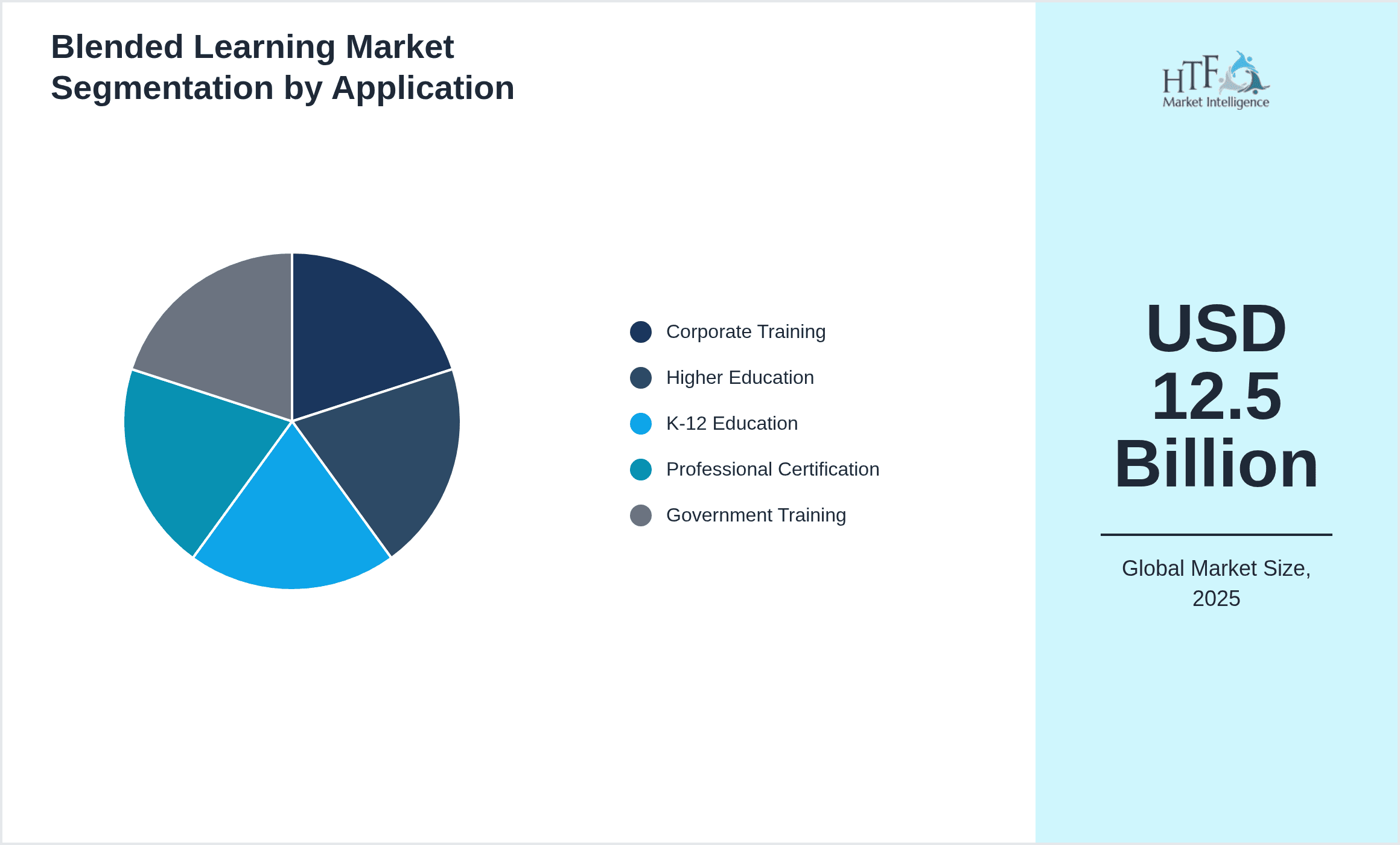
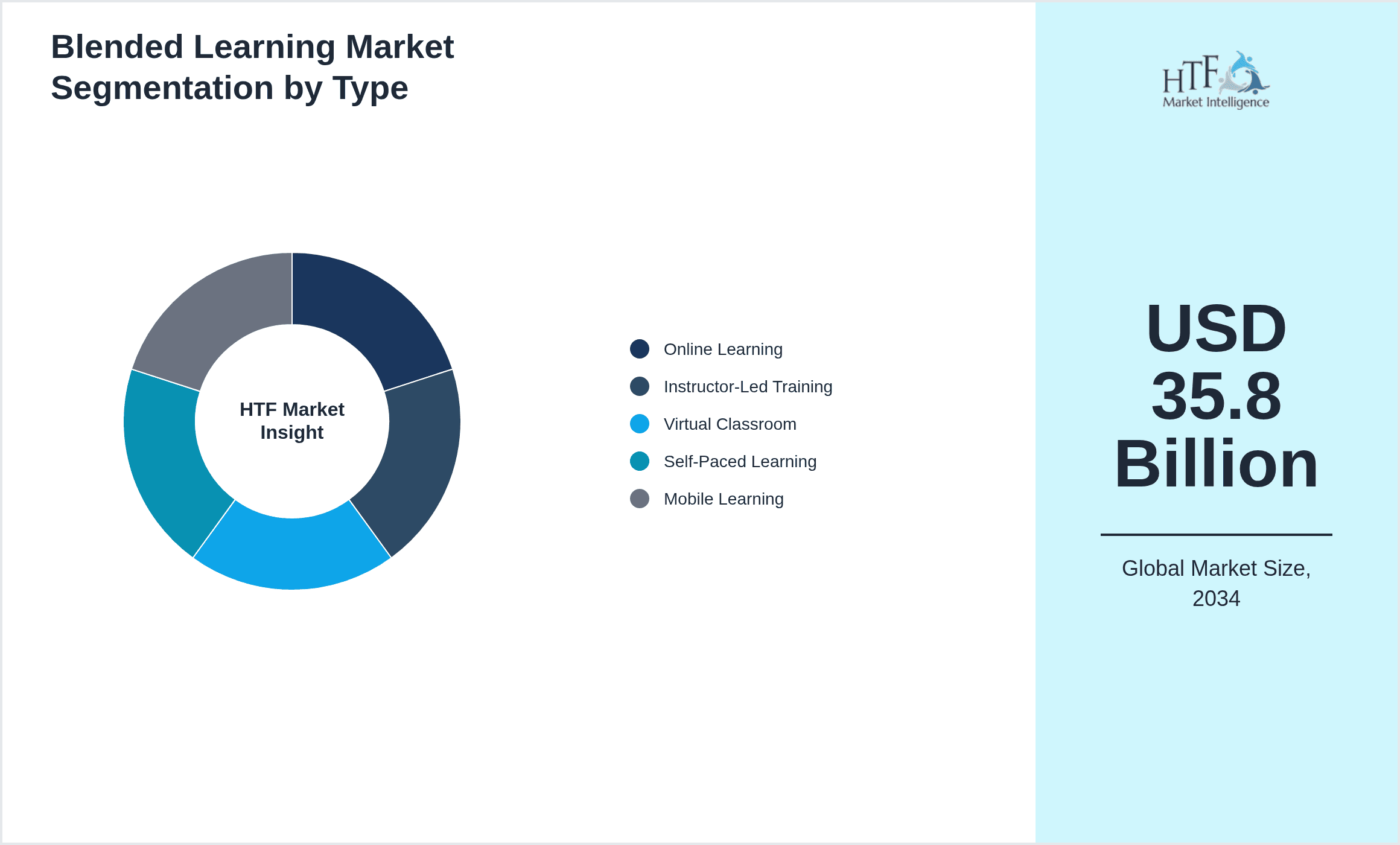
- •By Type
- ◦Online Learning
- ◦Instructor-Led Training
- ◦Virtual Classroom
- ◦Self-Paced Learning
- ◦Mobile Learning
- •By Application
- ◦Corporate Training
- ◦Higher Education
- ◦K-12 Education
- ◦Professional Certification
- ◦Government Training
- •By Deployment Model
- ◦Cloud-based
- ◦On-premise
- ◦Hybrid
- •By End User
- ◦Educational Institutions
- ◦Corporate Organizations
- ◦Government Agencies
- ◦Individual Learners
Growth Dynamics
The global blended learning market experiences significant growth driven by widespread digital transformation across education and corporate sectors. Increasing demand for flexible and personalized learning solutions accelerates adoption globally. For instance, the rise of remote work and e-learning during the COVID-19 pandemic accelerated integration of blended learning models by organizations such as LinkedIn Learning and Coursera. Government initiatives promoting digital education infrastructure, especially in Asia-Pacific, further fuel expansion. The integration of AI and data analytics enhances learner engagement and outcome measurement, making blended learning more effective. Corporate training programs increasingly rely on blended solutions to upskill employees cost-effectively while maintaining productivity. These factors collectively contribute to robust market expansion, with stakeholders investing heavily in technology and content development to capture emerging opportunities.
Market Trends
Emerging trends in blended learning emphasize mobile-based solutions and microlearning to cater to the evolving preferences of learners seeking quick, accessible training modules. Virtual and augmented reality technologies are increasingly integrated to create immersive learning environments that enhance retention and engagement. Companies like Skillsoft and Docebo are pioneering these innovations, offering experiential learning platforms. Additionally, AI-powered adaptive learning systems customize content based on individual performance and preferences, driving better outcomes. Collaborative learning through social platforms and gamification techniques gain traction, fostering interactive and motivating experiences. The shift towards competency-based education aligns blended learning with skill development demands in rapidly evolving job markets. These trends signify a transformative phase wherein technology adoption enhances both accessibility and quality of blended learning worldwide.

Market Opportunities
Expanding internet penetration and smartphone adoption in emerging regions present significant growth opportunities for blended learning providers. The increasing emphasis on lifelong learning and continuous professional development opens avenues for innovative course offerings and certifications. Partnerships with governments and educational institutions to digitize curricula and training programs create scalable market expansion. Integration of advanced analytics and AI enables the development of personalized learning pathways, attracting diverse learner segments. Additionally, corporate demand for scalable, cost-efficient training solutions fuels investment in cloud-based blended learning platforms. The rise of hybrid work models further supports adoption across industries. Companies investing in multilingual and culturally adapted content can unlock new markets, while continuous technological advancements present opportunities to enhance user engagement and retention.
Market Challenges
Challenges in the blended learning market include infrastructure disparities in developing regions, limiting access to quality digital education. Resistance to technology adoption among traditional educators and learners impacts implementation effectiveness. Data privacy and cybersecurity concerns pose significant barriers, especially in corporate and government training sectors where sensitive information is handled. The high cost of developing interactive and adaptive content constrains smaller providers. Additionally, inconsistent internet connectivity affects seamless delivery of online components, hindering learner engagement. Regulatory complexities across countries create compliance challenges for global providers. Market players face intense competition leading to pricing pressures that affect profitability. Furthermore, measuring learning outcomes and ensuring learner motivation in self-paced models require continuous innovation and investment, posing operational challenges for companies.
Regulatory Framework
Over the past five years, regulatory frameworks for blended learning have evolved to address data privacy, accessibility, and quality standards. Regulations such as the General Data Protection Regulation (GDPR) in Europe impose strict requirements on learner data security and consent, impacting platform operations globally. The U.S. Department of Education has introduced guidelines to ensure digital learning accessibility for students with disabilities, promoting inclusive education. Several countries have developed national digital education policies mandating accreditation and quality assurance for online and blended learning programs. Government incentives and funding initiatives support the adoption of blended learning in public education and workforce training. Compliance with these regulations ensures market players maintain operational legitimacy while fostering trust among learners and institutions, shaping the strategic approach toward product development and deployment.
Market Intelligence
- •Recent market developments and strategic initiatives are continuously tracked through industry publications, company announcements, and regulatory filings. For the most current information, stakeholders are advised to monitor official corporate communications and recognized market intelligence platforms.
- •Recent market developments and strategic initiatives are continuously tracked through industry publications, company announcements, and regulatory filings. For the most current information, stakeholders are advised to monitor official corporate communications and recognized market intelligence platforms.
- •Recent market developments and strategic initiatives are continuously tracked through industry publications, company announcements, and regulatory filings. For the most current information, stakeholders are advised to monitor official corporate communications and recognized market intelligence platforms.
- •Recent market developments and strategic initiatives are continuously tracked through industry publications, company announcements, and regulatory filings. For the most current information, stakeholders are advised to monitor official corporate communications and recognized market intelligence platforms.
- •Source: Industry Publications, Company Websites, Regulatory Authorities
Regional Outlook
The North America currently holds a significant share of the market, primarily due to several key factors: increasing consumption rates, a burgeoning population, and robust economic momentum. These elements collectively drive demand, positioning this region as a leader in the market. On the other hand, Asia-Pacific is rapidly emerging as the fastest-growing area within the industry. This remarkable growth can be attributed to swift infrastructure development, the expansion of various industrial sectors, and a marked increase in consumer demand. These dynamics make this region a crucial player in shaping future market growth.
In our report, we cover a comprehensive analysis of the following regions and countries:
- North America
- LATAM
- West Europe
- Central & Eastern Europe
- Northern Europe
- Southern Europe
- East Asia
- Southeast Asia
- South Asia
- Central Asia
- Oceania
- MEA
| Feature | Details |
|---|---|
| Base Year Market Size | USD 12.5 Billion |
| Forecast Year Market Size | USD 35.8 Billion |
| CAGR | 11.7% |
| Forecast Period | 2026 to 2033 |
| YoY Growth | 12.4% |
| Scope of Report | Market is segmented by Type (Online Learning, Instructor-Led Training, Virtual Classroom, Self-Paced Learning, Mobile Learning), Application (Corporate Training, Higher Education, K-12 Education, Professional Certification, Government Training), Deployment Model (Cloud-based, On-premise, Hybrid), End User (Educational Institutions, Corporate Organizations, Government Agencies, Individual Learners) |
| Regions Covered | North America, LATAM, West Europe, Central & Eastern Europe, Northern Europe, Southern Europe, East Asia, Southeast Asia, South Asia, Central Asia, Oceania, MEA |
| Key Companies | Coursera Inc. (United States), Udemy Inc. (United States), LinkedIn Learning (United States), Skillsoft Corporation (United States), Blackboard Inc. (United States), Instructure Inc. (United States), Khan Academy (United States), 2U Inc. (United States), Pluralsight Inc. (United States), Docebo Inc. (Canada), D2L Corporation (Canada), Byju's (India), TalentLMS (Greece), Edmodo (United States), Moodle Pty Ltd (Australia), SAP Litmos (United States), Google for Education (United States), Microsoft Education (United States), Open edX (United States), Teachable Inc. (United States) |
Global Blended Learning Market Size, Growth & Revenue 2025-2034 - Table of Contents
Frequently Asked Questions (FAQ):
The Compact Track Loaders market is projected to grow at a CAGR of 6.8% from 2025 to 2030, driven by increasing demand in construction and agricultural sectors.
North America currently leads the market with approximately 45% market share, followed by Europe at 28% and Asia-Pacific at 22%. The remaining regions account for 5% of the global market.
Key growth drivers include increasing construction activities, rising demand for versatile equipment in agriculture, technological advancements in track loader design, and growing preference for compact equipment in urban construction projects.