
Global Wedge Shoes Market Size, Growth & Revenue 2025-2034
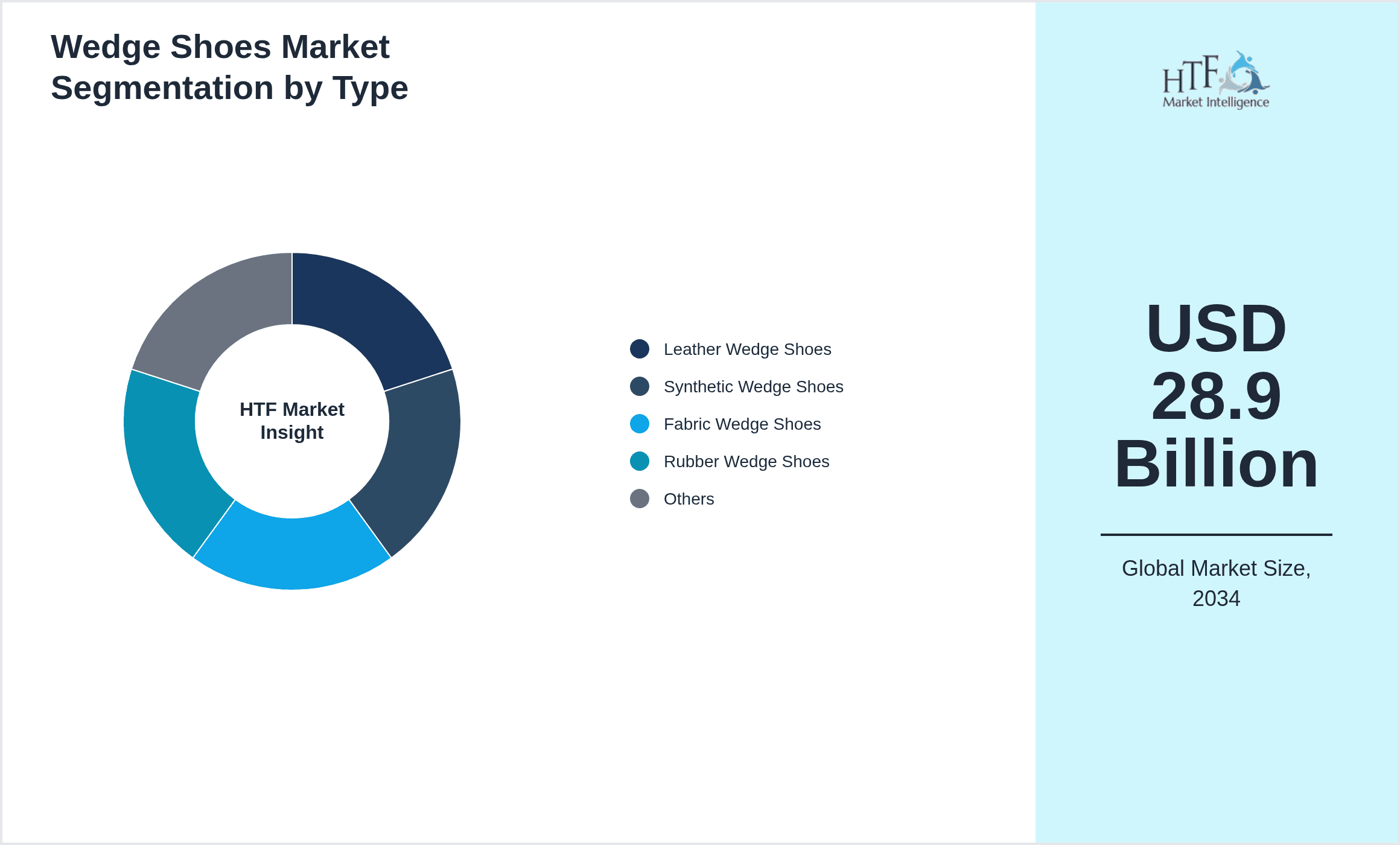
Global Wedge Shoes Market is segmented by Type (Leather Wedge Shoes, Synthetic Wedge Shoes, Fabric Wedge Shoes, Rubber Wedge Shoes, Others), Application (Casual Wear, Formal Wear, Outdoor Activities, Party Wear, Workwear), Distribution Channel (Online Retail, Specialty Stores, Department Stores, Brand Outlets), End-User Age Group (18-25 Years, 26-35 Years, 36-50 Years, Above 50 Years), and Geography (North America, LATAM, West Europe, Central & Eastern Europe, Northern Europe, Southern Europe, East Asia, Southeast Asia, South Asia, Central Asia, Oceania, MEA)
Pricing
Report Overview
Executive Summary
- •The global wedge shoes market comprises a diverse range of footwear designed with a sole that gradually elevates from the toe to the heel, providing both comfort and aesthetic appeal. This market includes types such as leather, synthetic, fabric, rubber, and other materials, which serve applications including casual wear, formal occasions, outdoor activities, party wear, and workwear. The importance of wedge shoes lies in their ergonomic design that offers users enhanced stability and comfort while adding height, making them a favored choice among various demographics worldwide. The market's scope extends across major global regions, with North America dominating in market share and Asia-Pacific showing the fastest growth due to rising fashion consciousness and increasing disposable incomes. Technological advancements in material science and design innovation have further propelled market expansion. Additionally, the evolving consumer preferences towards stylish yet comfortable footwear have reinforced the wedge shoes market's prominence in the global footwear industry. This report provides a detailed analysis of market dynamics, segmentation, competitive landscape, and future outlook from 2025 to 2034.
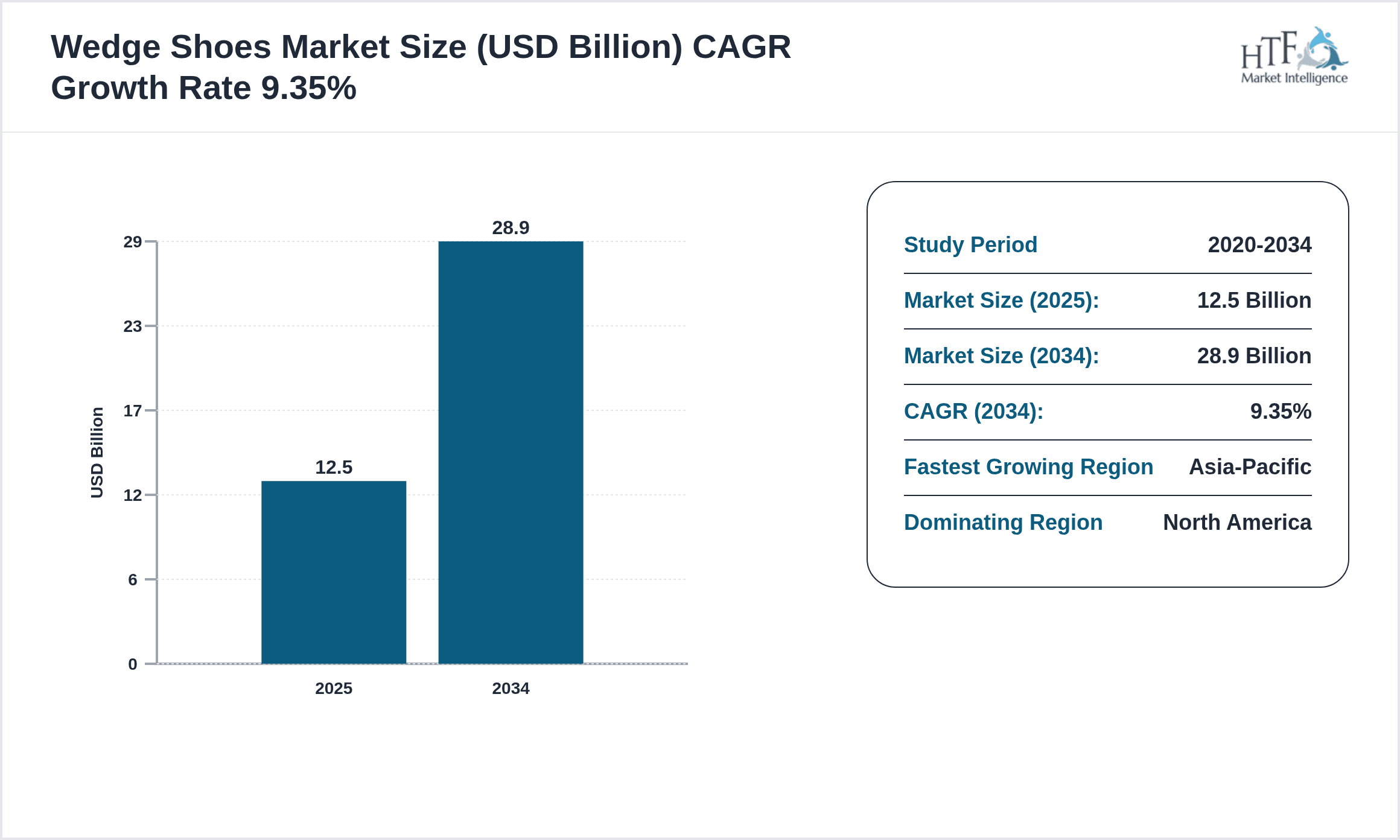
- •Key market highlights include a base market size of USD 12.5 Billion in 2025, projected to reach USD 28.9 Billion by 2034 at a CAGR of 9.35%. North America leads the market with the highest share, driven by strong demand for premium leather wedge shoes and well-established retail infrastructure. Asia-Pacific is the fastest-growing region fueled by urbanization, rising middle-class population, and expanding e-commerce platforms. Leather remains the dominating product type due to its durability and premium appeal, while synthetic materials register the fastest growth, benefiting from innovations in sustainable and affordable alternatives. Casual wear constitutes the largest application segment, reflecting consumer preference for versatile footwear. The growth trajectory is supported by increasing fashion trends, product innovations, and strategic collaborations among key players worldwide.
- •Wedge shoes offer a unique value proposition by combining fashion, comfort, and functionality, appealing to a broad consumer base including women, professionals, and fashion enthusiasts. The strategic importance of this market lies in its ability to address evolving style preferences while meeting ergonomic demands, positioning it as a critical segment within the global footwear industry. Stakeholders including manufacturers, retailers, and designers leverage trends such as sustainable materials, customization, and digital sales channels to enhance market presence. The growing emphasis on comfortable yet stylish footwear in workplaces and social settings further strengthens market demand. Continuous innovation in design and materials, along with expanding global distribution networks, ensures wedge shoes remain a key contributor to footwear market growth and profitability.
Competitive Landscape
The competitive environment of the global wedge shoes market is characterized by diversified operating strategies aimed at sustaining and enhancing market presence. Market leaders focus on product innovation, incorporating sustainable and high-performance materials to meet consumer demands for comfort and style. Strategic partnerships with fashion designers and influencers help companies expand brand visibility and reach new demographics. Global expansion through entry into emerging markets facilitates revenue growth and portfolio diversification. Companies invest heavily in digital transformation to optimize e-commerce platforms, enhancing customer experience and streamlining supply chains. Mergers and acquisitions enable consolidation and access to new technologies and markets. Pricing strategies are tailored to balance affordability and premium positioning. Distribution channels include multi-brand outlets, specialty stores, and online marketplaces, allowing flexible consumer access. The adoption of advanced manufacturing technologies improves production efficiency and product quality. Overall, competitive differentiation is driven by innovation, brand equity, global footprint, and responsiveness to emerging consumer trends.
Key Players in Wedge Shoes Market
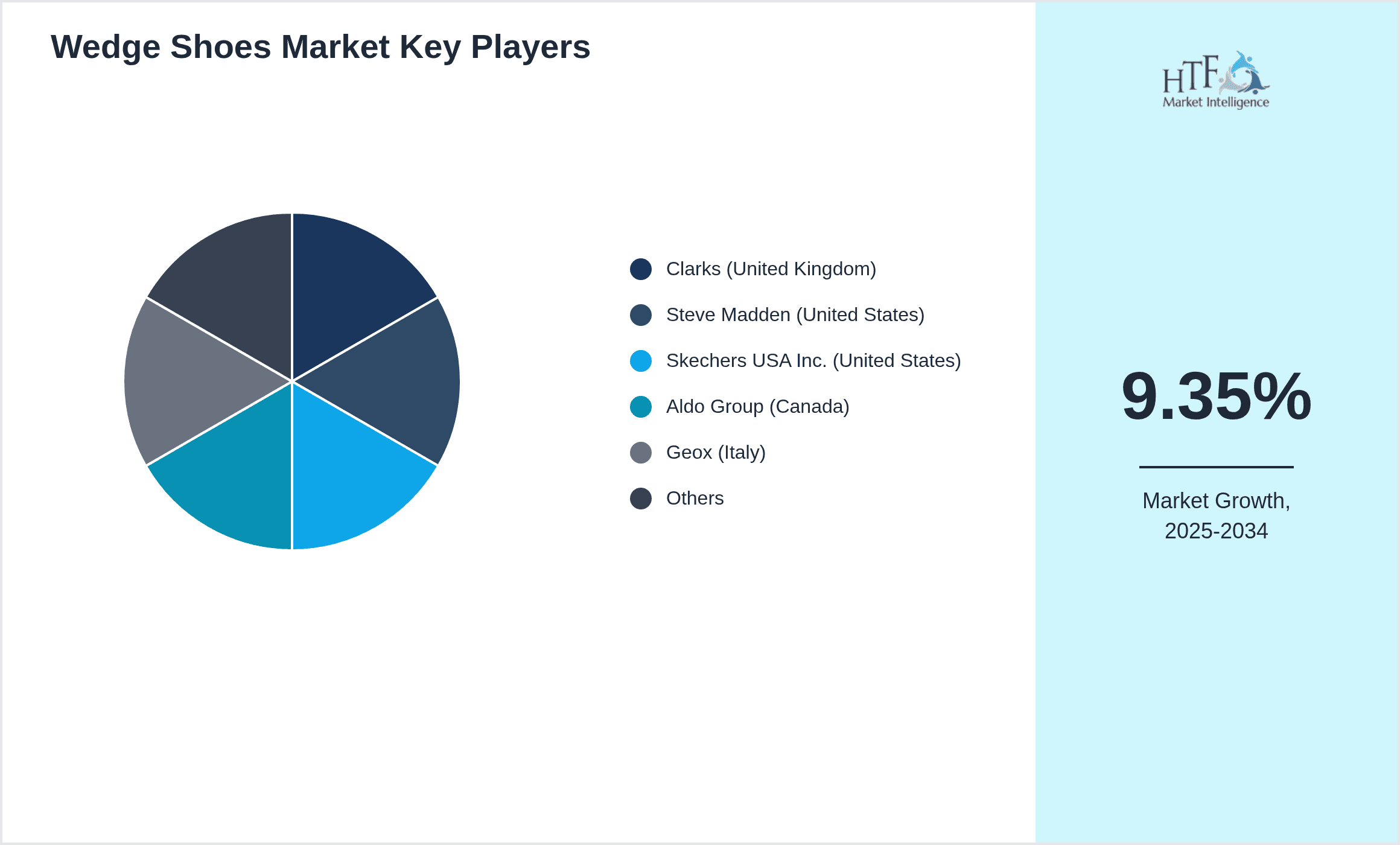
- •Clarks (United Kingdom)
- •Steve Madden (United States)
- •Skechers USA Inc. (United States)
- •Aldo Group (Canada)
- •Geox (Italy)
- •Calvin Klein (United States)
- •Michael Kors (United States)
- •ECCO (Denmark)
- •Naturalizer (United States)
- •Nine West (United States)
- •Cole Haan (United States)
- •Vionic Group LLC (United States)
- •Dr. Scholl's (United States)
- •Tamaris (Germany)
- •Bata Corporation (Switzerland)
- •Clarks Asia Pacific (India)
- •Fossil Group (United States)
- •Guess? Inc. (United States)
- •Timberland (United States)
- •Bruno Magli (Italy)

Market Breakdown
- •By Type
- ◦Leather Wedge Shoes
- ◦Synthetic Wedge Shoes
- ◦Fabric Wedge Shoes
- ◦Rubber Wedge Shoes
- ◦Others
- •By Application
- ◦Casual Wear
- ◦Formal Wear
- ◦Outdoor Activities
- ◦Party Wear
- ◦Workwear
- •By Distribution Channel
- ◦Online Retail
- ◦Specialty Stores
- ◦Department Stores
- ◦Brand Outlets
- •By End-User Age Group
- ◦18-25 Years
- ◦26-35 Years
- ◦36-50 Years
- ◦Above 50 Years
Growth Dynamics
Rising disposable income and increasing fashion consciousness globally fuel demand for wedge shoes, as consumers seek stylish yet comfortable footwear options. The surge in e-commerce adoption facilitates access to diverse product portfolios, increasing consumer reach. Technological advancements in material engineering enable production of lightweight, durable, and sustainable wedge shoes, appealing to environmentally aware customers. Collaborations between footwear brands and fashion influencers amplify market visibility and trend adoption. Additionally, urbanization and the growing working female population contribute to elevated demand for ergonomic yet fashionable workwear footwear. Recent launches of eco-friendly synthetic materials by leading companies bolster market growth. For example, Steve Madden's 2024 introduction of plant-based synthetic wedges has gained significant traction among young consumers. These factors collectively drive the expansion of the global wedge shoes market.
Market Trends
Sustainable and eco-friendly wedge shoes are gaining prominence as environmental concerns shape consumer preferences. Brands increasingly adopt recycled materials and biodegradable components, aligning with global sustainability goals. Digital customization platforms allow customers to personalize wedge shoe designs, enhancing user engagement and satisfaction. The integration of smart technologies, such as pressure-sensing insoles for enhanced comfort, is emerging as a futuristic trend. Additionally, the rise of omnichannel retail strategies combines online and offline experiences, optimizing consumer convenience. Collaborations between luxury fashion houses and sportswear companies introduce hybrid wedge designs blending style and performance. The growing influence of social media fashion communities accelerates trend dissemination and drives demand for innovative wedge shoe collections. These trends collectively redefine the market landscape, creating new avenues for growth and differentiation.
Market Opportunities
Expansion into emerging markets presents significant growth opportunities due to rising urbanization and disposable incomes. Development of gender-neutral wedge shoe designs addresses evolving consumer inclusivity demands, opening untapped market segments. Integration of augmented reality in online retail platforms enhances customer experience by enabling virtual try-ons, reducing return rates and increasing conversion. Collaborations with sustainable material suppliers foster innovation in eco-friendly product lines, attracting environmentally conscious buyers. Additionally, increasing demand for orthopedic wedge shoes provides niche market potential, supported by aging populations and health awareness. Strategic partnerships with fashion brands to co-develop limited edition collections create exclusivity and brand loyalty. The rising trend of athleisure inspires hybrid wedge shoe models combining style and functionality. These opportunities collectively empower market players to diversify offerings and capture new customer bases.
Market Challenges
High production costs associated with premium materials and sustainable manufacturing processes constrain profit margins for wedge shoe manufacturers. Intense competition from alternative footwear styles such as sneakers and flats limits market share growth. Supply chain disruptions, exacerbated by geopolitical tensions and global logistics issues, affect timely product availability. Counterfeit products and grey market imports undermine brand reputation and revenue. Variability in consumer preferences across regions complicates product standardization and inventory management. Additionally, the seasonal nature of wedge shoe demand leads to fluctuating sales cycles, impacting cash flow stability. Recent challenges include rising raw material prices that affect synthetic and leather segments differently. For instance, increased tariffs on leather imports in certain regions have led to cost-push inflation. These challenges necessitate agile supply chain strategies and innovation to sustain competitive advantage.
Regulatory Framework
The global wedge shoes market is influenced by evolving regulations focused on environmental sustainability and product safety enacted between 2020 and 2025. Key regulations include restrictions on hazardous substances in manufacturing processes, mandating compliance with international standards such as REACH and CPSIA. Countries have introduced labeling requirements to ensure transparency regarding material composition and origin, facilitating consumer awareness. Recent policies promote circular economy practices, encouraging manufacturers to adopt recyclable and biodegradable materials. Additionally, labor laws pertaining to ethical manufacturing and fair wages in footwear production hubs have been strengthened, impacting sourcing strategies. Compliance with these regulations drives innovation in sustainable materials and ethical production, shaping market dynamics. Companies investing in certification and adherence to these frameworks gain competitive advantages by meeting consumer and regulatory expectations globally.
Market Intelligence
- •Recent market developments and strategic initiatives are continuously tracked through industry publications, company announcements, and regulatory filings. For the most current information, stakeholders are advised to monitor official corporate communications and recognized market intelligence platforms.
- •Recent market developments and strategic initiatives are continuously tracked through industry publications, company announcements, and regulatory filings. For the most current information, stakeholders are advised to monitor official corporate communications and recognized market intelligence platforms.
- •Recent market developments and strategic initiatives are continuously tracked through industry publications, company announcements, and regulatory filings. For the most current information, stakeholders are advised to monitor official corporate communications and recognized market intelligence platforms.
- •Recent market developments and strategic initiatives are continuously tracked through industry publications, company announcements, and regulatory filings. For the most current information, stakeholders are advised to monitor official corporate communications and recognized market intelligence platforms.
- •Source: Industry Publications, Company Announcements, Regulatory Filings
Regional Outlook
The North America currently holds a significant share of the market, primarily due to several key factors: increasing consumption rates, a burgeoning population, and robust economic momentum. These elements collectively drive demand, positioning this region as a leader in the market. On the other hand, Asia-Pacific is rapidly emerging as the fastest-growing area within the industry. This remarkable growth can be attributed to swift infrastructure development, the expansion of various industrial sectors, and a marked increase in consumer demand. These dynamics make this region a crucial player in shaping future market growth.
In our report, we cover a comprehensive analysis of the following regions and countries:
- North America
- LATAM
- West Europe
- Central & Eastern Europe
- Northern Europe
- Southern Europe
- East Asia
- Southeast Asia
- South Asia
- Central Asia
- Oceania
- MEA
| Feature | Details |
|---|---|
| Base Year Market Size | USD 12.5 Billion |
| Forecast Year Market Size | USD 28.9 Billion |
| CAGR | 9.35% |
| Forecast Period | 2026 to 2033 |
| YoY Growth | 9.35% |
| Scope of Report | Market is segmented by Type (Leather Wedge Shoes, Synthetic Wedge Shoes, Fabric Wedge Shoes, Rubber Wedge Shoes, Others), Application (Casual Wear, Formal Wear, Outdoor Activities, Party Wear, Workwear), Distribution Channel (Online Retail, Specialty Stores, Department Stores, Brand Outlets), End-User Age Group (18-25 Years, 26-35 Years, 36-50 Years, Above 50 Years) |
| Regions Covered | North America, LATAM, West Europe, Central & Eastern Europe, Northern Europe, Southern Europe, East Asia, Southeast Asia, South Asia, Central Asia, Oceania, MEA |
| Key Companies | Clarks (United Kingdom), Steve Madden (United States), Skechers USA Inc. (United States), Aldo Group (Canada), Geox (Italy) |
Global Wedge Shoes Market Size, Growth & Revenue 2025-2034 - Table of Contents
Frequently Asked Questions (FAQ):
The Compact Track Loaders market is projected to grow at a CAGR of 6.8% from 2025 to 2030, driven by increasing demand in construction and agricultural sectors.
North America currently leads the market with approximately 45% market share, followed by Europe at 28% and Asia-Pacific at 22%. The remaining regions account for 5% of the global market.
Key growth drivers include increasing construction activities, rising demand for versatile equipment in agriculture, technological advancements in track loader design, and growing preference for compact equipment in urban construction projects.