
Global Bleach Market Size, Growth & Revenue 2025-2034
Global Bleach Market is segmented by Type (Liquid Bleach, Powder Bleach, Gel Bleach, Spray Bleach, Others), Application (Household Cleaning, Industrial Cleaning, Water Treatment, Textile Bleaching, Paper & Pulp), Formulation Technology (Chlorine-based, Oxygen-based, Non-Chlorine-based), End-User Industry (Residential, Commercial, Industrial), and Geography (North America, LATAM, West Europe, Central & Eastern Europe, Northern Europe, Southern Europe, East Asia, Southeast Asia, South Asia, Central Asia, Oceania, MEA)
Pricing
Report Overview
Executive Summary
- •The global bleach market comprises diverse chemical formulations utilized for cleaning, disinfecting, and bleaching across various sectors such as household, industrial, water treatment, textile, and paper & pulp industries. This market is essential due to its significant role in hygiene maintenance, pathogen control, and processing efficiency. It covers liquid, powder, gel, and spray bleach products, each tailored to specific applications with varying chemical compositions and concentration levels. Increasing consumer awareness regarding sanitation, coupled with rising industrial demands for effective bleaching agents, propels the market growth worldwide. The global bleach market also reflects ongoing innovations in safer, eco-friendly formulations aligned with regulatory requirements, enhancing the product portfolio’s versatility and market penetration.
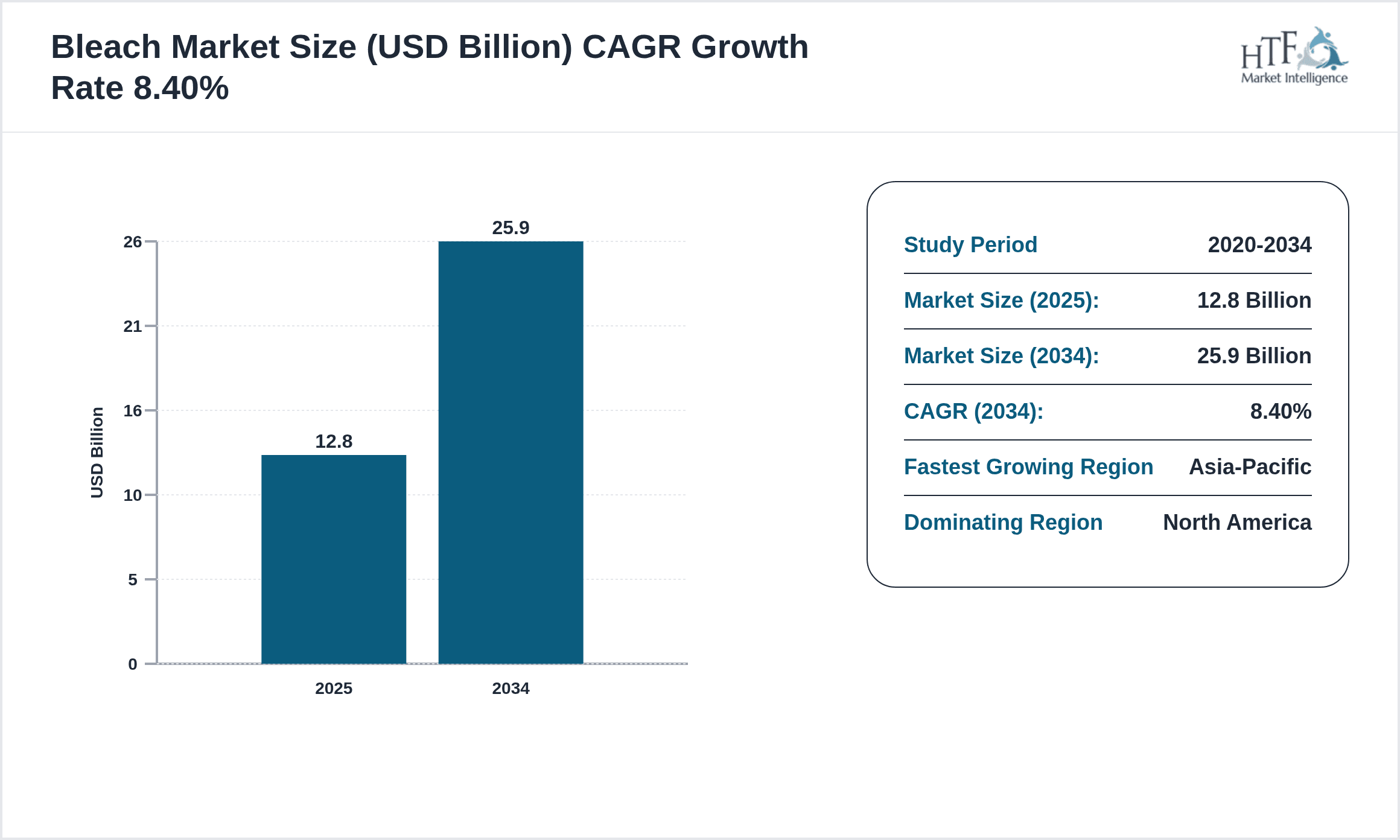
- •The market demonstrates robust growth prospects with a compound annual growth rate of 8.4% from 2025 to 2034, driven by expanding household cleaning needs and industrial applications. North America currently dominates the market, holding the largest share due to established infrastructure and stringent hygiene standards, while Asia-Pacific exhibits the fastest growth rate fueled by urbanization and industrial expansion. Liquid bleach leads product types by market share, favored for its ease of use and effectiveness. Spray bleach emerges as the fastest-growing segment, propelled by convenience and targeted cleaning applications. These factors collectively underscore the vibrant growth trajectory and evolving dynamics of the global bleach industry.
- •The bleach market offers significant strategic value across multiple industries, providing essential disinfection and bleaching solutions critical for health, safety, and industrial processing. Its importance is highlighted by integration into water treatment protocols, textile manufacturing, and paper production, ensuring product quality and compliance with environmental standards. Businesses benefit from continuous innovation in product formulations, enabling differentiation and addressing consumer demand for sustainable and high-performance solutions. The market’s expansion presents opportunities for chemical manufacturers, distributors, and end-users by fostering collaborations, technological adoption, and regional market penetration, contributing to long-term value creation globally.
Competitive Landscape
The global bleach market operates within a highly competitive landscape characterized by strategic partnerships, innovation-driven product development, and extensive geographic expansion initiatives. Leading companies focus on enhancing their product portfolio through research and development to meet evolving regulatory standards and consumer preferences for safer, environmentally friendly formulations. Adoption of advanced manufacturing technologies and digital supply chain integration strengthens operational efficiency and market responsiveness. Mergers and acquisitions serve as key strategies to consolidate market presence, access new customer bases, and leverage complementary capabilities. Companies invest in sustainability initiatives and eco-certifications to align with global environmental mandates, while aggressive marketing and distribution expansion in emerging regions position them favorably against competitors. The interplay of these strategies fosters a dynamic competitive environment, facilitating sustained growth and market leadership.
Leading Companies in Bleach Market
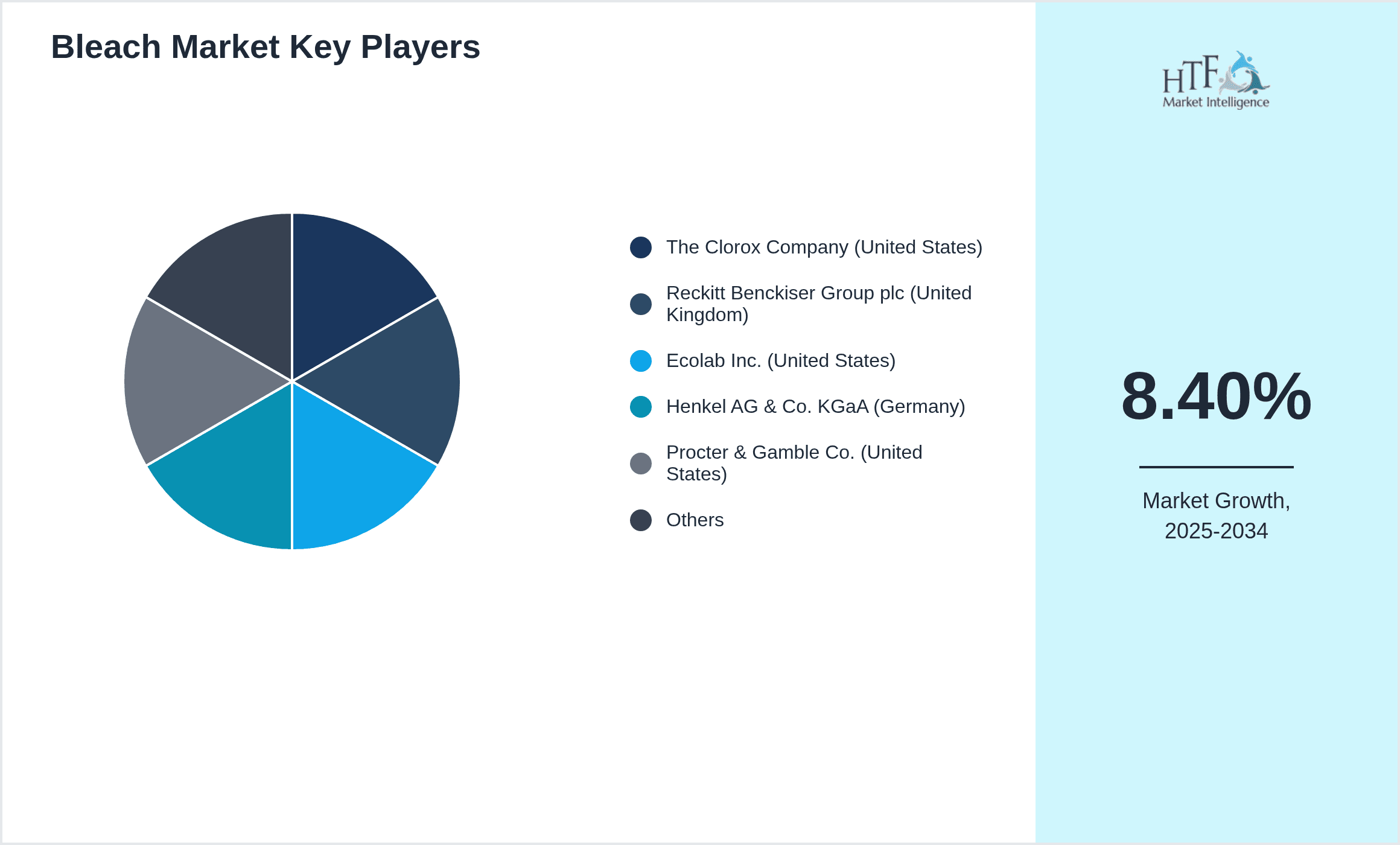
- •The Clorox Company (United States)
- •Reckitt Benckiser Group plc (United Kingdom)
- •Ecolab Inc. (United States)
- •Henkel AG & Co. KGaA (Germany)
- •Procter & Gamble Co. (United States)
- •Kao Corporation (Japan)
- •Unilever PLC (United Kingdom)
- •Mitsubishi Chemical Holdings Corporation (Japan)
- •BASF SE (Germany)
- •Solvay S.A. (Belgium)
- •Dow Inc. (United States)
- •Akzo Nobel N.V. (Netherlands)
- •Clariant AG (Switzerland)
- •Evonik Industries AG (Germany)
- •Lanxess AG (Germany)
- •Henan Xinboda Chemical Co., Ltd. (China)
- •Zhejiang Juhua Co., Ltd. (China)
- •P&G Chemicals Co., Ltd. (United States)
- •Lion Corporation (Japan)
- •SC Johnson & Son, Inc. (United States)
Market Breakdown
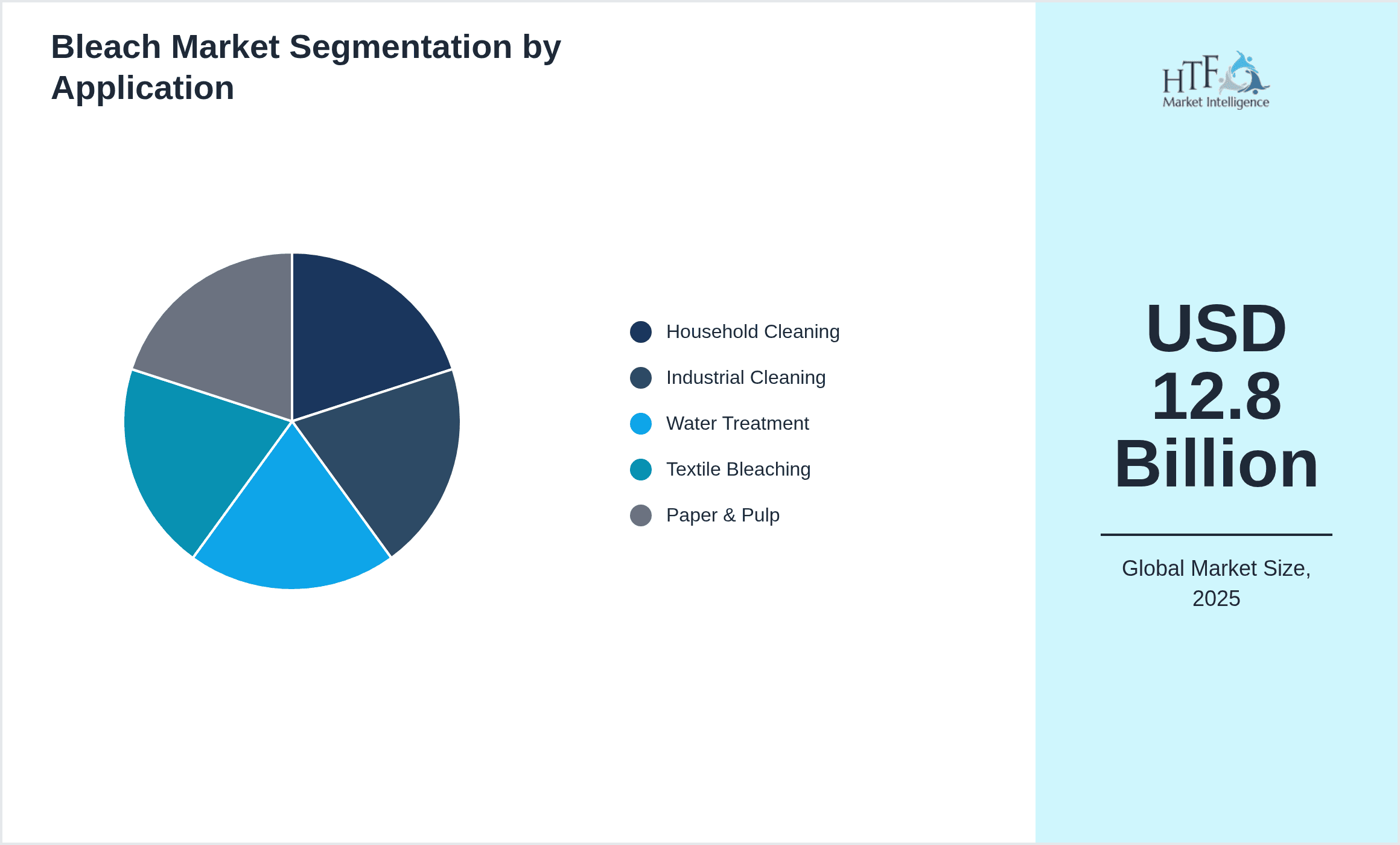
- •By Type
- ◦Liquid Bleach
- ◦Powder Bleach
- ◦Gel Bleach
- ◦Spray Bleach
- ◦Others
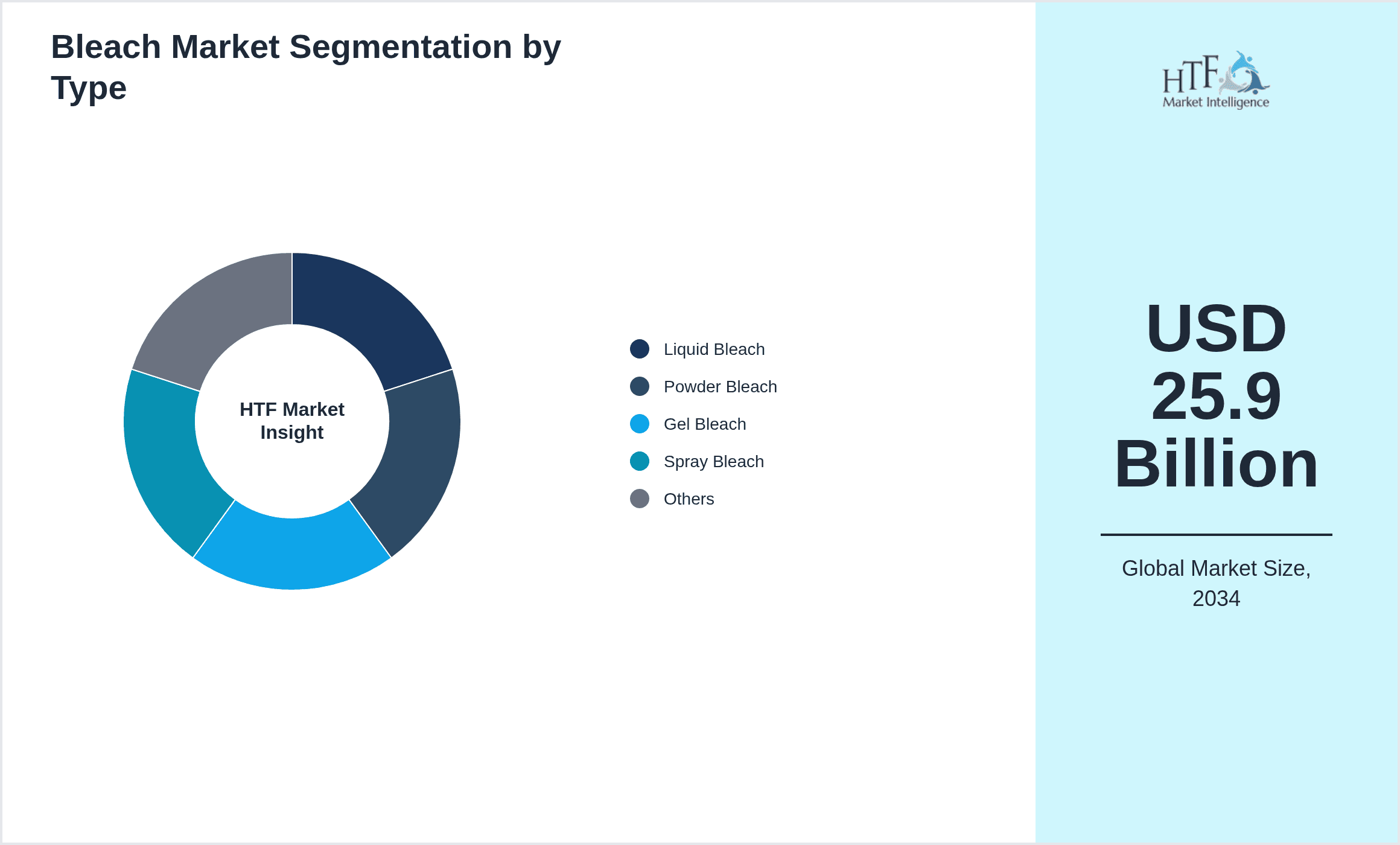
- •By Application
- ◦Household Cleaning
- ◦Industrial Cleaning
- ◦Water Treatment
- ◦Textile Bleaching
- ◦Paper & Pulp
- •By Formulation Technology
- ◦Chlorine-based
- ◦Oxygen-based
- ◦Non-Chlorine-based
- •By End-User Industry
- ◦Residential
- ◦Commercial
- ◦Industrial
Growth Dynamics
Expanding urbanization and rising consumer hygiene awareness globally significantly boost demand for household bleach products. The COVID-19 pandemic underscored the importance of disinfectants, leading to increased household consumption and sustained demand for liquid bleach formulations. Industrial sectors requiring sanitation, including food processing and healthcare, intensify bleach utilization, creating robust industrial market growth. Asia-Pacific’s rapid industrialization and population density contribute to the fastest regional market expansion, with governments enforcing stricter sanitation regulations. Innovations in eco-friendly and concentrated bleach products address environmental concerns, supporting market growth. Strategic partnerships and product launches by major players further stimulate market expansion by meeting diverse consumer needs and regulatory standards.
Market Trends
The global bleach market is witnessing a shift toward environmentally sustainable and less hazardous formulations, driven by increasing regulatory pressures and consumer preferences. Adoption of oxygen-based and non-chlorine bleach products is rising as companies innovate to reduce ecological impact. Digitalization in supply chains and e-commerce platforms facilitates broader product reach and consumer engagement. The growing trend of multi-functional cleaning products incorporating bleach enhances convenience and market appeal. Regional diversification with increased focus on emerging economies, particularly in Asia-Pacific and Latin America, expands market opportunities and competitive dynamics. Companies also invest in smart packaging and concentrated formulations to reduce waste and transportation costs, aligning with global sustainability goals.
Market Opportunities
Emerging markets in Asia-Pacific and Latin America present substantial growth opportunities due to increasing industrial activities, urbanization, and rising consumer expenditure on hygiene products. The water treatment sector offers expanding potential as governments enforce stricter water quality regulations, necessitating effective bleaching agents. Innovations in formulation technologies targeting safer, bio-based ingredients open avenues for product differentiation and premium market segments. Expansion into commercial cleaning services and institutional sanitation contracts provide steady revenue streams. Collaborations between chemical manufacturers and end-users enhance customized solutions, driving market penetration. Digital marketing and direct-to-consumer sales channels allow companies to capitalize on evolving consumer behaviors and increase brand visibility.
Market Challenges
Stringent environmental regulations regarding chlorine emissions and chemical safety pose significant challenges to bleach manufacturers, requiring costly reformulations and compliance measures. Raw material price volatility impacts production costs and profitability, particularly for chlorine and hydrogen peroxide derivatives. Consumer concerns over chemical exposure and health risks necessitate transparent labeling and safer product development, increasing R&D investments. Market saturation in developed regions intensifies competition and price pressures. Supply chain disruptions, exacerbated by global geopolitical events, affect raw material availability and logistics. Smaller players face difficulties scaling operations to meet regulatory and technological demands, limiting market access. Addressing these challenges requires strategic innovation, compliance management, and effective stakeholder communication.
Regulatory Framework
Recent regulations such as the European Union’s REACH (Registration, Evaluation, Authorization and Restriction of Chemicals) updates between 2020 and 2025 have imposed stringent requirements on chemical substances used in bleach formulations, necessitating comprehensive safety assessments and restrictions on hazardous components. North America’s EPA (Environmental Protection Agency) has enhanced guidelines for disinfectant efficacy and environmental impact, influencing product registration and usage standards. Asia-Pacific countries including China and India have introduced tighter environmental norms targeting industrial effluents containing bleaching agents, promoting sustainable production practices. These regulatory developments drive innovation toward greener bleach products, ensuring consumer safety and environmental protection while presenting compliance challenges for manufacturers worldwide.
Recent Industry Insights
Recent market developments and strategic initiatives are continuously tracked through industry publications, company announcements, and regulatory filings. For the most current information, stakeholders are advised to monitor official corporate communications and recognized market intelligence platforms.
Recent Merger and Acquisition
Recent market developments and strategic initiatives are continuously tracked through industry publications, company announcements, and regulatory filings. For the most current information, stakeholders are advised to monitor official corporate communications and recognized market intelligence platforms.
Regional Outlook
The North America currently holds a significant share of the market, primarily due to several key factors: increasing consumption rates, a burgeoning population, and robust economic momentum. These elements collectively drive demand, positioning this region as a leader in the market. On the other hand, Asia-Pacific is rapidly emerging as the fastest-growing area within the industry. This remarkable growth can be attributed to swift infrastructure development, the expansion of various industrial sectors, and a marked increase in consumer demand. These dynamics make this region a crucial player in shaping future market growth.
In our report, we cover a comprehensive analysis of the following regions and countries:
- North America
- LATAM
- West Europe
- Central & Eastern Europe
- Northern Europe
- Southern Europe
- East Asia
- Southeast Asia
- South Asia
- Central Asia
- Oceania
- MEA
| Feature | Details |
|---|---|
| Base Year Market Size | USD 12.8 Billion |
| Forecast Year Market Size | USD 25.9 Billion |
| CAGR | 8.4% |
| Forecast Period | 2026 to 2033 |
| YoY Growth | 8.1% |
| Scope of Report | Market is segmented by Type (Liquid Bleach, Powder Bleach, Gel Bleach, Spray Bleach, Others), Application (Household Cleaning, Industrial Cleaning, Water Treatment, Textile Bleaching, Paper & Pulp), Formulation Technology (Chlorine-based, Oxygen-based, Non-Chlorine-based), End-User Industry (Residential, Commercial, Industrial) |
| Regions Covered | North America, LATAM, West Europe, Central & Eastern Europe, Northern Europe, Southern Europe, East Asia, Southeast Asia, South Asia, Central Asia, Oceania, MEA |
| Key Companies | The Clorox Company (United States), Reckitt Benckiser Group plc (United Kingdom), Ecolab Inc. (United States), Henkel AG & Co. KGaA (Germany), Procter & Gamble Co. (United States) |
Global Bleach Market Size, Growth & Revenue 2025-2034 - Table of Contents
Frequently Asked Questions (FAQ):
The Compact Track Loaders market is projected to grow at a CAGR of 6.8% from 2025 to 2030, driven by increasing demand in construction and agricultural sectors.
North America currently leads the market with approximately 45% market share, followed by Europe at 28% and Asia-Pacific at 22%. The remaining regions account for 5% of the global market.
Key growth drivers include increasing construction activities, rising demand for versatile equipment in agriculture, technological advancements in track loader design, and growing preference for compact equipment in urban construction projects.