
Global Modified Polyphenylene Ether Market Size, Growth & Revenue 2025-2034
Global Modified Polyphenylene Ether Market is segmented by Product Type (Blends, Composites, Virgin Resins, Recycled Materials, Specialty Grades), Application (Automotive Components, Electrical & Electronics, Consumer Goods, Industrial Machinery, Packaging), Service Type (Custom Compounding, Standard Resin Supply, Technical Support Services, After-Sales Support), Deployment Model (Bulk Supply, Pre-Formulated Pellets, Masterbatch Solutions), and Geography (North America, LATAM, West Europe, Central & Eastern Europe, Northern Europe, Southern Europe, East Asia, Southeast Asia, South Asia, Central Asia, Oceania, MEA)
Pricing
Report Overview
Executive Summary
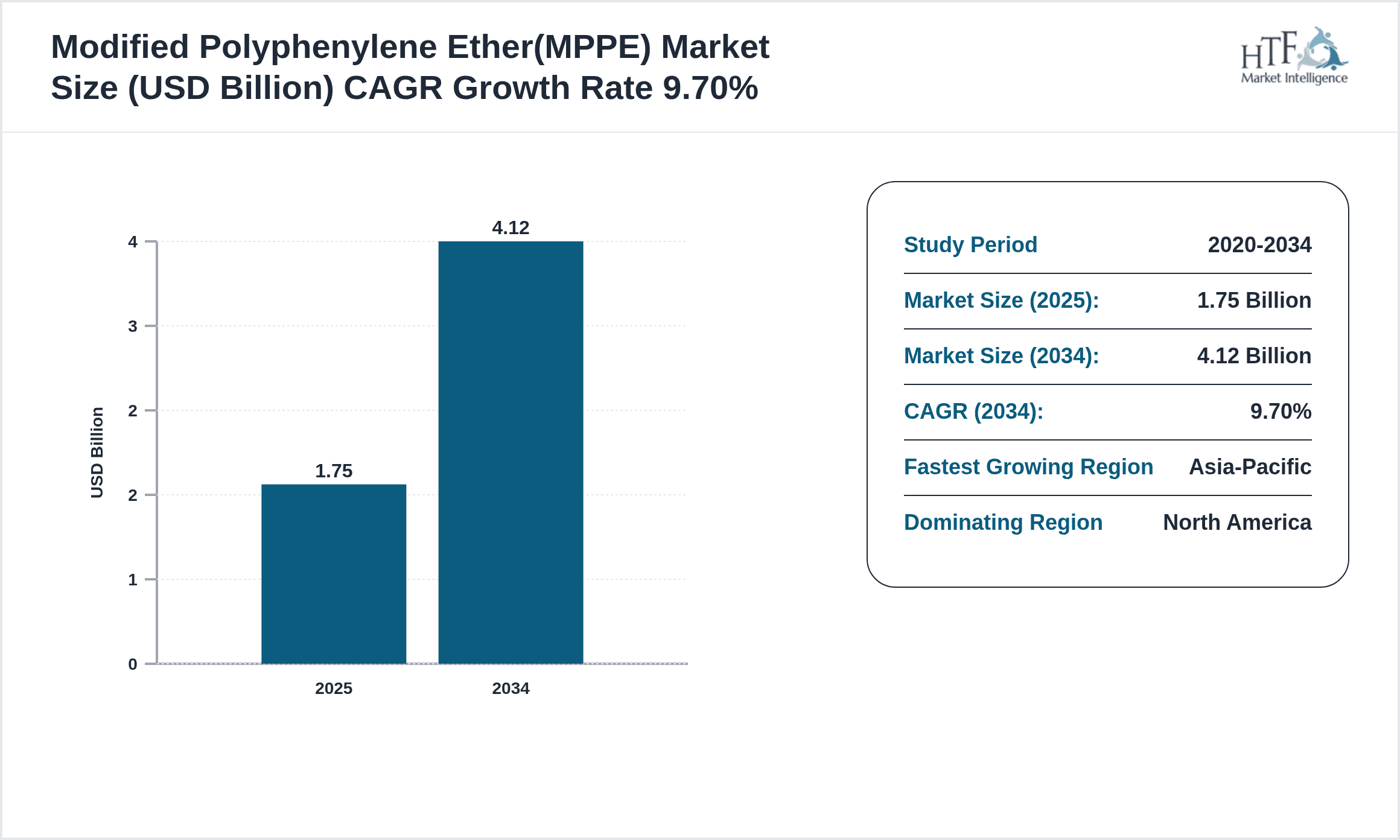
- •The global Modified Polyphenylene Ether (MPPE) market is a rapidly evolving sector characterized by the production and application of advanced polymer blends designed to meet increasing demands for materials with superior thermal, chemical, and mechanical properties. MPPE is primarily utilized in industries such as automotive, electrical and electronics, consumer goods, industrial machinery, and packaging, where enhanced durability, lightweight profiles, and resistance to degradation are critical. The market encompasses different product types including blends, composites, virgin resins, recycled materials, and specialty grades, each tailored to specific performance requirements and industry standards. The value chain integrates raw material suppliers, processors, compounders, and end users, with innovation driven by sustainability trends and regulatory pressures. Between 2020 and 2025, the market experienced steady expansion supported by rising demand in emerging markets and continuous advancements in polymer modification technologies. Forecasts indicate a compound annual growth rate (CAGR) of 9.7% through 2034, driven by increasing applications in electric vehicles, consumer electronics, and industrial automation. Leading regions such as North America dominate the market due to established manufacturing infrastructure and stringent quality requirements, while Asia-Pacific is poised as the fastest-growing region owing to rapid industrialization and investment in polymer manufacturing. Overall, the MPPE market offers significant opportunities for manufacturers and stakeholders aiming to capitalize on innovation and expanding end-use applications globally.
- •Key market highlights include the growing preference for MPPE blends in automotive lightweighting initiatives, which help improve fuel efficiency and reduce emissions. The electrical and electronics sector is witnessing increased MPPE adoption due to its excellent insulation properties and thermal resistance, critical for miniaturized devices. Rising consumer demand for durable and sustainable packaging materials further boosts MPPE applications. Market growth is supported by technological advancements in resin modification and increasing regulatory emphasis on eco-friendly materials. The forecast period anticipates a surge in specialty grade MPPE types, catering to niche applications requiring enhanced performance characteristics.
- •The MPPE market holds strategic importance across multiple industries due to its unique combination of properties such as high heat resistance, dimensional stability, and chemical inertness. This makes it invaluable for manufacturers seeking longevity and reliability in end products, particularly in automotive and electronics sectors where performance under extreme conditions is essential. The ongoing shift towards sustainability and circular economy principles further elevates MPPE’s value proposition by enabling incorporation of recycled materials and improving lifecycle management. With continuous R&D and expanding global industrialization, MPPE stands as a pivotal material in modern polymer engineering and high-performance applications.
Competitive Landscape
The global Modified Polyphenylene Ether market is marked by intense competition among established chemical manufacturers and polymer compounders who focus on innovation, strategic partnerships, and geographic expansion to consolidate market positions. Companies emphasize technological advancements in resin blending and modification techniques to enhance product performance and cater to diverse industry needs. Pricing strategies are influenced by raw material cost fluctuations and the demand for specialty grades that command premium pricing. Market entry barriers include high capital requirements, stringent regulatory standards, and the need for continuous R&D investments. Industry players adopt multi-channel distribution networks to enhance market reach globally, while regional competition intensifies particularly in Asia-Pacific, driven by burgeoning local production capacities. Strategic mergers and acquisitions have been utilized to acquire technological capabilities and expand product portfolios, reinforcing competitive advantages. The future competitive landscape will likely be shaped by the adoption of sustainable manufacturing practices, digitalization in supply chain management, and increased collaboration across the value chain to address evolving customer demands and regulatory compliances.
Leading Companies in Modified Polyphenylene Ether Market
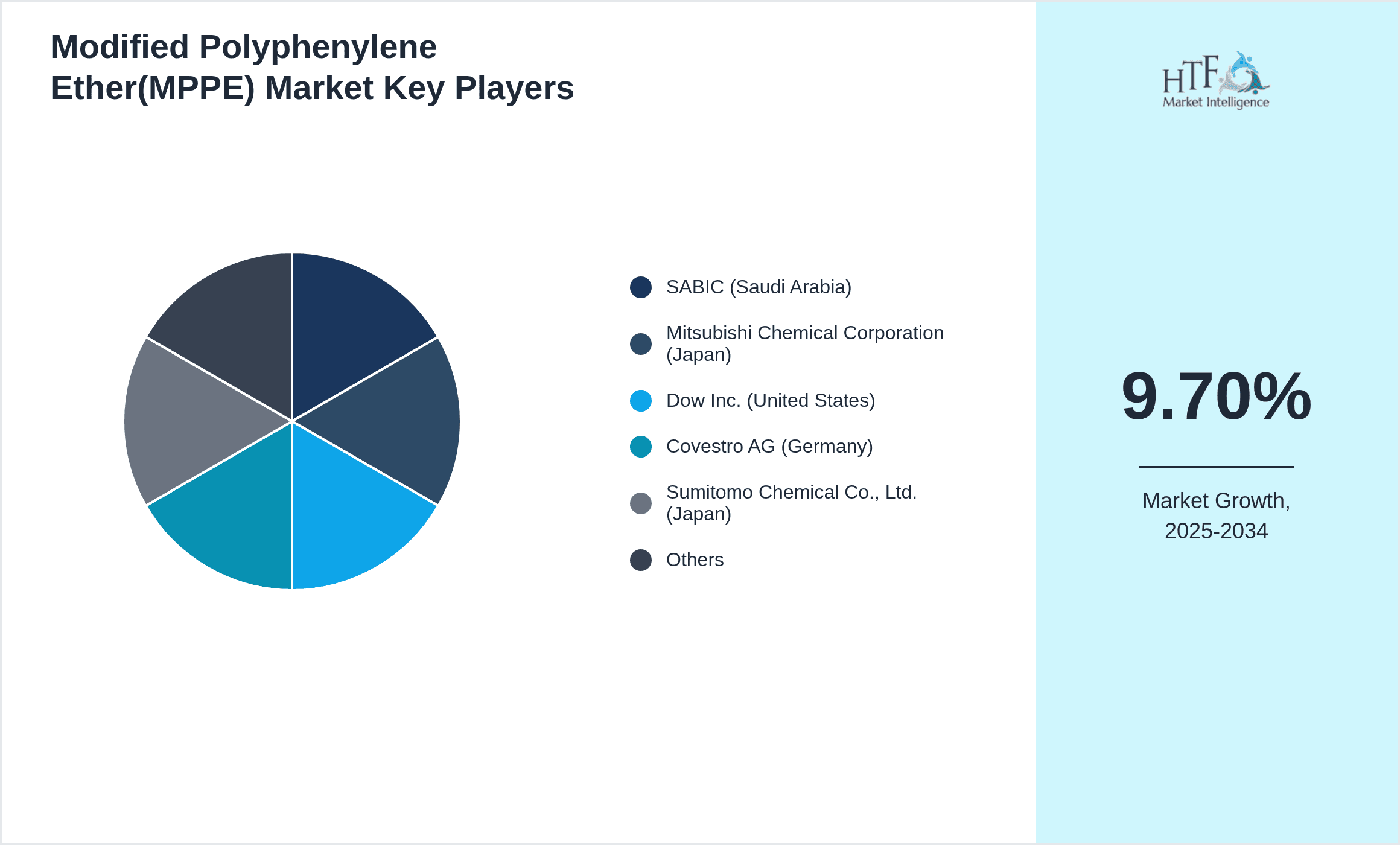
- •SABIC (Saudi Arabia)
- •Mitsubishi Chemical Corporation (Japan)
- •Dow Inc. (United States)
- •Covestro AG (Germany)
- •Sumitomo Chemical Co., Ltd. (Japan)
- •Lanxess AG (Germany)
- •BASF SE (Germany)
- •LyondellBasell Industries (Netherlands)
- •DuPont de Nemours, Inc. (United States)
- •Toray Industries, Inc. (Japan)
- •Celanese Corporation (United States)
- •Huntsman Corporation (United States)
- •Solvay S.A. (Belgium)
- •Sinopec (China)
- •Royal DSM (Netherlands)
- •PolyOne Corporation (United States)
- •ExxonMobil Chemical (United States)
- •INEOS Group (United Kingdom)
- •Kuraray Co., Ltd. (Japan)
- •Asahi Kasei Corporation (Japan)
- •Celanese Corporation (United States)
- •Arkema S.A. (France)
- •Sinopec Shanghai Petrochemical (China)
- •LG Chem Ltd. (South Korea)
- •Evonik Industries AG (Germany)
Market Breakdown
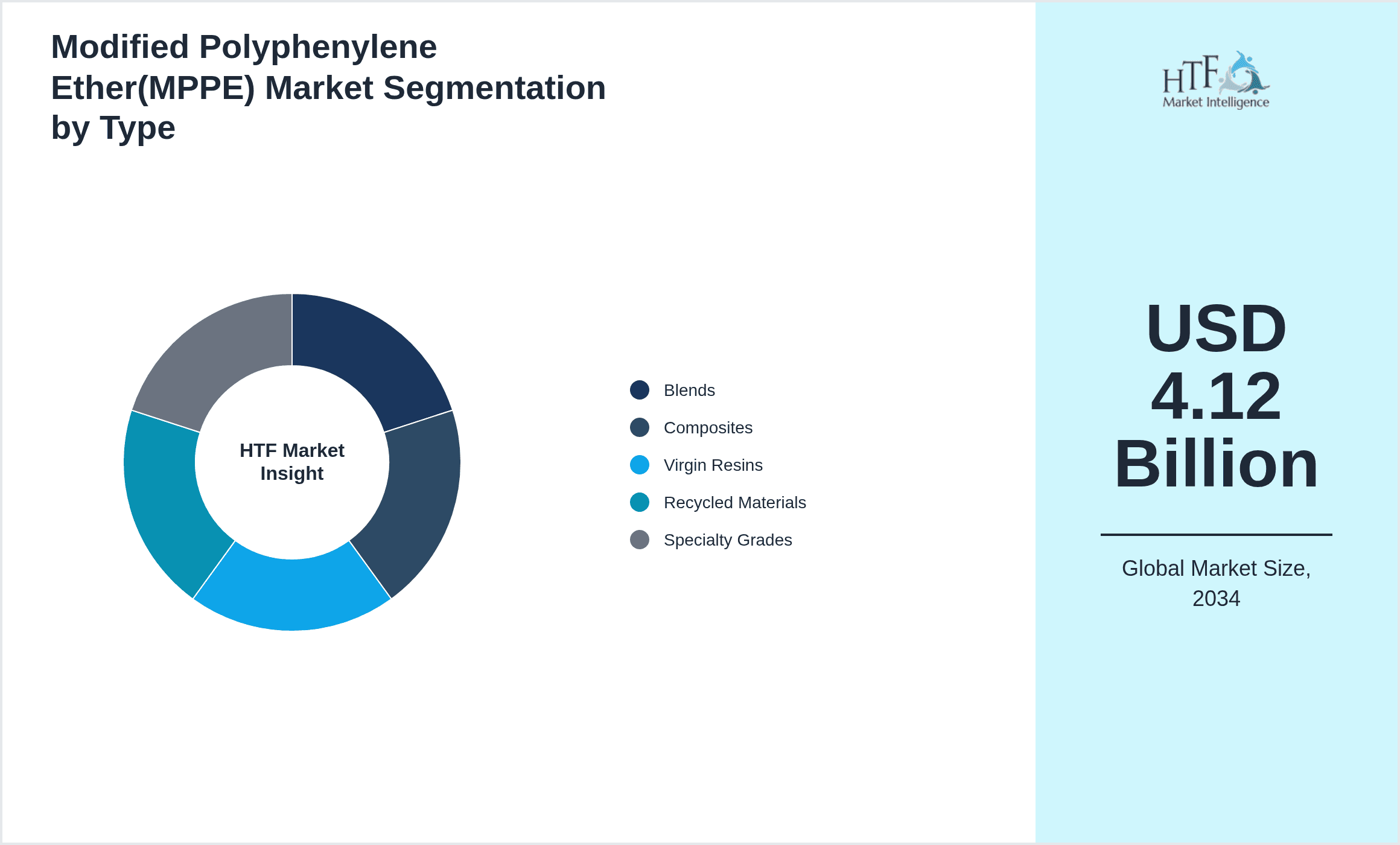
- •By Product Type
- ◦Blends
- ◦Composites
- ◦Virgin Resins
- ◦Recycled Materials
- ◦Specialty Grades
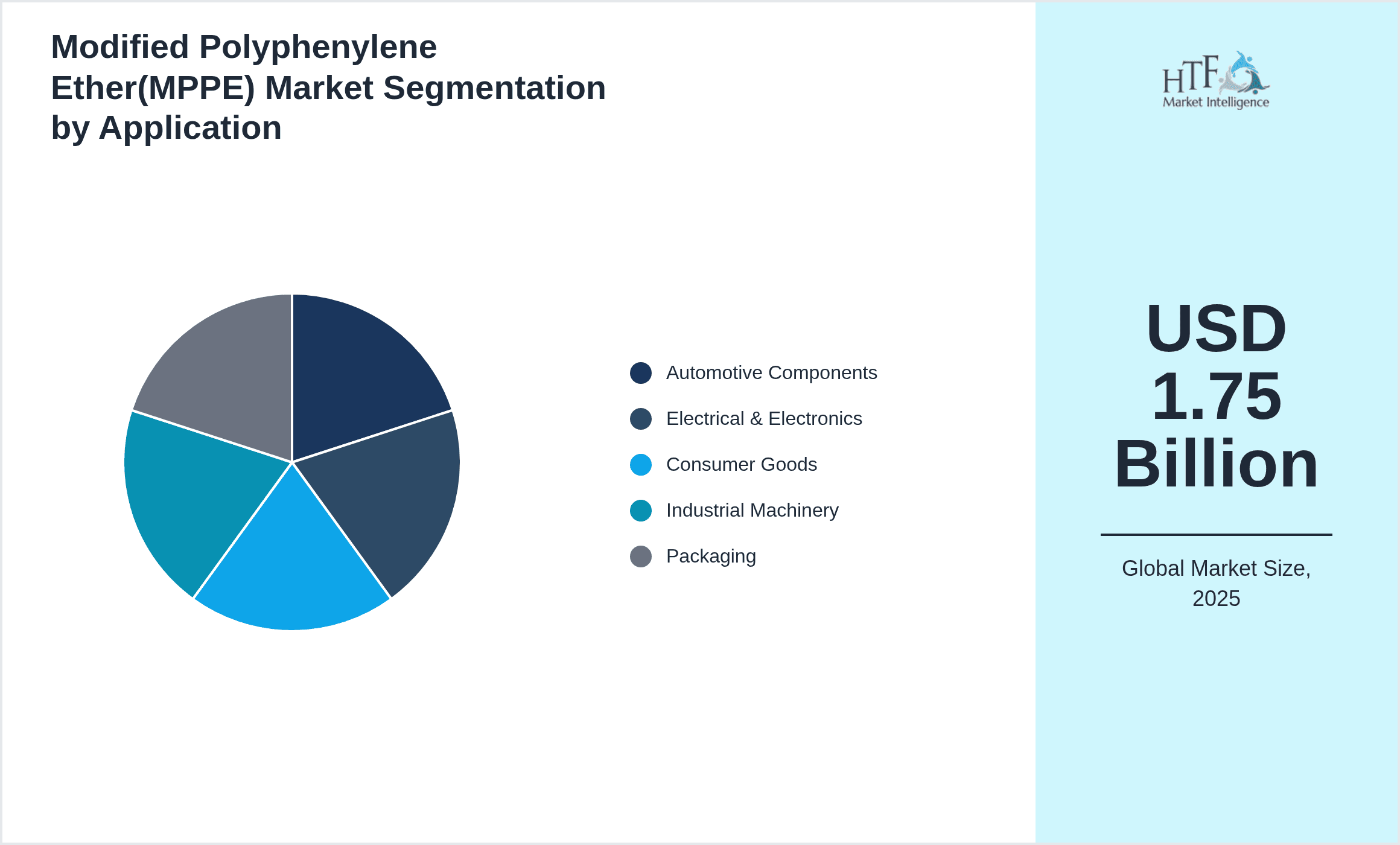
- •By Application
- ◦Automotive Components
- ◦Electrical & Electronics
- ◦Consumer Goods
- ◦Industrial Machinery
- ◦Packaging
- •By Service Type
- ◦Custom Compounding
- ◦Standard Resin Supply
- ◦Technical Support Services
- ◦After-Sales Support
- •By Deployment Model
- ◦Bulk Supply
- ◦Pre-Formulated Pellets
- ◦Masterbatch Solutions
Growth Dynamics
- •The rising demand for lightweight and fuel-efficient vehicles has driven significant MPPE adoption in automotive components, helping manufacturers meet stringent emission regulations while enhancing performance. MPPE's high heat resistance and mechanical strength are pivotal in replacing metal parts with durable polymer blends.
- •Expansion of the electrical and electronics industry, characterized by miniaturization and higher operating temperatures, fuels MPPE growth due to its superior electrical insulation and thermal stability properties critical for next-generation devices.
- •Increasing consumer preference for sustainable and recyclable materials boosts MPPE market growth, with companies innovating specialty grades incorporating recycled content without compromising performance, aligning with global sustainability goals.
- •Emerging economies in Asia-Pacific are witnessing rapid industrialization and infrastructure development, leading to increased polymer demand, including MPPE, for industrial machinery and consumer goods manufacturing, supporting robust regional expansion.
- •Technological advancements in polymer blending and compounding techniques allow for customized MPPE formulations, enabling penetration into niche applications and driving market diversification and growth.
- •Government initiatives and regulations promoting eco-friendly materials and reducing carbon footprint encourage adoption of MPPE in packaging and automotive sectors, further stimulating market growth.
- •Strategic partnerships between raw material suppliers and compounders optimize supply chains and enhance product innovation, improving market competitiveness and accelerating MPPE adoption across industries.
Market Trends
- •A growing trend toward the use of specialty grade MPPE with enhanced flame retardant and UV resistance properties is evident, catering to the stringent safety and durability requirements in electrical and automotive applications.
- •Integration of recycled materials in MPPE formulations is becoming increasingly prevalent, reflecting industry commitment to sustainability and circular economy practices without sacrificing material performance.
- •Manufacturers are increasingly investing in digitalization and automation in polymer compounding processes to improve quality consistency, reduce production costs, and speed up time-to-market for MPPE products.
- •There is a rising adoption of MPPE in emerging applications such as 3D printing and advanced composites, driven by its favorable thermal and mechanical properties, expanding the market scope.
- •Collaborations between chemical companies and end-user industries are intensifying to co-develop tailored MPPE solutions that meet specific application needs, fostering innovation and customer loyalty.
- •Market players are increasingly focusing on geographic expansion, particularly in Asia-Pacific and Latin America, to tap into growing demand and leverage cost advantages.
- •Sustainability-driven regulations globally are pushing companies to develop bio-based MPPE alternatives and reduce dependence on fossil-based feedstocks, signaling a paradigm shift in polymer development.
Market Opportunities
- •The rapid growth of electric vehicles presents significant opportunities for MPPE in battery casings, connectors, and thermal management components due to its electrical insulation and thermal stability advantages.
- •Expansion in consumer electronics, driven by demand for compact and heat-resistant components, provides lucrative avenues for specialty MPPE grades with enhanced performance features.
- •Increasing emphasis on sustainable packaging solutions opens new markets for bio-modified and recyclable MPPE blends that comply with environmental regulations and consumer preferences.
- •Emerging markets in Asia-Pacific and Latin America offer untapped potential due to infrastructure development and growing manufacturing sectors requiring advanced polymer materials like MPPE.
- •Technological innovation in polymer compounding and additive integration allows creation of customized MPPE products that cater to niche industrial applications, expanding market reach.
- •Strategic collaborations and joint ventures with OEMs and tier suppliers can accelerate product development cycles and enhance market penetration for MPPE manufacturers.
- •Government incentives and funding for advanced materials research provide opportunities to enhance MPPE formulations, driving product differentiation and competitive advantage.
Market Challenges
- •Fluctuating raw material prices, particularly for petroleum-based feedstocks, impose cost pressures on MPPE manufacturers, impacting profit margins and pricing strategies.
- •Complexities in recycling and reprocessing MPPE blends due to heterogeneous compositions create challenges in achieving circularity and sustainability goals.
- •High capital expenditure and technical expertise required for advanced polymer modification and compounding restrict market entry and expansion for smaller players.
- •Stringent regulatory standards for chemical safety, environmental compliance, and product certification vary across regions, complicating global market access for MPPE products.
- •Intense competition from alternative engineering plastics and composites with similar properties limits MPPE market share and necessitates continual innovation.
- •Supply chain disruptions and logistical challenges, exacerbated by global events, affect raw material availability and timely delivery of MPPE products to end users.
- •Limited awareness and technical knowledge among end users about MPPE benefits can hinder adoption in emerging markets and niche applications.
Regulatory Framework
- •The Registration, Evaluation, Authorization and Restriction of Chemicals (REACH) regulation, updated between 2020 and 2025, mandates comprehensive safety and environmental impact assessments for polymer materials including MPPE, ensuring compliance across the European market.
- •The U.S. Toxic Substances Control Act (TSCA) underwent significant revisions in 2021 requiring manufacturers to provide detailed chemical data and risk assessments for modified polymers, impacting MPPE producers targeting North American markets.
- •China’s Environmental Protection Law amendments implemented during 2020-2025 emphasize sustainable manufacturing and pollution control, compelling MPPE manufacturers to adopt cleaner production technologies and waste management practices.
- •The European Union’s Directive on Packaging and Packaging Waste (PPWD) enforces recycling targets and material restrictions effective from 2023, influencing MPPE formulations used in packaging applications to align with circular economy principles.
- •Government incentives and regulatory programs promoting bio-based and recyclable polymers have emerged globally, with specific funding initiatives announced between 2022 and 2025 to accelerate research and adoption of sustainable MPPE variants.
Market Intelligence
- •15th March 2025, SABIC announced the launch of a new line of specialty MPPE blends engineered for electric vehicle battery components. These blends offer enhanced thermal stability and electrical insulation properties, designed specifically to meet the rigorous demands of next-generation EV applications. The product launch aims to capture the growing EV market segment and reinforce SABIC’s position as a leader in advanced polymer materials. The new MPPE blends also incorporate recycled content aligning with global sustainability initiatives, targeting customers seeking eco-friendly solutions without compromising performance. This strategic development is expected to drive significant revenue growth for SABIC over the forecast period. Source: SABIC Official Press Release
- •10th June 2024, Dow Inc. introduced an innovative MPPE composite material tailored for high-performance electrical and electronics applications. The composite integrates nanotechnology additives to improve flame retardancy and mechanical strength while maintaining lightweight characteristics. Dow’s new MPPE composite addresses the increasing industry demand for safer, more durable plastics in consumer electronics and industrial devices. The company’s strategic focus on product innovation and sustainability is designed to enhance its competitive edge and expand market reach globally. This launch underscores Dow’s commitment to advancing polymer technology to meet evolving customer requirements. Source: Dow Inc. Corporate Announcement
- •20th January 2025, Mitsubishi Chemical Corporation announced a strategic partnership with a leading automotive manufacturer to co-develop MPPE formulations optimized for lightweight vehicle components. This collaboration focuses on enhancing fuel efficiency and reducing emissions through advanced polymer blends. The partnership includes joint R&D efforts and pilot manufacturing programs, aiming to accelerate commercialization of sustainable and high-performance MPPE products. Mitsubishi Chemical’s expertise in polymer chemistry combined with the automotive partner’s application knowledge is expected to yield innovative solutions that address stringent regulatory demands and consumer expectations. This initiative positions both companies at the forefront of the evolving automotive materials market. Source: Mitsubishi Chemical Press Release
- •5th September 2024, Covestro AG completed the acquisition of a specialty polymer compounding company focused on MPPE blends and composites. The acquisition strengthens Covestro’s product portfolio, enabling expanded capabilities in high-performance thermoplastic solutions. Integration of advanced compounding technologies and existing customer relationships is anticipated to enhance market penetration across key regions including Europe and Asia-Pacific. This strategic move aligns with Covestro’s growth objectives and commitment to sustainability by enabling development of eco-friendly MPPE grades with improved recyclability. The acquisition is expected to generate significant synergies and bolster Covestro’s competitive positioning in the global MPPE market. Source: Covestro Corporate Communications
- •Recent market developments and strategic initiatives are continuously tracked through industry publications, company announcements, and regulatory filings. For the most current information, stakeholders are advised to monitor official corporate communications and recognized market intelligence platforms.
Regional Outlook
The North America currently holds a significant share of the market, primarily due to several key factors: increasing consumption rates, a burgeoning population, and robust economic momentum. These elements collectively drive demand, positioning this region as a leader in the market. On the other hand, Asia-Pacific is rapidly emerging as the fastest-growing area within the industry. This remarkable growth can be attributed to swift infrastructure development, the expansion of various industrial sectors, and a marked increase in consumer demand. These dynamics make this region a crucial player in shaping future market growth.
In our report, we cover a comprehensive analysis of the following regions and countries:
- North America
- LATAM
- West Europe
- Central & Eastern Europe
- Northern Europe
- Southern Europe
- East Asia
- Southeast Asia
- South Asia
- Central Asia
- Oceania
- MEA
| Feature | Details |
|---|---|
| Base Year Market Size | USD 1.75 Billion |
| Forecast Year Market Size | USD 4.12 Billion |
| CAGR | 9.7% |
| Forecast Period | 2026 to 2033 |
| YoY Growth | 9.3% |
| Scope of Report | Market is segmented by Product Type (Blends, Composites, Virgin Resins, Recycled Materials, Specialty Grades), Application (Automotive Components, Electrical & Electronics, Consumer Goods, Industrial Machinery, Packaging), Service Type (Custom Compounding, Standard Resin Supply, Technical Support Services, After-Sales Support), Deployment Model (Bulk Supply, Pre-Formulated Pellets, Masterbatch Solutions) |
| Regions Covered | North America, LATAM, West Europe, Central & Eastern Europe, Northern Europe, Southern Europe, East Asia, Southeast Asia, South Asia, Central Asia, Oceania, MEA |
| Key Companies | SABIC (Saudi Arabia), Mitsubishi Chemical Corporation (Japan), Dow Inc. (United States), Covestro AG (Germany), Sumitomo Chemical Co., Ltd. (Japan), Lanxess AG (Germany), BASF SE (Germany), LyondellBasell Industries (Netherlands), DuPont de Nemours, Inc. (United States), Toray Industries, Inc. (Japan), Celanese Corporation (United States), Huntsman Corporation (United States), Solvay S.A. (Belgium), Sinopec (China), Royal DSM (Netherlands), PolyOne Corporation (United States), ExxonMobil Chemical (United States), INEOS Group (United Kingdom), Kuraray Co., Ltd. (Japan), Asahi Kasei Corporation (Japan), Celanese Corporation (United States), Arkema S.A. (France), Sinopec Shanghai Petrochemical (China), LG Chem Ltd. (South Korea), Evonik Industries AG (Germany) |
Global Modified Polyphenylene Ether Market Size, Growth & Revenue 2025-2034 - Table of Contents
Multidisciplinary researcher with 10+ years of experience uncovering insights across diverse domains focused on uncovering insights that drive informed decisions.
Frequently Asked Questions (FAQ):
The Compact Track Loaders market is expected to see value worth 5.3 Billion in 2025.
North America currently leads the market with approximately 45% market share, followed by Europe at 28% and Asia-Pacific at 22%. The remaining regions account for 5% of the global market.
Key growth drivers include increasing construction activities, rising demand for versatile equipment in agriculture, technological advancements in track loader design, and growing preference for compact equipment in urban construction projects.