
North America Air Compressors Market Scope & Changing Dynamics 2025-2034
North America Air Compressors Market is segmented by Compressor Type (Reciprocating Air Compressors, Rotary Screw Air Compressors, Centrifugal Air Compressors, Scroll Air Compressors, Axial Air Compressors), Application (Industrial Manufacturing, Automotive, Construction, Oil & Gas, HVAC Systems), Service Type (Aftermarket Services, Maintenance & Repairs, Rental & Leasing, Installation & Commissioning), Deployment Model (Stationary Air Compressors, Portable Air Compressors, Oil-Free Compressors, Oil-Lubricated Compressors), and Geography (United States, Canada, Mexico)
Pricing
Report Overview
Executive Summary
- •The North America Air Compressors market is a vital segment that includes a variety of compressor technologies such as reciprocating, rotary screw, centrifugal, scroll, and axial compressors. These technologies serve multiple applications spanning industrial manufacturing, automotive, construction, oil & gas, and HVAC sectors. The market is characterized by ongoing innovation focused on energy efficiency, noise reduction, and integration of smart controls to enhance operational reliability and environmental compliance. Over the forecast period from 2025 to 2034, the market is anticipated to experience steady growth driven by increased industrialization, infrastructure development, and modernization of manufacturing facilities. The United States dominates the regional landscape, while Mexico is emerging as the fastest growing market due to rising industrial activities and investments. Key product types include rotary screw compressors leading the market share, with scroll compressors witnessing the fastest growth owing to their compact size and efficiency. This comprehensive report provides detailed insights into market size, growth drivers, challenges, regulatory landscape, competitive environment, and investment trends, serving as a valuable resource for stakeholders and investors aiming to capitalize on growth opportunities within the North American air compressors market.
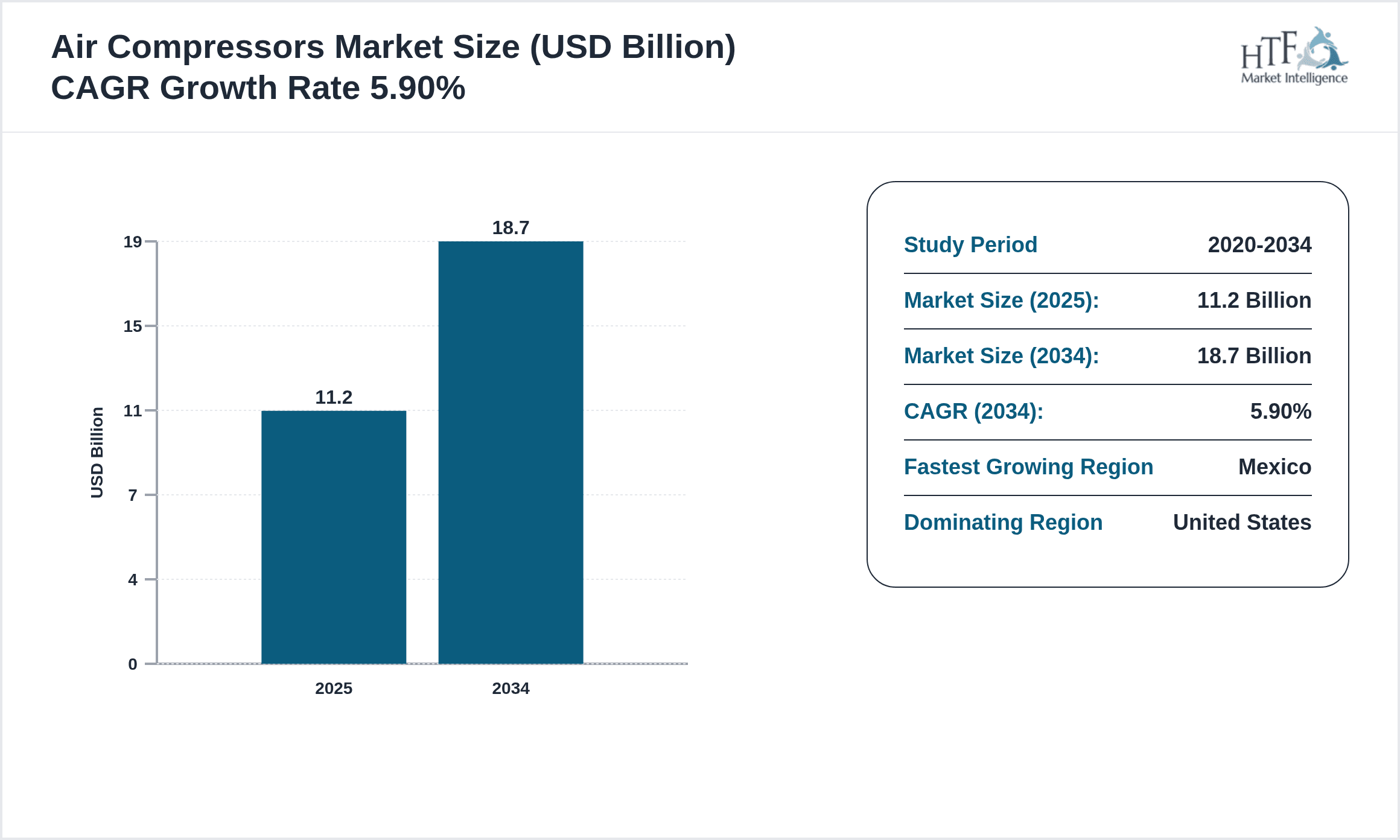
- •The market recorded a base size of USD 11.2 billion in 2025 and is forecasted to reach USD 18.7 billion by 2034, reflecting a CAGR of 5.9%. Year-on-year growth averages approximately 5.8%, supported by expanding applications in automotive manufacturing and construction. Technological advances such as IoT-enabled compressors and energy-saving designs are contributing to market momentum. The regulatory environment emphasizing emissions and energy efficiency further propels adoption of advanced compressor technologies. The report highlights the strategic importance of air compressors in enhancing productivity, operational efficiency, and sustainability across industries.
- •Air compressors serve as indispensable assets across North America’s industrial and commercial sectors by enabling efficient pneumatic power solutions that reduce operational costs and enhance process reliability. The market’s value proposition is strengthened by innovation in compressor design, growing demand for compressed air in manufacturing automation, and increasing infrastructure investments. Understanding the evolving regulatory frameworks and technological trends is key for stakeholders to align strategies with market dynamics and capitalize on growth prospects. This report equips decision-makers with actionable insights to navigate the competitive landscape and investment environment effectively.
Competitive Landscape
The North America Air Compressors market features a highly competitive environment with a diverse set of players leveraging innovation, strategic partnerships, and mergers to strengthen market presence. Companies focus on differentiating through advanced product features such as energy efficiency, noise reduction, and integration with Industry 4.0 technologies. Pricing strategies are influenced by raw material costs and competitive dynamics, while distribution channels including direct sales, dealers, and digital platforms play critical roles in market penetration. The competitive landscape is also shaped by increasing emphasis on after-sales services, maintenance contracts, and rental options to build customer loyalty. Market entry barriers such as high capital investment and stringent regulatory compliance limit new entrants, while established players focus on expanding manufacturing footprint and R&D capabilities. Regional preferences and local manufacturing capabilities further influence competitive positioning. Future trends indicate consolidation through M&A activities and heightened focus on sustainable compressor technologies to meet environmental mandates and customer expectations.
Top Companies Profiled in North America Air Compressors Market
- •Ingersoll Rand Inc. (United States)
- •Atlas Copco AB (Sweden)
- •Kaeser Kompressoren SE (Germany)
- •Sullair LLC (United States)
- •Gardner Denver Holdings, Inc. (United States)
- •Hitachi Industrial Equipment Systems Co., Ltd. (Japan)
- •Fusheng Industrial Co., Ltd. (Taiwan)
- •ELGi Equipments Limited (India)
- •Quincy Compressor (United States)
- •Chicago Pneumatic Tools (United States)
- •Bauer Compressors GmbH (Germany)
- •CompAir (United Kingdom)
- •Hitachi Ltd. (Japan)
- •Parker Hannifin Corporation (United States)
- •Alup Kompressoren GmbH (Germany)
- •Saylor-Beall Manufacturing Company (United States)
- •Multistack (United States)
- •Howden Group Limited (United Kingdom)
- •Compresores America S.A. (Mexico)
- •Gardner Denver Thomas (United States)
- •Shanghai Kaiquan Air Compressor Co., Ltd. (China)
- •Kaeser Compressors Inc. (United States)
- •Sundyne LLC (United States)
- •Mitsubishi Heavy Industries Compressor Corporation (Japan)
- •Donaldson Company, Inc. (United States)

Market Breakdown
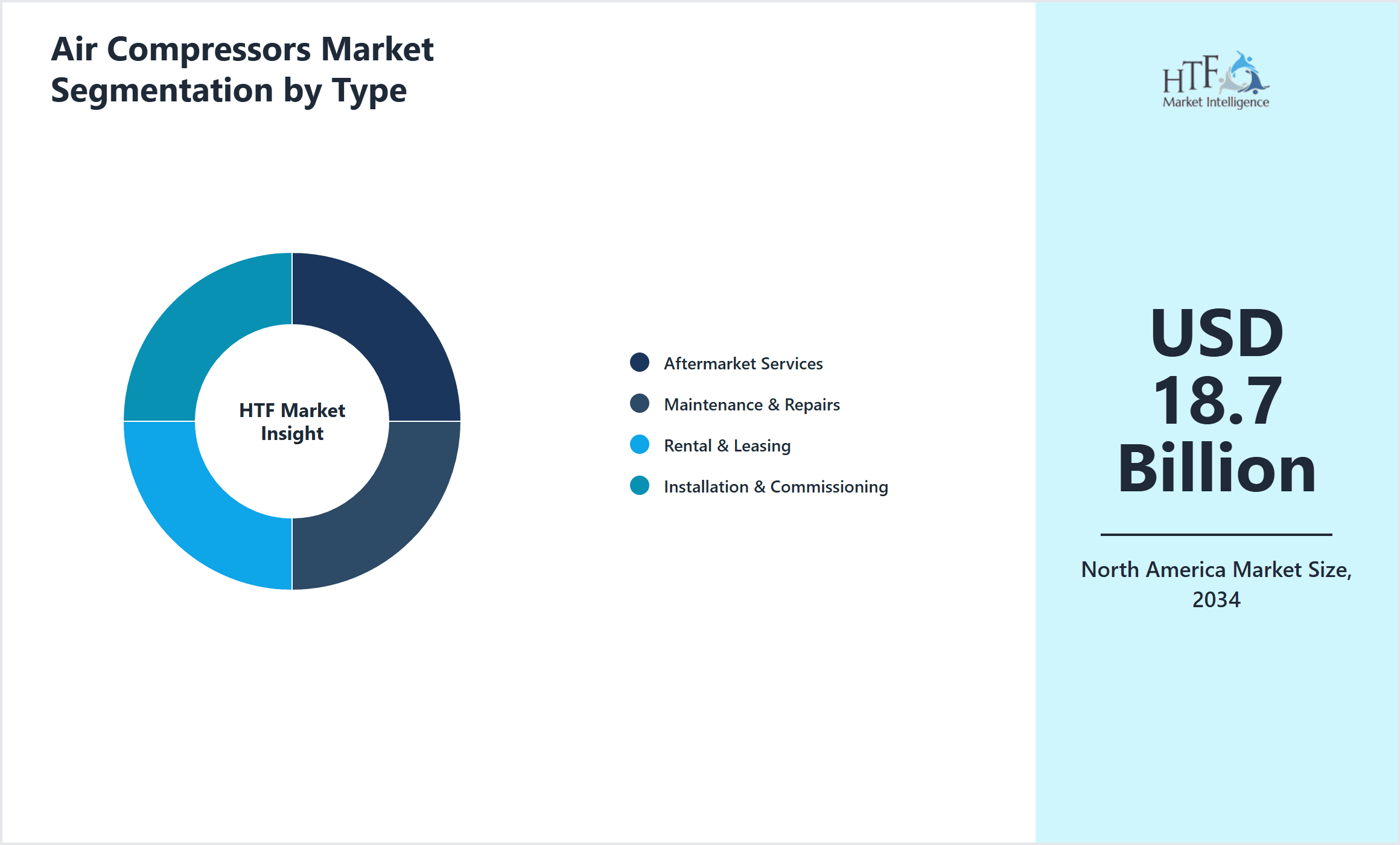
- •By Compressor Type
- ◦Reciprocating Air Compressors
- ◦Rotary Screw Air Compressors
- ◦Centrifugal Air Compressors
- ◦Scroll Air Compressors
- ◦Axial Air Compressors
- •By Application
- ◦Industrial Manufacturing
- ◦Automotive
- ◦Construction
- ◦Oil & Gas
- ◦HVAC Systems
- •By Service Type
- ◦Aftermarket Services
- ◦Maintenance & Repairs
- ◦Rental & Leasing
- ◦Installation & Commissioning
- •By Deployment Model
- ◦Stationary Air Compressors
- ◦Portable Air Compressors
- ◦Oil-Free Compressors
- ◦Oil-Lubricated Compressors
Growth Dynamics
The North America Air Compressors market growth is primarily driven by increasing industrial automation requiring reliable pneumatic power sources. The manufacturing sector's expansion, especially in automotive and aerospace industries, fuels demand for robust and energy-efficient compressors. Technological advancements, including IoT-enabled compressors, facilitate predictive maintenance and operational efficiency, boosting adoption. Environmental regulations mandating reduced emissions and energy consumption promote the development of oil-free and low-noise compressors. Infrastructure investments in construction and oil & gas sectors further propel market expansion. Additionally, the rising trend of rental and leasing services offers flexible solutions for small and medium enterprises, enhancing market penetration. The convergence of these factors creates a favorable environment for sustained market growth through 2034.
Market Trends
A significant trend in the North America air compressors market is the integration of smart technologies such as IoT and AI for real-time monitoring and predictive maintenance. Companies are increasingly investing in energy-efficient compressor designs to comply with stringent environmental regulations and reduce operational costs. The shift towards oil-free compressors in pharmaceutical and food processing sectors is gaining momentum due to hygiene requirements. Additionally, the market is witnessing growth in portable and compact compressor units catering to the construction and automotive repair sectors. Strategic collaborations between manufacturers and technology providers are also shaping the competitive landscape by accelerating innovation and market reach.

Market Opportunities
Emerging opportunities in the North America air compressors market include expanding adoption in renewable energy sectors such as wind and solar power for equipment maintenance and operations. The growing demand for air compressors in the healthcare industry for medical applications presents another lucrative segment. Furthermore, the retrofit and modernization of aging compressor installations in manufacturing facilities offer significant potential for aftermarket services. Investment in research and development to enhance compressor efficiency and reduce carbon footprint aligns well with government incentives and regulations. Expansion into underserved markets in Mexico and Canada with tailored product offerings can also drive incremental growth.
Market Challenges
The North America air compressors market faces challenges including high initial capital expenditure for advanced compressor technologies which may deter small and medium enterprises. Supply chain disruptions affecting raw materials and components lead to production delays and increased costs. The complexity of complying with diverse regulatory standards across the United States, Canada, and Mexico adds operational burdens. Additionally, competition from low-cost imports impacts pricing strategies and market share of domestic manufacturers. Technological obsolescence and the need for continuous innovation impose pressure on companies to invest heavily in R&D to maintain competitiveness.
Regulatory Framework
Between 2020 and 2025, the North America air compressors market has witnessed the implementation of several key regulations aimed at improving energy efficiency and reducing environmental impact. The U.S. Department of Energy (DOE) updated its energy conservation standards for commercial and industrial air compressors in 2021, requiring manufacturers to meet stricter efficiency criteria. Canada’s Energy Efficiency Regulations introduced in 2023 mandate lower energy consumption levels for compressors used in industrial applications. Mexico's PROFEPA environmental agency has enforced new emission standards for industrial equipment starting in 2024, focusing on reducing greenhouse gases and air pollutants. These regulations have driven compressor manufacturers to innovate in oil-free and energy-saving technologies, ensuring compliance while maintaining performance. Additionally, guidelines on noise pollution control have influenced design modifications to reduce operational sound levels. Compliance with these regulatory frameworks requires ongoing testing, certification, and reporting, impacting production costs and market entry strategies.
Market Intelligence
- •15th January 2025, Ingersoll Rand Inc. launched its latest generation of rotary screw air compressors featuring enhanced energy efficiency and IoT-enabled predictive maintenance capabilities. This new product line, targeting industrial manufacturing and construction sectors in North America, integrates advanced sensors and cloud analytics to reduce downtime and optimize operational performance. The launch aims to capture growing demand for smart, energy-saving compressors compliant with stringent regional environmental regulations. Ingersoll Rand’s initiative strengthens its competitive position and aligns with market trends emphasizing digital transformation and sustainability. Source: Ingersoll Rand Official Press Release.
- •30th March 2025, Atlas Copco AB introduced an innovative oil-free scroll compressor designed specifically for the pharmaceutical and food processing industries. The compressor delivers high purity compressed air while minimizing energy consumption and maintenance requirements. This product addresses increasing regulatory demands for contamination-free air and supports customers’ sustainability goals. Atlas Copco’s strategic focus on clean technology adoption is expected to boost its market share in North America’s specialized industrial segments. Source: Atlas Copco Corporate Website.
- •10th June 2025, Gardner Denver Holdings, Inc. announced a strategic partnership with a leading IoT software provider to develop integrated compressor monitoring solutions. The collaboration aims to enhance predictive maintenance, energy management, and operational analytics for rotary and reciprocating compressors used across North America. This initiative reflects the growing importance of digital solutions in improving equipment uptime and reducing lifecycle costs. The partnership is expected to accelerate Gardner Denver’s technological innovation and market penetration. Source: Gardner Denver Investor Relations.
- •28th July 2025, Kaeser Kompressoren SE completed the acquisition of a major regional compressor rental company in Mexico to expand its service offerings and strengthen market presence in the fastest growing North American market. This acquisition provides Kaeser with enhanced distribution channels and localized customer support, positioning it to capitalize on Mexico’s industrial growth. The move reflects broader consolidation trends in the market and the strategic importance of rental and aftermarket services in customer retention. Source: Kaeser Kompressoren Press Release.
Regional Outlook
The United States currently holds a significant share of the market, primarily due to several key factors: increasing consumption rates, a burgeoning population, and robust economic momentum. These elements collectively drive demand, positioning this region as a leader in the market. On the other hand, Mexico is rapidly emerging as the fastest-growing area within the industry. This remarkable growth can be attributed to swift infrastructure development, the expansion of various industrial sectors, and a marked increase in consumer demand. These dynamics make this region a crucial player in shaping future market growth.
In our report, we cover a comprehensive analysis of the following regions and countries:
- United States
- Canada
- Mexico
| Feature | Details |
|---|---|
| Base Year Market Size | USD 11.2 Billion |
| Forecast Year Market Size | USD 18.7 Billion |
| CAGR | 5.9% |
| Forecast Period | 2026 to 2033 |
| YoY Growth | 5.8% |
| Scope of Report | Market is segmented by Compressor Type (Reciprocating Air Compressors, Rotary Screw Air Compressors, Centrifugal Air Compressors, Scroll Air Compressors, Axial Air Compressors), Application (Industrial Manufacturing, Automotive, Construction, Oil & Gas, HVAC Systems), Service Type (Aftermarket Services, Maintenance & Repairs, Rental & Leasing, Installation & Commissioning), Deployment Model (Stationary Air Compressors, Portable Air Compressors, Oil-Free Compressors, Oil-Lubricated Compressors) |
| Regions Covered | United States, Canada, Mexico |
| Key Companies | Ingersoll Rand Inc. (United States), Atlas Copco AB (Sweden), Kaeser Kompressoren SE (Germany), Sullair LLC (United States), Gardner Denver Holdings, Inc. (United States), Hitachi Industrial Equipment Systems Co., Ltd. (Japan), Fusheng Industrial Co., Ltd. (Taiwan), ELGi Equipments Limited (India), Quincy Compressor (United States), Chicago Pneumatic Tools (United States), Bauer Compressors GmbH (Germany), CompAir (United Kingdom), Hitachi Ltd. (Japan), Parker Hannifin Corporation (United States), Alup Kompressoren GmbH (Germany), Saylor-Beall Manufacturing Company (United States), Multistack (United States), Howden Group Limited (United Kingdom), Compresores America S.A. (Mexico), Gardner Denver Thomas (United States), Shanghai Kaiquan Air Compressor Co., Ltd. (China), Kaeser Compressors Inc. (United States), Sundyne LLC (United States), Mitsubishi Heavy Industries Compressor Corporation (Japan), Donaldson Company, Inc. (United States) |
North America Air Compressors Market Scope & Changing Dynamics 2025-2034 - Table of Contents
Frequently Asked Questions (FAQ):
The Compact Track Loaders market is expected to see value worth 5.3 Billion in 2025.
North America currently leads the market with approximately 45% market share, followed by Europe at 28% and Asia-Pacific at 22%. The remaining regions account for 5% of the global market.
Key growth drivers include increasing construction activities, rising demand for versatile equipment in agriculture, technological advancements in track loader design, and growing preference for compact equipment in urban construction projects.