
United States Automotive Tail Light Market Size, Growth & Revenue 2025-2034
United States Automotive Tail Light Market is segmented by Application (Passenger Vehicles, Commercial Vehicles, Electric Vehicles, Luxury Vehicles, Aftermarket), Type (LED Tail Lights, Incandescent Tail Lights, OLED Tail Lights, Halogen Tail Lights, Laser Tail Lights), and Geography (Northeast, Southwest, The South, The Midwest)
Pricing
Report Overview
Executive Summary
- •The United States Automotive Tail Light market is a vital segment of the automotive components industry, focused on the production and application of rear lighting systems for various vehicle categories including passenger cars, commercial trucks, electric vehicles, and luxury automobiles. Tail lights are essential safety components designed to provide rear visibility, indicate braking, and signal turns, thereby reducing accident risks. The market includes a wide spectrum of lighting technologies such as LED, incandescent, OLED, halogen, and laser lights, with LED technology dominating due to its superior energy efficiency, longevity, and design versatility. The evolving automotive industry trends towards electrification and smart vehicles have accelerated the adoption of advanced tail light technologies that cater to both functional and aesthetic demands. Moreover, stringent U.S. vehicle safety regulations and consumer preference for modern lighting aesthetics have stimulated innovation and product development. The market also benefits from a robust aftermarket segment driven by vehicle maintenance and customization. This report covers market segmentation by type, application, and regional zones within the United States, providing a holistic view of market dynamics through 2025 to 2034. It highlights key growth drivers such as technological advancements, regulatory frameworks, and consumer trends alongside challenges including high component costs and complex supply chains. The report also analyzes competitive landscapes, regional performances, and strategic opportunities for stakeholders aiming to capitalize on the expanding U.S. automotive tail light market.
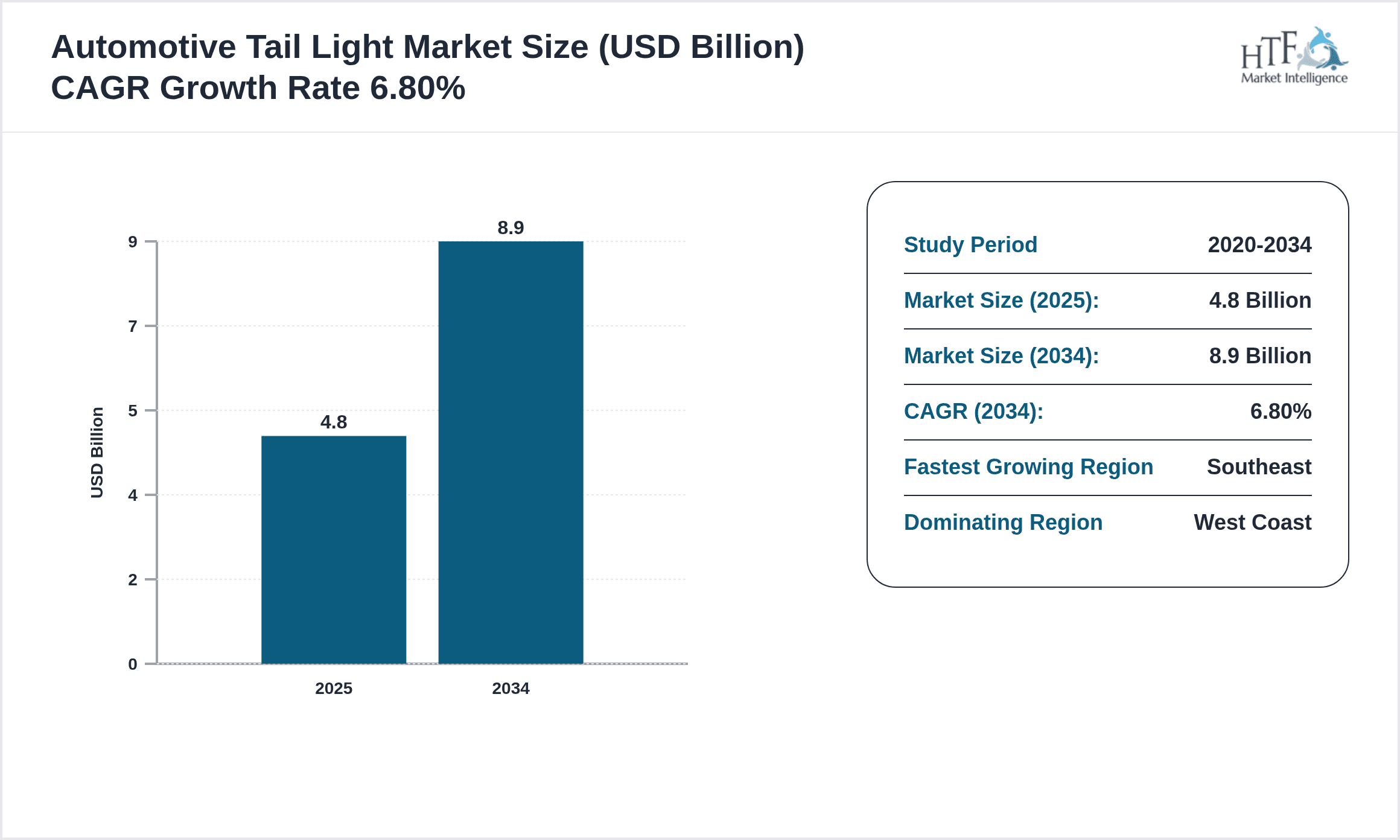
- •Key market highlights include a base market size of USD 4.8 billion in 2025, projected to reach USD 8.9 billion by 2034, representing a compound annual growth rate (CAGR) of 6.8%. The LED tail light segment currently leads the market, while OLED tail lights exhibit the fastest growth potential due to their flexibility and design innovation. Regionally, the West Coast dominates market revenue owing to high vehicle production and technology adoption, whereas the Southeast region is identified as the fastest growing zone benefiting from expanding automotive manufacturing hubs and aftermarket demand. The United States market is influenced by evolving regulatory standards that mandate improved lighting performance and environmental compliance, driving innovation and replacement cycles. The aftermarket segment is increasingly significant, supported by vehicle aging and customization trends among consumers seeking enhanced tail light aesthetics and functionality.
- •The value proposition of the automotive tail light market in the United States lies in its strategic importance for vehicle safety, regulatory compliance, and automotive design innovation. Tail light manufacturers and suppliers play a critical role in enabling automotive OEMs and aftermarket providers to meet evolving safety standards and consumer preferences. The continuous advancement in lighting technologies, from traditional incandescent to LED and OLED, presents opportunities for energy savings, reduced emissions, and enhanced vehicle styling. This market holds substantial potential for investors and industry players focusing on smart lighting integration, sustainable materials, and customizable solutions. The complex interplay of regulatory frameworks, technological progress, and regional manufacturing dynamics underscores the sector's significance for automotive safety, innovation, and market competitiveness within the United States.
Competitive Landscape
The United States automotive tail light market is characterized by intense competition among global and domestic players striving to innovate and capture market share through technological advancements and strategic partnerships. Key competitive strategies include investing in R&D to enhance lighting efficiency, durability, and design differentiation, particularly focusing on LED and OLED technologies. Market participants adopt product differentiation to meet diverse consumer preferences and regulatory requirements, offering customizable and intelligent lighting solutions that integrate with vehicle electronics and safety systems. Collaborations with automotive OEMs ensure early integration of cutting-edge tail light systems in new vehicle models, strengthening market positioning. Mergers and acquisitions have emerged as a strategic approach to consolidate capabilities, expand product portfolios, and gain access to new technologies and markets. Pricing strategies remain competitive, balancing affordability with advanced features, while distribution channels include direct OEM supply contracts and aftermarket networks. Regional competition within the United States is influenced by manufacturing hubs, innovation clusters, and regulatory environments. Future competitive trends point towards increased adoption of smart tail lights with adaptive and connected functionalities, driving innovation and reshaping market dynamics. Overall, competitive players continuously leverage technology, partnerships, and market intelligence to sustain growth and leadership in the evolving U.S. automotive tail light landscape.
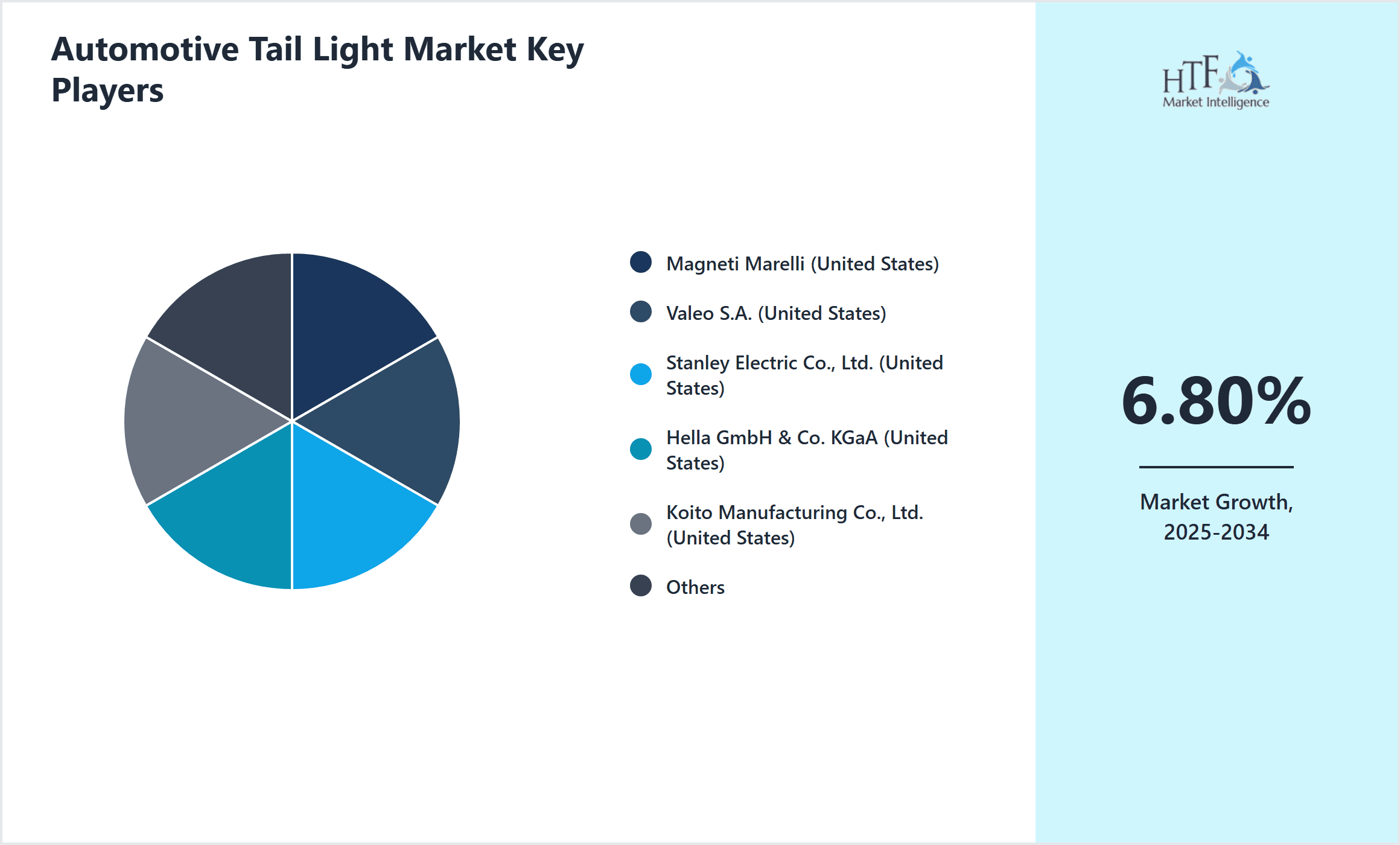
Prominent Players in United States Automotive Tail Light Market
- •Magneti Marelli (United States)
- •Valeo S.A. (United States)
- •Stanley Electric Co., Ltd. (United States)
- •Hella GmbH & Co. KGaA (United States)
- •Koito Manufacturing Co., Ltd. (United States)
- •ZKW Group GmbH (United States)
- •OSRAM Licht AG (United States)
- •Varroc Lighting Systems (United States)
- •Lumax Industries Ltd. (United States)
- •Philips Automotive Lighting (United States)
- •Auto Lite (United States)
- •GE Lighting (United States)
- •Ficosa International S.A. (United States)
- •Koito America, Inc. (United States)
- •Magneti Marelli North America (United States)
- •Jiangsu Haiming Auto Lamp Co., Ltd. (United States)
- •Shanghai Automotive Lamp Co., Ltd. (United States)
- •Valeo Vision (United States)
- •Ningbo Jinding Auto Parts Co., Ltd. (United States)
- •Shanghai Koito Automotive Lamp Co., Ltd. (United States)
- •Stanley Electric U.S.A. (United States)
- •Magneti Marelli Lighting (United States)
- •Nippon Seiki Co., Ltd. (United States)
- •Everlight Electronics Co., Ltd. (United States)
- •Eagle Light Source Ltd. (United States)
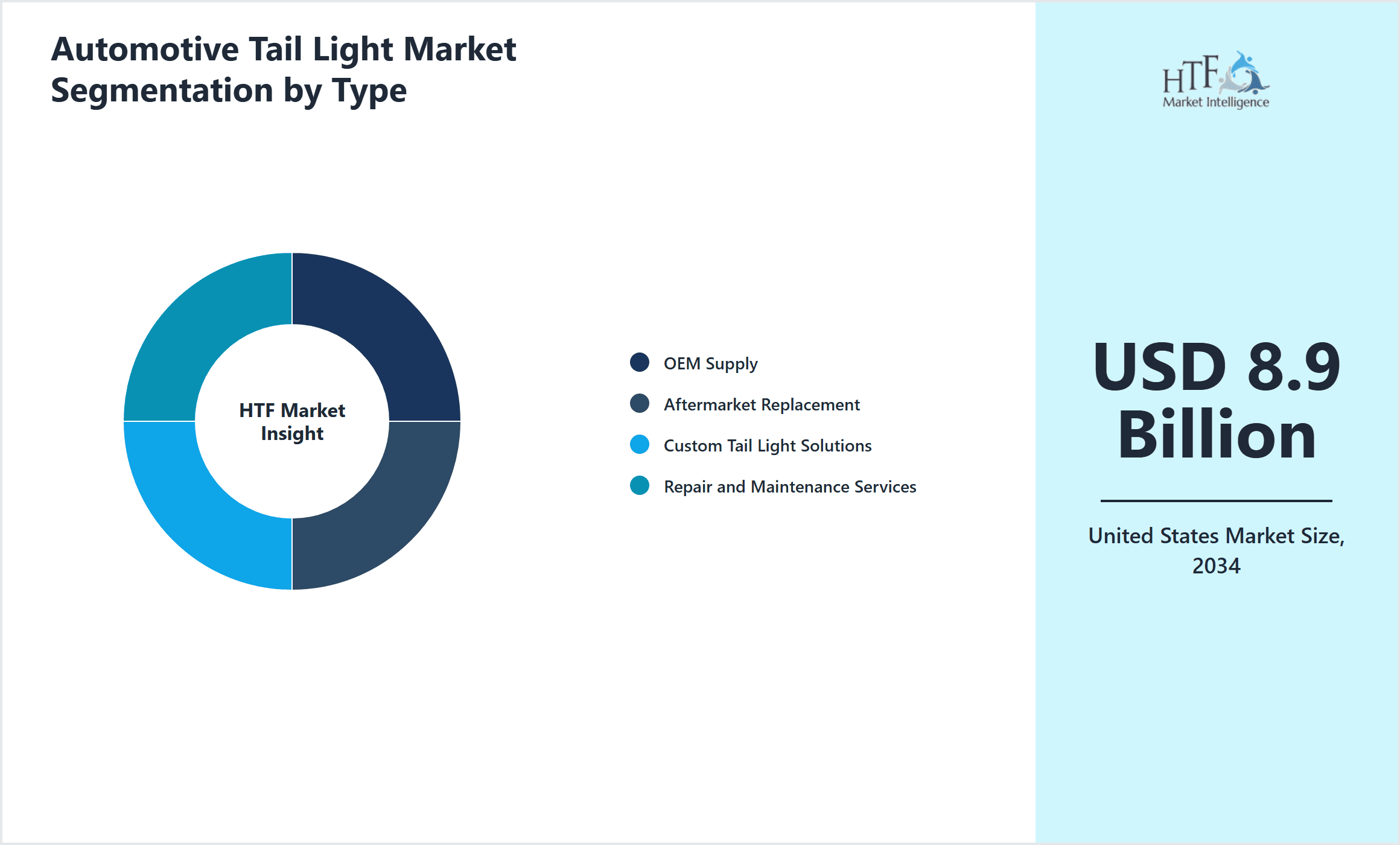
Tail Light Market Segmentation by Product Type and Application
- •By Tail Light Technology
- ◦LED Tail Lights
- ◦Incandescent Tail Lights
- ◦OLED Tail Lights
- ◦Halogen Tail Lights
- ◦Laser Tail Lights
- •By Vehicle Application
- ◦Passenger Vehicles
- ◦Commercial Vehicles
- ◦Electric Vehicles
- ◦Luxury Vehicles
- ◦Aftermarket
- •By Service Type
- ◦OEM Supply
- ◦Aftermarket Replacement
- ◦Custom Tail Light Solutions
- ◦Repair and Maintenance Services
- •By Installation Type
- ◦Original Equipment Installation
- ◦Retrofit Tail Lights
- ◦Smart/Connected Tail Light Systems
Growth Dynamics
The United States automotive tail light market is primarily driven by stringent federal and state vehicle safety regulations mandating enhanced rear lighting performance to reduce road accidents. These regulations compel automotive manufacturers to adopt advanced lighting technologies such as LED and OLED, which offer superior visibility and energy efficiency. Furthermore, the increasing penetration of electric and luxury vehicles in the U.S. stimulates demand for innovative tail light designs that integrate seamlessly with smart vehicle systems. Technological advancements including adaptive lighting, integration with vehicle sensors, and customizable aesthetics enrich product offerings and attract consumer interest. The aftermarket segment contributes to growth as vehicle owners seek to replace or upgrade tail lights for improved safety and style. Additionally, rising consumer awareness about vehicle safety and aesthetics encourages adoption of premium lighting solutions. Investments in R&D by manufacturers enhance product innovation, while growing automotive production volumes in key U.S. regions support market expansion. Together, these factors create robust growth momentum for the automotive tail light market in the United States through the forecast period.
Market Trends
The U.S. automotive tail light market is witnessing a strong shift towards LED and OLED technologies due to their advantages in energy consumption, lifespan, and design flexibility. Innovations in smart tail lights capable of adaptive brightness and signaling are gaining traction, aligning with the broader trend of connected and autonomous vehicles. Sustainability considerations have prompted manufacturers to explore eco-friendly materials and energy-efficient lighting components. Additionally, customization trends among vehicle owners fuel demand for aftermarket tail light upgrades with unique designs and enhanced functionality. Collaborations between lighting companies and automotive OEMs to develop integrated lighting solutions reflect the trend of seamless vehicle electronics integration. The rise of electric vehicles further accelerates adoption of advanced tail lighting systems that complement electric powertrain efficiency. Overall, these trends are shaping a dynamic market landscape focused on innovation, sustainability, and consumer experience enhancement.
Market Opportunities
Significant opportunities exist in the United States automotive tail light market through the development of OLED and laser-based lighting technologies, which offer enhanced design possibilities and energy efficiency. The growing electric vehicle segment presents a lucrative avenue for advanced tail light systems integrated with vehicle intelligence and safety features. Expansion of the aftermarket segment driven by vehicle aging and consumer customization preferences offers additional revenue streams. Moreover, emerging regional manufacturing hubs in the Southeast and Midwest provide strategic locations for production and distribution enhancements. Advancements in smart lighting, such as adaptive and connected tail lights, open pathways for partnerships between technology firms and lighting manufacturers. Regulatory incentives promoting energy-efficient and safer vehicle components further support market growth. These opportunities encourage industry players to innovate and diversify product portfolios to meet evolving market demands.
Market Challenges
The United States automotive tail light market faces challenges including high manufacturing and material costs associated with advanced lighting technologies like OLED and laser systems, which can limit adoption especially in cost-sensitive vehicle segments. Complex supply chain dynamics and dependency on specialized raw materials expose manufacturers to risks of disruption and price volatility. Additionally, the integration of sophisticated lighting systems with vehicle electronics requires significant R&D investment and technical expertise, posing barriers for smaller players. Regulatory compliance with evolving safety and environmental standards necessitates continuous innovation and capital expenditure. Market fragmentation due to diverse vehicle types and application requirements complicates product standardization and scalability. Furthermore, competition from low-cost imports pressures profit margins. These challenges necessitate strategic planning and operational efficiencies to sustain growth and competitiveness in the U.S. automotive tail light market.
United States Automotive Tail Light Regulatory Framework
Between 2020 and 2025, the U.S. Department of Transportation (DOT) and the National Highway Traffic Safety Administration (NHTSA) have implemented regulations mandating enhanced rear lighting performance to improve vehicle visibility and reduce rear-end collisions. FMVSS (Federal Motor Vehicle Safety Standards) No. 108 specifies requirements for lighting, reflective devices, and associated equipment including tail lights, influencing design and technology adoption. Compliance with these standards necessitates the use of lighting technologies that meet photometric and durability criteria, driving the shift towards LED and OLED solutions. State-level regulations have also introduced additional requirements for adaptive and dynamic lighting features. Environmental regulations have promoted energy-efficient lighting to reduce vehicle emissions indirectly by lowering power consumption. The regulatory landscape encourages continuous innovation, requiring manufacturers to certify new tail light technologies rigorously. These frameworks enhance consumer safety while fostering market competitiveness through technology advancement. Ongoing updates and harmonization with international standards are expected to further shape market trends and product development.
United States Automotive Tail Light Market Intelligence
- •15th March 2025, Magneti Marelli announced the launch of a new line of OLED tail lights designed specifically for electric and luxury vehicles in the United States market. These tail lights offer enhanced energy efficiency, customizable lighting patterns, and superior durability. The new product line aims to meet stringent U.S. safety regulations while providing automakers with flexible design options to differentiate their vehicles aesthetically. Magneti Marelli’s innovation is expected to accelerate the adoption of OLED technology in the U.S., leveraging increasing consumer demand for advanced lighting solutions. The company plans to collaborate with leading automotive OEMs to integrate these tail lights into upcoming vehicle models, reinforcing its market leadership. Source: Magneti Marelli Official Press Release
- •22nd June 2025, Valeo S.A. introduced an adaptive LED tail light system featuring real-time brightness adjustment and integrated communication with vehicle safety sensors. Targeted at passenger and commercial vehicles in the United States, this system enhances rear visibility under varying environmental conditions and improves signaling accuracy during braking and turning. The product aligns with evolving U.S. safety standards and the trend towards connected vehicle technologies. Valeo’s innovation underscores the growing focus on intelligent lighting solutions that contribute to overall vehicle safety and user experience. The company has secured partnerships with several U.S. automotive manufacturers to rollout this technology in new vehicle lines. Source: Valeo S.A. Corporate Announcement
- •10th September 2024, Stanley Electric Co., Ltd. announced a strategic collaboration with a leading U.S. automotive OEM to co-develop next-generation laser tail lights for premium electric vehicles. This initiative focuses on leveraging laser technology’s advantages in brightness, energy efficiency, and compact design to meet the increasing demand for innovative lighting solutions in the U.S. luxury vehicle segment. The partnership aims to accelerate product development cycles and facilitate regulatory approvals. Stanley Electric’s move reflects the growing competitive emphasis on cutting-edge technologies to capture market share amid rising demand for differentiated vehicle lighting. The collaboration is expected to enhance both companies’ technological capabilities and market positioning. Source: Stanley Electric Official News
- •28th January 2025, Hella GmbH & Co. KGaA completed the acquisition of a U.S.-based automotive lighting startup specializing in smart tail light systems. This acquisition strengthens Hella’s product portfolio with innovative connected lighting technologies that enable adaptive signaling and integration with vehicle safety networks. The move supports Hella’s strategic expansion in the U.S. market and its commitment to advancing intelligent lighting solutions compatible with autonomous vehicle technologies. The acquisition is anticipated to accelerate time-to-market for new products and enhance competitive positioning. Hella plans to invest further in R&D to scale smart tail light production for both OEM and aftermarket segments across the United States. Source: Hella Corporate Communications
Regional Outlook
The West Coast currently holds a significant share of the market, primarily due to several key factors: increasing consumption rates, a burgeoning population, and robust economic momentum. These elements collectively drive demand, positioning this region as a leader in the market. On the other hand, Southeast is rapidly emerging as the fastest-growing area within the industry. This remarkable growth can be attributed to swift infrastructure development, the expansion of various industrial sectors, and a marked increase in consumer demand. These dynamics make this region a crucial player in shaping future market growth.
In our report, we cover a comprehensive analysis of the following regions and countries:
- Northeast
- Southwest
- The South
- The Midwest
| Feature | Details |
|---|---|
| Base Year Market Size | USD 4.8 Billion |
| Forecast Year Market Size | USD 8.9 Billion |
| CAGR | 6.8% |
| Forecast Period | 2026 to 2033 |
| YoY Growth | 6.7% |
| Regions Covered | Northeast, Southwest, The South, The Midwest |
| Key Companies | Magneti Marelli (United States), Valeo S.A. (United States), Stanley Electric Co., Ltd. (United States), Hella GmbH & Co. KGaA (United States), Koito Manufacturing Co., Ltd. (United States), ZKW Group GmbH (United States), OSRAM Licht AG (United States), Varroc Lighting Systems (United States), Lumax Industries Ltd. (United States), Philips Automotive Lighting (United States), Auto Lite (United States), GE Lighting (United States), Ficosa International S.A. (United States), Koito America, Inc. (United States), Magneti Marelli North America (United States), Jiangsu Haiming Auto Lamp Co., Ltd. (United States), Shanghai Automotive Lamp Co., Ltd. (United States), Valeo Vision (United States), Ningbo Jinding Auto Parts Co., Ltd. (United States), Shanghai Koito Automotive Lamp Co., Ltd. (United States), Stanley Electric U.S.A. (United States), Magneti Marelli Lighting (United States), Nippon Seiki Co., Ltd. (United States), Everlight Electronics Co., Ltd. (United States), Eagle Light Source Ltd. (United States) |
United States Automotive Tail Light Market Size, Growth & Revenue 2025-2034 - Table of Contents
Multidisciplinary researcher with 10+ years of experience uncovering insights across diverse domains focused on uncovering insights that drive informed decisions.
Frequently Asked Questions (FAQ):
The Market market is projected to grow at a steady CAGR from 2025 to 2030, driven by increasing demand and expansion in various applications.
North America currently leads the market, followed by Europe and Asia-Pacific.
Key growth drivers include increasing activities, rising demand for innovative solutions, technological advancements, and growing preference for efficient products.