
Southeast Asia Tension Control System Market Size, Growth & Revenue 2024-2034
Southeast Asia Tension Control System Market is segmented by Type (Mechanical Tension Control Systems, Pneumatic Tension Control Systems, Electronic Tension Control Systems, Hydraulic Tension Control Systems, Servo Motor Tension Control Systems), Application (Textile, Paper, Film & Foil, Wire & Cable, Printing), Industrial End User (Manufacturing Plants, Packaging Industry, Automotive Industry, Electronics Manufacturing, Consumer Goods Production), Technology Integration (IoT-enabled Systems, Standalone Systems, Cloud-based Control Systems), and Geography (Singapore, Malaysia, Thailand, Indonesia, Vietnam, Philippines, Others)
Pricing
Report Overview
Executive Summary
- •The Southeast Asia Tension Control System market is defined by its focus on technologies that regulate material tension during industrial processes, vital for maintaining product integrity and operational efficiency. This market includes mechanical, pneumatic, electronic, hydraulic, and servo motor systems applied across textiles, paper, films, wires, cables, and printing industries. The scope covers equipment and software solutions that enable precise tension measurement and adjustment, thereby reducing material wastage and downtime. The market's growth is driven by increasing industrial automation, the rise of manufacturing hubs in countries like Indonesia and Vietnam, and the demand for high-quality end products. Southeast Asia’s expanding industrial base and government initiatives to boost manufacturing capabilities further underpin the market’s strategic importance. This report thoroughly examines key segments, competitive landscapes, regional dynamics, and the regulatory environment shaping the market trajectory through 2034.
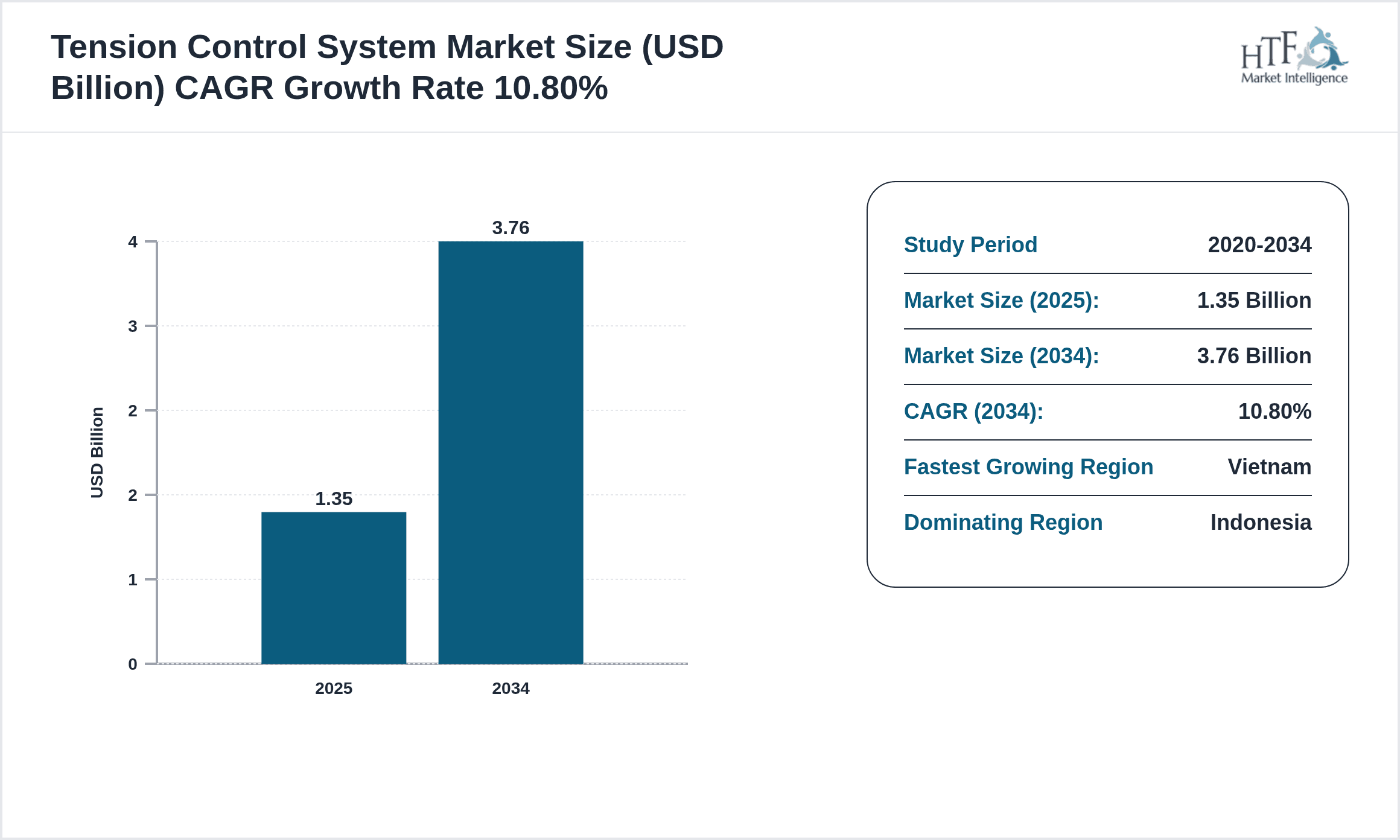
- •Key market highlights include a forecast CAGR of 10.8% from 2024 to 2034, with the market expected to grow from USD 1.35 billion in 2024 to USD 3.76 billion by 2034. Electronic tension control systems currently dominate the market, reflecting the region’s shift toward automation and precision manufacturing. The textile and paper applications are the largest sectors, driven by Southeast Asia’s strong textile exports and packaging industry growth. Indonesia holds the largest market share, while Vietnam is the fastest-growing country due to increasing foreign direct investments and industrialization. Market dynamics such as technological advancements and regional infrastructure development support sustained expansion.
- •The tension control system market offers significant value to manufacturers by enhancing process control, reducing downtime, and improving product quality. These benefits translate into cost savings and competitive advantages for industries in Southeast Asia. Stakeholders including equipment manufacturers, end-users, and investors find strategic opportunities in adopting advanced tension control technologies. The market's evolution aligns with Industry 4.0 trends, emphasizing smart, connected manufacturing solutions. This report provides actionable insights for companies looking to capitalize on growth drivers, navigate challenges, and leverage emerging opportunities within Southeast Asia's industrial landscape.
Competitive Landscape
The Southeast Asia Tension Control System market is characterized by intense competition among global and regional players focusing on innovation, strategic partnerships, and customization to meet diverse industrial needs. Companies leverage advanced electronic and servo motor technologies to differentiate their product offerings. Competitive strategies include expanding product portfolios, investing in R&D for smart tension control solutions, and enhancing after-sales services to build customer loyalty. Market rivalry is heightened by the presence of multinational corporations and local manufacturers competing on price, technology, and service quality. The adoption of Industry 4.0 and IoT integration fosters continuous innovation, while mergers and acquisitions have streamlined capabilities and expanded market reach. Regional market entrants focus on tailoring solutions to local manufacturing environments, thereby intensifying competition. Overall, the market dynamics reflect a balance between technology leadership and cost-effective solutions to capture growing demand across Southeast Asia.
Leading Companies in Southeast Asia Tension Control System Market
- •Brüel & Kjær Vibro (Denmark)
- •Dorner Manufacturing Corporation (United States)
- •Magpowr Technologies (United States)
- •Kübler Group (Germany)
- •Magnaflux Corporation (United States)
- •Yamato Scale Co., Ltd. (Japan)
- •MTS Systems Corporation (United States)
- •Tension Control Systems Pvt. Ltd. (India)
- •Saueressig Engineering GmbH (Germany)
- •Dynatek Labs (United States)
- •Futek Advanced Sensor Technology, Inc. (United States)
- •Emerson Electric Co. (United States)
- •Luna Innovations Inc. (United States)
- •Siemens AG (Germany)
- •ABB Ltd (Switzerland)
- •Honeywell International Inc. (United States)
- •Omron Corporation (Japan)
- •Schneider Electric SE (France)
- •Rockwell Automation, Inc. (United States)
- •Mitsubishi Electric Corporation (Japan)
- •Yokogawa Electric Corporation (Japan)
- •Delta Electronics, Inc. (Taiwan)
- •Fuji Electric Co., Ltd. (Japan)
- •Omni Instruments Ltd. (United Kingdom)
- •Gefran S.p.A. (Italy)
Market Breakdown
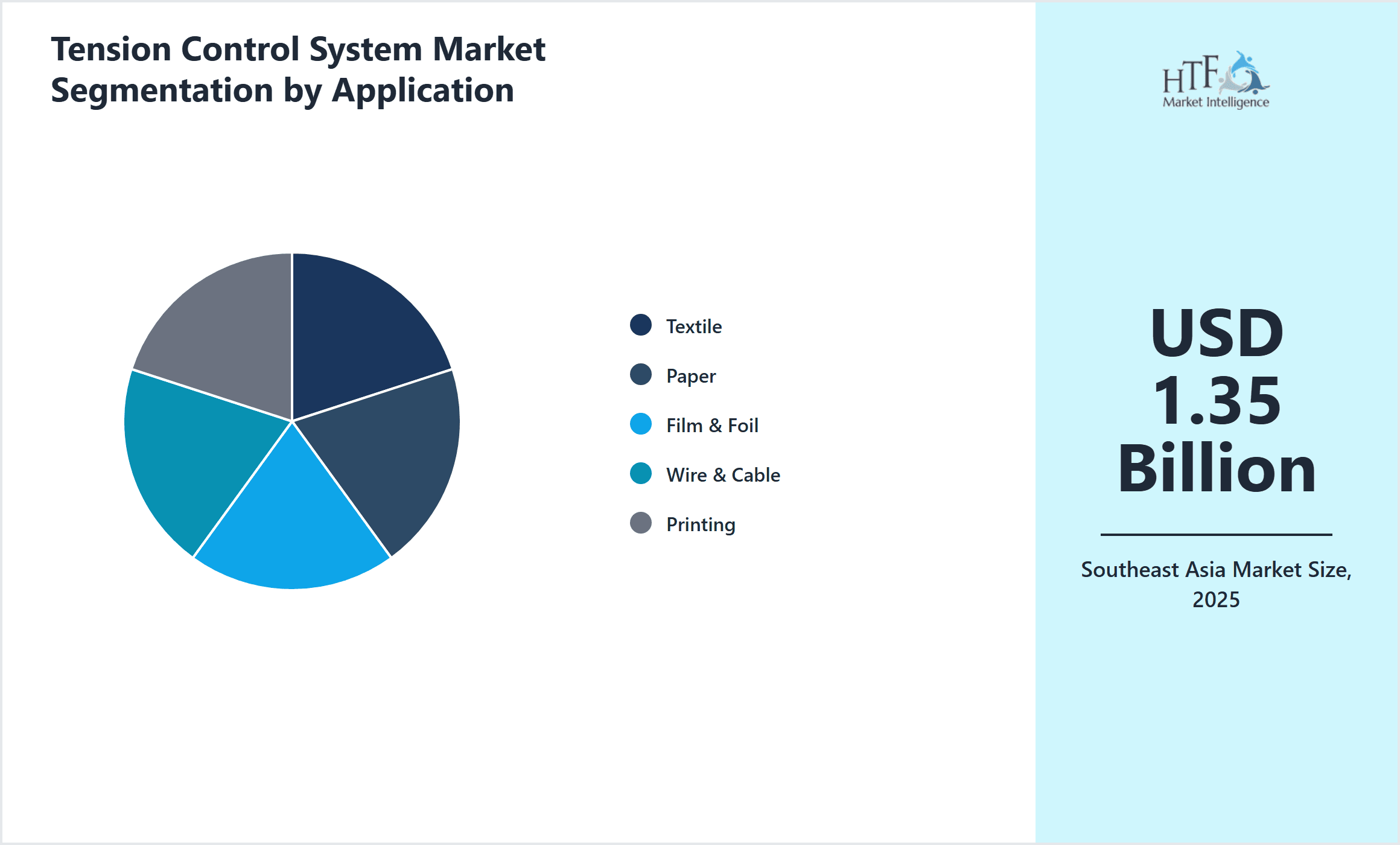
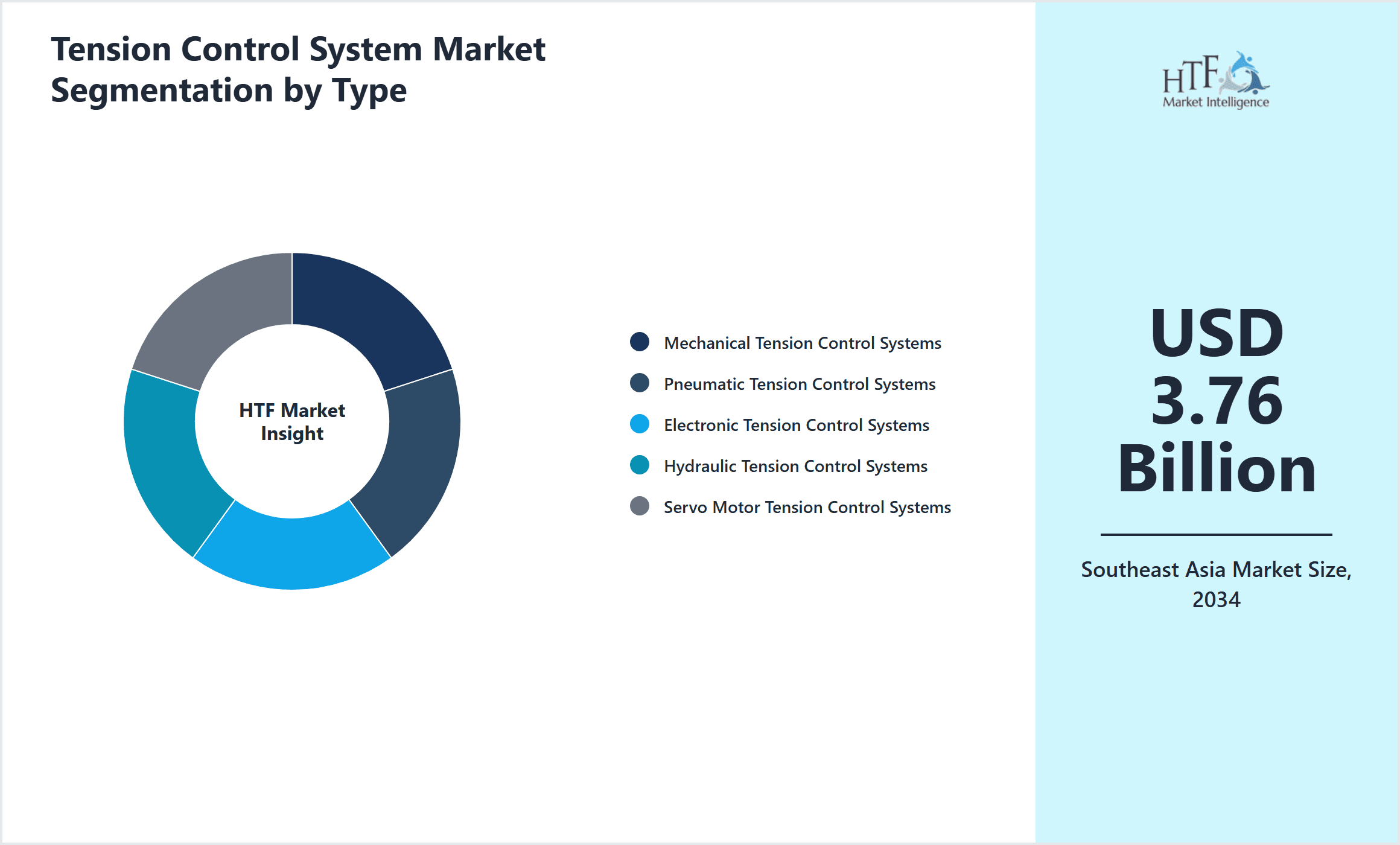
- •By Type
- ◦Mechanical Tension Control Systems
- ◦Pneumatic Tension Control Systems
- ◦Electronic Tension Control Systems
- ◦Hydraulic Tension Control Systems
- ◦Servo Motor Tension Control Systems
- •By Application
- ◦Textile
- ◦Paper
- ◦Film & Foil
- ◦Wire & Cable
- ◦Printing
- •By Industrial End User
- ◦Manufacturing Plants
- ◦Packaging Industry
- ◦Automotive Industry
- ◦Electronics Manufacturing
- ◦Consumer Goods Production
- •By Technology Integration
- ◦IoT-enabled Systems
- ◦Standalone Systems
- ◦Cloud-based Control Systems
Growth Dynamics
- •Rising demand for automation in manufacturing across Southeast Asia is driving the adoption of advanced tension control systems that improve process efficiency and product quality. Increasing investments in smart factory initiatives by governments and private sectors enhance growth prospects.
- •Technological advancements such as integration of IoT and real-time monitoring capabilities in tension control systems support predictive maintenance and reduce downtime, fostering market expansion in key industries like textiles and packaging.
- •The growth of export-oriented manufacturing hubs in countries like Indonesia and Vietnam creates a robust demand for reliable tension control solutions to meet international quality standards and regulatory compliance.
- •Increasing consumer preference for high-quality, defect-free products compels manufacturers to adopt precision tension control technologies, thus accelerating market growth.
- •Rising environmental regulations and sustainability initiatives encourage manufacturers to reduce material waste and optimize resource use, thereby boosting demand for efficient tension control systems.
Market Trends
- •The trend toward digitalization and Industry 4.0 adoption is transforming tension control systems with smart sensors and networked controls for enhanced operational visibility and control.
- •Growing implementation of servo motor-based tension control systems reflects the shift toward highly precise and energy-efficient manufacturing processes in Southeast Asia.
- •Collaborations between local manufacturers and global technology providers are becoming common to develop customized solutions tailored to regional industrial requirements.
- •Increased focus on predictive maintenance enabled by data analytics in tension control systems helps manufacturers reduce unexpected downtime and maintenance costs.
- •Sustainability-driven innovations in tension control systems are gaining traction, aiming to minimize energy consumption and environmental impact during production cycles.
Market Opportunities
- •Expanding industrial sectors such as automotive and electronics in Southeast Asia offer untapped potential for specialized tension control solutions designed for complex manufacturing processes.
- •Integration of AI and machine learning with tension control technologies provides opportunities for developing adaptive systems capable of self-optimization and fault detection.
- •Emerging markets within Southeast Asia, including the Philippines and Malaysia, present growth opportunities through infrastructure development and increased manufacturing activities.
- •Rising demand for retrofit and upgrade solutions in existing manufacturing plants creates a niche market for advanced tension control products compatible with legacy systems.
- •Collaborations and strategic partnerships between local distributors and global manufacturers facilitate market penetration and enhanced service delivery across the region.
Market Challenges
- •High initial investment costs for advanced electronic and servo motor tension control systems limit adoption among small and medium-sized enterprises in Southeast Asia.
- •Lack of skilled workforce and technical expertise in some regional markets poses challenges for installation, operation, and maintenance of sophisticated tension control equipment.
- •Fragmentation of the market with numerous local suppliers creates pricing pressure and affects profitability for established global players.
- •Complex regulatory environments and varying standards across Southeast Asian countries can delay product approvals and market entry.
- •Supply chain disruptions and component shortages, intensified by global geopolitical tensions, impact timely delivery and production schedules.
Regulatory Framework
- •Between 2019 and 2024, Southeast Asian countries have increasingly implemented standards related to industrial automation safety and electromagnetic compatibility to ensure reliable operation of tension control systems. Compliance with these regulations is mandatory for manufacturers and importers, driving product innovation and quality improvements.
- •Countries such as Indonesia and Vietnam have introduced specific guidelines for energy efficiency in industrial equipment, influencing the design and deployment of tension control technologies to reduce power consumption and environmental impact.
- •Environmental protection laws enacted in the region mandate reduction of waste and emissions during manufacturing, indirectly promoting the adoption of efficient tension control systems that minimize material wastage.
- •Regional trade agreements like ASEAN Free Trade Area (AFTA) facilitate smoother cross-border movement of industrial equipment, including tension control systems, encouraging market expansion and competitive pricing.
- •Government incentives and subsidies targeting smart manufacturing and Industry 4.0 adoption provide financial support to companies investing in advanced tension control solutions.
Market Intelligence
- •15th January 2025, Siemens AG launched its latest electronic tension control system designed specifically for Southeast Asia’s textile industry, featuring enhanced IoT connectivity and real-time monitoring capabilities. The product aims to reduce material waste by 15% and improve process efficiency, catering to the growing demand for automation in regional manufacturing hubs such as Indonesia and Vietnam. Siemens intends to leverage this launch to strengthen its position in the Southeast Asian market and support digital transformation initiatives among local manufacturers. Source: Official Siemens Press Release
- •20th March 2025, ABB Ltd introduced a servo motor tension control solution tailored for wire and cable production, emphasizing energy efficiency and precision control. The system integrates AI-powered diagnostics to enable predictive maintenance, reducing downtime by up to 20%. ABB’s initiative targets expanding automotive and electronics manufacturing sectors in Malaysia and Thailand, aligning with regional Industry 4.0 goals. The company plans strategic collaborations with local automation firms to enhance market penetration. Source: ABB Corporate Announcement
- •5th June 2025, Honeywell International Inc. announced a strategic partnership with a leading Indonesian automation provider to distribute its pneumatic and electronic tension control systems across Southeast Asia. This collaboration aims to accelerate adoption of advanced tension control technologies in packaging and printing industries by offering localized support and training. Honeywell expects this partnership to boost sales by 25% over the next two years, leveraging Indonesia’s growing manufacturing base. Source: Honeywell News Release
- •12th September 2025, Mitsubishi Electric Corporation completed the acquisition of a regional tension control equipment manufacturer in Vietnam to expand its footprint and customize solutions for fast-growing local industries. This move enhances Mitsubishi's product portfolio and strengthens its service network, catering to increasing demand for electronic and servo motor systems. The acquisition aligns with Mitsubishi’s strategic focus on Southeast Asia’s industrial automation market, expected to grow significantly through 2034. Source: Mitsubishi Electric Official Statement
Regional Outlook
The Indonesia currently holds a significant share of the market, primarily due to several key factors: increasing consumption rates, a burgeoning population, and robust economic momentum. These elements collectively drive demand, positioning this region as a leader in the market. On the other hand, Vietnam is rapidly emerging as the fastest-growing area within the industry. This remarkable growth can be attributed to swift infrastructure development, the expansion of various industrial sectors, and a marked increase in consumer demand. These dynamics make this region a crucial player in shaping future market growth.
In our report, we cover a comprehensive analysis of the following regions and countries:
- Singapore
- Malaysia
- Thailand
- Indonesia
- Vietnam
- Philippines
- Others
| Feature | Details |
|---|---|
| Base Year Market Size | USD 1.35 Billion |
| Forecast Year Market Size | USD 3.76 Billion |
| CAGR | 10.8% |
| Forecast Period | 2026 to 2033 |
| YoY Growth | 10.3% |
| Scope of Report | Market is segmented by Type (Mechanical Tension Control Systems, Pneumatic Tension Control Systems, Electronic Tension Control Systems, Hydraulic Tension Control Systems, Servo Motor Tension Control Systems), Application (Textile, Paper, Film & Foil, Wire & Cable, Printing), Industrial End User (Manufacturing Plants, Packaging Industry, Automotive Industry, Electronics Manufacturing, Consumer Goods Production), Technology Integration (IoT-enabled Systems, Standalone Systems, Cloud-based Control Systems) |
| Regions Covered | Singapore, Malaysia, Thailand, Indonesia, Vietnam, Philippines, Others |
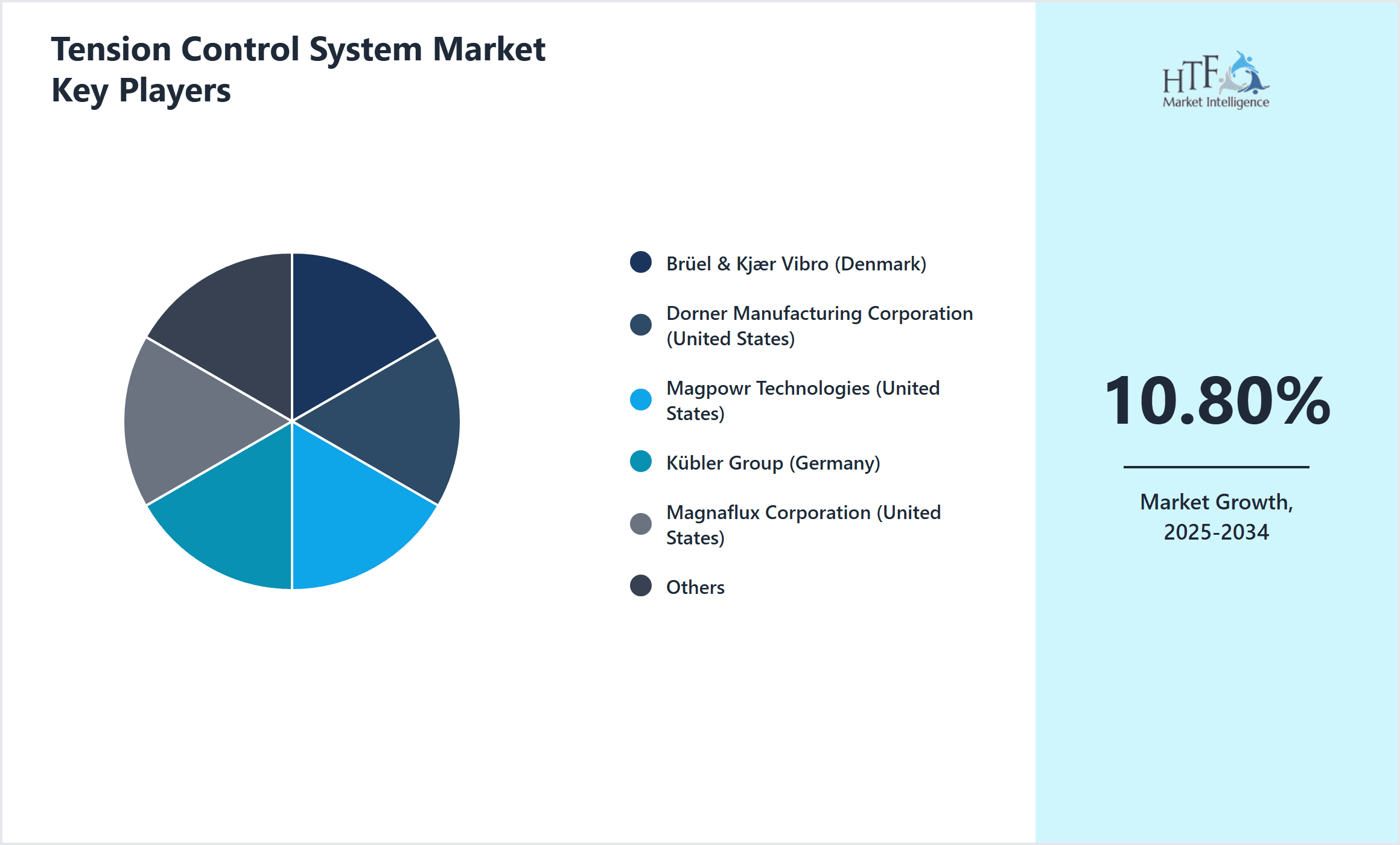
| Key Companies | Brüel & Kjær Vibro (Denmark), Dorner Manufacturing Corporation (United States), Magpowr Technologies (United States), Kübler Group (Germany), Magnaflux Corporation (United States) |
Southeast Asia Tension Control System Market Size, Growth & Revenue 2024-2034 - Table of Contents
Multidisciplinary researcher with 10+ years of experience uncovering insights across diverse domains focused on uncovering insights that drive informed decisions.
Frequently Asked Questions (FAQ):
The Compact Track Loaders market is expected to see value worth 5.3 Billion in 2025.
North America currently leads the market with approximately 45% market share, followed by Europe at 28% and Asia-Pacific at 22%. The remaining regions account for 5% of the global market.
Key growth drivers include increasing construction activities, rising demand for versatile equipment in agriculture, technological advancements in track loader design, and growing preference for compact equipment in urban construction projects.