
Southeast Asia Agricultural Round Baler Market Size, Growth & Revenue 2024-2034
Southeast Asia Agricultural Round Baler Market is segmented by Type (Small Square Balers, Large Square Balers, Large Round Balers, Mini Round Balers, Specialized Balers), Application (Hay Balers, Straw Balers, Silage Balers, Wrapper Balers, Other Agricultural Uses), End User (Commercial Farms, Smallholder Farms, Cooperative Farming Entities), Distribution Channel (Direct Sales, Dealerships, Online Platforms), and Geography (Singapore, Malaysia, Thailand, Indonesia, Vietnam, Philippines, Others)
Pricing
Report Overview
Executive Summary
- •The Southeast Asia Agricultural Round Baler Market represents a vital segment of the agricultural machinery industry, focusing on equipment that compacts crop residues into manageable round bales. This market addresses the needs of diverse farming operations across Indonesia, Thailand, Vietnam, Philippines, and Malaysia, where rice, sugarcane, and other crop residues require efficient baling solutions. The scope includes multiple product types such as large round balers, mini round balers, large and small square balers, and specialized balers designed for different crop types and terrain conditions. Technological advancements in binding mechanisms and automation have enhanced the operational efficiency of these balers, catering to labor shortages and increasing productivity demands. Key applications include hay, straw, silage, and wrapper baling, providing farmers with versatile options to manage biomass effectively. The increasing adoption of mechanization driven by government initiatives and rising labor costs positions this market for robust growth through 2034.
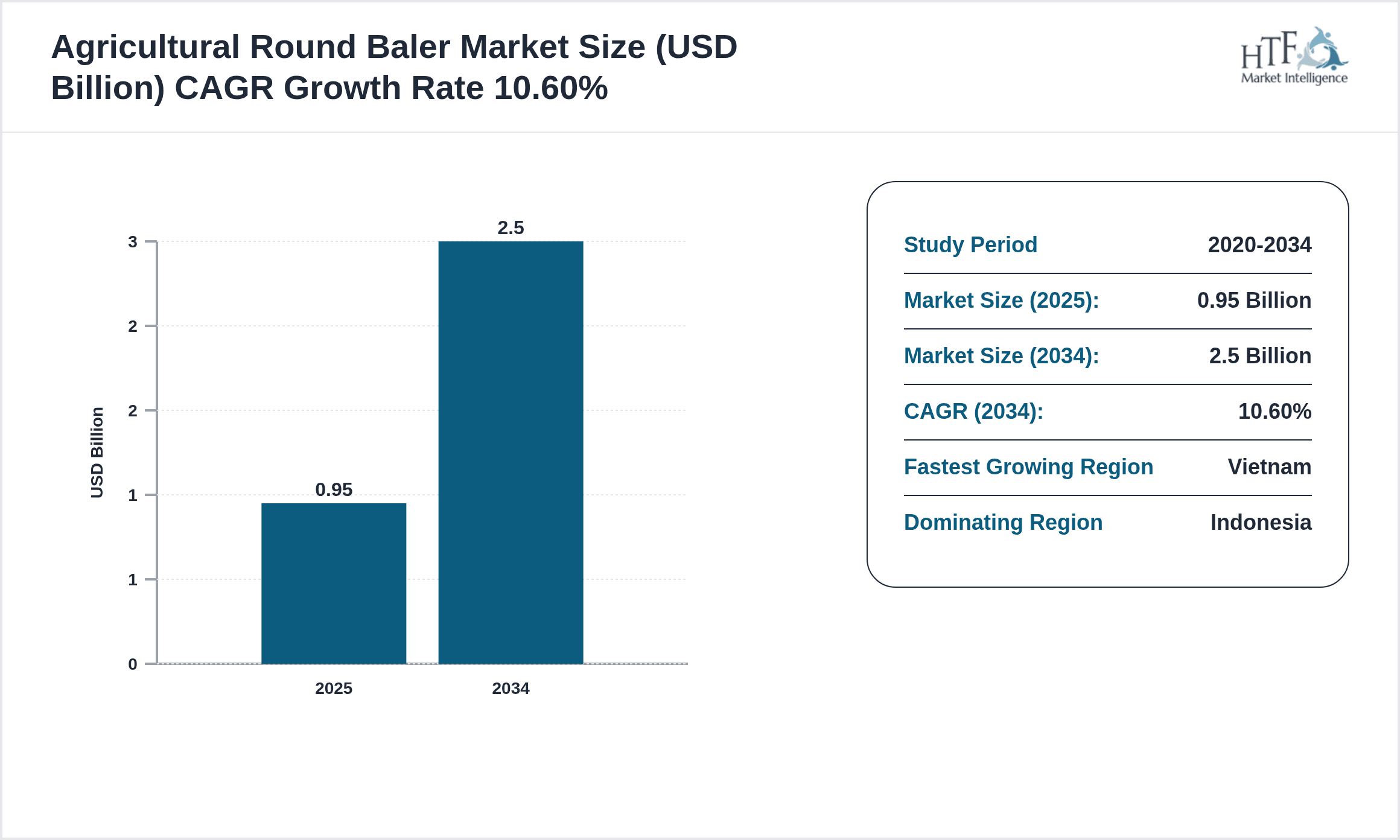
- •Market highlights indicate a base market size of USD 0.95 billion in 2024, projected to reach USD 2.50 billion by 2034, reflecting a CAGR of 10.6%. Large round balers dominate the product segment due to their efficiency in managing voluminous crop residues, while mini round balers emerge as the fastest-growing type, driven by smallholder farmers seeking cost-effective, compact solutions. Application-wise, hay balers hold the largest share, supported by extensive hay production in the region, with straw balers following closely. Indonesia leads the market geographically due to its vast agricultural land and mechanization adoption rates, whereas Vietnam exhibits the fastest growth fueled by expanding agribusiness and export demands.
- •This market presents significant value to agricultural machinery manufacturers, distributors, and end-users by enhancing crop residue management and contributing to sustainable farming practices. Strategic importance lies in its alignment with regional agricultural modernization, labor efficiency enhancement, and environmental conservation efforts. Stakeholders gain from technological innovation, expanding applications, and tailored product offerings addressing the diverse agro-climatic zones within Southeast Asia. The market’s growth trajectory offers opportunities for companies to capitalize on rising mechanization trends and government subsidies aimed at upgrading farming infrastructure.
Competitive Landscape
The Southeast Asia Agricultural Round Baler Market is characterized by intense competition among global agricultural equipment manufacturers and regional players focusing on innovation, customization, and distribution network expansion. Companies compete by enhancing product efficiency, integrating automation, and developing balers suited for varied crop types and field conditions prevalent in Southeast Asia. Strategic partnerships with local distributors and after-sales service infrastructure provide competitive advantages, while pricing strategies address diverse farmer profiles from commercial enterprises to smallholders. Innovation in binding technology and fuel efficiency further differentiates market participants. Mergers, acquisitions, and collaborative ventures are common to consolidate market share and expand geographic presence. The evolving competitive landscape demands agility in product development, regulatory compliance, and responsiveness to regional agricultural trends to maintain leadership and capture emerging market segments.
Prominent Players in Southeast Asia Agricultural Round Baler Market
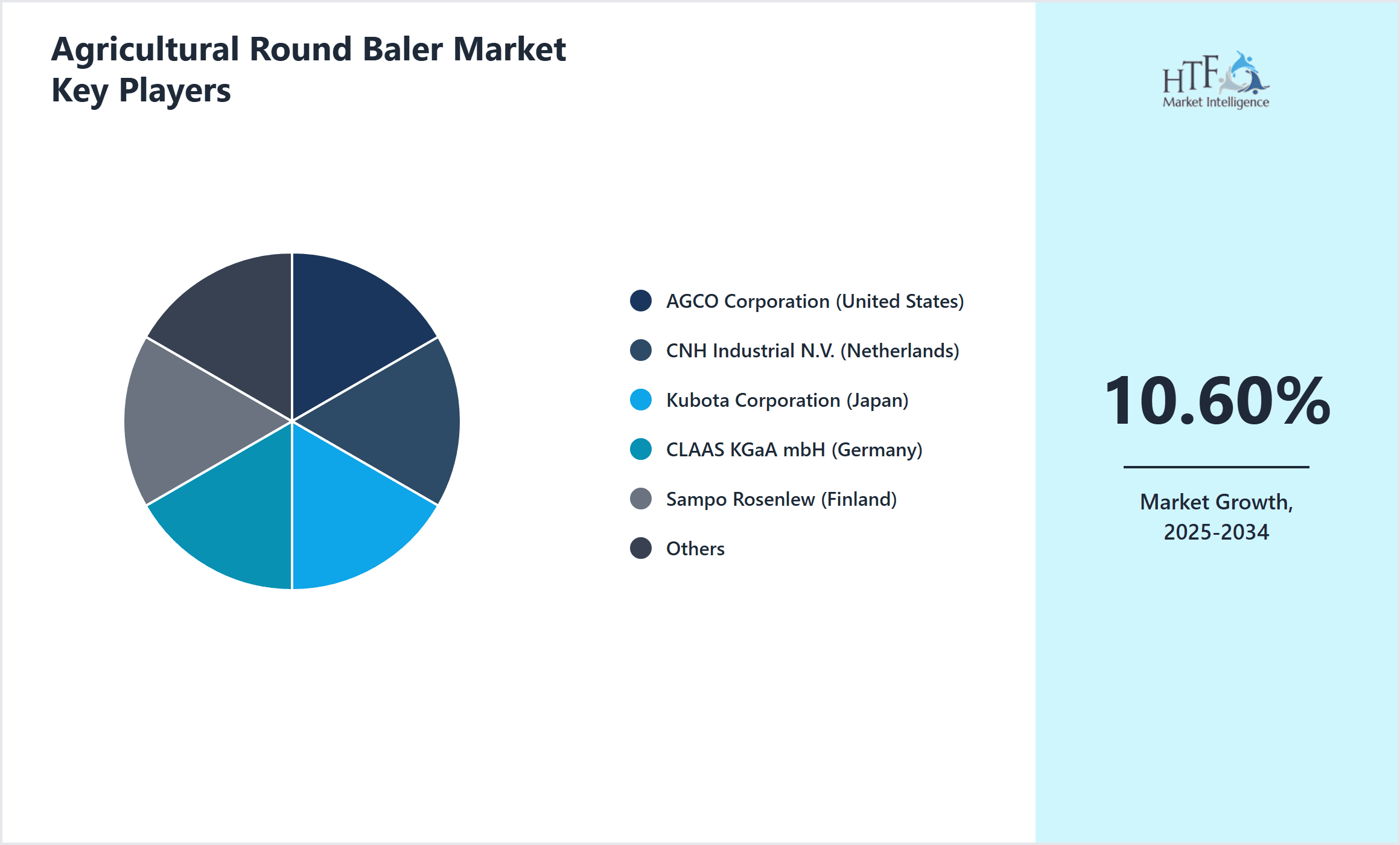
- •AGCO Corporation (United States)
- •CNH Industrial N.V. (Netherlands)
- •Kubota Corporation (Japan)
- •CLAAS KGaA mbH (Germany)
- •Sampo Rosenlew (Finland)
- •Mahindra & Mahindra Ltd. (India)
- •Yanmar Co., Ltd. (Japan)
- •New Holland Agriculture (United States)
- •John Deere (United States)
- •Kuhn Group (France)
- •Vicon (Netherlands)
- •Kverneland Group (Norway)
- •Deutz-Fahr (Germany)
- •Fendt (Germany)
- •Valtra (Finland)
- •AGRI Machinery (Thailand)
- •PT. Tractors Indonesia (Indonesia)
- •Vietnam Agricultural Equipment Co. (Vietnam)
- •Philippine Agri Machinery Corp. (Philippines)
- •Malaysian Farm Equipment Ltd. (Malaysia)
- •Southeast Agri Solutions (Singapore)
- •Asia Agri Machines (Thailand)
- •IndoFarm Equipment (Indonesia)
- •AgroTech Vietnam (Vietnam)
- •PhilAgri Machinery Ltd. (Philippines)
Market Breakdown
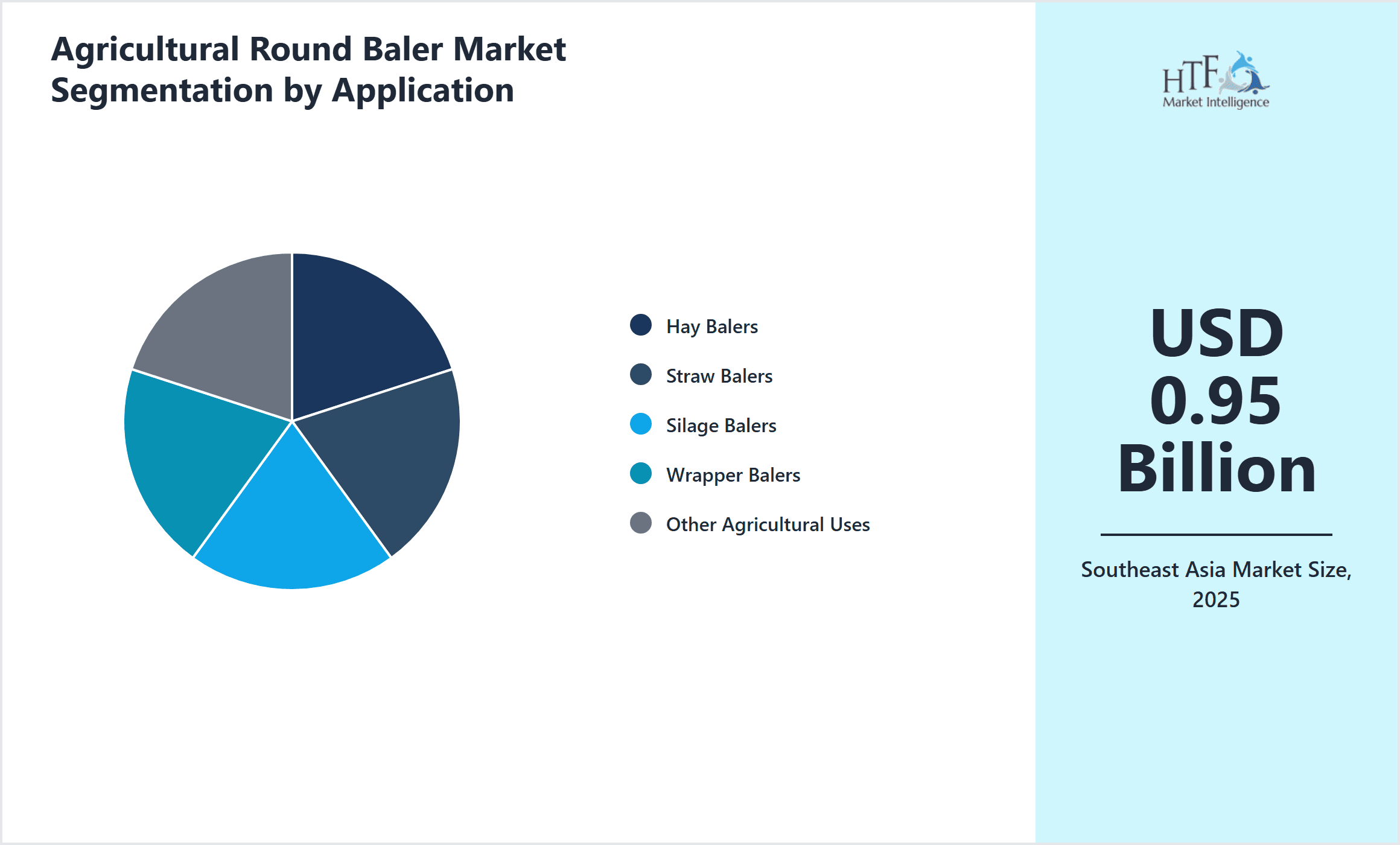
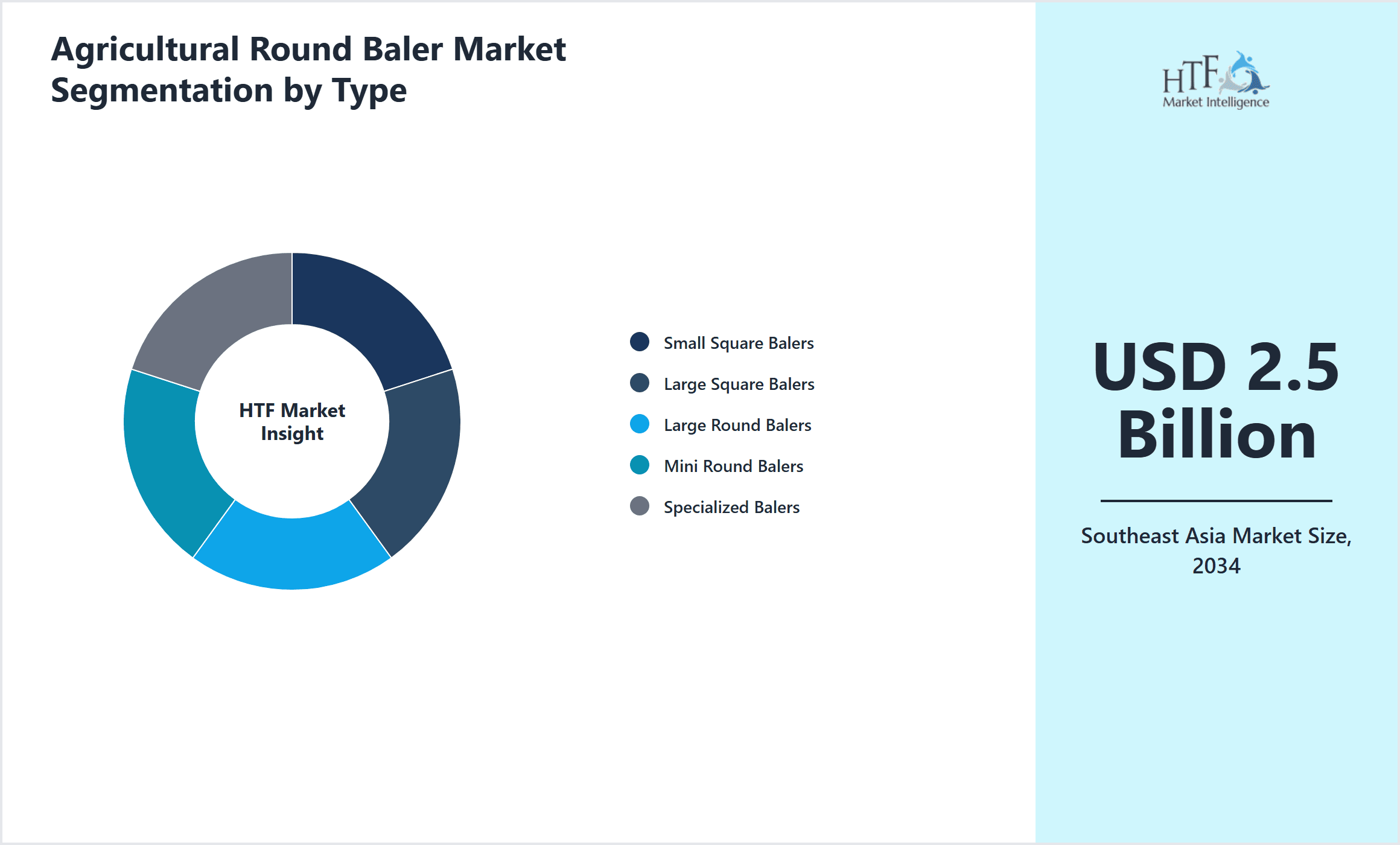
- •By Type
- ◦Small Square Balers
- ◦Large Square Balers
- ◦Large Round Balers
- ◦Mini Round Balers
- ◦Specialized Balers
- •By Application
- ◦Hay Balers
- ◦Straw Balers
- ◦Silage Balers
- ◦Wrapper Balers
- ◦Other Agricultural Uses
- •By End User
- ◦Commercial Farms
- ◦Smallholder Farms
- ◦Cooperative Farming Entities
- •By Distribution Channel
- ◦Direct Sales
- ◦Dealerships
- ◦Online Platforms
Growth Dynamics
- •Rising labor costs across Southeast Asia incentivize farmers to adopt mechanized baling solutions, improving operational efficiency and reducing manual labor dependency. This shift is particularly evident in Indonesia and Thailand, where labor shortages impact productivity.
- •Government initiatives promoting agricultural mechanization and sustainable farming practices have led to increased subsidies and financial support for machinery adoption, accelerating market growth and encouraging modernization in countries like Vietnam and the Philippines.
- •Technological advancements such as automated tying systems, improved hydraulic controls, and lightweight materials enhance baler performance and usability, making these products more attractive to diverse farming operations including smallholder and commercial farms.
- •Expansion of commercial agriculture, particularly in sugarcane, rice, and forage crops, drives demand for specialized balers capable of handling high volumes and varying biomass types, supporting growth in key markets like Malaysia and Indonesia.
- •Increasing environmental awareness and the adoption of circular economy principles encourage farmers to manage crop residues efficiently, using round balers to convert biomass into usable feed or biofuel feedstock, thus creating additional revenue streams.
Market Trends
- •The adoption of compact mini round balers is gaining momentum among smallholder farmers due to their affordability, maneuverability, and suitability for fragmented land holdings prevalent in Southeast Asia.
- •Integration of IoT and telematics in agricultural balers is emerging, enabling real-time monitoring, predictive maintenance, and operational optimization, which enhances productivity and reduces downtime.
- •Collaborative efforts between manufacturers and local distributors are strengthening, with tailored marketing and after-sales services addressing unique regional challenges and customer preferences, thereby improving market penetration.
- •Sustainability-focused innovations, including fuel-efficient engines and biodegradable binding materials, reflect growing environmental concerns and regulatory pressures in Southeast Asian countries.
- •The rise of contract farming and agri-cooperatives is influencing baler demand patterns, as collective ownership models enable shared access to mechanized equipment, reducing individual investment burdens.
Market Opportunities
- •There is significant opportunity to develop affordable, rugged mini round balers tailored for smallholder farms, which constitute the majority of agricultural operations in Southeast Asia and remain underserved by existing product offerings.
- •Expanding mechanization programs supported by regional governments create avenues for partnerships with local distributors and financial institutions to offer leasing and credit facilities, facilitating machinery adoption.
- •Innovation in multi-functional balers capable of handling diverse crop residues presents an opportunity to capture broader market segments and enhance operational efficiency for farmers cultivating mixed crops.
- •The growing bioenergy sector in Southeast Asia offers potential for round balers to serve as critical equipment in biomass supply chains, enabling farmers to monetize agricultural waste sustainably.
- •Digital marketing and e-commerce channels provide untapped potential for expanding reach and offering customized solutions, particularly in remote or underserved rural areas.
Market Challenges
- •High initial capital investment and the lack of affordable financing options limit smallholder farmer access to advanced round baler machinery, constraining market penetration in rural communities.
- •Inconsistent power supply and variable field conditions across Southeast Asia challenge the effective operation and maintenance of mechanized balers, leading to higher downtime and repair costs.
- •Limited awareness and technical knowledge about baler operation and maintenance among farmers impede adoption rates, necessitating extensive training and support services.
- •The presence of inexpensive, low-quality imports creates competitive pressure on established manufacturers and may affect market confidence and product reliability perceptions.
- •Regulatory heterogeneity regarding agricultural machinery standards across Southeast Asian countries complicates compliance and product certification processes for manufacturers and distributors.
Regulatory Framework
- •Between 2019 and 2024, Southeast Asian countries have progressively implemented agricultural machinery safety and emission standards aimed at reducing environmental impact and improving operator safety, requiring manufacturers to comply with stricter guidelines.
- •Indonesia and Thailand have introduced subsidy programs providing financial incentives for purchasing mechanized farming equipment, including round balers, to modernize agriculture and enhance productivity.
- •Vietnam's Ministry of Agriculture has mandated periodic certification and quality checks for imported agricultural machinery to ensure reliability and adherence to regional standards, affecting supply chain dynamics.
- •Malaysia has adopted regulations promoting the use of environmentally friendly hydraulic fluids and biodegradable binding materials in agricultural balers, aligning with broader sustainability goals.
- •The ASEAN Economic Community (AEC) framework facilitates harmonization of machinery standards and trade policies among member states, easing cross-border equipment movement while maintaining compliance requirements.
Market Intelligence
- •15th February 2025, AGCO Corporation launched its latest model of mini round baler designed specifically for the Southeast Asian smallholder market. The new baler features a lightweight frame and enhanced hydraulic systems to operate efficiently on small, uneven plots characteristic of the region. With an emphasis on affordability and ease of maintenance, AGCO aims to increase mechanization among rice and sugarcane farmers in Indonesia and Vietnam. The launch was accompanied by a strategic distribution partnership with regional dealers to ensure wide availability and after-sales support, targeting a market segment traditionally underserved by large-scale machinery. This launch positions AGCO to capitalize on the rising demand for compact balers in Southeast Asia. Source: AGCO Official Press Release
- •10th November 2024, Kubota Corporation introduced an IoT-enabled large round baler integrating telematics for real-time operation monitoring in Thailand and the Philippines. This innovation enables farmers to track machine performance, schedule maintenance proactively, and optimize baling efficiency remotely. Kubota’s push into connected machinery reflects a broader industry trend toward digital agriculture in Southeast Asia. The product launch was supported by demonstration events and training programs to facilitate adoption among commercial farms expanding mechanization. This strategic move enhances Kubota’s competitive edge by combining traditional machinery expertise with smart technology solutions. Source: Kubota Corporate News
- •Recent market developments and strategic initiatives are continuously tracked through industry publications, company announcements, and regulatory filings. For the most current information, stakeholders are advised to monitor official corporate communications and recognized market intelligence platforms.
- •Recent market developments and strategic initiatives are continuously tracked through industry publications, company announcements, and regulatory filings. For the most current information, stakeholders are advised to monitor official corporate communications and recognized market intelligence platforms.
Regional Outlook
The Indonesia currently holds a significant share of the market, primarily due to several key factors: increasing consumption rates, a burgeoning population, and robust economic momentum. These elements collectively drive demand, positioning this region as a leader in the market. On the other hand, Vietnam is rapidly emerging as the fastest-growing area within the industry. This remarkable growth can be attributed to swift infrastructure development, the expansion of various industrial sectors, and a marked increase in consumer demand. These dynamics make this region a crucial player in shaping future market growth.
In our report, we cover a comprehensive analysis of the following regions and countries:
- Singapore
- Malaysia
- Thailand
- Indonesia
- Vietnam
- Philippines
- Others
| Feature | Details |
|---|---|
| Base Year Market Size | USD 0.95 Billion |
| Forecast Year Market Size | USD 2.5 Billion |
| CAGR | 10.6% |
| Forecast Period | 2026 to 2033 |
| YoY Growth | 10.1% |
| Scope of Report | Market is segmented by Type (Small Square Balers, Large Square Balers, Large Round Balers, Mini Round Balers, Specialized Balers), Application (Hay Balers, Straw Balers, Silage Balers, Wrapper Balers, Other Agricultural Uses), End User (Commercial Farms, Smallholder Farms, Cooperative Farming Entities), Distribution Channel (Direct Sales, Dealerships, Online Platforms) |
| Regions Covered | Singapore, Malaysia, Thailand, Indonesia, Vietnam, Philippines, Others |
| Key Companies | AGCO Corporation (United States), CNH Industrial N.V. (Netherlands), Kubota Corporation (Japan), CLAAS KGaA mbH (Germany), Sampo Rosenlew (Finland), Mahindra & Mahindra Ltd. (India), Yanmar Co., Ltd. (Japan), New Holland Agriculture (United States), John Deere (United States), Kuhn Group (France), Vicon (Netherlands), Kverneland Group (Norway), Deutz-Fahr (Germany), Fendt (Germany), Valtra (Finland), AGRI Machinery (Thailand), PT. Tractors Indonesia (Indonesia), Vietnam Agricultural Equipment Co. (Vietnam), Philippine Agri Machinery Corp. (Philippines), Malaysian Farm Equipment Ltd. (Malaysia), Southeast Agri Solutions (Singapore), Asia Agri Machines (Thailand), IndoFarm Equipment (Indonesia), AgroTech Vietnam (Vietnam), PhilAgri Machinery Ltd. (Philippines) |
Southeast Asia Agricultural Round Baler Market Size, Growth & Revenue 2024-2034 - Table of Contents
Frequently Asked Questions (FAQ):
The Compact Track Loaders market is expected to see value worth 5.3 Billion in 2025.
North America currently leads the market with approximately 45% market share, followed by Europe at 28% and Asia-Pacific at 22%. The remaining regions account for 5% of the global market.
Key growth drivers include increasing construction activities, rising demand for versatile equipment in agriculture, technological advancements in track loader design, and growing preference for compact equipment in urban construction projects.