
Southeast Asia Construction Machinery Hydraulic Cylinder Market Size, Growth & Revenue 2024-2034
Southeast Asia Construction Machinery Hydraulic Cylinder Market is segmented by Type (Tie Rod Cylinder, Welded Cylinder, Telescopic Cylinder, Mill Type Cylinder, Ram Type Cylinder), Application (Excavators, Loaders, Cranes, Bulldozers, Forklifts), Manufacturing Material (Steel, Aluminum Alloy, Composite Materials, Cast Iron), Distribution Channel (Direct Sales, Dealerships, Online Platforms), and Geography (Singapore, Malaysia, Thailand, Indonesia, Vietnam, Philippines, Others)
Pricing
Report Overview
Executive Summary
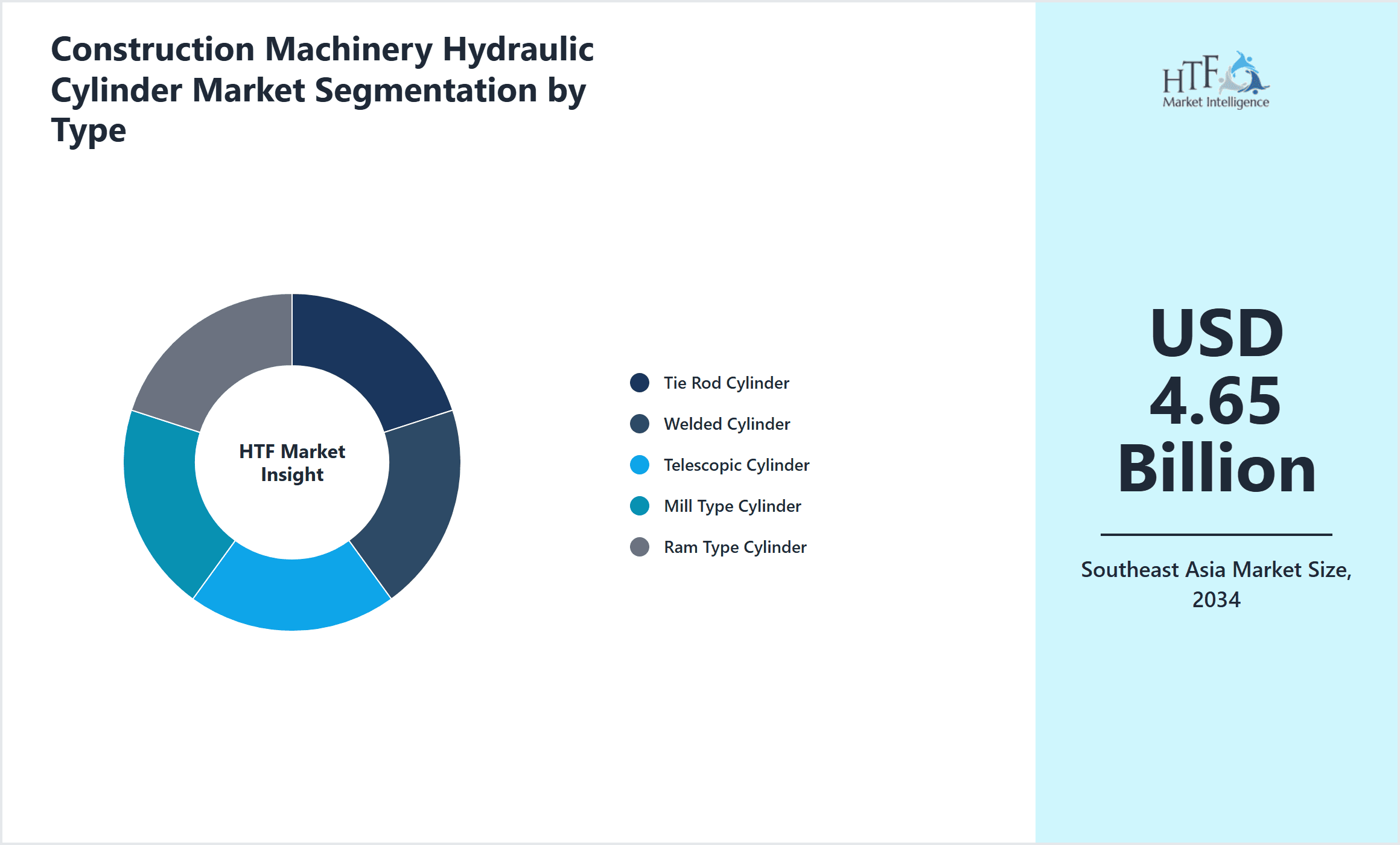
- •The Southeast Asia Construction Machinery Hydraulic Cylinder Market is dedicated to the production and supply of hydraulic cylinders used in heavy construction machinery. These cylinders function as vital mechanical actuators, converting hydraulic fluid power into linear motion to facilitate equipment operations such as lifting, digging, and pushing. The market covers a variety of cylinder types including tie rod, welded, telescopic, mill type, and ram type cylinders, each engineered for different machinery needs and operational environments. Key applications span across excavators, loaders, cranes, bulldozers, and forklifts, reflecting the diverse construction activities within the region. This market's scope is influenced by rapid urbanization, infrastructure projects, and government investments in Southeast Asia, propelling demand for advanced, efficient, and durable hydraulic solutions. The industry's growth is driven by technological advancements in cylinder materials and designs, improving performance and lifespan under challenging field conditions, while addressing environmental and operational safety standards prevalent in the region.
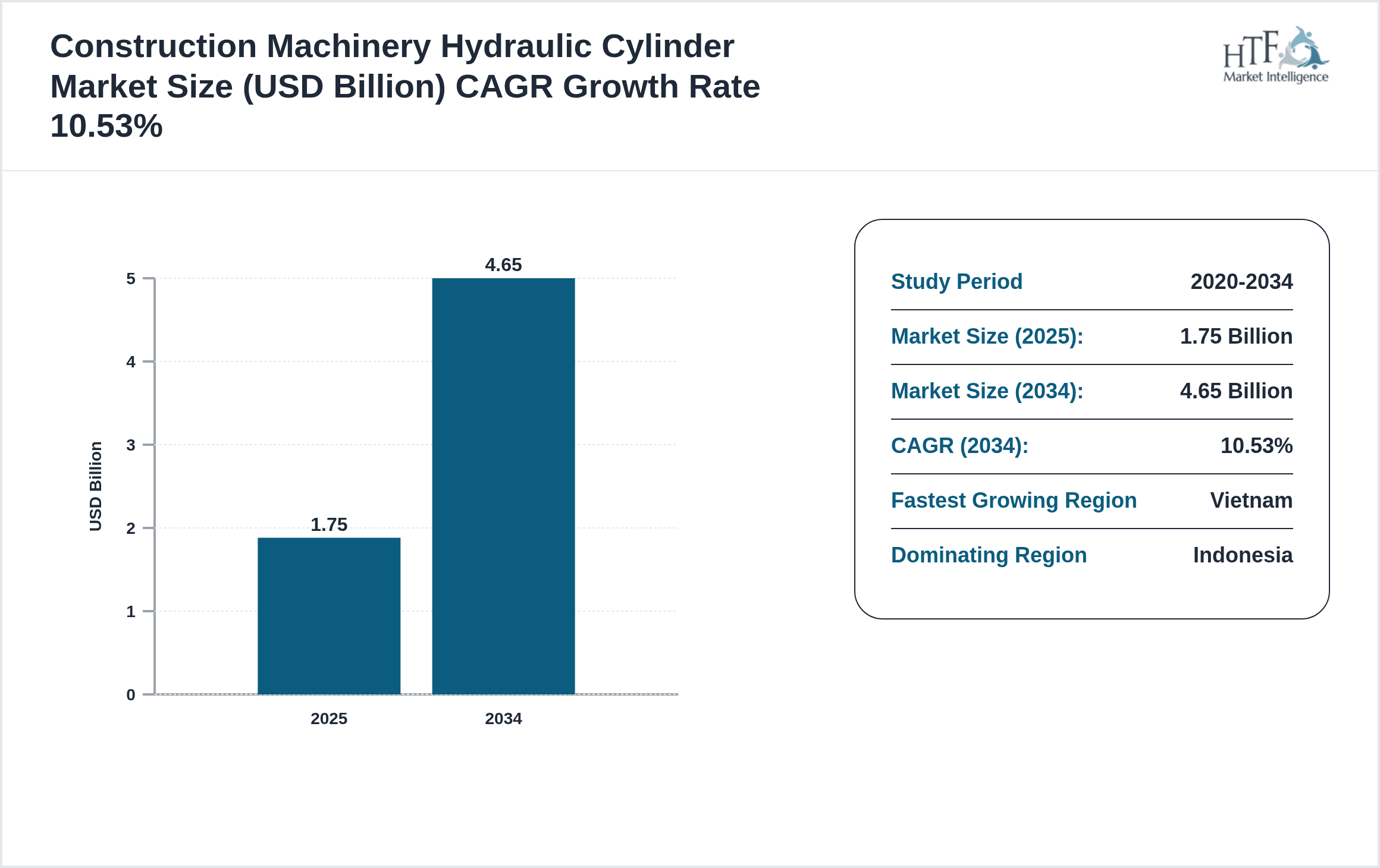
- •Significant growth in Southeast Asia's construction sector, driven by infrastructural developments and urban expansion, has fueled demand for hydraulic cylinders integral to construction machinery. The market size stood at USD 1.75 billion in 2024 and is forecast to reach USD 4.65 billion by 2034, growing at a CAGR of 10.53%. Key highlights include dominance of tie rod cylinders owing to their robustness, and the fastest adoption of telescopic cylinders due to their versatility in compact machinery. Indonesia leads the regional market share, while Vietnam emerges as the fastest-growing country fueled by industrialization and construction activity. Application-wise, excavators dominate usage, followed by loaders, reflecting the emphasis on earthmoving and material handling in ongoing projects.
- •This market presents strategic value to construction equipment manufacturers, hydraulic component suppliers, and infrastructure developers. Its growth aligns with the increasing mechanization of construction processes and the need for reliable machinery components to ensure operational efficiency and safety. Stakeholders benefit from insights into product innovation trends, regional demand patterns, and regulatory compliance landscapes, enabling informed investment and development strategies. Additionally, the market’s evolution supports sustainable development goals by promoting energy-efficient hydraulic technologies with lower environmental impact, thus enhancing the overall value proposition for industry participants across Southeast Asia.
Competitive Landscape
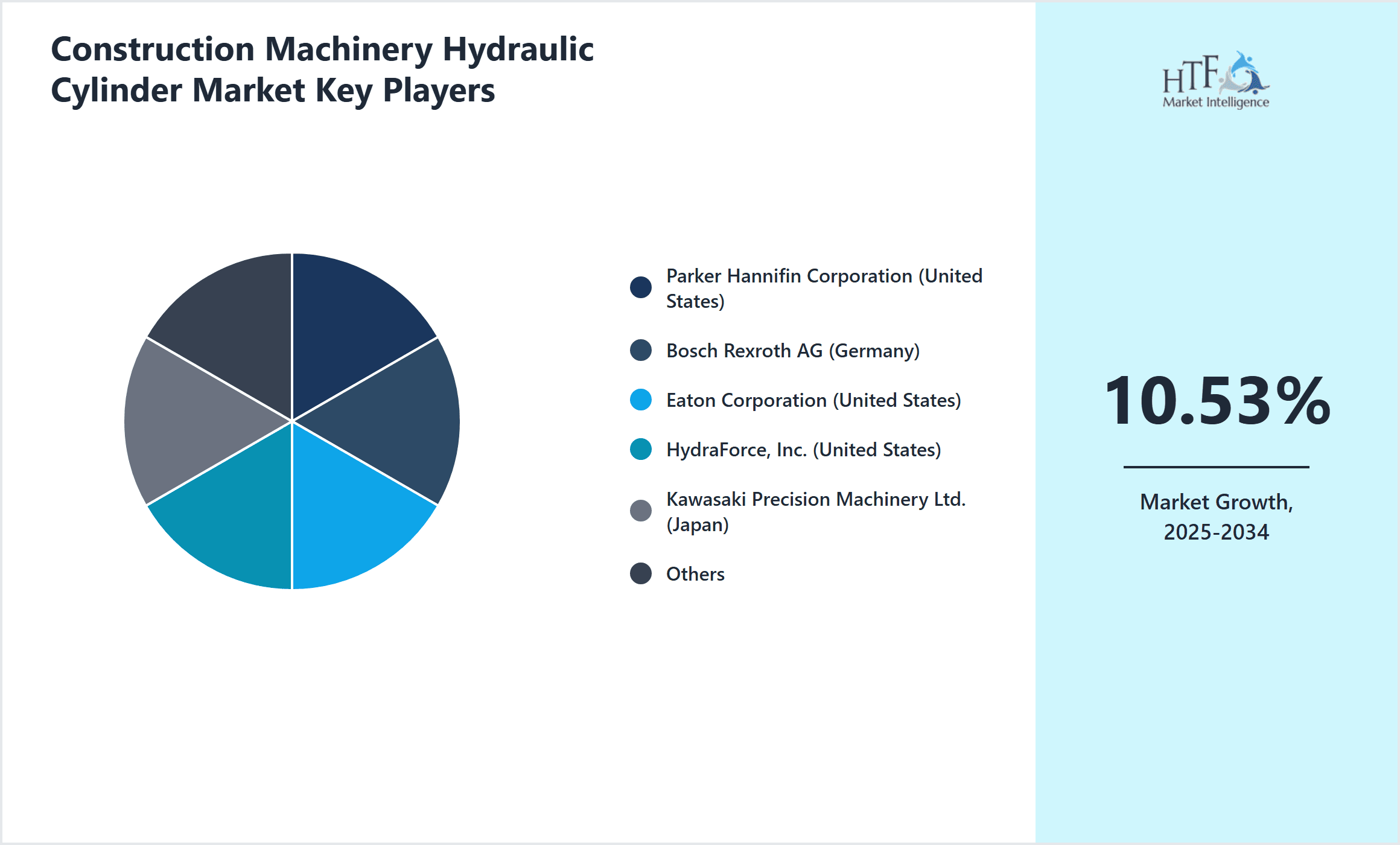
The Southeast Asia Construction Machinery Hydraulic Cylinder Market is characterized by intense competition among global industrial giants and regional manufacturers. Market players focus on innovation in hydraulic technology, such as enhanced seals, corrosion-resistant coatings, and modular designs that improve durability and serviceability. Companies differentiate themselves through robust R&D, strategic partnerships, and localized manufacturing to meet regional demand efficiently. Pricing strategies are influenced by raw material cost fluctuations and the need to balance affordability with quality. Distribution channels leverage direct sales and authorized dealerships to optimize market penetration. Mergers and acquisitions serve as key competitive strategies to consolidate market position and expand product portfolios. Regional players capitalize on their understanding of local market needs and regulatory environments to carve niches, while global firms emphasize technological superiority and brand reputation. The competitive environment is expected to intensify with rising infrastructure investments and the introduction of smart hydraulic components in machinery.
Prominent Players in Construction Machinery Hydraulic Cylinder Market
- •Parker Hannifin Corporation (United States)
- •Bosch Rexroth AG (Germany)
- •Eaton Corporation (United States)
- •HydraForce, Inc. (United States)
- •Kawasaki Precision Machinery Ltd. (Japan)
- •CNH Industrial N.V. (United Kingdom/Netherlands)
- •Enerpac Tool Group Corp. (United States)
- •Dongyang Hydraulic Machinery Co., Ltd. (South Korea)
- •Hengli Hydraulic Co., Ltd. (China)
- •Kito Corporation (Japan)
- •HYDAC International GmbH (Germany)
- •Nachi-Fujikoshi Corp. (Japan)
- •Hanwha Corporation (South Korea)
- •Trelleborg AB (Sweden)
- •Mitsubishi Heavy Industries, Ltd. (Japan)
- •Yuken Kogyo Co., Ltd. (Japan)
- •Liebherr Group (Switzerland)
- •Doosan Infracore Co., Ltd. (South Korea)
- •Atlas Copco AB (Sweden)
- •Sauer-Danfoss (United States)
- •Sumitomo Heavy Industries, Ltd. (Japan)
- •SKF AB (Sweden)
- •Jiangsu Hengli Hydraulic Co., Ltd. (China)
- •ZOOMLION Heavy Industry Science & Technology Co., Ltd. (China)
- •Festo AG & Co. KG (Germany)

Market Breakdown
- •By Type
- ◦Tie Rod Cylinder
- ◦Welded Cylinder
- ◦Telescopic Cylinder
- ◦Mill Type Cylinder
- ◦Ram Type Cylinder
- •By Application
- ◦Excavators
- ◦Loaders
- ◦Cranes
- ◦Bulldozers
- ◦Forklifts
- •By Manufacturing Material
- ◦Steel
- ◦Aluminum Alloy
- ◦Composite Materials
- ◦Cast Iron
- •By Distribution Channel
- ◦Direct Sales
- ◦Dealerships
- ◦Online Platforms
Growth Dynamics
- •Rapid urbanization and infrastructure expansion in Southeast Asia have significantly increased demand for construction machinery hydraulic cylinders, as governments prioritize transportation networks and commercial real estate projects.
- •Technological advancements in hydraulic cylinder designs, such as improved sealing systems and corrosion-resistant coatings, are enhancing cylinder durability and operational efficiency, driving market growth.
- •Rising adoption of automated and smart construction equipment integrating IoT sensors boosts demand for advanced hydraulic cylinders capable of precise control and remote monitoring.
- •Investment by key manufacturers in localized production facilities within Southeast Asia reduces supply chain complexities and lowers costs, fostering competitive pricing and market expansion.
- •Increasing focus on sustainability and energy efficiency in construction machinery promotes development of eco-friendly hydraulic cylinders with reduced leakage and enhanced power management.
Market Trends
- •Integration of smart sensors in hydraulic cylinders for real-time condition monitoring is a growing trend, enabling predictive maintenance and reducing downtime for construction equipment operators.
- •The rise of modular hydraulic cylinder systems allows easier customization and faster replacement cycles, responding to diverse machinery requirements across the Southeast Asia market.
- •Manufacturers are increasingly employing lightweight composite materials in cylinder construction to improve fuel efficiency and reduce operational costs of construction machinery.
- •Collaborations between hydraulic component makers and construction equipment OEMs are intensifying to develop integrated solutions that enhance machine performance and reliability.
- •Digitization of supply chains and adoption of e-commerce platforms for hydraulic cylinder sales streamline procurement processes for distributors and end-users in the region.
Market Opportunities
- •Expansion of infrastructure projects under national development plans in countries like Indonesia and Vietnam opens new markets for hydraulic cylinder suppliers with localized solutions.
- •Emerging demand for compact and multi-stage telescopic cylinders in urban construction machinery presents opportunities for product innovation and niche market capture.
- •Growing adoption of green building standards increases the demand for energy-efficient hydraulic components, encouraging manufacturers to develop sustainable product lines.
- •Strategic partnerships between regional distributors and global manufacturers can enhance market reach and provide tailored after-sales support to customers.
- •Investment in digital platforms for sales and customer service can improve market penetration and create competitive differentiation in the Southeast Asia hydraulic cylinder market.
Market Challenges
- •Volatility in raw material prices, especially steel and aluminum, poses significant cost challenges for hydraulic cylinder manufacturers impacting profit margins in Southeast Asia.
- •Limited availability of highly skilled technicians for precision manufacturing and maintenance of hydraulic cylinders hampers quality and service delivery in some countries.
- •Stringent environmental and safety regulations require continuous compliance investments, increasing operational costs for manufacturers and suppliers in the region.
- •Competition from low-cost imports and counterfeit hydraulic components affects market pricing and erodes brand trust among end-users.
- •Supply chain disruptions caused by geopolitical tensions and logistics bottlenecks can delay delivery schedules and increase inventory costs for market players.
Regulatory Framework
- •Between 2019 and 2024, Southeast Asian countries have implemented stricter emission and safety standards for construction machinery, requiring hydraulic cylinders to meet enhanced durability and leak-resistance criteria to ensure environmental compliance.
- •Regional trade agreements like the ASEAN Economic Community facilitate tariff reductions and standardized certification processes for hydraulic cylinders, simplifying cross-border trade within Southeast Asia.
- •Several countries mandate periodic equipment inspections and certifications, compelling manufacturers to provide traceable quality assurance and maintenance support for hydraulic components.
- •The introduction of energy efficiency labeling programs for construction machinery impacts hydraulic cylinder design requirements, encouraging adoption of more sustainable technologies.
- •Government initiatives promoting local manufacturing and technology transfers incentivize investments in hydraulic cylinder R&D and production facilities within the region.
Market Intelligence
- •15th February 2025, Parker Hannifin Corporation unveiled a next-generation tie rod hydraulic cylinder designed specifically for Southeast Asia’s varied terrain and heavy-duty construction applications. This product features enhanced corrosion resistance and an integrated sensor system for real-time diagnostics, targeting improved machine uptime and reduced maintenance costs. The launch aims to capture growing demand in Indonesia and Vietnam, where infrastructure projects are accelerating rapidly. The advanced cylinder supports both standard and customized machinery, reinforcing Parker Hannifin’s leadership in regional hydraulic solutions. Source: Official Parker Hannifin Press Release
- •10th April 2025, Bosch Rexroth AG announced the expansion of its manufacturing facility in Malaysia to increase production of telescopic hydraulic cylinders tailored to compact construction equipment. The expansion supports the rising adoption of multi-stage cylinders in urban construction sites across Southeast Asia. Bosch’s investment includes automation technologies to enhance production efficiency and quality control. This strategic move strengthens Bosch’s supply chain resilience and responsiveness to local market needs, fostering closer partnerships with regional OEMs. Source: Bosch Rexroth Corporate News
- •5th January 2025, CNH Industrial N.V. launched an integrated hydraulic system featuring modular welded cylinders for loaders and excavators in the Southeast Asian market. The system improves fuel efficiency by optimizing hydraulic power distribution and reduces cylinder wear through advanced materials. CNH Industrial’s initiative aims to support the region’s sustainability targets while enhancing machinery performance and operator safety. The product rollout is complemented by a regional training program for technicians and distributors to ensure optimal usage and maintenance. Source: CNH Industrial Official Announcement
- •20th March 2025, Dongyang Hydraulic Machinery Co., Ltd. entered a strategic partnership with a leading Indonesian construction equipment dealer to co-develop customized mill type cylinders for heavy-duty cranes used in port infrastructure projects. This collaboration focuses on adapting cylinder designs for tropical maritime environments with enhanced sealing and anti-corrosion features. The partnership is poised to expand Dongyang’s market share in Southeast Asia by delivering tailored solutions aligned with local operational challenges. Source: Dongyang Hydraulic Press Release
Regional Outlook
The Indonesia currently holds a significant share of the market, primarily due to several key factors: increasing consumption rates, a burgeoning population, and robust economic momentum. These elements collectively drive demand, positioning this region as a leader in the market. On the other hand, Vietnam is rapidly emerging as the fastest-growing area within the industry. This remarkable growth can be attributed to swift infrastructure development, the expansion of various industrial sectors, and a marked increase in consumer demand. These dynamics make this region a crucial player in shaping future market growth.
In our report, we cover a comprehensive analysis of the following regions and countries:
- Singapore
- Malaysia
- Thailand
- Indonesia
- Vietnam
- Philippines
- Others
| Feature | Details |
|---|---|
| Base Year Market Size | USD 1.75 Billion |
| Forecast Year Market Size | USD 4.65 Billion |
| CAGR | 10.53% |
| Forecast Period | 2026 to 2033 |
| YoY Growth | 10.05% |
| Scope of Report | Market is segmented by Type (Tie Rod Cylinder, Welded Cylinder, Telescopic Cylinder, Mill Type Cylinder, Ram Type Cylinder), Application (Excavators, Loaders, Cranes, Bulldozers, Forklifts), Manufacturing Material (Steel, Aluminum Alloy, Composite Materials, Cast Iron), Distribution Channel (Direct Sales, Dealerships, Online Platforms) |
| Regions Covered | Singapore, Malaysia, Thailand, Indonesia, Vietnam, Philippines, Others |
| Key Companies | Parker Hannifin Corporation (United States), Bosch Rexroth AG (Germany), Eaton Corporation (United States), HydraForce, Inc. (United States), Kawasaki Precision Machinery Ltd. (Japan), CNH Industrial N.V. (United Kingdom/Netherlands), Enerpac Tool Group Corp. (United States), Dongyang Hydraulic Machinery Co., Ltd. (South Korea), Hengli Hydraulic Co., Ltd. (China), Kito Corporation (Japan), HYDAC International GmbH (Germany), Nachi-Fujikoshi Corp. (Japan), Hanwha Corporation (South Korea), Trelleborg AB (Sweden), Mitsubishi Heavy Industries, Ltd. (Japan), Yuken Kogyo Co., Ltd. (Japan), Liebherr Group (Switzerland), Doosan Infracore Co., Ltd. (South Korea), Atlas Copco AB (Sweden), Sauer-Danfoss (United States), Sumitomo Heavy Industries, Ltd. (Japan), SKF AB (Sweden), Jiangsu Hengli Hydraulic Co., Ltd. (China), ZOOMLION Heavy Industry Science & Technology Co., Ltd. (China), Festo AG & Co. KG (Germany) |
Southeast Asia Construction Machinery Hydraulic Cylinder Market Size, Growth & Revenue 2024-2034 - Table of Contents
Frequently Asked Questions (FAQ):
The Compact Track Loaders market is expected to see value worth 5.3 Billion in 2025.
North America currently leads the market with approximately 45% market share, followed by Europe at 28% and Asia-Pacific at 22%. The remaining regions account for 5% of the global market.
Key growth drivers include increasing construction activities, rising demand for versatile equipment in agriculture, technological advancements in track loader design, and growing preference for compact equipment in urban construction projects.