
Global Loose Leaf Tea Market Scope & Changing Dynamics 2025-2034
Global Loose Leaf Tea Market is segmented by Tea Type (Green Tea, Black Tea, Oolong Tea, White Tea, Herbal Tea), Application (Retail, Foodservice, Online Sales, Specialty Stores, Export), Packaging Format (Loose Leaf in Bulk, Pre-packaged Loose Leaf, Gift Packs, Sampler Packs), Distribution Channel (Supermarkets/Hypermarkets, Specialty Retailers, Online Retail, Direct Sales), and Geography (North America, LATAM, West Europe, Central & Eastern Europe, Northern Europe, Southern Europe, East Asia, Southeast Asia, South Asia, Central Asia, Oceania, MEA)
Pricing
Report Overview
Executive Summary
- •The global loose leaf tea market represents a dynamic segment within the overall tea industry, characterized by the sale and consumption of loose, unbagged tea leaves. This market includes a variety of tea types such as green, black, oolong, white, and herbal teas, targeting consumers who seek premium, authentic tea experiences beyond conventional tea bags. Applications span retail environments including supermarkets and specialty stores, foodservice outlets like cafes and restaurants, and increasingly, online sales channels facilitating direct consumer access. The value chain involves multiple stakeholders, from tea growers harvesting diverse tea varieties across key producing regions, to processors who refine and package the leaves, and distributors and retailers who bridge the product to end users globally. The market is propelled by growing health consciousness, rising disposable incomes, and an increasing preference for natural and organic beverages. Asian countries, especially within Asia-Pacific, dominate production and consumption, while emerging regions such as Latin America and the Middle East & Africa are witnessing rapid adoption and market expansion. Challenges such as climate change affecting tea cultivation, supply chain complexities, and competition from other beverages remain, but ongoing innovations and expanding consumer awareness continue to drive robust growth prospects through 2034.
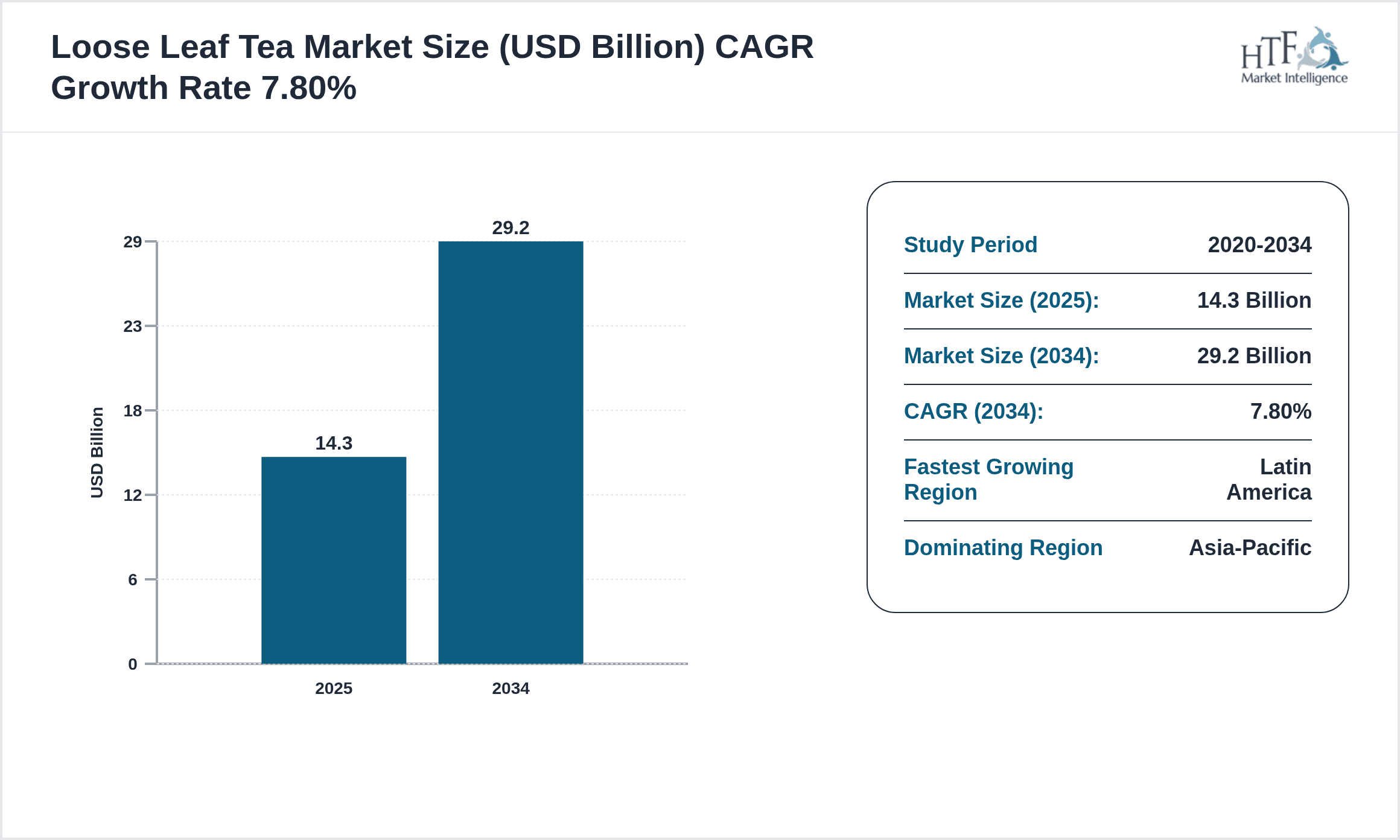
- •Key market highlights include a base market size of USD 14.3 Billion in 2025, forecasted to reach USD 29.2 Billion by 2034, reflecting a CAGR of 7.8%. Year-on-year growth is projected at approximately 7.2%, underscoring steady demand expansion. Asia-Pacific remains the dominant region in terms of market share, supported by established tea cultures and large-scale production, while Latin America is identified as the fastest growing region, fueled by increasing health awareness and rising disposable incomes. Green tea leads product types in market share, with herbal tea exhibiting the highest growth rates due to its perceived health benefits and increasing consumer interest.
- •The loose leaf tea market holds significant strategic importance for stakeholders across agriculture, manufacturing, retail, and hospitality sectors. Its value proposition is underscored by the rising consumer inclination towards premium, natural, and artisanal beverages, which offers opportunities for product differentiation and brand building. Additionally, the market contributes to sustainable agricultural practices and rural economies in key producing countries. For investors and businesses, understanding evolving consumer trends, regional dynamics, and regulatory frameworks is critical to capitalizing on growth opportunities and navigating challenges in this expanding global market.
Competitive Landscape
The global loose leaf tea market features a highly competitive environment characterized by a mix of established multinational corporations and innovative regional players. Market dynamics revolve around product innovation, premiumization, and expanding distribution networks across retail and online channels. Companies employ diverse strategies including strategic partnerships, mergers and acquisitions, and geographic expansion to enhance market presence and capture emerging consumer segments. Innovation approaches focus on developing organic and specialty tea blends, sustainable sourcing, and eco-friendly packaging to meet rising consumer expectations. Pricing strategies vary from affordable mass-market offerings to high-end premium products, enabling companies to cater to a broad spectrum of consumers. Distribution channels have evolved significantly with the rise of e-commerce platforms, allowing direct-to-consumer sales and personalized tea experiences. Market entry barriers include the need for strong supplier relationships, brand recognition, and compliance with regional food safety regulations. Regional competition is shaped by local tea cultivation practices and consumer preferences, with Asia-Pacific dominating due to its heritage and production capacity. Future competitive trends point towards increased digital marketing, product customization, and sustainability focus, driving differentiation and long-term consumer loyalty in an increasingly crowded marketplace.
Leading Companies in Loose Leaf Tea Market
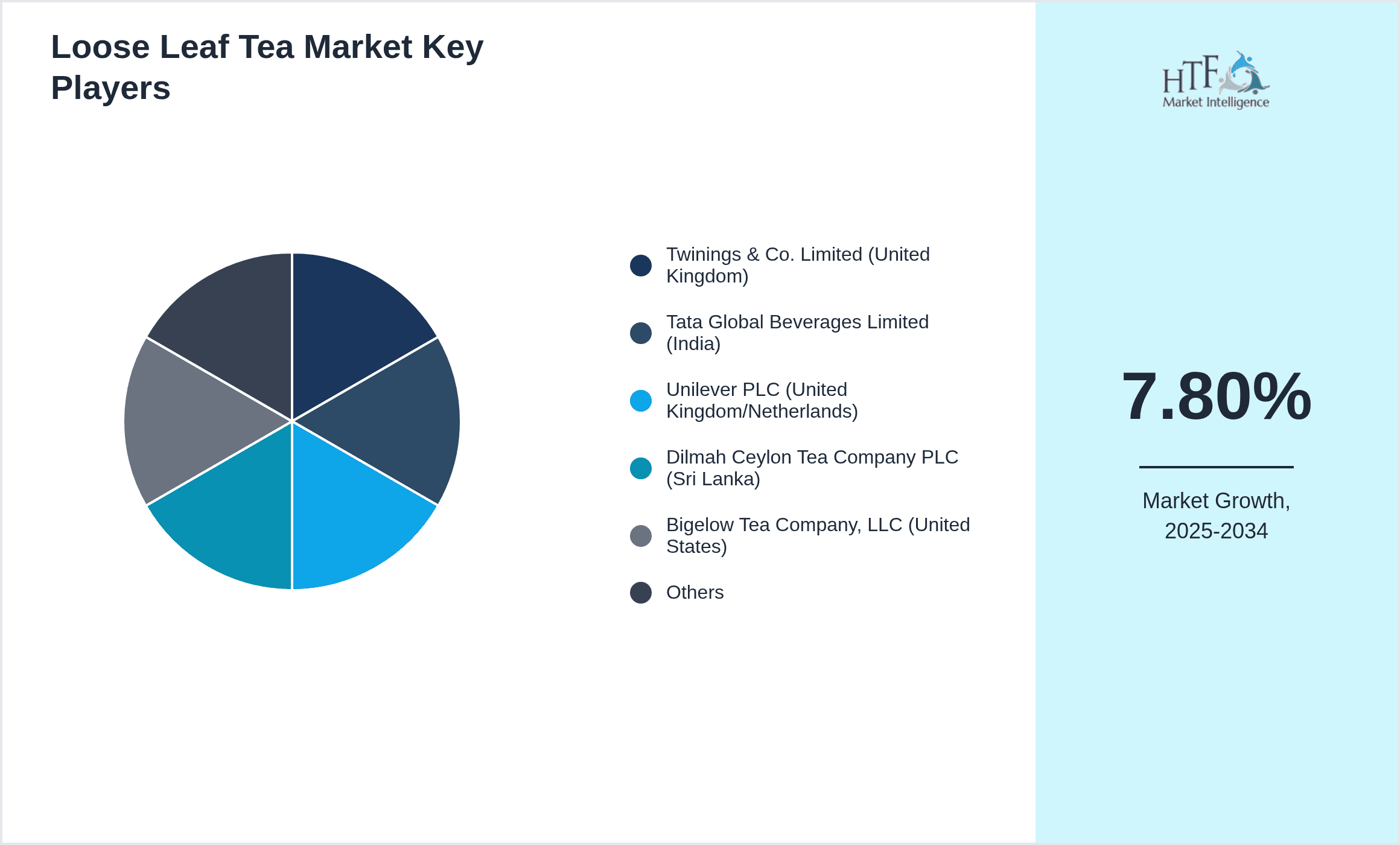
- •Twinings & Co. Limited (United Kingdom)
- •Tata Global Beverages Limited (India)
- •Unilever PLC (United Kingdom/Netherlands)
- •Dilmah Ceylon Tea Company PLC (Sri Lanka)
- •Bigelow Tea Company, LLC (United States)
- •Harney & Sons Fine Teas (United States)
- •The Republic of Tea (United States)
- •Celestial Seasonings, Inc. (United States)
- •Ito En, Ltd. (Japan)
- •Yunnan Pu'er Tea Group Co., Ltd. (China)
- •Teavana Corporation (United States)
- •Barry's Tea (Ireland)
- •Stash Tea Company (United States)
- •Ronnefeldt Group (Germany)
- •Lupicia Co., Ltd. (Japan)
- •Ahmad Tea Ltd. (United Kingdom)
- •Tazo Tea Company (United States)
- •Tea Forte (United States)
- •Numi Organic Tea (United States)
- •Mlesna Tea (Sri Lanka)
- •Teekanne GmbH & Co. KG (Germany)
- •Wissotzky Tea Company (Israel)
- •The Tea Spot (United States)
- •Dilmah Tea (Sri Lanka)
- •Numi Tea (United States)
Market Breakdown
- •By Tea Type
- ◦Green Tea
- ◦Black Tea
- ◦Oolong Tea
- ◦White Tea
- ◦Herbal Tea
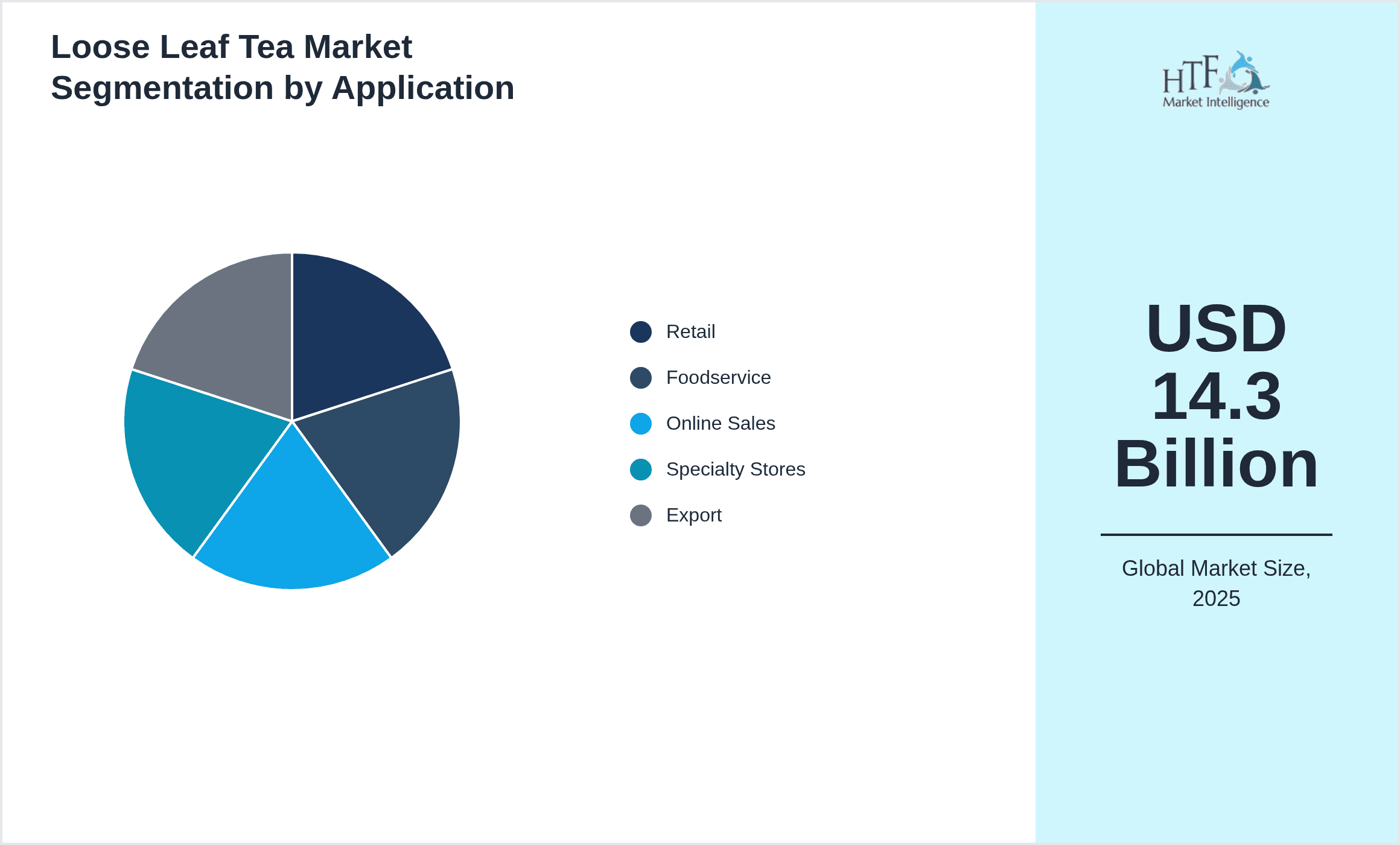
- •By Application
- ◦Retail
- ◦Foodservice
- ◦Online Sales
- ◦Specialty Stores
- ◦Export
- •By Packaging Format
- ◦Loose Leaf in Bulk
- ◦Pre-packaged Loose Leaf
- ◦Gift Packs
- ◦Sampler Packs
- •By Distribution Channel
- ◦Supermarkets/Hypermarkets
- ◦Specialty Retailers
- ◦Online Retail
- ◦Direct Sales
Growth Dynamics
- •Increasing consumer preference for natural and organic beverages is a primary growth driver, with health-conscious individuals seeking antioxidant-rich tea varieties such as green and herbal teas. This shift supports premiumization trends and higher market valuation.
- •Expansion of e-commerce platforms has significantly boosted loose leaf tea accessibility worldwide, allowing specialty brands to reach niche consumers and facilitating personalized buying experiences which drive volume growth.
- •Rising disposable incomes in emerging markets, especially within Latin America and Asia-Pacific, are enabling a growing middle class to afford premium loose leaf tea products, enhancing market penetration and revenue streams.
- •Increasing awareness of the environmental impact of tea packaging has led to demand for sustainable and biodegradable packaging solutions, encouraging manufacturers to innovate and differentiate their products.
- •The growing trend of specialty tea cafes and tea bars globally is creating new consumption occasions and elevating consumer interest in loose leaf tea varieties, further sustaining market expansion.
Market Trends
- •The rising popularity of functional and wellness teas infused with herbs and botanicals is reshaping product portfolios, with brands introducing blends targeting immunity, digestion, and relaxation benefits.
- •Digital marketing and social media influence have become critical for brand engagement, with companies leveraging influencer partnerships and content strategies to educate consumers about loose leaf tea benefits.
- •Sustainability and ethical sourcing are becoming standard expectations, prompting companies to adopt fair trade certifications and transparent supply chains to appeal to conscientious consumers.
- •Innovations in packaging, including resealable pouches and portion-controlled sachets, enhance convenience and freshness, addressing consumer demands for practicality alongside quality.
Market Opportunities
- •Emerging markets in Latin America, Middle East & Africa present untapped consumer bases with increasing tea consumption, offering significant growth potential through targeted marketing and distribution expansion.
- •Product innovation focusing on health-oriented and functional teas can attract niche consumer segments seeking lifestyle beverages aligned with wellness trends.
- •Collaborations between tea producers and hospitality chains can create exclusive blends and experiences, driving brand visibility and consumer loyalty.
- •Investment in sustainable agriculture and fair trade certification can enhance brand reputation and meet regulatory requirements, opening doors to premium retail channels.
Market Challenges
- •Climate change poses risks to tea cultivation through unpredictable weather patterns, impacting yield quality and supply consistency, which can disrupt market stability.
- •Supply chain complexities, including logistics disruptions and fluctuating raw material costs, present operational challenges for producers and distributors alike.
- •Competition from alternative beverages such as coffee, ready-to-drink teas, and herbal infusions intensifies market rivalry, requiring continuous innovation and marketing efforts.
- •Regulatory compliance across diverse international markets, including food safety standards and import/export restrictions, adds to the cost and complexity of global operations.
Regulatory Framework
- •Between 2020 and 2025, major regulations such as the EU Food Safety Modernization Act and FDA Food Safety Modernization Act enhanced compliance requirements for tea safety, mandating rigorous testing for contaminants and pesticide residues, ensuring consumer safety and product integrity.
- •Several countries implemented stricter labeling laws requiring full disclosure of ingredients, country of origin, and organic certifications, increasing transparency and consumer trust in loose leaf tea products.
- •Environmental regulations focused on sustainable packaging and waste reduction have driven manufacturers to adopt eco-friendly materials and recyclable packaging solutions, aligning with global sustainability goals.
- •Trade agreements and tariffs between key producing and consuming regions have influenced import-export dynamics, necessitating adaptive strategies for market entry and pricing.
- •Government incentives and support programs in tea-producing countries aimed at improving agricultural practices and promoting organic cultivation have positively impacted overall market quality and sustainability.
Market Intelligence
- •15th January 2025, Tata Global Beverages Limited announced the launch of its new premium organic loose leaf tea line targeting health-conscious consumers in Asia-Pacific and Europe. This product features sustainably sourced leaves with certifications for organic and fair trade, aiming to capitalize on growing demand for natural beverages. The launch includes an extensive digital campaign and partnerships with specialty retailers to strengthen market penetration. Strategic objectives include expanding Tata’s presence in the premium segment and enhancing brand equity globally. Source: Tata Global Beverages official press release.
- •10th March 2025, Unilever PLC introduced innovative biodegradable packaging for its loose leaf tea products under the Lipton brand. The packaging innovation reduces plastic waste by 60% and is designed to maintain product freshness for extended periods. This move aligns with Unilever’s sustainability goals and responds to increasing consumer demand for environmentally responsible products. Market analysts expect this initiative to set new standards in tea packaging and influence competitive packaging strategies across the market. Source: Unilever PLC sustainability report 2025.
- •22nd May 2025, Bigelow Tea Company, LLC announced a strategic partnership with leading e-commerce platform Amazon to enhance direct-to-consumer sales of its loose leaf tea portfolio. The collaboration includes exclusive product bundles, fast shipping options, and targeted marketing campaigns leveraging Amazon’s customer base. This initiative aims to boost Bigelow’s market share in North America and expand accessibility to specialty tea products. The partnership underscores the critical role of digital channels in driving growth for premium tea brands. Source: Bigelow Tea Company press release.
- •30th July 2025, Ito En, Ltd. completed the acquisition of a boutique herbal tea brand specializing in wellness blends, expanding its product portfolio in the Asia-Pacific region. The acquisition supports Ito En’s strategy to diversify offerings and tap into the growing wellness beverage segment. Integration plans include leveraging Ito En’s distribution networks and marketing expertise to scale the acquired brand’s presence across key markets. Industry experts view this consolidation as a significant move to strengthen competitive positioning and innovation capabilities. Source: Ito En corporate announcement.
Regional Outlook
The Asia-Pacific currently holds a significant share of the market, primarily due to several key factors: increasing consumption rates, a burgeoning population, and robust economic momentum. These elements collectively drive demand, positioning this region as a leader in the market. On the other hand, Latin America is rapidly emerging as the fastest-growing area within the industry. This remarkable growth can be attributed to swift infrastructure development, the expansion of various industrial sectors, and a marked increase in consumer demand. These dynamics make this region a crucial player in shaping future market growth.
In our report, we cover a comprehensive analysis of the following regions and countries:
- North America
- LATAM
- West Europe
- Central & Eastern Europe
- Northern Europe
- Southern Europe
- East Asia
- Southeast Asia
- South Asia
- Central Asia
- Oceania
- MEA
| Feature | Details |
|---|---|
| Base Year Market Size | USD 14.3 Billion |
| Forecast Year Market Size | USD 29.2 Billion |
| CAGR | 7.8% |
| Forecast Period | 2026 to 2033 |
| YoY Growth | 7.2% |
| Scope of Report | Market is segmented by Tea Type (Green Tea, Black Tea, Oolong Tea, White Tea, Herbal Tea), Application (Retail, Foodservice, Online Sales, Specialty Stores, Export), Packaging Format (Loose Leaf in Bulk, Pre-packaged Loose Leaf, Gift Packs, Sampler Packs), Distribution Channel (Supermarkets/Hypermarkets, Specialty Retailers, Online Retail, Direct Sales) |
| Regions Covered | North America, LATAM, West Europe, Central & Eastern Europe, Northern Europe, Southern Europe, East Asia, Southeast Asia, South Asia, Central Asia, Oceania, MEA |
| Key Companies | Twinings & Co. Limited (United Kingdom), Tata Global Beverages Limited (India), Unilever PLC (United Kingdom/Netherlands), Dilmah Ceylon Tea Company PLC (Sri Lanka), Bigelow Tea Company, LLC (United States) |
Global Loose Leaf Tea Market Scope & Changing Dynamics 2025-2034 - Table of Contents
Frequently Asked Questions (FAQ):
The Compact Track Loaders market is expected to see value worth 5.3 Billion in 2025.
North America currently leads the market with approximately 45% market share, followed by Europe at 28% and Asia-Pacific at 22%. The remaining regions account for 5% of the global market.
Key growth drivers include increasing construction activities, rising demand for versatile equipment in agriculture, technological advancements in track loader design, and growing preference for compact equipment in urban construction projects.