
Global Automotive Shock Absorber Rubber Market - Outlook 2024-2034
Global Automotive Shock Absorber Rubber Market is segmented by Application (Passenger Cars, Commercial Vehicles, Off-Highway Vehicles, Two-wheelers, Electric Vehicles), Type (Natural Rubber, Synthetic Rubber, EPDM, Nitrile Rubber, Silicone Rubber), and Geography (North America, LATAM, West Europe, Central & Eastern Europe, Northern Europe, Southern Europe, East Asia, Southeast Asia, South Asia, Central Asia, Oceania, MEA)
Pricing
Report Overview
Executive Summary
- •The Global Automotive Shock Absorber Rubber Market involves specialized rubber materials used in shock absorbers to improve vehicle ride quality and durability by mitigating vibrations and shocks. It includes natural and synthetic rubber variants, such as EPDM, nitrile, and silicone rubbers, each selected based on performance requirements. The market spans various automotive segments including passenger cars, commercial vehicles, off-highway vehicles, two-wheelers, and electric vehicles, reflecting broad application potential. The industry is evolving with innovations in rubber compound technologies, increasing focus on lightweight and environmentally friendly materials, and stringent safety and emission regulations influencing product development. Market growth is supported by rising vehicle production globally, especially in emerging economies, and the shift toward electric and hybrid vehicles requiring advanced shock absorber systems. This market also integrates supply chain complexities involving raw material sourcing and manufacturing processes, establishing a comprehensive ecosystem for automotive shock absorber rubber production and distribution.
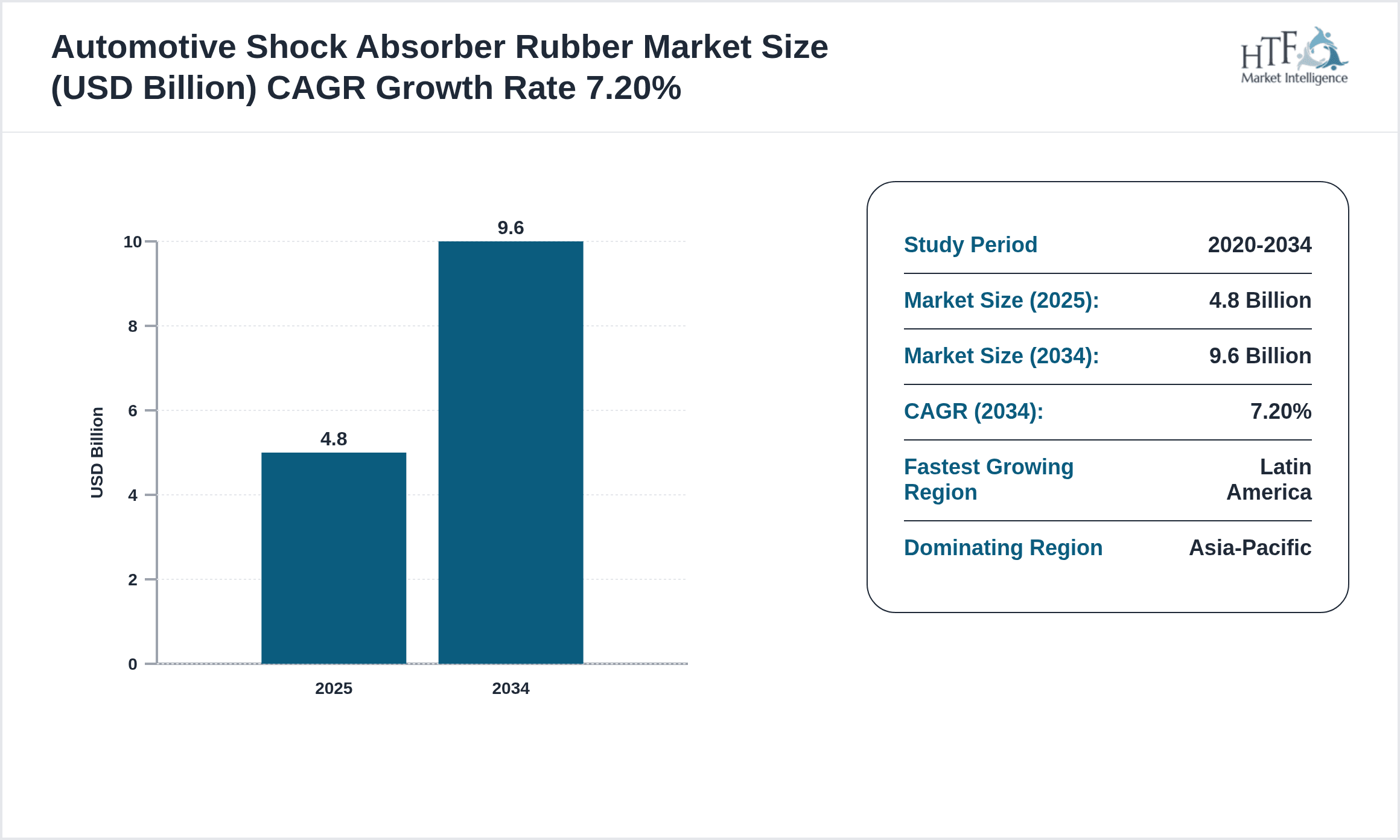
- •Key market highlights include a base market size of USD 4.8 Billion in 2024, projected to reach USD 9.6 Billion by 2034, growing at a CAGR of 7.2%. Synthetic rubber dominates the product segment due to its superior performance and durability, while silicone rubber is poised for the fastest growth driven by its thermal stability and compatibility with electric vehicles. Passenger cars hold the largest application share, followed closely by commercial vehicles, reflecting global automotive production trends. Asia-Pacific leads in market size and consumption, attributed to rapid industrialization and automotive manufacturing expansion, whereas Latin America is the fastest-growing region owing to increasing vehicle sales and infrastructure development. Year-on-year growth is anticipated at 7.0%, indicating robust and sustained demand for shock absorber rubber components across key automotive markets worldwide.
- •The Global Automotive Shock Absorber Rubber Market offers strategic value to stakeholders including rubber manufacturers, automotive OEMs, and aftermarket suppliers by enhancing vehicle safety and comfort through innovative material solutions. The market's evolution supports sustainability initiatives by encouraging development of eco-friendly rubber compounds and lightweight components that improve fuel efficiency. For investors and industry participants, this market presents opportunities to capitalize on rising automotive production, especially in emerging economies and the electric vehicle segment. Additionally, technological advancements in rubber processing and composite materials are expected to drive product differentiation and competitive advantage, underscoring the importance of continuous innovation and supply chain optimization within this sector.
Competitive Landscape
The competitive environment in the Global Automotive Shock Absorber Rubber Market is characterized by a mix of established multinational corporations and specialized regional manufacturers competing on innovation, quality, and supply chain efficiency. Companies focus on developing advanced rubber formulations to meet evolving automotive standards, emphasizing durability, thermal resistance, and environmental compliance. Strategic partnerships with automotive OEMs enhance product customization and integration, while mergers and acquisitions consolidate market positions and expand geographic reach. Pricing strategies balance raw material cost fluctuations and value-added features, with companies leveraging technology to optimize production. Regional competition is intense, especially in Asia-Pacific where manufacturing hubs proliferate, while North America and Europe emphasize premium product development. Future trends include increased investment in sustainable materials and digital manufacturing technologies to maintain competitive advantages in a dynamic market landscape.
Leading Companies in Automotive Shock Absorber Rubber Market
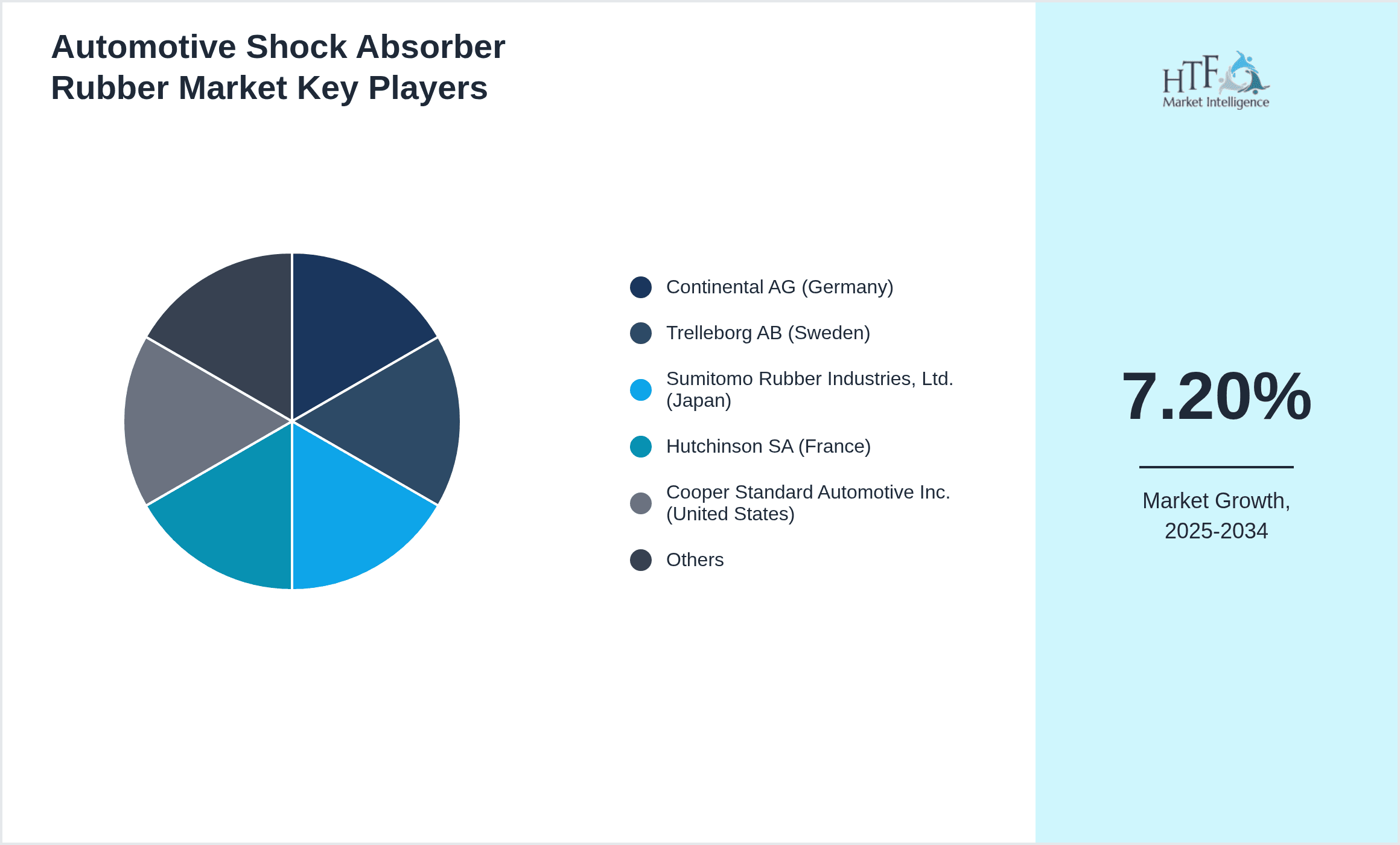
- •Continental AG (Germany)
- •Trelleborg AB (Sweden)
- •Sumitomo Rubber Industries, Ltd. (Japan)
- •Hutchinson SA (France)
- •Cooper Standard Automotive Inc. (United States)
- •Mitsui Chemicals, Inc. (Japan)
- •Schaeffler AG (Germany)
- •Lanxess AG (Germany)
- •Goodyear Tire & Rubber Company (United States)
- •Kumho Tire Co., Inc. (South Korea)
- •Bridgestone Corporation (Japan)
- •Michelin Group (France)
- •Parker Hannifin Corporation (United States)
- •JSR Corporation (Japan)
- •Nitto Denko Corporation (Japan)
- •Zhejiang Hengyi Group Co., Ltd. (China)
- •Sumitomo Electric Industries, Ltd. (Japan)
- •Hexpol AB (Sweden)
- •Flexitallic Group (United Kingdom)
- •PolyOne Corporation (United States)
- •Faurecia SE (France)
- •Toray Industries, Inc. (Japan)
- •Lanxess Solutions India Pvt Ltd (India)
- •Svenska Kullagerfabriken AB (SKF) (Sweden)
- •AkzoNobel N.V. (Netherlands)
Automotive Shock Absorber Rubber Market Segmentation Overview
- •By Type
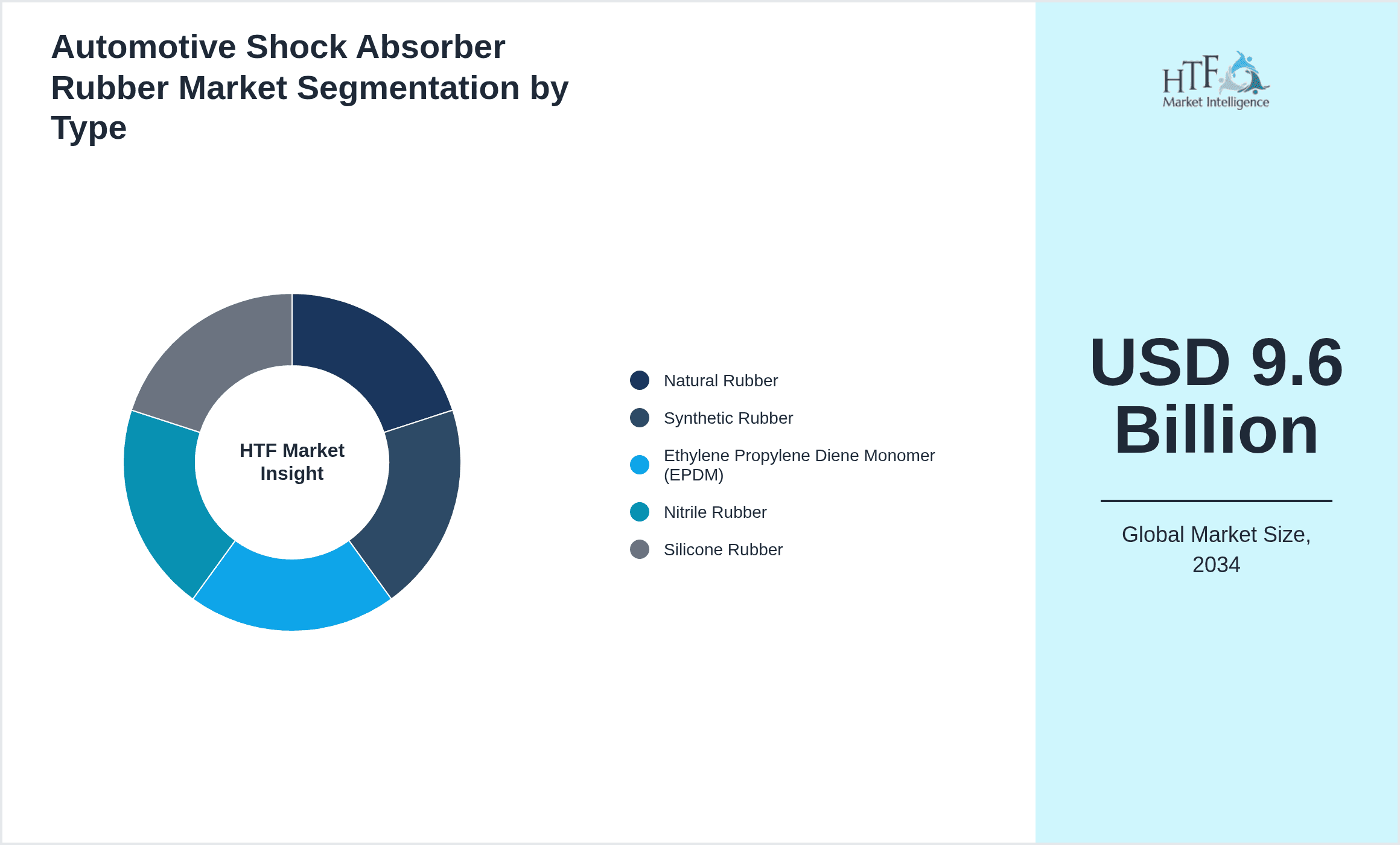
- ◦Natural Rubber
- ◦Synthetic Rubber
- ◦Ethylene Propylene Diene Monomer (EPDM)
- ◦Nitrile Rubber
- ◦Silicone Rubber
- •By Application
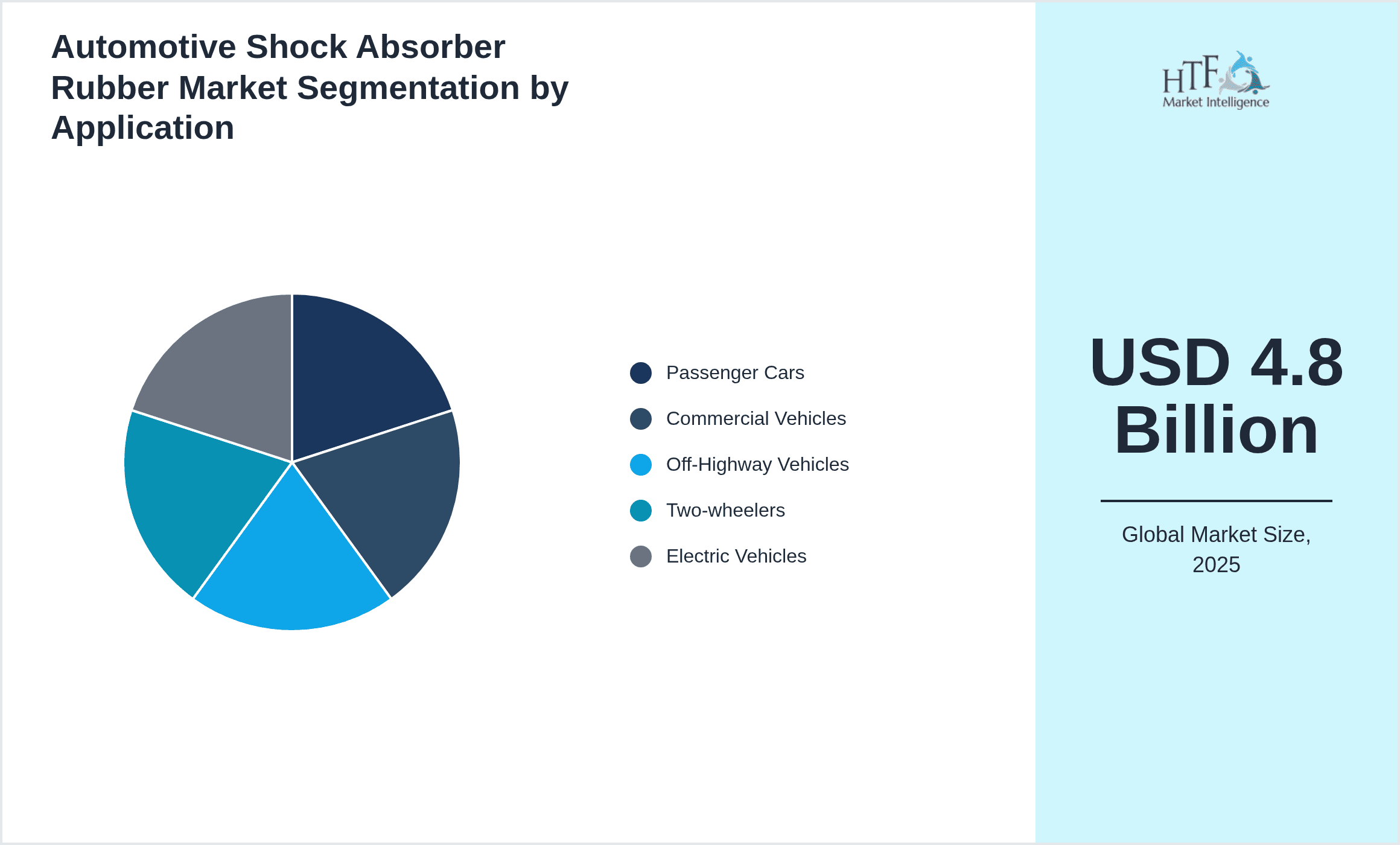
- ◦Passenger Cars
- ◦Commercial Vehicles
- ◦Off-Highway Vehicles
- ◦Two-wheelers
- ◦Electric Vehicles
- •By Distribution Channel
- ◦Original Equipment Manufacturer (OEM)
- ◦Aftermarket
- ◦Automotive Service Centers
- ◦Online Retail Platforms
- •By Material Technology
- ◦Vulcanized Rubber
- ◦Composite Rubber Materials
- ◦Eco-friendly/Bio-based Rubber
- ◦Thermoplastic Elastomers
Growth Dynamics
- •Rising automotive production globally, especially in Asia-Pacific, drives demand for high-quality shock absorber rubber components to enhance vehicle safety and comfort. Increasing sales of passenger and commercial vehicles are key contributors to market expansion.
- •Technological advancements in synthetic and silicone rubber formulations improve thermal resistance and durability, making them ideal for modern electric vehicles requiring specialized shock absorber materials.
- •Stringent government regulations on vehicle safety and emission standards encourage OEMs to adopt advanced rubber materials that contribute to lightweight and efficient shock absorber systems.
- •Growing consumer preference for comfortable and smooth ride experiences fuels demand for enhanced shock absorption technologies, increasing the use of premium rubber types in automotive applications.
- •Expansion of aftermarket service networks and online retail platforms facilitates easier availability of replacement shock absorber rubber parts, boosting market growth in emerging economies.
Market Trends
- •Increasing use of eco-friendly and bio-based rubber materials aligns with global sustainability goals and reduces reliance on petroleum-based synthetic rubbers in shock absorber applications.
- •Integration of IoT and smart materials in shock absorber systems is emerging, allowing real-time monitoring and adaptive damping, enhancing vehicle safety and performance.
- •Collaborations between rubber manufacturers and automotive OEMs are leading to customized rubber compounds tailored for electric and autonomous vehicles, supporting new mobility trends.
- •Digital transformation in manufacturing processes, including 3D printing and automated quality control, improves production efficiency and consistency of shock absorber rubber components.
- •Expansion of electric vehicle sales globally is driving demand for high-temperature resistant silicone rubber in shock absorber systems, reflecting a shift in material preferences.
Market Opportunities
- •Growing electric and hybrid vehicle segments offer significant opportunities for developing specialized shock absorber rubber materials with enhanced heat resistance and longevity.
- •Emerging markets in Latin America and Middle East & Africa present untapped demand for aftermarket replacement parts and OEM supplies, driven by increasing vehicle ownership.
- •Innovations in bio-based and recyclable rubber materials can capture environmentally conscious consumer segments and comply with tightening regulatory frameworks globally.
- •Collaborative R&D initiatives between material manufacturers and automotive companies can accelerate product development cycles and introduce next-generation shock absorber solutions.
- •Digital sales channels and enhanced distribution networks provide expanded reach for aftermarket shock absorber rubber components, improving customer accessibility and market penetration.
Market Challenges
- •Volatility in raw material prices, particularly natural rubber and petrochemical derivatives, poses cost management challenges for manufacturers impacting product pricing.
- •Stringent environmental regulations require costly compliance investments in material sourcing and production processes, increasing operational expenditures for market players.
- •Competition from alternative damping technologies such as hydraulic and electronic shock absorbers may limit growth potential for traditional rubber-based components.
- •Complex supply chain dependencies and geopolitical uncertainties can disrupt raw material availability and timely delivery, affecting production schedules and market responsiveness.
- •Limited awareness and adoption of advanced rubber materials in emerging markets may slow penetration despite growing automotive demand.
Regulatory Framework
- •Between 2019 and 2024, global automotive safety standards such as FMVSS and UNECE regulations mandated enhanced performance criteria for shock absorber components, requiring improved material resilience and durability.
- •Environmental regulations like REACH and RoHS have enforced strict limits on hazardous substances in rubber compounds, compelling manufacturers to reformulate products for compliance.
- •Regional mandates in Europe and North America promote the use of sustainable and recyclable materials in automotive components, influencing the development of eco-friendly shock absorber rubbers.
- •China’s recent policies on automotive emissions and safety standards have accelerated adoption of advanced shock absorber materials to meet regulatory thresholds and improve vehicle performance.
- •Government incentives for electric vehicle production in key regions have indirectly impacted shock absorber rubber material demand by fostering the growth of specialized components for EVs.
Market Intelligence
- •15th February 2025, Continental AG launched a new high-performance silicone rubber compound designed specifically for electric vehicle shock absorbers, boasting superior thermal stability and enhanced durability. This innovation targets the growing EV market segment by providing components capable of withstanding elevated operating temperatures and longer lifecycle demands. The product launch aligns with Continental's strategic focus on sustainable mobility solutions and is expected to strengthen its position in the automotive shock absorber rubber market globally. Source: Continental AG Official Press Release
- •10th April 2025, Trelleborg AB introduced an eco-friendly natural rubber variant for automotive shock absorber applications that reduces environmental impact without compromising mechanical properties. The new compound utilizes bio-based raw materials and advanced vulcanization techniques to meet increasingly stringent global regulations. This development supports Trelleborg's commitment to sustainability and addresses rising consumer demand for green automotive components. The product is targeted at OEMs looking to enhance their environmental credentials. Source: Trelleborg AB Corporate News
- •30th January 2025, Hutchinson SA announced a strategic partnership with a major electric vehicle manufacturer to co-develop customized EPDM rubber solutions for shock absorber systems. This collaboration aims to leverage Hutchinson’s material expertise and the OEM’s design capabilities to optimize shock absorber performance specific to EV requirements. The initiative is part of a broader innovation roadmap focused on electrification and lightweight automotive components. Source: Hutchinson SA Press Release
- •5th March 2025, Sumitomo Rubber Industries completed the expansion of its advanced rubber processing facility in Southeast Asia, increasing capacity by 30% to meet rising demand in the automotive sector. The upgraded plant features state-of-the-art manufacturing technologies enabling higher precision and product consistency for shock absorber rubber components. This investment supports Sumitomo’s growth strategy in emerging markets and enhances its competitive edge in the global automotive supply chain. Source: Sumitomo Rubber Industries News
Regional Outlook
The Asia-Pacific currently holds a significant share of the market, primarily due to several key factors: increasing consumption rates, a burgeoning population, and robust economic momentum. These elements collectively drive demand, positioning this region as a leader in the market. On the other hand, Latin America is rapidly emerging as the fastest-growing area within the industry. This remarkable growth can be attributed to swift infrastructure development, the expansion of various industrial sectors, and a marked increase in consumer demand. These dynamics make this region a crucial player in shaping future market growth.
In our report, we cover a comprehensive analysis of the following regions and countries:
- North America
- LATAM
- West Europe
- Central & Eastern Europe
- Northern Europe
- Southern Europe
- East Asia
- Southeast Asia
- South Asia
- Central Asia
- Oceania
- MEA
| Feature | Details |
|---|---|
| Base Year Market Size | USD 4.8 Billion |
| Forecast Year Market Size | USD 9.6 Billion |
| CAGR | 7.2% |
| Forecast Period | 2026 to 2033 |
| YoY Growth | 7% |
| Regions Covered | North America, LATAM, West Europe, Central & Eastern Europe, Northern Europe, Southern Europe, East Asia, Southeast Asia, South Asia, Central Asia, Oceania, MEA |
| Key Companies | Continental AG (Germany), Trelleborg AB (Sweden), Sumitomo Rubber Industries, Ltd. (Japan), Hutchinson SA (France), Cooper Standard Automotive Inc. (United States) |
Global Automotive Shock Absorber Rubber Market - Outlook 2024-2034 - Table of Contents
Research enthusiast focused on transforming data uncovering into actionable insights through data-driven decision-making.
Frequently Asked Questions (FAQ):
The Market market is expected to see significant growth and value in 2025.
North America currently leads the market, followed by Europe and Asia-Pacific.
Key growth drivers include increasing activities, rising demand for innovative solutions, technological advancements, and growing preference for efficient products.