
Asia-Pacific Optical Current Transformer (36 kV to 200 kV) Market - Outlook 2024-2034
Asia-Pacific Optical Current Transformer (36 kV to 200 kV) Market is segmented by Optical Current Transformer Type (Optical CT with Fiber Bragg Grating, Optical CT with Interferometric Sensors, Optical CT with Photonic Crystal Fibers, Optical CT with Polarimetric Sensors, Other Optical CT Types), Application (Power Transmission, Power Distribution, Renewable Energy, Industrial Automation, Smart Grid), End User Sector (Utilities, Industrial, Renewable Energy Operators, Infrastructure Developers), Deployment Model (On-premise Integration, Hybrid Systems, Cloud-enabled Monitoring Solutions), and Geography (Japan, China, Southeast Asia, India, Australia, South Korea, Others)
Pricing
Report Overview
Executive Summary
- •The Asia-Pacific Optical Current Transformer (36 kV to 200 kV) market is an evolving sector focused on fiber optic-based current transformers designed for high voltage applications in electrical grids and industrial systems. These optical CTs offer significant advantages over traditional electromagnetic transformers, including enhanced accuracy, reduced electromagnetic interference, increased safety, and compactness, enabling their critical role in modernizing power infrastructures. The market serves various applications such as power transmission, distribution, renewable energy integration, industrial automation, and smart grid development. The voltage range of 36 kV to 200 kV targets medium to high voltage systems, facilitating precise current measurement essential for system protection, monitoring, and energy management. The Asia-Pacific region, driven by rapid infrastructure development, renewable energy expansion, and smart grid adoption, is witnessing robust market growth. Key countries like China, India, Japan, and South Korea contribute substantially due to their investments in grid modernization and industrial electrification. The market is characterized by technological innovation, strategic partnerships, and increasing demand for reliable, low-loss current transformers supporting energy efficiency and sustainability goals.
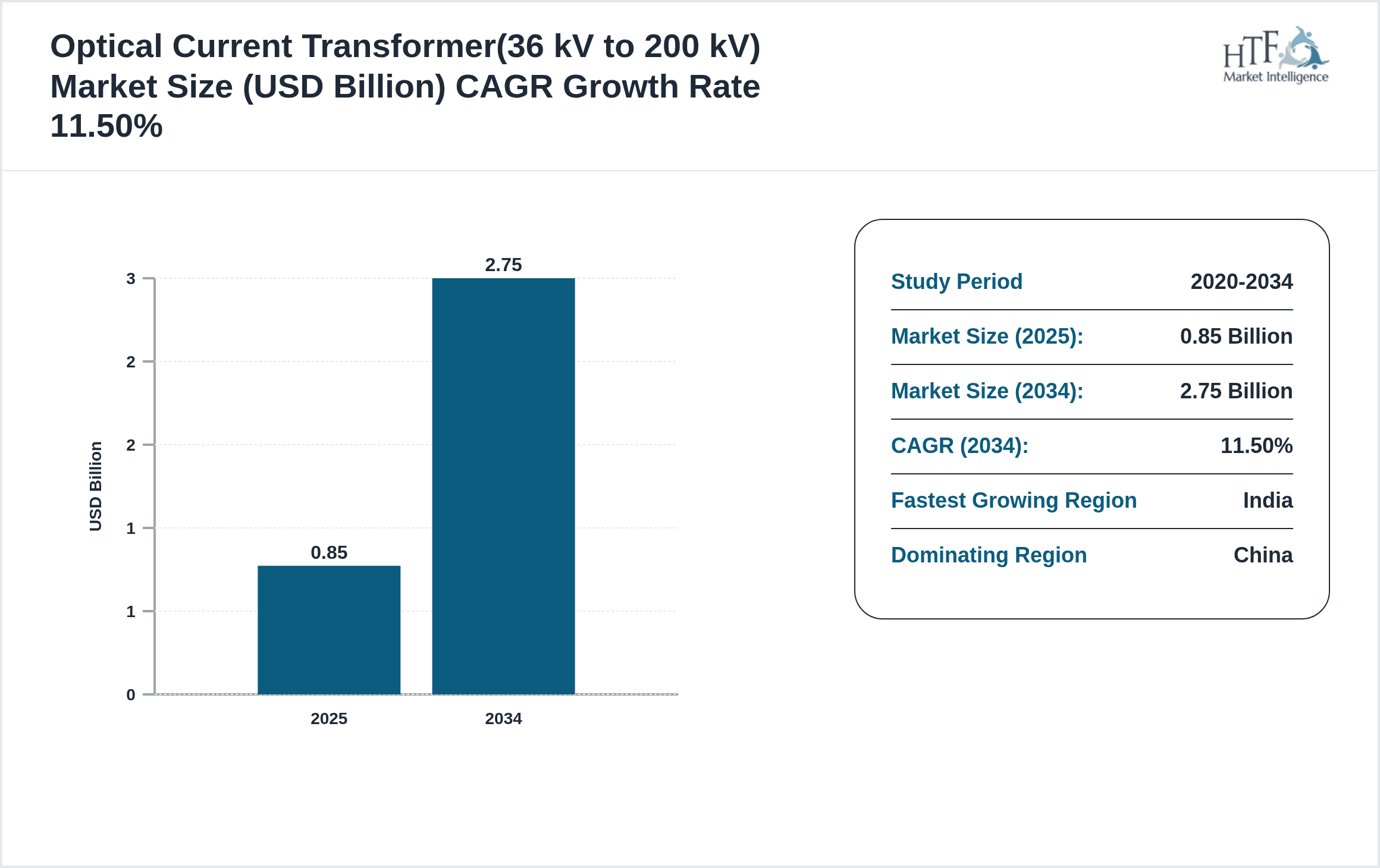
- •The Asia-Pacific optical CT market recorded a base size of approximately USD 0.85 billion in 2024, with projections estimating growth to USD 2.75 billion by 2034 at a CAGR of 11.5%. China dominates the regional market, accounting for the largest share due to its extensive power grid infrastructure and renewable energy projects. India emerges as the fastest-growing market, propelled by aggressive grid expansion and smart grid initiatives. The leading product type, Optical CT with Fiber Bragg Grating, commands significant adoption owing to its reliability and accuracy, while Optical CT with Photonic Crystal Fibers is rapidly gaining traction due to its advanced sensing capabilities. Key applications such as power transmission and distribution remain the primary revenue contributors, supported by government policies encouraging grid modernization. Market growth is further fueled by increased demand in renewable energy sectors and industrial automation. Despite challenges like high initial costs and technology standardization issues, opportunities in digital grid transformation and emerging markets remain substantial.
- •This market offers strategic value to utilities, industrial enterprises, and technology providers by enabling enhanced grid reliability and energy efficiency. Its adoption supports regulatory compliance, safety improvements, and integration of renewable energy sources, aligning with sustainability targets. For manufacturers and investors, the market presents opportunities for innovation in sensor technologies and expansion into emerging countries with growing electrification needs. The optical CT market’s evolution is critical for stakeholders aiming to capitalize on the Asia-Pacific region’s infrastructure modernization and digital transformation in power systems, positioning it as a key enabler in the transition towards smarter, more resilient electrical grids across the region.
Competitive Landscape
The Asia-Pacific Optical Current Transformer market is characterized by intense competition among established global leaders and emerging regional players focusing on technological innovation and strategic alliances. Companies are investing heavily in research and development to improve sensor accuracy, reduce costs, and enhance product integration with smart grid solutions. The competitive environment is shaped by differentiated product portfolios emphasizing fiber optic technologies such as Fiber Bragg Grating and photonic crystal fibers. Market participants engage in collaborations with utilities and industrial clients to customize solutions that meet evolving grid requirements, boosting customer retention and market penetration. Pricing strategies balance cost competitiveness with technology superiority, while firms expand distribution networks across key countries including China, India, Japan, and South Korea. M&A activities and partnerships further consolidate market positions and enable access to new markets. Overall, innovation-driven differentiation and strong customer relationships underpin competitive dynamics, with a growing emphasis on sustainability and digital transformation shaping future competition.
Leading Companies in Optical Current Transformer (36 kV to 200 kV) Market
- •Siemens AG (Germany)
- •ABB Ltd. (Switzerland)
- •Schneider Electric SE (France)
- •Nari Technology Development Co., Ltd. (China)
- •Toshiba Corporation (Japan)
- •Mitsubishi Electric Corporation (Japan)
- •GE Grid Solutions (United States)
- •Chint Group (China)
- •Nikko Company, Limited (Japan)
- •Hengyi Electric Group Co., Ltd. (China)
- •Hyosung Corporation (South Korea)
- •LSIS Co., Ltd. (South Korea)
- •Delta Electronics, Inc. (Taiwan)
- •TBEA Co., Ltd. (China)
- •Hyundai Electric & Energy Systems Co., Ltd. (South Korea)
- •Efacec Power Solutions (Portugal)
- •Elin EBG Traction GmbH (Austria)
- •Moxa Inc. (Taiwan)
- •Wasion Group Holdings Limited (China)
- •Yokogawa Electric Corporation (Japan)
- •Zhejiang Supcon Technology Co., Ltd. (China)
- •Hitachi ABB Power Grids Ltd. (Switzerland)
- •Ningbo Yinzhou Baichuang Electric Co., Ltd. (China)
- •Kaitian Group Co., Ltd. (China)
- •LS Cable & System Ltd. (South Korea)
Market Breakdown
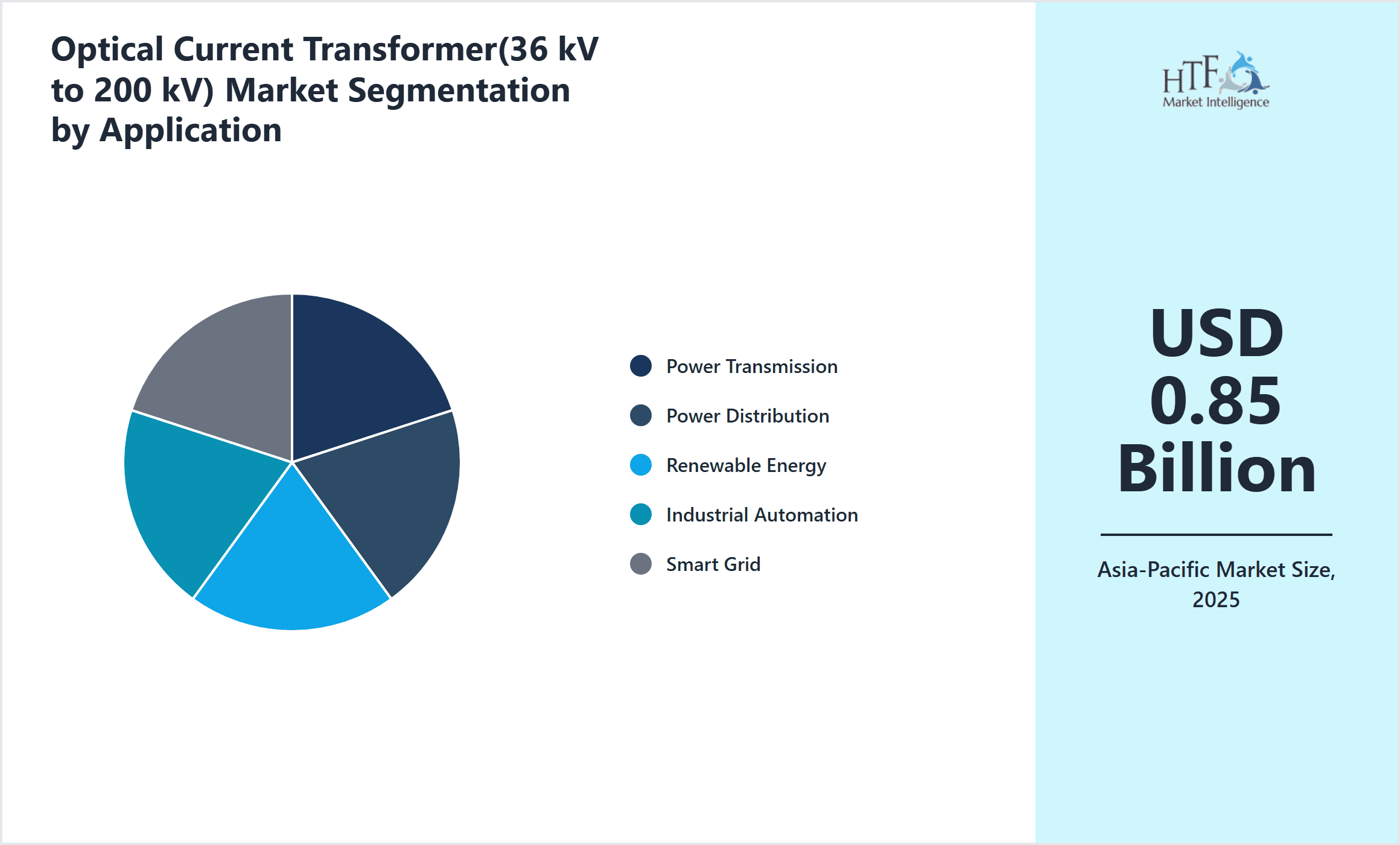
- •By Optical Current Transformer Type
- ◦Optical CT with Fiber Bragg Grating
- ◦Optical CT with Interferometric Sensors
- ◦Optical CT with Photonic Crystal Fibers
- ◦Optical CT with Polarimetric Sensors
- ◦Other Optical CT Types
- •By Application
- ◦Power Transmission
- ◦Power Distribution
- ◦Renewable Energy
- ◦Industrial Automation
- ◦Smart Grid
- •By End User Sector
- ◦Utilities
- ◦Industrial
- ◦Renewable Energy Operators
- ◦Infrastructure Developers
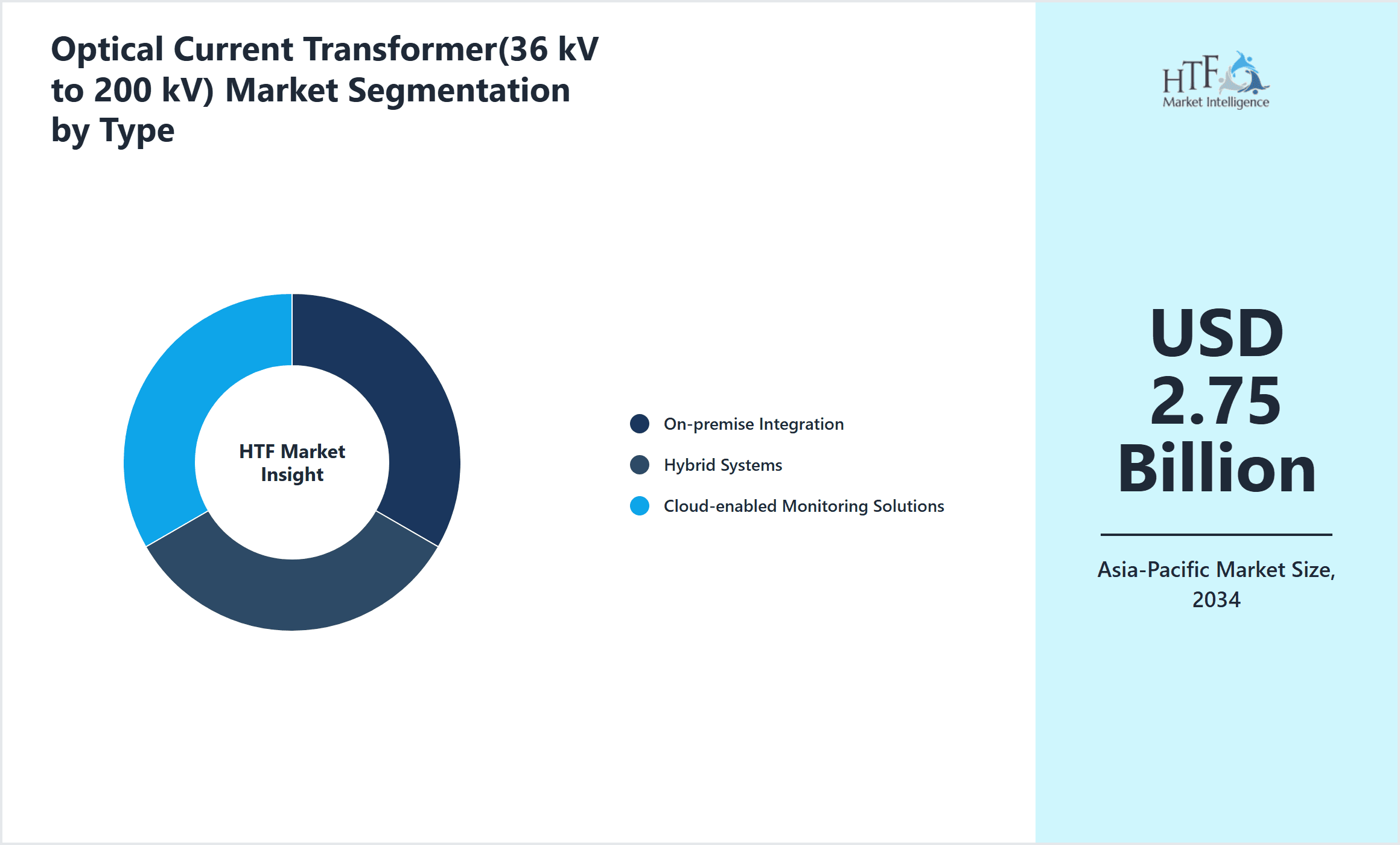
- •By Deployment Model
- ◦On-premise Integration
- ◦Hybrid Systems
- ◦Cloud-enabled Monitoring Solutions
Growth Dynamics
The Asia-Pacific Optical Current Transformer market is primarily driven by extensive power infrastructure expansion and grid modernization initiatives in countries such as China and India. Increasing investment in renewable energy projects, including solar and wind farms, requires highly accurate current measurement solutions, boosting demand for optical CTs. The growing adoption of smart grids and digital substations enhances the need for advanced fiber optic sensors that offer reliability and low maintenance. Furthermore, government policies promoting energy efficiency and sustainability accelerate market growth by mandating state-of-the-art metering and protection devices. This dynamic is strengthened by technological advancements such as Fiber Bragg Grating sensors, which improve measurement precision and system safety. Additionally, urbanization and industrial automation in the region further expand the market through increased electrification and demand for robust current monitoring solutions essential for operational efficiency and grid stability.
Market Trends
A notable trend in the Asia-Pacific Optical Current Transformer market is the shift towards integration with IoT-enabled smart grid systems, enabling real-time data analytics and predictive maintenance. Companies are focusing on miniaturization and modular designs to facilitate easier deployment and scalability in diverse power environments. The rise of renewable energy sources has driven innovation in optical CTs tailored for fluctuating current measurements in solar and wind applications. Manufacturers are also adopting advanced materials like photonic crystal fibers to enhance sensitivity and durability under harsh environmental conditions. Strategic collaborations between technology providers and utilities are becoming common to accelerate product customization and adoption. Furthermore, there is an increasing emphasis on compliance with international safety and performance standards, which guides product development and market acceptance across Asia-Pacific countries.

Market Opportunities
The Asia-Pacific Optical Current Transformer market offers considerable opportunities in the expanding renewable energy sector, where accurate current sensing is critical for grid stability and energy management. Emerging markets in Southeast Asia and India present untapped potential due to ongoing electrification and smart grid projects. Innovation in photonic crystal fiber technology opens avenues for developing high-precision, cost-effective optical CTs suited for diverse industrial applications. Strategic partnerships between manufacturers and regional utilities can foster tailored solutions addressing local grid challenges, enhancing market penetration. Additionally, growing demand for retrofitting aging electrical infrastructure with advanced optical CTs provides revenue streams. The increasing emphasis on sustainability and carbon reduction targets encourages adoption of energy-efficient measurement technologies, positioning optical CTs as essential components in future power systems. Expansion into cloud-based monitoring and predictive analytics services also presents new business models and market growth paths.
Market Challenges
Despite promising growth, the Asia-Pacific Optical Current Transformer market faces challenges including high initial investment costs and complex installation requirements, which can hinder adoption among smaller utilities and industrial users. Technology standardization remains a concern, as diverse regional regulations and lack of unified testing protocols complicate product certification and interoperability. The market also contends with limited awareness in emerging markets regarding optical CT advantages relative to traditional electromagnetic CTs, affecting demand generation. Supply chain disruptions and raw material price volatility impact manufacturing costs and delivery timelines. Additionally, competition from entrenched conventional CT manufacturers poses market entry barriers for new optical CT providers. Addressing these challenges requires focused efforts on cost reduction, regulatory harmonization, and extensive stakeholder education to drive broader market acceptance and sustainable growth.
Regulatory Framework
Between 2019 and 2024, the Asia-Pacific region has implemented several regulatory mandates to enhance grid safety and energy efficiency, directly influencing the Optical Current Transformer market. Countries like China and India introduced standards requiring utilities to adopt advanced metering infrastructure including optical sensing technologies to improve fault detection and reduce losses. Mandatory compliance with IEC 61869 series standards for instrument transformers has been enforced, ensuring global interoperability and safety benchmarks. Environmental regulations promoting low-carbon technologies have incentivized integration of optical CTs in renewable energy projects. Additionally, cybersecurity guidelines for smart grid deployments in Japan and South Korea impose stringent data protection measures on connected devices, impacting product design and deployment. These evolving policies create a favorable environment for optical CT adoption while necessitating continuous innovation and compliance efforts by manufacturers and end users.
Market Intelligence
- •15th March 2024, Siemens AG announced the launch of a next-generation Optical Current Transformer equipped with enhanced Fiber Bragg Grating sensors designed to provide ultra-high accuracy and real-time monitoring for smart grid applications in Asia-Pacific. This product integrates seamlessly with digital substation platforms, offering improved fault detection and predictive maintenance capabilities tailored to regional grid requirements. Siemens aims to leverage this innovation to strengthen its market position in rapidly developing countries such as India and China, addressing the increasing demand for advanced grid modernization solutions. The launch also includes a strategic partnership with regional utilities to pilot the technology in large-scale renewable integration projects, underscoring Siemens’ commitment to supporting sustainable energy transitions in the region. Source: Siemens Official Press Release
- •22nd November 2023, Nari Technology Development Co., Ltd. introduced an innovative Optical CT model featuring photonic crystal fiber technology optimized for high-voltage industrial automation systems. The product delivers superior immunity to electromagnetic interference and enhanced durability in harsh environments, addressing specific challenges faced by manufacturers and infrastructure operators in Asia-Pacific. Nari's new offering is positioned to accelerate the adoption of optical sensing solutions in sectors requiring precise current monitoring and rapid fault response. The company also announced strategic collaborations with Japanese and South Korean technology firms to expand its distribution network and facilitate customized solutions for regional customers. This initiative aligns with the growing trend of digital transformation and smart infrastructure development across Asia-Pacific countries. Source: Nari Technology Press Release
- •Recent market developments and strategic initiatives are continuously tracked through industry publications, company announcements, and regulatory filings. For the most current information, stakeholders are advised to monitor official corporate communications and recognized market intelligence platforms.
- •Recent market developments and strategic initiatives are continuously tracked through industry publications, company announcements, and regulatory filings. For the most current information, stakeholders are advised to monitor official corporate communications and recognized market intelligence platforms.
Regional Outlook
The China currently holds a significant share of the market, primarily due to several key factors: increasing consumption rates, a burgeoning population, and robust economic momentum. These elements collectively drive demand, positioning this region as a leader in the market. On the other hand, India is rapidly emerging as the fastest-growing area within the industry. This remarkable growth can be attributed to swift infrastructure development, the expansion of various industrial sectors, and a marked increase in consumer demand. These dynamics make this region a crucial player in shaping future market growth.
In our report, we cover a comprehensive analysis of the following regions and countries:
- Japan
- China
- Southeast Asia
- India
- Australia
- South Korea
- Others
| Feature | Details |
|---|---|
| Base Year Market Size | USD 0.85 Billion |
| Forecast Year Market Size | USD 2.75 Billion |
| CAGR | 11.5% |
| Forecast Period | 2026 to 2033 |
| YoY Growth | 11% |
| Scope of Report | Market is segmented by Optical Current Transformer Type (Optical CT with Fiber Bragg Grating, Optical CT with Interferometric Sensors, Optical CT with Photonic Crystal Fibers, Optical CT with Polarimetric Sensors, Other Optical CT Types), Application (Power Transmission, Power Distribution, Renewable Energy, Industrial Automation, Smart Grid), End User Sector (Utilities, Industrial, Renewable Energy Operators, Infrastructure Developers), Deployment Model (On-premise Integration, Hybrid Systems, Cloud-enabled Monitoring Solutions) |
| Regions Covered | Japan, China, Southeast Asia, India, Australia, South Korea, Others |
| Key Companies | Siemens AG (Germany), ABB Ltd. (Switzerland), Schneider Electric SE (France), Nari Technology Development Co., Ltd. (China), Toshiba Corporation (Japan), Mitsubishi Electric Corporation (Japan), GE Grid Solutions (United States), Chint Group (China), Nikko Company, Limited (Japan), Hengyi Electric Group Co., Ltd. (China), Hyosung Corporation (South Korea), LSIS Co., Ltd. (South Korea), Delta Electronics, Inc. (Taiwan), TBEA Co., Ltd. (China), Hyundai Electric & Energy Systems Co., Ltd. (South Korea), Efacec Power Solutions (Portugal), Elin EBG Traction GmbH (Austria), Moxa Inc. (Taiwan), Wasion Group Holdings Limited (China), Yokogawa Electric Corporation (Japan), Zhejiang Supcon Technology Co., Ltd. (China), Hitachi ABB Power Grids Ltd. (Switzerland), Ningbo Yinzhou Baichuang Electric Co., Ltd. (China), Kaitian Group Co., Ltd. (China), LS Cable & System Ltd. (South Korea) |
Asia-Pacific Optical Current Transformer (36 kV to 200 kV) Market - Outlook 2024-2034 - Table of Contents
Multidisciplinary researcher with 10+ years of experience uncovering insights across diverse domains focused on uncovering insights that drive informed decisions.
Frequently Asked Questions (FAQ):
The Compact Track Loaders market is projected to grow at a CAGR of 6.8% from 2025 to 2030, driven by increasing demand in construction and agricultural sectors.
North America currently leads the market with approximately 45% market share, followed by Europe at 28% and Asia-Pacific at 22%. The remaining regions account for 5% of the global market.
Key growth drivers include increasing construction activities, rising demand for versatile equipment in agriculture, technological advancements in track loader design, and growing preference for compact equipment in urban construction projects.