
Global Transmission And Powertrain Test Bench Market Size, Growth & Revenue 2025-2034
Global Transmission And Powertrain Test Bench Market is segmented by Application (Passenger Vehicles, Commercial Vehicles, Electric Vehicles, Hybrid Vehicles, Industrial Vehicles), Type (Hydraulic Test Benches, Electric Test Benches, Mechanical Test Benches, Simulation Test Benches, Automated Test Benches), and Geography (North America, LATAM, West Europe, Central & Eastern Europe, Northern Europe, Southern Europe, East Asia, Southeast Asia, South Asia, Central Asia, Oceania, MEA)
Pricing
Report Overview
Executive Summary
- •The global Transmission And Powertrain Test Bench market includes sophisticated testing platforms designed to assess the functionality, reliability, and efficiency of vehicle transmission and powertrain systems. These test benches consist of hydraulic, electric, mechanical, simulation, and automated models tailored for passenger vehicles, commercial trucks, electric and hybrid vehicles, and industrial applications. Their primary role is to simulate real-world operational stresses, facilitating performance optimization, durability analysis, and regulatory compliance verification. The market's importance lies in its direct influence on advancing vehicle technology, enabling manufacturers to meet evolving emission standards, improve fuel efficiency, and accelerate innovation towards electrified and automated powertrains. Increasing demand for electric vehicles and stringent global emission regulations drive the adoption of advanced test benches worldwide. Comprehensive testing ensures quality assurance, reduces recall risks, and supports cutting-edge research and development in the automotive sector.
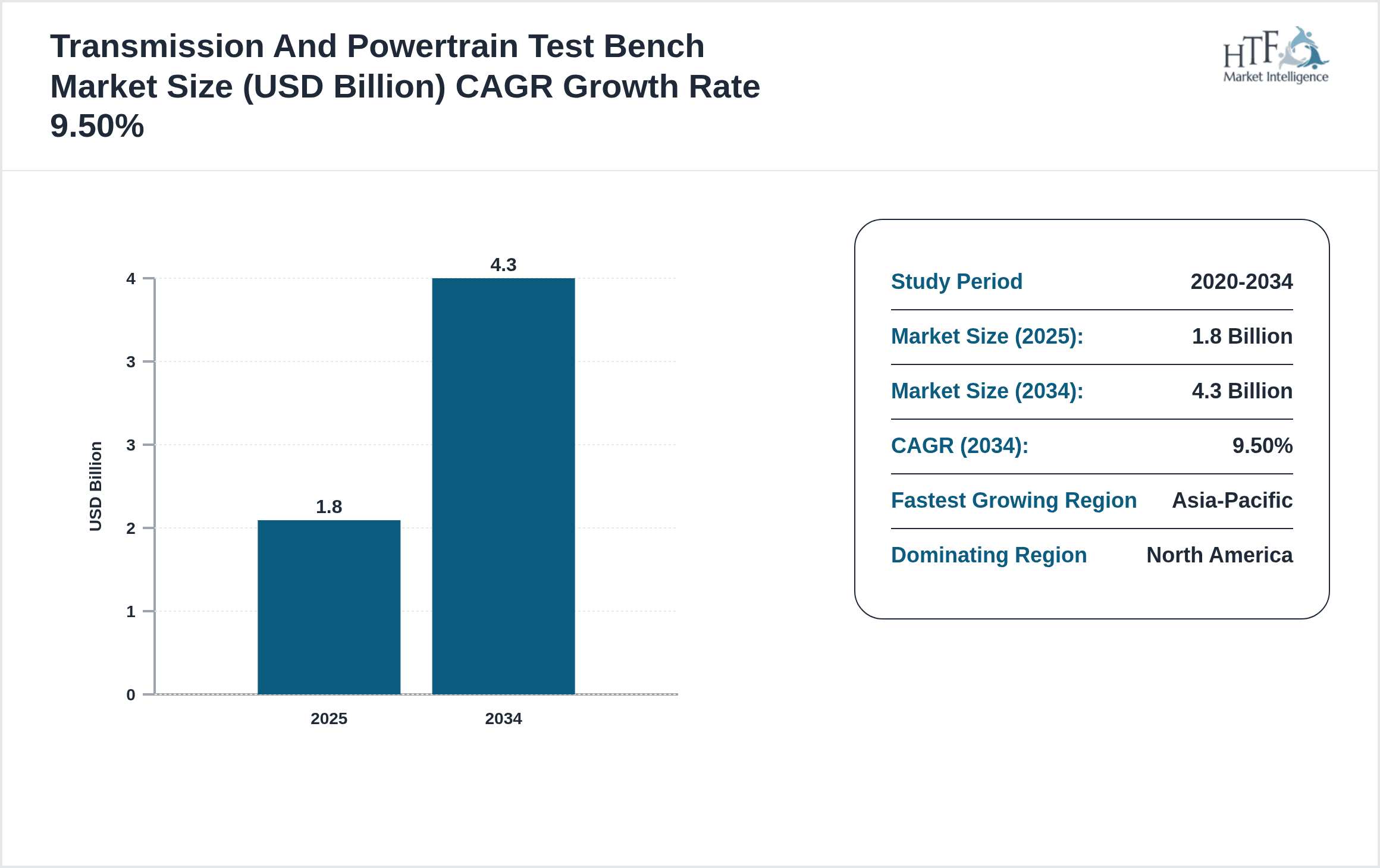
- •The Transmission And Powertrain Test Bench market is projected to grow from USD 1.8 Billion in 2025 to USD 4.3 Billion by 2034, registering a CAGR of 9.5 percent. North America leads the market with the highest share due to strong automotive manufacturing and technological advancements, while Asia-Pacific demonstrates the fastest growth fueled by rapid EV adoption and industrial expansion. Electric Test Benches dominate the product segment, reflecting the transition to electrified powertrains, whereas Automated Test Benches represent the fastest growing segment driven by Industry 4.0 integration. Key applications include passenger and commercial vehicles, with electric and hybrid vehicles gaining significant market traction. The market's upward trajectory is underpinned by increasing investments in R&D, stringent emission norms, and rising demand for vehicle performance validation.
- •Transmission and Powertrain Test Benches present strategic value to automotive OEMs, component manufacturers, and testing service providers. They enable manufacturers to mitigate risks, accelerate product launch cycles, and comply with environmental regulations. The ability to test various vehicle types under diverse conditions supports innovation and adaptation in an evolving automotive landscape. As electrification and automation reshape powertrain technologies, these test benches become instrumental in validating new designs and ensuring durability. The market's growth offers lucrative opportunities for technology providers and testing labs, emphasizing precision, efficiency, and integration with digital tools. Stakeholders across the automotive value chain benefit from these test benches to maintain competitive advantage and meet customer expectations in performance and sustainability.
Competitive Landscape
Companies operating in the Transmission And Powertrain Test Bench market adopt multifaceted strategies to sustain and expand their market presence. These strategies include investing heavily in research and development to innovate test bench technologies that accommodate emerging powertrain architectures such as electric and hybrid systems. Firms focus on forming strategic partnerships and collaborations with automotive manufacturers and technology providers to co-develop customized solutions, enhancing product relevance and market reach. Global expansion through establishing regional offices and service centers supports localized customer engagement and aftersales support. Adoption of Industry 4.0 principles, including automation, digital twin technologies, and IoT integration, enhances test accuracy and operational efficiency. Companies also pursue mergers and acquisitions to consolidate technologies and expand product portfolios, enabling comprehensive testing capabilities. Competitive pricing, enhanced service offerings, and compliance with evolving regulatory standards further differentiate market players, fostering sustained growth and innovation.
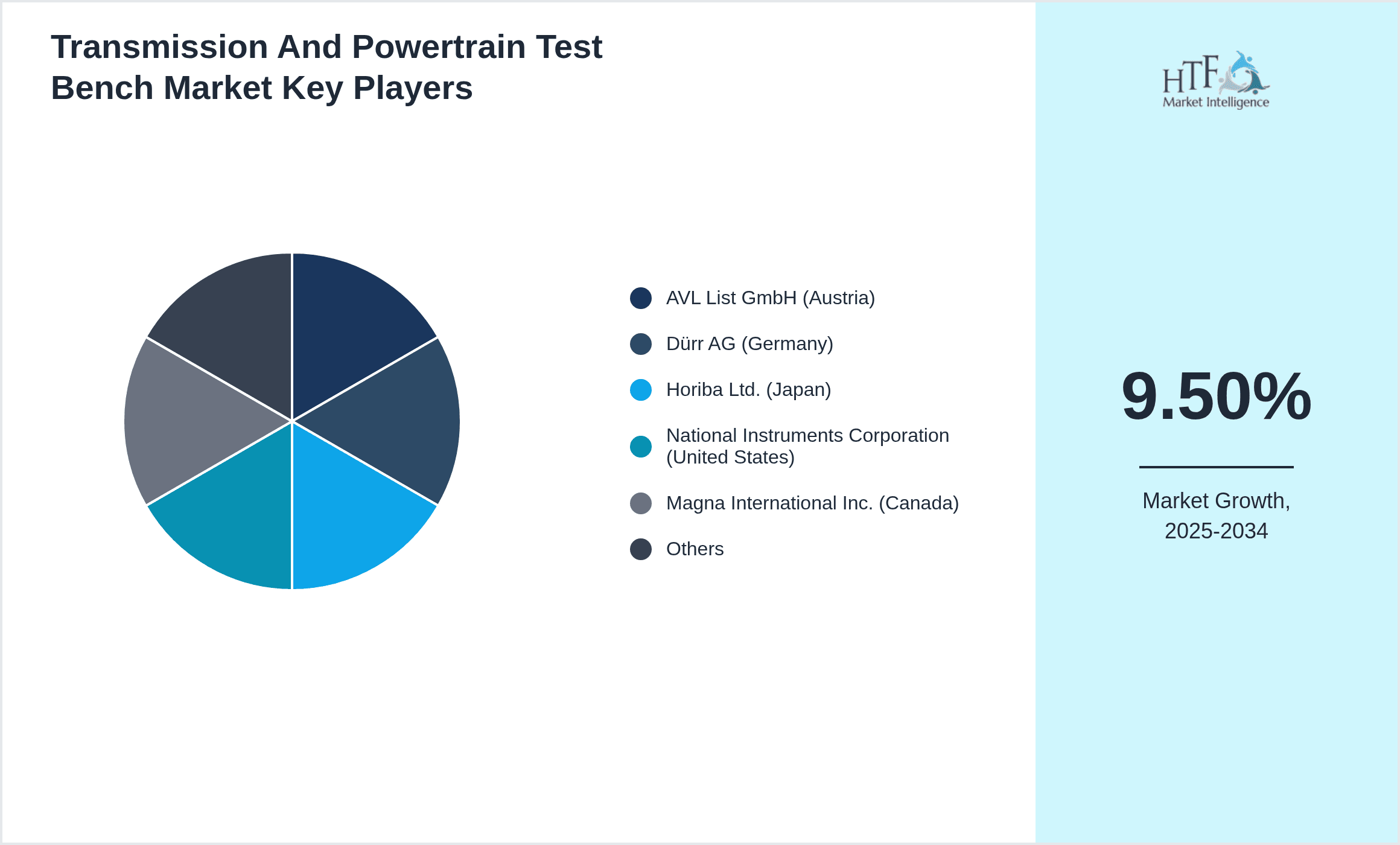
Leading Companies in Transmission And Powertrain Test Bench Market
- •AVL List GmbH (Austria)
- •Dürr AG (Germany)
- •Horiba Ltd. (Japan)
- •National Instruments Corporation (United States)
- •Magna International Inc. (Canada)
- •Siemens AG (Germany)
- •Horstman Ltd. (United Kingdom)
- •MAHA Maschinenbau Haldenwang GmbH & Co. KG (Germany)
- •FPT Industrial (Italy)
- •Curtiss-Wright Corporation (United States)
- •Bosch Engineering GmbH (Germany)
- •TÜV SÜD AG (Germany)
- •Magneti Marelli S.p.A. (Italy)
- •ETAS GmbH (Germany)
- •Ricardo plc (United Kingdom)
- •Valeo SA (France)
- •ZF Friedrichshafen AG (Germany)
- •IAV GmbH (Germany)
- •MTS Systems Corporation (United States)
- •Kistler Group (Switzerland)
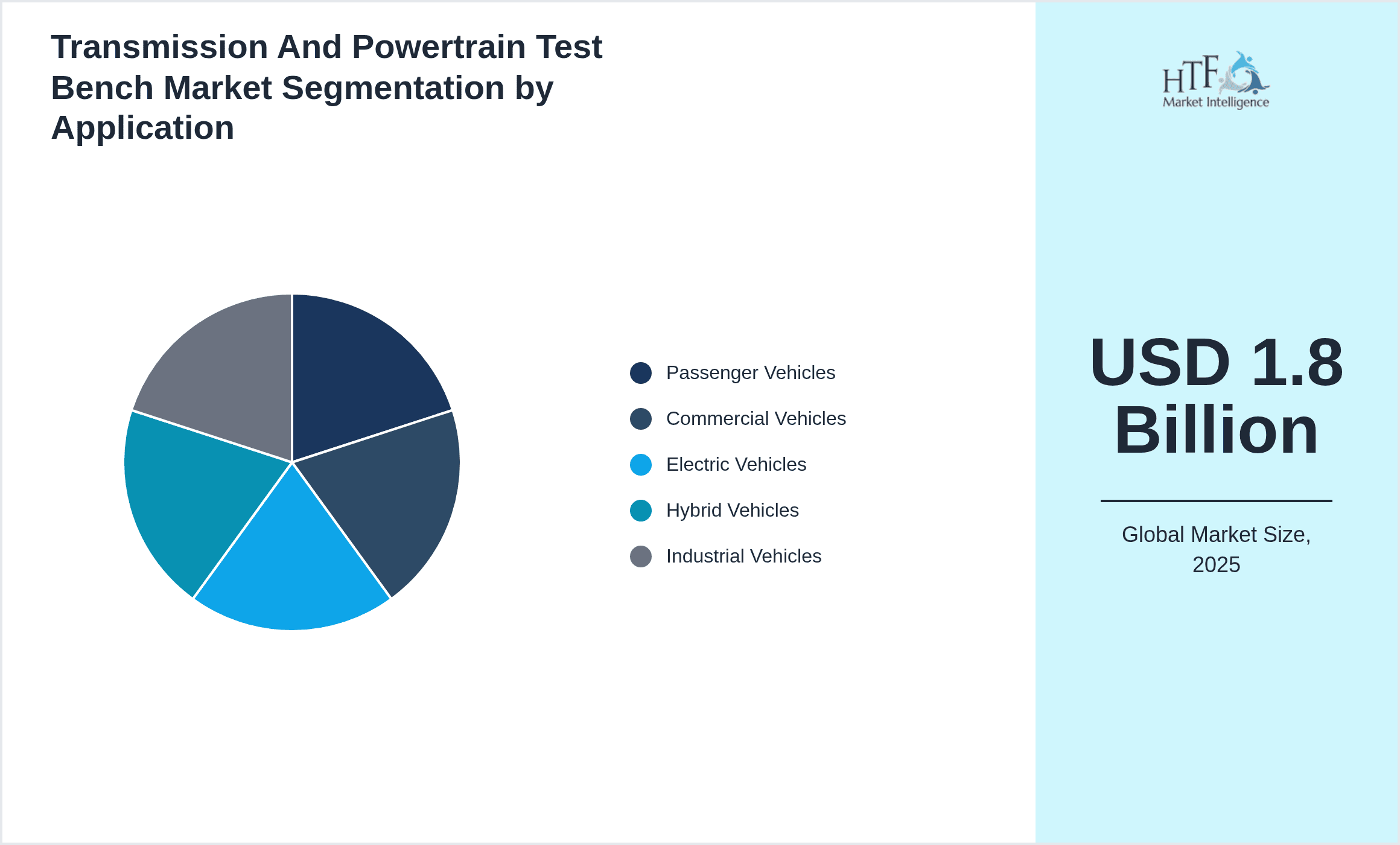
Transmission And Powertrain Test Bench Market Segmentation
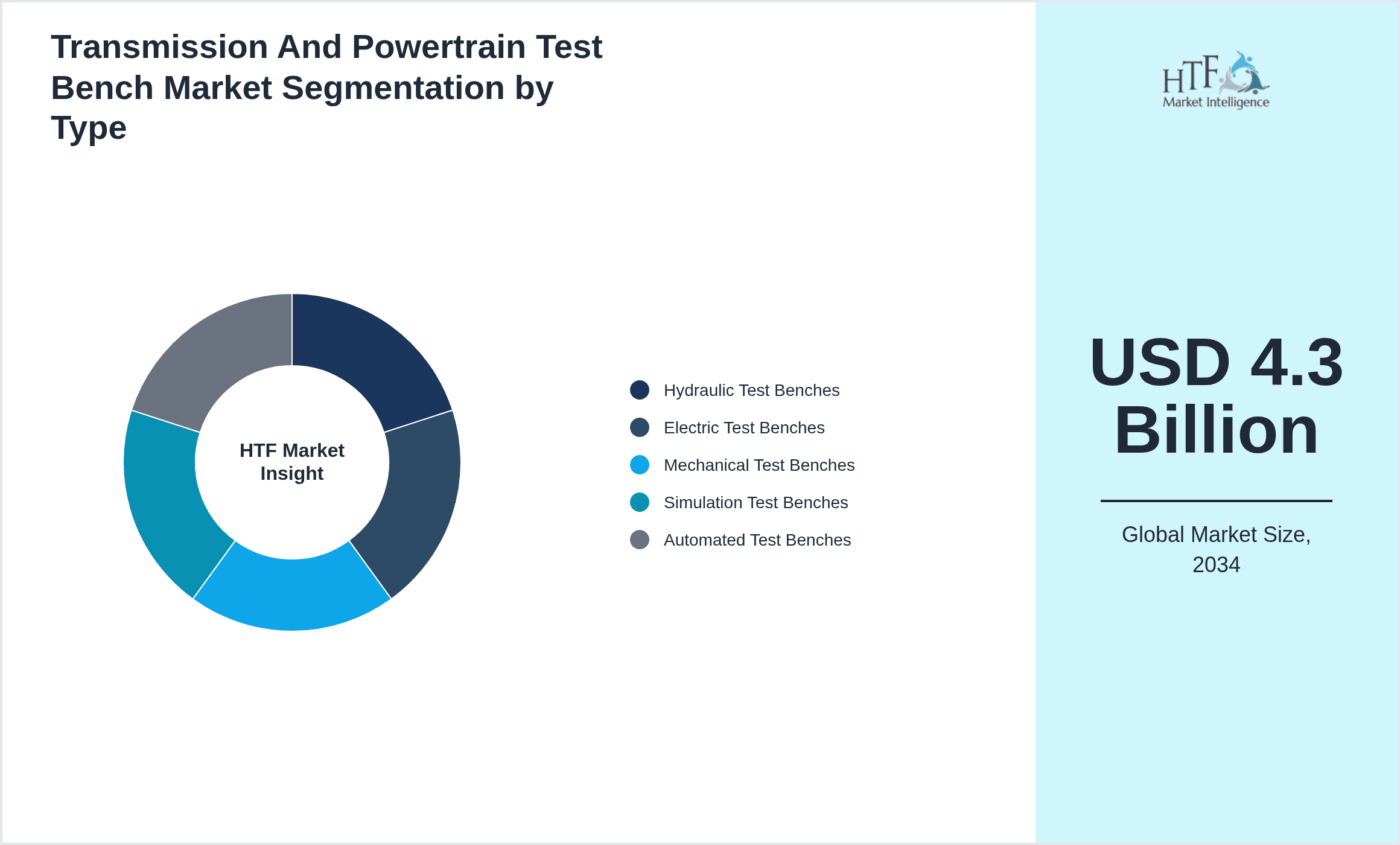
- •By Type
- ◦Hydraulic Test Benches
- ◦Electric Test Benches
- ◦Mechanical Test Benches
- ◦Simulation Test Benches
- ◦Automated Test Benches
- •By Application
- ◦Passenger Vehicles
- ◦Commercial Vehicles
- ◦Electric Vehicles
- ◦Hybrid Vehicles
- ◦Industrial Vehicles
- •By Testing Parameter
- ◦Torque Testing
- ◦Temperature Testing
- ◦Durability Testing
- ◦Efficiency Testing
- •By Deployment Model
- ◦On-Premise
- ◦Cloud-Integrated Testing
- ◦Hybrid
Growth Dynamics
Rising demand for electric and hybrid vehicles globally accelerates the adoption of advanced transmission and powertrain test benches. Automotive manufacturers deploy electric test benches extensively to validate battery powertrain efficiency and inverter performance, as observed in recent initiatives by companies like AVL List GmbH. Additionally, stringent emission and fuel economy regulations in North America and Europe necessitate comprehensive durability and efficiency testing, driving market expansion. Technological advancements such as automation and digital twin integration enhance testing accuracy and reduce time-to-market. Industry events such as the launch of automated test bench solutions by Horiba Ltd. in 2024 demonstrate increasing emphasis on innovation, facilitating real-time simulation and fault detection. The push towards Industry 4.0 in manufacturing environments encourages the adoption of connected test benches, enabling predictive maintenance and data analytics, thus reinforcing market growth.
Emerging Market Trends
Integration of artificial intelligence and machine learning into transmission and powertrain test benches is reshaping the market landscape. Companies are developing smart test benches capable of adaptive testing based on real-time data analysis, which improves diagnostic precision and reduces human error. The growing trend of electric and hybrid vehicle production necessitates specialized testing platforms that accommodate high-voltage systems and regenerative braking components. Recent launches by Siemens AG of simulation-based test benches for electric powertrains highlight this shift. Furthermore, remote monitoring and cloud-based testing solutions are gaining traction, enabling manufacturers to conduct off-site testing and data sharing across global R&D centers. Sustainability initiatives are also influencing market trends, with test benches designed for energy efficiency and reduced operational emissions becoming a priority. These trends collectively signal a future-oriented market adapting to evolving automotive technologies and digital transformation.
Future Market Opportunities
The rapid electrification of vehicles globally presents significant opportunities for the Transmission And Powertrain Test Bench market. Expansion into emerging markets such as Asia-Pacific offers untapped potential due to increasing automotive production and governmental incentives promoting EV adoption. Development of modular and scalable test bench solutions tailored for electric and hybrid powertrains enables manufacturers to optimize testing costs and speed. Collaborations between test bench providers and OEMs to co-create customized testing protocols for next-generation powertrain technologies open new avenues for market growth. Additionally, the rise of autonomous vehicles demands integrated test benches capable of simulating complex driving scenarios and system interactions. Investment in digital twin technologies and IoT-enabled test benches allows continuous performance monitoring and predictive analytics, enhancing product lifecycle management. These opportunities position the market for sustained innovation and expansion aligned with evolving automotive trends.
Key Market Challenges
High capital expenditure and complexity of advanced transmission and powertrain test benches pose significant challenges for market participants, especially small and medium-sized enterprises. The requirement for specialized technical expertise to operate and maintain sophisticated test benches limits widespread adoption in emerging markets. Additionally, rapid technological changes in powertrain design demand frequent updates and customization of test benches, increasing operational costs and complexity. Supply chain disruptions, particularly in electronic components and sensors, impact production timelines and delivery schedules. Regulatory uncertainties in different global regions create compliance challenges, as manufacturers must adapt test benches to meet varying standards. Furthermore, competition from low-cost regional manufacturers offering basic testing solutions pressures pricing and margins. Examples include delays faced by companies in procuring advanced simulation modules, underscoring the criticality of supply chain resilience and technology upgrades.
Regulatory Framework
In the last five years, regulations such as the Euro 7 emission standards introduced in Europe have intensified the need for precise powertrain testing, compelling manufacturers to adopt advanced test benches. North America’s Environmental Protection Agency has mandated stricter fuel economy and emission testing protocols, directly impacting test bench requirements. The United Nations Economic Commission for Europe’s (UNECE) recent mandates on electric vehicle safety and performance testing have further influenced test bench design and calibration. Regulatory bodies emphasize data accuracy, repeatability, and safety compliance, necessitating enhancements in test bench automation and software. Government initiatives promoting electric and hybrid vehicles provide incentives for upgrading testing infrastructure. These evolving regulatory frameworks drive innovation and standardization within the transmission and powertrain test bench market globally, ensuring products meet stringent environmental and safety benchmarks.
Recent Industry Insights
Recent market developments and strategic initiatives are continuously tracked through industry publications, company announcements, and regulatory filings. For the most current information, stakeholders are advised to monitor official corporate communications and recognized market intelligence platforms.
Recent Merger and Acquisition
Recent market developments and strategic initiatives are continuously tracked through industry publications, company announcements, and regulatory filings. For the most current information, stakeholders are advised to monitor official corporate communications and recognized market intelligence platforms.
Regional Outlook
The North America currently holds a significant share of the market, primarily due to several key factors: increasing consumption rates, a burgeoning population, and robust economic momentum. These elements collectively drive demand, positioning this region as a leader in the market. On the other hand, Asia-Pacific is rapidly emerging as the fastest-growing area within the industry. This remarkable growth can be attributed to swift infrastructure development, the expansion of various industrial sectors, and a marked increase in consumer demand. These dynamics make this region a crucial player in shaping future market growth.
In our report, we cover a comprehensive analysis of the following regions and countries:
- North America
- LATAM
- West Europe
- Central & Eastern Europe
- Northern Europe
- Southern Europe
- East Asia
- Southeast Asia
- South Asia
- Central Asia
- Oceania
- MEA
| Feature | Details |
|---|---|
| Base Year Market Size | USD 1.8 Billion |
| Forecast Year Market Size | USD 4.3 Billion |
| CAGR | 9.5% |
| Forecast Period | 2026 to 2033 |
| YoY Growth | 9.1% |
| Regions Covered | North America, LATAM, West Europe, Central & Eastern Europe, Northern Europe, Southern Europe, East Asia, Southeast Asia, South Asia, Central Asia, Oceania, MEA |
| Key Companies | AVL List GmbH (Austria), Dürr AG (Germany), Horiba Ltd. (Japan), National Instruments Corporation (United States), Magna International Inc. (Canada), Siemens AG (Germany), Horstman Ltd. (United Kingdom), MAHA Maschinenbau Haldenwang GmbH & Co. KG (Germany), FPT Industrial (Italy), Curtiss-Wright Corporation (United States), Bosch Engineering GmbH (Germany), TÜV SÜD AG (Germany), Magneti Marelli S.p.A. (Italy), ETAS GmbH (Germany), Ricardo plc (United Kingdom), Valeo SA (France), ZF Friedrichshafen AG (Germany), IAV GmbH (Germany), MTS Systems Corporation (United States), Kistler Group (Switzerland) |
Global Transmission And Powertrain Test Bench Market Size, Growth & Revenue 2025-2034 - Table of Contents
Research enthusiast focused on transforming data uncovering into actionable insights through data-driven decision-making.
Frequently Asked Questions (FAQ):
The Market market is projected to grow at a steady CAGR from 2025 to 2030, driven by increasing demand and expansion in various applications.
North America currently leads the market, followed by Europe and Asia-Pacific.
Key growth drivers include increasing activities, rising demand for innovative solutions, technological advancements, and growing preference for efficient products.