
Asia-Pacific Body Control Module Market Size, Growth & Revenue 2025-2034
Asia-Pacific Body Control Module Market is segmented by Product Type (Basic Body Control Module, Advanced Body Control Module, Smart Body Control Module, Programmable Body Control Module, Integrated Body Control Module), Application (Passenger Vehicles, Commercial Vehicles, Electric Vehicles, Hybrid Vehicles, Aftermarket), Vehicle Type (Sedans, SUVs, Trucks, Buses, Two-wheelers), Deployment Model (On-board Integrated BCM, Aftermarket Retrofit BCM, Programmable BCM Solutions), and Geography (Japan, China, Southeast Asia, India, Australia, South Korea, Others)
Pricing
Report Overview
Executive Summary
- •The Asia-Pacific Body Control Module (BCM) market is a critical segment of the automotive electronics industry, focused on the development, manufacturing, and integration of electronic control units designed to manage and automate vehicle body functions. This market covers a broad spectrum of BCM types including basic, advanced, smart, programmable, and integrated modules used across passenger vehicles, commercial vehicles, electric vehicles, and hybrids. BCMs enable essential vehicle features such as lighting control, door locking, window operation, security systems, and power distribution, enhancing safety, convenience, and user experience. The value chain comprises raw material suppliers, electronic component manufacturers, BCM assemblers, automotive OEMs, and aftermarket service providers who contribute to technological advancements and market expansion. Asia-Pacific, as a rapidly growing automotive hub, experiences rising demand driven by increasing vehicle production, stringent safety regulations, electrification trends, and consumer preference for smart and connected vehicles. The market's dynamic growth is further supported by ongoing innovations in automotive electronics, integration with IoT and telematics, and government initiatives promoting green and smart mobility solutions. This comprehensive report explores market size, growth projections, key drivers, challenges, and competitive landscape specific to the Asia-Pacific region, offering valuable insights for stakeholders and investors.
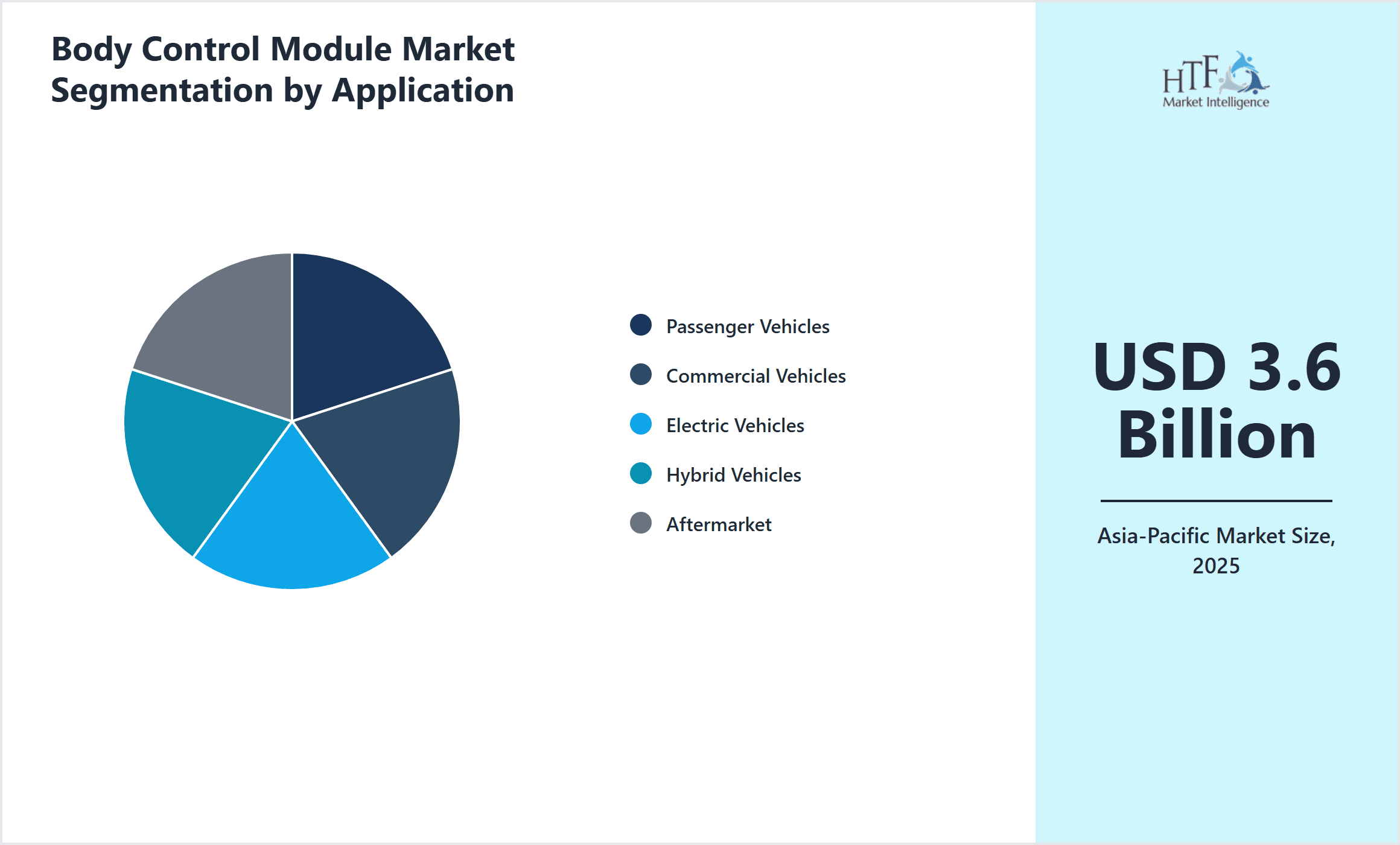
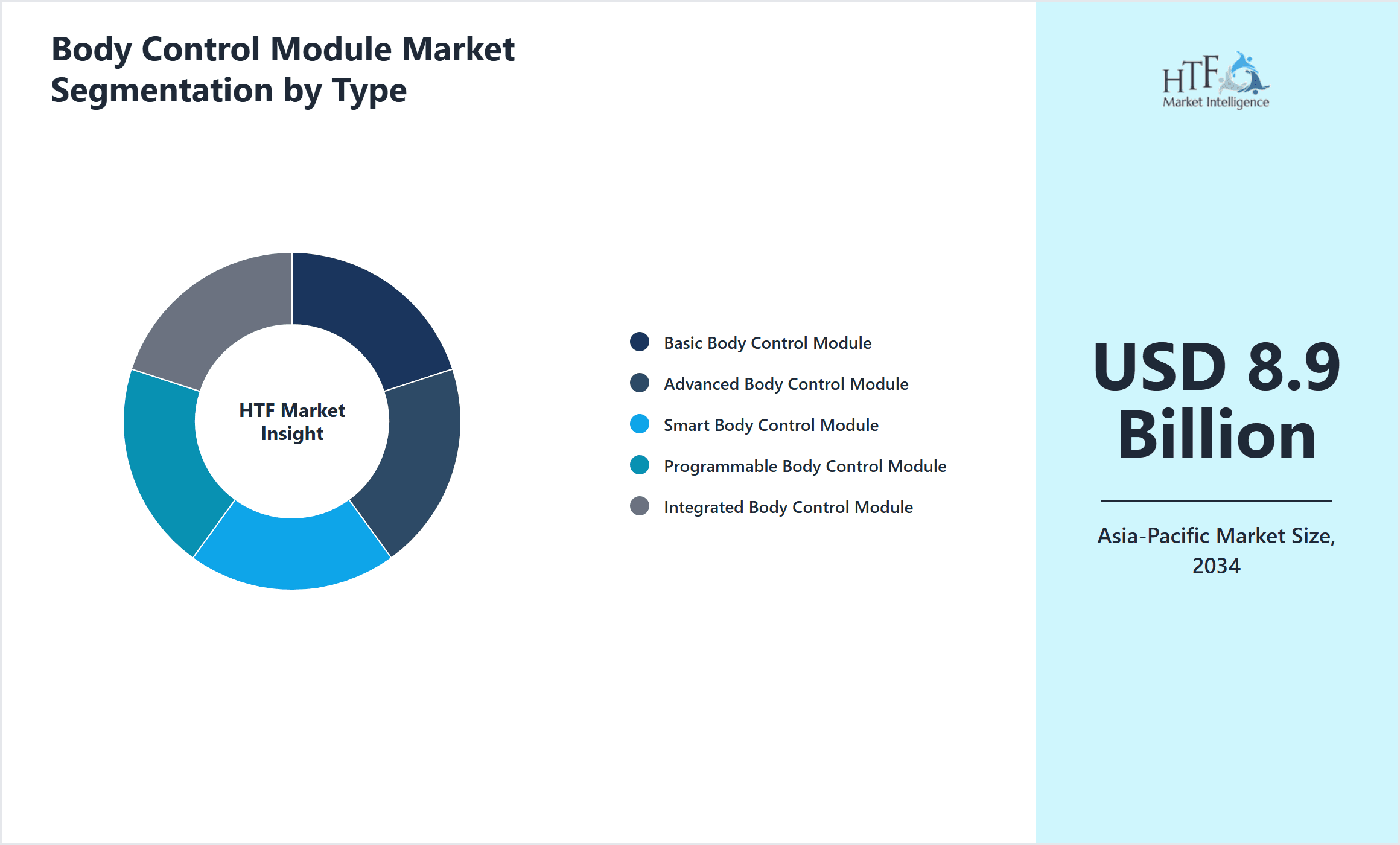
- •Key highlights of the Asia-Pacific BCM market include a base market size of USD 3.6 Billion in 2025, projected to reach USD 8.9 Billion by 2034, representing a robust CAGR of 10.0%. The region's fastest-growing markets include India and Southeast Asia, driven by rapid vehicle electrification and adoption of advanced driver assistance systems. China remains the dominating market due to its large automotive production base and technological investments in smart vehicles. The leading product type is the Advanced BCM, while Smart BCM modules are the fastest growing segment, reflecting consumer demand for enhanced connectivity and customization. Year-on-year growth sustains at approximately 9.6%, indicating steady expansion aligned with automotive industry trends.
- •The Asia-Pacific BCM market offers significant strategic value for automotive manufacturers, electronic component suppliers, and technology innovators. The integration of BCMs enables enhanced vehicle performance, safety, and user-centric features which are vital for competitive positioning in the evolving automotive landscape. With rising environmental concerns, government regulations, and consumer expectations for smart and eco-friendly vehicles, BCMs serve as foundational technology enabling vehicle automation and electrification. This market also presents lucrative opportunities for aftermarket services and component upgrades, supporting sustained revenue streams. Stakeholders leveraging technological advancements, regional manufacturing hubs, and strategic partnerships stand to gain considerable competitive advantages in this expanding market segment.

Competitive Landscape
The Asia-Pacific Body Control Module market exhibits intense competition shaped by rapid technological innovation, strategic partnerships, and expansion of production capabilities across key automotive hubs. Leading players focus on developing advanced BCM solutions integrating smart connectivity, cybersecurity features, and compatibility with electric and hybrid vehicle platforms to differentiate their offerings. Competitive strategies include investments in R&D, acquisitions of component manufacturers, and collaborations with automotive OEMs to secure long-term supply contracts and co-develop customized solutions. Market positioning relies heavily on product innovation, quality, pricing strategies, and extensive distribution networks. The proliferation of electric vehicles and autonomous driving technologies has intensified the demand for sophisticated BCMs, prompting firms to enhance modularity and software capabilities. Regional competition varies, with China dominating production volumes and technology leadership, while India and Southeast Asia emerge as key growth frontiers attracting investments. Barriers to entry include high capital requirements, stringent quality standards, and intellectual property protections. Future competitive trends point toward increasing adoption of AI-driven control modules, enhanced integration with vehicle ecosystems, and expansion of aftermarket service offerings, reinforcing the dynamic and evolving nature of the BCM market in Asia-Pacific.
Prominent Players in Body Control Module Market
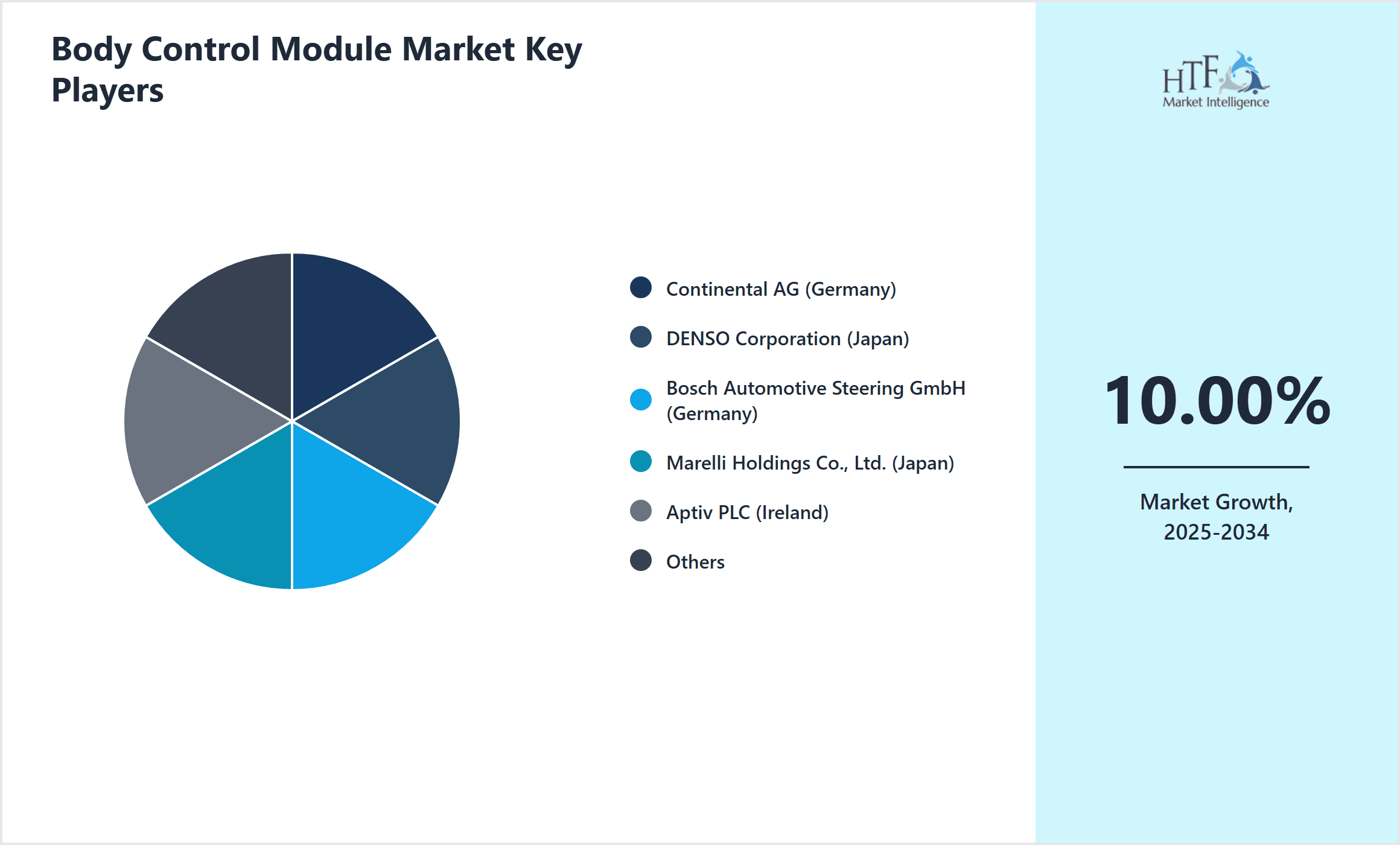
- •Continental AG (Germany)
- •DENSO Corporation (Japan)
- •Bosch Automotive Steering GmbH (Germany)
- •Marelli Holdings Co., Ltd. (Japan)
- •Aptiv PLC (Ireland)
- •Lear Corporation (United States)
- •Nippon Seiki Co., Ltd. (Japan)
- •Keihin Corporation (Japan)
- •Valeo SA (France)
- •ZF Friedrichshafen AG (Germany)
- •Hella GmbH & Co. KGaA (Germany)
- •Visteon Corporation (United States)
- •Delphi Technologies (United Kingdom)
- •Hitachi Astemo, Ltd. (Japan)
- •Magneti Marelli S.p.A. (Italy)
- •Brose Fahrzeugteile GmbH & Co. KG (Germany)
- •Panasonic Automotive Systems Company (Japan)
- •Denso Ten Limited (Japan)
- •Autoliv Inc. (Sweden)
- •BorgWarner Inc. (United States)
- •Yazaki Corporation (Japan)
- •Sumitomo Electric Industries, Ltd. (Japan)
- •Johnson Electric Holdings Limited (Hong Kong)
- •Calsonic Kansei Corporation (Japan)
- •Mitsubishi Electric Corporation (Japan)
Market Breakdown
- •By Product Type
- ◦Basic Body Control Module
- ◦Advanced Body Control Module
- ◦Smart Body Control Module
- ◦Programmable Body Control Module
- ◦Integrated Body Control Module
- •By Application
- ◦Passenger Vehicles
- ◦Commercial Vehicles
- ◦Electric Vehicles
- ◦Hybrid Vehicles
- ◦Aftermarket
- •By Vehicle Type
- ◦Sedans
- ◦SUVs
- ◦Trucks
- ◦Buses
- ◦Two-wheelers
- •By Deployment Model
- ◦On-board Integrated BCM
- ◦Aftermarket Retrofit BCM
- ◦Programmable BCM Solutions
Growth Dynamics
- •The Asia-Pacific Body Control Module market growth is primarily driven by the rapid expansion of the automotive industry, especially in China and India, where increasing vehicle production fuels demand for advanced electronic control units. Growing consumer preference for vehicles equipped with enhanced safety and convenience features is accelerating the adoption of sophisticated BCMs. Additionally, stringent government regulations around vehicle safety and emission standards drive OEMs to integrate advanced BCMs for compliance and performance optimization. The rising penetration of electric and hybrid vehicles necessitates smarter, energy-efficient BCMs capable of managing complex electrical systems, further propelling market growth.
- •Technological advancements such as integration of IoT, AI, and vehicle-to-everything (V2X) communication capabilities into BCMs are creating new opportunities for enhancing vehicle automation and connectivity. These innovations enable real-time diagnostics, predictive maintenance, and customized control functions, improving overall vehicle performance and user experience. The emergence of smart and programmable BCMs supports evolving automotive electronics architectures, aligning with trends toward autonomous and connected vehicles.
- •Investment in local manufacturing capacities and strategic partnerships between BCM manufacturers and automotive OEMs in Asia-Pacific are facilitating market penetration and cost optimization. Government incentives promoting electric vehicle adoption and research grants for automotive electronics innovation support the development and commercialization of next-generation BCMs. These initiatives bolster the competitive landscape and accelerate technology diffusion across the region.
- •Consumer demand for customization and aftermarket upgrades is fostering a growing market for retrofittable and programmable BCM solutions. This segment offers potential for revenue growth through service models and product lifecycle extensions, particularly in mature automotive markets within Asia-Pacific. Such trends underscore the importance of flexible and scalable BCM technologies.
Market Trends
- •Integration of smart BCMs with advanced driver assistance systems (ADAS) and infotainment platforms marks a significant trend, enabling enhanced vehicle control and user interface capabilities. Manufacturers are prioritizing BCMs that support seamless communication with other vehicle electronic control units to facilitate autonomous functions.
- •The shift towards electrification is driving demand for BCMs designed specifically for electric and hybrid vehicles, capable of managing complex battery systems, power distribution, and energy efficiency optimization. This specialization is prompting innovation in module design and software.
- •Increasing adoption of cybersecurity measures in BCMs to protect vehicles from hacking and unauthorized access is becoming a critical market trend. Manufacturers are incorporating encryption, secure communication protocols, and intrusion detection systems within BCM architecture.
- •The aftermarket segment is witnessing a rise in programmable and retrofit BCM solutions, catering to consumer preferences for vehicle customization and upgradeability post-purchase. This trend is supported by growing vehicle longevity and increasing aftermarket service penetration in Asia-Pacific.
Market Opportunities
- •The expanding electric vehicle market across Asia-Pacific presents substantial opportunities for BCM manufacturers to develop specialized modules that address unique EV requirements such as battery management and energy distribution.
- •Emerging economies within Southeast Asia offer untapped potential due to increasing vehicle ownership rates and growing demand for automotive electronic components, creating avenues for market expansion.
- •Technological innovations such as AI-enabled BCMs and integration with connected vehicle ecosystems provide opportunities for product differentiation and premium offerings.
- •Collaborations between BCM manufacturers and tech companies to co-develop cybersecurity solutions can enhance product value and address rising concerns over vehicle data safety.
Market Challenges
- •High development costs and complexity of integrating advanced features into BCMs pose significant barriers for manufacturers, especially smaller players in the Asia-Pacific region.
- •Supply chain disruptions, especially in semiconductor components critical to BCM production, impact timely delivery and cost structures, challenging market growth.
- •Lack of standardized protocols across automotive manufacturers complicates BCM compatibility and integration, restricting widespread adoption of advanced modules.
- •Stringent regulatory compliance requirements across diverse Asia-Pacific countries increase operational complexities and necessitate region-specific product adaptations.
Regulatory Framework
- •Between 2020 and 2025, several Asia-Pacific countries introduced stringent automotive safety regulations mandating the integration of electronic control units such as BCMs to enhance vehicle safety features. For instance, China’s National New Energy Vehicle mandate requires advanced BCM functionalities for electric vehicle safety and efficiency.
- •Japan implemented regulations focused on vehicle cybersecurity, demanding manufacturers incorporate secure BCM architectures to prevent unauthorized access and safeguard driver data. Compliance enforcement includes mandatory testing and certification.
- •India’s automotive standards evolved with the adoption of Bharat Stage VI emission norms, indirectly influencing BCM designs to support engine management and emission control systems effectively.
- •Australia introduced safety and environmental regulations between 2020 and 2025 emphasizing electronic stability control and energy efficiency, encouraging BCM innovations to meet these requirements.
- •Government incentives across Asia-Pacific, including subsidies for electric vehicle components and localization policies, foster BCM market growth by promoting domestic manufacturing and technology development.
Market Intelligence
- •15th March 2025, DENSO Corporation launched its next-generation Smart Body Control Module designed specifically for electric vehicles, featuring AI-driven diagnostics, enhanced cybersecurity protocols, and seamless integration with vehicle networks. Targeted at major automotive OEMs in China and India, this product aims to improve energy efficiency and user experience through adaptive control algorithms. The launch aligns with increasing electric vehicle penetration and regulatory demands in Asia-Pacific, positioning DENSO as a leader in advanced automotive electronics. This initiative also includes collaboration with local semiconductor suppliers to optimize component sourcing and cost efficiency. Source: DENSO Corporation Official Press Release.
- •10th July 2025, Bosch Automotive Steering GmbH unveiled a programmable Body Control Module platform enabling aftermarket customization and upgrades. The platform supports multiple vehicle types including commercial and passenger electric vehicles and is designed to enhance security with embedded encryption and intrusion detection. The company targets growing consumer demand for vehicle personalization in Southeast Asia and India, leveraging digital sales channels and service networks. This innovative solution reduces retrofit complexity and accelerates adoption in emerging markets, contributing to revenue growth. Source: Bosch Automotive Steering GmbH News Bulletin.
- •22nd November 2025, Aptiv PLC announced a strategic partnership with a leading Asian telematics provider to integrate connected vehicle capabilities into its Advanced Body Control Modules. This collaboration enables real-time vehicle monitoring, predictive maintenance, and enhanced driver assistance features across multiple Asia-Pacific markets. The integration supports OEMs in meeting regional regulatory requirements and consumer preferences for connected vehicles. Aptiv aims to leverage this partnership to expand its market share in China, India, and Southeast Asia by offering enhanced BCM solutions with added value services. Source: Aptiv PLC Corporate Communication.
- •5th January 2025, Panasonic Automotive Systems Company completed the acquisition of a regional BCM component manufacturer based in South Korea, enhancing its production capabilities and product portfolio. This move strengthens Panasonic’s foothold in Asia-Pacific’s automotive electronics market and facilitates faster delivery of integrated BCM solutions for electric and hybrid vehicles. The acquisition is expected to generate synergies in R&D and supply chain management, supporting the company’s growth strategy focused on smart mobility and vehicle electrification. Source: Panasonic Automotive Systems Company Press Release.
Regional Outlook
The China currently holds a significant share of the market, primarily due to several key factors: increasing consumption rates, a burgeoning population, and robust economic momentum. These elements collectively drive demand, positioning this region as a leader in the market. On the other hand, India is rapidly emerging as the fastest-growing area within the industry. This remarkable growth can be attributed to swift infrastructure development, the expansion of various industrial sectors, and a marked increase in consumer demand. These dynamics make this region a crucial player in shaping future market growth.
In our report, we cover a comprehensive analysis of the following regions and countries:
- Japan
- China
- Southeast Asia
- India
- Australia
- South Korea
- Others
| Feature | Details |
|---|---|
| Base Year Market Size | USD 3.6 Billion |
| Forecast Year Market Size | USD 8.9 Billion |
| CAGR | 10% |
| Forecast Period | 2026 to 2033 |
| YoY Growth | 9.6% |
| Scope of Report | Market is segmented by Product Type (Basic Body Control Module, Advanced Body Control Module, Smart Body Control Module, Programmable Body Control Module, Integrated Body Control Module), Application (Passenger Vehicles, Commercial Vehicles, Electric Vehicles, Hybrid Vehicles, Aftermarket), Vehicle Type (Sedans, SUVs, Trucks, Buses, Two-wheelers), Deployment Model (On-board Integrated BCM, Aftermarket Retrofit BCM, Programmable BCM Solutions) |
| Regions Covered | Japan, China, Southeast Asia, India, Australia, South Korea, Others |
| Key Companies | Continental AG (Germany), DENSO Corporation (Japan), Bosch Automotive Steering GmbH (Germany), Marelli Holdings Co., Ltd. (Japan), Aptiv PLC (Ireland), Lear Corporation (United States), Nippon Seiki Co., Ltd. (Japan), Keihin Corporation (Japan), Valeo SA (France), ZF Friedrichshafen AG (Germany), Hella GmbH & Co. KGaA (Germany), Visteon Corporation (United States), Delphi Technologies (United Kingdom), Hitachi Astemo, Ltd. (Japan), Magneti Marelli S.p.A. (Italy), Brose Fahrzeugteile GmbH & Co. KG (Germany), Panasonic Automotive Systems Company (Japan), Denso Ten Limited (Japan), Autoliv Inc. (Sweden), BorgWarner Inc. (United States), Yazaki Corporation (Japan), Sumitomo Electric Industries, Ltd. (Japan), Johnson Electric Holdings Limited (Hong Kong), Calsonic Kansei Corporation (Japan), Mitsubishi Electric Corporation (Japan) |
Asia-Pacific Body Control Module Market Size, Growth & Revenue 2025-2034 - Table of Contents
Frequently Asked Questions (FAQ):
The Compact Track Loaders market is projected to grow at a CAGR of 6.8% from 2025 to 2030, driven by increasing demand in construction and agricultural sectors.
North America currently leads the market with approximately 45% market share, followed by Europe at 28% and Asia-Pacific at 22%. The remaining regions account for 5% of the global market.
Key growth drivers include increasing construction activities, rising demand for versatile equipment in agriculture, technological advancements in track loader design, and growing preference for compact equipment in urban construction projects.