
Europe Monorail Systems Market - Europe Size & Outlook 2025-2034
Europe Monorail Systems Market is segmented by Monorail Type (Straddle Beam Monorail, Suspended Monorail, Automated People Mover, Hybrid Systems, Others), Application Segment (Urban Transportation, Airport Transit, Amusement Parks, Industrial Transport, Others), System Technology (Automated, Semi-automated, Manual Control, Hybrid Technology), End-User Sector (Public Transit Authorities, Private Industrial Users, Airport Operators, Amusement Park Operators), and Geography (Germany, France, The United Kingdom, BeNeLux, Spain, Italy, NORDIC, CEE, Others)
Pricing
Report Overview
Executive Summary
- •The Europe Monorail Systems Market represents a rapidly evolving segment within the regional mass transit infrastructure landscape, focusing on innovative rail transit solutions designed to alleviate urban congestion and promote sustainable transportation. This market includes a variety of monorail systems such as straddle beam monorails, suspended monorails, automated people movers, and hybrid systems tailored to diverse applications including urban passenger transport, airport shuttles, amusement parks, and industrial logistics. The market’s scope covers the entire lifecycle from engineering and manufacturing to deployment and maintenance, integrating advances in automation, control technologies, and energy-efficient propulsion. Growing urbanization, environmental regulations, and government funding initiatives are key factors expanding market boundaries. The European market is distinguished by a strong focus on green technology adoption and the integration of monorail systems within smart city frameworks, ensuring enhanced operational efficiency and passenger safety. This comprehensive market analysis explores segmentation, key players, growth dynamics, and future outlook, providing stakeholders with strategic insights into evolving trends and competitive landscapes across major European countries.
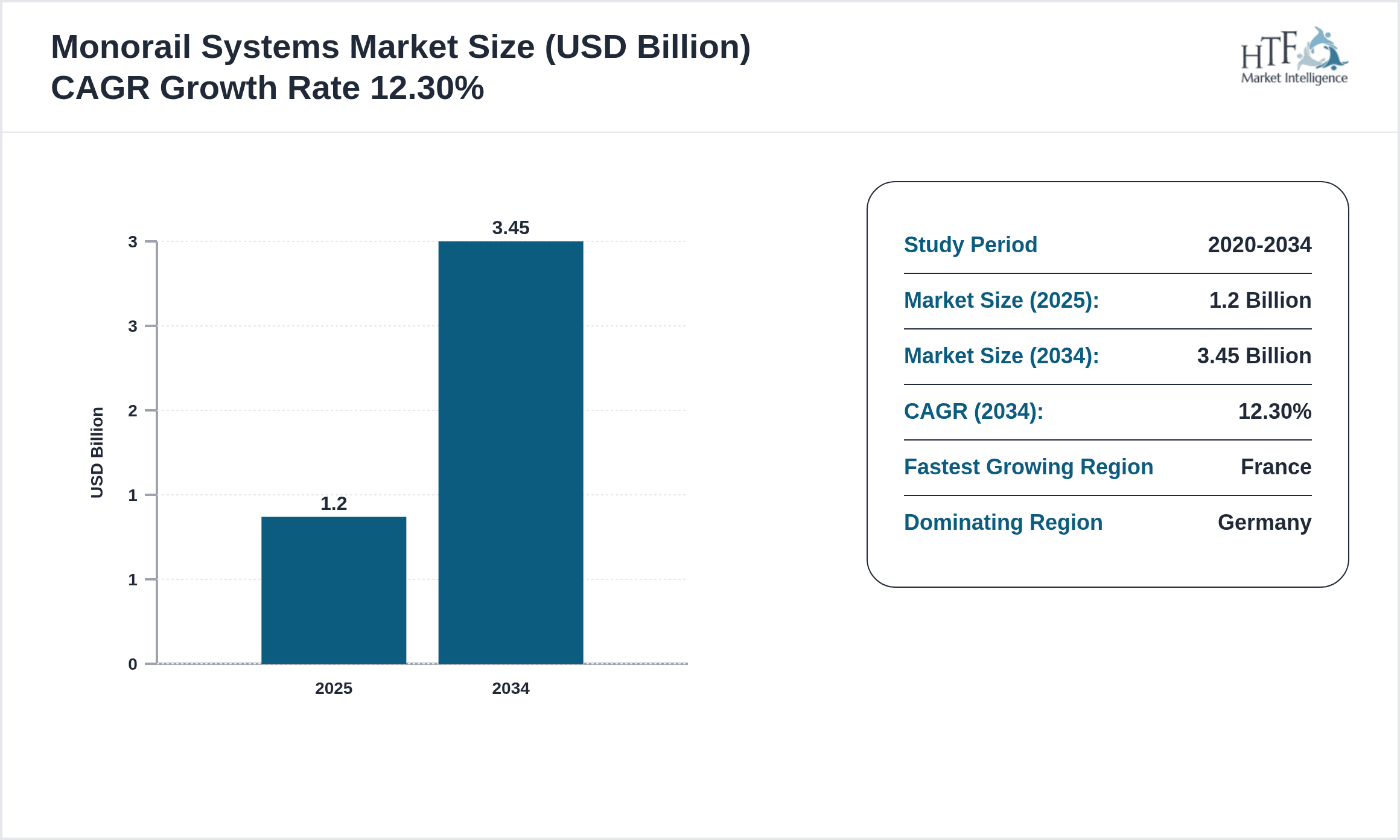
- •Key highlights of the Europe Monorail Systems Market include a projected CAGR of 12.3% between 2025 and 2034, driven by a forecasted market size increase from USD 1.2 billion in 2025 to approximately USD 3.45 billion by 2034. Germany currently dominates the market due to extensive urban transit projects and advanced infrastructure investments, while France is emerging as the fastest-growing country, fueled by airport expansions and urban transit modernization. Straddle beam monorails hold the largest market share due to their versatility and established deployment history, whereas automated people movers are witnessing the fastest growth owing to increasing automation and demand in airport and industrial settings. Urban transportation remains the leading application segment, supplemented by growth in airport transit solutions. The market is characterized by strategic collaborations, increasing government subsidies for sustainable transit, and rising technological innovations.
- •The Europe Monorail Systems Market offers significant value propositions to urban planners, transit authorities, and technology providers by delivering efficient, low-footprint transportation alternatives that help reduce urban congestion and carbon emissions. Strategic importance is underscored by the market’s alignment with regional environmental targets and smart city initiatives, enabling integration with IoT and AI-based traffic management systems. For stakeholders, the market presents opportunities for technology innovation, infrastructure development, and enhanced passenger experience through automation and safety improvements. Furthermore, the increasing focus on reducing operational costs and maintenance through predictive analytics and modular design enhances the market's appeal. Overall, this market is vital for Europe’s sustainable urban mobility future, balancing technological advancement with ecological responsibility and societal needs.
Competitive Landscape
The Europe Monorail Systems Market is highly competitive, characterized by the presence of both global multinational corporations and specialized regional firms striving for technological innovation and market expansion. Competition is primarily driven by advanced engineering capabilities, integration of cutting-edge automation technologies, and the ability to customize solutions for diverse applications such as urban transit and industrial logistics. Market players focus on strategic partnerships, joint ventures, and R&D investments to enhance system efficiency, safety, and environmental compliance. Pricing strategies are influenced by project scale, complexity, and technology sophistication, with an emphasis on lifecycle cost optimization. The rivalry is intensified by the growing demand for sustainable transit solutions, prompting companies to differentiate through innovation in energy-efficient propulsion and smart control systems. Market entry barriers include high capital requirements, regulatory approvals, and the need for extensive technical expertise. Regional competition varies, with Germany and France hosting advanced manufacturing and deployment capabilities, while emerging markets in Eastern Europe present growth opportunities for new entrants. Future trends indicate increasing consolidation through mergers and acquisitions to strengthen technological portfolios and geographic reach.
Leading Companies in Monorail Systems Market
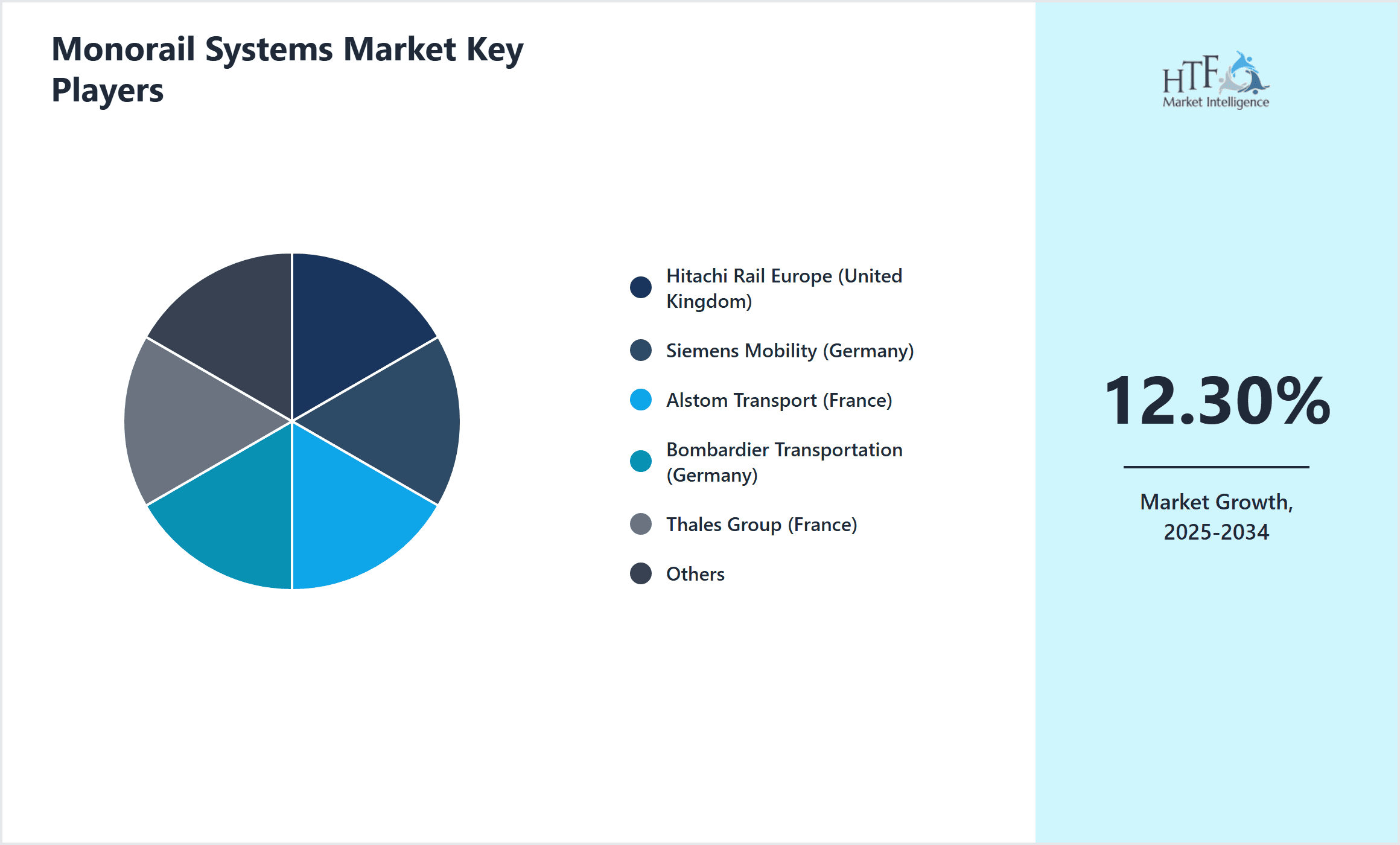
- •Hitachi Rail Europe (United Kingdom)
- •Siemens Mobility (Germany)
- •Alstom Transport (France)
- •Bombardier Transportation (Germany)
- •Thales Group (France)
- •SK Engineering & Construction Europe (South Korea)
- •Mitsubishi Heavy Industries (Japan)
- •Kawasaki Railcar Manufacturing Europe (Japan)
- •POMA Group (France)
- •CRRC Corporation Limited (China)
- •CAF (Construcciones y Auxiliar de Ferrocarriles) (Spain)
- •Vossloh AG (Germany)
- •ThyssenKrupp AG (Germany)
- •Toshiba Infrastructure Systems & Solutions Corporation (Japan)
- •SK Innovation (South Korea)
- •Transdev Group (France)
- •Hitachi Rail STS (Italy)
- •Bombardier Transportation UK (United Kingdom)
- •Alstom Transport UK (United Kingdom)
- •Siemens AG Austria (Austria)
- •CAF UK (United Kingdom)
- •Larsen & Toubro Rail Systems (India)
- •Mitsubishi Electric Europe (Germany)
- •Hitachi Rail (Italy)
- •Voith GmbH & Co. KGaA (Germany)
Market Breakdown
- •By Monorail Type
- ◦Straddle Beam Monorail
- ◦Suspended Monorail
- ◦Automated People Mover
- ◦Hybrid Systems
- ◦Others
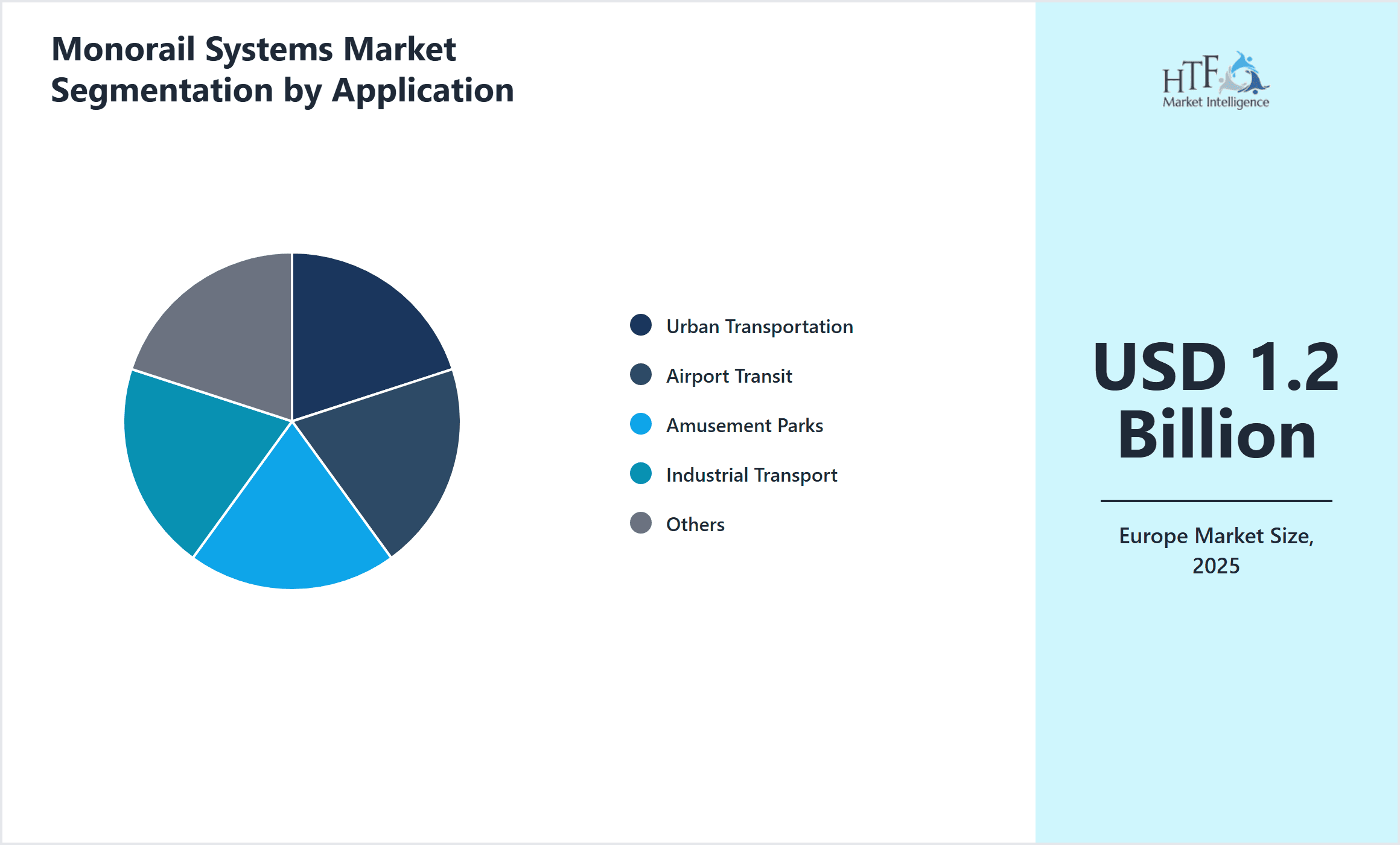
- •By Application Segment
- ◦Urban Transportation
- ◦Airport Transit
- ◦Amusement Parks
- ◦Industrial Transport
- ◦Others
- •By System Technology
- ◦Automated
- ◦Semi-automated
- ◦Manual Control
- ◦Hybrid Technology
- •By End-User Sector
- ◦Public Transit Authorities
- ◦Private Industrial Users
- ◦Airport Operators
- ◦Amusement Park Operators
Growth Dynamics
The Europe Monorail Systems Market benefits from increasing urbanization and governmental initiatives aimed at reducing traffic congestion and lowering carbon emissions, which drives the adoption of efficient monorail solutions. Investments in smart city projects facilitate the integration of these systems with intelligent transportation networks, enhancing their operational efficiency and appeal. Public transit authorities are increasingly prioritizing automated and eco-friendly transit options to meet stringent environmental policies, which expands market potential. Technological advancements in propulsion and control systems further enhance safety and cost-effectiveness, attracting new projects across metropolitan areas. Additionally, the rise in airport expansions and industrial logistics demands supports diversified application growth, ensuring steady market expansion over the forecast period.
Market Trends
Recent trends in the Europe Monorail Systems Market include the growing adoption of automated people movers and hybrid monorail technologies that provide enhanced flexibility and energy efficiency. Increasing collaboration between technology providers and urban planners is fostering innovative designs that optimize space utilization and passenger comfort. There is a notable shift towards modular and scalable monorail systems, facilitating easier deployment and maintenance. Sustainability is a key trend, with manufacturers focusing on reducing lifecycle emissions and integrating renewable energy sources. Furthermore, digitalization of monorail operations through IoT and AI-driven predictive maintenance is improving system reliability and reducing downtime, thereby attracting greater investments.
Market Opportunities
Europe’s increasing focus on sustainable urban mobility opens significant opportunities for the expansion of monorail systems, particularly in mid-sized cities aiming to enhance public transit without extensive infrastructure overhaul. The airport transit segment offers substantial growth potential due to rising passenger volumes and the need for efficient intra-airport connectivity. Emerging technologies such as AI-based control systems and energy-efficient propulsion can be harnessed to develop next-generation monorail solutions, enabling companies to differentiate in a competitive market. Partnerships between governments and private players for smart city initiatives create avenues for pilot projects and large-scale deployments. Additionally, retrofitting existing transit corridors with monorail systems presents an attractive opportunity to modernize aging infrastructure while minimizing urban disruption.
Market Challenges
The Europe Monorail Systems Market faces challenges related to high initial capital expenditure and extended project implementation timelines, which can inhibit adoption especially among smaller municipalities. Regulatory complexities and varying standards across European countries require companies to navigate a multifaceted compliance landscape that may delay project approvals. Technical challenges such as integrating monorail systems with existing transport infrastructure and ensuring interoperability pose operational risks. Additionally, competition from alternative transit solutions like light rail and metro systems can limit market penetration. Limited public awareness and resistance to new transit technologies in certain regions further complicate acceptance. Addressing supply chain disruptions and skilled labor shortages remains critical to maintaining project schedules and quality standards.
Regulatory Framework
Between 2020 and 2025, Europe has seen the implementation of stringent regulations aimed at reducing urban pollution and promoting sustainable transportation infrastructure. Key directives include the EU’s Green Deal and Urban Mobility Framework, which mandate emission reduction targets and encourage the adoption of low-impact transit systems such as monorails. Safety standards have been enhanced through the European Union Agency for Railways, requiring advanced signaling, fire safety, and passenger protection measures in monorail deployments. Furthermore, individual countries such as Germany and France have introduced localized regulations to streamline project approvals and incentivize green transit investments through subsidies and tax benefits. These regulatory updates have catalyzed greater investment in advanced monorail technologies, mandating compliance with environmental and operational benchmarks that elevate system reliability and user safety.
Market Intelligence
- •15th February 2025, Alstom Transport announced the launch of its new automated people mover system specifically designed for European airports, featuring energy-efficient propulsion and enhanced passenger capacity. The system integrates AI-driven control technology enabling seamless operations and reduced maintenance costs, targeting major hubs in France and Germany to improve intra-terminal connectivity and operational efficiency. This launch positions Alstom as a leader in next-generation monorail solutions catering to growing airport transit needs.
- •10th July 2025, Siemens Mobility unveiled a hybrid monorail prototype combining straddle beam and suspended configurations, aimed at urban environments with challenging topographies. This innovation enhances route flexibility and passenger comfort, with pilot projects planned in the BeNeLux region. Siemens’ strategic focus on modular design and digital integration anticipates boosting market share in European metropolitan areas.
- •22nd March 2025, Hitachi Rail Europe announced a strategic partnership with the NORDIC urban transport authority to deploy an automated monorail system for a smart city initiative. The collaboration emphasizes sustainability, incorporating renewable energy sources and IoT-enabled predictive maintenance to maximize system uptime and minimize environmental impact, setting new standards for urban transit solutions in the region.
- •5th November 2025, POMA Group completed the expansion of its monorail network at a major amusement park in Spain, introducing advanced safety features and passenger amenities. This project highlights the company’s commitment to enhancing user experience through technology upgrades and operational efficiency, reinforcing its market presence in the leisure and tourism sector across Europe.
- •Source: Official press releases from Alstom Transport, Siemens Mobility, Hitachi Rail Europe, POMA Group
Regional Outlook
The Germany currently holds a significant share of the market, primarily due to several key factors: increasing consumption rates, a burgeoning population, and robust economic momentum. These elements collectively drive demand, positioning this region as a leader in the market. On the other hand, France is rapidly emerging as the fastest-growing area within the industry. This remarkable growth can be attributed to swift infrastructure development, the expansion of various industrial sectors, and a marked increase in consumer demand. These dynamics make this region a crucial player in shaping future market growth.
In our report, we cover a comprehensive analysis of the following regions and countries:
- Germany
- France
- The United Kingdom
- BeNeLux
- Spain
- Italy
- NORDIC
- CEE
- Others
| Feature | Details |
|---|---|
| Base Year Market Size | USD 1.2 Billion |
| Forecast Year Market Size | USD 3.45 Billion |
| CAGR | 12.3% |
| Forecast Period | 2026 to 2033 |
| YoY Growth | 12.1% |
| Scope of Report | Market is segmented by Monorail Type (Straddle Beam Monorail, Suspended Monorail, Automated People Mover, Hybrid Systems, Others), Application Segment (Urban Transportation, Airport Transit, Amusement Parks, Industrial Transport, Others), System Technology (Automated, Semi-automated, Manual Control, Hybrid Technology), End-User Sector (Public Transit Authorities, Private Industrial Users, Airport Operators, Amusement Park Operators) |
| Regions Covered | Germany, France, The United Kingdom, BeNeLux, Spain, Italy, NORDIC, CEE, Others |
| Key Companies | Hitachi Rail Europe (United Kingdom), Siemens Mobility (Germany), Alstom Transport (France), Bombardier Transportation (Germany), Thales Group (France), SK Engineering & Construction Europe (South Korea), Mitsubishi Heavy Industries (Japan), Kawasaki Railcar Manufacturing Europe (Japan), POMA Group (France), CRRC Corporation Limited (China), CAF (Construcciones y Auxiliar de Ferrocarriles) (Spain), Vossloh AG (Germany), ThyssenKrupp AG (Germany), Toshiba Infrastructure Systems & Solutions Corporation (Japan), SK Innovation (South Korea), Transdev Group (France), Hitachi Rail STS (Italy), Bombardier Transportation UK (United Kingdom), Alstom Transport UK (United Kingdom), Siemens AG Austria (Austria), CAF UK (United Kingdom), Larsen & Toubro Rail Systems (India), Mitsubishi Electric Europe (Germany), Hitachi Rail (Italy), Voith GmbH & Co. KGaA (Germany) |
Europe Monorail Systems Market - Europe Size & Outlook 2025-2034 - Table of Contents
Research enthusiast focused on transforming data uncovering into actionable insights through data-driven decision-making.
Frequently Asked Questions (FAQ):
The Compact Track Loaders market is expected to see value worth 5.3 Billion in 2025.
North America currently leads the market with approximately 45% market share, followed by Europe at 28% and Asia-Pacific at 22%. The remaining regions account for 5% of the global market.
Key growth drivers include increasing construction activities, rising demand for versatile equipment in agriculture, technological advancements in track loader design, and growing preference for compact equipment in urban construction projects.