
Global Auto-Dimming Mirrors Market Size, Growth & Revenue 2024-2034
Global Auto-Dimming Mirrors Market is segmented by Type (Electrochromic Auto-Dimming Mirrors, Suspended Particle Device Auto-Dimming Mirrors, Micro-Blind Auto-Dimming Mirrors, Liquid Crystal Auto-Dimming Mirrors, Photochromic Auto-Dimming Mirrors), Application (Passenger Vehicles, Commercial Vehicles, Electric Vehicles, Luxury Vehicles, Aftermarket), Vehicle Segment (Compact Cars, Mid-Size Cars, SUVs, Trucks, Buses), Distribution Channel (Original Equipment Manufacturer (OEM), Aftermarket, Online Retail, Automotive Dealerships), and Geography (North America, LATAM, West Europe, Central & Eastern Europe, Northern Europe, Southern Europe, East Asia, Southeast Asia, South Asia, Central Asia, Oceania, MEA)
Pricing
Report Overview
Executive Summary
- •The global auto-dimming mirrors market is a critical segment of the automotive safety and comfort industry, incorporating advanced mirror technologies that automatically adjust reflectivity to minimize glare from headlights and sunlight. This market spans diverse vehicle types including passenger cars, commercial trucks, electric vehicles, luxury models, and the aftermarket sector. The technology landscape includes electrochromic mirrors, suspended particle devices, micro-blind systems, liquid crystal mirrors, and photochromic variants, each offering unique advantages in response time, energy efficiency, and cost-effectiveness. The market scope covers the research, development, manufacturing, and distribution of these mirrors worldwide, with a strong focus on enhancing driver visibility and reducing accidents. Growth drivers include rising vehicle production, stringent safety regulations, and consumer preference for smart vehicle features. The market also addresses challenges such as high production costs and technological complexity. Overall, the market is positioned for robust growth driven by innovation, regulatory support, and increasing automotive safety awareness worldwide.
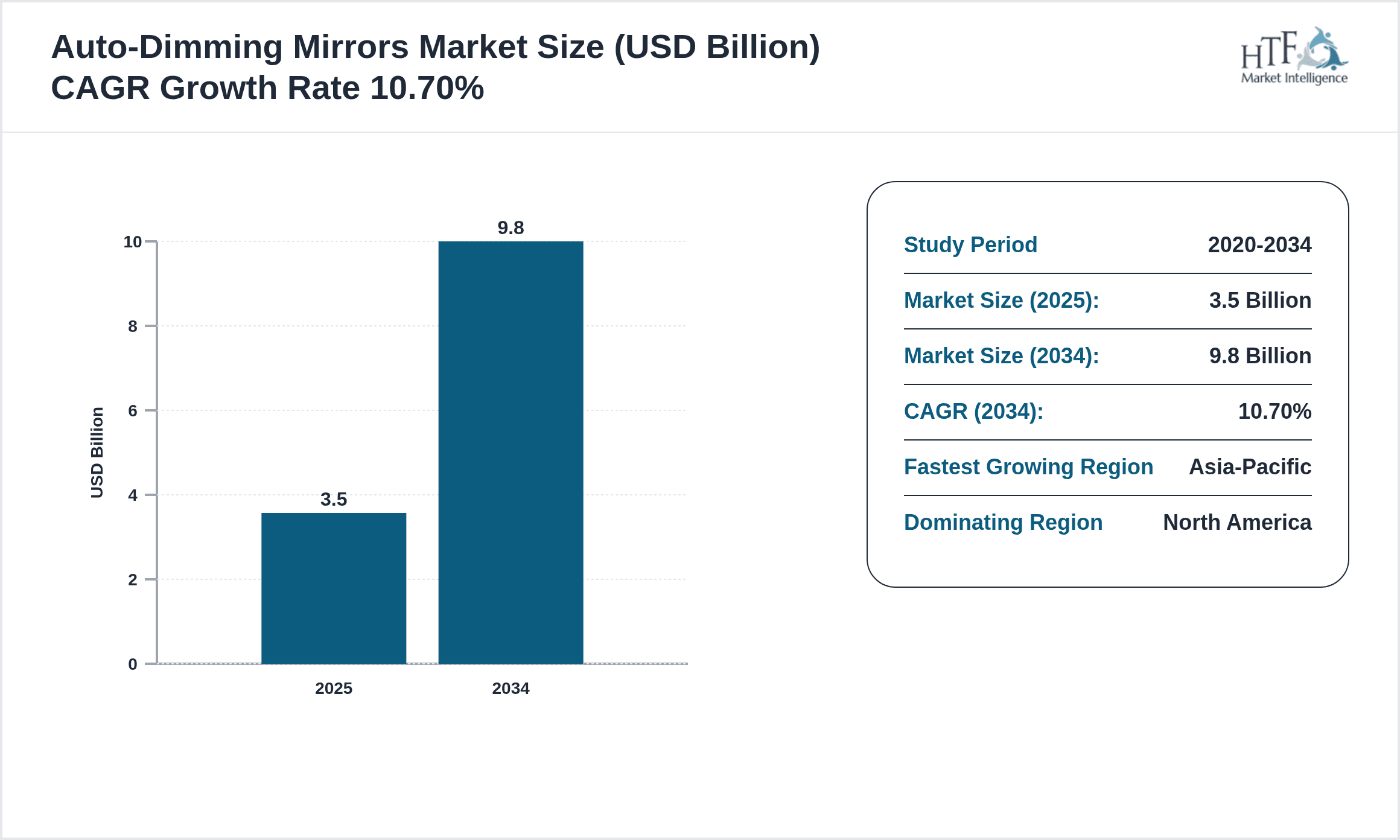
- •Key highlights of the market include a base size of USD 3.5 Billion in 2024, projected to reach USD 9.8 Billion by 2034, reflecting a CAGR of 10.7%. Electrochromic technology currently leads the product segment, commanding the largest market share due to its proven reliability and widespread adoption. Passenger vehicles dominate the application segment, accounting for the majority of demand globally. North America is the dominant region, driven by advanced automotive safety adoption and regulatory frameworks, while Asia-Pacific emerges as the fastest-growing market fueled by expanding automotive manufacturing and increasing electric vehicle penetration. The market demonstrates a strong year-over-year growth rate of approximately 10.2%, underscoring its dynamic expansion and evolving technological landscape.
- •The strategic importance of auto-dimming mirrors extends across automotive manufacturers, suppliers, and aftermarket service providers, as these components contribute significantly to vehicle safety, driver comfort, and regulatory compliance. The integration of auto-dimming mirrors with vehicle sensor systems and smart technologies enhances their value proposition, enabling manufacturers to differentiate their offerings and address consumer demand for advanced safety features. For stakeholders, the market presents opportunities in innovation development, geographic expansion, and partnerships to capitalize on the increasing vehicle safety consciousness globally. Furthermore, government mandates and consumer expectations for safer driving environments accelerate the adoption of these technologies, making the auto-dimming mirrors market a vital contributor to the automotive industry's evolution towards smarter and safer vehicles.
Competitive Landscape
The competitive environment of the global auto-dimming mirrors market is characterized by a mix of established automotive component manufacturers and innovative technology providers, vying to offer advanced, reliable, and cost-effective solutions. Market players focus on research and development to enhance mirror responsiveness, durability, and integration with vehicle systems such as cameras and sensors. Competitive strategies include strategic partnerships with automotive OEMs, mergers and acquisitions to consolidate technological capabilities, and geographic expansion to capitalize on emerging markets. Product differentiation is achieved through innovation in electrochromic and liquid crystal technologies, while pricing strategies balance premium features with affordability to capture broader market segments. Distribution channels span OEM contracts and aftermarket sales, with players investing in supply chain optimization. The rivalry is intense, driven by rapid technological advancements and increasing regulatory demands, fostering a dynamic landscape where continuous innovation and strategic alliances determine market leadership and future growth trajectories.
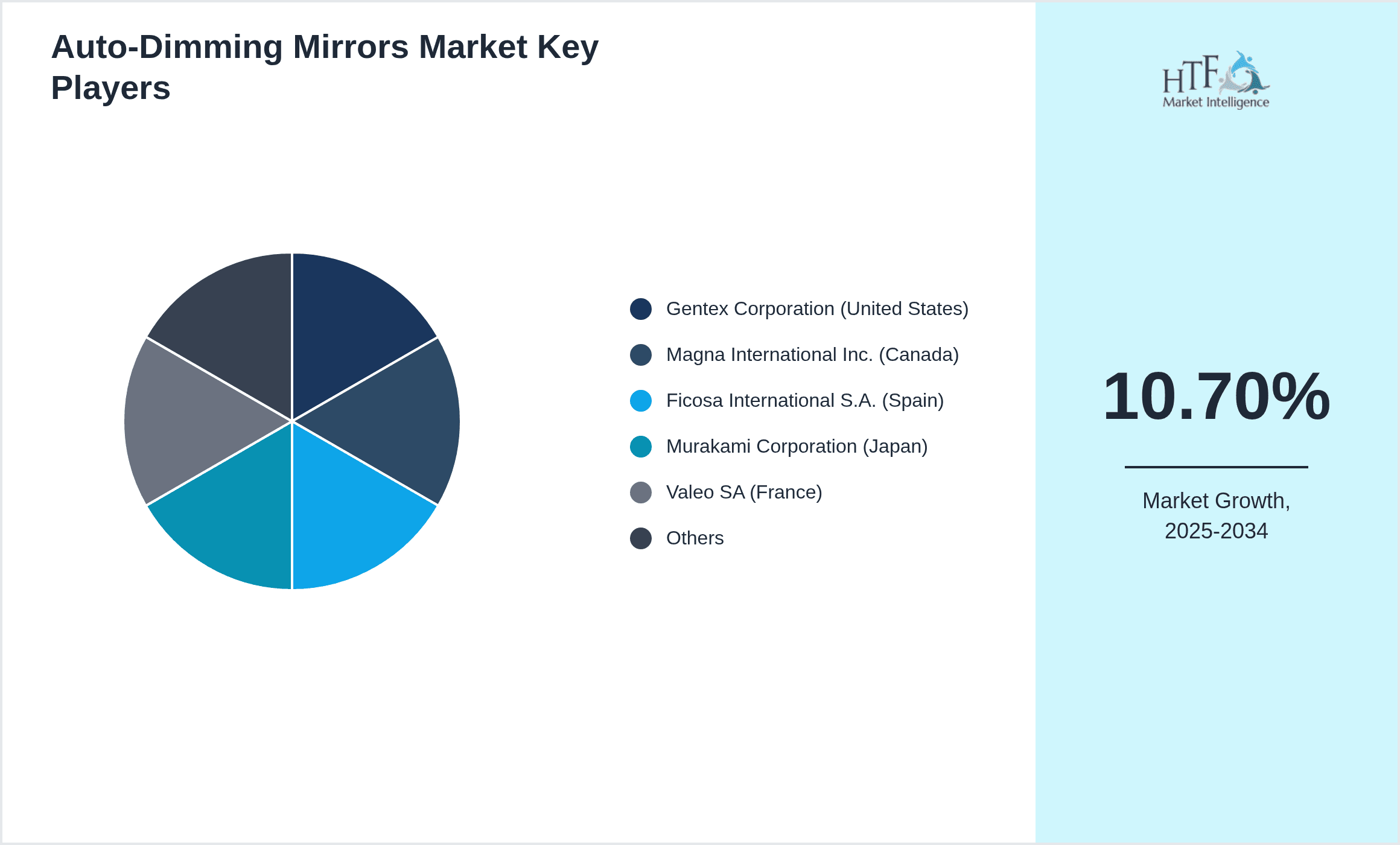
Leading Companies in Auto-Dimming Mirrors Market
- •Gentex Corporation (United States)
- •Magna International Inc. (Canada)
- •Ficosa International S.A. (Spain)
- •Murakami Corporation (Japan)
- •Valeo SA (France)
- •Motherson Sumi Systems Limited (India)
- •Donnelly Corporation (United States)
- •Hyundai Mobis (South Korea)
- •Gentherm Inc. (United States)
- •SMR Automotive Mirrors Worldwide (Germany)
- •Magneti Marelli (Italy)
- •Samvardhana Motherson Group (India)
- •CTS Corporation (United States)
- •Kumho Industrial Co., Ltd. (South Korea)
- •Hella GmbH & Co. KGaA (Germany)
- •Brose Fahrzeugteile GmbH & Co. KG (Germany)
- •Inalfa Roof Systems Group B.V. (Netherlands)
- •Gentex Europe S.A. (Luxembourg)
- •Fujikura Ltd. (Japan)
- •Yazaki Corporation (Japan)
- •Hyundai Motor Group (South Korea)
- •Toyota Boshoku Corporation (Japan)
- •Magneti Marelli S.p.A. (Italy)
- •Nippon Seiki Co., Ltd. (Japan)
- •Denso Corporation (Japan)
Market Breakdown
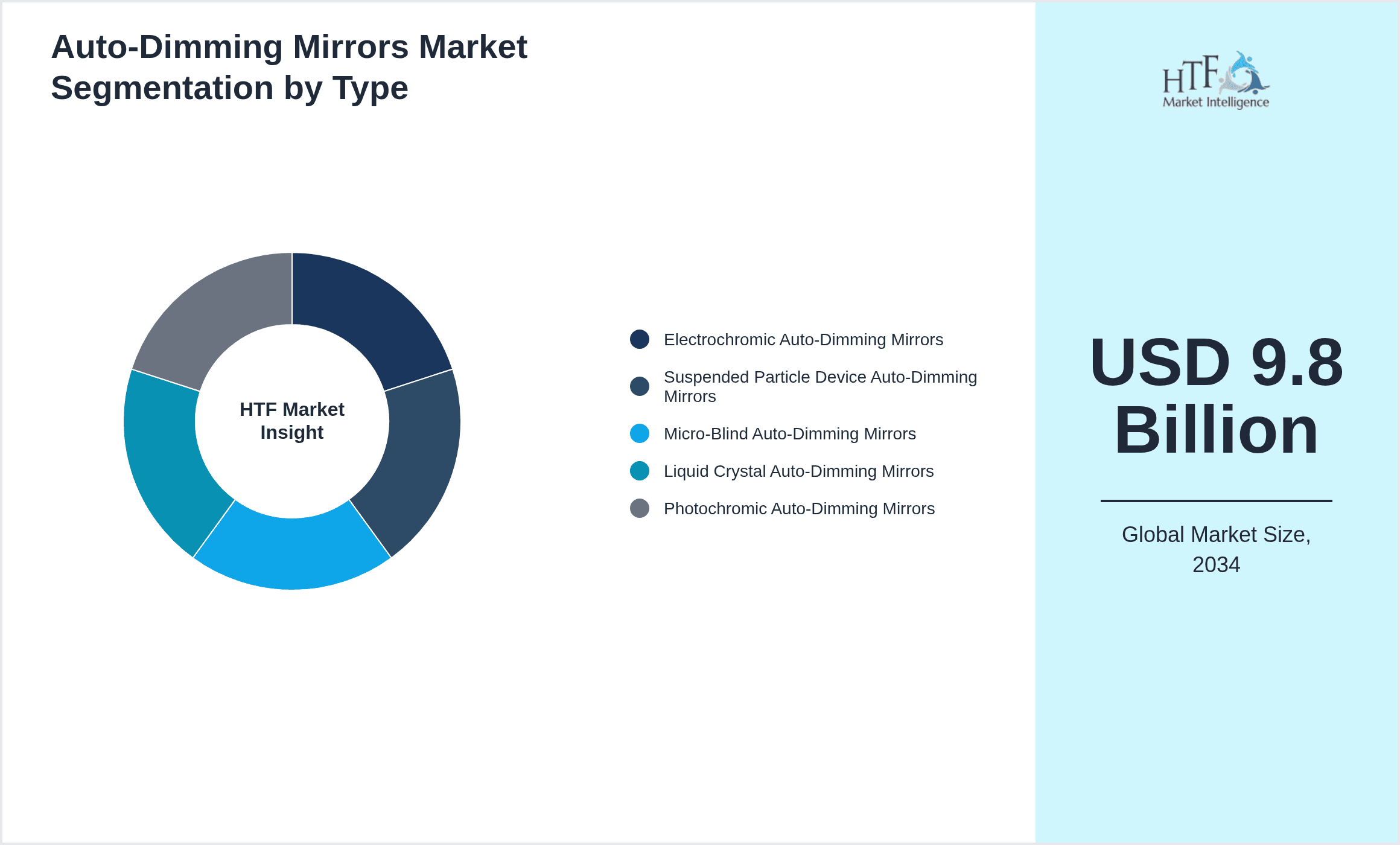
- •By Type
- ◦Electrochromic Auto-Dimming Mirrors
- ◦Suspended Particle Device Auto-Dimming Mirrors
- ◦Micro-Blind Auto-Dimming Mirrors
- ◦Liquid Crystal Auto-Dimming Mirrors
- ◦Photochromic Auto-Dimming Mirrors
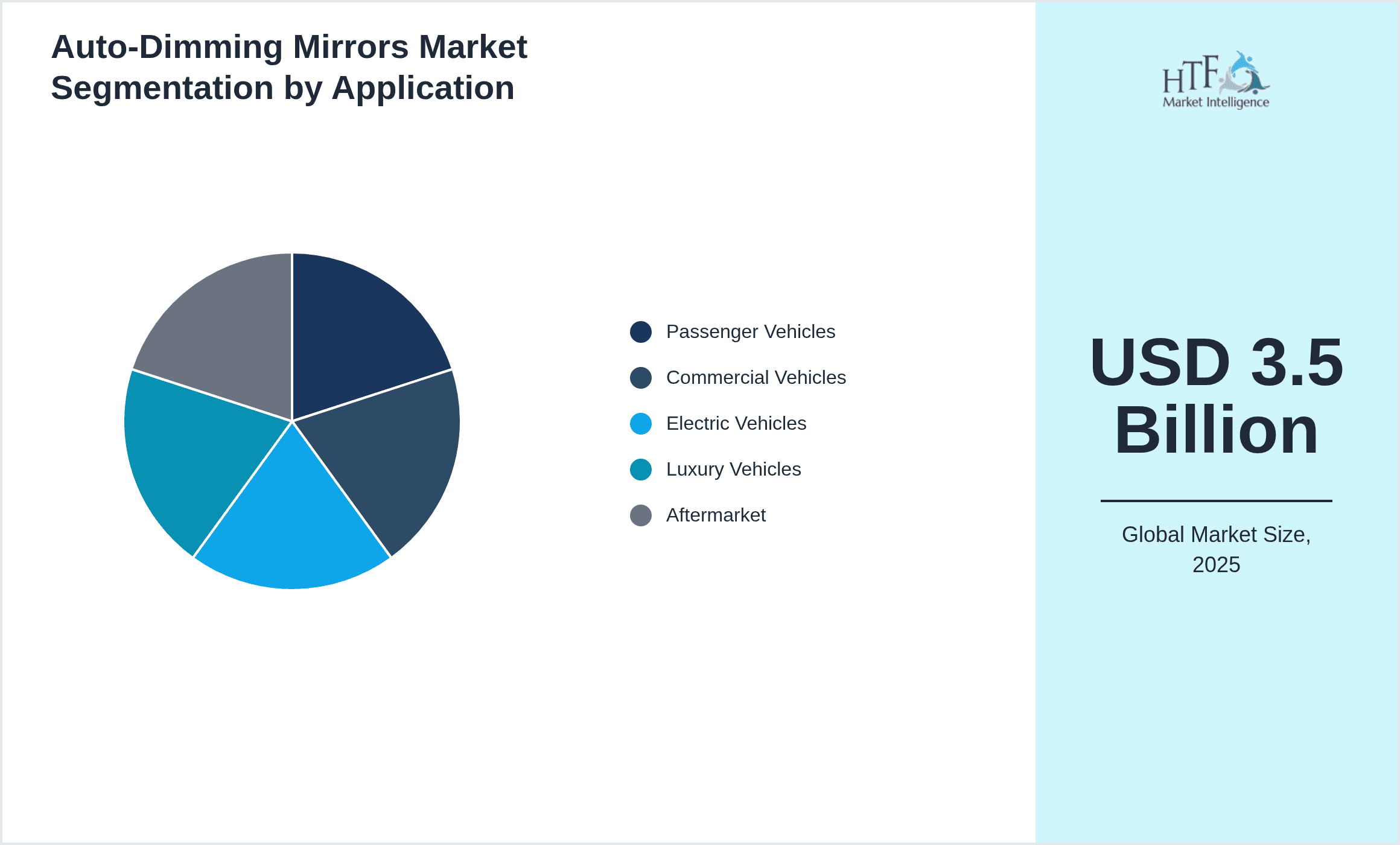
- •By Application
- ◦Passenger Vehicles
- ◦Commercial Vehicles
- ◦Electric Vehicles
- ◦Luxury Vehicles
- ◦Aftermarket
- •By Vehicle Segment
- ◦Compact Cars
- ◦Mid-Size Cars
- ◦SUVs
- ◦Trucks
- ◦Buses
- •By Distribution Channel
- ◦Original Equipment Manufacturer (OEM)
- ◦Aftermarket
- ◦Online Retail
- ◦Automotive Dealerships
Growth Dynamics
- •Increasing global vehicle production, especially in emerging economies, drives demand for advanced safety features like auto-dimming mirrors, enhancing market growth. Government mandates for safety equipment in vehicles further accelerate adoption, ensuring consistent market expansion.
- •Technological advancements such as integration with digital sensors and cameras enhance mirror functionality, attracting OEMs to adopt electrochromic and liquid crystal types for improved driver experience and safety.
- •Rising consumer preference for luxury and electric vehicles, which often come equipped with advanced auto-dimming mirrors, fuels market growth by increasing demand for premium mirror technologies.
- •Expansion of aftermarket sales channels and growing vehicle aging populations in developed regions create additional revenue streams, supporting market growth and adoption of retrofit auto-dimming mirrors.
- •Strategic collaborations between automotive component manufacturers and technology firms facilitate innovation, product launches, and market penetration, boosting overall market dynamics.
Market Trends
- •The shift towards electric vehicles has increased demand for energy-efficient auto-dimming mirrors, leading to innovation in low-power consuming liquid crystal technologies that enhance battery life and vehicle efficiency.
- •Smart mirror systems combining auto-dimming with integrated cameras and display features are becoming prevalent, especially in luxury and high-end vehicles, transforming traditional mirror functionalities.
- •Sustainability trends push manufacturers to develop eco-friendly materials and recyclable components within auto-dimming mirror production, aligning with global environmental standards.
- •Increasing adoption of aftermarket customization offers consumers options to upgrade standard mirrors to auto-dimming variants, expanding the market beyond OEMs.
- •Regional regulations mandating advanced safety features in vehicles are influencing automakers to incorporate auto-dimming mirrors as standard equipment, especially in North America and Europe.
Market Opportunities
- •Emerging markets in Asia-Pacific present significant growth potential due to rapid automotive industry expansion and increasing safety awareness, creating untapped opportunities for auto-dimming mirror manufacturers.
- •Development of cost-effective auto-dimming mirror technologies can open opportunities in the mid-tier passenger vehicle segment, increasing market penetration and volume sales.
- •Integration of auto-dimming mirrors with connected vehicle technologies and autonomous driving systems presents opportunities for product innovation and new application areas.
- •Aftermarket penetration through digital platforms and automotive service chains offers growth avenues by catering to vehicle owners seeking retrofits and replacements.
- •Strategic alliances with automotive OEMs for exclusive supply contracts enable manufacturers to secure steady revenues and expand global footprint.
Market Challenges
- •High manufacturing and material costs of advanced auto-dimming mirror technologies limit affordability, especially in price-sensitive emerging markets, restraining market growth.
- •Technical complexities related to integration with vehicle electronic systems and ensuring durability under varying environmental conditions pose challenges for manufacturers.
- •Intense competition from traditional mirror manufacturers and alternative glare-reduction technologies could impede market share expansion for auto-dimming mirrors.
- •Regulatory discrepancies across regions create compliance challenges and increase costs for global manufacturers attempting to standardize products.
- •Supply chain disruptions and raw material shortages, especially for specialty glass and electrochromic materials, impact production timelines and costs.
Regulatory Framework
- •Between 2019 and 2024, key regulations such as the UN ECE Regulation No. 46 mandated enhanced rearview mirror standards to improve visibility and reduce glare, compelling manufacturers to incorporate auto-dimming features in compliance with safety norms.
- •The U.S. Federal Motor Vehicle Safety Standards (FMVSS) updates introduced between 2020 and 2023 increased requirements for glare reduction and mirror performance, driving adoption of advanced auto-dimming technologies.
- •European Union directives on vehicle safety and environmental impact introduced in 2021 required manufacturers to ensure eco-friendly materials and energy-efficient mirror systems, influencing product design and manufacturing practices.
- •China's Motor Vehicle Safety Technical Regulations updated in 2022 mandated the inclusion of anti-glare mirror technologies in new vehicles, accelerating market growth in Asia-Pacific.
- •Government incentives and subsidies for electric and smart vehicles in multiple regions have indirectly supported auto-dimming mirror adoption by promoting advanced vehicle safety features.
Market Intelligence
- •15th February 2025, Gentex Corporation unveiled a next-generation electrochromic auto-dimming mirror designed with enhanced glare reduction and faster response time, targeting integration in electric and luxury vehicles. The new product features improved durability and energy efficiency, positioning Gentex as a technology leader. This launch is expected to drive increased adoption across OEMs globally, reinforcing Gentex’s market presence and addressing growing consumer demand for advanced safety features. Source: Gentex Official Press Release
- •30th May 2025, Magna International Inc. announced a strategic partnership with a leading sensor technology firm to develop smart auto-dimming mirrors integrated with camera-based driver assistance systems. This collaboration aims to innovate mirror functionalities by combining glare reduction with real-time environmental monitoring, enhancing driver safety and vehicle automation. The initiative aligns with the rising trend of connected vehicles and is slated for rollout in premium passenger vehicles starting late 2025. Source: Magna International Newsroom
- •10th September 2024, Ficosa International launched a liquid crystal auto-dimming mirror system optimized for electric vehicle applications, focusing on low energy consumption and lightweight design. This innovation addresses key EV requirements by reducing power draw and improving vehicle range while maintaining superior glare mitigation. Ficosa’s new product is gaining traction among EV manufacturers, highlighting the market shift towards specialized mirror systems for new energy vehicles. Source: Ficosa Corporate Announcement
- •22nd November 2024, Murakami Corporation completed the acquisition of a micro-blind technology startup, enhancing its product portfolio in auto-dimming mirror technology. The acquisition strengthens Murakami’s market position in Asia-Pacific and accelerates the development of next-gen mirror solutions combining optical performance with smart controls. This move is expected to boost Murakami’s competitive edge and expand its global footprint. Source: Murakami Investor Relations
Regional Outlook
The North America currently holds a significant share of the market, primarily due to several key factors: increasing consumption rates, a burgeoning population, and robust economic momentum. These elements collectively drive demand, positioning this region as a leader in the market. On the other hand, Asia-Pacific is rapidly emerging as the fastest-growing area within the industry. This remarkable growth can be attributed to swift infrastructure development, the expansion of various industrial sectors, and a marked increase in consumer demand. These dynamics make this region a crucial player in shaping future market growth.
In our report, we cover a comprehensive analysis of the following regions and countries:
- North America
- LATAM
- West Europe
- Central & Eastern Europe
- Northern Europe
- Southern Europe
- East Asia
- Southeast Asia
- South Asia
- Central Asia
- Oceania
- MEA
| Feature | Details |
|---|---|
| Base Year Market Size | USD 3.5 Billion |
| Forecast Year Market Size | USD 9.8 Billion |
| CAGR | 10.7% |
| Forecast Period | 2026 to 2033 |
| YoY Growth | 10.2% |
| Scope of Report | Market is segmented by Type (Electrochromic Auto-Dimming Mirrors, Suspended Particle Device Auto-Dimming Mirrors, Micro-Blind Auto-Dimming Mirrors, Liquid Crystal Auto-Dimming Mirrors, Photochromic Auto-Dimming Mirrors), Application (Passenger Vehicles, Commercial Vehicles, Electric Vehicles, Luxury Vehicles, Aftermarket), Vehicle Segment (Compact Cars, Mid-Size Cars, SUVs, Trucks, Buses), Distribution Channel (Original Equipment Manufacturer (OEM), Aftermarket, Online Retail, Automotive Dealerships) |
| Regions Covered | North America, LATAM, West Europe, Central & Eastern Europe, Northern Europe, Southern Europe, East Asia, Southeast Asia, South Asia, Central Asia, Oceania, MEA |
| Key Companies | Gentex Corporation (United States), Magna International Inc. (Canada), Ficosa International S.A. (Spain), Murakami Corporation (Japan), Valeo SA (France), Motherson Sumi Systems Limited (India), Donnelly Corporation (United States), Hyundai Mobis (South Korea), Gentherm Inc. (United States), SMR Automotive Mirrors Worldwide (Germany), Magneti Marelli (Italy), Samvardhana Motherson Group (India), CTS Corporation (United States), Kumho Industrial Co., Ltd. (South Korea), Hella GmbH & Co. KGaA (Germany), Brose Fahrzeugteile GmbH & Co. KG (Germany), Inalfa Roof Systems Group B.V. (Netherlands), Gentex Europe S.A. (Luxembourg), Fujikura Ltd. (Japan), Yazaki Corporation (Japan), Hyundai Motor Group (South Korea), Toyota Boshoku Corporation (Japan), Magneti Marelli S.p.A. (Italy), Nippon Seiki Co., Ltd. (Japan), Denso Corporation (Japan) |
Global Auto-Dimming Mirrors Market Size, Growth & Revenue 2024-2034 - Table of Contents
Frequently Asked Questions (FAQ):
The Compact Track Loaders market is projected to grow at a CAGR of 6.8% from 2025 to 2030, driven by increasing demand in construction and agricultural sectors.
North America currently leads the market with approximately 45% market share, followed by Europe at 28% and Asia-Pacific at 22%. The remaining regions account for 5% of the global market.
Key growth drivers include increasing construction activities, rising demand for versatile equipment in agriculture, technological advancements in track loader design, and growing preference for compact equipment in urban construction projects.