
Global Ginjo Sake Market - Outlook 2025-2034
Global Ginjo Sake Market is segmented by Application (Restaurants, Retail, Online Sales, Bars & Pubs, Events), Type (Junmai Ginjo, Non-Junmai Ginjo, Organic Ginjo, Premium Ginjo, Other Ginjo), and Geography (North America, LATAM, West Europe, Central & Eastern Europe, Northern Europe, Southern Europe, East Asia, Southeast Asia, South Asia, Central Asia, Oceania, MEA)
Pricing
Report Overview
Executive Summary
- •The global Ginjo Sake market represents a specialized segment of the alcoholic beverage industry focused on premium Japanese rice wine. Ginjo Sake is produced using highly polished rice grains fermented at low temperatures, resulting in a refined aroma and taste. This market comprises diverse product types including Junmai Ginjo, Non-Junmai Ginjo, Organic Ginjo, and Premium Ginjo, each catering to specific consumer preferences and regulatory standards. Distribution channels span restaurants, retail stores, online platforms, bars, and event venues, reflecting the broad spectrum of consumption occasions. The market's significance emerges from increasing global appreciation for Japanese culture, expanding premium beverage consumption, and innovations in brewing technology. Geographic reach includes major global regions such as Asia-Pacific, North America, Europe, Latin America, and the Middle East & Africa. These factors collectively drive market growth, positioning Ginjo Sake as a notable category within the international alcoholic drinks landscape.
- •The Ginjo Sake market exhibits robust growth dynamics marked by a compound annual growth rate of 9.5% projected from 2025 to 2034. The base market size of USD 1.2 Billion in 2025 is expected to expand to USD 2.7 Billion by 2034. Dominance of Asia-Pacific is evident due to cultural heritage and expanding export hubs, while Latin America presents the fastest growth prospects fueled by rising consumer interest and premiumization trends. Junmai Ginjo holds the largest product share, supported by consumer preference for traditional brewing methods, whereas Organic Ginjo demonstrates the fastest growth driven by health-conscious buyers. Key applications include restaurants and retail, which together command significant market shares. These highlights underscore the market’s evolving landscape, marked by innovation, market penetration, and growing global demand for premium alcoholic beverages.
- •The global Ginjo Sake market offers strategic value to producers, distributors, and hospitality sectors by enabling diversification into premium alcoholic beverages. The market’s growth aligns with increasing consumer sophistication and demand for authentic cultural experiences. Companies can leverage product innovation, organic certification, and e-commerce channels to enhance market presence and revenue streams. Furthermore, sustained investments in international marketing and partnerships facilitate entry into emerging markets. The strategic importance extends to tourism, gastronomy, and luxury lifestyle industries, where Ginjo Sake serves as a cultural ambassador and a symbol of refined taste. Robust regulatory frameworks and quality standards ensure consumer trust, while technological advancements in fermentation and packaging improve product consistency and shelf life. Collectively, these factors position the Ginjo Sake market as a lucrative sector for stakeholders aiming to capitalize on premium beverage trends globally.

Competitive Landscape
The global Ginjo Sake market features intense competition among established breweries and emerging craft producers. Companies pursue differentiation through innovation in brewing techniques, organic certification, and unique flavor profiles to attract discerning consumers. Strategic global expansions into new markets, especially in North America and Europe, broaden distribution networks and enhance brand visibility. Partnerships with restaurants, bars, and specialty retailers strengthen market penetration and consumer engagement. Technological adoption, including advanced fermentation controls and sustainable packaging, supports quality assurance and eco-friendly branding. Mergers and acquisitions enable consolidation, resource optimization, and portfolio diversification. Pricing strategies balance premium positioning with competitive accessibility, often supported by marketing emphasizing cultural heritage and craftsmanship. Regional competition reflects varying consumer preferences and regulatory environments, prompting localized product offerings. Future trends indicate increased digital marketing and e-commerce integration, further intensifying competition and market dynamism.
Prominent Players in Ginjo Sake Market
- •Asahi Breweries (Japan)
- •Kirin Holdings Company (Japan)
- •Suntory Holdings (Japan)
- •Takara Holdings (Japan)
- •Ozeki Corporation (Japan)
- •Hakutsuru Sake Brewing Company (Japan)
- •Gekkeikan Sake Company (Japan)
- •Dassai (Asahi Shuzo) (Japan)
- •Tedorigawa (Yoshida Brewery) (Japan)
- •Born Sake (Japan)
- •Sawanotsuru (Japan)
- •Urakasumi (Japan)
- •Kokuryu Sake Brewing (Japan)
- •Masumi Sake Company (Japan)
- •Nanbu Bijin (Japan)
- •Shirakabegura (Japan)
- •Miyasaka Brewing Company (Japan)
- •Hakkaisan Sake Brewing (Japan)
- •Kikusui Sake Company (Japan)
- •Tatsuriki Sake Brewery (Japan)
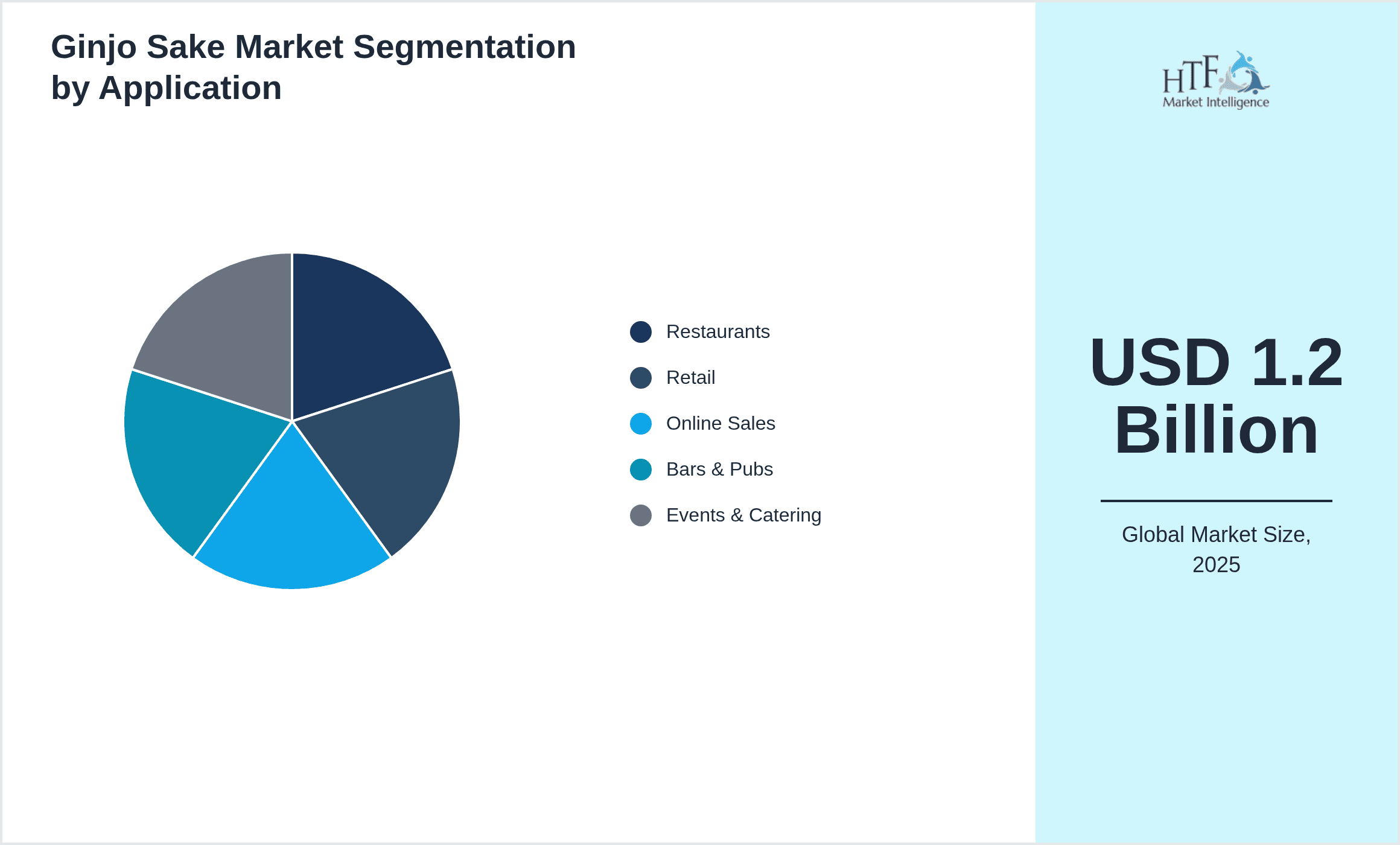
Market Segmentation
- •By Type
- ◦Junmai Ginjo
- ◦Non-Junmai Ginjo
- ◦Organic Ginjo
- ◦Premium Ginjo
- ◦Other Ginjo Variants
- •By Application
- ◦Restaurants
- ◦Retail
- ◦Online Sales
- ◦Bars & Pubs
- ◦Events & Catering
- •By Packaging Format
- ◦Bottled
- ◦Canned
- ◦Tetrapak
- ◦Bulk
- •By Distribution Channel
- ◦Specialty Liquor Stores
- ◦Supermarkets & Hypermarkets
- ◦E-commerce
- ◦Direct Sales
Growth Dynamics
Expanding global consumer interest in premium alcoholic beverages drives the Ginjo Sake market, supported by rising disposable incomes and growing appreciation for Japanese culinary culture. Increasing international tourism to Japan and the popularity of Japanese cuisine worldwide contribute to heightened demand. Recent collaborations between Ginjo Sake producers and luxury restaurants enhance brand visibility and consumer engagement. Additionally, innovations in organic and craft sake brewing respond to health-conscious consumer segments, further boosting market penetration. Events such as sake tasting festivals and cultural promotions significantly raise awareness, stimulating sales. Technological advancements in fermentation techniques improve product quality and consistency, which heightens consumer trust. The rise of e-commerce platforms facilitates convenient access to diverse Ginjo Sake varieties globally, expanding consumer base. Regulatory support in key markets for alcoholic beverage trade and quality certification also underpins sustainable growth in this sector.

Emerging Market Trends
Premiumization and health-conscious consumption patterns shape future trends in the Ginjo Sake market. Increasing adoption of organic Ginjo varieties aligns with global wellness movements and consumer demand for natural products. Cross-cultural fusion beverages incorporating sake elements gain popularity in international markets, broadening appeal beyond traditional consumers. Digital marketing through social media and influencer partnerships accelerates brand awareness and engagement, particularly among younger demographics. Sustainable packaging innovations address environmental concerns and regulatory mandates, enhancing brand reputation. Expansion of online retailing channels enables personalized consumer experiences and wider geographic reach. Additionally, integration of AI and IoT technologies in brewing optimizes quality control and production efficiency, setting new industry standards. These trends collectively indicate that Ginjo Sake will evolve dynamically, with innovation and consumer-centric approaches driving market expansion.

Market Opportunities
The rising global interest in Japanese culture and cuisine presents significant growth opportunities for Ginjo Sake producers, especially in emerging markets such as Latin America and the Middle East & Africa. Development of export-oriented strategies and localized marketing campaigns can capitalize on these expanding consumer bases. Innovation in organic and low-alcohol Ginjo variants caters to health-conscious and diverse demographic segments, unlocking new consumption occasions. Expansion of e-commerce and direct-to-consumer sales channels enhances accessibility and customer engagement. Collaborations with premium hospitality brands and event organizers offer avenues for experiential marketing and brand differentiation. Additionally, investment in sustainable and eco-friendly production practices aligns with global environmental priorities, improving corporate social responsibility profiles. These opportunities provide a roadmap for market players to diversify portfolios, strengthen global footprint, and achieve sustainable revenue growth.
Market Challenges
High production costs associated with the meticulous brewing process of Ginjo Sake create pricing challenges, limiting accessibility in price-sensitive markets. Strict regulatory frameworks governing alcoholic beverages across different countries impose compliance burdens, complicating international expansion and increasing operational costs. Distribution complexities, such as import tariffs and logistical constraints, hinder timely market penetration, especially in emerging regions. Consumer education remains a challenge due to the niche nature of Ginjo Sake, requiring sustained marketing investments to build awareness and acceptance. Competition from alternative premium alcoholic beverages, including craft beers and wines, intensifies market rivalry. Additionally, supply chain disruptions caused by global events affect raw material availability and production schedules. Recent reports indicate some producers facing difficulties in scaling organic Ginjo production due to certification complexities and limited organic rice supply. These challenges require strategic mitigation to sustain market momentum and profitability.
Regulatory Framework
Recent regulations in key markets have focused on alcohol content labeling, quality certification, and import-export compliance relevant to Ginjo Sake. For instance, revised labeling standards implemented between 2020 and 2025 require transparent disclosure of ingredients and production methods, enhancing consumer trust. Organic certification processes have become more stringent, compelling producers to adhere to rigorous agricultural and production standards. Trade agreements have facilitated tariff reductions but introduced compliance complexities concerning product classification and origin labeling. Additionally, countries have reinforced advertising guidelines to prevent misleading health claims, impacting marketing strategies. These evolving regulatory frameworks necessitate proactive compliance and continuous monitoring by Ginjo Sake producers and distributors to ensure market access and maintain brand integrity globally.
Recent Industry Insights
Recent market developments and strategic initiatives are continuously tracked through industry publications, company announcements, and regulatory filings. For the most current information, stakeholders are advised to monitor official corporate communications and recognized market intelligence platforms.
Recent Merger and Acquisition
Recent market developments and strategic initiatives are continuously tracked through industry publications, company announcements, and regulatory filings. For the most current information, stakeholders are advised to monitor official corporate communications and recognized market intelligence platforms.
Regional Outlook
The Asia-Pacific currently holds a significant share of the market, primarily due to several key factors: increasing consumption rates, a burgeoning population, and robust economic momentum. These elements collectively drive demand, positioning this region as a leader in the market. On the other hand, Latin America is rapidly emerging as the fastest-growing area within the industry. This remarkable growth can be attributed to swift infrastructure development, the expansion of various industrial sectors, and a marked increase in consumer demand. These dynamics make this region a crucial player in shaping future market growth.
In our report, we cover a comprehensive analysis of the following regions and countries:
- North America
- LATAM
- West Europe
- Central & Eastern Europe
- Northern Europe
- Southern Europe
- East Asia
- Southeast Asia
- South Asia
- Central Asia
- Oceania
- MEA
| Feature | Details |
|---|---|
| Base Year Market Size | USD 1.2 Billion |
| Forecast Year Market Size | USD 2.7 Billion |
| CAGR | 9.5% |
| Forecast Period | 2026 to 2033 |
| YoY Growth | 9.1% |
| Regions Covered | North America, LATAM, West Europe, Central & Eastern Europe, Northern Europe, Southern Europe, East Asia, Southeast Asia, South Asia, Central Asia, Oceania, MEA |
| Key Companies | Asahi Breweries (Japan), Kirin Holdings Company (Japan), Suntory Holdings (Japan), Takara Holdings (Japan), Ozeki Corporation (Japan), Hakutsuru Sake Brewing Company (Japan), Gekkeikan Sake Company (Japan), Dassai (Asahi Shuzo) (Japan), Tedorigawa (Yoshida Brewery) (Japan), Born Sake (Japan), Sawanotsuru (Japan), Urakasumi (Japan), Kokuryu Sake Brewing (Japan), Masumi Sake Company (Japan), Nanbu Bijin (Japan), Shirakabegura (Japan), Miyasaka Brewing Company (Japan), Hakkaisan Sake Brewing (Japan), Kikusui Sake Company (Japan), Tatsuriki Sake Brewery (Japan) |
Global Ginjo Sake Market - Outlook 2025-2034 - Table of Contents
Frequently Asked Questions (FAQ):
The Compact Track Loaders market is expected to see value worth 5.3 Billion in 2025.
North America currently leads the market with approximately 45% market share, followed by Europe at 28% and Asia-Pacific at 22%. The remaining regions account for 5% of the global market.
Key growth drivers include increasing construction activities, rising demand for versatile equipment in agriculture, technological advancements in track loader design, and growing preference for compact equipment in urban construction projects.