
Global Commercial Vehicle Run-flat Tire Inserts Market Size, Growth & Revenue 2025-2034
Global Commercial Vehicle Run-flat Tire Inserts Market is segmented by Type (Foam Inserts, Rubber Inserts, Beadlock Inserts, Composite Inserts, Others), Application (Long-Haul Trucks, Delivery Vehicles, Construction Vehicles, Military Vehicles, Mining Vehicles), Installation Method (Internal Inserts, External Inserts), Distribution Channel (OEM, Aftermarket), and Geography (North America, LATAM, West Europe, Central & Eastern Europe, Northern Europe, Southern Europe, East Asia, Southeast Asia, South Asia, Central Asia, Oceania, MEA)
Pricing
Report Overview
Executive Summary
- •The Global Commercial Vehicle Run-flat Tire Inserts market includes products designed to maintain tire functionality after puncture or air loss, crucial for various commercial vehicles including long-haul trucks, delivery vehicles, construction machinery, military and mining vehicles. These inserts, made from advanced materials such as foam, rubber, beadlock, and composites, enhance vehicle safety, reduce downtime, and help maintain operational continuity in diverse terrains and challenging environments. The market is driven by the increasing demand for reliable transportation solutions, particularly in logistics and construction sectors, where vehicle uptime significantly impacts productivity and cost efficiency. Innovations in materials and designs contribute to improved performance and durability of run-flat inserts. The market operates globally with key regional players in North America, Europe, Asia-Pacific, Latin America, and the Middle East & Africa, addressing the growing need for advanced tire solutions. The primary use cases focus on long-distance freight transport, urban delivery services, off-road construction, military mobility, and mining operations, where tire reliability is critical.
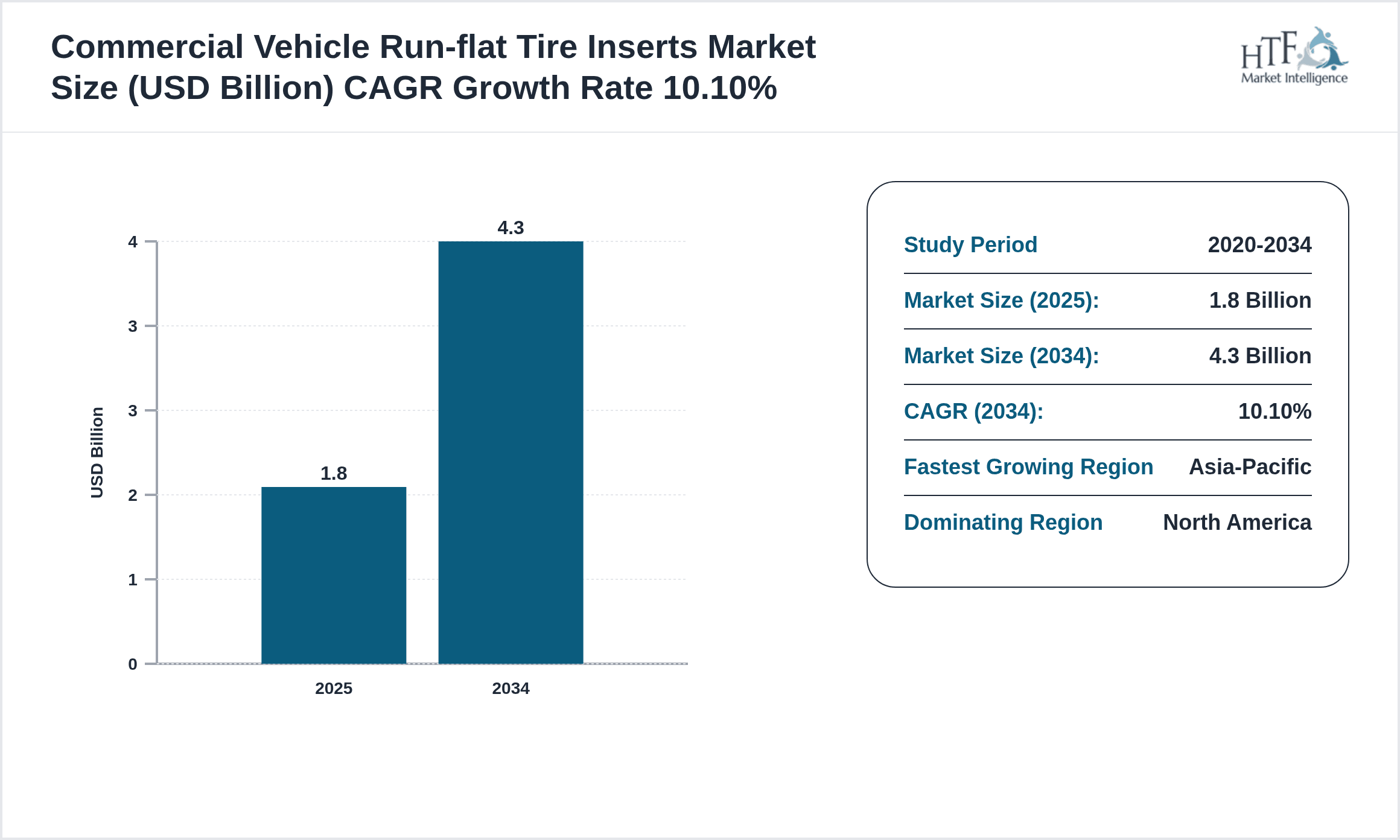
- •The market is estimated at USD 1.8 Billion in 2025 and is forecasted to reach USD 4.3 Billion by 2034, reflecting a CAGR of 10.1%. North America dominates the market in size due to advanced infrastructure and widespread adoption of commercial run-flat technologies, while Asia-Pacific exhibits the fastest growth driven by expanding commercial vehicle fleets and infrastructure development. Foam inserts lead the product segment by market share, favored for their lightweight and resilience, whereas composite inserts show the highest growth potential due to superior durability and performance. Long-haul trucks remain the dominant application owing to their critical need for uninterrupted mobility. The market growth is supported by ongoing product innovations, strategic industry collaborations, and increasing regulatory emphasis on vehicle safety and environmental standards.
- •The Commercial Vehicle Run-flat Tire Inserts market holds strategic importance for automotive manufacturers, fleet operators, and logistics providers by enhancing vehicle reliability and reducing total cost of ownership. It supports uninterrupted supply chains and construction operations by mitigating downtime risks associated with tire punctures. The market’s innovation in materials and designs aligns with broader trends in vehicle safety enhancement and sustainability. Stakeholders benefit from advancements that enable extended tire life, improved fuel efficiency, and compliance with stringent safety regulations. Investment in research and development further propels market competitiveness, while expansion into emerging economies offers substantial growth avenues. The market’s role in critical sectors such as defense and mining underlines its broad industrial relevance and long-term growth prospects.
Competitive Landscape
The competitive environment for commercial vehicle run-flat tire inserts is characterized by intense innovation, strategic partnerships, and global expansion efforts. Leading companies prioritize research and development to introduce advanced materials and designs that improve durability and safety under extreme conditions. Adoption of composite and hybrid materials is a key trend, driven by demand for higher performance and weight reduction. Companies engage in collaborations with tire manufacturers and vehicle OEMs to integrate run-flat solutions seamlessly into new vehicle models. Expansion into emerging markets through regional subsidiaries and partnerships strengthens market presence. Competitive strategies include portfolio diversification, technological upgrades, and after-sales service enhancement to build customer loyalty. Strategic acquisitions and mergers are employed to consolidate market share and access new technologies. Pricing strategies focus on balancing cost-effectiveness with performance benefits to cater to diverse customer segments. Market players also emphasize compliance with evolving safety and environmental regulations to maintain competitive advantage and foster sustainable growth.
Key Participants in Commercial Vehicle Run-flat Tire Inserts Market
- •Michelin (France)
- •Bridgestone Corporation (Japan)
- •Continental AG (Germany)
- •Goodyear Tire & Rubber Company (United States)
- •Pirelli & C. S.p.A. (Italy)
- •Trelleborg AB (Sweden)
- •Giti Tire (Singapore)
- •Nokian Tyres Plc (Finland)
- •Apollo Tyres Ltd (India)
- •Hankook Tire & Technology (South Korea)
- •Maxam Tire International Limited (Hong Kong)
- •ZC Rubber (China)
- •Double Coin Holdings Ltd. (China)
- •Carlisle Companies Incorporated (United States)
- •Kenda Rubber Industrial Company (Taiwan)
- •Toyo Tire Corporation (Japan)
- •Cooper Tire & Rubber Company (United States)
- •Sumitomo Rubber Industries Ltd. (Japan)
- •Linglong Tire (China)
- •Triangle Group (China)
Market Breakdown
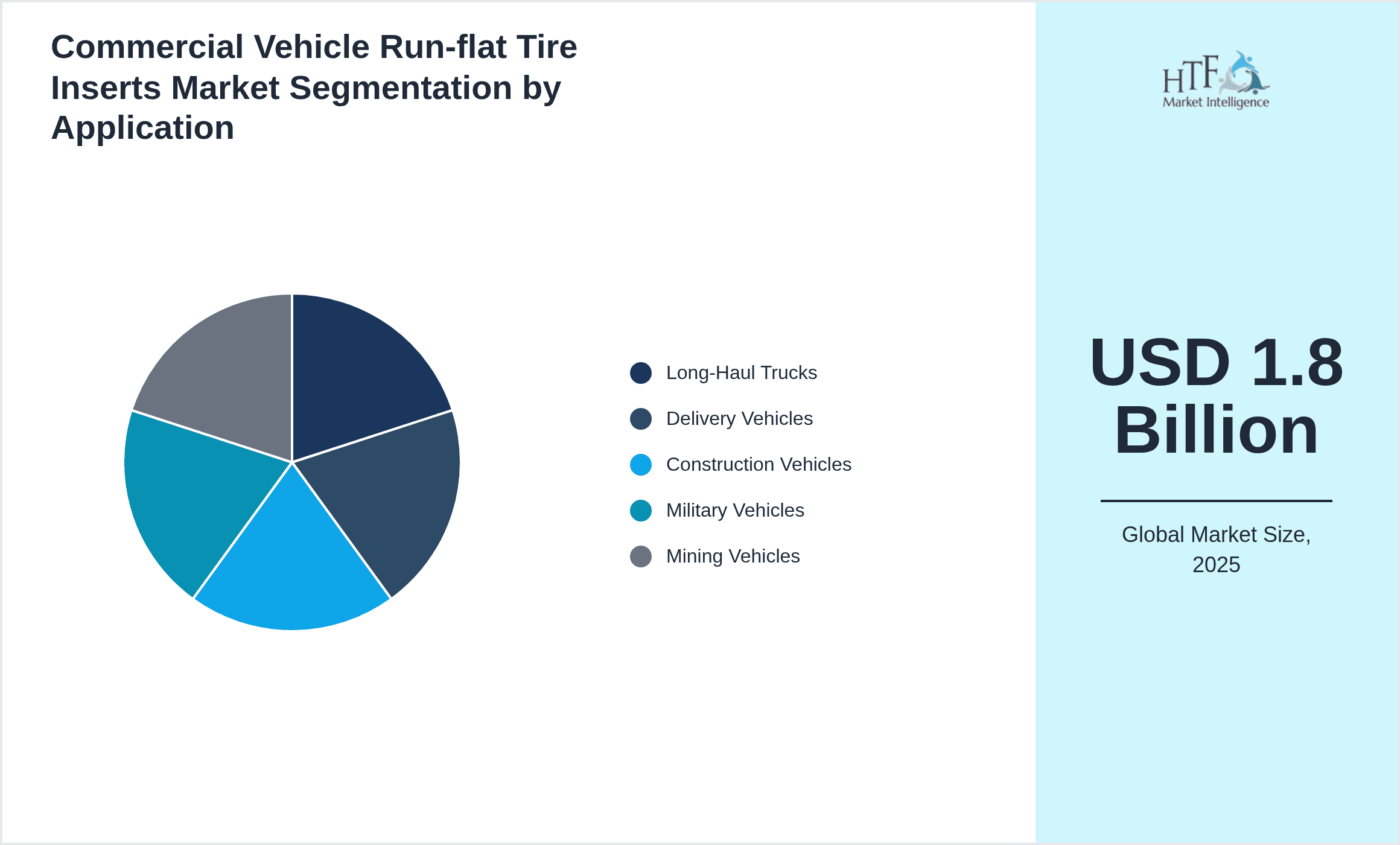
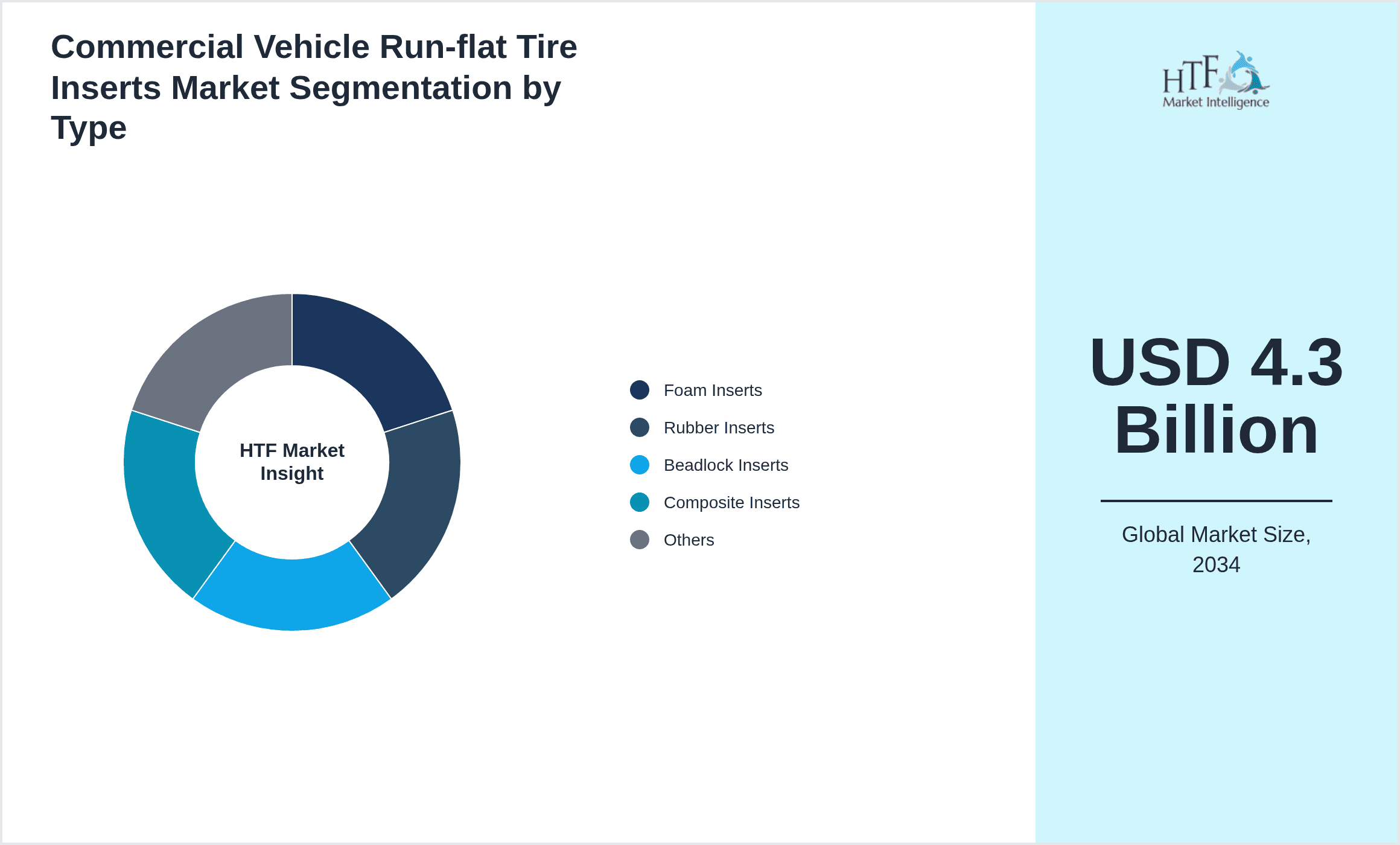
- •By Type
- ◦Foam Inserts
- ◦Rubber Inserts
- ◦Beadlock Inserts
- ◦Composite Inserts
- ◦Others
- •By Application
- ◦Long-Haul Trucks
- ◦Delivery Vehicles
- ◦Construction Vehicles
- ◦Military Vehicles
- ◦Mining Vehicles
- •By Installation Method
- ◦Internal Inserts
- ◦External Inserts
- •By Distribution Channel
- ◦OEM
- ◦Aftermarket
Growth Dynamics
The global demand for commercial vehicle run-flat tire inserts is propelled by the increasing need to reduce vehicle downtime and enhance safety across transportation and logistics sectors. The expanding e-commerce industry and last-mile delivery services amplify the requirement for reliable delivery vehicles equipped with run-flat tires, reducing delays and operational disruptions. Advancements in material science, such as development of lightweight composite inserts, improve tire performance and fuel efficiency, directly benefiting fleet operators. Regulatory mandates focusing on road safety and vehicle emission reductions encourage adoption of advanced tire technologies. Fleet operators in mining and construction industries prioritize run-flat inserts to ensure mobility in rugged terrains and harsh conditions. Additionally, growing military modernization programs globally drive demand for durable run-flat solutions to maintain operational readiness in challenging environments. Recent product launches incorporating enhanced cushioning and heat resistance demonstrate industry commitment to innovation, further fueling market expansion.
Market Trends
Emerging trends in the commercial vehicle run-flat tire inserts market include the integration of smart sensor technologies to monitor tire pressure and insert integrity in real-time, enhancing predictive maintenance capabilities. The adoption of eco-friendly and sustainable materials in insert manufacturing aligns with the automotive industry's broader shift towards environmental responsibility. Increasing collaborations between tire insert manufacturers and commercial vehicle OEMs facilitate development of tailor-made solutions optimized for specific vehicle types and operational conditions. The Asia-Pacific region leads in adopting innovative run-flat technologies due to rapid industrialization and increasing fleet sizes. Digitalization of fleet management systems enhances the utility of run-flat inserts by enabling data-driven decision-making for maintenance and replacement schedules. Companies are investing in lightweight composite inserts that reduce overall vehicle weight, contributing to improved fuel economy and reduced emissions. These trends reflect the market's focus on performance enhancement, sustainability, and smart technology adoption.
Market Opportunities
Significant growth opportunities exist in emerging markets where expanding construction, mining, and logistics sectors drive demand for robust commercial vehicle tire solutions. Increasing investments in infrastructure development across Asia-Pacific, Latin America, and the Middle East create a favorable environment for run-flat tire insert adoption. Innovations in composite materials offer avenues to develop lighter and more durable inserts that enhance vehicle efficiency and safety, appealing to fleet operators focused on cost reduction. The rise of autonomous and electric commercial vehicles opens new application segments for customized run-flat inserts designed to meet unique performance requirements. Strategic partnerships and joint ventures between tire manufacturers and technology firms enable accelerated product development and market penetration. Moreover, aftermarket channels present growth potential by catering to existing vehicle fleets seeking upgrades to run-flat capabilities. Regulatory emphasis on vehicle safety and environmental compliance further incentivizes adoption, creating a conducive market landscape for sustained expansion.
Market Challenges
The high initial cost of run-flat tire inserts remains a significant barrier to widespread adoption, especially among small and medium commercial fleet operators prioritizing cost efficiency. Technical challenges related to ensuring insert compatibility across diverse tire and vehicle models complicate integration efforts and limit standardization. Material durability under extreme operational conditions poses ongoing development challenges, with some inserts experiencing premature wear leading to replacement expenses. Supply chain disruptions, exacerbated by geopolitical tensions and raw material scarcity, impact production timelines and cost structures. Regulatory variations across regions create compliance complexities for manufacturers operating globally. Limited awareness and technical expertise among end-users hinder market penetration in developing economies. Recent recalls and product failures reported by certain manufacturers highlight quality assurance issues, undermining customer confidence. These challenges necessitate continuous innovation, cost optimization, and robust quality control to sustain market growth.
Regulatory Framework
In the past five years, several regions have introduced regulations enhancing safety standards for commercial vehicle tires, including mandatory performance criteria for run-flat capabilities. North American and European authorities have enforced stringent testing and certification protocols for tire inserts to ensure durability and safety under emergency conditions. Environmental regulations encourage the use of sustainable and recyclable materials in tire manufacturing, influencing product development strategies. Compliance with emission standards indirectly affects run-flat insert design by prioritizing lightweight materials to improve fuel efficiency. Regional mandates require detailed labeling and consumer information regarding tire performance features, including run-flat technology. These regulations collectively drive the market towards higher quality, safety, and sustainability benchmarks, compelling manufacturers to align products with global compliance requirements.
Market Intelligence
Recent market developments and strategic initiatives are continuously tracked through industry publications, company announcements, and regulatory filings. For the most current information, stakeholders are advised to monitor official corporate communications and recognized market intelligence platforms.
Regional Outlook
The North America currently holds a significant share of the market, primarily due to several key factors: increasing consumption rates, a burgeoning population, and robust economic momentum. These elements collectively drive demand, positioning this region as a leader in the market. On the other hand, Asia-Pacific is rapidly emerging as the fastest-growing area within the industry. This remarkable growth can be attributed to swift infrastructure development, the expansion of various industrial sectors, and a marked increase in consumer demand. These dynamics make this region a crucial player in shaping future market growth.
In our report, we cover a comprehensive analysis of the following regions and countries:
- North America
- LATAM
- West Europe
- Central & Eastern Europe
- Northern Europe
- Southern Europe
- East Asia
- Southeast Asia
- South Asia
- Central Asia
- Oceania
- MEA
| Feature | Details |
|---|---|
| Base Year Market Size | USD 1.8 Billion |
| Forecast Year Market Size | USD 4.3 Billion |
| CAGR | 10.1% |
| Forecast Period | 2026 to 2033 |
| YoY Growth | 10.1% |
| Scope of Report | Market is segmented by Type (Foam Inserts, Rubber Inserts, Beadlock Inserts, Composite Inserts, Others), Application (Long-Haul Trucks, Delivery Vehicles, Construction Vehicles, Military Vehicles, Mining Vehicles), Installation Method (Internal Inserts, External Inserts), Distribution Channel (OEM, Aftermarket) |
| Regions Covered | North America, LATAM, West Europe, Central & Eastern Europe, Northern Europe, Southern Europe, East Asia, Southeast Asia, South Asia, Central Asia, Oceania, MEA |
| Key Companies | Significant growth opportunities exist in emerging markets where expanding construction, mining, and logistics sectors drive demand for robust commercial vehicle tire solutions. Increasing investments in infrastructure development across Asia-Pacific, Latin America, and the Middle East create a favorable environment for run-flat tire insert adoption. Innovations in composite materials offer avenues to develop lighter and more durable inserts that enhance vehicle efficiency and safety, appealing to fleet operators focused on cost reduction. The rise of autonomous and electric commercial vehicles opens new application segments for customized run-flat inserts designed to meet unique performance requirements. Strategic partnerships and joint ventures between tire manufacturers and technology firms enable accelerated product development and market penetration. Moreover, aftermarket channels present growth potential by catering to existing vehicle fleets seeking upgrades to run-flat capabilities. Regulatory emphasis on vehicle safety and environmental compliance further incentivizes adoption, creating a conducive market landscape for sustained expansion. |
Global Commercial Vehicle Run-flat Tire Inserts Market Size, Growth & Revenue 2025-2034 - Table of Contents
Frequently Asked Questions (FAQ):
The Compact Track Loaders market is expected to see value worth 5.3 Billion in 2025.
North America currently leads the market with approximately 45% market share, followed by Europe at 28% and Asia-Pacific at 22%. The remaining regions account for 5% of the global market.
Key growth drivers include increasing construction activities, rising demand for versatile equipment in agriculture, technological advancements in track loader design, and growing preference for compact equipment in urban construction projects.