
Southeast Asia Biodiesel Emulsification Machines Market Scope & Changing Dynamics 2024-2034
Southeast Asia Biodiesel Emulsification Machines Market is segmented by Application (Transportation Fuel, Industrial Heating, Power Generation, Agricultural Use, Marine Fuel), Type (High-Shear Emulsifiers, Ultrasonic Emulsifiers, Rotor-Stator Emulsifiers, Homogenizers, Static Mixers), and Geography (Singapore, Malaysia, Thailand, Indonesia, Vietnam, Philippines, Others)
Pricing
Report Overview
Executive Summary
- •The Southeast Asia Biodiesel Emulsification Machines market represents a critical segment of the region's renewable energy sector, focusing on equipment that facilitates the emulsification of biodiesel fuels to enhance performance and environmental compliance. This market covers a variety of emulsification technologies including high-shear mixers, ultrasonic devices, rotor-stator systems, homogenizers, and static mixers, each tailored to specific operational requirements. The machines enable the blending of biodiesel with additives, improving fuel stability, combustion efficiency, and emission profiles across key end-use sectors such as transportation, industrial heating, power generation, agriculture, and marine applications. The industry scope extends from equipment manufacturing to integration services, addressing the growing emphasis on sustainable fuel solutions in Southeast Asia. Increasing governmental mandates promoting biofuel adoption, coupled with rising investments in energy infrastructure, drive market expansion. The market also faces challenges such as technical complexities in emulsification processes and feedstock variability. The strategic importance of these machines lies in their ability to support Southeast Asia's transition toward cleaner fuel alternatives and energy security objectives, serving as a pivotal technology in regional decarbonization efforts.
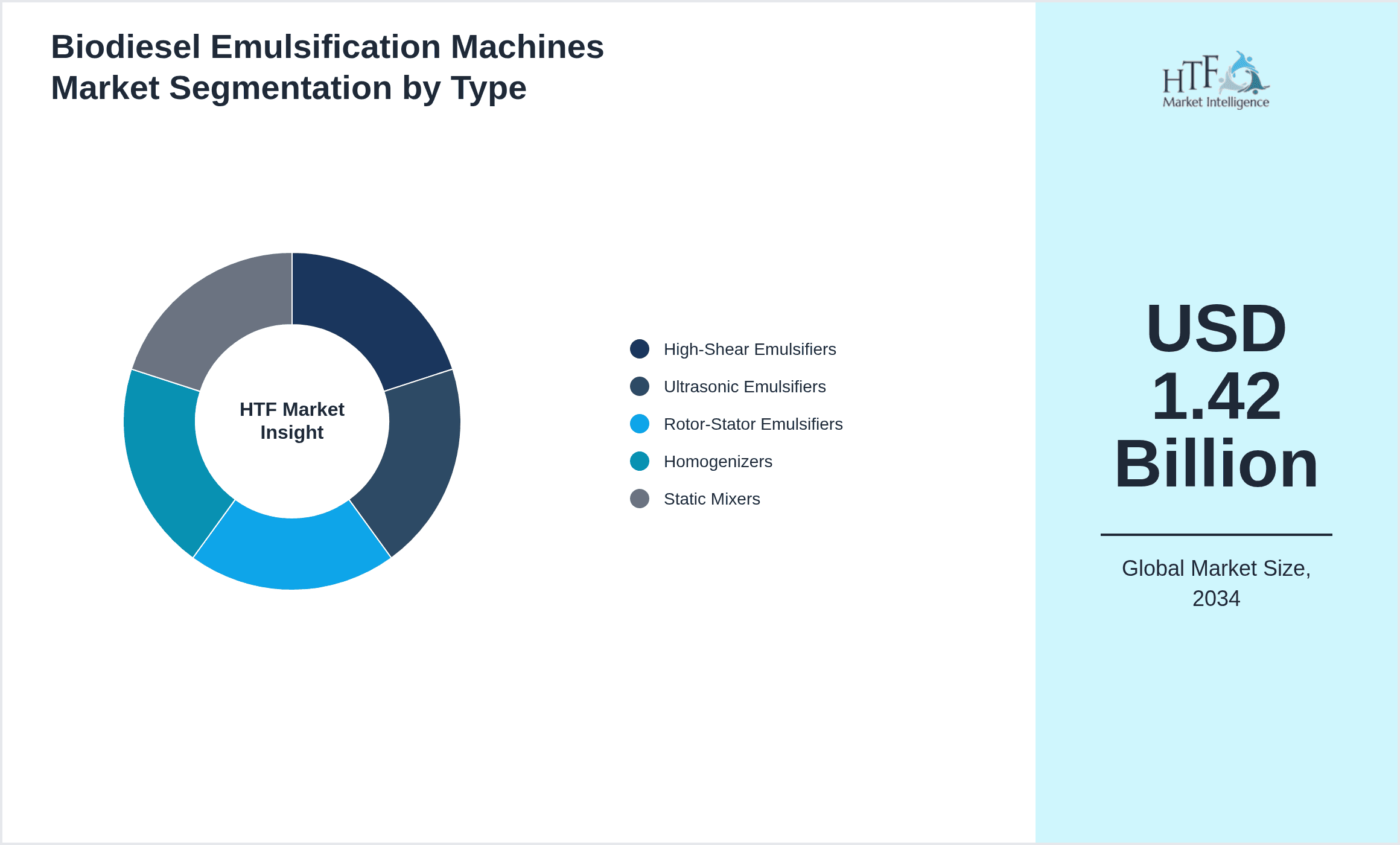
- •Key market highlights include a forecasted CAGR of 11.5% between 2024 and 2034, with the market size projected to increase from USD 0.48 Billion in 2024 to USD 1.42 Billion by 2034. High-shear emulsifiers currently dominate the product segment due to their wide applicability and proven efficiency, while ultrasonic emulsifiers are the fastest growing owing to advancements in precision emulsification technology. Application-wise, transportation fuel emulsification holds the largest share, driven by stringent emission regulations and biodiesel blending mandates in countries like Indonesia and Malaysia. Vietnam emerges as the fastest growing regional market, reflecting significant investments in biofuel infrastructure and supportive policy frameworks. The market's growth trajectory is supported by increasing industrial adoption, rising environmental concerns, and technological innovation in emulsification equipment. Year-over-year growth stands at approximately 11%, reflecting steady expansion aligned with regional energy transition goals.
- •The value proposition of biodiesel emulsification machines in Southeast Asia is underscored by their ability to enhance fuel quality and compliance with regional emissions standards, thereby reducing environmental impact and operational costs. These machines offer strategic advantages to fuel producers, transport companies, and industrial end-users by improving fuel combustion characteristics and enabling the use of lower-grade feedstocks without compromising engine performance. Additionally, the equipment supports sustainability initiatives and government biofuel mandates, positioning manufacturers and service providers as essential partners in the region’s renewable energy ecosystem. The market’s strategic importance extends to fostering energy independence and meeting global climate commitments, making it attractive for investors and technology developers focused on green fuel technologies.

Competitive Landscape
The competitive landscape in the Southeast Asia Biodiesel Emulsification Machines market is defined by an intense rivalry among global and regional equipment manufacturers, technology innovators, and service providers striving for market leadership through product differentiation and technological advancement. Companies emphasize R&D investments to develop more efficient, scalable, and customizable emulsification systems that cater to the diverse feedstock and application needs prevalent in Southeast Asia. Strategic partnerships and collaborations with biodiesel producers and government agencies are common to gain market access and accelerate adoption. Pricing strategies vary, balancing cost competitiveness with quality and technological sophistication. Market entry barriers include high capital requirements, technical expertise, and compliance with regional standards. Regional players focus on localized solutions and after-sales services to enhance customer retention. The future competitive trend is expected to shift towards integrated systems combining emulsification with real-time monitoring and automation, driven by Industry 4.0 influences and sustainability demands.
Companies Shaping the Biodiesel Emulsification Machines Market
- •GEA Group AG (Germany)
- •SPX FLOW, Inc. (United States)
- •IKA Works, Inc. (Germany)
- •Silverson Machines (United Kingdom)
- •Alfa Laval AB (Sweden)
- •BEE International (United States)
- •Hielscher Ultrasonics GmbH (Germany)
- •Admix, Inc. (United States)
- •Charles Ross & Son Company (United States)
- •IKA India Private Limited (India)
- •Mason Technology Co., Ltd. (China)
- •NINGBO XINJIA Machinery Co., Ltd. (China)
- •Ystral GmbH (Germany)
- •EuroLab Company (France)
- •Kady International (United Kingdom)
- •Mouvex (France)
- •Vortex Mixing Technology (United States)
- •IKA Asia Pacific (Singapore)
- •Inno-Tech Manufacturing (Malaysia)
- •Techno Emulsions Pvt Ltd (India)
- •Shakti Engineering Works (India)
- •Shanghai Longzhuo Chemical Machinery Co., Ltd. (China)
- •Andritz AG (Austria)
- •Sundyne (United States)
- •Phoenix Equipment (Singapore)

Biodiesel Emulsification Machines Market Segmentation Overview
- •By Type
- ◦High-Shear Emulsifiers
- ◦Ultrasonic Emulsifiers
- ◦Rotor-Stator Emulsifiers
- ◦Homogenizers
- ◦Static Mixers
- •By Application
- ◦Transportation Fuel
- ◦Industrial Heating
- ◦Power Generation
- ◦Agricultural Use
- ◦Marine Fuel
- •By End User
- ◦Fuel Blending Plants
- ◦Power Plants
- ◦Agricultural Enterprises
- ◦Marine Transport Operators
- •By Distribution Channel
- ◦Direct Sales
- ◦Distributors & Dealers
- ◦Online Sales Platforms
Growth Dynamics
- •The Southeast Asia Biodiesel Emulsification Machines market is propelled by rising governmental mandates for renewable fuel adoption, especially in Indonesia and Malaysia. These regulations require biodiesel blending in fuels, increasing demand for emulsification equipment that ensures fuel stability and performance. Additionally, growing awareness of environmental concerns fuels adoption of emulsifiers that reduce emissions and improve combustion. Industrial growth in transportation and power sectors further accelerates market expansion. Technological advancements in emulsification processes, such as ultrasonic and rotor-stator methods, enhance efficiency and scalability, attracting investments. Moreover, rising feedstock availability from palm oil and other bio-resources strengthens the market foundation. Increasing energy security concerns and sustainability initiatives by ASEAN nations also underpin market growth. Collectively, these factors create a favorable environment for equipment manufacturers and service providers to expand their regional footprint and innovate product offerings.
- •Technological innovation is a key growth driver, with companies focusing on developing advanced emulsification machines that offer higher precision, energy efficiency, and integration capabilities with automated systems. Ultrasonic emulsifiers are gaining traction due to their ability to produce uniform and stable emulsions at lower energy costs. Furthermore, digitalization trends enable real-time monitoring and control of emulsification parameters, improving operational reliability. The increasing adoption of biofuels in marine and agricultural sectors diversifies application areas, creating new demand streams. Strategic partnerships between equipment manufacturers and biofuel producers also drive market penetration. Additionally, financial incentives and grants from governments encourage investments in green technologies. Rising consumer preference for eco-friendly fuels and corporate sustainability commitments by end-users contribute to steady market growth.
- •Market growth faces restraints from technical complexities in emulsification processes, which require specialized knowledge and maintenance. Variability in biodiesel feedstock quality across Southeast Asia can affect emulsification consistency, leading to operational challenges. High initial capital expenditure for advanced emulsification machines limits adoption among smaller fuel producers. Additionally, the lack of standardized regulations across ASEAN countries creates market fragmentation and compliance difficulties. Infrastructure limitations in rural and remote areas hinder equipment deployment. Competitive pressures from alternative fuel technologies, such as electric vehicles, pose long-term challenges. Furthermore, supply chain disruptions and fluctuating raw material prices impact manufacturing and pricing stability. These factors collectively restrain market expansion and necessitate strategic risk management by stakeholders.
- •Opportunities in the Southeast Asia Biodiesel Emulsification Machines market arise from expanding biofuel mandates, particularly in emerging markets like Vietnam and the Philippines, where infrastructure development is accelerating. The growing marine fuel sector’s shift toward cleaner energy presents significant demand for emulsification systems tailored to maritime applications. Innovation in modular and compact emulsification machines suitable for small-to-medium scale producers opens new market segments. Moreover, increasing cross-border collaborations and joint ventures enhance technology transfer and market access. Government subsidies and international climate finance initiatives provide funding opportunities for equipment upgrades and capacity expansion. Development of hybrid emulsification technologies combining ultrasonic and rotor-stator methods offers potential for performance enhancement. Finally, rising environmental awareness among consumers and corporates is expected to drive demand for biodiesel emulsifiers as part of sustainable fuel solutions.
- •Challenges include navigating diverse regulatory frameworks across Southeast Asia, which complicates market entry and compliance. The technical skill gap in operating and maintaining complex emulsification machinery can limit adoption, especially in less developed regions. Price sensitivity among end-users impacts demand for premium emulsification technologies. Additionally, competition from established fossil fuel infrastructure slows biodiesel uptake. Limited availability of consistent quality feedstock affects emulsification efficiency and product reliability. Logistical barriers in distributing heavy and specialized equipment across archipelagic geographies increase costs. Furthermore, intellectual property protection concerns can hinder innovation sharing. Addressing these challenges requires coordinated policy efforts, capacity building, and development of cost-effective technologies suited to regional conditions.
Market Trends
- •The Southeast Asia Biodiesel Emulsification Machines market is witnessing a trend toward integration of digital monitoring and automation technologies that optimize emulsification parameters in real-time, thus enhancing product quality and operational efficiency. Industry players are increasingly adopting ultrasonic emulsification due to its superior emulsion stability and lower energy consumption. Green technology adoption is accelerating with a focus on reducing carbon footprints and meeting stringent emission norms. Collaborative innovations between emulsifier manufacturers and biofuel companies are creating customized solutions tailored to regional feedstock characteristics. The rise of modular and scalable emulsification units enables flexible deployment across diverse production scales, from small artisanal to large industrial plants. Additionally, renewable energy policies in ASEAN countries are fostering increased investments and market expansion. Sustainability certifications and eco-labeling are also influencing purchasing decisions and market positioning.
- •Emerging trends include the development of hybrid emulsification technologies combining ultrasonic and rotor-stator mechanisms to achieve enhanced emulsion uniformity and efficiency. Companies are investing in R&D to reduce maintenance requirements and extend equipment lifespan. There is a growing emphasis on circular economy principles by integrating waste feedstocks into biodiesel production, necessitating emulsification machines capable of handling variable input qualities. Strategic alliances and mergers are reshaping market structures, promoting technology sharing and market access. The rise of e-commerce platforms for equipment sales and service bookings is transforming distribution channels, improving accessibility, and customer engagement. Moreover, environmental, social, and governance (ESG) criteria are increasingly embedded into corporate strategies, influencing product development and marketing in the emulsification machinery sector.
- •Strategic trend shifts include the adoption of IoT-enabled emulsification machines that provide predictive maintenance and remote diagnostics, reducing downtime and operational costs. Some manufacturers are exploring integration of emulsification units with larger biodiesel production lines for seamless process automation. Market players are leveraging big data analytics to optimize emulsification processes based on feedstock variability and end-use requirements. There is also a rising focus on lightweight and portable emulsifiers to serve decentralized biodiesel production models prevalent in rural Southeast Asia. Government-led pilot projects and demonstration plants are supporting technology validation and market confidence. Additionally, companies are increasingly marketing their emulsification solutions as part of comprehensive biofuel sustainability packages, enhancing customer value propositions.
- •The trend toward digitalization extends to supply chain management, where blockchain technology is being trialed for traceability of biofuel and emulsification equipment provenance. Sustainability-driven innovation is prompting development of emulsifiers with reduced energy consumption and environmentally friendly materials. Partnerships between emulsification machine manufacturers and academic institutions are fostering knowledge exchange and advanced product development. The growing importance of marine and agricultural fuel applications is driving product diversification and customization. Companies are also focusing on after-sales service excellence, offering training, maintenance contracts, and spare parts availability to strengthen customer relationships. Lastly, the COVID-19 pandemic has accelerated adoption of remote support technologies, reshaping service delivery models.
- •Consumer preference trends show increasing demand for biodiesel blends with higher emulsification quality to ensure engine performance and emission compliance. The market is seeing a shift from conventional static mixers to more advanced, energy-efficient emulsifiers. Environmental certification requirements are influencing product design and marketing strategies. Increasing awareness about fuel quality benefits among end-users is driving investments in emulsification technology upgrades. There is also a noticeable trend of regional players expanding product portfolios to include complementary equipment and services, fostering integrated solutions. Moreover, the rise of green finance and sustainability-linked loans supports investments in state-of-the-art emulsification machinery.

Market Opportunities
- •Expanding biofuel mandates in emerging Southeast Asian economies such as Vietnam, the Philippines, and Cambodia create substantial growth opportunities for emulsification machine manufacturers. These countries are developing biofuel infrastructure and require efficient emulsification technology to meet blending and emission standards. Additionally, the marine fuel segment’s shift to biodiesel emulsions opens new application channels for tailored emulsifiers. The emergence of decentralized biodiesel production models in rural areas presents opportunities for compact, modular emulsification units. Cross-border collaborations and technology transfer initiatives between ASEAN members and international firms facilitate market penetration and innovation. Furthermore, government subsidies and climate finance programs offer financial incentives to upgrade emulsification equipment. The growing emphasis on lifecycle emissions reduction in supply chains encourages adoption of advanced emulsification technologies, presenting avenues for product differentiation and premium pricing.
- •There is significant opportunity in developing specialized emulsification machines designed to handle diverse and non-traditional feedstocks such as used cooking oil and agricultural residues, which are abundant in Southeast Asia. Innovations in hybrid emulsification technologies combining ultrasonic and rotor-stator principles can meet evolving customer needs for efficiency and stability. Expanding service offerings including digital monitoring, predictive maintenance, and training services enhances customer loyalty and recurring revenue streams. The rise of e-commerce and digital platforms enables broader market reach and streamlined sales processes. Strategic acquisitions and joint ventures with local manufacturers allow international players to increase regional foothold. Moreover, growing environmental consciousness among end-users drives demand for certified eco-friendly emulsification solutions. Lastly, integration of emulsification machines with renewable energy-powered systems presents a novel growth avenue aligned with sustainability goals.
- •Investment in research focused on lowering emulsification energy consumption and improving machine durability can unlock cost benefits for end-users, expanding the market base. There is potential in developing customized emulsifiers for niche applications such as agricultural machinery fuel and industrial heating systems, broadening product portfolios. ASEAN governments’ increasing focus on energy security and climate commitments encourages public-private partnerships and pilot projects that stimulate market demand. The growing trend of corporate sustainability reporting and green branding incentivizes companies to adopt advanced emulsification technology. Expansion into adjacent markets such as bio-lubricants and bio-solvents emulsification offers diversification opportunities. Additionally, leveraging Industry 4.0 technologies for enhanced process control and data analytics creates competitive differentiation. Lastly, growing demand for retrofit solutions to upgrade existing biodiesel plants drives aftermarket opportunity.
- •Geographical expansion into underpenetrated Southeast Asian countries with emerging biofuel policies, such as Laos and Myanmar, presents untapped market potential. The development of regional standards harmonizing biodiesel quality and emulsification requirements would simplify compliance and stimulate equipment demand. Collaboration with financial institutions to provide leasing or financing options for emulsification machinery can lower adoption barriers for SMEs. The rise of biofuel blending mandates in the marine shipping industry in ASEAN waters creates specialized demand. Technological advancements enabling multi-feedstock emulsification machines broaden applicability and market reach. Participation in government-led renewable energy projects and demonstration plants facilitates product validation and market credibility. Finally, growing public awareness campaigns on air quality and health impacts bolster demand for cleaner fuel technologies including biodiesel emulsification.
- •The increasing integration of emulsification machines with renewable energy-powered systems, such as solar or biomass energy, enables off-grid biodiesel production, enhancing appeal in remote locations. Modular and portable emulsification units designed for small-scale producers enable market penetration in decentralized production scenarios. Developing service ecosystems offering predictive maintenance, remote diagnostics, and operator training strengthens customer relationships and brand loyalty. The growing importance of ESG compliance among investors and corporations drives demand for state-of-the-art emulsification technology as part of sustainability strategies. Emerging trends in biofuel quality certification and traceability create opportunities for emulsification machine providers to offer value-added monitoring solutions. Strategic acquisitions of local players by international manufacturers enhance market presence and technology access. Lastly, innovation in energy-efficient emulsification processes aligns with global climate goals, attracting funding and partnerships.
Market Challenges
- •The Southeast Asia Biodiesel Emulsification Machines market faces challenges stemming from the fragmented regulatory landscape across ASEAN countries, complicating compliance and standardization. Technical complexities in operating and maintaining advanced emulsification equipment limit adoption among smaller or less technologically adept producers. The high upfront capital investment required for sophisticated emulsification machines constrains market penetration in price-sensitive segments. Variability in feedstock quality, especially with non-conventional inputs, causes emulsification inconsistencies affecting fuel performance. Infrastructure inadequacies, particularly in archipelagic and rural areas, restrict equipment distribution and after-sales support. Competition from alternative renewable energy sources and fossil fuels tempers market enthusiasm. Furthermore, supply chain disruptions, fluctuating raw materials costs, and intellectual property concerns add operational risks. Addressing these issues requires coordinated industry collaboration, capacity building, and innovation tailored to regional conditions.
- •A significant challenge is the lack of skilled workforce to manage emulsification technology effectively, resulting in suboptimal machine utilization and maintenance. Diverse climatic and environmental conditions across Southeast Asia impact emulsification process stability and equipment durability. Price pressures from low-cost local manufacturers and imports challenge profitability for premium technology providers. Market education is needed to increase awareness among end-users about the benefits of advanced emulsification equipment. Additionally, logistical complexity in servicing remote islands and rural markets increases operational costs. Regulatory uncertainties and evolving biofuel policies may cause investment hesitation. The COVID-19 pandemic disrupted supply chains and delayed project implementations. Lastly, intellectual property protection issues may inhibit technology sharing and collaborative innovation within the region.
- •Access to financing remains a hurdle for small and medium enterprises aiming to upgrade or invest in emulsification machinery. The absence of uniform quality standards for biodiesel emulsions across Southeast Asia complicates machine design and market acceptance. Environmental concerns regarding waste and emissions from emulsification processes require attention to avoid regulatory backlash. Competition from alternative biofuel technologies such as biogas and hydrogen may divert investment. Limited local manufacturing capabilities increase reliance on imports, affecting lead times and costs. Furthermore, cultural and linguistic diversity within ASEAN countries poses challenges for marketing and customer support. Lastly, potential geopolitical tensions in the region could impact trade and supply chains related to emulsification equipment.
- •Rapid technological evolution demands continuous R&D investments, challenging smaller firms to keep pace. The fragmented nature of the biodiesel industry, with many small producers, complicates large-scale emulsification machine adoption. Price volatility of feedstocks such as palm oil impacts biodiesel production economics, influencing emulsification equipment demand. Environmental regulations may tighten further, requiring frequent equipment upgrades and compliance costs. Competition from low-cost, unregulated emulsification methods can erode market share for certified equipment. The need for customized solutions for varying feedstock and application requirements increases design complexity. Lastly, coordination among multiple stakeholders, including governments, producers, and technology providers, is essential but difficult to achieve consistently.
- •Supply chain disruptions caused by global events impact availability of critical components for emulsification machines. Limited awareness about the long-term cost benefits of advanced emulsification technologies hinders investment decisions. Resistance to change from traditional fuel blending practices slows technology adoption. The diverse economic development levels among Southeast Asian countries create uneven market demand. Intellectual property infringement risks discourage innovation and investment. Operational risks related to machine downtime and maintenance in remote locations affect user confidence. Finally, the pace of regulatory changes may outstrip the ability of manufacturers and end-users to adapt promptly.
Regulatory Framework
- •Between 2020 and 2024, Southeast Asian governments enacted several renewable energy and biofuel regulations impacting the biodiesel emulsification machines market. Indonesia implemented a mandatory B30 biodiesel blending policy in 2020, requiring stable emulsification to ensure fuel quality. Malaysia introduced amendments to its National Biofuel Policy in 2021, setting stricter emission standards for biodiesel blends that necessitate advanced emulsification technology. The Philippines updated fuel quality standards in 2022, emphasizing uniformity and stability in biodiesel emulsions. Thailand’s Energy Conservation Promotion Act revisions in 2023 incentivize adoption of energy-efficient emulsification equipment through tax rebates. Vietnam’s Renewable Energy Development Strategy 2023-2030 includes guidelines mandating certified emulsification processes for biofuel producers. These regulations collectively drive demand for emulsification machines designed to meet compliance and performance requirements, while fostering innovation and regional standardization in the biodiesel sector.
- •Enforcement mechanisms in Southeast Asia include periodic fuel quality audits, certification requirements for emulsification equipment, and penalties for non-compliance with blending mandates. Governments collaborate with industry associations to conduct training and awareness programs on regulatory adherence. Subsidies and grants are provided to encourage investment in advanced emulsification technologies that reduce emissions and energy consumption. Regional harmonization efforts under ASEAN aim to standardize biofuel quality and emulsification guidelines, facilitating cross-border trade and technology exchange. Safety standards specific to emulsification machinery cover operational protocols, maintenance, and environmental impact mitigation. The evolving policy landscape necessitates continuous monitoring by manufacturers and end-users to align products with regulatory updates, ensuring market access and competitive advantage.
- •Environmental regulations emphasize reduction of particulate matter and NOx emissions from biodiesel combustion, indirectly influencing emulsification machine specifications. Operational guidelines address waste management and effluent treatment generated during emulsification processes. Countries such as Indonesia and Malaysia have introduced carbon trading schemes incentivizing cleaner fuel technologies including emulsification. Policy frameworks support R&D funding for green technology development and pilot projects demonstrating emulsification effectiveness. The integration of emulsification equipment standards into national biofuel certification schemes reinforces compliance. Additionally, import-export regulations govern the trade of emulsification machinery, ensuring adherence to safety and quality benchmarks. These multi-faceted regulatory measures collectively shape market dynamics and investment decisions within the Southeast Asia biodiesel emulsification machines industry.
- •Country-specific mandates include Indonesia’s Ministry of Energy and Mineral Resources regulation on biodiesel blending and quality control, Malaysia’s Sustainable Energy Development Authority guidelines, and Thailand’s Department of Alternative Energy Development and Efficiency standards for fuel emulsification. Vietnam’s Ministry of Industry and Trade sets technical requirements for biofuel production equipment, including emulsifiers. The Philippines’ Department of Energy enforces fuel quality and blending ratios through its Biofuels Act revisions. These mandates establish technical and operational criteria for emulsification machines, influencing product development and market adoption. Adherence to these regulations is essential for market participation and benefits from government incentive programs.
- •Government initiatives promoting renewable energy adoption include subsidies for biofuel infrastructure, low-interest loans for equipment procurement, and tax incentives for manufacturers of emulsification machinery. Public-private partnerships foster technology transfer and capacity building in emulsification processes. Regional cooperation under ASEAN frameworks supports standardization and policy alignment, encouraging cross-border investments. Training programs and certification courses enhance technical expertise among operators and service personnel. These supportive policies and programs reduce market entry barriers, stimulate innovation, and accelerate adoption of biodiesel emulsification technologies, underpinning market growth and sustainability objectives in Southeast Asia.
Market Intelligence
- •15th February 2024, GEA Group AG announced the launch of its latest high-shear emulsification system specifically engineered for Southeast Asia’s biodiesel market. The equipment features enhanced energy efficiency and integrated digital controls enabling precise emulsion quality monitoring. Targeted at large-scale fuel blending plants, the system supports compliance with Indonesia’s B35 biodiesel mandate and Malaysia’s tightening emission standards. This product launch reflects GEA’s strategic focus on expanding its footprint in emerging biofuel markets by offering tailored solutions that address regional feedstock variability and regulatory requirements. The new machine is expected to reduce operational costs and improve fuel stability, contributing to cleaner combustion and lower emissions. GEA plans to collaborate with local partners for installation and after-sales support, strengthening its market position. Source: Official GEA Group Press Release
- •10th August 2023, Hielscher Ultrasonics GmbH introduced an ultrasonic emulsification unit designed for decentralized biodiesel producers in Southeast Asia. The compact, modular system provides high emulsion stability at reduced energy consumption, suitable for small- and medium-scale operations common in rural Indonesia and Vietnam. The innovation incorporates IoT-enabled monitoring for remote diagnostics and predictive maintenance, enhancing uptime and operational efficiency. Hielscher’s launch aligns with growing demand for portable and scalable emulsification solutions driven by increasing biofuel mandates and sustainability goals in the region. The company is engaging in pilot projects with agricultural cooperatives to demonstrate technology benefits and optimize configurations. This development positions Hielscher as a leading provider of advanced emulsification technology catering to the unique needs of Southeast Asia’s biodiesel sector. Source: Hielscher Company Website
- •Recent market developments and strategic initiatives are continuously tracked through industry publications, company announcements, and regulatory filings. For the most current information, stakeholders are advised to monitor official corporate communications and recognized market intelligence platforms.
- •Recent market developments and strategic initiatives are continuously tracked through industry publications, company announcements, and regulatory filings. For the most current information, stakeholders are advised to monitor official corporate communications and recognized market intelligence platforms.
Mergers and Acquisitions in Southeast Asia Biodiesel Emulsification Machines Market
- •In March 2023, Alfa Laval AB completed the acquisition of Inno-Tech Manufacturing, a Malaysia-based emulsification equipment supplier specializing in custom biodiesel emulsifiers. This strategic move expanded Alfa Laval’s presence in Southeast Asia, enabling access to local market expertise and established customer networks. The acquisition enhanced Alfa Laval's product portfolio by integrating Inno-Tech’s modular emulsification technologies suitable for small and medium enterprises. The deal facilitates accelerated innovation and rapid deployment of emulsification solutions aligned with regional biofuel mandates. Post-acquisition, Alfa Laval has focused on scaling manufacturing capacity and strengthening after-sales service infrastructure in key Southeast Asian markets, positioning itself as a comprehensive solutions provider in the biodiesel emulsification segment.
- •In July 2024, SPX FLOW, Inc. announced the acquisition of Phoenix Equipment, a Singaporean manufacturer of advanced rotor-stator emulsifiers for biodiesel applications. This acquisition aims to bolster SPX FLOW’s technological capabilities and regional footprint in Southeast Asia’s growing biofuel equipment market. Phoenix Equipment’s expertise in energy-efficient emulsification aligns with SPX FLOW’s sustainability strategy. The integration enables the combined entity to offer enhanced product customization and digital monitoring features, addressing emerging market demands. This strategic consolidation supports SPX FLOW’s expansion plans in ASEAN countries and strengthens its competitive positioning against other global players in the biodiesel emulsification machines segment.
Recent Industry News
- •14th November 2022, Silverson Machines entered a strategic partnership with Indonesia’s Pertamina to supply high-shear emulsifiers for its expanding biodiesel blending operations. The collaboration includes joint R&D efforts to optimize emulsification processes tailored to locally sourced palm oil feedstock. Silverson Machines will provide technical training and maintenance services to Pertamina’s operational teams across multiple sites. This partnership enhances Pertamina’s ability to meet Indonesia’s B40 blending targets while improving fuel stability and emissions performance. It marks a significant step in deploying advanced emulsification technology in Southeast Asia’s largest biodiesel market. Source: Industry Publication
- •2nd May 2023, IKA Asia Pacific launched a comprehensive service center in Kuala Lumpur, Malaysia, dedicated to servicing biodiesel emulsification machines. The facility offers spare parts, technical support, and training programs for operators and maintenance personnel. This initiative addresses growing regional demand for reliable after-sales support amid expanding biodiesel production activities. The service center supports rapid response and reduces operational downtime for emulsification equipment users in Southeast Asia, enhancing customer satisfaction and retention. IKA Asia Pacific’s investment signals confidence in the long-term growth potential of the regional biodiesel emulsification market. Source: Company Website
- •20th September 2023, BEE International announced the release of its latest homogenizer model optimized for biodiesel emulsification with improved energy efficiency and integration capabilities. The equipment targets Southeast Asia’s expanding power generation and transportation fuel sectors. BEE International emphasized the model’s adaptability to variable feedstock qualities, addressing common challenges in the region. The launch was accompanied by pilot installations in Vietnam and Thailand, demonstrating enhanced emulsion stability and reduced operational costs. This development strengthens BEE International’s position in the competitive Southeast Asian market. Source: Official Press Release
- •8th January 2024, Charles Ross & Son Company expanded its Southeast Asia operations by inaugurating a new manufacturing and assembly plant in Ho Chi Minh City, Vietnam. The facility focuses on producing rotor-stator emulsifiers and static mixers tailored for biodiesel producers in the region. This expansion aims to reduce lead times, customize products for local requirements, and provide enhanced after-sales service. The move aligns with increasing demand from Vietnam’s growing biofuel sector, supported by favorable government policies. Charles Ross & Son plans to collaborate with academic institutions for technology advancement and workforce training. Source: Industry News
Market Statistics Snapshot
- •CAGR by 2034: 11.5%
- •Market Size by 2034: USD 1.42 Billion
- •Market Size in 2025: USD 0.54 Billion
- •Dominating Type: High-Shear Emulsifiers; Next-Following Type: Ultrasonic Emulsifiers
- •Dominating Application: Transportation Fuel; Next-Following Application: Industrial Heating
- •Dominating Region: Indonesia; Second-Leading Region: Malaysia
- •Region with Highest Growth Rate: Vietnam
- •Dominating Country: Indonesia
Market Share and Growth Rate Comparison Table
- •Market Share (%) of Dominating vs Followed Type: High-Shear Emulsifiers (45%), Ultrasonic Emulsifiers (30%)
- •Market Share (%) of Dominating vs Followed Application: Transportation Fuel (50%), Industrial Heating (25%)
- •Growth Rate (%) of Dominating vs Followed Type: High-Shear Emulsifiers (10.5%), Ultrasonic Emulsifiers (15.8%)
- •Growth Rate (%) of Dominating vs Followed Application: Transportation Fuel (11.0%), Industrial Heating (12.3%)
Top 5 Global Players in Southeast Asia Biodiesel Emulsification Machines Market
- •GEA Group AG (Germany)
- •SPX FLOW, Inc. (United States)
- •IKA Works, Inc. (Germany)
- •Silverson Machines (United Kingdom)
- •Alfa Laval AB (Sweden)
Regional Outlook
The Indonesia currently holds a significant share of the market, primarily due to several key factors: increasing consumption rates, a burgeoning population, and robust economic momentum. These elements collectively drive demand, positioning this region as a leader in the market. On the other hand, Vietnam is rapidly emerging as the fastest-growing area within the industry. This remarkable growth can be attributed to swift infrastructure development, the expansion of various industrial sectors, and a marked increase in consumer demand. These dynamics make this region a crucial player in shaping future market growth.
In our report, we cover a comprehensive analysis of the following regions and countries:
- Singapore
- Malaysia
- Thailand
- Indonesia
- Vietnam
- Philippines
- Others
| Feature | Details |
|---|---|
| Base Year Market Size | USD 0.48 Billion |
| Forecast Year Market Size | USD 1.42 Billion |
| CAGR | 11.5% |
| Forecast Period | 2026 to 2033 |
| YoY Growth | 11% |
| Regions Covered | Singapore, Malaysia, Thailand, Indonesia, Vietnam, Philippines, Others |
| Key Companies | GEA Group AG (Germany), SPX FLOW, Inc. (United States), IKA Works, Inc. (Germany), Silverson Machines (United Kingdom), Alfa Laval AB (Sweden) |
Southeast Asia Biodiesel Emulsification Machines Market Scope & Changing Dynamics 2024-2034 - Table of Contents
Frequently Asked Questions (FAQ):
The Compact Track Loaders market is projected to grow at a CAGR of 6.8% from 2025 to 2030, driven by increasing demand in construction and agricultural sectors.
North America currently leads the market with approximately 45% market share, followed by Europe at 28% and Asia-Pacific at 22%. The remaining regions account for 5% of the global market.
Key growth drivers include increasing construction activities, rising demand for versatile equipment in agriculture, technological advancements in track loader design, and growing preference for compact equipment in urban construction projects.