
Children's Smartphone Market Shows Incredible Growth Soon
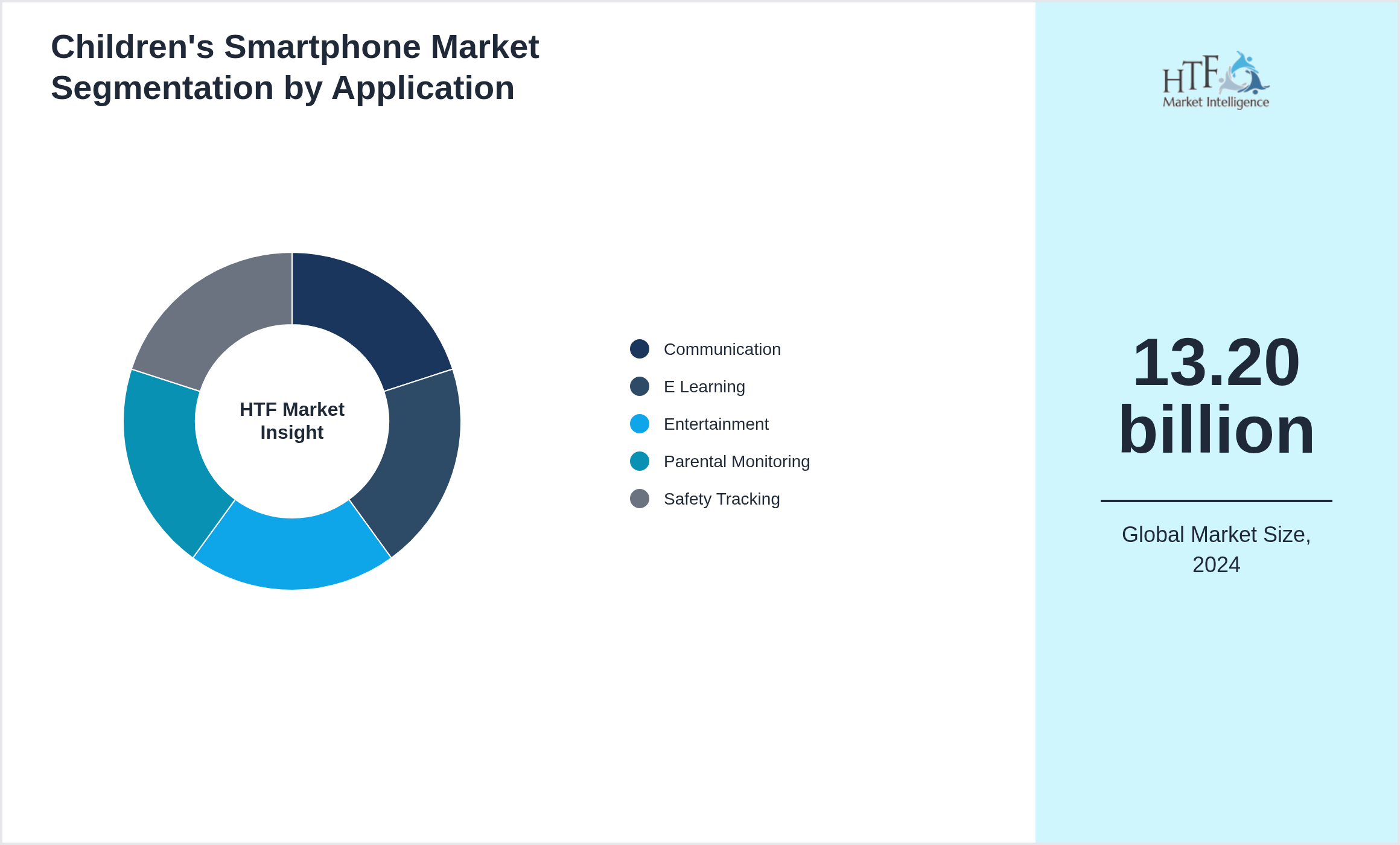
Global Children's Smartphone Market is segmented by Application (Communication, E Learning, Entertainment, Parental Monitoring, Safety Tracking), Type (Entry Level Smartphones, Parental Control Phones, Educational Smartphones, Rugged Smartphones, Feature Smartphones), and Geography (North America, LATAM, West Europe, Central & Eastern Europe, Northern Europe, Southern Europe, East Asia, Southeast Asia, South Asia, Central Asia, Oceania, MEA)
Pricing
Report Overview
Industry Overview
The Children's Smartphone market is expected to reach 28.40 billion by 2033 and is growing at a CAGR of8.90% between 2024 and 2033.
Children's Smartphone refers to mobile devices specifically designed for children with enhanced safety, parental control, and educational features. These smartphones include restricted app access, location tracking, screen time management, and content filtering to ensure safe usage. Children's smartphones often include educational applications and simplified user interfaces. Parents use these devices to introduce children to digital communication while maintaining control over usage. Increasing digital adoption among younger users and concerns about online safety are driving the children's smartphone market globally.
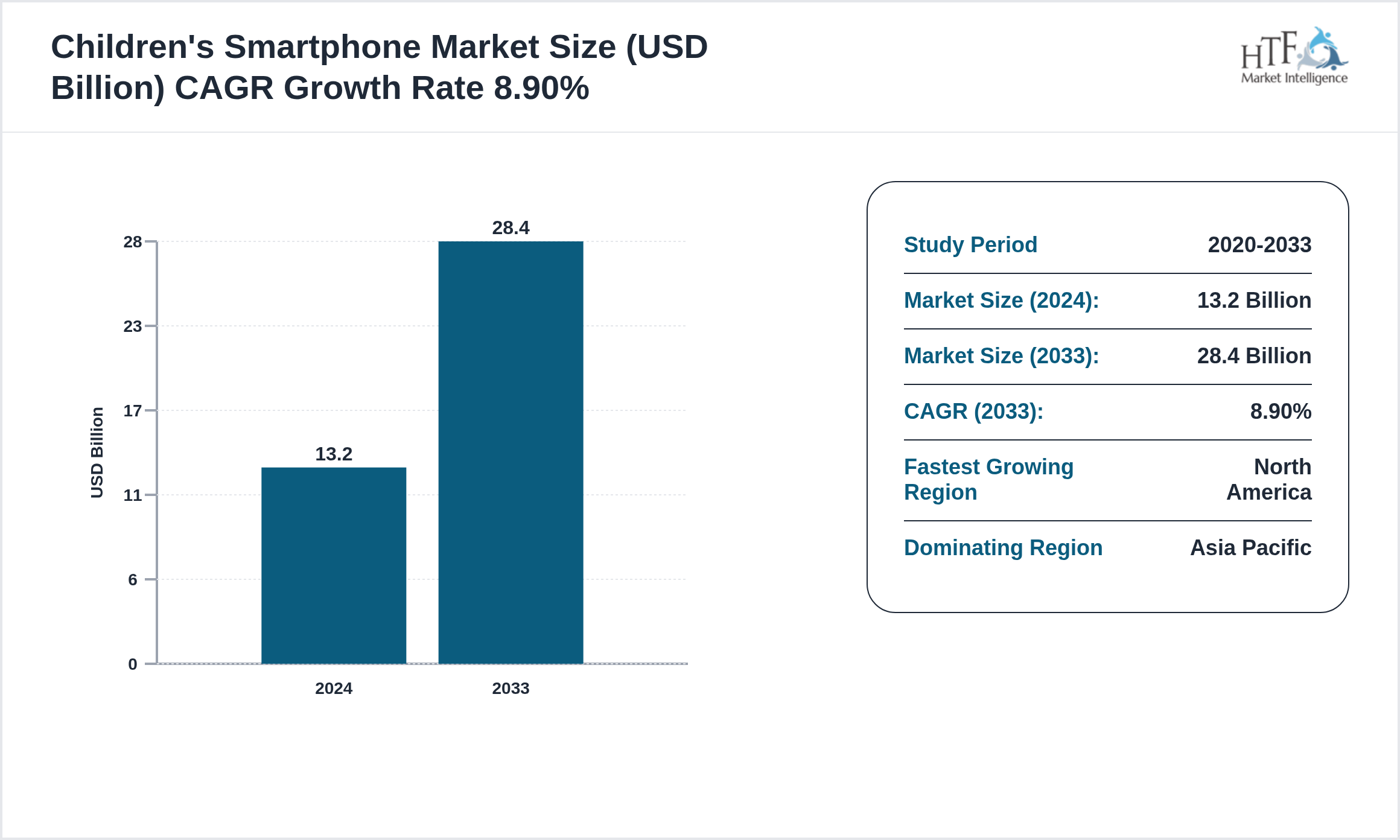
Source: HTF Market Intelligence (HTF MI)
Market Size & Forecast
Market Segmentation
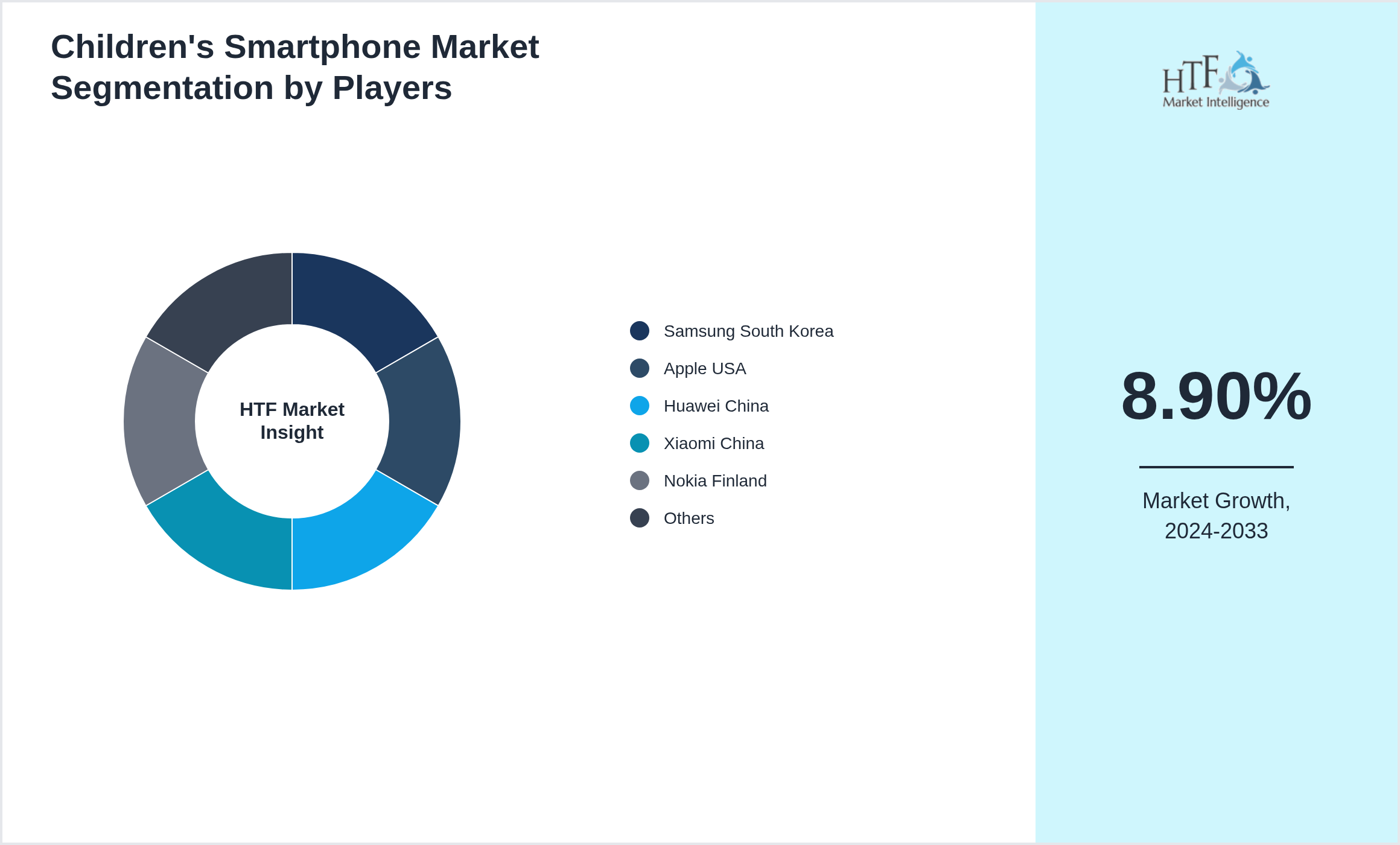
Selecting segmentation criteria in Samsung South Korea, Apple USA, Huawei China, Xiaomi China, Nokia Finland, Motorola USA, Vivo China, Oppo China, Realme China, Lenovo China, TCL China, ZTE China, Gabb Wireless USA, Pinwheel USA, Kurio France involves several key steps. Researchers begin by defining their objectives, such as understanding consumer behavior or identifying market opportunities. They then gather relevant data on demographics, psychographics, and buying behavior. Next, they identify segmentation variables like age, location, lifestyle, and purchase patterns. Using analytical tools, they analyze the data to find distinct market segments and evaluate their attractiveness based on size, growth potential, and alignment with business goals. Detailed profiles are created for each segment, and the most promising ones are selected for targeting. Finally, tailored marketing strategies are developed, and the performance of these strategies is monitored and adjusted as needed. This process ensures that segmentation effectively identifies valuable market opportunities and aligns with strategic goals.
Segmentation by Type
- • Entry Level Smartphones
- • Parental Control Phones
- • Educational Smartphones
- • Rugged Smartphones
- • Feature Smartphones
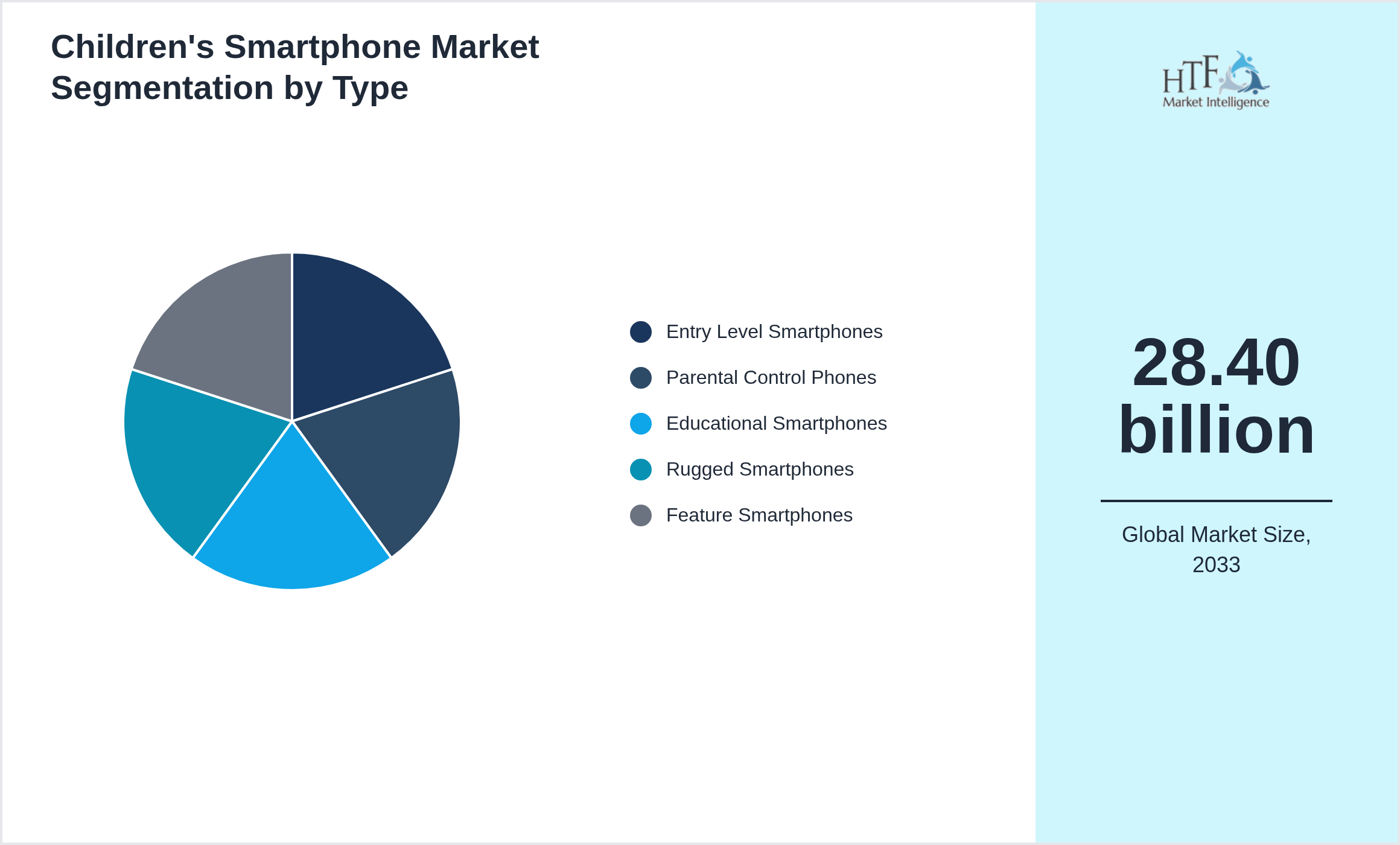
Segmentation by Application
- • Communication
- • E Learning
- • Entertainment
- • Parental Monitoring
- • Safety Tracking
Children's Smartphone Market Dynamics
TheChildren's Smartphone is driven by factors such as increasing demand in end-use industries, technological advancements, research and development (R&D), economic growth, and increasing global trade.
Influencing Trend:
- • Parental Control Software Integration
- • Educational Content Pre Installation
- • Rugged And Shock Resistant Design
- • Limited Screen Time And Safe Mode Features
- • AI Based Content Filtering
- • Increasing Digital Learning Adoption
- • Rising Internet Penetration In Households
- • Demand For Child Safe Communication Devices
- • Growing EdTech Platform Usage
- • Parental Demand For GPS And Monitoring Features
- • Screen Addiction And Health Concerns
- • Data Privacy And Child Safety Regulations
- • Intense Competition From Standard Smartphones
- • Pricing Sensitivity In Developing Markets
- • Rapid Technological Obsolescence
- • Emerging Market Penetration In Urban Areas
- • Collaboration With Schools For Learning Programs
- • Subscription Based Child Safe App Ecosystems
- • Expansion Of 5G Enabled Smart Devices
- • Localization Of Educational Content
Regional Insight
The Asia Pacificregion holds a dominant market share, primarily driven by growing consumption patterns, a rising population, and robust economic activity that fuels market demand. Meanwhile, the North America Region is experiencing the fastest growth, propelled by increasing infrastructure developments, expanding industrial activities, and a surge in consumer demand, positioning it as a key driver for future market expansion.
- North America
- LATAM
- West Europe
- Central & Eastern Europe
- Northern Europe
- Southern Europe
- East Asia
- Southeast Asia
- South Asia
- Central Asia
- Oceania
- MEA
- • North America leads due to high digital adoption and parental awareness Europe follows with strong child data protection regulations Asia Pacific fastest growing driven by increasing smartphone penetration and rising middle class population across emerging markets
Key Players
The companies highlighted in this profile were selected based on insights from primary experts and an evaluation of their market penetration, product offerings, and geographical reach:
- • Samsung South Korea
- • Apple USA
- • Huawei China
- • Xiaomi China
- • Nokia Finland
- • Motorola USA
- • Vivo China
- • Oppo China
- • Realme China
- • Lenovo China
- • TCL China
- • ZTE China
- • Gabb Wireless USA
- • Pinwheel USA
- • Kurio France
Regulatory Framework
The regulatory framework for the Children's Smartphone ensures product safety, fair competition, and consumer protection. It encompasses setting standards for product quality and safety, enforcing truthful advertising and labeling, and implementing environmental sustainability practices. Regulations include robust procedures for product recalls, data protection, and anti-competitive practices, while also overseeing import/export controls and intellectual property rights. Regulatory bodies enforce these rules through inspections and penalties, and consumer education programs help individuals make informed decisions. This framework aims to protect consumers, promote fair market conditions, and encourage ethical business practices.
- • Regulatory landscape emphasizes child data privacy content safety and digital wellbeing requiring compliance with international standards ensuring secure device usage globally
Competitive Insights
The key players in the Children's Smartphone are intensifying their focus on research and development (R&D) activities to innovate and stay competitive. Major companies, such as Samsung South Korea, Apple USA, Huawei China, Xiaomi China, Nokia Finland, Motorola USA, Vivo China, Oppo China, Realme China, Lenovo China, TCL China, ZTE China, Gabb Wireless USA, Pinwheel USA, Kurio France, are heavily investing in R&D to develop new products and improve existing ones. This strategic emphasis on innovation is driving significant advancements in product formulation and the introduction of sustainable and eco-friendly products.
In addition to R&D and acquisitions, there is a notable shift towards green investments among key players in the consumer goods industry. Companies are increasingly committing resources to sustainable practices and the development of environmentally friendly products. This green investment is in response to growing consumer demand for sustainable solutions and stringent environmental regulations. By prioritizing sustainability, these companies are not only contributing to environmental protection but also positioning themselves as leaders in the green movement, thereby fueling market growth.
Merger Acquisition
- • Jan 2026 Samsung launched children smartphone with enhanced parental controls Feb 2026 Nokia partnered with education platform improving usability Mar 2026 Xiaomi introduced affordable device targeting emerging markets Apr 2026 Huawei expanded product line through innovation
Patent Analysis
- • Samsung develops patents in parental control technologies improving device safety Nokia focuses on secure communication features enhancing protection Xiaomi innovates in affordable smartphone technologies expanding accessibility Huawei expands intellectual property in secure ecosystems improving usability Apple advances patents enabling advanced content filtering and monitoring globally
Investment and Funding Scenario
- • Increasing investments in consumer electronics and education technology drive funding in children smartphone markets enhancing innovation globally Strategic partnerships between manufacturers and content providers accelerate adoption and development of child friendly devices Government initiatives supporting digital education promote deployment across regions Private equity investments enable expansion of production capabilities improving scalability globally Rising demand for safe digital devices attracts funding supporting market growth globally
Market Entropy
- • Children smartphones gain traction with increasing demand for safe digital devices enabling communication learning and entertainment across younger demographics globally steadily Rising integration of parental control features enhances safety improving monitoring and content filtering across devices worldwide continuously Growing adoption of educational applications drives demand improving learning outcomes and engagement among children globally Expanding smartphone penetration and digital literacy initiatives in emerging markets accelerate market growth improving accessibility globally
Report Infographics:
| Report Features | Details |
| Base Year | 2024 |
| Based Year Market Size 2024 | 13.20 billion |
| Historical Period Market Size 2020 | USD Million ZZ |
| CAGR (2024 to 2033) | 8.90% |
| Forecast Period | 2024 to2033 |
| Forecasted Period Market Size 2033 | 28.40 billion |
| Scope of the Report | Entry Level Smartphones, Parental Control Phones, Educational Smartphones, Rugged Smartphones, Feature Smartphones, Communication, E Learning, Entertainment, Parental Monitoring, Safety Tracking |
| Regions Covered | North America, LATAM, West Europe, Central & Eastern Europe, Northern Europe, Southern Europe, East Asia, Southeast Asia, South Asia, Central Asia, Oceania, MEA |
| Year-on-Year Growth | 7.80% |
| Companies Covered | Samsung South Korea, Apple USA, Huawei China, Xiaomi China, Nokia Finland, Motorola USA, Vivo China, Oppo China, Realme China, Lenovo China, TCL China, ZTE China, Gabb Wireless USA, Pinwheel USA, Kurio France |
| Customization Scope | 15% Free Customization (For EG) |
| Delivery Format | PDF and Excel through Email
Want to Buy Specific Sections of This Report?
|
Research Methodology
The research methodology for the consumer goods industry involves several key steps to ensure comprehensive and actionable insights. First, the research objectives are clearly defined, focusing on aspects like consumer behavior, market opportunities, competitive dynamics, or regulatory impacts. A thorough literature review follows, drawing from academic journals, industry reports, government publications, and market analyses to establish a knowledge base and identify research gaps. Data collection encompasses both primary methods, such as surveys, interviews, and focus groups with consumers and industry experts, and secondary methods, including analysis of market reports, government data, and industry publications. Quantitative data is analyzed using statistical tools to identify patterns and market segments, while qualitative data from interviews and focus groups is examined to extract key themes and insights.
The market is then segmented based on demographics, psychographics, geography, and purchasing behavior, and competitive analysis is conducted to evaluate key players' strategies and strengths. Trend analysis identifies current and emerging industry trends. Findings are compiled into a detailed report with data visualizations and strategic recommendations. The research is validated and refined through cross-checking and expert feedback, and a framework for continuous monitoring is established to keep the research current and relevant.
Multidisciplinary researcher with 10+ years of experience uncovering insights across diverse domains focused on uncovering insights that drive informed decisions.