
Global Organic Cosmetic Ingredients Market - Outlook 2024-2034
Global Organic Cosmetic Ingredients Market is segmented by Type (Botanical Extracts, Essential Oils, Natural Emulsifiers, Preservatives, Vitamins & Antioxidants), Application (Skincare, Haircare, Makeup, Personal Care, Fragrances), Distribution Channel (Direct Sales, Distributors, Online Retail, Specialty Stores), End User (Personal Care Manufacturers, Cosmetics Brands, Contract Manufacturers), and Geography (North America, LATAM, West Europe, Central & Eastern Europe, Northern Europe, Southern Europe, East Asia, Southeast Asia, South Asia, Central Asia, Oceania, MEA)
Pricing
Report Overview
Executive Summary
- •The Global Organic Cosmetic Ingredients Market is defined by the production and utilization of certified organic natural components used in cosmetics and personal care formulations. This market includes a diverse range of raw materials such as botanical extracts, essential oils, natural emulsifiers, preservatives, vitamins, and antioxidants, all adhering to organic and natural standards. It spans various product applications including skincare, haircare, makeup, personal care, and fragrances. The market's boundaries extend from sustainable agricultural sourcing to advanced extraction and formulation technologies, catering to consumer demand for clean-label and eco-friendly beauty products. Rising awareness of health and environmental impacts of synthetic chemicals fuels market growth. Additionally, regulatory frameworks and certification bodies worldwide enforce compliance, ensuring product authenticity and safety. The industry is characterized by innovation in ingredient functionality, sustainable packaging, and expanding distribution channels globally, making it a pivotal segment within the broader cosmetics and personal care industry.
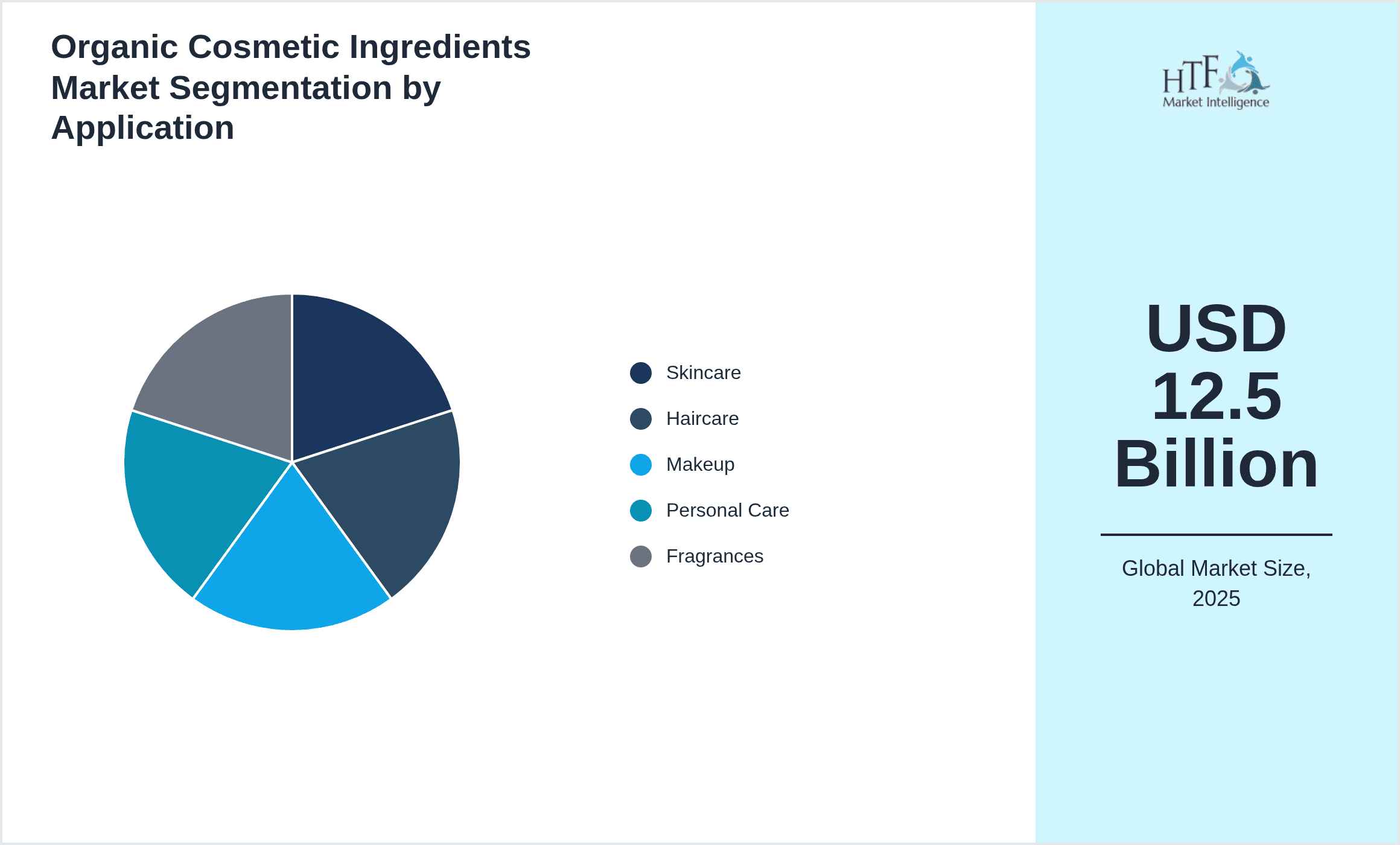
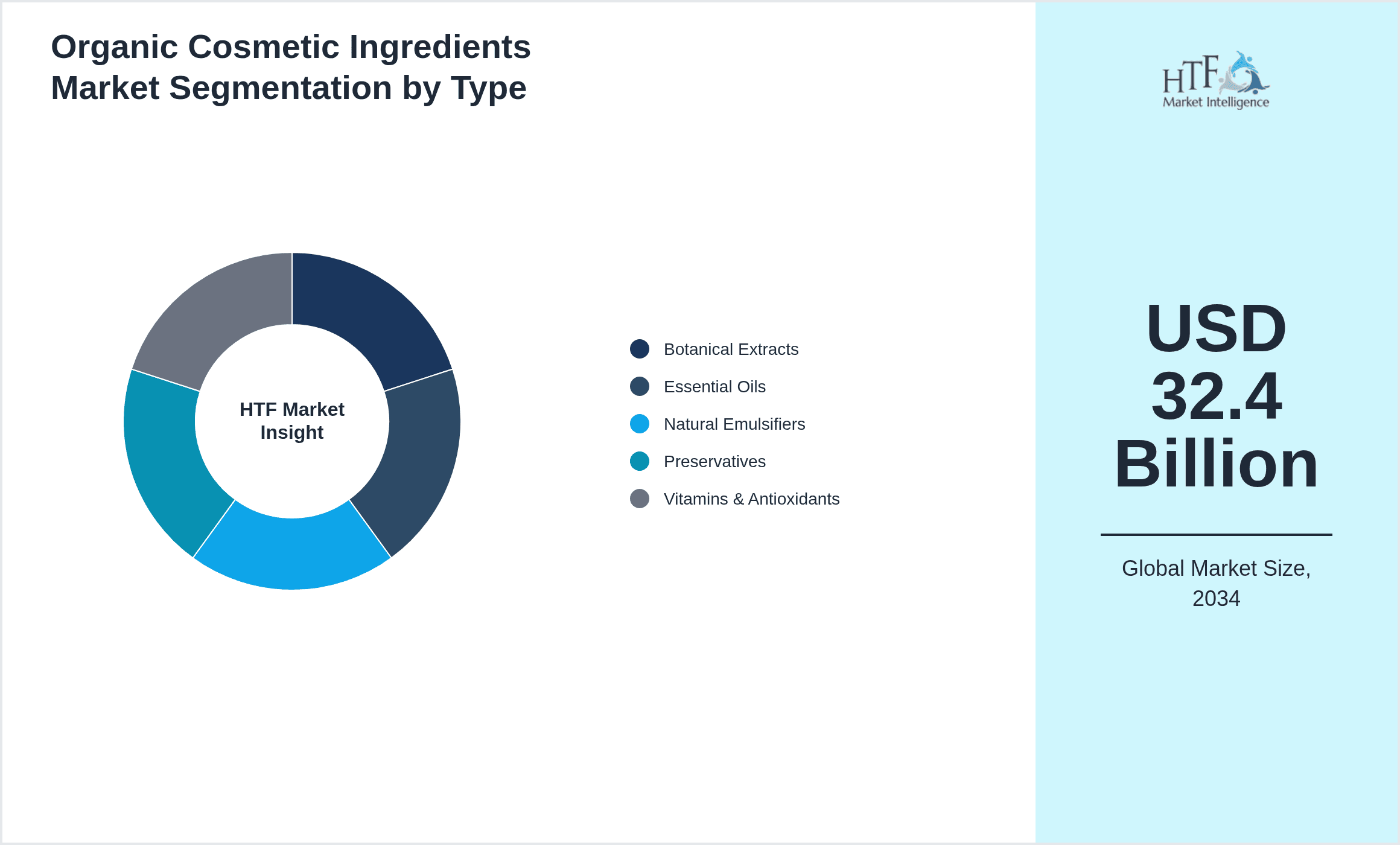
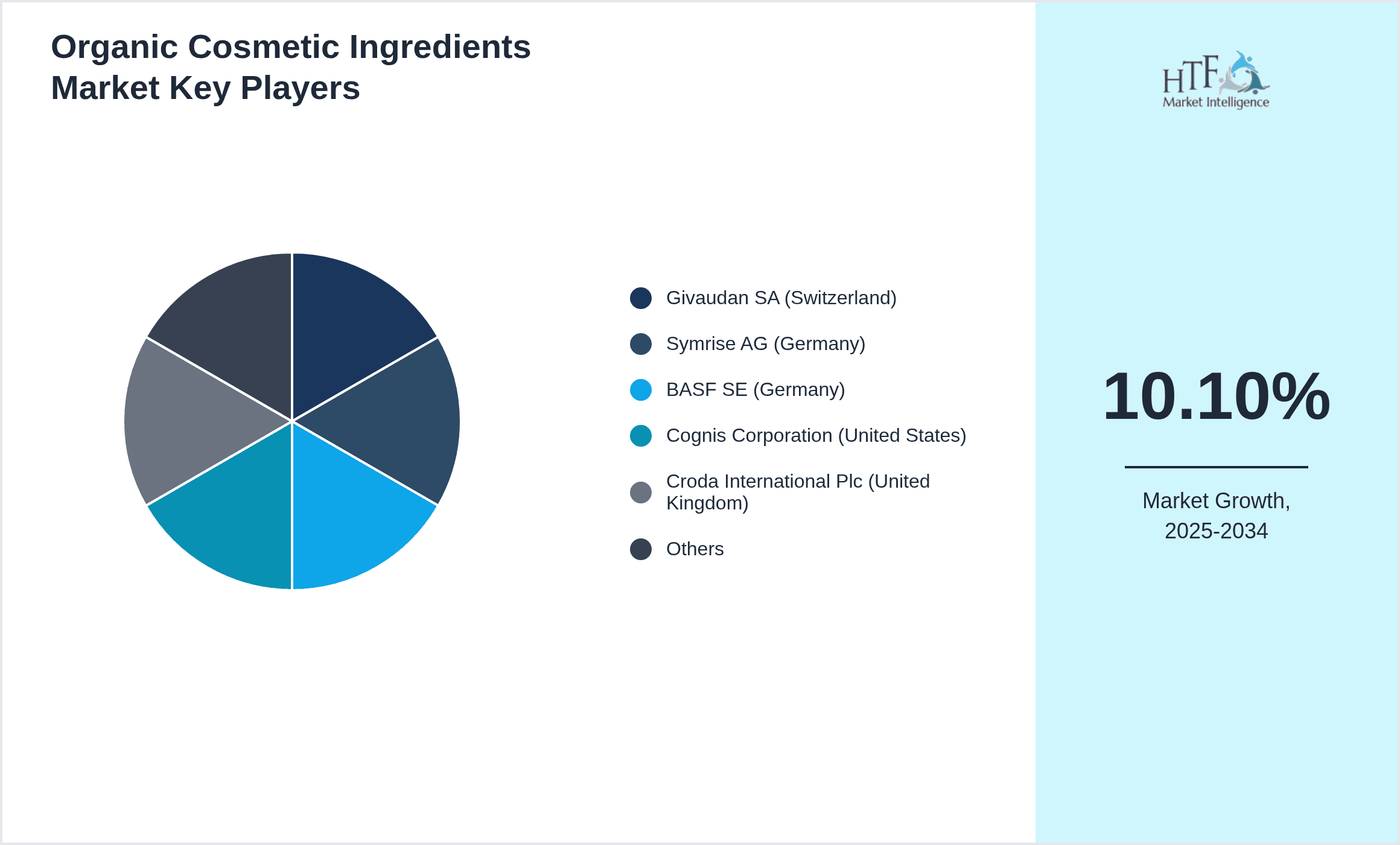
- •Key highlights include a projected CAGR of 10.1% from 2024 to 2034, driven by increasing consumer preference for organic and natural cosmetic solutions. The market size is expected to grow from USD 12.5 Billion in 2024 to USD 32.4 Billion by 2034. North America currently dominates the market due to established organic product demand and certification infrastructure, while Asia-Pacific exhibits the fastest growth rate, propelled by rising disposable incomes and expanding awareness. Botanical extracts lead in product type dominance, with natural emulsifiers emerging as the fastest growing segment. Skincare remains the largest application segment, closely followed by haircare. Market drivers include health-conscious consumer trends, sustainability focus, and technological advancements in ingredient extraction.
- •The Global Organic Cosmetic Ingredients Market offers strategic value to manufacturers, suppliers, and retailers by enabling differentiation through natural product innovation and meeting regulatory compliance. It supports the growing trend toward clean beauty and sustainability, attracting investment and driving product portfolio expansion. This market is crucial for brand positioning in the competitive cosmetic landscape and aligns with global consumer shifts toward environmentally responsible consumption. Stakeholders benefit from opportunities in emerging regions, novel ingredient development, and expanding e-commerce distribution channels, reinforcing the market’s importance across the cosmetic and personal care value chain.

Competitive Landscape
The Global Organic Cosmetic Ingredients Market is highly competitive, characterized by the presence of multinational corporations and specialized natural ingredient producers. Competition centers on innovation in extraction technologies, ingredient purity, certification compliance, and sustainable sourcing. Companies differentiate through proprietary blends, organic certifications, and partnerships with agricultural producers. Strategic collaborations and mergers are common to expand product portfolios and geographic reach. Pricing strategies balance premium positioning with market accessibility, while companies invest heavily in R&D to introduce novel bioactive compounds that enhance product efficacy. Distribution channels range from direct-to-brand supply to global ingredient distributors, intensifying rivalry. Additionally, adherence to evolving regulatory standards creates barriers to entry, fostering competition among established players. The market’s competitive dynamics are shaped by consumer demand for transparency, traceability, and environmental stewardship, driving continuous improvements and innovation.
Leading Companies in Organic Cosmetic Ingredients Market
- •Givaudan SA (Switzerland)
- •Symrise AG (Germany)
- •BASF SE (Germany)
- •Cognis Corporation (United States)
- •Croda International Plc (United Kingdom)
- •Evonik Industries AG (Germany)
- •Clariant AG (Switzerland)
- •Kerry Group plc (Ireland)
- •Solvay S.A. (Belgium)
- •Indena S.p.A. (Italy)
- •Seppic (France)
- •Azelis (Belgium)
- •Inolex Chemical Company (United States)
- •Takasago International Corporation (Japan)
- •Mane SA (France)
- •Beraca S.A. (Brazil)
- •Taiwan Yes Corporation (Taiwan)
- •Lipo Chemicals Inc. (United States)
- •Sinerga S.p.A. (Italy)
- •Hudson Technologies (United States)
- •Azelis Americas (United States)
- •Döhler Group (Germany)
- •Kobo Products Inc. (United States)
- •Naturex (France)
- •Vantage Specialty Chemicals (United States)
Market Breakdown
- •By Type
- ◦Botanical Extracts
- ◦Essential Oils
- ◦Natural Emulsifiers
- ◦Preservatives
- ◦Vitamins & Antioxidants
- •By Application
- ◦Skincare
- ◦Haircare
- ◦Makeup
- ◦Personal Care
- ◦Fragrances
- •By Distribution Channel
- ◦Direct Sales
- ◦Distributors
- ◦Online Retail
- ◦Specialty Stores
- •By End User
- ◦Personal Care Manufacturers
- ◦Cosmetics Brands
- ◦Contract Manufacturers
Growth Dynamics
- •Rising consumer preference for natural and chemical-free beauty products is a primary growth driver, fueled by increasing health awareness and environmental concerns globally. Organic cosmetic ingredients provide safer alternatives, accelerating demand.
- •Technological advancements in sustainable extraction and preservation methods have enhanced ingredient efficacy and shelf-life, enabling wider adoption in premium and mass-market cosmetic formulations.
- •Emergence of stringent regulatory frameworks and organic certification standards worldwide has boosted consumer confidence and propelled market growth, encouraging manufacturers to reformulate products with certified organic ingredients.
- •Expanding e-commerce platforms and digital marketing have increased accessibility and consumer reach, particularly in emerging markets where organic cosmetic awareness is growing rapidly.
- •Collaborations between ingredient suppliers and cosmetic brands to develop innovative, multifunctional organic ingredients are driving product differentiation and market expansion.
Market Trends
- •Clean beauty and sustainability remain dominant trends, with brands emphasizing transparency, eco-friendly sourcing, and biodegradable packaging to meet evolving consumer expectations.
- •Growth in vegan and cruelty-free certified organic ingredients is reshaping product development, appealing to ethically conscious consumers.
- •Integration of biotechnology in producing organic cosmetic ingredients is gaining traction, offering scalable and sustainable alternatives to traditional extraction processes.
- •Personalization in organic cosmetic formulations is emerging, leveraging natural ingredient blends tailored to individual skin and hair needs.
- •Collaborative innovation between ingredient suppliers and cosmetic manufacturers is fostering development of novel bioactive compounds with enhanced functional benefits.
Market Opportunities
- •Expanding demand in emerging economies presents significant growth potential due to rising disposable incomes and increasing consumer awareness of organic cosmetics.
- •Development of multifunctional organic ingredients that offer combined skincare benefits can unlock new market segments and enhance product appeal.
- •Opportunities lie in leveraging biotechnology and green chemistry to create sustainable, high-performance organic cosmetic ingredients at competitive costs.
- •Partnerships and joint ventures between ingredient manufacturers and cosmetic brands can accelerate innovation and market penetration globally.
- •Expansion of e-commerce and direct-to-consumer channels offers avenues for marketing and distributing organic cosmetic products more efficiently.
Market Challenges
- •High production costs and supply chain complexities for certified organic raw materials pose significant challenges, affecting pricing and availability.
- •Stringent and diverse regulatory requirements across regions increase compliance burdens and complicate international market entry for ingredient suppliers.
- •Limited shelf-life and stability issues of organic ingredients compared to synthetic counterparts require continual innovation in formulation and preservation methods.
- •Market fragmentation and lack of standardized certifications can create consumer confusion and hinder product trust in some regions.
- •Competitive pressure from established synthetic ingredient suppliers and emerging natural ingredient producers intensifies market rivalry and pricing challenges.
Regulatory Framework
- •Between 2019 and 2024, the International Organic and Natural Cosmetics Standards have been updated to enhance ingredient traceability and certification rigor, impacting supplier compliance globally.
- •The European Union's Cosmetics Regulation (EC) No 1223/2009 was amended in 2022 to tighten permissible ingredient lists and labeling requirements for organic claims, influencing market transparency.
- •The U.S. FDA has increased scrutiny on organic cosmetic ingredient claims since 2021, requiring substantiation of natural origin and safety profiles, affecting product formulations and marketing.
- •Japan's Ministry of Health, Labour and Welfare introduced new guidelines in 2023 for organic cosmetic ingredient testing and certification to harmonize with global standards.
- •Several countries in Asia-Pacific have initiated government incentives and subsidies since 2020 to support sustainable ingredient sourcing and organic cosmetic product development.
Market Intelligence
- •15th January 2025, Givaudan SA unveiled a new line of botanical extract blends tailored for anti-aging skincare formulations. This launch leverages advanced cold-press extraction technology to preserve bioactive compounds, targeting premium cosmetic brands seeking high-efficacy natural ingredients. The initiative aligns with rising consumer demand for clean and sustainable beauty products globally, enhancing Givaudan’s portfolio and market positioning in the organic ingredients segment. Strategic partnerships with regional organic farmers support sustainable sourcing and traceability.
- •10th March 2025, Symrise AG announced a strategic collaboration with biotechnology firms to develop fermentation-based natural emulsifiers, providing scalable and eco-friendly alternatives to traditional plant-derived materials. This innovation aims to address supply constraints and reduce environmental impact, positioning Symrise as a leader in sustainable ingredient development. The project includes pilot production facilities and plans for commercial-scale rollout by late 2025.
- •22nd February 2025, BASF SE introduced a vitamin-rich antioxidant complex sourced from certified organic botanical ingredients, designed to enhance skin protection and repair. This product integrates novel extraction methods to maximize ingredient potency and stability, appealing to cosmetic manufacturers focused on health-conscious consumers. The launch is supported by extensive clinical studies validating efficacy and safety.
- •30th April 2025, Croda International Plc expanded its global manufacturing footprint by inaugurating a new facility focused on organic cosmetic ingredient production in Asia-Pacific. This expansion addresses growing regional demand and supports Croda’s sustainability goals by incorporating renewable energy and waste reduction technologies. The facility enhances supply chain resilience and capacity for specialty organic emulsifiers and preservatives.
- •Source: Official company press releases, industry publications
Regional Outlook
The North America currently holds a significant share of the market, primarily due to several key factors: increasing consumption rates, a burgeoning population, and robust economic momentum. These elements collectively drive demand, positioning this region as a leader in the market. On the other hand, Asia-Pacific is rapidly emerging as the fastest-growing area within the industry. This remarkable growth can be attributed to swift infrastructure development, the expansion of various industrial sectors, and a marked increase in consumer demand. These dynamics make this region a crucial player in shaping future market growth.
In our report, we cover a comprehensive analysis of the following regions and countries:
- North America
- LATAM
- West Europe
- Central & Eastern Europe
- Northern Europe
- Southern Europe
- East Asia
- Southeast Asia
- South Asia
- Central Asia
- Oceania
- MEA
| Feature | Details |
|---|---|
| Base Year Market Size | USD 12.5 Billion |
| Forecast Year Market Size | USD 32.4 Billion |
| CAGR | 10.1% |
| Forecast Period | 2026 to 2033 |
| YoY Growth | 9.7% |
| Scope of Report | Market is segmented by Type (Botanical Extracts, Essential Oils, Natural Emulsifiers, Preservatives, Vitamins & Antioxidants), Application (Skincare, Haircare, Makeup, Personal Care, Fragrances), Distribution Channel (Direct Sales, Distributors, Online Retail, Specialty Stores), End User (Personal Care Manufacturers, Cosmetics Brands, Contract Manufacturers) |
| Regions Covered | North America, LATAM, West Europe, Central & Eastern Europe, Northern Europe, Southern Europe, East Asia, Southeast Asia, South Asia, Central Asia, Oceania, MEA |
| Key Companies | Givaudan SA (Switzerland), Symrise AG (Germany), BASF SE (Germany), Cognis Corporation (United States), Croda International Plc (United Kingdom), Evonik Industries AG (Germany), Clariant AG (Switzerland), Kerry Group plc (Ireland), Solvay S.A. (Belgium), Indena S.p.A. (Italy), Seppic (France), Azelis (Belgium), Inolex Chemical Company (United States), Takasago International Corporation (Japan), Mane SA (France), Beraca S.A. (Brazil), Taiwan Yes Corporation (Taiwan), Lipo Chemicals Inc. (United States), Sinerga S.p.A. (Italy), Hudson Technologies (United States), Azelis Americas (United States), Döhler Group (Germany), Kobo Products Inc. (United States), Naturex (France), Vantage Specialty Chemicals (United States) |
Global Organic Cosmetic Ingredients Market - Outlook 2024-2034 - Table of Contents
Frequently Asked Questions (FAQ):
The Compact Track Loaders market is expected to see value worth 5.3 Billion in 2025.
North America currently leads the market with approximately 45% market share, followed by Europe at 28% and Asia-Pacific at 22%. The remaining regions account for 5% of the global market.
Key growth drivers include increasing construction activities, rising demand for versatile equipment in agriculture, technological advancements in track loader design, and growing preference for compact equipment in urban construction projects.