
United States Steam Boiler System Market Size, Growth & Revenue 2024-2034
United States Steam Boiler System Market is segmented by Boiler Type (Fire Tube Boilers, Water Tube Boilers, Electric Boilers, Waste Heat Boilers, Fluidized Bed Boilers), Application Sector (Power Generation, Chemical Processing, Food & Beverage, HVAC, Pharmaceuticals), End-Use Industry (Industrial Manufacturing, Commercial Buildings, Energy Sector, Healthcare Facilities), Distribution Channel (Direct Sales, Distributors, Online Platforms), and Geography (Northeast, Southwest, The South, The Midwest)
Pricing
Report Overview
Executive Summary
- •The United States Steam Boiler System market is defined by the manufacture and deployment of steam boilers that serve critical functions across multiple industrial applications, including power generation, chemical processing, food and beverage production, HVAC systems, and pharmaceutical manufacturing. These systems convert water into steam through various technologies such as fire tube, water tube, electric, waste heat, and fluidized bed boilers. The market's scope encompasses not only the equipment itself but also services such as installation, maintenance, and modernization, reflecting a holistic approach to steam boiler lifecycle management. Increasing industrialization, stringent environmental regulations, and demands for energy efficiency drive innovation and growth within this market. Steam boiler systems are integral to operational efficiency and sustainability efforts, making them a pivotal component in the industrial infrastructure of the United States. The market is characterized by evolving technologies, regulatory compliance, and growing investments in cleaner and smarter boiler solutions, underscoring its strategic importance to various economic sectors.
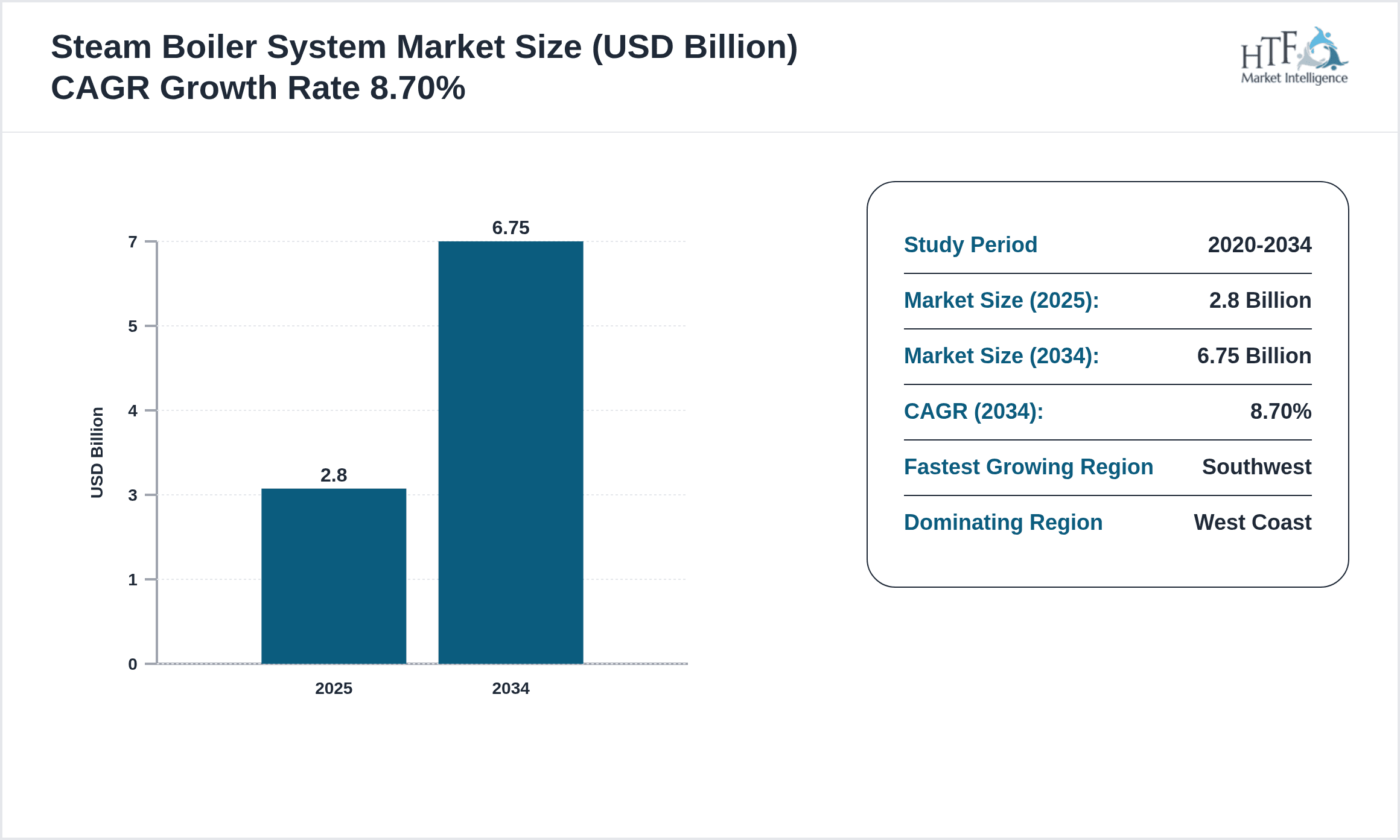
- •Key market highlights indicate a robust CAGR of 8.7% from 2024 to 2034, with the market size expected to expand from USD 2.8 billion in 2024 to USD 6.75 billion by 2034. Water tube boilers dominate the product type segment due to their efficiency and wide industrial applicability, while electric boilers are emerging as the fastest growing segment, driven by clean energy initiatives. Power generation remains the leading application, supported by continuous infrastructure investments, with food and beverage sectors also demonstrating substantial growth potential. Regionally, the West Coast leads market share, benefiting from significant industrial activity and environmental regulations, while the Southwest region is poised for the highest growth rate due to expanding industrialization and infrastructure development.
- •The United States Steam Boiler System market offers substantial value propositions through its contributions to operational efficiency, energy conservation, and regulatory compliance across industries. Strategic importance is amplified by the integration of advanced technologies that reduce emissions and optimize fuel consumption. Stakeholders including manufacturers, end-users, and policymakers benefit from innovations that align with sustainability goals and industrial modernization. The market also drives economic growth by supporting critical infrastructure and enabling industrial competitiveness. As industries shift towards cleaner and more efficient steam generation solutions, the market is positioned to deliver long-term value through technology adoption, service enhancements, and expansion into emerging applications.
Competitive Landscape
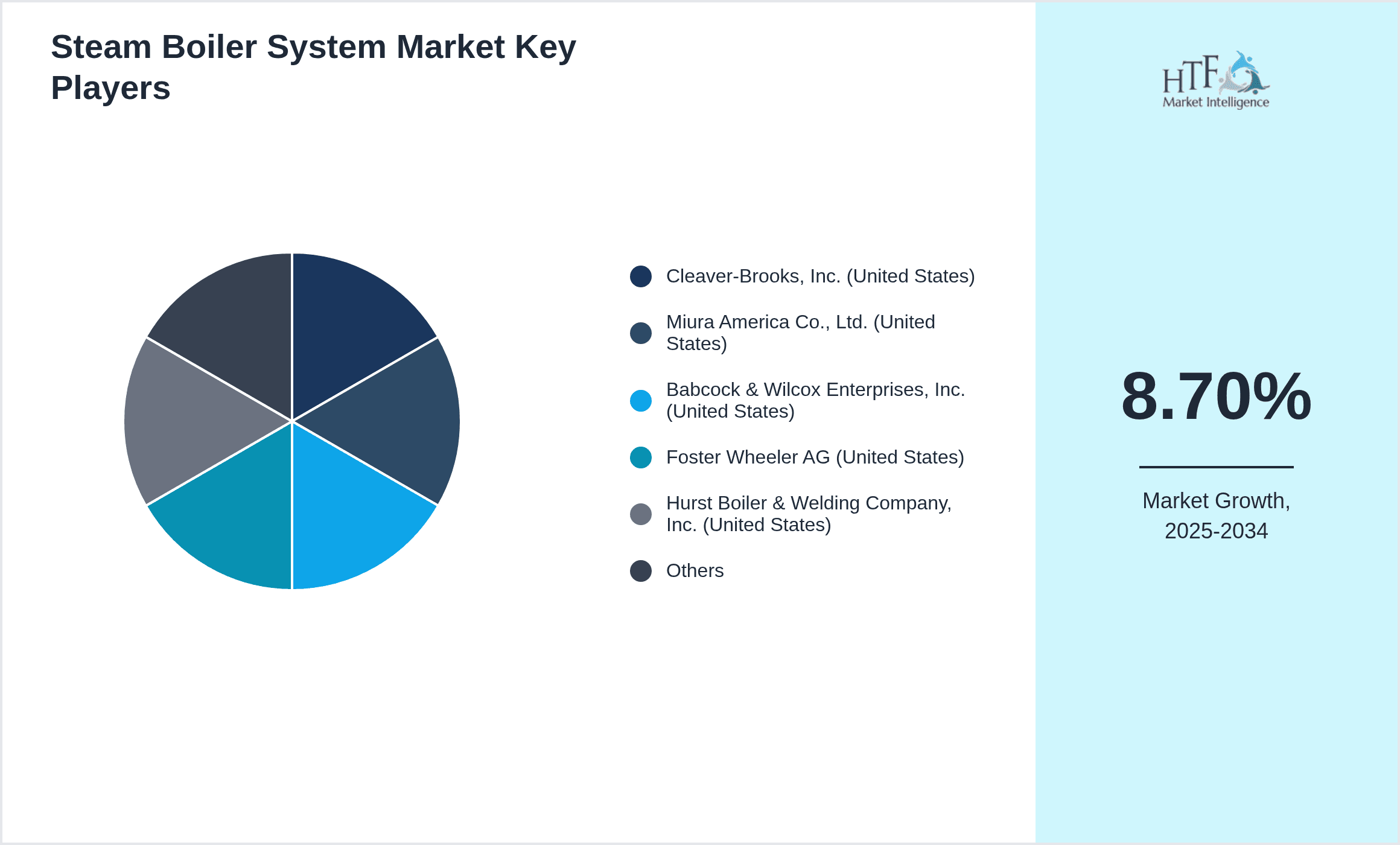
The competitive landscape of the United States Steam Boiler System market is marked by intense rivalry among established global manufacturers and regional specialists. Market players compete through innovation in energy-efficient boiler technologies, customization capabilities, and comprehensive after-sales services. Strategic partnerships and investments in R&D are pivotal for maintaining market leadership and addressing evolving regulatory standards. Companies focus on differentiating their offerings by integrating smart controls, emissions reduction technologies, and modular designs to meet diverse customer requirements. Competitive strategies also include geographic expansion within the United States, targeting high-growth regional zones such as the West Coast and Southwest. Market entry barriers remain moderate due to the capital-intensive nature of production and the need for compliance with stringent safety and environmental regulations. Looking ahead, consolidation through mergers and acquisitions and increased emphasis on sustainable solutions are expected to shape the competitive dynamics further.
Leading Companies in Steam Boiler System Market
- •Cleaver-Brooks, Inc. (United States)
- •Miura America Co., Ltd. (United States)
- •Babcock & Wilcox Enterprises, Inc. (United States)
- •Foster Wheeler AG (United States)
- •Hurst Boiler & Welding Company, Inc. (United States)
- •Superior Boiler Works, Inc. (United States)
- •Smith Boilers (United States)
- •Viessmann Manufacturing Company, Inc. (United States)
- •Bosch Thermotechnology Corp. (United States)
- •John Zink Hamworthy Combustion (United States)
- •Hoval America Inc. (United States)
- •Burnham Holdings, Inc. (United States)
- •Rentech Boiler Systems (United States)
- •Thermax Global Pvt. Ltd. (United States)
- •Atlas Copco AB (United States)
- •GE Power (United States)
- •Fulton Boiler Works, Inc. (United States)
- •Cleaver-Brooks Canada (United States)
- •AERCO International, Inc. (United States)
- •Viessmann Group (United States)
- •Thermo Energy Corporation (United States)
- •Armstrong International, Inc. (United States)
- •Hurst Boiler & Welding Co. (United States)
- •Lattner Boiler Corporation (United States)
- •Superior Boiler Works (United States)
Market Breakdown
- •By Boiler Type
- ◦Fire Tube Boilers
- ◦Water Tube Boilers
- ◦Electric Boilers
- ◦Waste Heat Boilers
- ◦Fluidized Bed Boilers
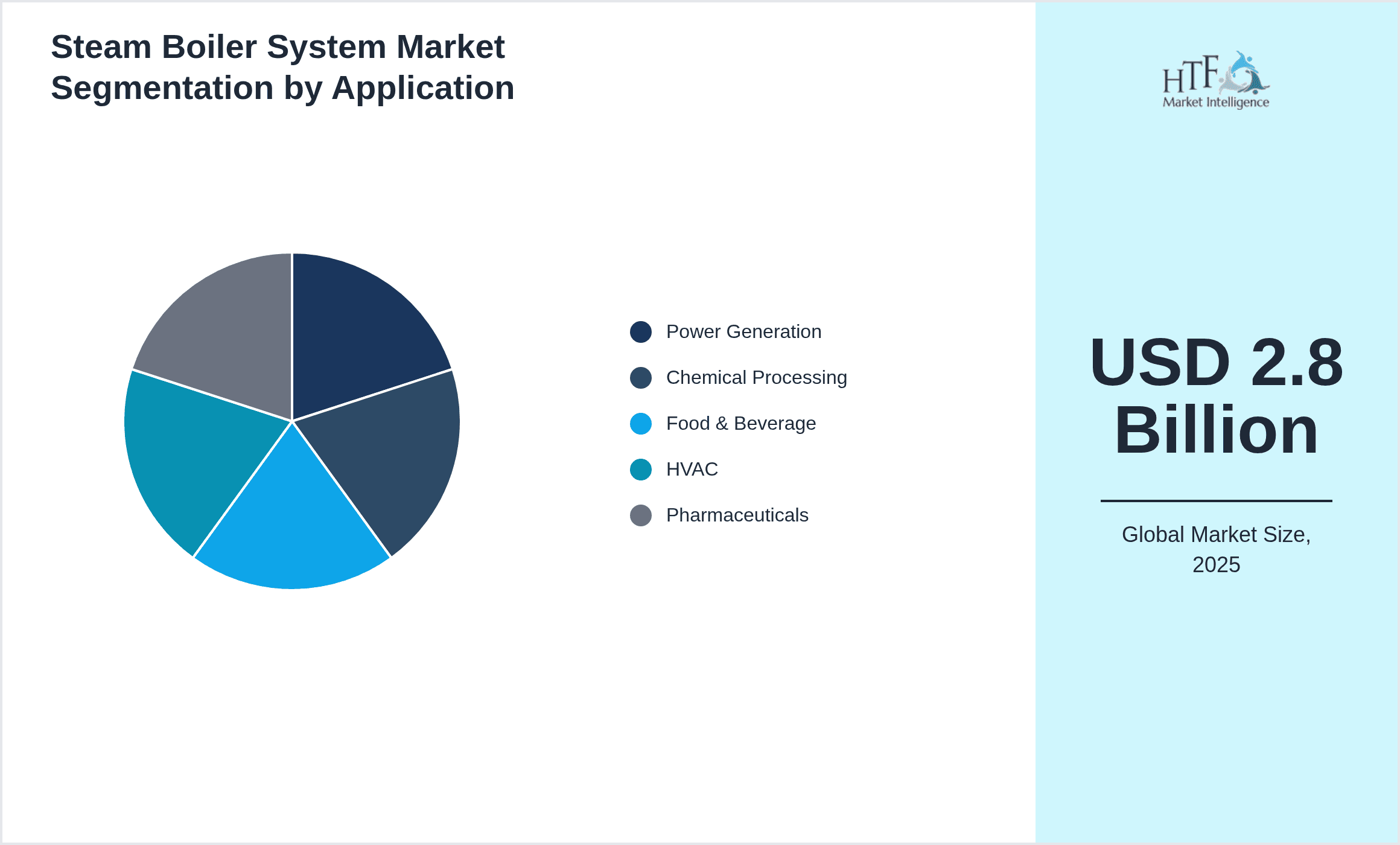
- •By Application Sector
- ◦Power Generation
- ◦Chemical Processing
- ◦Food & Beverage
- ◦HVAC
- ◦Pharmaceuticals
- •By End-Use Industry
- ◦Industrial Manufacturing
- ◦Commercial Buildings
- ◦Energy Sector
- ◦Healthcare Facilities
- •By Distribution Channel
- ◦Direct Sales
- ◦Distributors
- ◦Online Platforms
Growth Dynamics
- •Rising industrialization and infrastructure development in the United States drive increased demand for steam boiler systems, particularly in power generation and chemical processing sectors. Investments in energy-efficient and low-emission boilers align with government sustainability goals and corporate environmental responsibility initiatives, fueling market expansion.
- •Technological advancements such as the integration of IoT-enabled monitoring systems and smart controls enhance operational efficiency and predictive maintenance capabilities, reducing downtime and operational costs for end-users, thereby promoting adoption.
- •The growing emphasis on reducing carbon footprints encourages the adoption of electric boilers and waste heat recovery systems, which offer cleaner and more sustainable steam generation alternatives compared to traditional fossil-fuel-based boilers.
- •Government regulations enforcing stringent emissions standards and safety norms incentivize market players to innovate and upgrade existing boiler technologies, resulting in increased demand for modern, compliant steam boiler systems.
- •Expansion of the food and beverage and pharmaceutical industries in regions like the Southwest and West Coast boosts demand for specialized steam boiler solutions tailored to strict hygiene and process control standards.
Market Trends
- •Adoption of digital twin technology and advanced analytics in steam boiler operations is enabling predictive maintenance and enhanced lifecycle management, leading to reduced operational costs and improved reliability.
- •Shift towards electrification of steam boiler systems is accelerating, driven by increasing electricity availability from renewable sources and rising environmental concerns, promoting electric boilers as a viable alternative.
- •Modular boiler designs that allow for scalable capacity and easier installation are gaining traction among industrial users seeking flexible and cost-effective steam generation solutions.
- •Integration of renewable energy sources with boiler systems, such as biomass and solar thermal, is becoming more prevalent, reflecting the market's move towards sustainability and circular economy principles.
- •Enhanced focus on emissions reduction technologies, including low NOx burners and flue gas recirculation, is shaping product development strategies across leading manufacturers in the US market.
Market Opportunities
- •Growing retrofitting and modernization needs in aging industrial infrastructure present significant opportunities for suppliers of advanced steam boiler systems with improved efficiency and compliance features.
- •Expansion in the pharmaceutical and food & beverage sectors opens avenues for specialized steam boilers designed for hygienic and precise process control requirements, creating niche market segments.
- •Rising investments in renewable energy integration offer opportunities to develop hybrid boiler systems combining traditional and green technologies, appealing to industries targeting sustainability goals.
- •Increasing government incentives for energy-efficient equipment adoption provide financial leverage for manufacturers and end-users to invest in state-of-the-art steam boiler technologies.
- •Emerging regional markets within the US, particularly the Southwest and Southeast zones, offer growth potential due to expanding industrial bases and infrastructure projects.
Market Challenges
- •High capital expenditure requirements for advanced steam boiler systems and installation act as a deterrent for small and medium-sized enterprises aiming to upgrade or expand operations.
- •Stringent regulatory compliance demands increase operational complexity and costs for manufacturers and end-users, requiring ongoing investments in certification and safety management.
- •Availability of skilled labor for installation, operation, and maintenance of sophisticated boiler systems remains a constraint, impacting operational efficiency and service quality.
- •Volatility in raw material prices and supply chain disruptions affect production costs and delivery timelines, posing risks to market stability and profitability.
- •Competition from alternative heating technologies such as heat pumps and cogeneration systems challenges the traditional steam boiler market, necessitating continuous innovation.
Regulatory Framework
- •Between 2019 and 2024, the United States Environmental Protection Agency (EPA) updated the Clean Air Act standards, enforcing stricter emissions limits on NOx and SOx pollutants from steam boiler operations. Compliance mandates include installation of advanced emission control technologies and periodic emissions monitoring, significantly influencing boiler design and operation.
- •The Occupational Safety and Health Administration (OSHA) enhanced boiler safety regulations, mandating rigorous inspection, certification, and operator training requirements between 2020 and 2023 to ensure workplace safety and accident prevention.
- •Energy Efficiency Regulations introduced by the Department of Energy (DOE) in 2021 required minimum efficiency standards for new steam boiler installations, encouraging adoption of high-efficiency models and phasing out outdated systems.
- •State-level policies, particularly in California and New York, have implemented additional environmental and safety regulations targeting industrial steam boiler emissions and operational standards, creating regional compliance variances within the United States.
- •Government incentive programs such as tax credits and grants for energy-efficient equipment investments have been expanded since 2022, promoting modernization of steam boiler systems and accelerating industry transformation towards sustainability.
Market Intelligence
- •15th January 2025, Cleaver-Brooks, Inc. launched its latest range of electric steam boilers designed for commercial and industrial applications, featuring enhanced energy efficiency and IoT-enabled remote monitoring capabilities. This product aims to meet growing demand for low-emission solutions and supports customers’ sustainability goals by reducing operational carbon footprints. The launch positions Cleaver-Brooks as a leader in innovative steam generation technology in the United States market.
- •22nd March 2025, Miura America Co., Ltd. introduced an advanced modular water tube boiler system incorporating AI-driven predictive maintenance tools. This innovation reduces downtime and maintenance costs by enabling real-time fault detection and analytics, enhancing operational reliability for industrial clients. The initiative strengthens Miura’s competitive edge in the US steam boiler market, especially among high-demand sectors like pharmaceuticals and food processing.
- •10th June 2024, Babcock & Wilcox Enterprises, Inc. announced a strategic partnership with a leading renewable energy provider to co-develop hybrid steam boiler solutions integrating biomass fuel sources. This collaboration aims to deliver sustainable boiler systems that reduce fossil fuel dependence and align with federal clean energy targets, enhancing market penetration in environmentally conscious industries.
- •5th November 2024, Foster Wheeler AG completed the acquisition of a regional boiler servicing company to expand its after-sales and maintenance network across key US industrial hubs. This move enhances customer service capabilities and supports long-term client relationships through localized support, reinforcing Foster Wheeler’s market position in the steam boiler ecosystem.
- •Source: Official company press releases, industry publications
Regional Outlook
The West Coast currently holds a significant share of the market, primarily due to several key factors: increasing consumption rates, a burgeoning population, and robust economic momentum. These elements collectively drive demand, positioning this region as a leader in the market. On the other hand, Southwest is rapidly emerging as the fastest-growing area within the industry. This remarkable growth can be attributed to swift infrastructure development, the expansion of various industrial sectors, and a marked increase in consumer demand. These dynamics make this region a crucial player in shaping future market growth.
In our report, we cover a comprehensive analysis of the following regions and countries:
- Northeast
- Southwest
- The South
- The Midwest
| Feature | Details |
|---|---|
| Base Year Market Size | USD 2.8 Billion |
| Forecast Year Market Size | USD 6.75 Billion |
| CAGR | 8.7% |
| Forecast Period | 2026 to 2033 |
| YoY Growth | 8.4% |
| Scope of Report | Market is segmented by Boiler Type (Fire Tube Boilers, Water Tube Boilers, Electric Boilers, Waste Heat Boilers, Fluidized Bed Boilers), Application Sector (Power Generation, Chemical Processing, Food & Beverage, HVAC, Pharmaceuticals), End-Use Industry (Industrial Manufacturing, Commercial Buildings, Energy Sector, Healthcare Facilities), Distribution Channel (Direct Sales, Distributors, Online Platforms) |
| Regions Covered | Northeast, Southwest, The South, The Midwest |
| Key Companies | Cleaver-Brooks, Inc. (United States), Miura America Co., Ltd. (United States), Babcock & Wilcox Enterprises, Inc. (United States), Foster Wheeler AG (United States), Hurst Boiler & Welding Company, Inc. (United States), Superior Boiler Works, Inc. (United States), Smith Boilers (United States), Viessmann Manufacturing Company, Inc. (United States), Bosch Thermotechnology Corp. (United States), John Zink Hamworthy Combustion (United States), Hoval America Inc. (United States), Burnham Holdings, Inc. (United States), Rentech Boiler Systems (United States), Thermax Global Pvt. Ltd. (United States), Atlas Copco AB (United States), GE Power (United States), Fulton Boiler Works, Inc. (United States), Cleaver-Brooks Canada (United States), AERCO International, Inc. (United States), Viessmann Group (United States), Thermo Energy Corporation (United States), Armstrong International, Inc. (United States), Hurst Boiler & Welding Co. (United States), Lattner Boiler Corporation (United States), Superior Boiler Works (United States) |
United States Steam Boiler System Market Size, Growth & Revenue 2024-2034 - Table of Contents
Frequently Asked Questions (FAQ):
The Compact Track Loaders market is projected to grow at a CAGR of 6.8% from 2025 to 2030, driven by increasing demand in construction and agricultural sectors.
North America currently leads the market with approximately 45% market share, followed by Europe at 28% and Asia-Pacific at 22%. The remaining regions account for 5% of the global market.
Key growth drivers include increasing construction activities, rising demand for versatile equipment in agriculture, technological advancements in track loader design, and growing preference for compact equipment in urban construction projects.