
United Kingdom Education ERP Market - Outlook 2024-2034
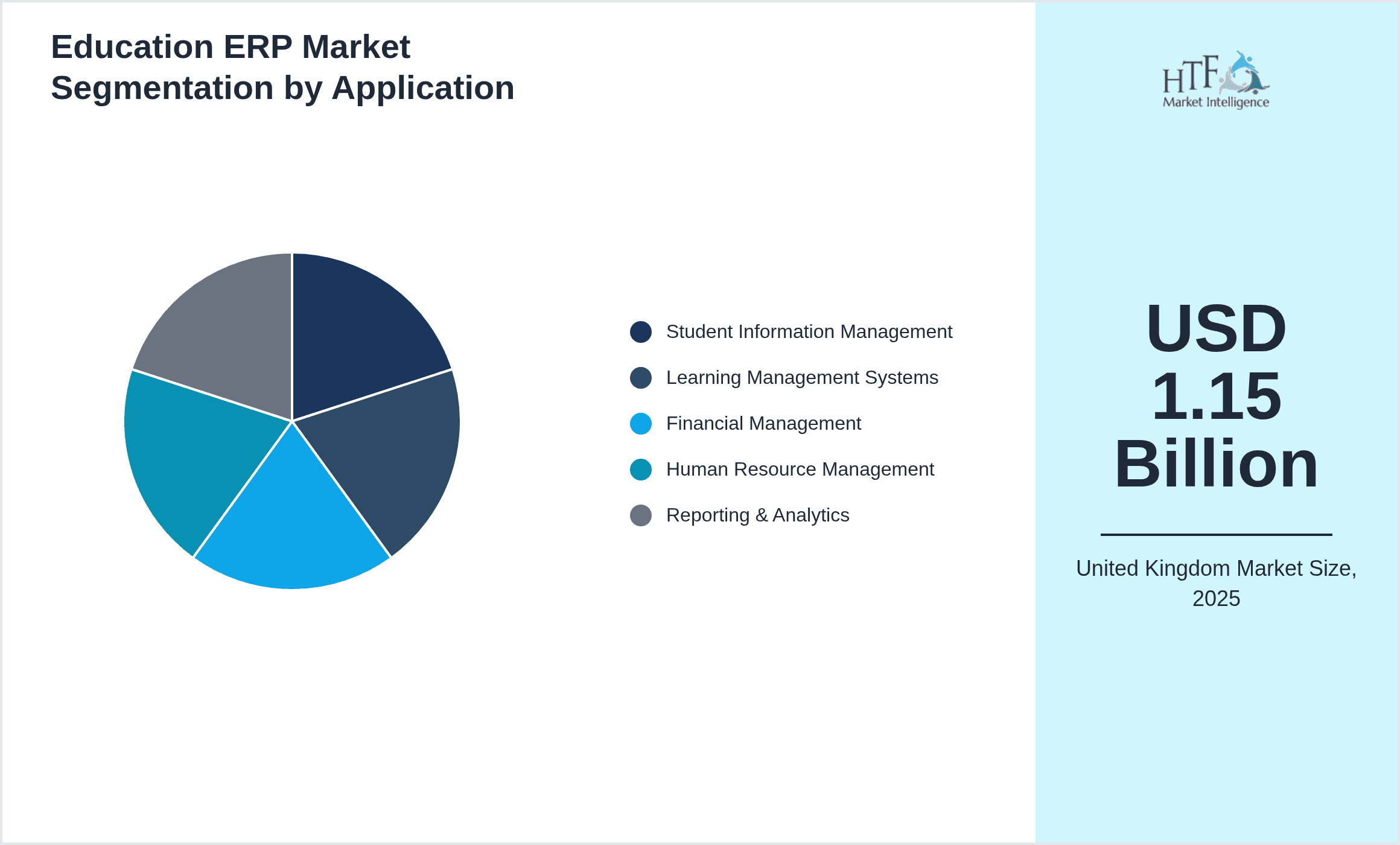
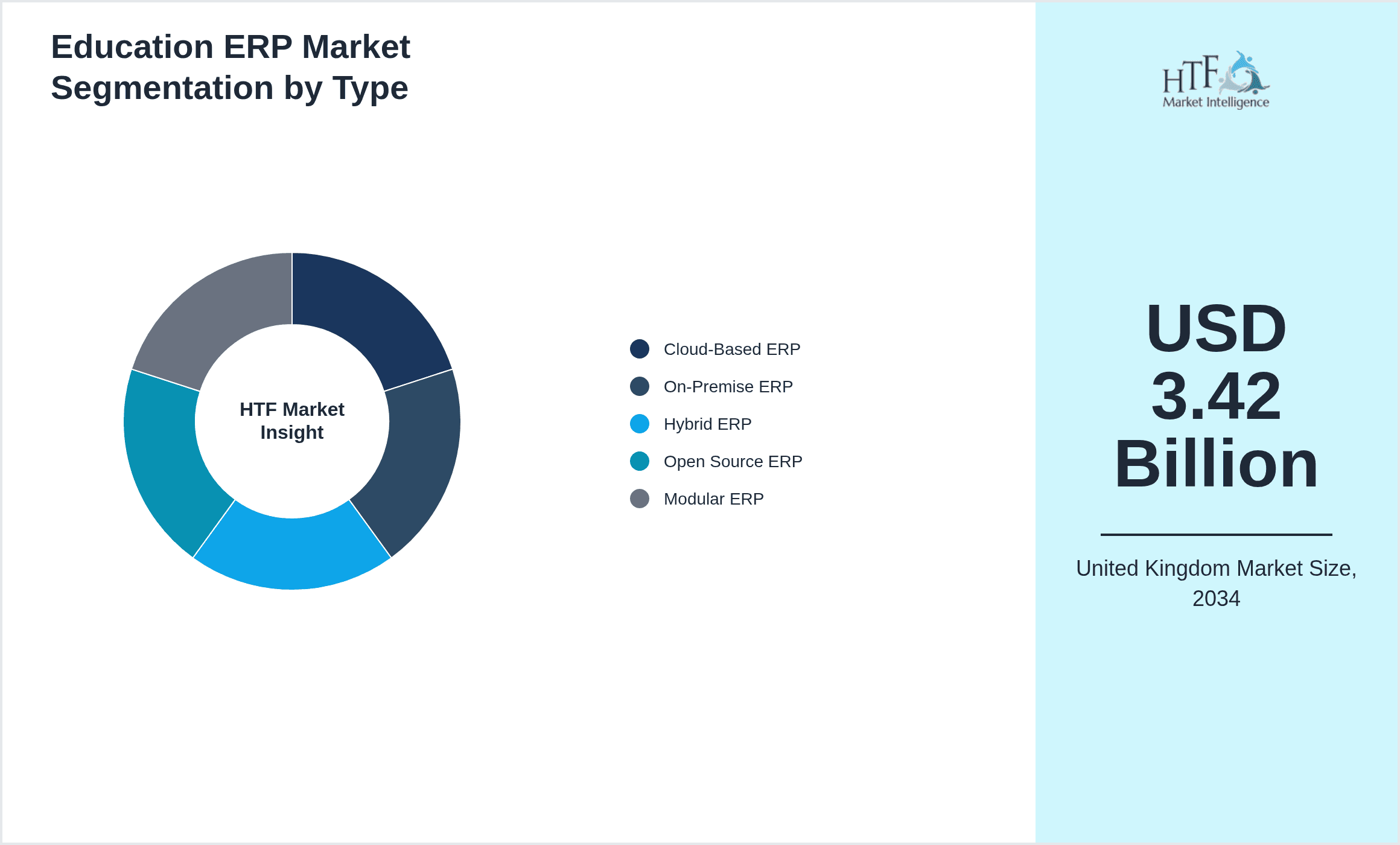
United Kingdom Education ERP Market is segmented by Type (Cloud-Based ERP, On-Premise ERP, Hybrid ERP, Open Source ERP, Modular ERP), Application (Student Information Management, Learning Management Systems, Financial Management, Human Resource Management, Reporting & Analytics), Educational Institution Level (Primary Education, Secondary Education, Higher Education, Vocational Training, Special Education), Deployment Model (Cloud Deployment, On-Premise Deployment, Hybrid Deployment), and Geography (England, Scotland, Wales, Northern Ireland)
Pricing
Report Overview
Executive Summary
- •The United Kingdom Education ERP market consists of comprehensive enterprise resource planning software solutions tailored for educational institutions within the UK. These systems integrate various functionalities including student information management, learning management systems (LMS), financial management, human resource management, and reporting & analytics to optimize institutional efficiency. The market covers diverse types such as cloud-based ERP, on-premise ERP, hybrid ERP, open source ERP, and modular ERP systems, catering to the varied needs of primary, secondary, and higher education institutions. Rapid digital transformation and government initiatives to modernize education infrastructure have accelerated adoption rates. Additionally, the market is influenced by the growing demand for data-driven decision-making and enhanced student engagement platforms. Overall, the Education ERP market in the UK plays a critical role in enabling educational institutions to streamline operations, comply with regulatory requirements, and foster academic excellence across the country's regional zones.
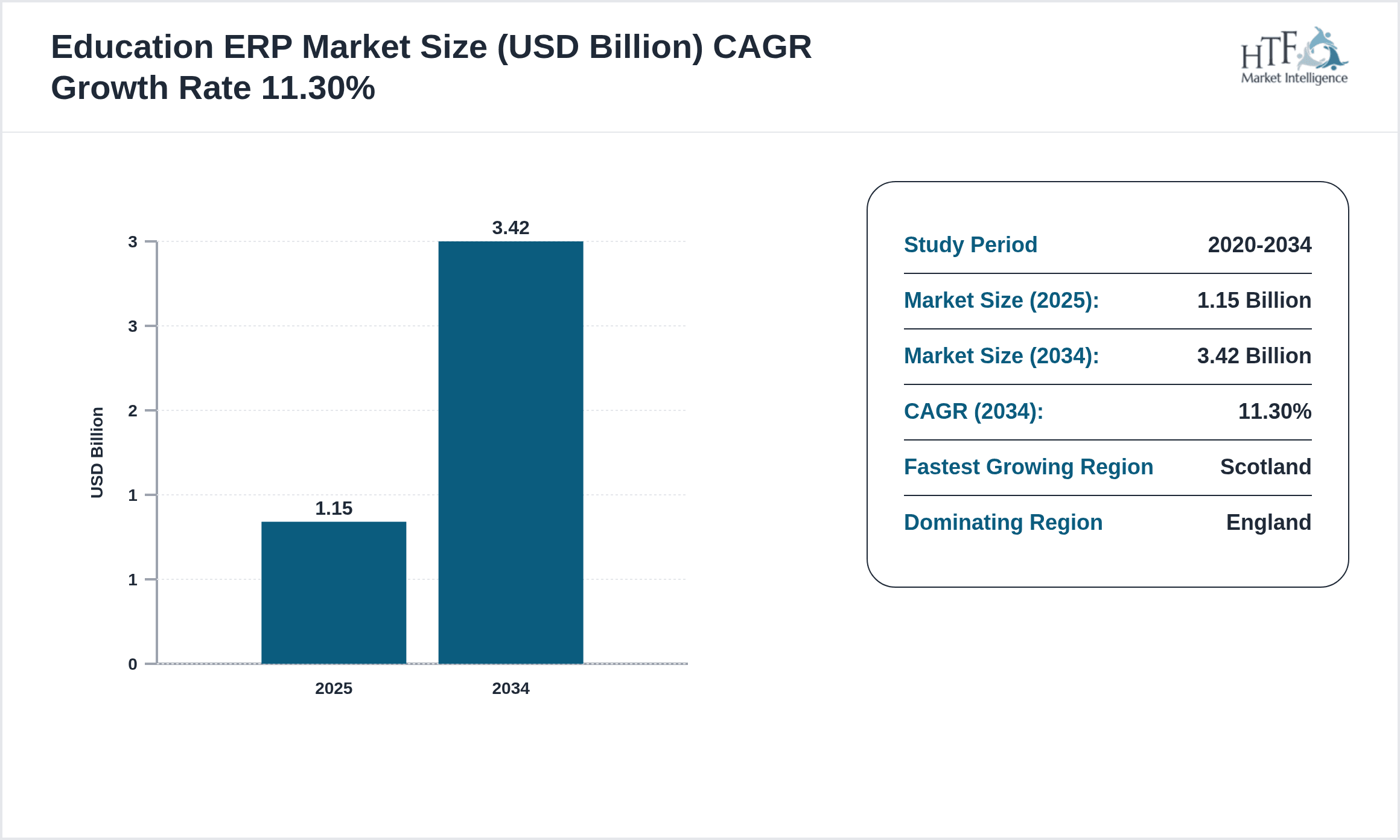
- •Key market highlights include a base market size of USD 1.15 Billion in 2024, with projections to reach USD 3.42 Billion by 2034, reflecting a robust CAGR of 11.3%. Cloud-Based ERP dominates the market, accounting for the largest share due to its scalability and cost-effectiveness, while Hybrid ERP is identified as the fastest growing type driven by flexible deployment preferences. England remains the dominating regional zone with a 45% market share, followed by Scotland which is experiencing the fastest growth at 13.5% CAGR. Student Information Management leads application segments, supported by growing requirements for comprehensive data handling, with Financial Management as the next-leading application. The market is also shaped by increasing investment in digital education infrastructure and evolving regulatory frameworks.
- •The strategic importance of the Education ERP market in the United Kingdom lies in its ability to support educational institutions in managing complex administrative workflows while enhancing educational delivery. With the United Kingdom’s focus on digital transformation and education modernization, ERP solutions offer value propositions such as improved operational efficiency, data security, real-time analytics, and compliance with evolving educational mandates. These solutions empower administrators, educators, and students by facilitating seamless collaboration and resource optimization. Consequently, the market attracts significant interest from software vendors, education authorities, and technology investors aiming to capitalize on the rising demand for integrated education management systems across the UK’s regional zones.
Competitive Landscape
The United Kingdom Education ERP market is characterized by intense competition among global software providers and specialized regional vendors. Market players adopt innovation-driven strategies focusing on cloud migration, modular product development, and integration capabilities to differentiate their offerings. The competitive environment is marked by strategic partnerships with educational institutions and government bodies, enhancing product customization and adoption. Pricing strategies range from subscription-based models for cloud ERP to perpetual licenses for on-premise solutions, catering to diverse institutional budgets. Market entry barriers include compliance with stringent UK education regulations and the need for robust data security features. Competitive rivalry intensifies as vendors continuously invest in R&D to incorporate AI, analytics, and mobile accessibility. Additionally, consolidation trends through mergers and acquisitions are reshaping market dynamics, while regional competition among zones such as England and Scotland reflects varied adoption rates and technology preferences.
Leading Companies in United Kingdom Education ERP Market
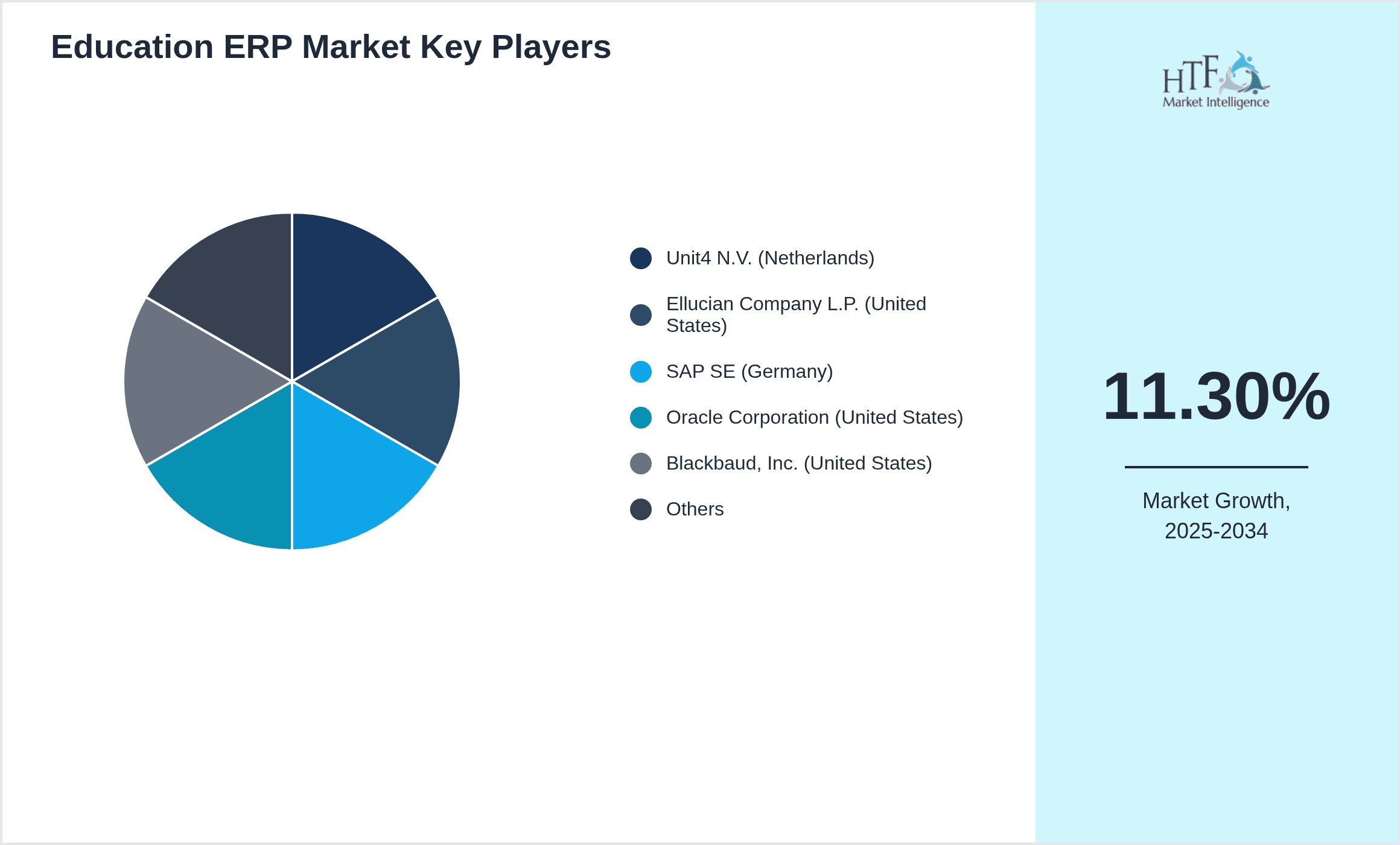
- •Unit4 N.V. (Netherlands)
- •Ellucian Company L.P. (United States)
- •SAP SE (Germany)
- •Oracle Corporation (United States)
- •Blackbaud, Inc. (United States)
- •Workday, Inc. (United States)
- •Microsoft Corporation (United States)
- •Infor, Inc. (United States)
- •Campus Management Corp. (United States)
- •Jenzabar, Inc. (United States)
- •PowerSchool Group LLC (United States)
- •Advanced Computer Software Group plc (United Kingdom)
- •Sungard Availability Services (United States)
- •Unit4 Education Solutions (United Kingdom)
- •Ellucian UK Ltd. (United Kingdom)
- •Open LMS (United Kingdom)
- •Blackboard Inc. (United States)
- •Ellucian (United Kingdom)
- •SAP UK Ltd. (United Kingdom)
- •Oracle UK (United Kingdom)
- •Workday UK (United Kingdom)
- •Microsoft UK (United Kingdom)
- •Advanced Education Solutions (United Kingdom)
- •PowerSchool UK (United Kingdom)
- •Jenzabar UK (United Kingdom)
Market Breakdown
- •By Type
- ◦Cloud-Based ERP
- ◦On-Premise ERP
- ◦Hybrid ERP
- ◦Open Source ERP
- ◦Modular ERP
- •By Application
- ◦Student Information Management
- ◦Learning Management Systems
- ◦Financial Management
- ◦Human Resource Management
- ◦Reporting & Analytics
- •By Educational Institution Level
- ◦Primary Education
- ◦Secondary Education
- ◦Higher Education
- ◦Vocational Training
- ◦Special Education
- •By Deployment Model
- ◦Cloud Deployment
- ◦On-Premise Deployment
- ◦Hybrid Deployment
Growth Dynamics
- •Increasing adoption of cloud-based ERP solutions is driving growth in the UK Education ERP market, as institutions seek scalable, cost-efficient systems that enable remote accessibility and real-time data management, enhancing operational agility.
- •Government initiatives promoting digital transformation in education and funding for technology upgrades are significantly boosting ERP deployment across schools and universities, facilitating compliance and improving administrative workflows.
- •The rising demand for integrated student information and learning management systems is fueling market expansion, allowing educators to deliver personalized learning experiences and enhance student engagement through data analytics.
- •Hybrid ERP solutions combining cloud flexibility with on-premise control are gaining traction due to concerns over data security and regulatory compliance, attracting institutions with diverse infrastructure needs.
- •The increasing emphasis on data-driven decision-making and reporting capabilities in education institutions encourages investment in advanced ERP systems equipped with analytics and AI, driving market growth.
- •Strategic partnerships between ERP vendors and UK educational bodies facilitate tailored solutions, accelerating adoption and market penetration by addressing specific regional requirements.
- •The expansion of higher education and vocational training sectors in the UK provides new opportunities for ERP vendors to cater to evolving educational demands and institutional complexities.
Market Trends
- •The UK Education ERP market is witnessing a growing trend towards cloud-native platforms offering seamless integration with other educational technologies, enabling institutions to build comprehensive digital ecosystems.
- •Artificial intelligence and machine learning are being embedded into ERP systems to enhance predictive analytics for student performance and resource planning, driving smarter educational management.
- •There is a shift towards modular ERP solutions allowing institutions to adopt specific functionalities incrementally, reducing upfront costs and improving customization.
- •Mobile accessibility is becoming a critical feature, with ERP providers developing apps to facilitate on-the-go access for administrators, educators, and students.
- •Data privacy and cybersecurity are increasingly prioritized, prompting ERP vendors to implement robust compliance features aligned with UK data protection regulations.
- •Collaborations between ERP vendors and edtech startups are fostering innovation and expanding the range of integrated services available to educational institutions.
- •Sustainability initiatives are influencing ERP development, with providers offering energy-efficient cloud hosting and promoting paperless administrative processes.
Market Opportunities
- •There is significant growth potential in expanding ERP adoption within smaller educational institutions and vocational training centers that are currently underpenetrated in the UK market.
- •Emerging opportunities exist for developing AI-driven personalized learning modules integrated with ERP platforms to enhance student outcomes and institutional effectiveness.
- •The increasing focus on hybrid learning models post-pandemic opens avenues for ERP solutions supporting blended educational environments and remote resource management.
- •Investments in upgrading legacy systems to cloud or hybrid ERP models offer vendors opportunities to capture replacement and upgrade demand across UK regions.
- •Expanding ERP functionalities to incorporate compliance management tailored to UK education regulations can attract institutions seeking simplified regulatory adherence.
- •Strategic alliances with regional education authorities and technology providers can facilitate broader market penetration and co-developed offerings addressing localized needs.
- •Growing demand for data analytics and reporting services presents opportunities for ERP vendors to differentiate through advanced business intelligence capabilities.
Market Challenges
- •High initial implementation costs and complex integration requirements pose significant barriers for many UK educational institutions, especially smaller schools with limited IT budgets.
- •Data security and privacy concerns, particularly compliance with GDPR and UK-specific data protection laws, create challenges for ERP vendors and users alike.
- •Resistance to change among educational staff and administrators slows down ERP adoption, requiring extensive training and change management efforts.
- •Fragmented education systems across UK regions necessitate customized ERP solutions, increasing development and support complexity for vendors.
- •Limited interoperability with existing legacy systems and third-party educational tools complicates deployment and reduces operational efficiency.
- •Economic uncertainties and budget constraints in the public education sector affect procurement cycles and delay ERP investments.
- •Rapid technological advancements require continuous updates and innovation from vendors to remain competitive, increasing R&D costs.
Regulatory Framework
- •Between 2019 and 2024, the UK government reinforced data protection mandates aligned with GDPR, requiring Education ERP vendors to ensure stringent compliance for handling student and staff data, significantly impacting software design and deployment.
- •The UK Digital Strategy for Education initiated in 2021 emphasizes the integration of cloud technologies and digital tools in schools and universities, promoting funding and incentives for ERP adoption to modernize educational infrastructure.
- •New cybersecurity guidelines published in 2023 mandate regular audits and enhanced security protocols for software solutions used in educational institutions, compelling ERP providers to upgrade their security frameworks.
- •Regional educational authorities across England, Scotland, Wales, and Northern Ireland have introduced specific compliance frameworks since 2020, focusing on accessibility, data transparency, and ethical use of AI within ERP systems.
- •Government initiatives launched in 2022 to support digital skills development include funding for ERP training programs and the promotion of standardized software platforms to ensure interoperability and data consistency across UK education sectors.
Market Intelligence
- •15th February 2024, Unit4 N.V. announced the launch of its latest Cloud-Based Education ERP platform specifically designed for UK institutions, featuring enhanced AI-driven analytics and seamless integration with existing Learning Management Systems. This platform aims to improve operational efficiency and provide real-time insights into student performance and financial management. The company targets primary to higher education institutions with scalable deployment options and advanced data security features compliant with UK regulations. Strategic partnerships with regional education authorities underpin this launch, projecting accelerated adoption across England and Scotland. Source: Official Unit4 press release
- •10th October 2024, Ellucian Company L.P. introduced a hybrid ERP solution tailored for UK universities, combining cloud flexibility with on-premise control to address data sovereignty concerns. This solution supports complex academic workflows including research management, student recruitment, and alumni relations. Ellucian’s innovation focuses on modular architecture facilitating phased implementations and integration with third-party edtech applications. The company’s strategic collaboration with several Scottish universities highlights growing regional demand. This launch is expected to enhance Ellucian’s market position and encourage digital transformation within UK higher education. Source: Ellucian official announcement
- •5th May 2025, Advanced Computer Software Group plc expanded its UK Education ERP portfolio by acquiring a specialized LMS provider, aiming to deliver comprehensive end-to-end solutions for schools and vocational centers. This acquisition enhances Advanced’s capabilities in student engagement and personalized learning, addressing emerging market demands. Integration plans focus on cloud deployment and analytics enhancements aligned with UK data privacy laws. The move consolidates Advanced’s leadership in the UK education sector and strengthens its competitive edge against global players. Source: Advanced Computer Software press release
- •22nd January 2025, Microsoft Corporation UK launched an AI-powered ERP analytics module for educational institutions, enabling predictive insights into student enrollment trends, resource allocation, and financial forecasting. This innovation supports proactive decision-making and operational optimization across UK schools and universities. Microsoft’s focus on cloud integration and cybersecurity compliance resonates with the UK market’s regulatory frameworks. Early pilot deployments in Wales and Northern Ireland demonstrate improved institutional planning capabilities. This product launch is anticipated to drive significant market interest and adoption. Source: Microsoft UK official news
Regional Outlook
The England currently holds a significant share of the market, primarily due to several key factors: increasing consumption rates, a burgeoning population, and robust economic momentum. These elements collectively drive demand, positioning this region as a leader in the market. On the other hand, Scotland is rapidly emerging as the fastest-growing area within the industry. This remarkable growth can be attributed to swift infrastructure development, the expansion of various industrial sectors, and a marked increase in consumer demand. These dynamics make this region a crucial player in shaping future market growth.
In our report, we cover a comprehensive analysis of the following regions and countries:
- England
- Scotland
- Wales
- Northern Ireland
| Feature | Details |
|---|---|
| Base Year Market Size | USD 1.15 Billion |
| Forecast Year Market Size | USD 3.42 Billion |
| CAGR | 11.3% |
| Forecast Period | 2026 to 2033 |
| YoY Growth | 11.3% |
| Scope of Report | Market is segmented by Type (Cloud-Based ERP, On-Premise ERP, Hybrid ERP, Open Source ERP, Modular ERP), Application (Student Information Management, Learning Management Systems, Financial Management, Human Resource Management, Reporting & Analytics), Educational Institution Level (Primary Education, Secondary Education, Higher Education, Vocational Training, Special Education), Deployment Model (Cloud Deployment, On-Premise Deployment, Hybrid Deployment) |
| Regions Covered | England, Scotland, Wales, Northern Ireland |
| Key Companies | Unit4 N.V. (Netherlands), Ellucian Company L.P. (United States), SAP SE (Germany), Oracle Corporation (United States), Blackbaud, Inc. (United States), Workday, Inc. (United States), Microsoft Corporation (United States), Infor, Inc. (United States), Campus Management Corp. (United States), Jenzabar, Inc. (United States), PowerSchool Group LLC (United States), Advanced Computer Software Group plc (United Kingdom), Sungard Availability Services (United States), Unit4 Education Solutions (United Kingdom), Ellucian UK Ltd. (United Kingdom), Open LMS (United Kingdom), Blackboard Inc. (United States), Ellucian (United Kingdom), SAP UK Ltd. (United Kingdom), Oracle UK (United Kingdom), Workday UK (United Kingdom), Microsoft UK (United Kingdom), Advanced Education Solutions (United Kingdom), PowerSchool UK (United Kingdom), Jenzabar UK (United Kingdom) |
United Kingdom Education ERP Market - Outlook 2024-2034 - Table of Contents
Frequently Asked Questions (FAQ):
The Compact Track Loaders market is projected to grow at a CAGR of 6.8% from 2025 to 2030, driven by increasing demand in construction and agricultural sectors.
North America currently leads the market with approximately 45% market share, followed by Europe at 28% and Asia-Pacific at 22%. The remaining regions account for 5% of the global market.
Key growth drivers include increasing construction activities, rising demand for versatile equipment in agriculture, technological advancements in track loader design, and growing preference for compact equipment in urban construction projects.