
South America Microfiber Market - Outlook 2025-2034
South America Microfiber Market is segmented by Type (Polyester Microfiber, Nylon Microfiber, Blended Microfiber, Specialty Microfiber, Others), Application (Apparel, Home Textiles, Industrial Cleaning, Automotive, Healthcare), End-Use Industry (Consumer Goods, Industrial Sector, Healthcare Facilities, Automotive Manufacturing), Distribution Channel (Direct Sales, Retail Stores, Online Platforms), and Geography (Brazil, Argentina, Chile, Peru, Colombia, Rest of South America)
Pricing
Report Overview
Executive Summary
- •The South America Microfiber market represents a dynamic sector focused on synthetic textile fibers with a diameter finer than one denier, primarily used in apparel, home textiles, industrial cleaning, automotive, and healthcare applications. This market covers a broad spectrum of microfiber types including polyester, nylon, blended, specialty, and others, each tailored to meet specific performance requirements such as enhanced softness, durability, moisture management, and environmental sustainability. The market scope also integrates manufacturing technologies and distribution channels that support the growing demand in countries like Brazil, Argentina, Chile, Peru, and Colombia. Driven by rapid urbanization, increasing disposable incomes, and rising awareness of microfiber benefits, the industry is witnessing significant expansion. Key use cases include high-performance sportswear, upholstery materials, cleaning cloths, and medical fabrics, which collectively contribute to market growth and innovation. Stakeholders ranging from manufacturers and retailers to end-users benefit from the advanced properties of microfiber products that align with evolving consumer preferences and regulatory standards across South America.
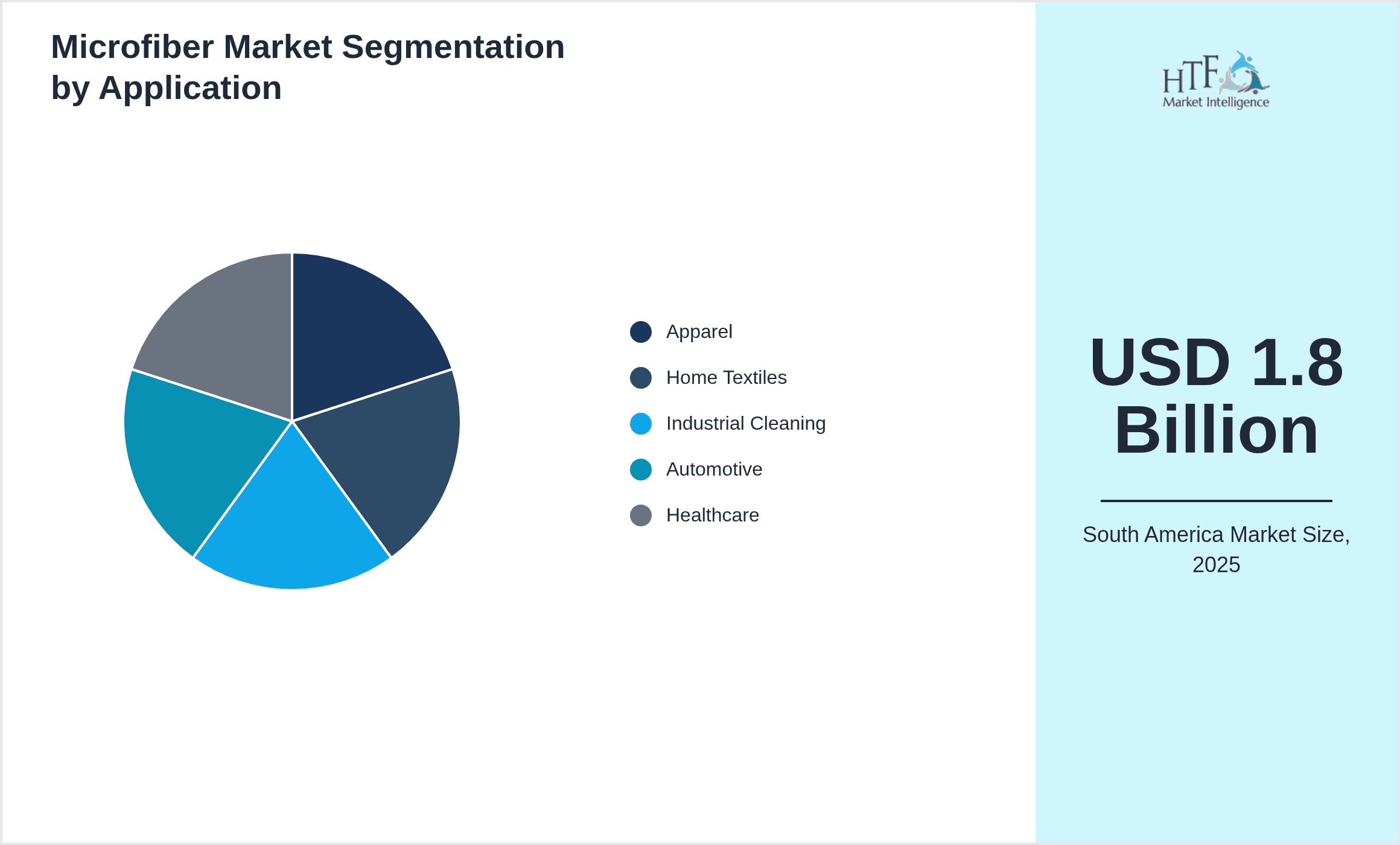
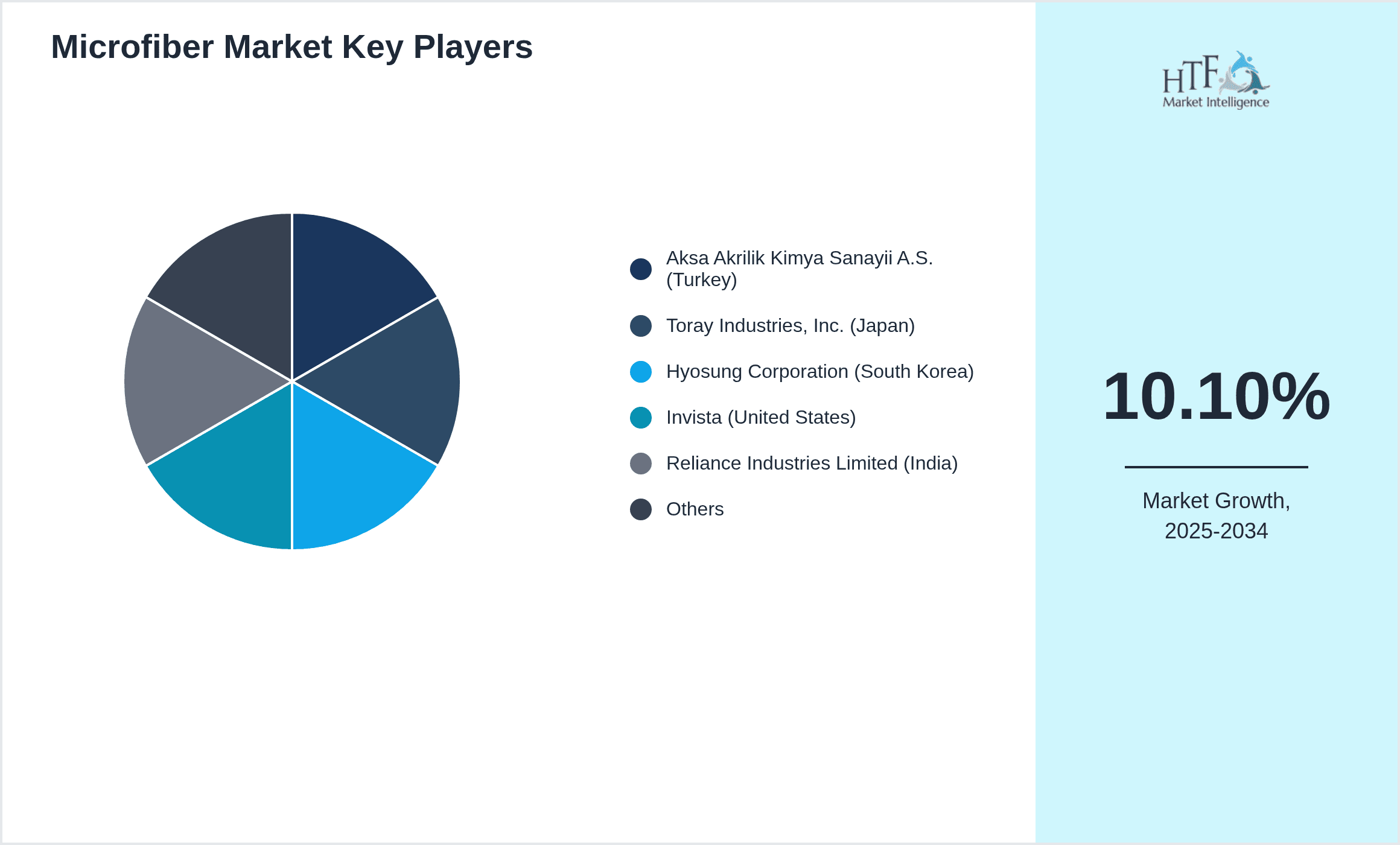
- •The South America Microfiber market is projected to grow from USD 1.8 Billion in 2025 to USD 4.35 Billion by 2034, reflecting a healthy CAGR of approximately 10.1%. Brazil dominates the market with a 35% share, while Argentina is emerging as the fastest growing country with a CAGR of 12.3%. Polyester microfiber remains the leading product type due to its versatility and cost-effectiveness, followed by specialty microfiber growing rapidly owing to its application in technical textiles. Apparel and home textiles constitute the primary applications, collectively accounting for over 60% of the market volume. Market growth is further supported by increasing fashion consciousness, industrial demand for efficient cleaning textiles, and automotive sector expansion. These factors underpin a vibrant competitive landscape and ample opportunities for innovation and market penetration across the region.
- •The market offers substantial value propositions for various stakeholders including manufacturers aiming to capitalize on the rising demand for sustainable and high-performance textiles, retailers seeking to expand microfiber product portfolios, and end-users benefitting from superior fabric qualities such as durability, comfort, and easy maintenance. Strategic importance is underscored by the microfiber market’s role in advancing eco-friendly production methods, enhancing industrial cleaning efficiency, and supporting healthcare hygiene standards. The market's growth trajectory aligns with broader economic developments in South America, fostering investment in infrastructure and technology. Additionally, the increasing adoption of microfiber in automotive interiors and healthcare textiles positions the market as a critical contributor to regional industrial diversification and innovation.

Competitive Landscape
The competitive landscape of the South America Microfiber market is characterized by a mix of established multinational corporations and influential regional manufacturers leveraging innovation, strategic partnerships, and diversified product portfolios to capture market share. Companies compete intensely on the basis of product quality, technological advancements such as eco-friendly fiber production, and expanding distribution networks. Innovation in specialty microfibers tailored for technical applications like healthcare and automotive sectors is a key differentiator, fostering ongoing rivalry. Market positioning is also influenced by agility in responding to consumer trends emphasizing sustainability and performance. Strategic alliances and localized manufacturing are common strategies to mitigate import dependencies and optimize supply chains. The presence of both global brands and strong regional players creates a dynamic ecosystem that drives continuous product development, pricing strategies, and customer engagement. Future competitive trends are expected to focus on digital integration, customization, and enhanced sustainability credentials to meet evolving regulatory and consumer demands.
Leading Companies in Microfiber Market
- •Aksa Akrilik Kimya Sanayii A.S. (Turkey)
- •Toray Industries, Inc. (Japan)
- •Hyosung Corporation (South Korea)
- •Invista (United States)
- •Reliance Industries Limited (India)
- •Wellman, Inc. (United States)
- •Teijin Limited (Japan)
- •Far Eastern New Century Corporation (Taiwan)
- •Asahi Kasei Corporation (Japan)
- •Dupont de Nemours, Inc. (United States)
- •Sateri Holdings Limited (China)
- •Indorama Ventures Public Company Limited (Thailand)
- •Mogul Tekstil Sanayi ve Ticaret A.S. (Turkey)
- •Shandong Ruyi Technology Group Co., Ltd. (China)
- •Toray Advanced Materials Korea Inc. (South Korea)
- •Nan Ya Plastics Corporation (Taiwan)
- •China National Chemical Corporation (China)
- •Mitsubishi Chemical Holdings Corporation (Japan)
- •Reliance Textiles (India)
- •Far Eastern Textile Co., Ltd. (Taiwan)
- •Unifi, Inc. (United States)
- •Zhejiang Hengyi Group Co., Ltd. (China)
- •Lenzing AG (Austria)
- •Toray Textiles Europe (Germany)
- •Cortefiel Group, S.A. (Spain)
Market Breakdown
- •By Type
- ◦Polyester Microfiber
- ◦Nylon Microfiber
- ◦Blended Microfiber
- ◦Specialty Microfiber
- ◦Others
- •By Application
- ◦Apparel
- ◦Home Textiles
- ◦Industrial Cleaning
- ◦Automotive
- ◦Healthcare
- •By End-Use Industry
- ◦Consumer Goods
- ◦Industrial Sector
- ◦Healthcare Facilities
- ◦Automotive Manufacturing
- •By Distribution Channel
- ◦Direct Sales
- ◦Retail Stores
- ◦Online Platforms
Growth Dynamics
- •Rising demand for high-performance textiles in South America’s apparel and home furnishing sectors is a major growth driver, fueled by increasing consumer preference for durable, lightweight, and moisture-wicking fabrics such as polyester microfiber. This trend is supported by rising disposable incomes and urbanization, which boost textile consumption and demand for premium fabrics.
- •Technological advancements in microfiber production, including sustainable manufacturing processes and development of specialty microfibers with enhanced functional properties, are expanding application scopes in technical textiles, healthcare, and automotive interiors, creating new market avenues.
- •Government initiatives promoting sustainable textiles and reducing environmental impact in South America encourage manufacturers to adopt recycled polyester microfiber and eco-friendly blends, aligning industry growth with regulatory frameworks and consumer values.
- •Increasing industrialization and growth in automotive manufacturing within Brazil and Argentina are driving demand for microfiber materials in automotive interior applications, supporting market expansion in these key countries.
- •The growth of e-commerce and digital retail platforms enables wider distribution and accessibility of microfiber products across South America, facilitating market penetration into untapped regions and consumer segments.

Market Trends
- •Sustainability is a dominant trend, with manufacturers increasingly using recycled polyester and eco-friendly fibers to meet consumer demand for greener products, driving innovation in microfiber textiles.
- •The rise of smart textiles integrating microfibers with wearable technology is an emerging trend, particularly in the healthcare and sports apparel sectors, enhancing functionality and consumer engagement.
- •Customization and niche applications such as antimicrobial microfiber fabrics for healthcare and hygiene products are gaining traction, reflecting shifting market preferences toward specialized performance textiles.
- •Growth in industrial cleaning applications is propelled by microfiber’s superior cleaning efficiency and durability, leading to increased adoption in commercial and household cleaning products.
- •Collaborations between textile manufacturers and automotive OEMs are increasing to develop advanced microfiber materials tailored for vehicle interiors, improving comfort and durability.
Market Opportunities
- •Expanding microfiber applications in healthcare, including wound care and surgical textiles, present significant growth opportunities driven by rising healthcare infrastructure investments in South America.
- •Untapped markets in emerging South American countries offer potential for microfiber manufacturers to expand presence through targeted marketing and localized production facilities.
- •Investment in R&D focusing on biodegradable and bio-based microfibers could open new market segments aligned with global sustainability trends and regulatory demands.
- •Growth in automotive microfiber upholstery demand provides opportunities for partnerships with vehicle manufacturers to develop customized solutions that improve vehicle comfort and sustainability.
- •E-commerce expansion enables microfiber producers to reach a broader consumer base, creating opportunities for direct-to-consumer sales models and product diversification.
Market Challenges
- •High raw material costs and price volatility for polyester and nylon pose significant challenges, affecting profit margins and pricing strategies for microfiber manufacturers in South America.
- •Competition from alternative textile materials such as cotton blends and natural fibers limits microfiber market penetration, particularly in cost-sensitive consumer segments.
- •Lack of widespread awareness about microfiber benefits and sustainability aspects among consumers in certain South American regions hampers market growth potential.
- •Stringent environmental regulations related to synthetic fiber production and waste management impose compliance burdens and increase operational costs.
- •Supply chain disruptions caused by geopolitical factors and logistical challenges in South America can delay raw material availability and product delivery, impacting market stability.
Regulatory Framework
- •Between 2020 and 2025, South American governments, notably Brazil and Argentina, have implemented stricter environmental regulations mandating reductions in chemical emissions and waste during textile manufacturing, prompting microfiber producers to adopt cleaner technologies.
- •New compliance standards require manufacturers to certify the sustainability of synthetic fibers, including mandatory reporting on recycled content percentages, impacting production processes and market entry strategies.
- •Safety standards for microfiber use in healthcare and industrial cleaning have been tightened, ensuring products meet stringent hygiene and performance criteria, influencing product development priorities.
- •Regional trade agreements within South America facilitate easier cross-border distribution of textile goods but also impose quality and labeling requirements that manufacturers must adhere to.
- •Government incentives promoting sustainable manufacturing practices, including tax benefits and grants for adopting eco-friendly microfiber production technologies, have been introduced to stimulate industry growth.
Market Intelligence
- •15th January 2025, Toray Industries, Inc. launched an innovative eco-friendly polyester microfiber line targeting South America, incorporating 50% recycled materials and advanced hydrophobic properties aimed at the sportswear and home textiles markets. This launch positions Toray as a sustainability leader in the region, responding to increasing consumer demand for green products and supporting the region’s environmental regulations. The new product is expected to expand Toray’s market share significantly in key countries such as Brazil and Argentina. Source: Official Toray Press Release
- •22nd March 2025, Invista announced a strategic partnership with a leading Brazilian textile manufacturer to co-develop specialty microfiber fabrics for automotive interiors. This collaboration focuses on enhancing durability and aesthetic appeal while reducing environmental impact through recycled content integration. The initiative aims to meet rising automotive sector demands in South America and accelerate product innovation. Source: Invista Corporate Announcement
- •10th June 2025, Reliance Industries Limited expanded its microfiber production facility in Argentina, increasing capacity by 30% to meet growing demand from the healthcare and industrial cleaning segments. This expansion includes state-of-the-art sustainable manufacturing equipment compliant with the latest South American environmental regulations, positioning Reliance as a major regional supplier. The move is expected to strengthen Reliance’s footprint and competitive positioning in South America. Source: Reliance Industries Press Release
- •5th September 2025, Hyosung Corporation introduced a new microfiber variant featuring enhanced antimicrobial properties, designed for the healthcare and hygiene markets in South America. This product launch addresses rising health and safety concerns and leverages Hyosung’s advanced fiber technology to capture emerging market opportunities in hospitals and clinics. The product has received positive industry feedback and is anticipated to drive significant sales growth. Source: Hyosung Official Statement
Regional Outlook
The Brazil currently holds a significant share of the market, primarily due to several key factors: increasing consumption rates, a burgeoning population, and robust economic momentum. These elements collectively drive demand, positioning this region as a leader in the market. On the other hand, Argentina is rapidly emerging as the fastest-growing area within the industry. This remarkable growth can be attributed to swift infrastructure development, the expansion of various industrial sectors, and a marked increase in consumer demand. These dynamics make this region a crucial player in shaping future market growth.
In our report, we cover a comprehensive analysis of the following regions and countries:
- Brazil
- Argentina
- Chile
- Peru
- Colombia
- Rest of South America
| Feature | Details |
|---|---|
| Base Year Market Size | USD 1.8 Billion |
| Forecast Year Market Size | USD 4.35 Billion |
| CAGR | 10.1% |
| Forecast Period | 2026 to 2033 |
| YoY Growth | 9.7% |
| Scope of Report | Market is segmented by Type (Polyester Microfiber, Nylon Microfiber, Blended Microfiber, Specialty Microfiber, Others), Application (Apparel, Home Textiles, Industrial Cleaning, Automotive, Healthcare), End-Use Industry (Consumer Goods, Industrial Sector, Healthcare Facilities, Automotive Manufacturing), Distribution Channel (Direct Sales, Retail Stores, Online Platforms) |
| Regions Covered | Brazil, Argentina, Chile, Peru, Colombia, Rest of South America |
| Key Companies | Aksa Akrilik Kimya Sanayii A.S. (Turkey), Toray Industries, Inc. (Japan), Hyosung Corporation (South Korea), Invista (United States), Reliance Industries Limited (India), Wellman, Inc. (United States), Teijin Limited (Japan), Far Eastern New Century Corporation (Taiwan), Asahi Kasei Corporation (Japan), Dupont de Nemours, Inc. (United States), Sateri Holdings Limited (China), Indorama Ventures Public Company Limited (Thailand), Mogul Tekstil Sanayi ve Ticaret A.S. (Turkey), Shandong Ruyi Technology Group Co., Ltd. (China), Toray Advanced Materials Korea Inc. (South Korea), Nan Ya Plastics Corporation (Taiwan), China National Chemical Corporation (China), Mitsubishi Chemical Holdings Corporation (Japan), Reliance Textiles (India), Far Eastern Textile Co., Ltd. (Taiwan), Unifi, Inc. (United States), Zhejiang Hengyi Group Co., Ltd. (China), Lenzing AG (Austria), Toray Textiles Europe (Germany), Cortefiel Group, S.A. (Spain) |
South America Microfiber Market - Outlook 2025-2034 - Table of Contents
Frequently Asked Questions (FAQ):
The Compact Track Loaders market is projected to grow at a CAGR of 6.8% from 2025 to 2030, driven by increasing demand in construction and agricultural sectors.
North America currently leads the market with approximately 45% market share, followed by Europe at 28% and Asia-Pacific at 22%. The remaining regions account for 5% of the global market.
Key growth drivers include increasing construction activities, rising demand for versatile equipment in agriculture, technological advancements in track loader design, and growing preference for compact equipment in urban construction projects.