
Asia-Pacific Outdoor Apparel Market Size, Growth & Revenue 2024-2034
Asia-Pacific Outdoor Apparel Market is segmented by Product Type (Technical Jackets, Fleece, Pants, Base Layers, Footwear), Application (Hiking, Camping, Skiing, Mountaineering, Casual Wear), Distribution Channel (Specialty Outdoor Stores, E-commerce, Sports Retail Chains, Department Stores), Technology (Waterproof and Breathable Fabrics, Thermal Insulation Materials, Sustainable/Recycled Materials), and Geography (Japan, China, Southeast Asia, India, Australia, South Korea, Others)
Pricing
Report Overview
Executive Summary
- •The Asia-Pacific Outdoor Apparel Market comprises specialized clothing and footwear engineered for outdoor activities such as hiking, camping, skiing, mountaineering, and casual wear. It includes diverse product types like technical jackets, fleece, pants, base layers, and footwear designed to offer protection, comfort, and performance across varied climatic conditions prevalent in Asia-Pacific countries. The market benefits from technological advances in fabric innovation, sustainable materials, and smart textile integration, responding to increasing consumer demand for versatile and eco-friendly outdoor wear. This market's scope covers a wide demographic, from adventure sports enthusiasts to urban consumers embracing outdoor lifestyles. The Asia-Pacific region's expansive geography, ranging from tropical Southeast Asia to the cold mountainous terrains of Japan and China, drives distinct product requirements and market segmentation. Increasing disposable incomes, growing adventure tourism, and heightened awareness about personal health and outdoor recreation contribute substantially to market growth. These factors collectively create a dynamic environment fostering innovation, competition, and expansion opportunities within the Asia-Pacific outdoor apparel industry.
- •Asia-Pacific's outdoor apparel market is projected to grow robustly with a CAGR of 8.8% from 2024 to 2034, expanding from USD 18.5 billion in 2024 to USD 42.3 billion by 2034. China leads the market with a commanding 35% share, supported by strong manufacturing capabilities and domestic consumption. India represents the fastest-growing country with a CAGR of 12.5%, driven by rising urbanization and increasing participation in outdoor sports. Technical jackets dominate the product type segment due to their multifunctionality and weather resistance, while base layers are the fastest-growing product category, reflecting consumer preferences for comfort and thermal regulation. Hiking and camping remain the primary applications, with skiing and mountaineering showing steady demand in colder regions. The Asia-Pacific market's growth is bolstered by expanding adventure tourism, increased outdoor participation, and the rising popularity of sustainable and performance-enhancing apparel.
- •The Asia-Pacific outdoor apparel market offers significant value propositions to manufacturers, retailers, and consumers by catering to the diverse and evolving needs of outdoor enthusiasts. For manufacturers, the market provides opportunities to leverage advancing textile technologies and sustainability trends to differentiate offerings. Retailers benefit from expanding distribution channels, including e-commerce and specialty stores, targeting a growing consumer base. Consumers gain access to innovative, high-performance products that enhance outdoor experiences and lifestyle appeal. Strategically, the market's growth is aligned with rising health consciousness, urban outdoor culture, and government initiatives promoting tourism and sports activities. This creates a conducive environment for investment, product development, and regional expansion, positioning the Asia-Pacific outdoor apparel market as a critical segment within the global outdoor gear and apparel industry.

Competitive Landscape
The competitive environment in the Asia-Pacific outdoor apparel market is characterized by intense rivalry among established global brands and emerging regional players. Companies focus on innovation through advanced fabric technologies such as moisture-wicking, thermal regulation, and eco-friendly materials to meet evolving consumer demands. Strategic positioning is achieved via product differentiation, brand loyalty, and expanding retail and e-commerce channels. Collaboration with outdoor sports events and sponsorships enhances brand visibility and consumer engagement. Mergers and acquisitions are prevalent as firms seek to consolidate market share and diversify product portfolios. Pricing strategies balance premium product offerings with accessible mid-range options to cater to diverse demographic segments. Geographic expansion within Asia-Pacific countries is a critical competitive tactic due to varied market maturity and consumer preferences. The adoption of digital marketing and omnichannel distribution further intensifies competition, while sustainability commitments increasingly influence brand reputations and market positioning. Overall, the landscape is dynamic, with innovation and strategic agility as core competitive drivers.
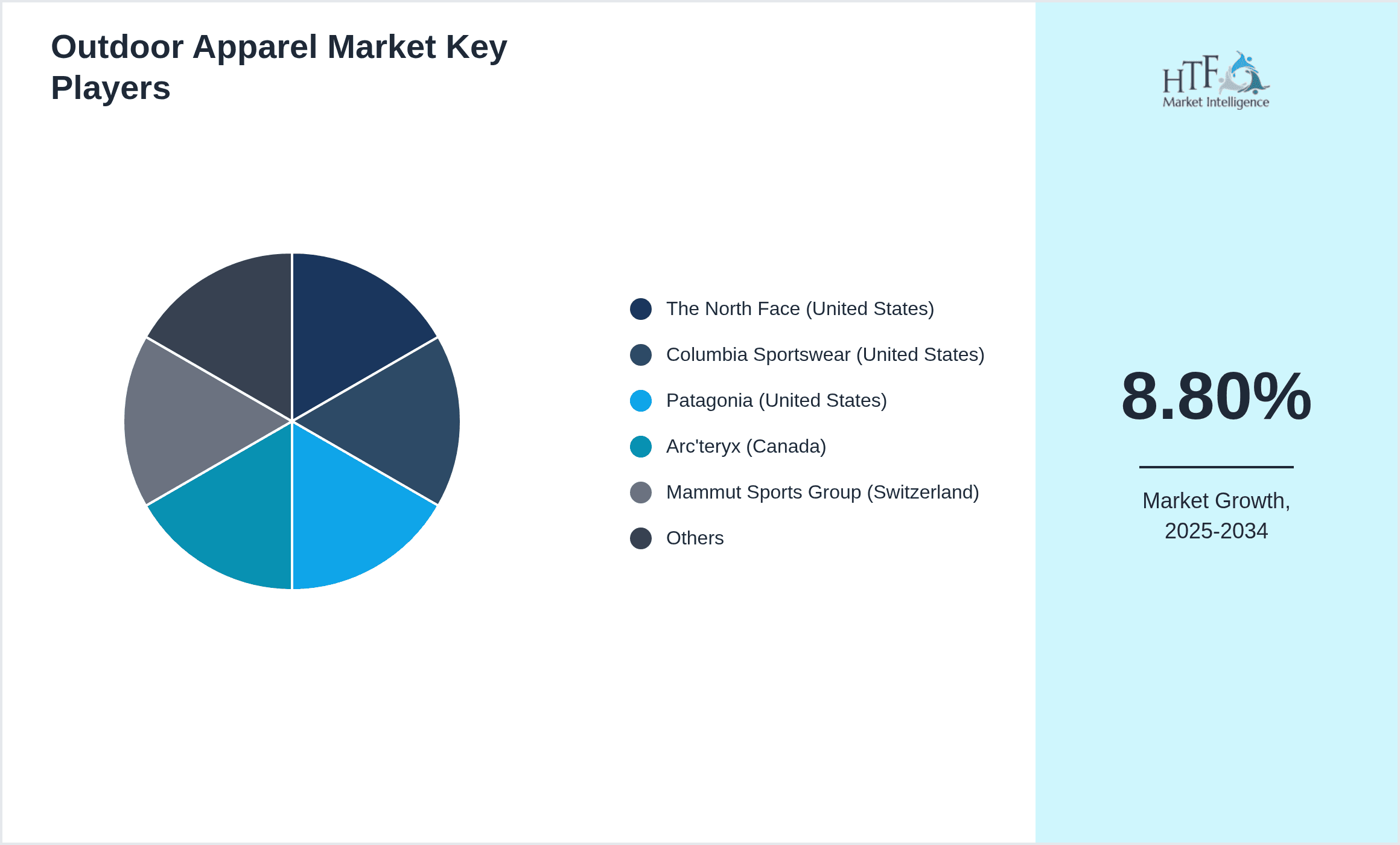
Leading Companies in Asia-Pacific Outdoor Apparel Market
- •The North Face (United States)
- •Columbia Sportswear (United States)
- •Patagonia (United States)
- •Arc'teryx (Canada)
- •Mammut Sports Group (Switzerland)
- •Montbell (Japan)
- •Jack Wolfskin (Germany)
- •Black Yak (South Korea)
- •Decathlon (France)
- •Peak Performance (Sweden)
- •K2 Corporation (South Korea)
- •Fjällräven (Sweden)
- •Snow Peak (Japan)
- •Wildcraft (India)
- •Quechua (France)
- •Salomon (France)
- •Eider (South Korea)
- •Colmar (Italy)
- •Mountain Hardwear (United States)
- •Sherpa Adventure Gear (Nepal)
Market Breakdown
- •By Product Type
- ◦Technical Jackets
- ◦Fleece
- ◦Pants
- ◦Base Layers
- ◦Footwear
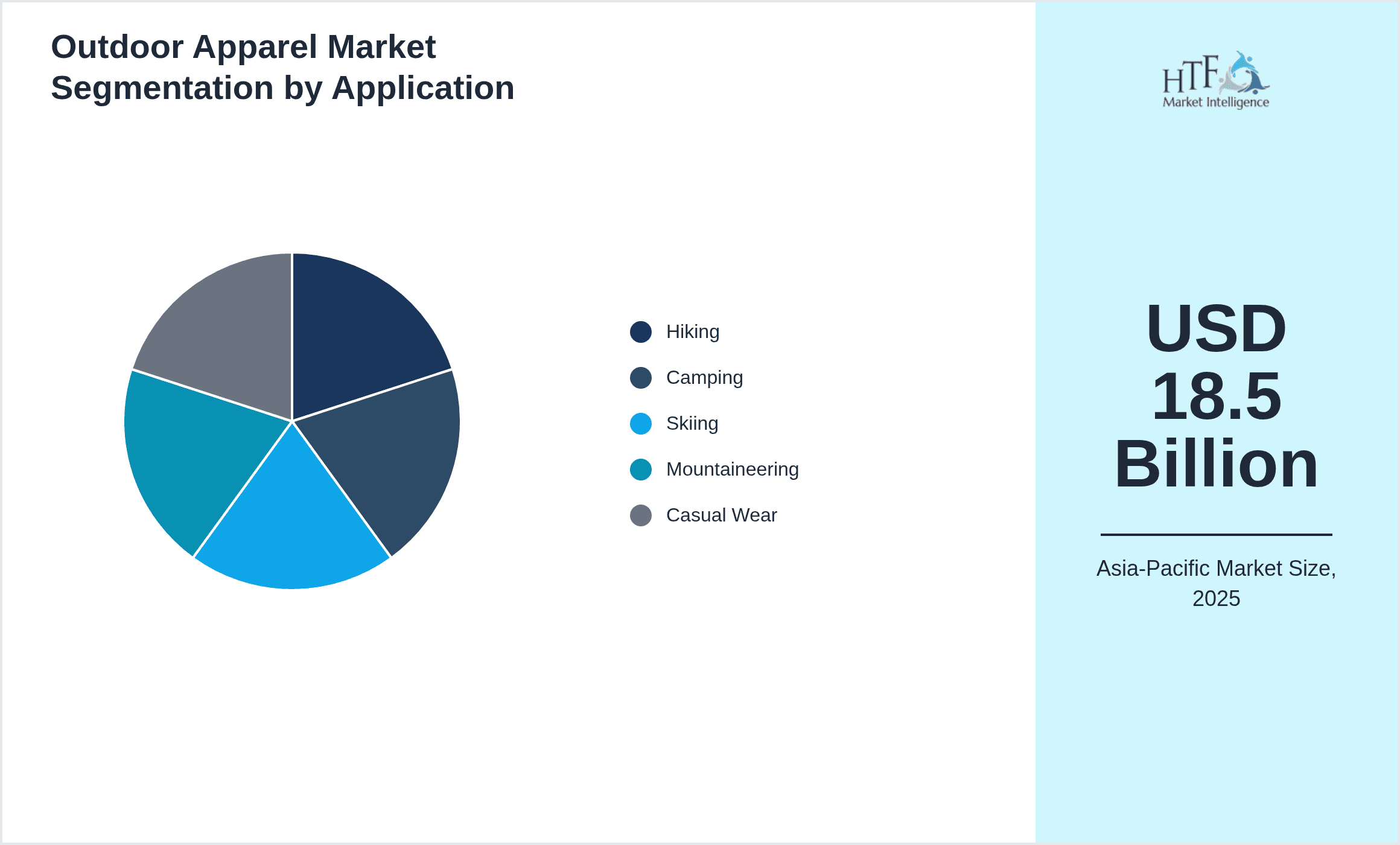
- •By Application
- ◦Hiking
- ◦Camping
- ◦Skiing
- ◦Mountaineering
- ◦Casual Wear
- •By Distribution Channel
- ◦Specialty Outdoor Stores
- ◦E-commerce
- ◦Sports Retail Chains
- ◦Department Stores
- •By Technology
- ◦Waterproof and Breathable Fabrics
- ◦Thermal Insulation Materials
- ◦Sustainable/Recycled Materials
Growth Dynamics
- •The Asia-Pacific outdoor apparel market growth is fueled by increasing urbanization and rising disposable incomes, enabling consumers to invest more in leisure and outdoor activities. Adventure tourism growth across countries such as China, India, and Southeast Asia significantly boosts demand for specialized apparel. Technological advancements in fabric and garment design, including enhanced weather resistance and comfort features, attract a broad consumer base seeking high-performance products. Government initiatives promoting outdoor sports and wellness activities further stimulate market expansion. The growing environmental awareness is accelerating demand for sustainable and ethically-produced outdoor apparel, creating new product development avenues and attracting environmentally conscious consumers.
- •The proliferation of digital retail channels and e-commerce platforms in Asia-Pacific enhances product accessibility and consumer engagement. Market players leverage omnichannel strategies combining online and offline sales to reach diverse demographics efficiently. Increasing participation of millennials and Gen Z in outdoor sports and recreational activities fuels demand for fashionable yet functional outdoor clothing. Seasonal climatic variations within the region create year-round demand cycles for different apparel types. Corporate wellness programs and outdoor lifestyle trends encourage bulk purchases and diversified product adoption. Collaborations between apparel brands and outdoor event organizers amplify brand visibility and consumer trust, contributing positively to market growth.
- •Innovation in sustainable materials, such as recycled polyester and bio-based fabrics, is transforming the product landscape, appealing to environmentally conscious consumers in Asia-Pacific. Local manufacturers are increasingly adopting eco-friendly practices to align with global sustainability trends. The rising popularity of athleisure and casual outdoor wear blurs traditional segment boundaries, expanding the target market. Enhanced product customization and smart textile integration, including wearable technology for health and environmental monitoring, provide differentiation opportunities. The growing influence of social media and influencer marketing drives consumer awareness and preference for premium outdoor apparel brands. These factors collectively foster a competitive and innovative market environment.
- •Government infrastructure development projects in tourism hotspots and national parks stimulate demand for outdoor apparel among both domestic and international tourists. Trade agreements and reduced tariffs among Asia-Pacific nations facilitate smoother cross-border distribution and market entry for international brands. Increasing awareness of outdoor activities as part of a healthy lifestyle, including hiking and camping, supports sustained demand growth. Expansion of retail networks into tier-2 and tier-3 cities unlocks new consumer bases. The rise of experiential retail and brand-led community events enhances customer loyalty and market penetration. These macroeconomic and social trends underpin a favorable growth trajectory for the Asia-Pacific outdoor apparel market.
- •Investment in research and development focused on performance enhancement and sustainability is increasingly prioritized by market players. Partnerships with textile innovators and sports organizations enable co-creation of advanced products tailored for Asia-Pacific’s diverse climates. The advent of 3D knitting and seamless garment technologies reduces production waste and improves product quality. Consumer preference shifts towards multifunctional apparel suitable for various outdoor conditions drive product portfolio diversification. Rising environmental regulations encourage compliance with eco-friendly manufacturing standards, creating barriers for non-compliant players and opportunities for leaders. Together, these growth dynamics position the Asia-Pacific outdoor apparel market for robust expansion over the forecast period.

Market Trends
- •The Asia-Pacific outdoor apparel market is witnessing a pronounced shift towards sustainable and ethically sourced materials, with brands increasingly adopting recycled fibers and biodegradable fabrics. This trend aligns with growing consumer environmental awareness and regulatory pressures. For instance, major players have launched eco-conscious product lines incorporating organic cotton and recycled polyester. Additionally, the integration of smart textiles capable of monitoring body temperature and moisture levels is gaining traction, enhancing functionality for outdoor enthusiasts. Urban outdoor lifestyles are also influencing design aesthetics, blending performance with fashion, which broadens the consumer base beyond traditional adventurers. These trends collectively redefine product development and marketing strategies within the region.
- •Digital transformation continues to reshape the retail landscape, with e-commerce platforms and virtual fitting technologies improving the consumer purchase experience. Social media influencers and community-driven marketing are crucial in shaping brand perception and driving sales among younger demographics. Moreover, collaborations between outdoor apparel brands and tech companies foster innovation in wearable devices and connected clothing. Seasonal collections adapted to Asia-Pacific’s diverse climates are becoming standard, allowing brands to cater to local preferences effectively. The rise of rental and resale models reflects growing consumer interest in sustainable consumption, impacting product lifecycle management. These evolving trends underscore the dynamic nature of the Asia-Pacific outdoor apparel market.
- •Brands are increasingly focusing on inclusivity and customization, offering a broader range of sizes and styles catering to diverse consumer profiles across the Asia-Pacific. Localization of product offerings, including culturally relevant designs and region-specific features, enhances market acceptance. The surge in adventure tourism and outdoor recreational activities is prompting development of specialized apparel for niche sports such as trail running and rock climbing. Strategic retail expansions into emerging markets within the region are enabling access to untapped consumer segments. Furthermore, partnerships with local athletes and environmental organizations bolster brand authenticity and consumer trust. These trends collectively drive competitive differentiation and market growth.
- •Sustainability certifications and transparent supply chain practices are becoming key purchasing criteria, prompting brands to invest in traceability technologies and ethical sourcing. The adoption of biodegradable packaging and reduced water usage in manufacturing processes aligns with corporate social responsibility goals. Circular economy initiatives, including take-back and recycling programs, are emerging across the region, influencing consumer loyalty. Technological advances in fabric durability and weight reduction enhance product appeal for long-duration outdoor activities. Market players are also leveraging data analytics to optimize inventory and forecast demand accurately. These developments highlight the convergence of technology and sustainability shaping the market’s future.
- •Consumer preferences are increasingly influenced by health and wellness trends, driving demand for versatile outdoor apparel suitable for both athletic and casual use. The blending of outdoor functionality with streetwear aesthetics creates new fashion segments. Brands are exploring augmented reality and AI-driven personalized shopping experiences to enhance engagement. Expansion of omni-channel retail strategies integrates physical stores with digital platforms, providing seamless customer journeys. The growing emphasis on product transparency and corporate ethics fosters brand loyalty and differentiates market leaders. Collectively, these trends signify a maturation of the Asia-Pacific outdoor apparel market towards innovation-driven, consumer-centric growth.
Market Opportunities
- •The rapid urbanization and rising middle-class population in countries like India and Southeast Asia present significant opportunities for market players to expand their consumer base. Untapped rural and semi-urban markets offer potential for growth through affordable and regionally adapted product lines. The increasing popularity of adventure tourism and outdoor recreational activities in emerging economies can be leveraged by introducing specialized gear and apparel. Investments in digital marketing and e-commerce infrastructure enable brands to reach wider audiences efficiently. Collaborations with local designers and influencers can foster brand authenticity and regional relevance, driving deeper market penetration and customer loyalty.
- •Sustainability remains a key growth area, with opportunities to develop innovative eco-friendly materials and circular economy business models. Brands that pioneer biodegradable fabrics, recycled content, and ethical manufacturing processes can capture environmentally conscious consumers. The integration of wearable technology and smart textiles opens avenues for differentiation in performance apparel segments. Expansion into niche outdoor sports apparel, such as trail running and climbing, addresses specialized consumer needs and commands premium pricing. Additionally, growth in women’s outdoor apparel and inclusive sizing reflects evolving consumer demographics, enabling product portfolio diversification and increased market share.
- •Developing region-specific product lines tailored to diverse climatic and cultural conditions across Asia-Pacific enhances market relevance and consumer acceptance. Leveraging augmented reality and AI for personalized shopping experiences can improve customer engagement and conversion rates. Strategic alliances with tourism boards and outdoor sports organizations provide marketing leverage and broaden brand reach. Expansion in omnichannel retail, combining e-commerce with experiential physical stores, can optimize sales and customer loyalty. Emerging trends in rental and resale models offer sustainable revenue streams and attract younger, environmentally aware consumers. These opportunities collectively support sustained innovation and competitive advantage in the Asia-Pacific outdoor apparel market.
- •Government initiatives promoting sports, wellness, and tourism create enabling environments for market growth. Capitalizing on infrastructure development in national parks and recreational areas can stimulate demand for outdoor apparel. Enhanced logistics and supply chain capabilities in the region facilitate faster product delivery and inventory management. Increasing consumer willingness to invest in premium and technical outdoor gear supports margin expansion. Brands that effectively combine sustainability, technology, and localized marketing strategies are well positioned to capture emerging opportunities. Expansion into adjacent product categories such as outdoor accessories and equipment also represents a growth avenue.
- •The growing influence of social media and digital communities focused on outdoor lifestyles provides platforms for brand storytelling and consumer engagement. Innovative marketing campaigns leveraging user-generated content and influencer partnerships can amplify brand visibility. The rising adoption of subscription-based and direct-to-consumer sales models offers alternative revenue channels. Advances in fabric science and manufacturing technologies enable rapid prototyping and product iteration, responding swiftly to market trends. Collaborations with environmental NGOs and participation in sustainability certifications enhance corporate reputation and consumer trust. These strategic initiatives collectively unlock significant growth potential within the Asia-Pacific outdoor apparel market.
Market Challenges
- •The Asia-Pacific outdoor apparel market faces challenges from fluctuating raw material prices, particularly for high-performance synthetic fabrics and sustainable alternatives. Supply chain disruptions caused by geopolitical tensions, natural disasters, and pandemic-related restrictions impact production schedules and delivery timelines. Intense competition from both established international brands and local manufacturers exerts pressure on pricing and profit margins. Counterfeit products and brand imitation undermine market trust and affect revenue. Additionally, balancing cost competitiveness with sustainability commitments presents operational challenges, especially for mid-sized enterprises.
- •Variations in climatic conditions and consumer preferences across Asia-Pacific complicate product standardization and inventory management. Regulatory complexities and compliance requirements differ significantly among countries, imposing burdens on cross-border trade and market entry. Limited consumer awareness in emerging markets about technical features and sustainability aspects hampers premium product adoption. The high cost of research and development for innovative textiles and smart apparel restricts smaller players’ competitiveness. Furthermore, environmental regulations and labor standards enforcement increase operational costs and necessitate continuous process improvements.
- •Digital transformation challenges include cybersecurity risks, data privacy concerns, and the need for continuous technology upgrades to maintain competitive advantage. The fragmented retail landscape with diverse consumer channels demands tailored marketing and distribution strategies, increasing complexity. Seasonal demand fluctuations require efficient supply chain agility to prevent overstock or stockouts. The growing consumer preference for fast fashion and low-cost alternatives poses a threat to premium outdoor apparel segments. Lastly, attracting and retaining skilled talent in textile innovation, design, and digital marketing remains a persistent challenge in some Asia-Pacific markets.
- •Political and economic uncertainties in key countries may disrupt investment flows and consumer spending patterns. Limited infrastructure in remote outdoor regions restricts market access and product availability. The need for continuous consumer education on product functionalities and environmental impact demands additional marketing investments. Competitive pressures may drive consolidation, creating barriers for new entrants and reducing market diversity. Addressing these challenges requires strategic agility, innovation, and strong stakeholder collaboration to sustain long-term growth in the Asia-Pacific outdoor apparel market.
- •Finally, the evolving regulatory landscape around environmental compliance and trade policies necessitates proactive adaptation by market players. Non-compliance risks reputational damage and financial penalties. The growing demand for transparency and traceability in supply chains calls for investments in digital tools and certifications. Consumer skepticism regarding greenwashing also poses reputational risks. Balancing innovation, cost, and compliance remains a complex endeavor, especially for companies expanding rapidly across diverse Asia-Pacific markets. Continuous monitoring and agile strategy formulation are essential to navigate these multifaceted challenges effectively.
Regulatory Framework
- •Between 2019 and 2024, Asia-Pacific countries have enacted several regulations impacting the outdoor apparel market. China implemented stricter environmental standards targeting textile manufacturing emissions and water usage, requiring enhanced compliance from apparel producers. India introduced regulations promoting sustainable sourcing and waste management in the textile sector, incentivizing eco-friendly production. Japan strengthened labor laws improving worker safety and fair wages in garment factories, enhancing ethical manufacturing practices. Australia updated product safety standards for outdoor clothing, mandating accurate labeling of materials and performance claims. Southeast Asian nations harmonized trade policies facilitating easier cross-border apparel distribution. These regulatory measures collectively enhance market transparency, sustainability, and consumer safety, shaping competitive strategies and compliance frameworks across the Asia-Pacific outdoor apparel industry.
- •Enforcement mechanisms include regular audits, certification requirements, and penalties for non-compliance, prompting companies to invest in quality assurance and reporting systems. Stakeholders such as manufacturers, importers, and retailers are affected, necessitating coordinated supply chain management. Industry associations provide guidance and training to support regulatory adherence. Government incentives encourage adoption of green technologies and sustainable materials, fostering innovation. The evolving regulatory landscape necessitates continuous monitoring and agile strategy adaptation by market participants to maintain competitive advantage and ensure market access within the Asia-Pacific region.
- •Safety standards require outdoor apparel to meet performance criteria for thermal insulation, water resistance, and durability, protecting consumers in diverse environmental conditions. Environmental norms focus on reducing chemical usage, emissions, and waste generation during production. Operational guidelines emphasize transparency in sourcing, fair labor practices, and corporate social responsibility. These regulations collectively promote sustainability, ethical manufacturing, and consumer confidence in outdoor apparel products. Compliance with international frameworks such as REACH and OEKO-TEX is increasingly adopted by Asia-Pacific manufacturers targeting global markets.
- •Country-specific mandates include China's Green Supply Chain initiative mandating reporting on environmental impact, India's Textile Recycling Policy encouraging circular economy adoption, and Japan's Sustainable Fashion Promotion encouraging eco-labeling. The timeline for implementation spans from 2021 through 2024, with phased compliance deadlines. These initiatives drive industry-wide shifts towards environmentally responsible practices and product innovation. Companies proactive in aligning with these mandates gain competitive advantages and access to expanding sustainability-conscious consumer segments.
- •Government programs across Asia-Pacific promote outdoor sports and tourism development, indirectly supporting the outdoor apparel market. Incentives for local manufacturing and exports, along with skill development initiatives, enhance industry competitiveness. Public-private partnerships facilitate research in advanced textile technologies and sustainable production methods. These policy frameworks underpin the market's long-term growth trajectory, encouraging investment, innovation, and regional collaboration across the outdoor apparel sector.
Market Intelligence
- •15th January 2025, The North Face launched its new line of sustainable technical jackets in Asia-Pacific, incorporating recycled materials and advanced moisture-wicking technology designed for extreme weather conditions. The collection targets hiking and mountaineering enthusiasts, aiming to reduce environmental impact while enhancing performance. This launch marks a significant step in The North Face's commitment to sustainability and innovation within the Asia-Pacific region, responding to growing consumer demand for eco-conscious outdoor apparel. The product rollout includes an extensive marketing campaign featuring regional outdoor athletes and digital engagement strategies to boost brand visibility. Source: The North Face Official Press Release
- •10th September 2024, Black Yak expanded its presence in India through a strategic partnership with local e-commerce platforms and specialty outdoor retailers. This move aims to capitalize on India's growing adventure tourism sector and increasing consumer interest in high-quality outdoor apparel. The partnership includes co-branded marketing initiatives and localized product lines tailored to India's diverse climates and outdoor activities. Black Yak's expansion reflects broader trends of international brands strengthening footholds in emerging Asia-Pacific markets through collaborative distribution strategies. Source: Black Yak Corporate Announcement
- •5th March 2025, Patagonia introduced a new range of base layers featuring bio-based fabrics and enhanced thermal regulation technology, targeting eco-conscious consumers in Japan and Southeast Asia. The launch highlights Patagonia's ongoing commitment to sustainability and innovation, integrating circular economy principles into product design. The products offer improved comfort and durability for hiking and casual wear applications. Patagonia also initiated a take-back program in Asia-Pacific to encourage garment recycling and reduce environmental footprint, positioning the brand as a leader in responsible outdoor apparel. Source: Patagonia Press Release
- •20th November 2024, Decathlon unveiled an experiential retail store in Shanghai focusing on outdoor apparel and equipment, featuring interactive displays and personalized fitting technology. The store aims to enhance customer experience and support brand differentiation in the competitive Asia-Pacific market. Decathlon's investment in innovative retail formats underscores the importance of omnichannel strategies combining physical and digital engagement to drive sales growth in the region's expanding outdoor sports segment. The Shanghai store serves as a pilot for potential rollouts across China and Southeast Asia. Source: Decathlon Newsroom
Regional Outlook
The China currently holds a significant share of the market, primarily due to several key factors: increasing consumption rates, a burgeoning population, and robust economic momentum. These elements collectively drive demand, positioning this region as a leader in the market. On the other hand, India is rapidly emerging as the fastest-growing area within the industry. This remarkable growth can be attributed to swift infrastructure development, the expansion of various industrial sectors, and a marked increase in consumer demand. These dynamics make this region a crucial player in shaping future market growth.
In our report, we cover a comprehensive analysis of the following regions and countries:
- Japan
- China
- Southeast Asia
- India
- Australia
- South Korea
- Others
| Feature | Details |
|---|---|
| Base Year Market Size | USD 18.5 Billion |
| Forecast Year Market Size | USD 42.3 Billion |
| CAGR | 8.8% |
| Forecast Period | 2026 to 2033 |
| YoY Growth | 8.5% |
| Scope of Report | Market is segmented by Product Type (Technical Jackets, Fleece, Pants, Base Layers, Footwear), Application (Hiking, Camping, Skiing, Mountaineering, Casual Wear), Distribution Channel (Specialty Outdoor Stores, E-commerce, Sports Retail Chains, Department Stores), Technology (Waterproof and Breathable Fabrics, Thermal Insulation Materials, Sustainable/Recycled Materials) |
| Regions Covered | Japan, China, Southeast Asia, India, Australia, South Korea, Others |
| Key Companies | The North Face (United States), Columbia Sportswear (United States), Patagonia (United States), Arc'teryx (Canada), Mammut Sports Group (Switzerland), Montbell (Japan), Jack Wolfskin (Germany), Black Yak (South Korea), Decathlon (France), Peak Performance (Sweden), K2 Corporation (South Korea), Fjällräven (Sweden), Snow Peak (Japan), Wildcraft (India), Quechua (France), Salomon (France), Eider (South Korea), Colmar (Italy), Mountain Hardwear (United States), Sherpa Adventure Gear (Nepal) |
Asia-Pacific Outdoor Apparel Market Size, Growth & Revenue 2024-2034 - Table of Contents
Multidisciplinary researcher with 10+ years of experience uncovering insights across diverse domains focused on uncovering insights that drive informed decisions.
Frequently Asked Questions (FAQ):
The Compact Track Loaders market is projected to grow at a CAGR of 6.8% from 2025 to 2030, driven by increasing demand in construction and agricultural sectors.
North America currently leads the market with approximately 45% market share, followed by Europe at 28% and Asia-Pacific at 22%. The remaining regions account for 5% of the global market.
Key growth drivers include increasing construction activities, rising demand for versatile equipment in agriculture, technological advancements in track loader design, and growing preference for compact equipment in urban construction projects.