
Japan Yogurt Market - Market Size, Growth & Revenue 2024-2034
Japan Yogurt Market is segmented by Yogurt Type (Set Yogurt, Stirred Yogurt, Drinking Yogurt, Frozen Yogurt, Greek Yogurt), Application (Breakfast Foods, Snacks, Dietary Supplements, Culinary, Beverage), Distribution Channel (Supermarkets & Hypermarkets, Convenience Stores, Online Retail, Specialty Stores), Regional Zone (Hokkaido, Tohoku, Kanto, Chubu, Kansai, Chugoku, Shikoku, Kyushu & Okinawa), and Geography (Hokkaido, Tohoku, Kanto, Chubu, Kansai, Chugoku, Shikoku, Kyushu)
Pricing
Report Overview
Executive Summary
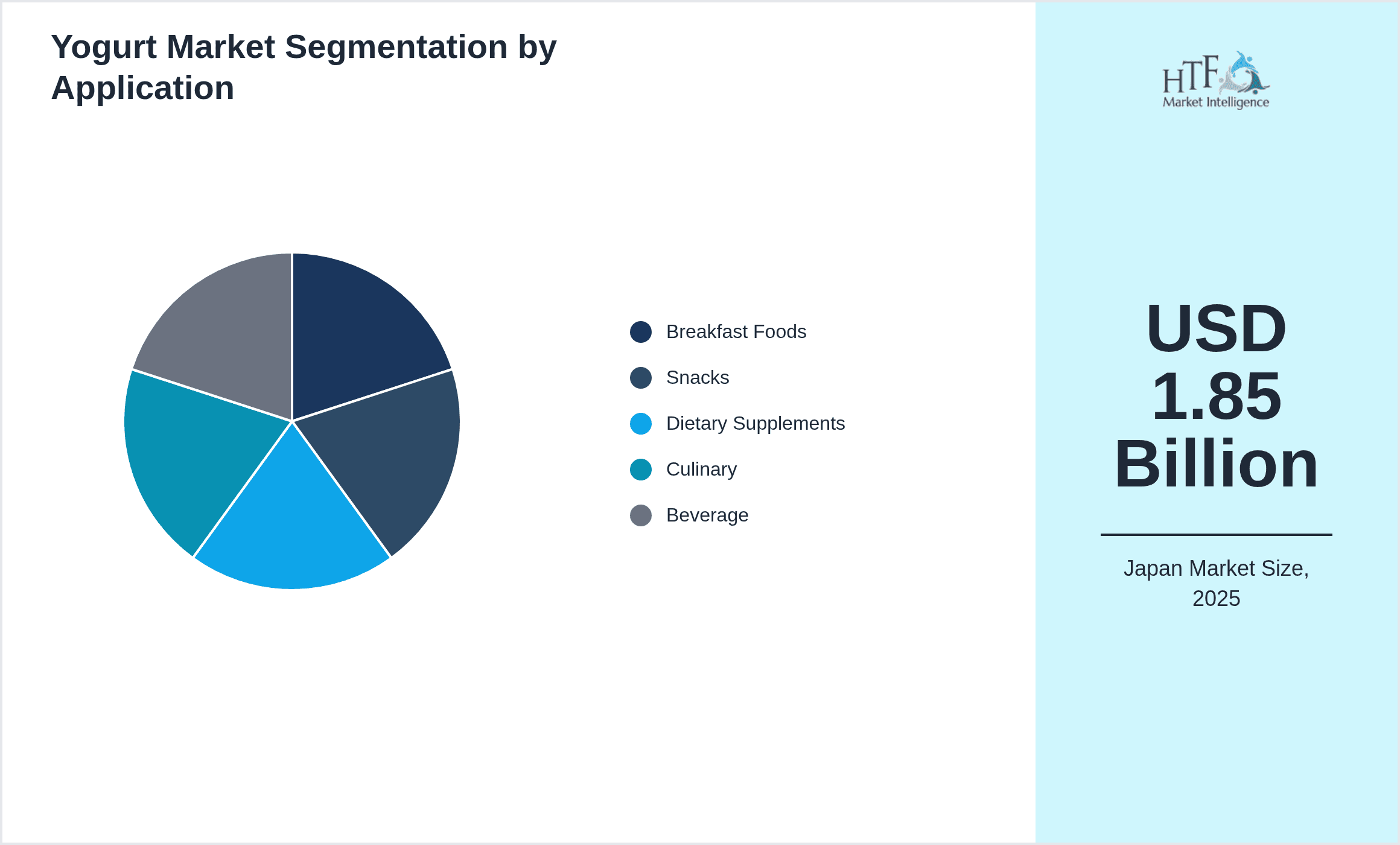
- •The Japan Yogurt Market represents a significant segment within the country’s broader dairy industry, focusing on various yogurt types such as set, stirred, drinking, frozen, and Greek yogurt. This market serves a wide range of applications including breakfast foods, snacks, dietary supplements, culinary dishes, and beverages tailored to Japanese consumer preferences. Japan’s aging population and increasing health awareness are driving demand for probiotic-rich and functional yogurt products, leading producers to innovate with enhanced nutritional profiles and convenient packaging solutions. The market operates across key regional zones such as Kanto, Kansai, and Kyushu & Okinawa, each exhibiting unique consumption patterns influenced by local dietary habits and economic factors. Regulatory standards in Japan ensure product safety and quality, shaping market entry and competition. Strategic partnerships among dairy producers, retailers, and foodservice companies further fuel market growth. This comprehensive market encompasses production, distribution, retail, and consumer trends, providing investors and stakeholders with detailed insights into growth opportunities and challenges within the Japanese yogurt landscape.
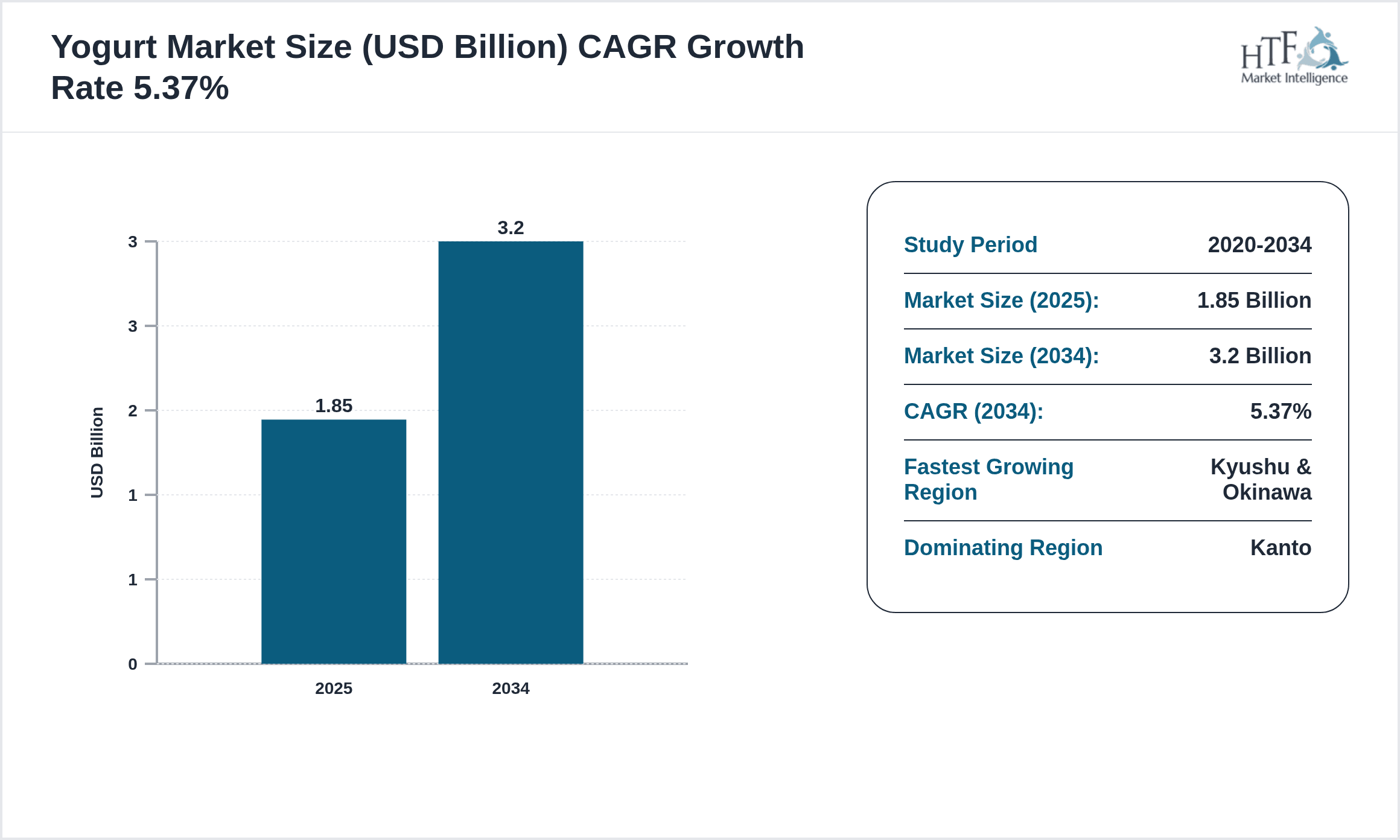
- •Key market highlights include a base market size of USD 1.85 Billion in 2024 with a projected growth to USD 3.20 Billion by 2034, reflecting a CAGR of 5.37%. The set yogurt segment dominates the product landscape, while Greek yogurt is the fastest-growing category due to rising consumer interest in high-protein and functional foods. Application-wise, breakfast foods lead consumption, followed closely by snacks. Regionally, the Kanto zone holds the largest market share at 32%, with Kyushu & Okinawa showing the highest growth rate of 7.1% CAGR. These dynamics underline the expanding demand driven by evolving lifestyles and nutrition trends in Japan.
- •The Japan Yogurt Market offers substantial value propositions, including enhanced health benefits through probiotic formulations, convenience through ready-to-consume products, and innovation in flavors and packaging. Its strategic importance spans multiple industries such as retail, foodservice, and healthcare nutrition, appealing to a broad consumer base from young adults to seniors. The market’s growth is supported by continuous product development, increasing consumer education about gut health, and government initiatives promoting functional foods. These factors collectively create robust opportunities for manufacturers and distributors aiming to capitalize on shifting dietary patterns and premiumization trends within Japan’s competitive dairy sector.
Competitive Landscape
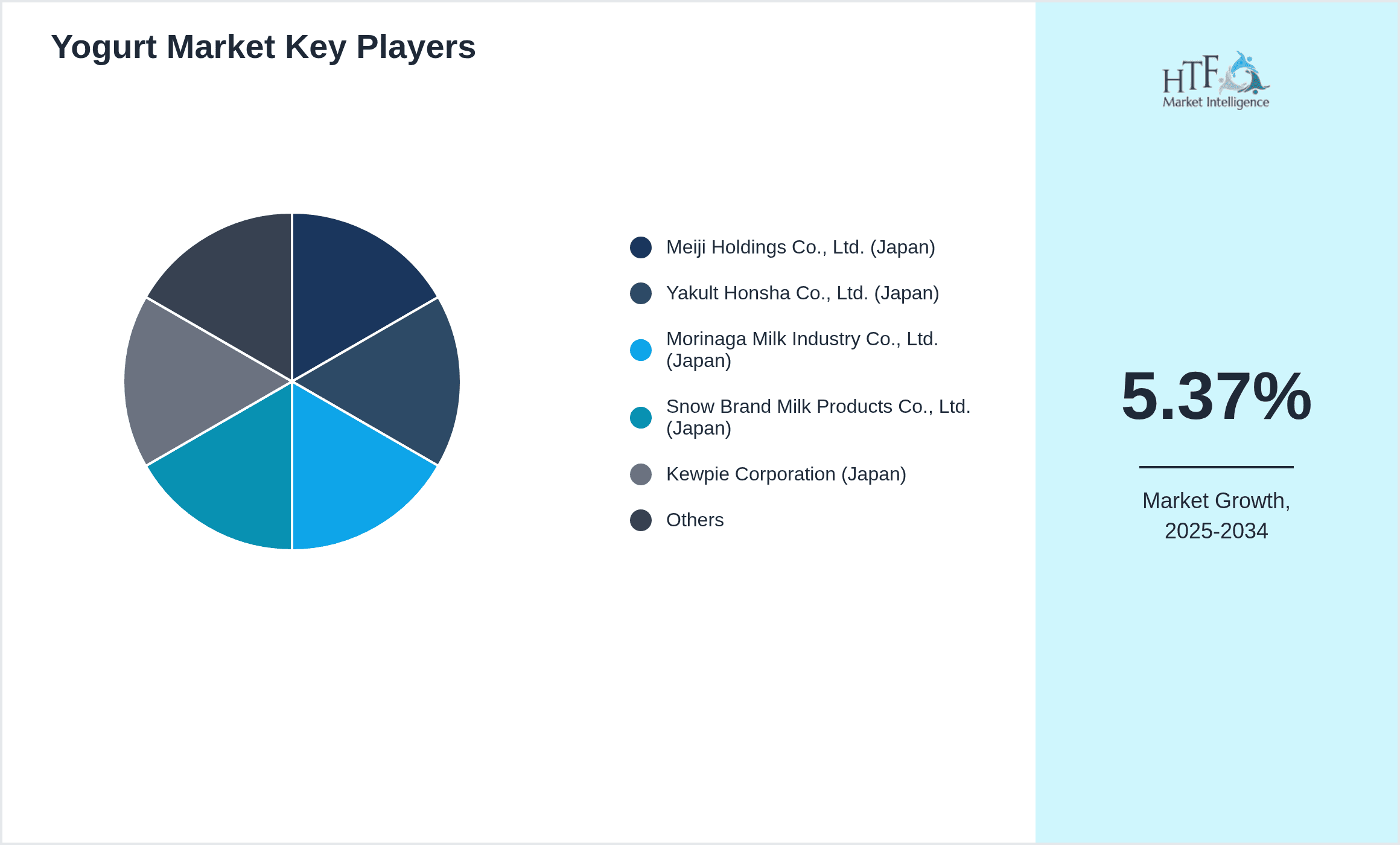
The competitive environment of the Japan Yogurt Market is characterized by a mix of established domestic dairy giants and innovative regional players vying for market share through product differentiation and strategic marketing. Companies focus heavily on innovation around probiotics, natural ingredients, and packaging technology to meet Japan’s discerning consumer demands. Competition is intensified by the presence of private labels and imported brands, driving continuous improvements in quality and pricing strategies. Market positioning hinges on brand trust, product efficacy, and distribution reach across supermarkets, convenience stores, and e-commerce platforms. Strategic collaborations and partnerships with research institutions enable rapid development of functional yogurt variants tailored for specific health benefits such as digestion, immunity, and weight management. Additionally, rivalry extends into regional penetration strategies targeting zones like Kanto and Kansai, where consumer preferences vary. Pricing models balance premium product launches with affordable options to maintain market penetration and loyalty. Overall, the competitive landscape is dynamic, with innovation and consumer engagement serving as key levers for sustained growth.
Leading Companies in Japan Yogurt Market
- •Meiji Holdings Co., Ltd. (Japan)
- •Yakult Honsha Co., Ltd. (Japan)
- •Morinaga Milk Industry Co., Ltd. (Japan)
- •Snow Brand Milk Products Co., Ltd. (Japan)
- •Kewpie Corporation (Japan)
- •Fuji Oil Holdings Inc. (Japan)
- •Panasonic Corporation (Japan)
- •Danone Japan Inc. (Japan)
- •Asahi Group Holdings, Ltd. (Japan)
- •Nissin Foods Holdings Co., Ltd. (Japan)
- •Otsuka Pharmaceutical Co., Ltd. (Japan)
- •Morinaga & Co., Ltd. (Japan)
- •Meiji Seika Pharma Co., Ltd. (Japan)
- •Hochu Milk Co., Ltd. (Japan)
- •Snow Brand Milk Products Co., Ltd. (Japan)
- •Megmilk Snow Brand Co., Ltd. (Japan)
- •Kikkoman Corporation (Japan)
- •Suntory Holdings Limited (Japan)
- •Ito En, Ltd. (Japan)
- •Morinaga Milk Industry Co., Ltd. (Japan)
Market Breakdown
- •By Yogurt Type
- ◦Set Yogurt
- ◦Stirred Yogurt
- ◦Drinking Yogurt
- ◦Frozen Yogurt
- ◦Greek Yogurt
- •By Application
- ◦Breakfast Foods
- ◦Snacks
- ◦Dietary Supplements
- ◦Culinary
- ◦Beverage
- •By Distribution Channel
- ◦Supermarkets & Hypermarkets
- ◦Convenience Stores
- ◦Online Retail
- ◦Specialty Stores
- •By Regional Zone
- ◦Hokkaido
- ◦Tohoku
- ◦Kanto
- ◦Chubu
- ◦Kansai
- ◦Chugoku
- ◦Shikoku
- ◦Kyushu & Okinawa
Growth Dynamics
- •The Japan Yogurt Market is propelled by rising health consciousness among consumers, particularly the growing awareness of probiotics and gut health benefits. This has led to increased demand for functional yogurt products enriched with live cultures and specialized nutrients. The aging population in Japan, seeking digestive and immune support, further drives consumption. Additionally, urbanization and busy lifestyles encourage convenient, ready-to-eat yogurt formats, expanding market reach. Innovation in flavors and packaging tailored to Japanese taste preferences also supports growth. Government initiatives promoting functional foods and nutrition education enhance consumer acceptance, making yogurt a staple in daily diets. These factors together create a steady upward trajectory for market expansion over the next decade.
- •Trends such as premiumization with high-protein Greek yogurt and low-sugar variants are reshaping the Japan Yogurt Market. Consumers increasingly prefer natural, organic ingredients and transparent labeling, pushing manufacturers to reformulate products. Technological advancements in fermentation processes and packaging are extending shelf life and enhancing product appeal. E-commerce growth enables wider distribution and accessibility, especially among younger demographics. Collaborations between dairy companies and food tech startups foster innovation in functional ingredients and personalized nutrition. These evolving consumer preferences and industry innovations collectively influence market dynamics by fostering brand differentiation and expanding consumption occasions across meal times.
- •Market restraints include fluctuating raw milk prices impacting production costs, which can constrain profitability for yogurt manufacturers. Japan’s strict regulatory environment for dairy products requires compliance with quality and labeling standards, sometimes delaying product launches and increasing costs. Consumer price sensitivity amid economic uncertainties poses challenges for premium product adoption. Additionally, competition from alternative dairy and plant-based products adds pressure on traditional yogurt segments. Logistical complexities in distributing perishable goods across Japan’s diverse regional zones also affect supply chain efficiency. These factors collectively limit rapid market expansion and require strategic cost management and innovation to sustain growth.
- •Opportunities in the Japan Yogurt Market stem from rising demand for personalized nutrition and functional foods targeting specific health concerns such as bone health, digestion, and immunity. Expansion into new regional zones like Kyushu & Okinawa with growing urban populations offers untapped consumer bases. Integration of advanced biotechnology and probiotic strains can differentiate products and command premium pricing. Growth in online retail channels provides direct-to-consumer sales prospects and data-driven marketing. Collaborations with healthcare providers and fitness industries to promote yogurt as part of wellness regimes can further enhance market penetration. These avenues present substantial potential for investment and innovation to capture evolving consumer needs.
- •Challenges include intense competition among well-established dairy manufacturers and emerging niche players, necessitating continuous innovation and marketing investments. Consumer skepticism toward health claims requires robust scientific validation and transparent communication. Supply chain disruptions and seasonal fluctuations in raw material availability can impact production stability. Cultural preferences for traditional foods may limit acceptance of novel yogurt variants in certain regions. Moreover, environmental concerns and sustainability pressures demand adoption of eco-friendly packaging and production practices, adding to operational complexities. Addressing these challenges is essential for maintaining market relevance and achieving long-term growth in Japan’s yogurt sector.
Market Trends
- •The Japan Yogurt Market is witnessing a notable shift toward high-protein and low-sugar yogurt varieties, reflecting consumers’ focus on balanced nutrition and weight management. This trend aligns with the rising popularity of Greek yogurt, which offers higher protein content and richer texture. Manufacturers are also incorporating indigenous flavors such as yuzu and matcha to cater to local tastes, enhancing product differentiation. Sustainability is gaining prominence, with eco-friendly packaging and reduced waste initiatives influencing purchasing decisions. Furthermore, digital marketing and influencer partnerships are increasingly employed to engage health-conscious millennials and Gen Z consumers, driving brand visibility and loyalty.
- •Functional yogurt products fortified with probiotics, vitamins, and minerals are becoming mainstream in Japan, leveraging scientific research on gut microbiome and immunity. The emergence of plant-based yogurt alternatives is gradually impacting market dynamics, catering to vegan and lactose-intolerant consumers. Technological advancements in fermentation and cold chain logistics are improving product quality and shelf life. The integration of smart packaging with QR codes offers enhanced consumer engagement and product traceability. Additionally, convenience formats like drinking yogurts and single-serve packs support on-the-go consumption trends, reflecting changing lifestyles and time constraints.
- •Strategic collaborations between dairy producers and health organizations are fostering innovation in targeted nutrition, such as yogurts designed for elderly populations to support bone and cognitive health. Retailers are expanding yogurt assortments to include premium and organic lines, responding to demand for clean-label products. Seasonal and limited-edition flavors stimulate consumer interest and trial, driving incremental sales. Digital transformation in supply chain management enhances efficiency and responsiveness to consumer demand fluctuations. The increased penetration of online grocery platforms during the COVID-19 pandemic has permanently altered purchasing behaviors, favoring direct-to-consumer models and subscription services.
- •Digitization is transforming marketing and distribution channels in the Japanese yogurt industry, with brands leveraging e-commerce and social media to reach niche audiences. Sustainability initiatives such as biodegradable packaging and carbon footprint reduction are becoming key differentiators amid growing environmental awareness. The rising influence of wellness trends and preventive healthcare is expanding yogurt’s role beyond nutrition to therapeutic applications. Consumer preferences are increasingly segmented by age, lifestyle, and health needs, prompting personalized product offerings. These evolving market trends indicate a dynamic and innovative industry landscape poised for steady growth.
- •Collaborative ecosystems involving dairy companies, biotechnology firms, and academic institutions are accelerating research into novel probiotic strains and fermentation technologies. This cooperation facilitates faster product development cycles and enhanced functional benefits. Consumer education programs and transparent labeling foster greater acceptance of health claims, boosting market confidence. The expansion of cold chain infrastructure across regional zones improves product availability and quality consistency. Looking ahead, disruptive innovations in yogurt formulations and digital engagement platforms are expected to redefine competitive advantages and consumer experiences in Japan’s yogurt market.
Market Opportunities
- •The growing aging population in Japan presents significant opportunities for functional yogurt products tailored to senior health needs, such as bone density support and digestive wellness. Developing specialized formulas enriched with calcium, vitamin D, and probiotics can cater to this demographic’s preferences. Expansion into underpenetrated regional zones like Tohoku and Shikoku offers new consumer bases with increasing disposable incomes. Leveraging e-commerce platforms to target health-conscious urban consumers allows for personalized marketing and direct feedback. Collaborations with healthcare providers and fitness centers to promote yogurt as part of holistic wellness programs can further enhance market reach. These opportunities enable manufacturers to diversify portfolios and drive sustainable growth.
- •Sustainability-focused product lines featuring organic, locally sourced ingredients and environmentally friendly packaging align with rising consumer demand for ethical consumption. Innovations in plant-based yogurt alternatives can attract vegan and lactose-intolerant populations, expanding market inclusivity. Incorporating smart technology such as augmented reality labels and QR codes for interactive consumer engagement offers differentiation in a competitive landscape. Partnerships with foodservice providers to introduce yogurt-based menu items in cafes and restaurants can stimulate incremental demand. Moreover, cross-industry collaborations with pharmaceutical and nutraceutical sectors to develop therapeutic yogurt products present emerging avenues for growth and diversification.
- •Investment in advanced fermentation techniques and proprietary probiotic strains can enhance product efficacy and brand positioning. Increasing awareness campaigns focused on gut health benefits can educate consumers and stimulate trial. Seasonal and limited-edition flavor launches aligned with cultural festivals and events can create buzz and drive short-term sales spikes. Utilization of big data analytics and AI-driven consumer insights enables targeted product development and marketing strategies. Expansion of cold chain logistics infrastructure supports distribution to remote regional zones, ensuring product freshness and quality. These strategic initiatives collectively present substantial growth potential for stakeholders in Japan’s yogurt market.
- •The rise of convenience retail formats such as convenience stores and online subscription services provides channels for rapid product rollout and consumer engagement. Developing smaller portion sizes and multi-pack offerings caters to single-person households and on-the-go lifestyles prevalent in urban Japan. Collaborations with influencers and health professionals can amplify brand credibility and reach. Exploring export opportunities to neighboring Asian markets leveraging Japan’s reputation for quality dairy products presents additional revenue streams. Continuous product innovation focusing on taste, texture, and health benefits remains critical to capturing evolving consumer preferences and sustaining competitive advantage.
- •Emerging consumer segments such as millennials and Gen Z show increasing interest in personalized nutrition and wellness, creating demand for customizable yogurt products. Integration of digital platforms for consumer feedback, loyalty programs, and educational content enhances engagement and brand loyalty. Adoption of blockchain for supply chain transparency can address consumer concerns about product authenticity and safety. Investment in R&D for novel functional ingredients like postbiotics and synbiotics opens new product categories. These opportunities position the Japan Yogurt Market for innovation-driven expansion over the next decade.
Market Challenges
- •One prominent challenge in the Japan Yogurt Market is the high raw milk price volatility, which directly impacts production costs and pricing strategies. This volatility stems from supply constraints and seasonal fluctuations affecting dairy farming in Japan. Manufacturers face pressure to balance cost increases without alienating price-sensitive consumers, particularly in the competitive retail environment. Additionally, stringent regulatory requirements regarding labeling, health claims, and food safety impose compliance costs and can delay product launches. These factors require companies to maintain operational efficiencies and robust supply chain management to sustain profitability.
- •Consumer skepticism toward functional food health claims presents a barrier to market acceptance of novel yogurt products. Without clear scientific validation and transparent communication, consumers may hesitate to adopt new formulations. This challenge necessitates investment in clinical studies and effective marketing to build trust. Furthermore, cultural preferences for traditional Japanese foods may limit the appeal of certain yogurt variants, especially among older demographics. Overcoming these cultural barriers demands tailored product development and education strategies. The competitive pressure from plant-based and alternative dairy products also fragments the market, requiring differentiation through innovation and quality.
- •Logistical complexities in distributing highly perishable yogurt products across Japan’s diverse geographic zones, including remote areas like Shikoku and Kyushu & Okinawa, impact shelf life and availability. Maintaining cold chain integrity is critical but costly, posing challenges to scalability. Environmental sustainability pressures necessitate adoption of eco-friendly packaging and waste reduction practices, which may increase production expenses. Additionally, talent shortages in dairy processing and food technology hinder R&D and operational expansion. Addressing these multifaceted challenges requires strategic investments in infrastructure, workforce development, and sustainable practices to ensure long-term market viability.
- •Price competition intensified by private label products and imported yogurts restricts margins for established brands. Maintaining brand loyalty amid a fragmented market with diverse consumer preferences demands continuous innovation and marketing efforts. Regulatory uncertainties, including potential changes in food safety standards and import policies, add complexity to strategic planning. The COVID-19 pandemic's residual impacts on supply chains and consumer spending patterns continue to create unpredictability. These challenges necessitate agile business models and proactive risk management to navigate evolving market conditions in Japan’s yogurt sector effectively.
- •Environmental concerns related to dairy farming’s carbon footprint and water usage are increasingly scrutinized by consumers and regulators. Companies must invest in sustainable sourcing and production technologies to meet these expectations, which may raise costs. Furthermore, shifting consumer trends toward plant-based alternatives challenge traditional yogurt demand, requiring diversification strategies. Balancing innovation with cultural authenticity and maintaining competitive pricing amid these challenges will be critical for market players seeking growth in Japan’s complex yogurt industry landscape.
Regulatory Framework
- •Between 2019 and 2024, Japan updated its Food Sanitation Act to reinforce safety standards for dairy products, including yogurt. These revisions introduced stricter microbial and chemical contaminant limits, mandating rigorous testing protocols for manufacturers. Compliance ensures consumer safety and maintains market trust but requires significant quality control investments. The Ministry of Health, Labour and Welfare (MHLW) oversees enforcement, emphasizing transparent labeling of probiotic content and nutritional claims. Additionally, Japan’s Functional Food Regulation, including Foods with Function Claims (FFC) established prior to 2019, continues evolving to accommodate emerging yogurt formulations with health benefits. Manufacturers must submit scientific evidence for claims to obtain approval, shaping product development strategies. Regional food safety inspections have intensified, particularly in zones with large dairy production like Kanto and Kansai. These regulatory developments collectively create a robust compliance environment fostering product integrity and consumer confidence within the Japan Yogurt Market.
- •The Food Labeling Act was revised to enhance clarity and accuracy for dairy products, requiring precise ingredient disclosure and allergen information. This impacts yogurt packaging design and marketing practices, ensuring consumers can make informed choices. Enforcement mechanisms include penalties for non-compliance and mandatory recalls. These regulations affect product launch timelines and retail acceptance, prompting companies to align labeling with legal mandates proactively.
- •Environmental regulations introduced between 2019 and 2024 focus on sustainable packaging and waste reduction in the food industry, including dairy sectors. Japan incentivizes the adoption of biodegradable materials and recycling practices, influencing yogurt manufacturers to innovate eco-friendly packaging solutions. Compliance with these policies reduces environmental impact and aligns brands with consumer sustainability expectations, becoming a competitive advantage in the market.
- •Regional mandates in zones such as Hokkaido and Kyushu have implemented additional quality certifications for dairy products, encouraging local producers to meet higher standards and differentiate their offerings. These certifications support regional branding and export potential but require adherence to specific production and safety criteria.
- •Government initiatives launched to promote functional foods and healthy aging encourage research and development in probiotic yogurt products. Support programs provide funding and tax incentives to companies innovating in health-enhancing dairy products, stimulating market growth and product diversification across Japan.
Market Intelligence
- •15th March 2025, Meiji Holdings Co., Ltd. launched a new line of probiotic Greek yogurts aimed at health-conscious consumers seeking high protein and digestive benefits. The product features locally sourced ingredients and sustainable packaging, targeting urban markets in Kanto and Kansai. This launch aligns with rising demand for premium functional foods and supports Meiji’s strategy to expand its portfolio in the growing yogurt segment. The company plans nationwide rollout through supermarkets, convenience stores, and online channels, leveraging digital marketing campaigns to engage millennials and seniors alike. This initiative reinforces Meiji’s market leadership and innovation commitment in Japan’s dairy industry. Source: Official Meiji press release
- •22nd January 2025, Yakult Honsha Co., Ltd. introduced an innovative yogurt beverage fortified with postbiotic ingredients designed to enhance immune response. Developed in collaboration with leading biotechnology firms, the product targets elderly consumers in regional zones such as Kyushu & Okinawa experiencing rapid demographic aging. Yakult’s launch includes partnerships with healthcare providers and fitness centers to promote the beverage as part of holistic wellness programs. The product’s extended shelf life and distinctive packaging support wide distribution across retail and institutional channels. This move strengthens Yakult’s position in the functional yogurt category and meets increasing consumer demand for scientifically backed health foods. Source: Yakult official website
- •10th July 2024, Morinaga Milk Industry Co., Ltd. announced a strategic alliance with a major e-commerce platform to expand direct-to-consumer sales of its yogurt products. The partnership includes exclusive online offerings, subscription models, and personalized nutrition recommendations using AI-driven consumer data analytics. This initiative addresses shifting consumer shopping behaviors accelerated by the COVID-19 pandemic and enhances Morinaga’s digital footprint. The alliance aims to capture younger demographics and provide convenient access to premium yogurt variants, including organic and Greek types. This digital transformation supports Morinaga’s growth ambitions and competitive differentiation in the Japan Yogurt Market. Source: Industry publication
- •5th May 2025, Snow Brand Milk Products Co., Ltd. completed the acquisition of a regional dairy producer specializing in organic and artisanal yogurt products based in Tohoku. This acquisition expands Snow Brand’s product portfolio and strengthens its presence in northern Japan’s growing health food market. The integration allows for synergistic production efficiencies, enhanced R&D capabilities, and access to niche consumer segments prioritizing natural and sustainable products. Snow Brand plans to leverage this acquisition to accelerate innovation and distribution across its extensive retail network nationwide. This move reflects consolidation trends and strategic growth within Japan’s competitive yogurt industry. Source: Company announcement
Regional Outlook
The Kanto currently holds a significant share of the market, primarily due to several key factors: increasing consumption rates, a burgeoning population, and robust economic momentum. These elements collectively drive demand, positioning this region as a leader in the market. On the other hand, Kyushu & Okinawa is rapidly emerging as the fastest-growing area within the industry. This remarkable growth can be attributed to swift infrastructure development, the expansion of various industrial sectors, and a marked increase in consumer demand. These dynamics make this region a crucial player in shaping future market growth.
In our report, we cover a comprehensive analysis of the following regions and countries:
- Hokkaido
- Tohoku
- Kanto
- Chubu
- Kansai
- Chugoku
- Shikoku
- Kyushu
| Feature | Details |
|---|---|
| Base Year Market Size | USD 1.85 Billion |
| Forecast Year Market Size | USD 3.2 Billion |
| CAGR | 5.37% |
| Forecast Period | 2026 to 2033 |
| YoY Growth | 5.23% |
| Scope of Report | Market is segmented by Yogurt Type (Set Yogurt, Stirred Yogurt, Drinking Yogurt, Frozen Yogurt, Greek Yogurt), Application (Breakfast Foods, Snacks, Dietary Supplements, Culinary, Beverage), Distribution Channel (Supermarkets & Hypermarkets, Convenience Stores, Online Retail, Specialty Stores), Regional Zone (Hokkaido, Tohoku, Kanto, Chubu, Kansai, Chugoku, Shikoku, Kyushu & Okinawa) |
| Regions Covered | Hokkaido, Tohoku, Kanto, Chubu, Kansai, Chugoku, Shikoku, Kyushu |
| Key Companies | Meiji Holdings Co., Ltd. (Japan), Yakult Honsha Co., Ltd. (Japan), Morinaga Milk Industry Co., Ltd. (Japan), Snow Brand Milk Products Co., Ltd. (Japan), Kewpie Corporation (Japan), Fuji Oil Holdings Inc. (Japan), Panasonic Corporation (Japan), Danone Japan Inc. (Japan), Asahi Group Holdings, Ltd. (Japan), Nissin Foods Holdings Co., Ltd. (Japan), Otsuka Pharmaceutical Co., Ltd. (Japan), Morinaga & Co., Ltd. (Japan), Meiji Seika Pharma Co., Ltd. (Japan), Hochu Milk Co., Ltd. (Japan), Snow Brand Milk Products Co., Ltd. (Japan), Megmilk Snow Brand Co., Ltd. (Japan), Kikkoman Corporation (Japan), Suntory Holdings Limited (Japan), Ito En, Ltd. (Japan), Morinaga Milk Industry Co., Ltd. (Japan) |
Japan Yogurt Market - Market Size, Growth & Revenue 2024-2034 - Table of Contents
Frequently Asked Questions (FAQ):
The Compact Track Loaders market is expected to see value worth 5.3 Billion in 2025.
North America currently leads the market with approximately 45% market share, followed by Europe at 28% and Asia-Pacific at 22%. The remaining regions account for 5% of the global market.
Key growth drivers include increasing construction activities, rising demand for versatile equipment in agriculture, technological advancements in track loader design, and growing preference for compact equipment in urban construction projects.