
South America Road Transport Refrigeration Equipment Market Size, Growth & Revenue 2025-2034
South America Road Transport Refrigeration Equipment Market is segmented by Type (Unit Coolers, Condensers, Evaporators, Compressors, Control Systems), Application (Food & Beverage, Pharmaceuticals, Chemicals, Floral, Others), Service Type (Installation, Maintenance & Repair, Consulting Services, Upgrades & Retrofits), Deployment Model (Integrated Systems, Standalone Units, Hybrid Solutions), and Geography (Brazil, Argentina, Chile, Peru, Colombia, Rest of South America)
Pricing
Report Overview
Executive Summary
- •The South America Road Transport Refrigeration Equipment market comprises specialized refrigeration systems engineered for temperature-controlled road logistics. This market includes equipment such as unit coolers, condensers, evaporators, compressors, and electronic control systems that preserve perishable goods' quality during transit. The market's scope spans applications across food and beverages, pharmaceuticals, chemicals, and floral products, reflecting critical cold chain logistics demands. Increasing perishable exports from South America, coupled with rising consumer demand for fresh and frozen products, emphasize the market's strategic importance. Regulatory compliance focused on reducing cold chain breaches and enhancing food safety further expands the market. Technological advancements promoting energy efficiency and remote temperature monitoring are redefining product offerings, thereby driving adoption. This market plays a pivotal role in supporting the regional cold chain infrastructure, ensuring product integrity, reducing losses, and enabling seamless supply chains in South America's growing road transportation sector.
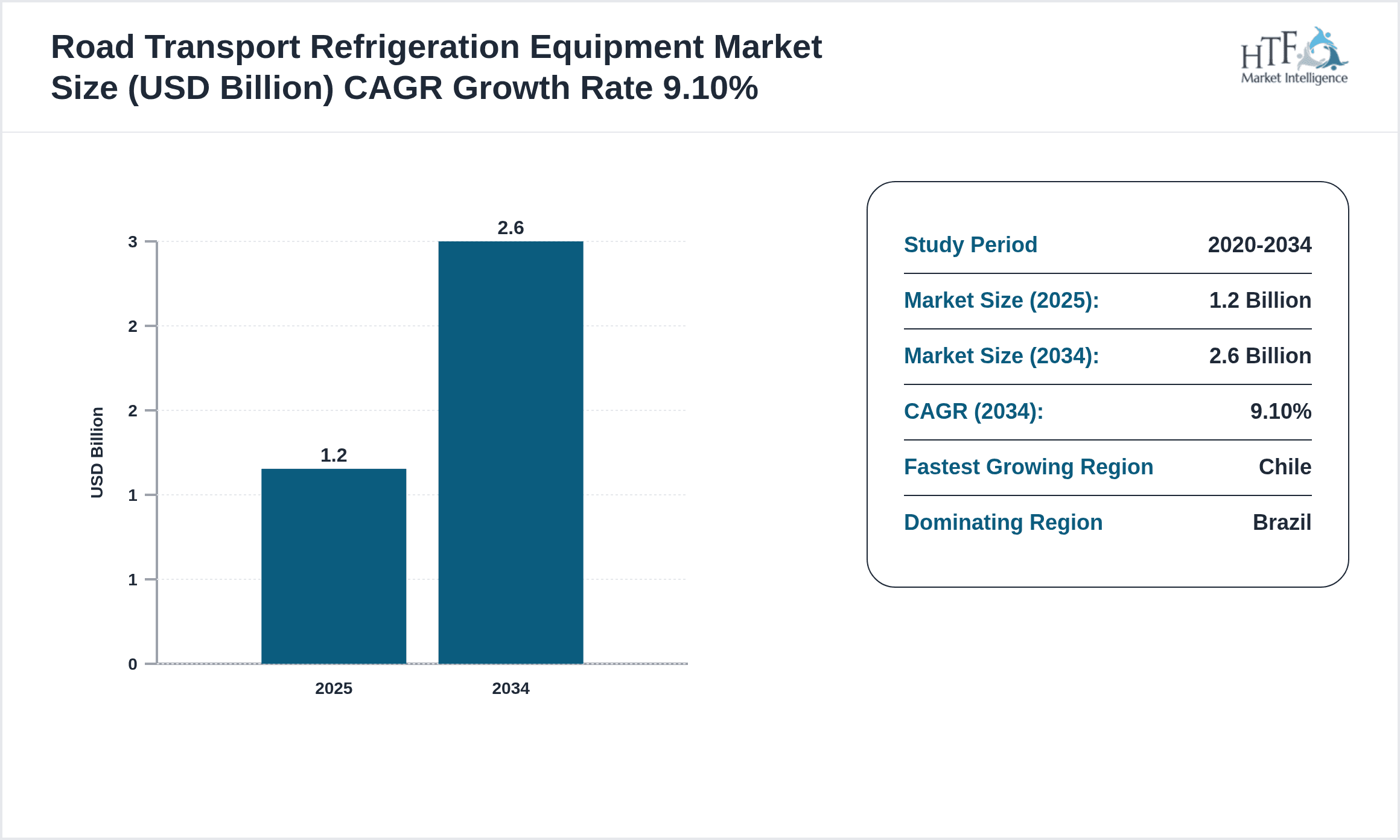
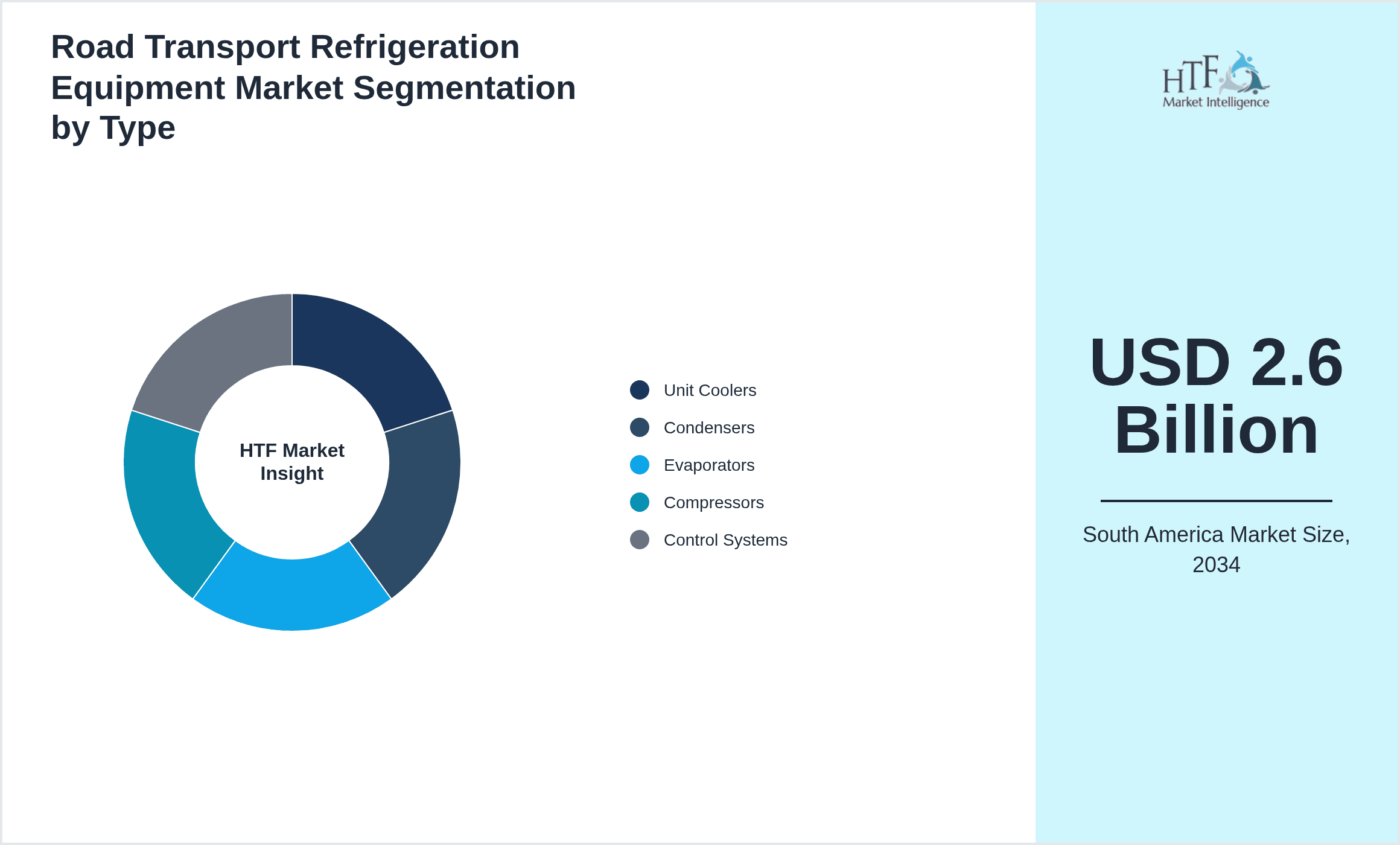
- •The South America Road Transport Refrigeration Equipment market is projected to grow at a CAGR of 9.1% from USD 1.2 Billion in 2025 to USD 2.6 Billion by 2034. Brazil dominates with a 38% market share, driven by its large agricultural exports and expanding cold chain logistics infrastructure. Chile leads the fastest-growing regional market segment with an 11.5% CAGR, fueled by increasing pharmaceutical exports and investments in refrigerated transport. Unit coolers hold the largest share among product types due to their widespread use in refrigerated trucks and trailers. Control systems exhibit the fastest growth, reflecting rising demand for smart, energy-efficient, and remotely monitored refrigeration solutions. The Food & Beverage application segment dominates market consumption, supported by rising demand for fresh produce and frozen foods. These dynamics underscore the increasing strategic importance of road transport refrigeration equipment in South America’s cold chain ecosystem.
- •The market's value proposition lies in enhancing cold chain reliability across South America’s diverse climatic zones, thereby reducing product spoilage and ensuring compliance with international food safety standards. It supports various industries including agriculture, pharmaceuticals, and chemicals by enabling temperature-sensitive logistics. Stakeholders benefit from technological innovations such as IoT-enabled monitoring and energy-efficient refrigeration units that reduce operational costs and environmental impact. Government initiatives promoting export growth and food safety standards further amplify market potential. The growth of e-commerce and rising consumer preference for fresh and frozen foods in urban centers underscore the strategic significance of robust road transport refrigeration equipment. Market players focusing on product innovation, regional partnerships, and service expansion are positioned to capitalize on evolving market needs and regulatory frameworks in South America.
Competitive Landscape
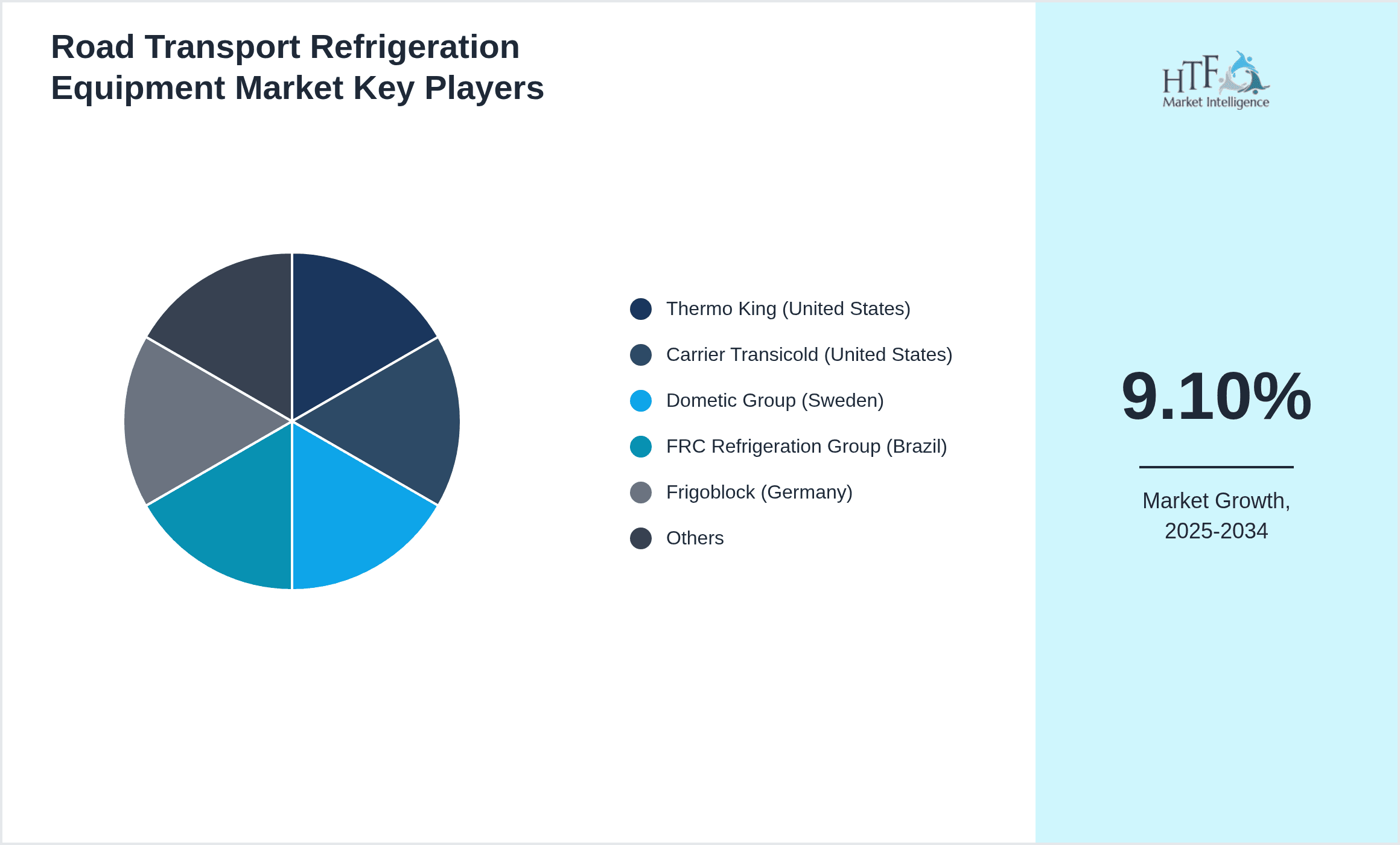
Companies operating in the South America Road Transport Refrigeration Equipment market pursue diverse strategies to maintain and expand their market presence. Innovation in energy-efficient and digitally controlled refrigeration units remains a core focus, enabling differentiation in a competitive landscape. Strategic partnerships with logistics providers and vehicle manufacturers facilitate integrated cold chain solutions tailored to regional transport requirements. Global expansion efforts include establishing local service centers and distribution networks across key South American countries to ensure rapid maintenance and support. Mergers and acquisitions target technology enhancement and portfolio broadening, allowing firms to offer comprehensive product suites. Emphasis on sustainability drives adoption of environmentally friendly refrigerants and low-emission compressors. Companies also invest in training and certification programs to align with regional regulatory compliance mandates. These multifaceted approaches help industry players solidify their competitive advantage, respond to evolving customer needs, and capitalize on the growing demand for road transport refrigeration equipment in South America.
Leading Companies in South America Road Transport Refrigeration Equipment Market
- •Thermo King (United States)
- •Carrier Transicold (United States)
- •Dometic Group (Sweden)
- •FRC Refrigeration Group (Brazil)
- •Frigoblock (Germany)
- •Güntner GmbH & Co. KG (Germany)
- •Hwasung Thermo Co., Ltd. (South Korea)
- •Kooltech (Brazil)
- •BorgWarner Inc. (United States)
- •Lumikko Technologies Oy (Finland)
- •MaxiTRANS Industries (Australia)
- •Cold Chain Technologies (United States)
- •Zanotti S.p.A. (Italy)
- •ESPEC CORP (Japan)
- •Thermo King Latin America (Brazil)
- •Webasto SE (Germany)
- •Cold Carriers LLC (United States)
- •Carrier Brazil Ltda. (Brazil)
- •Frigidaire (United States)
- •Valeo Thermal Systems (France)
- •Sanden Holdings Corporation (Japan)
- •Thermo King Argentina (Argentina)
- •Dometic Latin America (Brazil)
- •Linde plc (United Kingdom)
- •Bitzer Kühlmaschinenbau GmbH (Germany)

Market Breakdown
- •By Type
- ◦Unit Coolers
- ◦Condensers
- ◦Evaporators
- ◦Compressors
- ◦Control Systems
- •By Application
- ◦Food & Beverage
- ◦Pharmaceuticals
- ◦Chemicals
- ◦Floral
- ◦Others
- •By Service Type
- ◦Installation
- ◦Maintenance & Repair
- ◦Consulting Services
- ◦Upgrades & Retrofits
- •By Deployment Model
- ◦Integrated Systems
- ◦Standalone Units
- ◦Hybrid Solutions
Growth Dynamics
Expanding cold chain infrastructure across South America fuels demand for advanced road transport refrigeration equipment. Brazil’s agricultural export growth, especially in perishables, necessitates reliable refrigerated transport solutions to maintain product quality and comply with international standards. Recent government investments in cold storage and transport logistics enhance regional supply chain efficiency, supporting market expansion. The pharmaceutical sector’s increasing need for temperature-controlled transport due to vaccine distribution and biologics growth further accelerates demand. Technological advancements such as IoT-enabled monitoring systems improve real-time temperature control, reducing spoilage risks and operational costs. Companies like Thermo King and Carrier Transicold have launched energy-efficient and low-emission refrigeration units tailored to South American climates, reflecting market responsiveness. The rise in e-commerce for fresh and frozen foods in urban centers drives last-mile refrigerated deliveries, boosting equipment sales. These factors collectively create a robust growth environment for the South America road transport refrigeration equipment market.
Market Trends
Integration of smart technologies and electrification of refrigeration units define future trends in the South America road transport refrigeration equipment market. Increasing adoption of IoT sensors and telematics allows fleet operators to remotely monitor and manage temperature settings, enhancing cold chain transparency and compliance. The shift toward electric and hybrid refrigeration systems aligns with sustainability goals and regulations targeting reduced emissions in transport logistics. Several manufacturers are investing in modular and lightweight systems to improve fuel efficiency and reduce operational costs. Growing consumer preference for organic and fresh foods promotes demand for specialized refrigerated transport solutions. Additionally, government incentives for green logistics and investments in infrastructure development encourage market players to innovate and expand. These trends indicate a dynamic evolution of the market, with digitalization and environmental sustainability at the core of future developments in South America.
Market Opportunities
Emerging opportunities in South America’s expanding cold chain ecosystem present significant growth potential for road transport refrigeration equipment providers. Increasing investments in pharmaceutical cold chain logistics, especially for vaccine and biologics distribution, open new application segments. Growing export volumes of perishable goods such as fruits, vegetables, and seafood from countries like Chile and Peru create demand for advanced, reliable refrigeration systems. Development of regional trade agreements facilitating cross-border refrigerated transport enhances market prospects. Additionally, urbanization and rising income levels boost consumer demand for frozen and fresh foods, driving last-mile refrigerated delivery solutions. Opportunities also exist in retrofitting existing fleets with energy-efficient and IoT-enabled equipment to comply with tightening environmental regulations. Strategic partnerships between manufacturers and logistics providers to deliver integrated cold chain services further expand market reach. These factors collectively position the South America road transport refrigeration equipment market for sustained growth and innovation.
Market Challenges
High initial capital expenditure for advanced refrigeration units limits adoption among small and medium logistics operators in South America. Inconsistent power supply and infrastructure gaps in rural and remote areas pose operational challenges for maintaining continuous temperature control. Complex regulatory environments across multiple countries create compliance difficulties and increase administrative burdens for manufacturers and transport companies. Maintenance and servicing of specialized equipment require skilled technicians, which are in short supply regionally, impacting system uptime and reliability. Volatile fuel prices increase operational costs for diesel-powered refrigeration units, affecting profitability. Additionally, fluctuating currency exchange rates and economic uncertainties restrict investment capacity for fleet upgrades. These challenges combined hinder rapid market penetration and slow the modernization of the road transport refrigeration equipment fleet across South America, requiring targeted strategic interventions by stakeholders.
Regulatory Framework
Over the past five years, South American countries have enacted multiple regulations to enhance cold chain safety and reduce environmental impact from road transport refrigeration. Brazil implemented stricter emission standards in 2021 targeting refrigerant leakage and greenhouse gas emissions from transport refrigeration units, mandating the use of eco-friendly refrigerants and efficient compressors. Argentina introduced temperature control compliance requirements for pharmaceutical logistics in 2022, enforcing real-time monitoring and documentation during transport. Regional trade agreements such as MERCOSUR promote harmonization of cold chain standards across member countries, facilitating cross-border refrigerated transport with standardized compliance protocols. Chile’s Ministry of Environment updated refrigerant handling and disposal policies in 2023 to align with the Kigali Amendment for phasing down hydrofluorocarbons. These regulations drive manufacturers and logistics operators to adopt advanced, environmentally compliant technologies and enhance quality assurance measures across the South America road transport refrigeration equipment market.
Market Intelligence
Recent market developments and strategic initiatives are continuously tracked through industry publications, company announcements, and regulatory filings. For the most current information, stakeholders are advised to monitor official corporate communications and recognized market intelligence platforms.
Regional Outlook
The Brazil currently holds a significant share of the market, primarily due to several key factors: increasing consumption rates, a burgeoning population, and robust economic momentum. These elements collectively drive demand, positioning this region as a leader in the market. On the other hand, Chile is rapidly emerging as the fastest-growing area within the industry. This remarkable growth can be attributed to swift infrastructure development, the expansion of various industrial sectors, and a marked increase in consumer demand. These dynamics make this region a crucial player in shaping future market growth.
In our report, we cover a comprehensive analysis of the following regions and countries:
- Brazil
- Argentina
- Chile
- Peru
- Colombia
- Rest of South America
| Feature | Details |
|---|---|
| Base Year Market Size | USD 1.2 Billion |
| Forecast Year Market Size | USD 2.6 Billion |
| CAGR | 9.1% |
| Forecast Period | 2026 to 2033 |
| YoY Growth | 9% |
| Scope of Report | Market is segmented by Type (Unit Coolers, Condensers, Evaporators, Compressors, Control Systems), Application (Food & Beverage, Pharmaceuticals, Chemicals, Floral, Others), Service Type (Installation, Maintenance & Repair, Consulting Services, Upgrades & Retrofits), Deployment Model (Integrated Systems, Standalone Units, Hybrid Solutions) |
| Regions Covered | Brazil, Argentina, Chile, Peru, Colombia, Rest of South America |
| Key Companies | Thermo King (United States), Carrier Transicold (United States), Dometic Group (Sweden), FRC Refrigeration Group (Brazil), Frigoblock (Germany), Güntner GmbH & Co. KG (Germany), Hwasung Thermo Co., Ltd. (South Korea), Kooltech (Brazil), BorgWarner Inc. (United States), Lumikko Technologies Oy (Finland), MaxiTRANS Industries (Australia), Cold Chain Technologies (United States), Zanotti S.p.A. (Italy), ESPEC CORP (Japan), Thermo King Latin America (Brazil), Webasto SE (Germany), Cold Carriers LLC (United States), Carrier Brazil Ltda. (Brazil), Frigidaire (United States), Valeo Thermal Systems (France), Sanden Holdings Corporation (Japan), Thermo King Argentina (Argentina), Dometic Latin America (Brazil), Linde plc (United Kingdom), Bitzer Kühlmaschinenbau GmbH (Germany) |
South America Road Transport Refrigeration Equipment Market Size, Growth & Revenue 2025-2034 - Table of Contents
Frequently Asked Questions (FAQ):
The Compact Track Loaders market is projected to grow at a CAGR of 6.8% from 2025 to 2030, driven by increasing demand in construction and agricultural sectors.
North America currently leads the market with approximately 45% market share, followed by Europe at 28% and Asia-Pacific at 22%. The remaining regions account for 5% of the global market.
Key growth drivers include increasing construction activities, rising demand for versatile equipment in agriculture, technological advancements in track loader design, and growing preference for compact equipment in urban construction projects.