
Latin America Self-Healing Construction Materials Intelligence Market Size, Growth & Revenue 2024-2034
Latin America Self-Healing Construction Materials Intelligence Market is segmented by Type (Autonomous Healing Materials, Capsule-Based Materials, Vascular Materials, Polymer-Based Materials, Bacterial Concrete), Application (Infrastructure Repair, Concrete Restoration, Road Maintenance, Building Rehabilitation, Others), End-Use Sector (Commercial Construction, Residential Construction, Public Infrastructure, Industrial Facilities), Distribution Channel (Direct Sales, Distributors and Dealers, Online Platforms), and Geography (Brazil, Argentina, Chile, Peru, Colombia, Rest of South America)
Pricing
Report Overview
Executive Summary
- •The Latin America Self-Healing Construction Materials Intelligence market represents a cutting-edge frontier in the construction sector, focusing on materials that autonomously repair structural damages to improve longevity and reduce maintenance costs. These materials employ innovative technologies such as microcapsule embedding, vascular networks, bacterial agents, and polymer composites to repair cracks and deterioration in concrete and infrastructure. The market scope includes applications across infrastructure repair, road maintenance, building rehabilitation, and other civil construction needs. It serves construction companies, material manufacturers, and research organizations emphasizing sustainability and durability. The regional market benefits from increased public and private infrastructure investments and a growing emphasis on sustainable construction practices. Key characteristics include the integration of smart materials to enhance asset life cycles, reduce environmental impact, and deliver cost-effective maintenance solutions. Primary use cases span highways, bridges, commercial buildings, and residential structures, highlighting the versatility and expanding adoption of self-healing construction materials in Latin America.
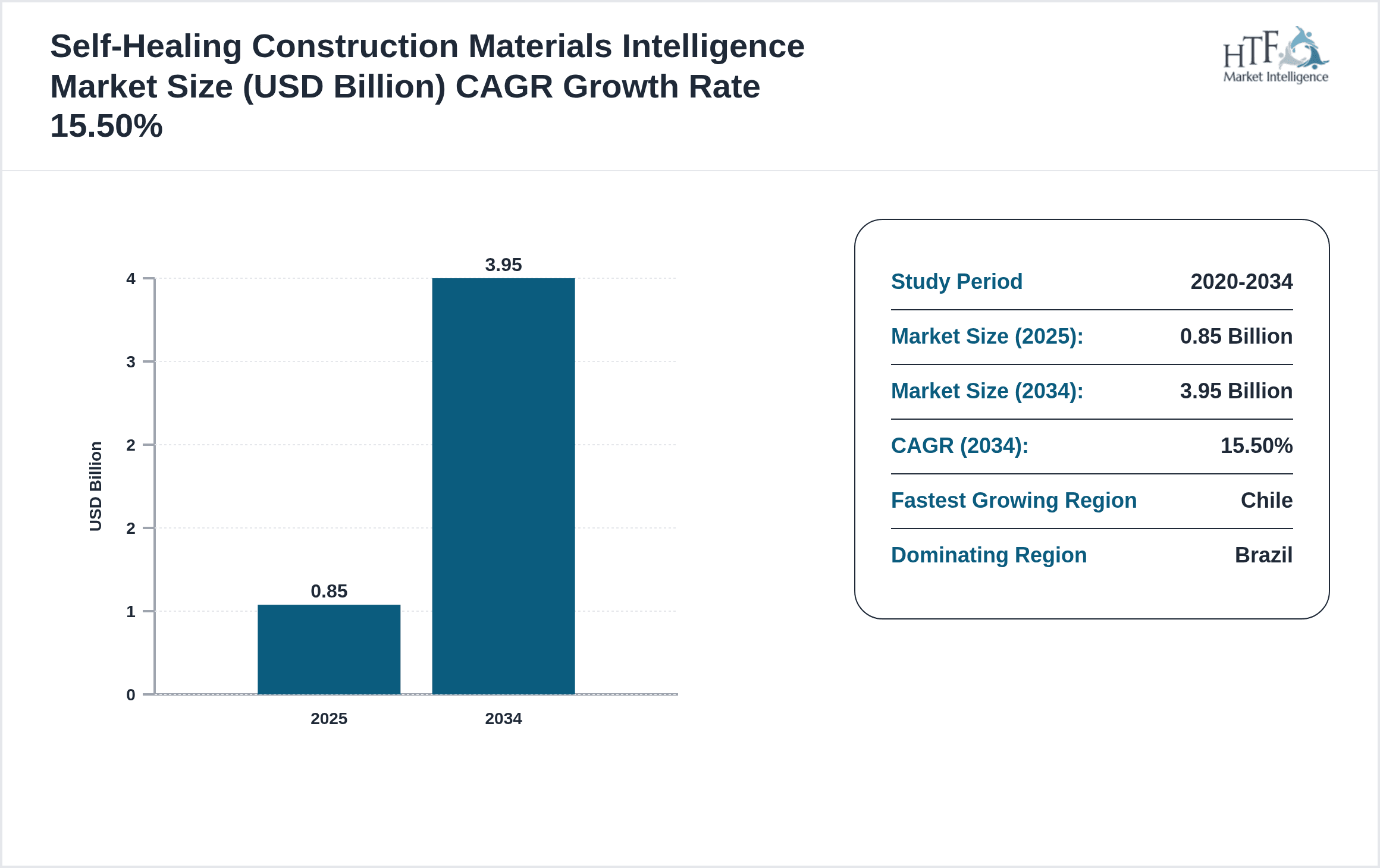
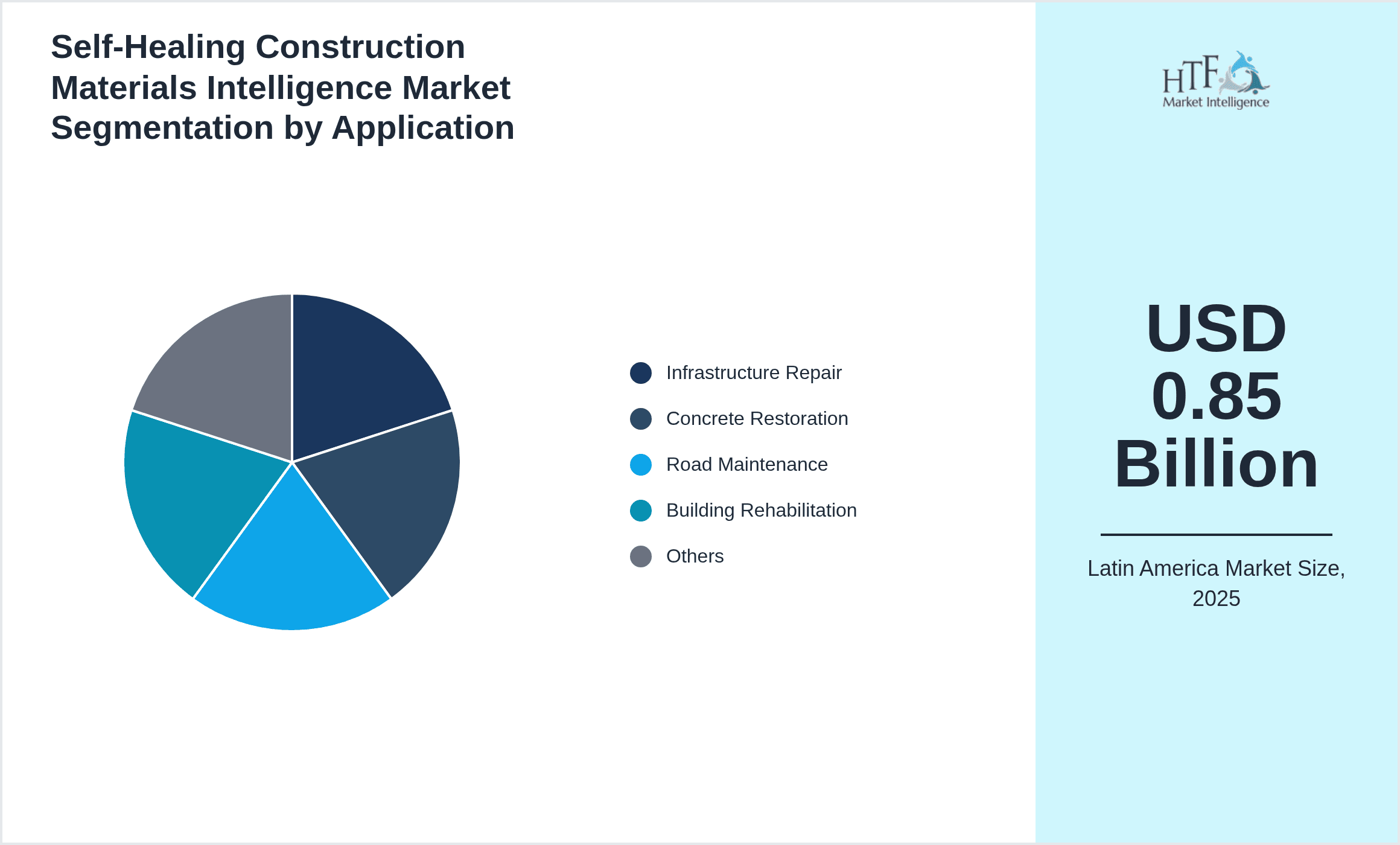
- •Market highlights reveal a strong compound annual growth rate (CAGR) of 15.5% from 2024 to 2034, projecting the market to grow from USD 0.85 billion in 2024 to approximately USD 3.95 billion by 2034. Brazil dominates the region with a 38% market share, driven by significant infrastructure development and innovation adoption. Chile emerges as the fastest-growing country in the region with a 19.2% CAGR, capitalizing on government initiatives and infrastructure modernization programs. Autonomous Healing Materials lead the product type segment, followed by Capsule-Based Materials, reflecting advanced technology adoption. In applications, Infrastructure Repair holds the largest share, with Concrete Restoration following closely, demonstrating the critical demand in public works and commercial construction sectors. The market's strategic importance is underscored by its potential to reduce lifecycle costs and environmental footprint across construction projects in Latin America.
- •This market offers substantial value to construction firms, technology developers, and governmental agencies by providing innovative solutions that extend the durability and safety of infrastructure. The adoption of self-healing materials aligns with regional goals for sustainable development and resilient infrastructure. Stakeholders benefit from reduced repair frequency, lower maintenance costs, and enhanced asset performance. Furthermore, the integration of intelligent material systems supports Latin America's ambition to modernize construction practices with eco-friendly and cost-efficient technologies. The market fosters collaboration among material scientists, manufacturers, and construction companies to drive innovation and practical implementation, positioning Latin America as a key growth region within the global self-healing construction materials landscape.
Competitive Landscape
The competitive environment in the Latin America Self-Healing Construction Materials Intelligence market is characterized by intense rivalry among both multinational corporations and emerging regional innovators focusing on technological advancements and strategic partnerships. Key players prioritize R&D investments to develop novel autonomous and capsule-based healing materials, aiming to differentiate through product efficacy and sustainability credentials. Market positioning often hinges on establishing collaborations with local construction firms and government infrastructure projects to secure adoption. Innovation strategies include the deployment of bacterial concrete and vascular networks to enhance healing cycles, with companies leveraging intellectual property and proprietary formulations to maintain competitive advantages. Pricing strategies balance cost competitiveness with premium technology offerings, and distribution channels are expanding through partnerships with material suppliers and construction service providers. Market entry barriers include high R&D costs and regulatory compliance, while regional competition is intensified by growing infrastructure demands across Brazil, Argentina, and Chile. Future trends suggest consolidation through mergers and acquisitions, alongside a shift towards digitalization of construction materials monitoring and smart infrastructure integration.
Key Participants in Self-Healing Construction Materials Intelligence Market
- •BASF SE (Germany)
- •CEMEX S.A.B. de C.V. (Mexico)
- •Sika AG (Switzerland)
- •HeidelbergCement AG (Germany)
- •LafargeHolcim Ltd. (Switzerland)
- •BASF Corporation (United States)
- •Saint-Gobain S.A. (France)
- •BASF Mexicana S.A. de C.V. (Mexico)
- •Vicat Group (France)
- •Holcim Argentina S.A. (Argentina)
- •Grupo Cementos de Chihuahua, S.A.B. de C.V. (Mexico)
- •Mitsubishi Corporation (Japan)
- •Tecnocem S.A. (Chile)
- •Grupo Cementos de Colombia S.A. (Colombia)
- •Cimento Apodi S.A. (Brazil)
- •Holcim Brasil (Brazil)
- •CPFL Energia (Brazil)
- •Cimentos Liz (Brazil)
- •Concrete Canvas Ltd. (United Kingdom)
- •BASF Construction Chemicals (Brazil)
- •EcoCem Technologies (Brazil)
- •Quimera S.A. (Argentina)
- •Sika Brazil Ltda (Brazil)
- •Unibeton Ready Mix (Brazil)
- •Ardex Group (Germany)
Market Breakdown
- •By Type
- ◦Autonomous Healing Materials
- ◦Capsule-Based Materials
- ◦Vascular Materials
- ◦Polymer-Based Materials
- ◦Bacterial Concrete
- •By Application
- ◦Infrastructure Repair
- ◦Concrete Restoration
- ◦Road Maintenance
- ◦Building Rehabilitation
- ◦Others
- •By End-Use Sector
- ◦Commercial Construction
- ◦Residential Construction
- ◦Public Infrastructure
- ◦Industrial Facilities
- •By Distribution Channel
- ◦Direct Sales
- ◦Distributors and Dealers
- ◦Online Platforms
Growth Dynamics
- •The Latin America market's growth is primarily driven by escalating infrastructure investments and government initiatives aimed at enhancing public utilities and transportation networks. Countries like Brazil and Chile are prioritizing sustainable construction technologies, which amplifies demand for self-healing materials. Advancements in material science, particularly in autonomous and bacterial concrete technologies, are enabling more efficient and cost-effective healing processes that appeal to developers seeking durability and maintenance savings.
- •Increasing awareness of environmental sustainability and lifecycle cost reduction is encouraging adoption of intelligent construction materials. The ability of self-healing materials to reduce carbon footprint by minimizing repair frequency aligns with regional environmental regulations and green building standards, encouraging stakeholders to integrate these materials into projects.
- •Technological breakthroughs, including improved encapsulation techniques and microbial healing agents, have broadened the application spectrum and improved reliability. Industry collaborations and pilot projects in Latin America have demonstrated successful real-world applications, fostering confidence among construction firms and investors.
- •The emergence of innovative distribution channels, including partnerships with local construction suppliers and online platforms, facilitate wider market penetration, particularly in remote areas. This expansion supports the growing demand for rapid and accessible supply of advanced construction materials.
- •Rising urbanization and the resultant pressure on infrastructure quality and longevity is a significant growth catalyst. Self-healing materials provide a strategic solution to extend asset life, reduce downtime, and lower maintenance costs, which is particularly critical for the rapidly developing urban centers in Latin America.

Market Trends
- •There is a growing trend towards integrating bio-based healing agents such as bacteria and enzymes into concrete, which enhances sustainability and reduces dependency on synthetic polymers. This shift aligns with global green construction trends and local environmental policies in Latin America.
- •Adoption of digital monitoring technologies alongside self-healing materials is increasing, enabling real-time assessment of infrastructure health and triggering autonomous repair processes. Companies are investing in IoT-enabled materials that provide intelligent feedback loops, improving maintenance efficiency.
- •Collaborations between chemical manufacturers and construction companies are facilitating the co-development of customized self-healing solutions tailored for Latin America’s diverse climatic and infrastructural conditions, enhancing market relevance and adoption rates.
- •The market is witnessing an influx of pilot projects and government-backed demonstration initiatives, which validate the performance and economic benefits of self-healing materials in public infrastructure, thus accelerating broader acceptance.
- •Increasing consumer awareness about the long-term cost benefits and durability improvements offered by self-healing materials is driving demand in residential and commercial construction segments, boosting market expansion beyond public works.
Market Opportunities
- •There is significant growth potential in expanding applications to road maintenance and bridge repair, where self-healing materials can drastically reduce lifecycle costs and improve safety. Targeted investments and pilot programs in these segments present lucrative opportunities for market entrants.
- •Emerging economies within Latin America with increasing infrastructure budgets, such as Peru and Colombia, offer untapped markets for advanced construction materials, especially as urbanization accelerates and demand for durable infrastructure rises.
- •Technological innovation focused on enhancing the healing speed and repeatability of materials offers prospects for differentiation and premium product offerings, attracting strategic partnerships and funding for development.
- •Integration of self-healing materials with smart city infrastructure initiatives presents novel avenues for growth, aligning with regional ambitions to modernize urban centers through sustainable and resilient construction technologies.
- •Collaborations with local governments and regulatory bodies to establish standards and certifications for self-healing materials can facilitate market acceptance and stimulate demand by reducing adoption risks.
Market Challenges
- •High initial investment costs and complexity of integrating self-healing materials into existing construction processes present barriers to widespread adoption, particularly among small and medium enterprises in Latin America.
- •Lack of standardized testing methods and regulatory frameworks specific to self-healing construction materials in the region creates uncertainty and slows decision-making by developers and contractors.
- •Technical challenges related to the long-term durability and repeatability of healing mechanisms under diverse climatic conditions prevalent in Latin America require ongoing research and validation.
- •Limited awareness and skepticism among traditional construction stakeholders about the efficacy and cost-benefit of self-healing materials hinder market penetration and require extensive education efforts.
- •Supply chain constraints, including availability of raw materials and logistics in remote areas, can impede timely delivery and increase costs, affecting project timelines and profitability.
Regulatory Framework
- •Between 2019 and 2024, Latin American countries, particularly Brazil and Chile, have introduced updated building codes encouraging the use of sustainable and advanced construction materials. These regulations emphasize durability and environmental impact, indirectly promoting self-healing materials.
- •Environmental protection laws implemented during this period require construction projects to minimize carbon footprints, fostering demand for eco-friendly self-healing solutions that reduce repair frequency and material wastage.
- •Safety standards have been enhanced to ensure that new materials, including self-healing concretes, meet rigorous structural integrity and performance criteria, increasing trust and adoption in public infrastructure projects.
- •Government incentives for green construction and innovation funding programs have been introduced in Mexico, Argentina, and Colombia, providing financial support and tax benefits to companies developing intelligent construction materials.
- •Regional harmonization efforts are underway to standardize testing and certification processes for self-healing materials across Latin America, facilitating cross-border trade and technology transfer.
Market Intelligence
- •15th February 2025, BASF SE launched a new line of autonomous healing concrete additives specifically formulated for Latin America’s climatic conditions. The product features enhanced microbial agents enabling faster crack repair and improved resistance to humidity and temperature variations. This launch targets infrastructure projects in Brazil and Chile, aiming to reduce maintenance cycles and extend asset lifespan significantly. BASF’s strategic focus on sustainable construction solutions is expected to strengthen its market position in Latin America, complementing ongoing collaborations with local construction firms. Source: BASF Official Press Release
- •10th April 2025, CEMEX S.A.B. de C.V. introduced an innovative capsule-based self-healing concrete technology to the Latin American market. The product utilizes microcapsules releasing healing agents upon crack formation, suitable for road and bridge repair applications. This development aligns with CEMEX’s commitment to sustainable infrastructure and supports government initiatives on resilient urban development across Mexico and Brazil. The new product line is anticipated to drive significant growth in the region’s self-healing materials segment by offering cost-effective and durable solutions. Source: CEMEX Corporate News
- •22nd June 2025, Sika AG announced a strategic partnership with Tecnocem S.A. in Chile to co-develop tailored self-healing construction materials for seismic-resistant infrastructure. This alliance combines Sika’s global R&D expertise with Tecnocem’s regional market insights to address Latin America’s unique geotechnical challenges. The initiative includes pilot projects focused on public infrastructure upgrades in Santiago and surrounding regions, aiming to validate performance under earthquake stress. This collaboration is expected to accelerate adoption of intelligent materials in Chile and neighboring countries. Source: Sika AG Newsroom
- •5th August 2025, Holcim Brasil unveiled a new polymer-based self-healing concrete mix designed for tropical climates, addressing moisture-related degradation common in Latin America. The product enhances crack sealing efficiency and durability, reducing lifecycle costs for commercial and residential construction. Holcim’s launch coincides with increased demand for sustainable building materials and supports Brazil’s green building certification programs. Early trials demonstrate improved material performance, positioning the company as a leading innovator in the regional market. Source: Holcim Brasil Press Release
Regional Outlook
The Brazil currently holds a significant share of the market, primarily due to several key factors: increasing consumption rates, a burgeoning population, and robust economic momentum. These elements collectively drive demand, positioning this region as a leader in the market. On the other hand, Chile is rapidly emerging as the fastest-growing area within the industry. This remarkable growth can be attributed to swift infrastructure development, the expansion of various industrial sectors, and a marked increase in consumer demand. These dynamics make this region a crucial player in shaping future market growth.
In our report, we cover a comprehensive analysis of the following regions and countries:
- Brazil
- Argentina
- Chile
- Peru
- Colombia
- Rest of South America
| Feature | Details |
|---|---|
| Base Year Market Size | USD 0.85 Billion |
| Forecast Year Market Size | USD 3.95 Billion |
| CAGR | 15.5% |
| Forecast Period | 2026 to 2033 |
| YoY Growth | 15.3% |
| Scope of Report | Market is segmented by Type (Autonomous Healing Materials, Capsule-Based Materials, Vascular Materials, Polymer-Based Materials, Bacterial Concrete), Application (Infrastructure Repair, Concrete Restoration, Road Maintenance, Building Rehabilitation, Others), End-Use Sector (Commercial Construction, Residential Construction, Public Infrastructure, Industrial Facilities), Distribution Channel (Direct Sales, Distributors and Dealers, Online Platforms) |
| Regions Covered | Brazil, Argentina, Chile, Peru, Colombia, Rest of South America |
| Key Companies | There is significant growth potential in expanding applications to road maintenance and bridge repair, where self-healing materials can drastically reduce lifecycle costs and improve safety. Targeted investments and pilot programs in these segments present lucrative opportunities for market entrants., Emerging economies within Latin America with increasing infrastructure budgets, such as Peru and Colombia, offer untapped markets for advanced construction materials, especially as urbanization accelerates and demand for durable infrastructure rises., Technological innovation focused on enhancing the healing speed and repeatability of materials offers prospects for differentiation and premium product offerings, attracting strategic partnerships and funding for development., Integration of self-healing materials with smart city infrastructure initiatives presents novel avenues for growth, aligning with regional ambitions to modernize urban centers through sustainable and resilient construction technologies., Collaborations with local governments and regulatory bodies to establish standards and certifications for self-healing materials can facilitate market acceptance and stimulate demand by reducing adoption risks. |
Latin America Self-Healing Construction Materials Intelligence Market Size, Growth & Revenue 2024-2034 - Table of Contents
Frequently Asked Questions (FAQ):
The Compact Track Loaders market is expected to see value worth 5.3 Billion in 2025.
North America currently leads the market with approximately 45% market share, followed by Europe at 28% and Asia-Pacific at 22%. The remaining regions account for 5% of the global market.
Key growth drivers include increasing construction activities, rising demand for versatile equipment in agriculture, technological advancements in track loader design, and growing preference for compact equipment in urban construction projects.