
India Baby Educational Blocks Market Size, Growth & Revenue 2024-2034
India Baby Educational Blocks Market is segmented by Type (Wooden Blocks, Plastic Blocks, Foam Blocks, Magnetic Blocks, Fabric Blocks), Application (Preschool Education, Early Childhood Development, Therapy & Special Needs, Home Learning, Daycare Centers), Distribution Channel (Online Retail, Specialty Toy Stores, Mass Merchandisers, Educational Institutions), Regional Zone (North India, South India, East India, West India, Central India, Northeast India), and Geography (North India, South India, Central India, East India, West India)
Pricing
Report Overview
Executive Summary
- •The India Baby Educational Blocks Market is a specialized segment within the broader educational toys and early childhood development industry. It includes a range of building blocks made from materials such as wood, plastic, foam, magnetic elements, and fabric, designed specifically to improve cognitive, motor, and sensory skills in infants and toddlers. These products serve multiple applications including preschool education, early childhood developmental programs, therapy for children with special needs, home learning environments, and daycare centers. The market has been driven by increasing parental awareness about the importance of early education, government initiatives promoting preschool learning, and rising disposable income levels in urban and semi-urban areas. The distribution channels have expanded from traditional toy stores to online platforms, enabling wider accessibility. Furthermore, innovation in product design and materials to ensure safety and enhance interactive learning experiences has become a focal point. The market boundaries include all baby educational blocks targeted at children aged 0-5 years, emphasizing both educational efficacy and safety compliance. This market is poised for significant expansion with the growing focus on early childhood development in India.
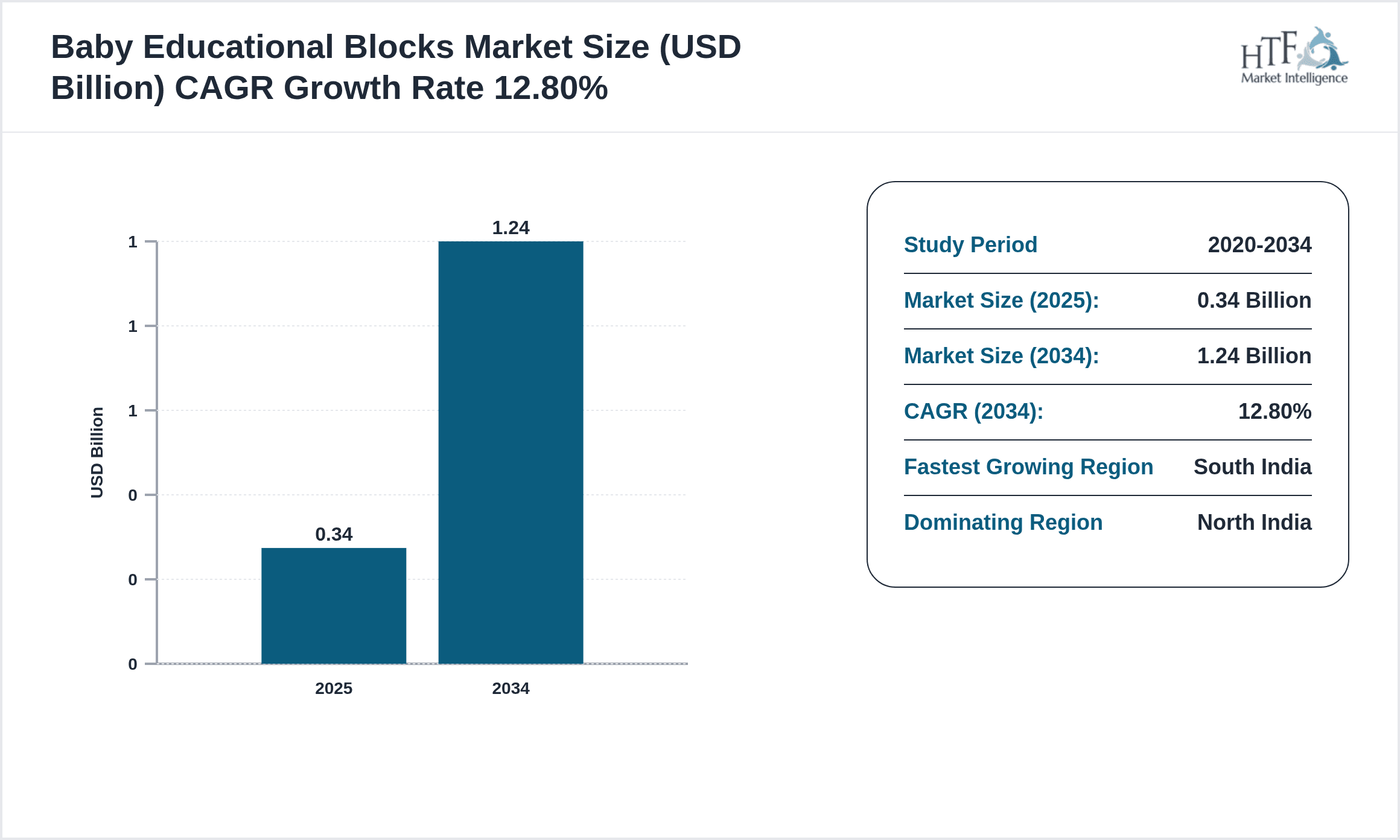
- •Key highlights of the India Baby Educational Blocks Market include a base market size of USD 0.34 Billion in 2024, projected to reach USD 1.24 Billion by 2034, reflecting a CAGR of approximately 12.8%. The Wooden Blocks segment currently dominates product types due to their natural appeal and safety, while Magnetic Blocks are the fastest-growing category, driven by technological innovation and increased demand for interactive learning tools. Preschool Education is the leading application, contributing the highest revenue share, closely followed by Early Childhood Development programs. Geographically, North India holds the largest market share at 30%, supported by high population density and urban centers, whereas South India is the fastest-growing sub-region with a CAGR of 14.5%, fueled by rising education awareness and economic growth. These growth indicators underscore the market’s robust expansion potential in India, supported by evolving consumer preferences and increasing investments in early education.
- •This market offers significant value propositions to multiple stakeholders including parents, educators, manufacturers, and retailers. For parents and educators, baby educational blocks function as foundational tools for early cognitive and motor skill development, combining play with learning. Manufacturers benefit from a growing demand for innovative and safe educational toys, encouraging product diversification and technological enhancement. Retailers and online platforms gain from expanding consumer bases and increasing penetration into tier II and tier III cities. Strategically, the market is critical for supporting national educational objectives and fostering long-term child development. The market's expansion encourages innovation in sustainable materials and inclusive designs, aligning with global trends. Overall, the India Baby Educational Blocks Market represents a vital segment of the early childhood education ecosystem, driving both social and economic value.
Competitive Landscape
The competitive environment of the India Baby Educational Blocks Market is characterized by a mix of domestic manufacturers and international brands competing to capture the growing demand for educational toys. Market players focus heavily on innovation, particularly in materials and interactive features, to differentiate their offerings and meet stringent safety standards. The rivalry is intensified by increasing consumer awareness and the entry of new players leveraging e-commerce platforms to reach broader audiences. Companies employ strategies such as strategic partnerships with educational institutions and robust marketing campaigns emphasizing developmental benefits. Additionally, pricing strategies vary from premium segments offering eco-friendly wooden blocks to affordable plastic-based options catering to price-sensitive consumers. Distribution channels have diversified, with a growing emphasis on online retail and specialized educational stores. The market also sees moderate consolidation through partnerships and collaborations aiming to enhance product portfolios and geographic reach. Overall, competitive dynamics are driven by innovation, brand reputation, and the ability to adapt to evolving consumer preferences and regulatory requirements.
Key Participants in India Baby Educational Blocks Market
- •Funskool India Ltd. (India)
- •Ravensburger Spieleverlag GmbH (Germany)
- •LeapFrog Enterprises, Inc. (United States)
- •Hape International AG (Switzerland)
- •Mattel, Inc. (United States)
- •VTech Holdings Limited (Hong Kong)
- •Melissa & Doug, LLC (United States)
- •Hasbro, Inc. (United States)
- •Chicco (Italy)
- •Fisher-Price, Inc. (United States)
- •Little Tikes (United States)
- •First Play (India)
- •Goki Spiel & Design GmbH (Germany)
- •PlanToys (Thailand)
- •KidKraft (United States)
- •Earlyears Education Pvt. Ltd. (India)
- •Toiing Toys (India)
- •Learning Resources, Inc. (United States)
- •Bannor Toys (United States)
- •Janod (France)
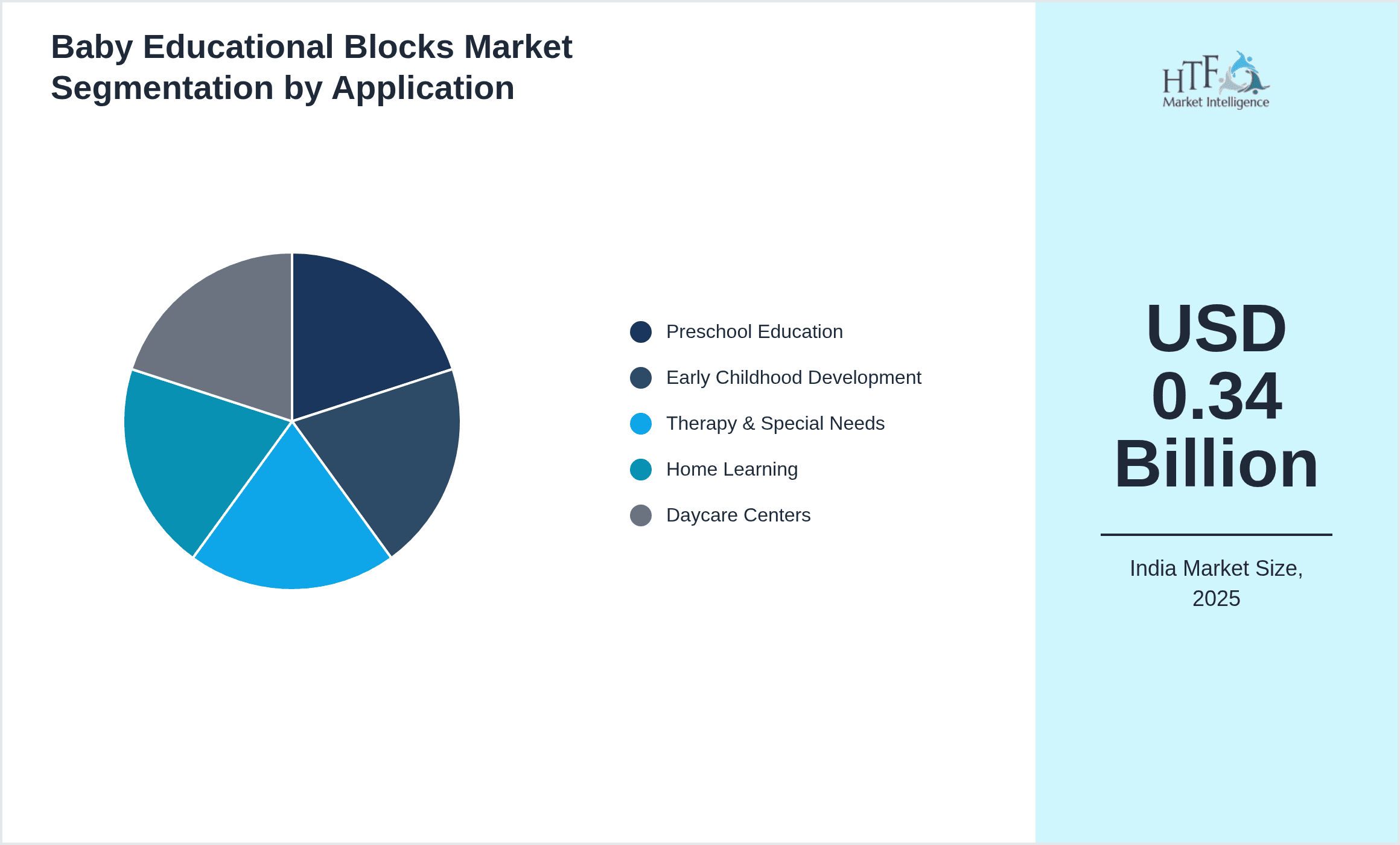
Market Breakdown
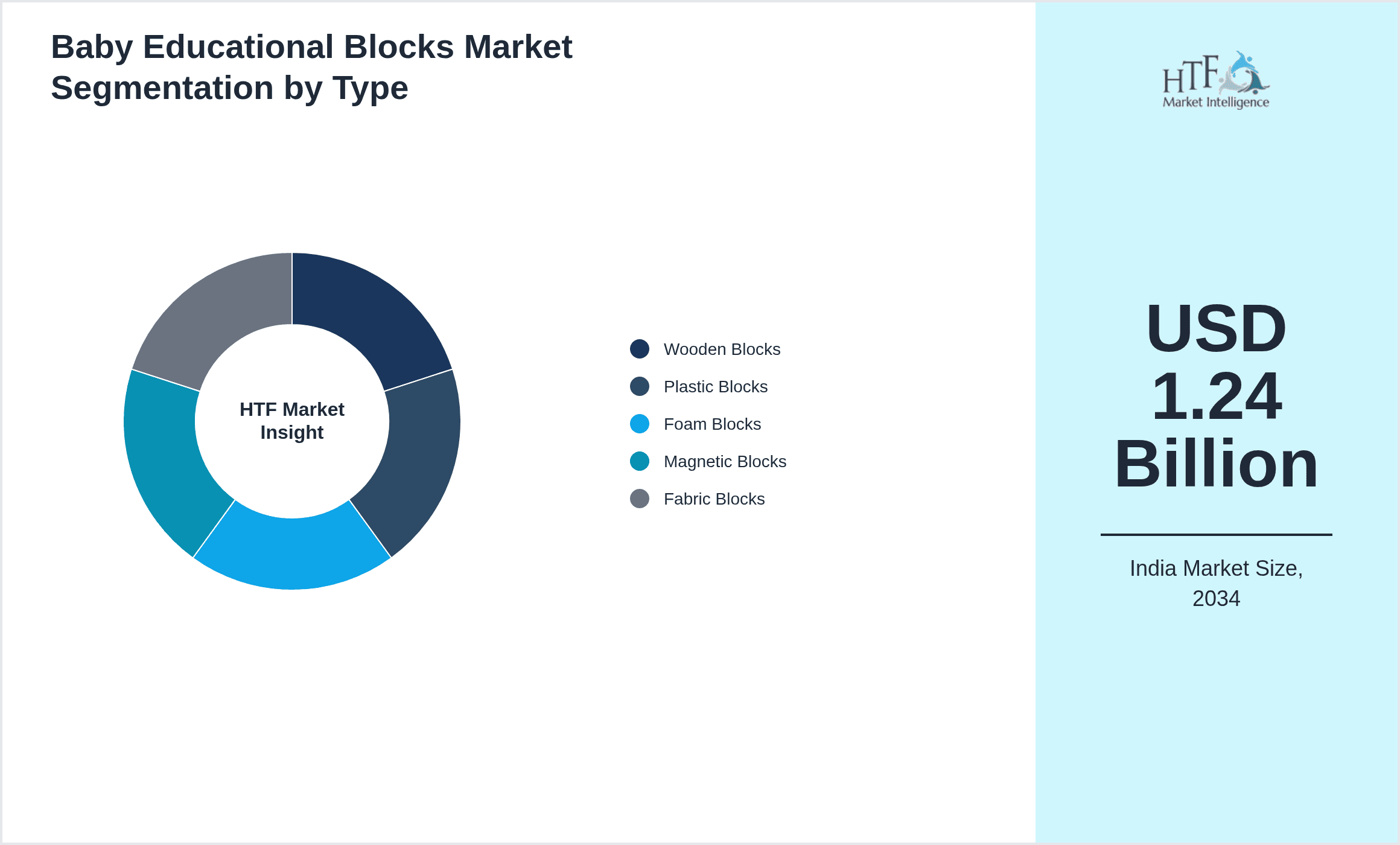
- •By Type
- ◦Wooden Blocks
- ◦Plastic Blocks
- ◦Foam Blocks
- ◦Magnetic Blocks
- ◦Fabric Blocks
- •By Application
- ◦Preschool Education
- ◦Early Childhood Development
- ◦Therapy & Special Needs
- ◦Home Learning
- ◦Daycare Centers
- •By Distribution Channel
- ◦Online Retail
- ◦Specialty Toy Stores
- ◦Mass Merchandisers
- ◦Educational Institutions
- •By Regional Zone
- ◦North India
- ◦South India
- ◦East India
- ◦West India
- ◦Central India
- ◦Northeast India
Growth Dynamics
- •The India Baby Educational Blocks Market is primarily driven by increasing awareness among parents regarding the importance of early childhood education and cognitive development. Rising disposable income levels across urban and semi-urban regions have enabled more families to invest in educational toys that promote learning through play. Government initiatives promoting preschool education and child development programs further boost demand. Additionally, the penetration of e-commerce platforms has expanded accessibility to diverse product ranges, facilitating growth in tier II and tier III cities. Manufacturers are innovating with eco-friendly materials and interactive designs, appealing to environmentally conscious consumers and enhancing product engagement. The growing focus on inclusive education and therapy for special needs children creates new demand streams. Overall, these factors collectively stimulate demand and are expected to sustain the market's robust growth trajectory over the forecast period.
- •Trends in the India Baby Educational Blocks Market include a strong shift towards sustainable and non-toxic materials such as natural wood and organic fabrics, driven by increasing parental concerns regarding child safety and environmental impact. The integration of technology, such as magnetic and electronic blocks that enable interactive learning, is gaining traction. Customization and modular designs that allow children to build complex structures are becoming popular. Additionally, the rise of online educational content and digital parenting communities influences purchasing decisions, emphasizing developmental benefits. Retailers are enhancing omni-channel strategies to blend online and offline experiences. The market also witnesses growing collaborations between toy manufacturers and educational institutions to co-develop curriculum-aligned products. These evolving consumer preferences and innovation trends define the competitive landscape and future growth avenues.
- •Market restraints include high price sensitivity among a large segment of the Indian population, limiting penetration in rural and lower-income groups. Additionally, the availability of low-cost, unregulated counterfeit products poses safety risks and affects consumer confidence. Regulatory complexities and lack of stringent enforcement on product safety standards can hamper market growth. Distribution challenges in remote regions and lack of awareness about the developmental benefits of educational blocks also restrict market expansion. Furthermore, the COVID-19 pandemic temporarily disrupted supply chains and retail operations, although recovery is underway. Addressing these constraints requires concerted efforts from manufacturers, regulators, and educators to ensure safety, affordability, and awareness.
- •The India Baby Educational Blocks Market presents significant opportunities through expansion into untapped rural and semi-urban areas supported by digital commerce growth. Innovation in affordable and multifunctional product lines can cater to cost-conscious consumers and diverse educational needs. Collaborations with government early childhood programs and NGOs offer pathways for broader adoption. There is potential for integrating augmented reality and smart technology to enhance interactive learning experiences. Export opportunities also exist as Indian manufacturers improve quality and certification standards. The growing middle class and increasing female workforce participation stimulate demand for early education tools, creating new market segments. Strategic partnerships with educational institutions and daycare centers can drive product adoption and brand loyalty.
- •Challenges in the market include intense competition from domestic and international players that necessitate continuous innovation and cost optimization. Ensuring compliance with evolving safety and environmental regulations increases production complexity. The fragmented retail landscape and dominance of unorganized players make market penetration difficult. Awareness gaps, especially in non-urban regions, require significant marketing and educational efforts. Supply chain disruptions due to geopolitical or health crises remain a risk factor. Additionally, balancing product affordability with quality and safety standards is a persistent challenge for manufacturers aiming to scale. Overcoming these challenges is crucial for sustained growth and market leadership.
Market Trends
- •A key trend in the India Baby Educational Blocks Market is the increasing adoption of eco-friendly and sustainable materials, such as FSC-certified wood and biodegradable plastics. This shift aligns with global sustainability goals and addresses growing consumer demand for safe and environmentally responsible products. Major players have introduced lines emphasizing natural textures and non-toxic paints, enhancing the appeal among health-conscious parents. This trend also encourages innovation in production processes to reduce carbon footprints and waste.
- •Technological integration is gaining momentum, with magnetic blocks and smart building toys that interact with apps becoming more prevalent. These innovations offer augmented learning experiences that combine tactile play with digital content, helping children develop STEM-related skills early. Such products cater to tech-savvy young parents and educational institutions aiming to blend traditional and digital learning.
- •Omni-channel retail strategies are shaping the market, as companies leverage both online marketplaces and brick-and-mortar specialty stores to maximize reach. The rise in smartphone penetration and internet accessibility in India facilitates e-commerce growth, enabling brands to tap into tier II and III cities. This multi-channel approach improves customer engagement and convenience.
- •Collaborations between educational toy manufacturers and early childhood educators are increasing. Such partnerships help co-create curriculum-aligned products that support developmental milestones, enhancing product credibility and adoption. These collaborations also foster research-driven innovations and tailored marketing strategies.
- •The market is witnessing a growing preference for multifunctional and modular educational blocks that evolve with the child's age and learning ability. This trend toward versatile toys provides better value to consumers and extends product lifecycle. It also aligns with parental desire for long-term educational tools.
Market Opportunities
- •Expanding into rural and semi-urban markets represents a substantial growth opportunity, given increasing awareness and improving infrastructure. Customized marketing campaigns and affordable product lines targeted at these regions can drive adoption. Digital literacy and smartphone use growth further enable e-commerce penetration, opening new sales channels.
- •The development and launch of smart educational blocks embedded with sensors and connectivity features provide avenues for differentiation and market leadership. These products can integrate with educational apps to offer personalized learning experiences, appealing to tech-oriented parents and institutions.
- •Partnerships with government early childhood education schemes and NGOs can facilitate product inclusion in large-scale child development programs. Such collaborations enhance brand visibility and social impact, driving volume growth and consumer trust.
- •Innovating affordable and durable products using locally sourced sustainable materials can reduce costs and appeal to environmentally conscious consumers. This strategy also supports the 'Make in India' initiative, encouraging domestic manufacturing and exports.
- •Expanding product portfolios to include therapy-focused educational blocks designed for children with special needs opens niche markets. Growing recognition of inclusive education in India supports demand in this segment, with potential for premium pricing and brand differentiation.
Market Challenges
- •High price sensitivity among large portions of the Indian population remains a significant challenge, limiting penetration beyond urban centers. Manufacturers face pressure to balance affordability with product quality and safety, which can constrain profit margins and innovation budgets.
- •The presence of unregulated and counterfeit toys in the market undermines consumer confidence and poses safety risks. Lack of stringent enforcement of product safety standards complicates efforts to establish trust and brand loyalty among consumers.
- •Distribution challenges in remote and rural regions hinder market expansion. Limited retail infrastructure and logistical complexities increase costs and reduce product availability in these areas, requiring innovative supply chain solutions.
- •Awareness gaps regarding the developmental benefits of educational blocks persist, especially in non-urban segments. This necessitates substantial investment in marketing and educational outreach to drive informed consumer purchasing decisions.
- •Ensuring compliance with evolving domestic and international safety and environmental regulations increases operational complexity and costs. Manufacturers must continuously adapt to regulatory changes to maintain market access and consumer trust.
Regulatory Framework
- •Between 2019 and 2024, India implemented the Bureau of Indian Standards (BIS) certification requirements for educational toys, mandating compliance with safety and quality standards to protect children from hazardous materials and choking hazards. This regulation has compelled manufacturers to enhance product testing and certification processes, thereby improving overall market quality.
- •The Consumer Protection Act of 2019 introduced stricter guidelines on product liability and consumer rights, increasing accountability for toy manufacturers and retailers. This legislation has incentivized companies to prioritize transparency and quality assurance in their supply chains.
- •Environmental regulations focusing on the reduction of plastic use and promotion of sustainable materials have influenced the market since 2021. Manufacturers are encouraged to adopt eco-friendly materials and reduce packaging waste to comply with these norms.
- •State-level mandates in regions such as Maharashtra and Karnataka require educational toys sold in government-supported childcare centers to meet specified safety certifications, promoting higher standards in institutional procurement.
- •Government initiatives under the National Early Childhood Care and Education (ECCE) policy support the adoption of educational toys, including blocks, as part of developmental programs. Incentives and subsidies for manufacturers and educational institutions have been introduced to facilitate market growth.
Market Intelligence
- •15th January 2025, Funskool India Ltd. launched a new eco-friendly wooden block series featuring biodegradable paints and premium craftsmanship tailored for preschoolers. This product line aims to address growing consumer demand for sustainable and safe educational toys, with plans to expand distribution through leading e-commerce platforms and specialty retailers. The launch highlights the company's commitment to innovation and environmental responsibility, positioning it strongly within the competitive India baby educational blocks market. Source: Funskool Official Press Release.
- •3rd March 2025, LeapFrog Enterprises, Inc. introduced an interactive magnetic block set integrated with augmented reality (AR) technology designed to enhance STEM learning for children aged 3-5 years. The product leverages mobile app connectivity to provide guided building challenges and educational content, marking LeapFrog’s entry into the Indian market’s tech-enabled educational toys segment. This innovation sets a trend towards digital-physical hybrid toys, expected to attract tech-savvy parents and educational institutions. Source: LeapFrog Corporate Announcement.
- •20th April 2025, Earlyears Education Pvt. Ltd. announced a strategic partnership with regional preschools in South India to supply customized educational blocks aligned with local curricula. This collaboration aims to improve early childhood learning outcomes by integrating play-based learning tools into classroom settings, enhancing brand visibility and product adoption in the fastest-growing regional market. Source: Earlyears Company Release.
- •10th June 2025, Hape International AG expanded its distribution network in India through tie-ups with major online marketplaces and specialty toy stores across metro and tier II cities. The expansion seeks to capitalize on rising demand for premium educational toys, leveraging Hape’s reputation for quality and innovative design. This move is expected to strengthen market presence and competitive positioning in India’s growing baby educational blocks segment. Source: Hape Official Statement.
Regional Outlook
The North India currently holds a significant share of the market, primarily due to several key factors: increasing consumption rates, a burgeoning population, and robust economic momentum. These elements collectively drive demand, positioning this region as a leader in the market. On the other hand, South India is rapidly emerging as the fastest-growing area within the industry. This remarkable growth can be attributed to swift infrastructure development, the expansion of various industrial sectors, and a marked increase in consumer demand. These dynamics make this region a crucial player in shaping future market growth.
In our report, we cover a comprehensive analysis of the following regions and countries:
- North India
- South India
- Central India
- East India
- West India
| Feature | Details |
|---|---|
| Base Year Market Size | USD 0.34 Billion |
| Forecast Year Market Size | USD 1.24 Billion |
| CAGR | 12.8% |
| Forecast Period | 2026 to 2033 |
| YoY Growth | 12.1% |
| Scope of Report | Market is segmented by Type (Wooden Blocks, Plastic Blocks, Foam Blocks, Magnetic Blocks, Fabric Blocks), Application (Preschool Education, Early Childhood Development, Therapy & Special Needs, Home Learning, Daycare Centers), Distribution Channel (Online Retail, Specialty Toy Stores, Mass Merchandisers, Educational Institutions), Regional Zone (North India, South India, East India, West India, Central India, Northeast India) |
| Regions Covered | North India, South India, Central India, East India, West India |
| Key Companies | Expanding into rural and semi-urban markets represents a substantial growth opportunity, given increasing awareness and improving infrastructure. Customized marketing campaigns and affordable product lines targeted at these regions can drive adoption. Digital literacy and smartphone use growth further enable e-commerce penetration, opening new sales channels., The development and launch of smart educational blocks embedded with sensors and connectivity features provide avenues for differentiation and market leadership. These products can integrate with educational apps to offer personalized learning experiences, appealing to tech-oriented parents and institutions., Partnerships with government early childhood education schemes and NGOs can facilitate product inclusion in large-scale child development programs. Such collaborations enhance brand visibility and social impact, driving volume growth and consumer trust., Innovating affordable and durable products using locally sourced sustainable materials can reduce costs and appeal to environmentally conscious consumers. This strategy also supports the 'Make in India' initiative, encouraging domestic manufacturing and exports., Expanding product portfolios to include therapy-focused educational blocks designed for children with special needs opens niche markets. Growing recognition of inclusive education in India supports demand in this segment, with potential for premium pricing and brand differentiation. |
India Baby Educational Blocks Market Size, Growth & Revenue 2024-2034 - Table of Contents
Frequently Asked Questions (FAQ):
The Compact Track Loaders market is expected to see value worth 5.3 Billion in 2025.
North America currently leads the market with approximately 45% market share, followed by Europe at 28% and Asia-Pacific at 22%. The remaining regions account for 5% of the global market.
Key growth drivers include increasing construction activities, rising demand for versatile equipment in agriculture, technological advancements in track loader design, and growing preference for compact equipment in urban construction projects.