
Europe Portable Blender Market - Outlook 2024-2034
Europe Portable Blender Market is segmented by Product Type (Cordless Portable Blenders, Rechargeable Portable Blenders, USB-Powered Portable Blenders, Battery-Operated Portable Blenders, Manual Portable Blenders), Application (Home Use, Outdoor Activities, Fitness & Health, Travel, Commercial Use), Distribution Channel (Retail Stores, E-Commerce Platforms, Specialty Kitchenware Outlets, Direct Sales), Technology (Lithium-Ion Battery Technology, Brushless Motor Technology, Smart Connectivity Features), and Geography (Germany, France, The United Kingdom, BeNeLux, Spain, Italy, NORDIC, CEE, Others)
Pricing
Report Overview
Executive Summary
- •The Europe Portable Blender Market represents a rapidly growing segment within the small kitchen appliances industry, focused on compact, efficient blending solutions that cater to a mobile and health-conscious consumer base. These devices are designed for ease of use both indoors and outdoors, with types including cordless, rechargeable, USB-powered, battery-operated, and manual blenders. The market scope encompasses diverse applications such as home usage for quick meal preparations, outdoor activities including camping and hiking, fitness and health regimes requiring fresh nutrition, travel convenience, and commercial use in cafes or food trucks. Over the forecast period from 2024 to 2034, the market is expected to see significant expansion driven by technological innovations improving battery life and motor performance, rising consumer focus on wellness, and increasing adoption of portable appliances in European households. The competitive landscape features established brands innovating for product differentiation and expanding distribution through e-commerce platforms. Regulatory frameworks across European countries emphasize safety and environmental compliance, impacting product design and market entry. Overall, this market is a confluence of lifestyle trends, technological progress, and regional consumer dynamics shaping future growth.
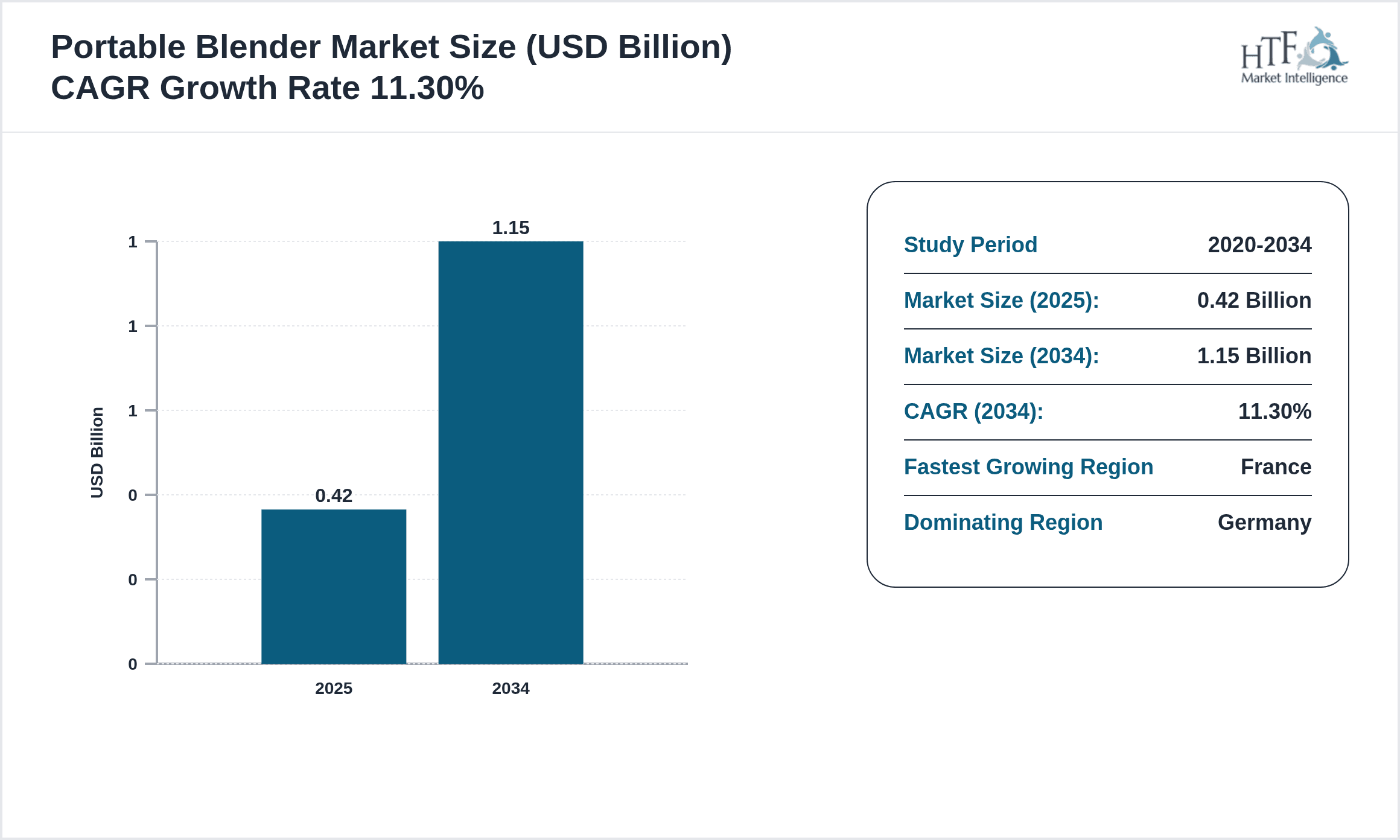
- •Key market highlights include a base market size of approximately USD 0.42 Billion in 2024, with a projected growth to USD 1.15 Billion by 2034, representing a robust CAGR of 11.3%. Germany leads as the dominant regional market with a 25% share, while France exhibits the fastest growth rate at a CAGR of 14.2%, capturing an 18% market share. Cordless portable blenders hold the leading product type position, favored for their convenience and power, whereas USB-powered blenders are the fastest-growing segment due to their compatibility with modern charging ecosystems. Home use remains the primary application, complemented by rising demand in outdoor and fitness segments. These data points underscore a dynamic market environment with expanding consumer adoption driven by evolving lifestyles and technological enhancements.
- •The value proposition of portable blenders in Europe centers on delivering mobility, ease of use, and health-focused convenience, addressing the needs of urban consumers, fitness enthusiasts, and on-the-go lifestyles. Strategic importance extends to manufacturers and retailers leveraging innovation and distribution channels to capture emerging demand. This market fosters opportunities for product differentiation through advanced battery technologies, smart features, and sustainable materials, positioning stakeholders to capitalize on shifting consumer preferences and regulatory incentives promoting eco-friendly appliances. The market’s growth trajectory aligns with broader trends in consumer electronics and personal wellness, making it a pivotal segment within the European small appliances industry.
Competitive Landscape
The competitive environment in the Europe Portable Blender Market is characterized by a mix of established multinational corporations and innovative regional players striving for market share through continuous product innovation and strategic positioning. Companies focus on differentiating their offerings by enhancing battery life, motor efficiency, design aesthetics, and incorporating smart features such as app connectivity and safety mechanisms. Intense rivalry exists in pricing strategies, distribution partnerships, and marketing efforts targeting health-conscious and convenience-driven consumers. Mergers and acquisitions have played a significant role in consolidating market positions, enabling firms to expand their product portfolios and geographical reach. The distribution landscape includes traditional retail, specialty kitchenware stores, and rapidly growing online sales channels, with companies investing in omnichannel strategies to maximize consumer touchpoints. Sustainability and regulatory compliance are increasingly important competitive factors, as European consumers and authorities demand eco-friendly materials and energy-efficient designs. Overall, competition stimulates innovation, driving the market towards technologically advanced, user-friendly portable blenders with diversified application suitability.
Key Players in Portable Blender Market
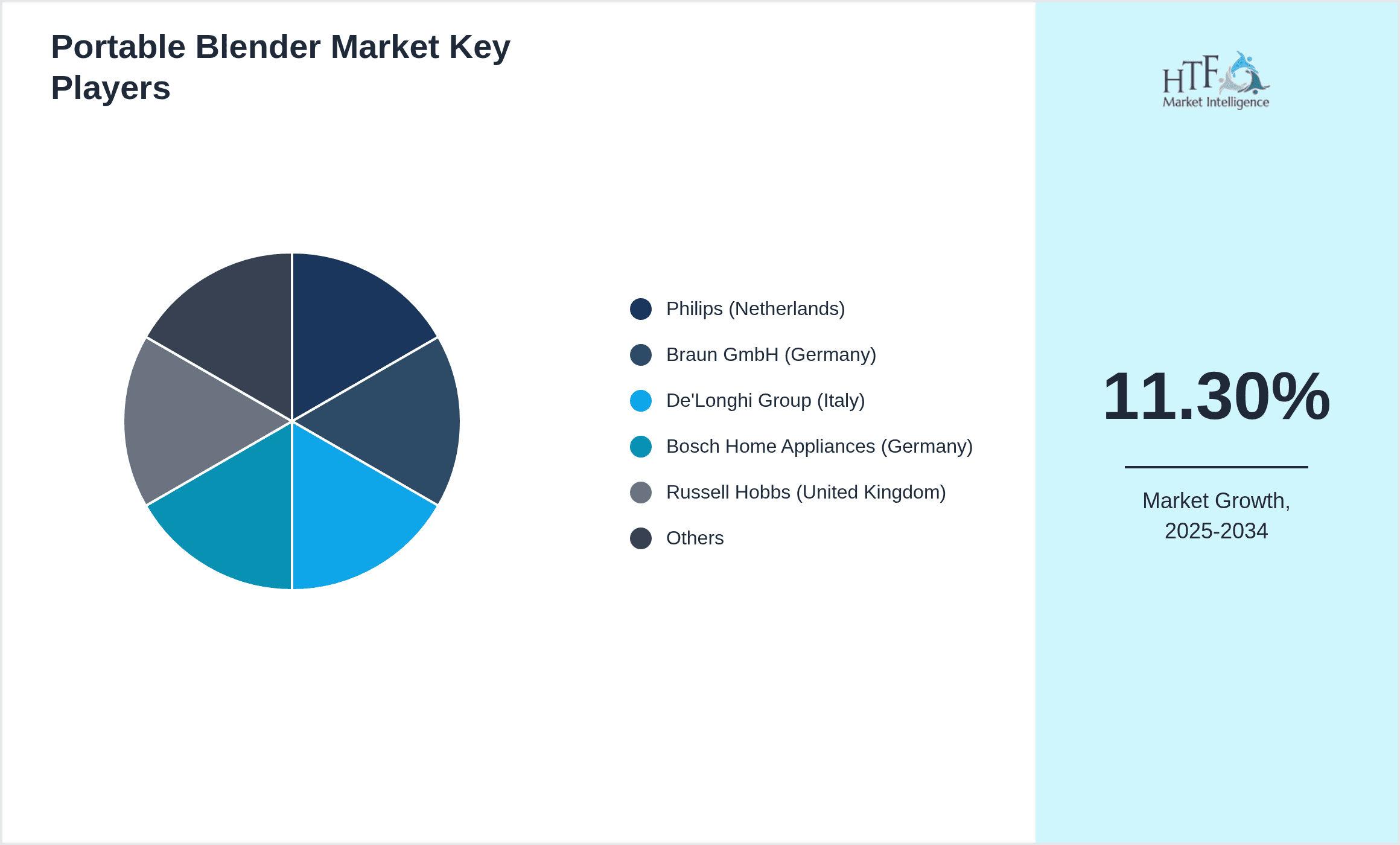
- •Philips (Netherlands)
- •Braun GmbH (Germany)
- •De'Longhi Group (Italy)
- •Bosch Home Appliances (Germany)
- •Russell Hobbs (United Kingdom)
- •Kenwood Limited (United Kingdom)
- •Tefal (France)
- •Moulinex (France)
- •Smeg (Italy)
- •Severin Elektrogeräte GmbH (Germany)
- •KitchenAid Europe (United Kingdom)
- •Morphy Richards (United Kingdom)
- •Vitamix Europe (Netherlands)
- •Bosch Siemens Hausgeräte (Germany)
- •Ariete (Italy)
- •Russell Hobbs Europe (Germany)
- •Sencor (Czech Republic)
- •Emerio Europe (Belgium)
- •Bodum (Denmark)
- •Tristar Products (Netherlands)

Market Breakdown
- •By Product Type
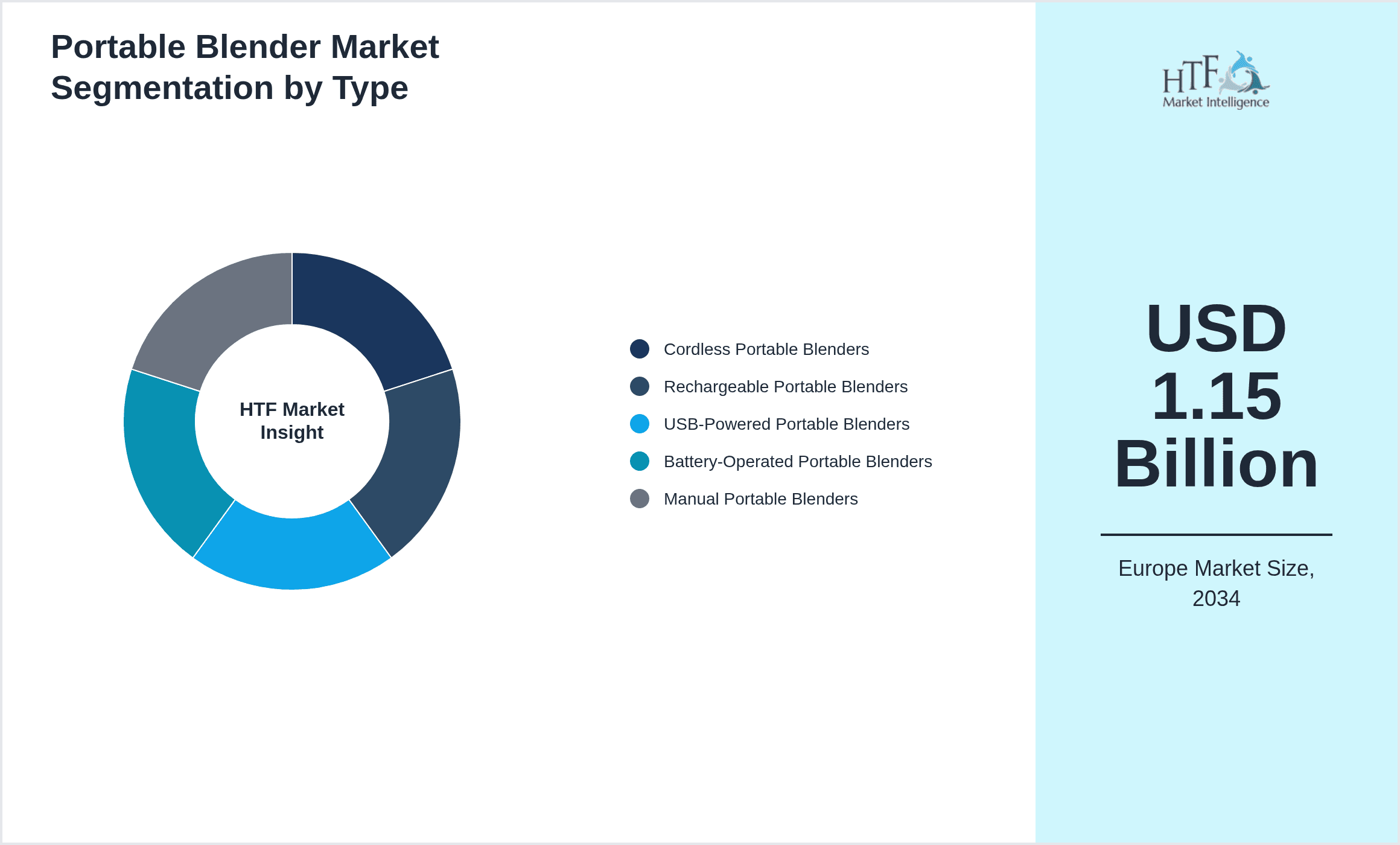
- ◦Cordless Portable Blenders
- ◦Rechargeable Portable Blenders
- ◦USB-Powered Portable Blenders
- ◦Battery-Operated Portable Blenders
- ◦Manual Portable Blenders
- •By Application
- ◦Home Use
- ◦Outdoor Activities
- ◦Fitness & Health
- ◦Travel
- ◦Commercial Use
- •By Distribution Channel
- ◦Retail Stores
- ◦E-Commerce Platforms
- ◦Specialty Kitchenware Outlets
- ◦Direct Sales
- •By Technology
- ◦Lithium-Ion Battery Technology
- ◦Brushless Motor Technology
- ◦Smart Connectivity Features
Growth Dynamics
- •The Europe Portable Blender Market's growth is primarily driven by increasing health consciousness among consumers, who seek convenient solutions for preparing fresh juices and smoothies. Rising urbanization and fast-paced lifestyles have propelled demand for portable and easy-to-use blenders that support on-the-go nutrition. Technological advancements in battery efficiency, such as lithium-ion batteries, have enhanced product usability and performance, further fueling adoption. Additionally, the expansion of e-commerce platforms has improved accessibility and variety, allowing consumers to explore innovative products easily. Government initiatives promoting healthy lifestyles and sustainable appliances also underpin market growth by incentivizing manufacturers to innovate eco-friendly, energy-efficient blenders. These factors collectively create a favorable environment for sustained market expansion across Europe.
- •Consumer trends reveal a growing preference for multipurpose portable blenders capable of handling various ingredients, including fruits, vegetables, and ice. The integration of smart features like app connectivity and safety locks aligns with the digital lifestyle of European consumers, enhancing product appeal. Additionally, eco-conscious buying behavior is encouraging manufacturers to adopt sustainable materials and recyclable components. Social media influence and fitness culture contribute to heightened demand, with consumers sharing usage experiences and recipes, thus amplifying market visibility. Seasonal and regional festivals also boost sales, especially in countries with strong outdoor activity traditions. Overall, these trends signify a shift towards blending convenience, technology, and sustainability in product development and marketing strategies.
- •Despite promising growth, the market faces restraints such as higher product costs compared to conventional blenders, which may limit adoption among price-sensitive consumers. Battery life limitations and longer charging times can affect user satisfaction, particularly for frequent outdoor users. Additionally, the lack of standardized safety regulations across different European countries creates challenges for manufacturers in compliance and market entry. Competition from alternative portable beverage preparation devices, such as shaker bottles and pre-packaged smoothies, also constrains growth. Furthermore, supply chain disruptions and raw material price volatility may impact production costs and availability. Addressing these challenges requires innovation in cost optimization, battery technology, and harmonized regulatory frameworks to sustain market momentum.
- •Opportunities in the Europe Portable Blender Market include expanding product lines targeting niche consumer segments such as athletes, travelers, and eco-conscious buyers. Incorporating advanced technologies like fast-charging batteries, improved blade materials, and smart sensors can enhance user experience and differentiate products. Collaborations with fitness brands, nutritionists, and lifestyle influencers offer strategic marketing channels to boost brand visibility and credibility. Geographic expansion into emerging European markets with rising disposable incomes presents untapped potential. Additionally, leveraging sustainability trends by developing recyclable and biodegradable components can capture environmentally aware consumers. The integration of subscription-based services for accessories or replacement parts also opens new revenue streams. These opportunities enable stakeholders to innovate and capture growing demand effectively.
- •Market challenges include intense competition from both established appliance manufacturers and emerging startups offering innovative portable blending solutions. Navigating complex European regulations concerning electrical safety, chemical usage, and energy efficiency requires significant investment and expertise. Variability in consumer preferences across countries necessitates tailored product designs and marketing strategies, increasing operational complexity. Distribution channel fragmentation and the need for robust after-sales service infrastructure pose logistical hurdles. Moreover, technological barriers such as optimizing motor power while maintaining compact size demand continuous R&D efforts. Overcoming these challenges is critical for companies aiming to establish and maintain a competitive edge in the evolving European portable blender landscape.
Market Trends
- •The Europe Portable Blender Market is witnessing a surge in adoption of USB-powered and cordless models, reflecting consumer demand for portability combined with seamless charging options compatible with mobile devices. This trend is supported by advancements in compact battery technologies and efficient motor designs that deliver powerful blending performance in lightweight formats. Increasing integration of smart features, such as app-controlled blending modes and safety sensors, aligns with the growing digitalization of kitchen appliances. Additionally, there is a noticeable shift towards sustainable product designs, including the use of recycled plastics and biodegradable materials, driven by consumer environmental awareness. Retailers are also expanding online presence, offering customizable options and subscription services that enhance convenience and customer engagement. These trends collectively shape a dynamic market responding to technological, environmental, and lifestyle influences.
- •Emerging trends include collaborations between portable blender manufacturers and fitness or wellness brands to create co-branded products targeting health-conscious consumers. Seasonal limited editions with unique designs and functionalities are gaining popularity, stimulating periodic sales spikes. The rise of influencer marketing and recipe-sharing communities on social media platforms fuels demand and consumer education on portable blender uses. Furthermore, some companies are experimenting with modular designs allowing easy replacement of parts, improving product longevity and reducing waste. Expansion of multi-functional blenders capable of food processing beyond blending, such as chopping and grinding, caters to broader culinary applications. Overall, these trends reflect a market adapting to consumer desires for personalization, sustainability, and enhanced functionality.
- •Strategic market developments include increased investment in R&D to improve battery life and blending power while minimizing noise and size. Companies are adopting eco-friendly manufacturing processes and certifications to meet stringent European environmental standards. Enhanced warranty and service policies are being deployed to build consumer trust and brand loyalty. The growth of e-commerce has led to partnerships with leading online retailers, optimizing product visibility and accessibility. Additionally, some players are introducing trade-in or recycling programs to promote circular economy principles. The balance between innovation, sustainability, and customer experience is central to sustaining competitive advantage in this evolving market landscape.
- •Digitalization is driving operational efficiencies and consumer engagement through smart appliances that connect to mobile apps for remote control, blending preferences storage, and maintenance alerts. This enhances user convenience and product differentiation. Sustainability initiatives include adopting energy-efficient motors and reducing packaging waste, aligning with regulatory pressures and consumer values. Operational improvements in supply chain transparency and inventory management support timely product availability and cost control. Companies are also leveraging data analytics and customer feedback to refine product development and marketing strategies. These advancements contribute to a more responsive and responsible portable blender market in Europe.
- •Collaborative ecosystems are forming as manufacturers partner with technology providers, fitness brands, and retail platforms to deliver integrated product experiences. Cross-industry partnerships enable access to new customer segments and innovative marketing channels. Consumer preferences are evolving towards multifunctional, durable, and aesthetically appealing portable blenders, prompting diversification in product portfolios. Market segmentation is becoming more granular, with tailored products for distinct demographics and usage scenarios. The value chain is experiencing digitization, facilitating direct-to-consumer sales and personalized services. Future directions include leveraging AI for predictive maintenance and customization, signaling a paradigm shift in portable blender innovation and market approach.
Market Opportunities
- •Significant growth potential exists in targeting the growing outdoor and adventure sports segment, where lightweight and durable portable blenders can fulfill specific consumer needs. Developing ruggedized models with enhanced battery life and water resistance can open new market niches. Expansion into emerging European countries with increasing disposable incomes and urbanization rates offers untapped opportunities. Collaborating with health and wellness influencers to educate consumers on nutritional benefits and product versatility can stimulate demand. Additionally, integrating eco-friendly materials and circular economy principles aligns with regulatory incentives and consumer values, creating competitive advantages in product differentiation and brand positioning.
- •Untapped segments such as commercial use in cafes, juice bars, and food trucks represent lucrative opportunities for portable blenders designed with higher capacity and durability. Customizing products for these applications with enhanced performance and safety features can drive B2B adoption. The rise of subscription models for replacement parts and accessories presents new revenue streams and customer retention possibilities. Technology integration opportunities include embedding IoT sensors for usage tracking and maintenance alerts, appealing to tech-savvy consumers. Geographic expansion into Eastern and Southern European markets, supported by localized marketing and distribution, can broaden the customer base and accelerate revenue growth.
- •Investment in innovation around fast-charging battery systems and brushless motor technologies can improve product attractiveness by reducing downtime and enhancing blending efficiency. Exploring partnerships with fitness and nutrition companies for co-branded products or bundled offerings can leverage established consumer trust and expand market reach. Developing multilingual digital platforms and apps to accompany smart blenders enhances user experience and market penetration across Europe’s diverse linguistic landscape. Sustainable packaging innovations and take-back programs can meet regulatory requirements while resonating with environmentally conscious consumers. These strategic initiatives enable companies to capitalize on evolving consumer expectations and regulatory frameworks effectively.
- •Geographical expansion opportunities include deepening presence in high-growth countries like France, Spain, and Italy through tailored product assortments and localized marketing campaigns. Addressing specific consumer preferences, cultural habits, and price sensitivities in these countries can improve market share. Introducing compact, travel-friendly models designed for frequent travelers and urban commuters can capture niche segments. Developing multifunctional blenders capable of food processing and blending expands use cases and attracts broader consumer groups. Enhancing after-sales service networks and warranty offerings builds brand loyalty and trust, facilitating sustained growth in competitive markets.
- •Strategic partnerships and acquisitions targeting technology startups and component suppliers can accelerate innovation and reduce time-to-market for advanced portable blender models. Capitalizing on regulatory trends favoring energy-efficient and eco-friendly appliances through product certification and marketing can enhance brand reputation. Anticipating future consumer needs such as allergy-friendly blending settings or silent operation features allows early mover advantage. Investing in digital marketing and direct-to-consumer channels improves customer engagement and data collection for continuous product improvement. These opportunities position stakeholders to navigate the evolving market landscape proactively and profitably.
Market Challenges
- •A major challenge in the Europe Portable Blender Market is managing the balance between product performance and portability, as consumers demand powerful, long-lasting blenders in compact forms. Achieving this requires advanced engineering and higher production costs, which can elevate retail prices and restrict mass adoption. Variations in electrical standards and safety regulations across European countries complicate the design and certification processes, increasing time-to-market and compliance expenses. Price sensitivity in certain markets and competition from low-cost imports add pressure on profit margins. Furthermore, educating consumers on product benefits and proper usage remains critical to reducing return rates and enhancing satisfaction, necessitating sustained marketing investment.
- •Technical limitations such as battery degradation over time and motor overheating impact product reliability and user experience, posing challenges in warranty management and brand reputation. Supply chain disruptions, exacerbated by geopolitical uncertainties and raw material shortages, affect production schedules and cost structures. The fragmented retail landscape requires tailored distribution and service strategies, increasing operational complexity. Counterfeit and substandard products in the market undermine consumer trust and pose legal risks. Addressing these challenges demands robust quality control, strategic sourcing, and consumer education initiatives to maintain competitive positioning and market confidence.
- •The rapid pace of technological change necessitates continuous investment in R&D, which can strain resources for smaller manufacturers and startups, limiting innovation potential. Integration of smart features involves cybersecurity risks and data privacy considerations that require compliance with stringent European regulations like GDPR. Limited awareness of portable blender advantages in certain demographics restricts market penetration, highlighting the need for targeted outreach and demonstration campaigns. Additionally, environmental regulations around battery disposal and material recyclability impose constraints on product design and lifecycle management. Navigating these multifaceted challenges is essential for sustainable growth and regulatory adherence.
- •Competition from alternative portable beverage preparation solutions such as shaker bottles and ready-to-drink products limits market expansion. Shifts in consumer preferences towards multifunctional kitchen appliances may divert attention from single-use portable blenders. The high cost of smart technology integration can deter price-sensitive segments, necessitating tiered product strategies. Variability in internet penetration and digital literacy across European regions affects adoption rates of smart-enabled portable blenders. Lastly, environmental concerns around electronic waste require manufacturers to establish effective recycling and take-back programs, adding operational complexity and cost.
- •Supply chain vulnerabilities, including dependency on specific battery and component suppliers, expose manufacturers to risks of delays and cost escalations. The need to maintain quality across diverse product lines and distribution channels challenges operational efficiency. Consumer expectations for rapid innovation cycles and product customization increase production planning complexity. Ensuring consistent after-sales service and technical support across multiple countries with different languages and regulations demands significant investment. These challenges necessitate strategic supply chain management, agile operations, and robust customer relationship frameworks to sustain market competitiveness.
Regulatory Framework
- •Between 2019 and 2024, the Portable Blender Market in Europe has been influenced by the implementation of the EU's Ecodesign Directive, mandating energy efficiency and environmental performance standards for electric appliances. This regulation requires manufacturers to optimize power consumption and facilitate recyclability, impacting design and material choices. The Restriction of Hazardous Substances (RoHS) directive updated in 2021 limits the use of harmful chemicals in electronic components, ensuring consumer safety and environmental protection. The 2023 introduction of the Batteries Directive revision emphasizes sustainable battery sourcing, recycling, and disposal protocols, compelling manufacturers to adopt eco-friendly battery technologies and establish take-back schemes. Additionally, the General Product Safety Directive mandates rigorous safety testing and certification processes before market entry. National regulations in countries like Germany and France supplement these EU-wide rules with specific labeling and warranty requirements. Compliance with these evolving regulations presents both challenges and opportunities for innovation and market access in the European portable blender sector.
- •The enforcement mechanisms include mandatory conformity assessments, CE marking, and periodic market surveillance by regulatory bodies, ensuring that products meet stringent safety and environmental standards. Non-compliance can result in fines, product recalls, and reputational damage, incentivizing proactive adherence by manufacturers. Industry associations facilitate compliance by providing guidelines and training to stakeholders. The regulatory landscape encourages the adoption of energy-efficient motors, recyclable materials, and safe battery technologies, aligning with the European Green Deal objectives. These frameworks stimulate sustainable product development while protecting consumers and the environment, shaping the portable blender market's future trajectory in Europe.
- •Safety standards under EN IEC 60335 series govern the electrical and mechanical safety of household appliances, including portable blenders. These standards cover insulation, protection against electric shock, mechanical hazards, and durability. Environmental regulations address packaging waste under the Packaging and Packaging Waste Directive, requiring reduction and recycling of packaging materials. The Waste Electrical and Electronic Equipment (WEEE) directive mandates responsible disposal and recycling of electronic appliances, influencing manufacturers’ end-of-life product management strategies. These regulatory requirements compel companies to integrate design for environment principles and establish take-back and recycling programs to comply with legal obligations and consumer expectations.
- •Country-specific mandates, such as Germany’s ElektroG and France’s ADEME regulations, impose additional compliance layers including extended producer responsibility and eco-design incentives. Timelines for implementation vary, with phased requirements introduced from 2022 through 2024 to allow market adjustment. These regulations promote circular economy practices and encourage innovation in sustainable materials and energy efficiency. Manufacturers operating in multiple European countries must navigate this regulatory mosaic by harmonizing product designs and documentation to meet diverse national standards while leveraging EU-wide directives for streamlined compliance.
- •Government initiatives, including subsidies and tax incentives for energy-efficient appliances, support market growth by reducing costs and encouraging consumer adoption. Public awareness campaigns on sustainability and safe appliance usage further drive demand for compliant products. Collaboration between regulatory bodies and industry stakeholders fosters the development of standards that balance innovation with safety and environmental protection. These policy frameworks create a supportive environment enabling portable blender manufacturers to innovate responsibly and expand their market presence across Europe.
Market Intelligence
- •15th January 2025, Philips launched its latest cordless portable blender model featuring an enhanced lithium-ion battery providing up to 20 blending cycles per charge and a noise reduction system targeting urban consumers seeking quiet operation. The product integrates smart app connectivity for customizing blending modes and maintenance alerts, aiming to capture tech-savvy and health-conscious segments. The launch includes a sustainable packaging initiative using recycled materials, aligning with European environmental standards. Strategic marketing campaigns across Germany and France emphasize convenience and eco-friendliness to boost market penetration. This introduction strengthens Philips’ leadership position in Europe’s portable blender market. Source: Philips Official Press Release
- •30th March 2025, De’Longhi Group introduced a USB-powered portable blender designed for travelers and outdoor enthusiasts, featuring rapid charging capabilities and durable, BPA-free components. The product targets markets with growing outdoor activity trends, particularly in Southern Europe. De’Longhi’s innovation includes modular blade replacements to extend product lifespan and reduce electronic waste. The brand’s expansion into e-commerce platforms and partnerships with fitness influencers amplify outreach efforts. This launch exemplifies the company’s commitment to combining portability, performance, and sustainability in the European blender market. Source: De’Longhi Corporate News
- •10th February 2025, Bosch Home Appliances announced the acquisition of a European startup specializing in smart kitchen devices, aimed at accelerating innovation in portable blender technology. The acquisition includes proprietary battery management systems and app integration software, expected to enhance Bosch’s product portfolio. This strategic move enables Bosch to leverage emerging technologies and expand its presence in the fast-growing European portable blender segment. The integration of startup agility with Bosch’s manufacturing scale promises to deliver competitive advantages in product performance and digital features. Source: Bosch Press Release
- •22nd April 2025, Russell Hobbs Europe expanded its distribution network by partnering with major online retailers across the Nordic and Central European regions, enhancing product accessibility and customer service. The initiative includes exclusive online product bundles combining portable blenders with complementary kitchen accessories. Enhanced logistics and customer engagement strategies aim to increase market share in competitive segments. This expansion capitalizes on shifting consumer purchasing behaviors favoring e-commerce and convenience. The partnership marks a significant step in Russell Hobbs’ European growth strategy within the portable blender market. Source: Russell Hobbs Corporate Announcement
Regional Outlook
The Germany currently holds a significant share of the market, primarily due to several key factors: increasing consumption rates, a burgeoning population, and robust economic momentum. These elements collectively drive demand, positioning this region as a leader in the market. On the other hand, France is rapidly emerging as the fastest-growing area within the industry. This remarkable growth can be attributed to swift infrastructure development, the expansion of various industrial sectors, and a marked increase in consumer demand. These dynamics make this region a crucial player in shaping future market growth.
In our report, we cover a comprehensive analysis of the following regions and countries:
- Germany
- France
- The United Kingdom
- BeNeLux
- Spain
- Italy
- NORDIC
- CEE
- Others
| Feature | Details |
|---|---|
| Base Year Market Size | USD 0.42 Billion |
| Forecast Year Market Size | USD 1.15 Billion |
| CAGR | 11.3% |
| Forecast Period | 2026 to 2033 |
| YoY Growth | 11.3% |
| Scope of Report | Market is segmented by Product Type (Cordless Portable Blenders, Rechargeable Portable Blenders, USB-Powered Portable Blenders, Battery-Operated Portable Blenders, Manual Portable Blenders), Application (Home Use, Outdoor Activities, Fitness & Health, Travel, Commercial Use), Distribution Channel (Retail Stores, E-Commerce Platforms, Specialty Kitchenware Outlets, Direct Sales), Technology (Lithium-Ion Battery Technology, Brushless Motor Technology, Smart Connectivity Features) |
| Regions Covered | Germany, France, The United Kingdom, BeNeLux, Spain, Italy, NORDIC, CEE, Others |
| Key Companies | Philips (Netherlands), Braun GmbH (Germany), De'Longhi Group (Italy), Bosch Home Appliances (Germany), Russell Hobbs (United Kingdom) |
Europe Portable Blender Market - Outlook 2024-2034 - Table of Contents
Frequently Asked Questions (FAQ):
The Compact Track Loaders market is projected to grow at a CAGR of 6.8% from 2025 to 2030, driven by increasing demand in construction and agricultural sectors.
North America currently leads the market with approximately 45% market share, followed by Europe at 28% and Asia-Pacific at 22%. The remaining regions account for 5% of the global market.
Key growth drivers include increasing construction activities, rising demand for versatile equipment in agriculture, technological advancements in track loader design, and growing preference for compact equipment in urban construction projects.