
Latin America Kitchen Mixer Tap Market - Outlook 2024-2034
Latin America Kitchen Mixer Tap Market is segmented by Type (Single Handle Kitchen Mixer Tap, Double Handle Kitchen Mixer Tap, Touchless Kitchen Mixer Tap, Pull-Out Kitchen Mixer Tap, Wall Mounted Kitchen Mixer Tap), Application (Residential Kitchen, Commercial Kitchen, Hospitality, Institutional, Others), End User (Homes, Restaurants, Hotels, Educational Institutions, Healthcare Facilities), Distribution Channel (Retail Stores, Online Retail, Wholesale Distributors, Direct Sales), and Geography (Brazil, Argentina, Chile, Peru, Colombia, Rest of South America)
Pricing
Report Overview
Executive Summary
- •The Latin America Kitchen Mixer Tap market is defined by its focus on faucets designed to mix hot and cold water for kitchen use, serving diverse applications ranging from residential kitchens to commercial and institutional environments. This market includes a variety of product types such as single handle, double handle, touchless, pull-out, and wall-mounted mixer taps that integrate advanced technologies to enhance user experience and water efficiency. The industry scope covers the full value chain from manufacturing to distribution, influenced by consumer demand, water conservation regulations, and increasing preference for smart, hygienic kitchen solutions. Key countries in Latin America, including Brazil, Argentina, Chile, Peru, and Colombia, form the core market, with Brazil dominating due to its large population and urbanization. The market is propelled by rising construction activity, renovation trends, and a growing middle-class population emphasizing kitchen aesthetics and functionality. Innovation in touchless technology and eco-friendly materials are reshaping market dynamics, while regional challenges like economic variability and supply chain constraints impact growth trajectories.
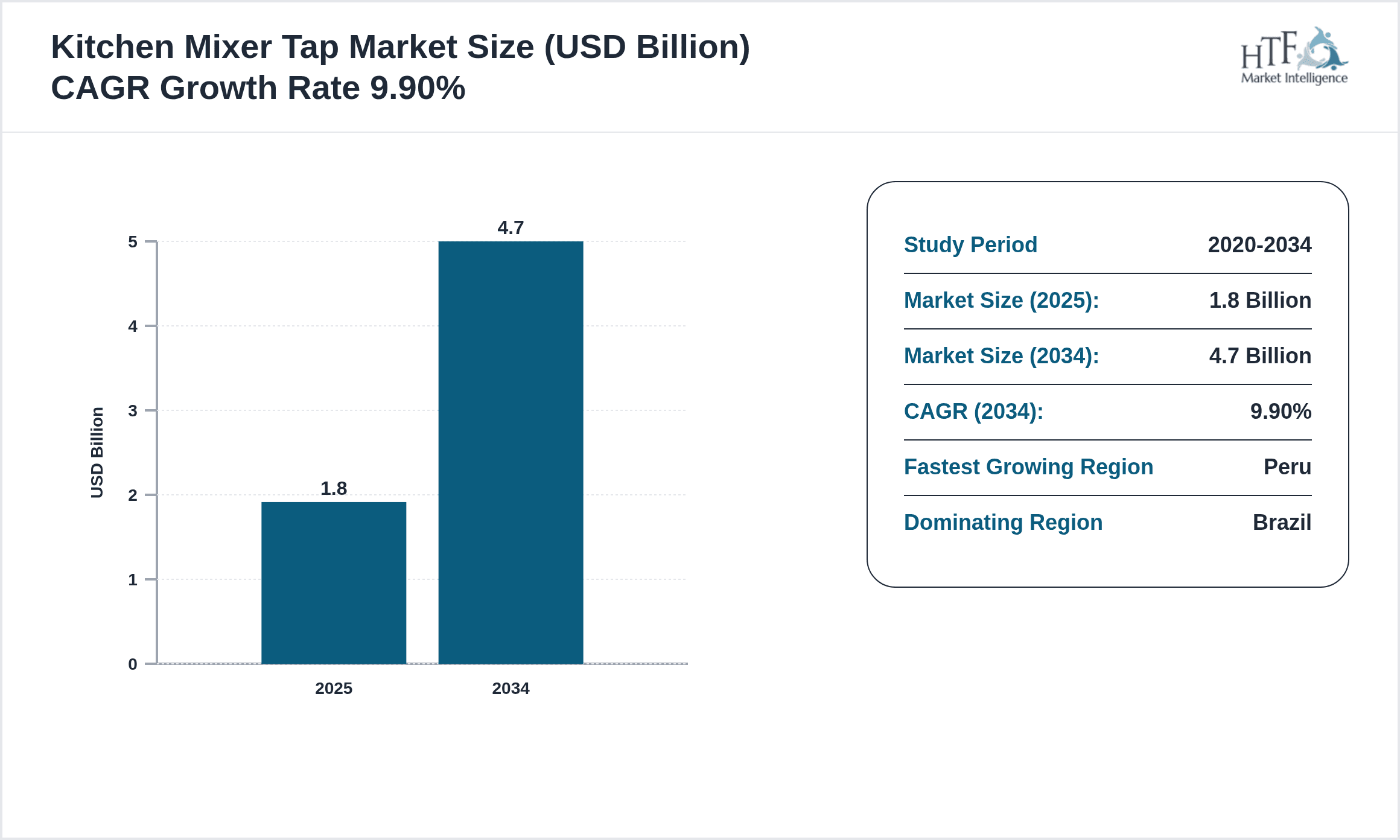
- •Key market highlights include a base market size of USD 1.8 Billion in 2024, projected to reach USD 4.7 Billion by 2034, reflecting a robust CAGR of 9.9%. Brazil holds the largest market share at 38%, driven by urban expansion and infrastructure development, while Peru is the fastest growing country with a CAGR of 12.1%, fueled by increasing commercial kitchen investments. Single handle kitchen mixer taps constitute the leading product segment, favored for their ease of use and cost-effectiveness, whereas touchless taps are the fastest growing type due to hygiene concerns and technological adoption. Residential kitchen applications dominate usage, but commercial and hospitality segments are rapidly expanding as food service industries evolve. The market's strategic importance lies in its role in supporting water conservation initiatives and enhancing kitchen functionality across Latin America, making it a critical sector for manufacturers, distributors, and end-users.
- •The value proposition of the Latin America Kitchen Mixer Tap market lies in delivering innovative, efficient, and stylish water delivery solutions that meet diverse consumer needs while adhering to environmental standards. This market holds strategic importance for kitchen fixture manufacturers, real estate developers, and hospitality sectors focused on quality and sustainability. Advances in touchless and pull-out mixer tap technologies improve user convenience and hygiene, aligning with rising health awareness. Additionally, market growth is supported by governmental regulations promoting water-saving devices and eco-friendly manufacturing practices. Stakeholders benefit from opportunities in product differentiation, expanding distribution channels, and leveraging digital marketing to capture evolving customer preferences. The market’s evolution is poised to drive long-term value creation through integration of smart technologies and sustainable materials, positioning it as a key contributor to Latin America’s kitchen appliance ecosystem.
Competitive Landscape
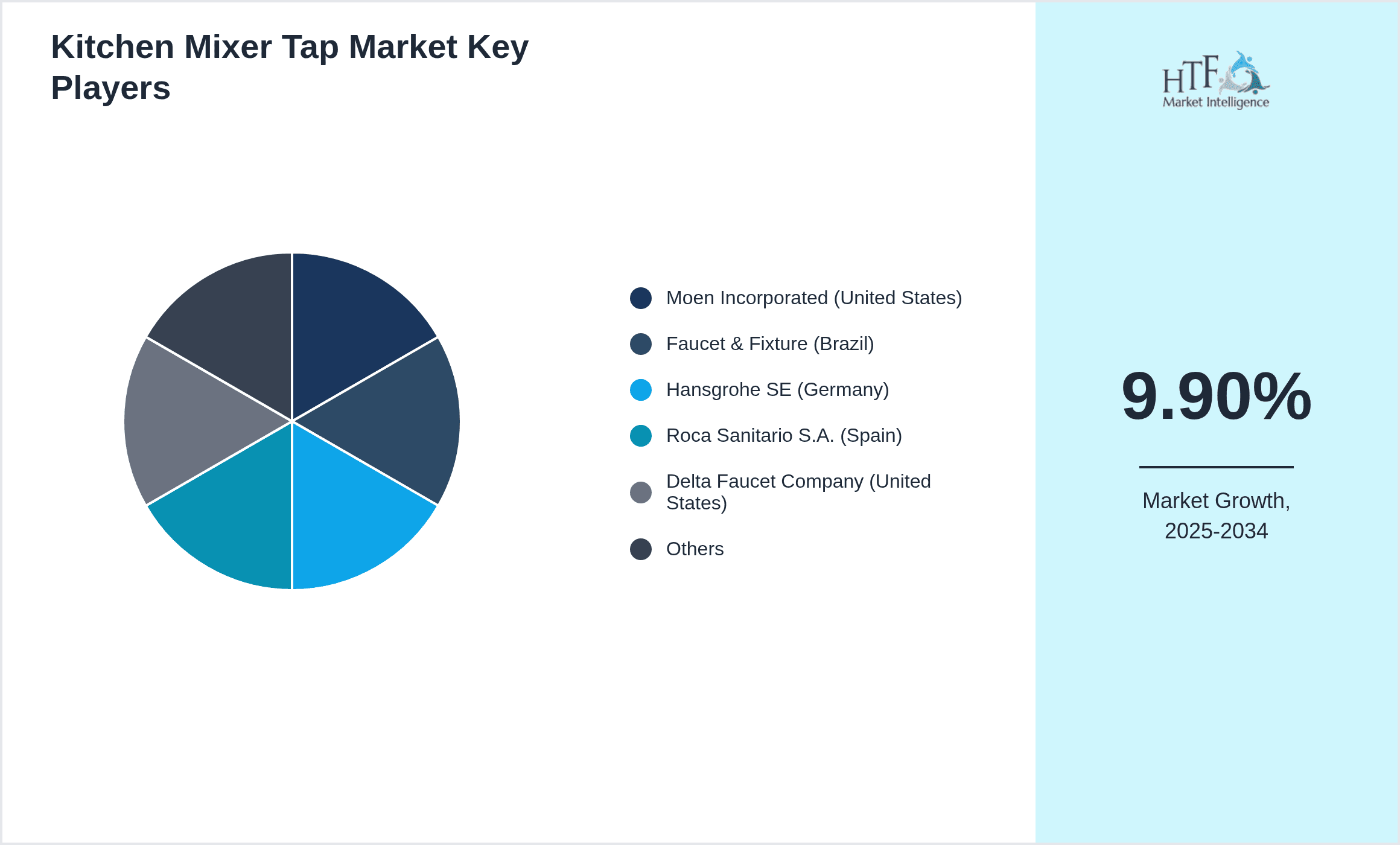
The competitive landscape of the Latin America Kitchen Mixer Tap market is characterized by a mix of global multinational corporations and strong regional players vying for market share through innovation, pricing strategies, and distribution network expansion. Companies focus on product differentiation by integrating advanced features such as touchless operation, water-saving aerators, and durable finishes to address diverse consumer preferences. Innovation serves as a critical competitive lever, with firms investing in R&D for smart faucet technologies and eco-friendly materials to meet regulatory and sustainability demands. Rivalry is intensified by the presence of well-established brands coupled with emerging local manufacturers who leverage cost advantages and regional market insights. Strategic partnerships with distributors and construction firms, as well as aggressive marketing campaigns, further shape competitive dynamics. Market entry barriers include stringent quality standards and the need for robust supply chain management, while future trends point towards consolidation and increased emphasis on digital sales channels and after-sales services.
Leading Companies in Kitchen Mixer Tap Market
- •Moen Incorporated (United States)
- •Faucet & Fixture (Brazil)
- •Hansgrohe SE (Germany)
- •Roca Sanitario S.A. (Spain)
- •Delta Faucet Company (United States)
- •Deca (Brazil)
- •Kohler Co. (United States)
- •Teka Industrial S.A. (Spain)
- •Grohe AG (Germany)
- •American Standard Brands (United States)
- •Incepa (Brazil)
- •Lixil Corporation (Japan)
- •Blukit (Brazil)
- •Brizo (United States)
- •Villeroy & Boch AG (Germany)
- •Docol Metais Sanitarios Ltda (Brazil)
- •Pfister Faucets (United States)
- •Cotto (Thailand)
- •Torneiras Tigre (Brazil)
- •Ramon Soler (Spain)
- •Aquabrass (Canada)
- •Alape GmbH (Germany)
- •Fima Carlo Frattini (Italy)
- •BrassCraft Manufacturing Company (United States)
- •Fienza Pty Ltd (Australia)
Market Breakdown
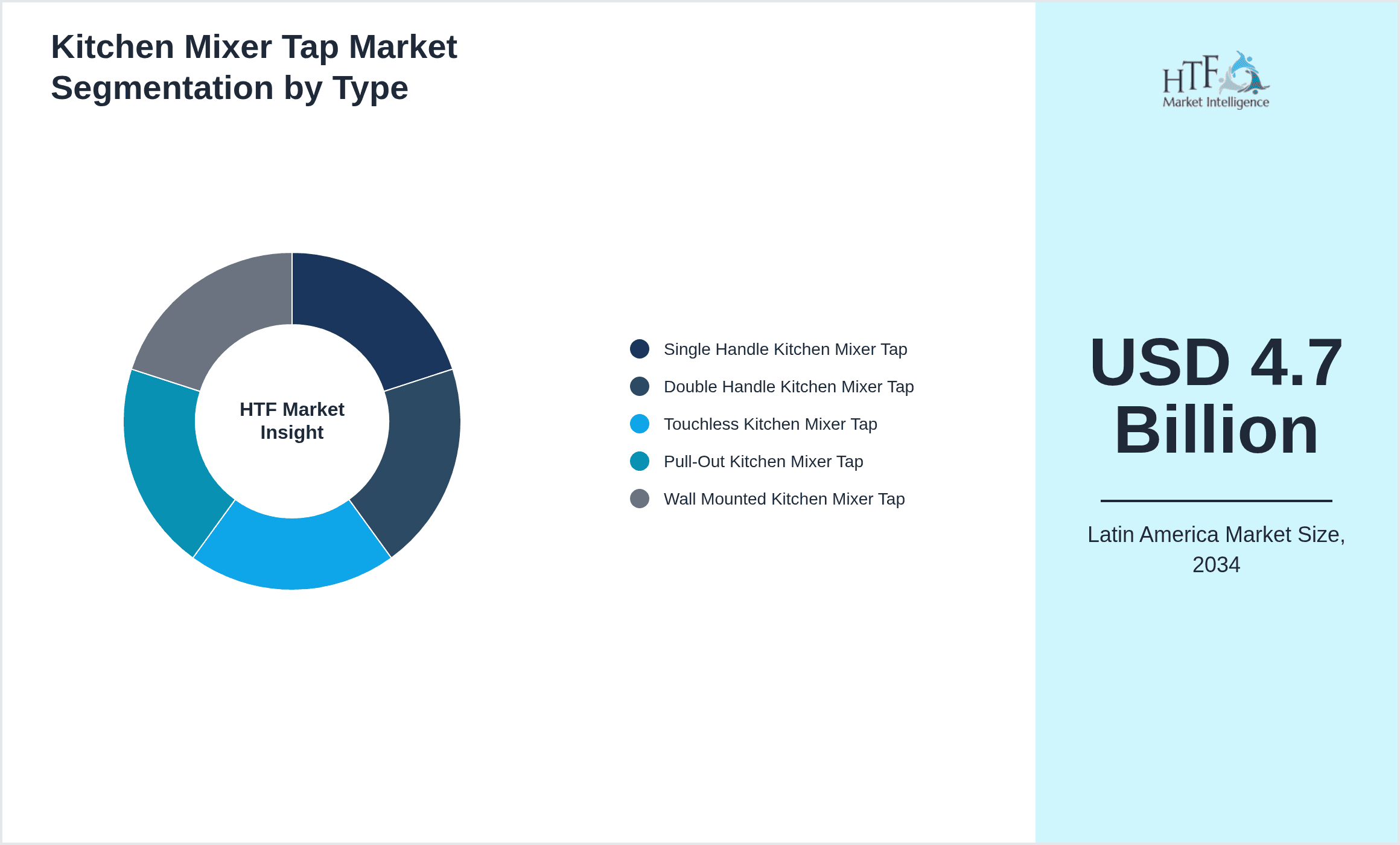
- •By Type
- ◦Single Handle Kitchen Mixer Tap
- ◦Double Handle Kitchen Mixer Tap
- ◦Touchless Kitchen Mixer Tap
- ◦Pull-Out Kitchen Mixer Tap
- ◦Wall Mounted Kitchen Mixer Tap
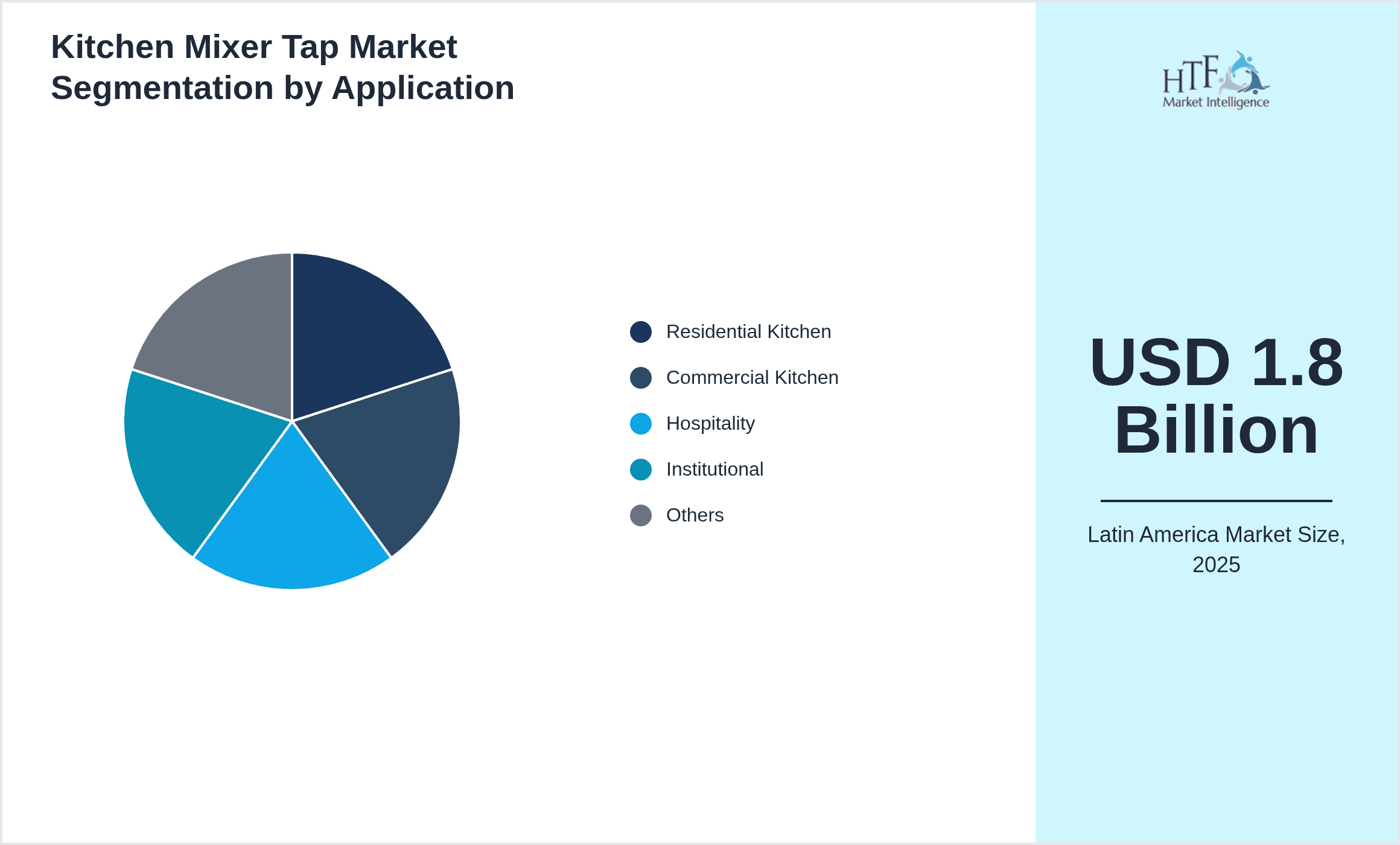
- •By Application
- ◦Residential Kitchen
- ◦Commercial Kitchen
- ◦Hospitality
- ◦Institutional
- ◦Others
- •By End User
- ◦Homes
- ◦Restaurants
- ◦Hotels
- ◦Educational Institutions
- ◦Healthcare Facilities
- •By Distribution Channel
- ◦Retail Stores
- ◦Online Retail
- ◦Wholesale Distributors
- ◦Direct Sales
Growth Dynamics
- •Increasing urbanization and rising disposable incomes across Latin America are driving demand for modern kitchen fixtures, including mixer taps, as consumers seek enhanced aesthetics and functionality in residential and commercial kitchens.
- •Government initiatives promoting water conservation and efficiency are encouraging adoption of water-saving kitchen mixer taps, accelerating market growth through regulatory compliance and enhanced product innovation.
- •Technological advancements such as touchless operation and smart sensor integration are gaining traction, enhancing user convenience and hygiene, which is particularly valued in commercial and hospitality segments.
- •Expansion of the hospitality and foodservice sectors in key countries like Brazil and Peru is fostering increased demand for durable and efficient kitchen mixer taps tailored to high-usage environments.
- •Growing consumer awareness about sustainable and eco-friendly products is incentivizing manufacturers to develop kitchen mixer taps with recyclable materials and low water consumption features.
- •E-commerce penetration and digital marketing have expanded reach, enabling faster market access and product variety for consumers across urban and semi-urban areas in Latin America.
- •Strategic collaborations between manufacturers and real estate developers are creating bundled offerings that integrate advanced kitchen mixer taps into new residential and commercial construction projects.
Market Trends
- •The adoption of touchless kitchen mixer taps is accelerating in Latin America, driven by heightened hygiene awareness post-pandemic and increasing interest in smart home technologies.
- •Sustainability trends are influencing design choices, with manufacturers introducing eco-friendly faucets featuring water-saving technologies and materials compliant with environmental standards.
- •Customization and aesthetic innovation are gaining traction, as consumers seek kitchen mixer taps that complement modern kitchen decor and offer ergonomic benefits.
- •Integration with smart home systems is emerging, allowing remote control and monitoring of water usage through mobile applications and IoT connectivity.
- •Collaborative partnerships between global brands and local distributors are enhancing product availability and after-sales support, strengthening market penetration in remote areas.
- •Increasing preference for premium and designer kitchen mixer taps is observed among affluent consumers, signaling a shift towards higher value segments.
- •Growth of online retail platforms is reshaping purchasing patterns, enabling consumers to access a wider range of kitchen mixer taps with detailed product information and competitive pricing.
Market Opportunities
- •Expanding construction and renovation activities in emerging Latin American economies present significant growth opportunities for innovative kitchen mixer taps tailored to local tastes and climates.
- •Rising demand for touchless and sensor-operated kitchen mixer taps offers manufacturers avenues to capture health-conscious and technology-savvy consumer segments.
- •Partnerships with hotel chains and commercial kitchen operators can drive bulk sales and long-term contracts, boosting market stability and revenue streams.
- •Investment in sustainable product lines aligned with government regulations and consumer preferences can differentiate brands and open export opportunities within Latin America.
- •Digital transformation in sales and marketing channels enables targeted outreach and customer engagement, facilitating market expansion beyond traditional urban centers.
- •Customization services offering bespoke kitchen mixer tap designs may appeal to premium buyers, creating niche market segments with higher margins.
- •Emerging markets within Latin America, such as Peru and Colombia, present rapid growth potential due to increasing urbanization and disposable income levels.
Market Challenges
- •Economic volatility and currency fluctuations in Latin American countries can impact raw material costs and pricing strategies for kitchen mixer tap manufacturers.
- •Supply chain disruptions and logistic inefficiencies pose challenges in maintaining consistent product availability across the geographically diverse Latin American region.
- •Competition from low-cost local manufacturers and imports may pressure profit margins of established brands focusing on premium segments.
- •Fragmented distribution networks and limited penetration in rural areas hinder market reach and consumer access to advanced kitchen mixer tap products.
- •Compliance with varied regulatory standards across different countries requires substantial investment in certification and testing protocols.
- •Consumer price sensitivity in several Latin American markets restricts adoption of high-end and technologically advanced mixer taps despite growing interest.
- •Technological adoption barriers, including lack of awareness and infrastructure for smart systems, limit rapid uptake of IoT-enabled kitchen mixer taps.
Regulatory Framework
- •Between 2019 and 2024, Latin American countries, notably Brazil and Argentina, implemented water efficiency standards mandating maximum flow rates for kitchen mixer taps to promote conservation.
- •New regulations require manufacturers to adhere to material safety and lead content restrictions to ensure consumer health protection, impacting product design and sourcing.
- •Certification programs, such as Brazil’s INMETRO quality mark, have been strengthened to enhance product reliability and consumer trust in kitchen mixer taps.
- •Environmental policies incentivize use of recyclable and sustainable materials in manufacturing, pushing companies toward eco-friendly product innovations.
- •Trade agreements within Mercosur facilitate regional market integration but also impose compliance with harmonized standards affecting import and export dynamics.
Market Intelligence
- •15th February 2025, Moen Incorporated launched a new line of touchless kitchen mixer taps in Latin America featuring advanced motion sensors and water-saving aerators. Designed specifically for hygiene-conscious consumers, the product integrates smart home compatibility and is targeted at both residential and commercial segments to capitalize on rising demand for contactless solutions.
- •10th August 2024, Deca (Brazil) introduced eco-friendly kitchen mixer taps constructed from recycled brass with low lead content, aligning with updated regional regulations. These models include water flow control technology and are marketed through enhanced retail and online channels to boost consumer adoption of sustainable bathroom and kitchen fixtures.
- •22nd January 2025, Hansgrohe SE announced a strategic partnership with a major Latin American distributor to expand its market footprint across Brazil, Argentina, and Chile. The collaboration focuses on increasing availability of premium kitchen mixer taps and accelerating adoption of smart faucet technology in commercial kitchens.
- •5th May 2025, Faucet & Fixture (Brazil) completed the expansion of its manufacturing facility to increase production capacity of pull-out and single handle kitchen mixer taps. This move aims to meet growing demand in urban residential construction and hospitality sectors, positioning the company for enhanced market leadership in Latin America.
- •Source: Official Company Releases and Industry Publications
Regional Outlook
The Brazil currently holds a significant share of the market, primarily due to several key factors: increasing consumption rates, a burgeoning population, and robust economic momentum. These elements collectively drive demand, positioning this region as a leader in the market. On the other hand, Peru is rapidly emerging as the fastest-growing area within the industry. This remarkable growth can be attributed to swift infrastructure development, the expansion of various industrial sectors, and a marked increase in consumer demand. These dynamics make this region a crucial player in shaping future market growth.
In our report, we cover a comprehensive analysis of the following regions and countries:
- Brazil
- Argentina
- Chile
- Peru
- Colombia
- Rest of South America
| Feature | Details |
|---|---|
| Base Year Market Size | USD 1.8 Billion |
| Forecast Year Market Size | USD 4.7 Billion |
| CAGR | 9.9% |
| Forecast Period | 2026 to 2033 |
| YoY Growth | 9.4% |
| Scope of Report | Market is segmented by Type (Single Handle Kitchen Mixer Tap, Double Handle Kitchen Mixer Tap, Touchless Kitchen Mixer Tap, Pull-Out Kitchen Mixer Tap, Wall Mounted Kitchen Mixer Tap), Application (Residential Kitchen, Commercial Kitchen, Hospitality, Institutional, Others), End User (Homes, Restaurants, Hotels, Educational Institutions, Healthcare Facilities), Distribution Channel (Retail Stores, Online Retail, Wholesale Distributors, Direct Sales) |
| Regions Covered | Brazil, Argentina, Chile, Peru, Colombia, Rest of South America |
| Key Companies | Moen Incorporated (United States), Faucet & Fixture (Brazil), Hansgrohe SE (Germany), Roca Sanitario S.A. (Spain), Delta Faucet Company (United States), Deca (Brazil), Kohler Co. (United States), Teka Industrial S.A. (Spain), Grohe AG (Germany), American Standard Brands (United States), Incepa (Brazil), Lixil Corporation (Japan), Blukit (Brazil), Brizo (United States), Villeroy & Boch AG (Germany), Docol Metais Sanitarios Ltda (Brazil), Pfister Faucets (United States), Cotto (Thailand), Torneiras Tigre (Brazil), Ramon Soler (Spain), Aquabrass (Canada), Alape GmbH (Germany), Fima Carlo Frattini (Italy), BrassCraft Manufacturing Company (United States), Fienza Pty Ltd (Australia) |
Latin America Kitchen Mixer Tap Market - Outlook 2024-2034 - Table of Contents
Multidisciplinary researcher with 10+ years of experience uncovering insights across diverse domains focused on uncovering insights that drive informed decisions.
Frequently Asked Questions (FAQ):
The Compact Track Loaders market is expected to see value worth 5.3 Billion in 2025.
North America currently leads the market with approximately 45% market share, followed by Europe at 28% and Asia-Pacific at 22%. The remaining regions account for 5% of the global market.
Key growth drivers include increasing construction activities, rising demand for versatile equipment in agriculture, technological advancements in track loader design, and growing preference for compact equipment in urban construction projects.