
Benelux Automated Espresso Machine Market - Outlook 2025-2034
Benelux Automated Espresso Machine Market is segmented by Type (Super-Automatic Espresso Machines, Semi-Automatic Espresso Machines, Capsule-Based Espresso Machines, Manual Espresso Machines, Fully Automatic Espresso Machines), Application (Home Use, Commercial Cafes, Offices, Hotels, Restaurants), Distribution Channel (Specialty Retail Stores, Online Retail, Direct Sales, Wholesale Distributors), Technology Integration (IoT-Enabled Machines, Programmable Interface Machines, Energy-Efficient Models), and Geography (Belgium, Netherlands, Luxembourg)
Pricing
Report Overview
Executive Summary
- •The Benelux Automated Espresso Machine Market is a dynamic sector focused on providing technologically advanced coffee-making equipment tailored for various settings such as homes, offices, commercial cafes, hotels, and restaurants. This market includes diverse machine types such as super-automatic, semi-automatic, capsule-based, manual, and fully automatic espresso machines, each designed to meet specific consumer preferences and operational needs. The industry is defined by its integration of automation technology, enabling consistent coffee quality, user convenience, and efficiency. The market boundaries cover key Benelux countries—Belgium, Netherlands, and Luxembourg—and extend to neighboring influential economies like Germany and France that impact demand and supply chains. The scope also involves components manufacturing, distribution networks, and after-sales services. The growing coffee culture, rising disposable incomes, and innovation in smart appliance features contribute to the market's expansion. Moreover, the increasing inclination toward specialty coffee and demand for quick, quality espresso drinks in commercial and residential segments further solidify the market’s growth potential.
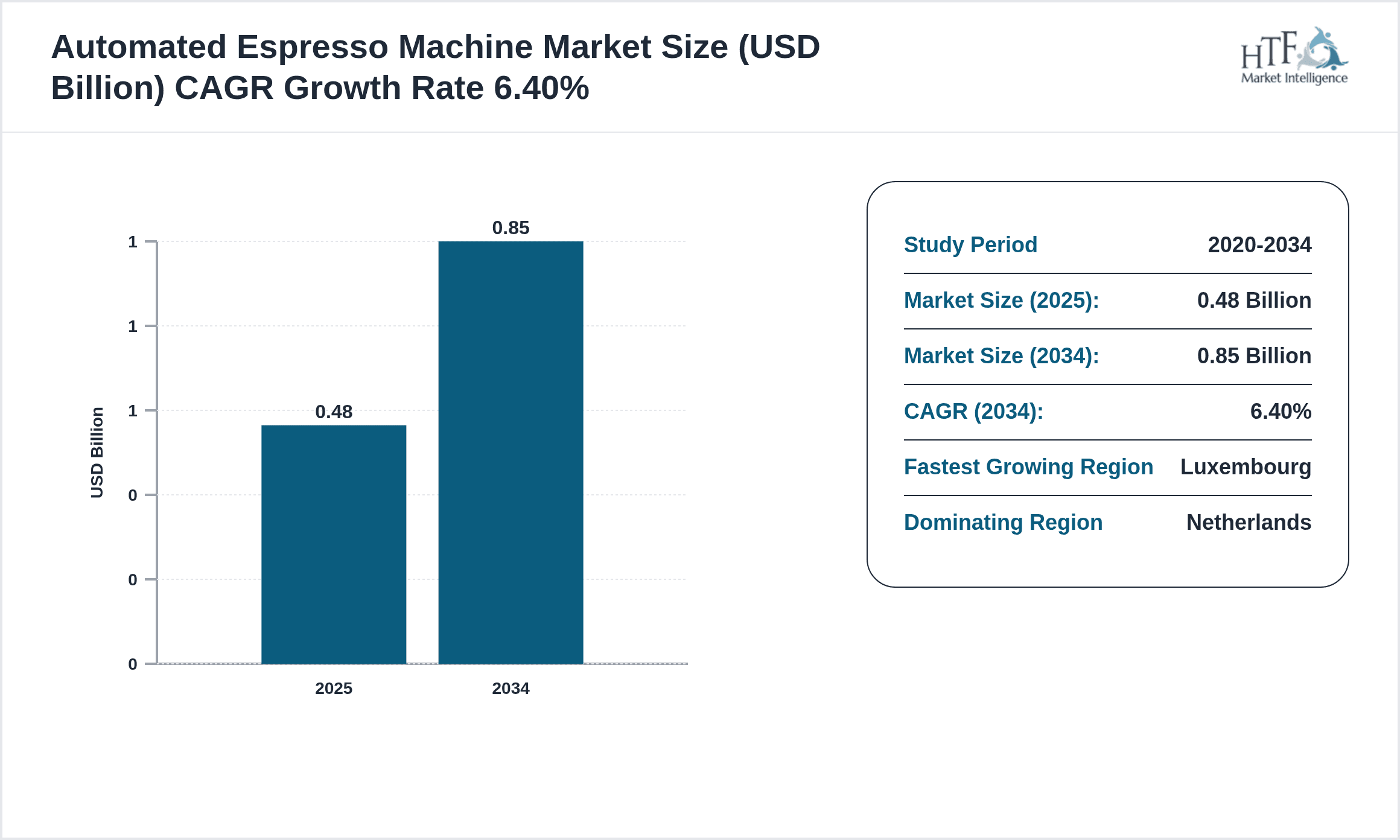
- •Key market highlights include a base market size of USD 0.48 Billion in 2025, forecasted to grow to USD 0.85 Billion by 2034 at a CAGR of 6.4%. The Netherlands leads with a 45% market share, while Luxembourg is the fastest-growing country with an 8% share and a CAGR of 8.1%. Super-automatic machines dominate the product landscape due to their convenience and consistency, but capsule-based types are experiencing rapid growth driven by consumer preference for ease of use and variety. Applications in commercial cafes and home use represent the largest market segments, reflecting diverse end-user adoption. The market benefits from technological advancements such as IoT-enabled controls and energy-efficient designs, alongside expanding coffee culture across the Benelux region.
- •The strategic importance of automated espresso machines in the Benelux region lies in their ability to meet evolving consumer demands for premium coffee experiences and operational efficiency in commercial settings. This market presents value propositions for manufacturers through innovation-led product differentiation and for distributors via expanding retail and service networks. Stakeholders including hospitality operators, office facility managers, and end consumers benefit from enhanced beverage quality, time savings, and customization features. The market also supports sustainability objectives with energy-efficient models, aligning with regional environmental policies. Overall, the Benelux Automated Espresso Machine Market is positioned for steady growth driven by cultural trends, economic factors, and technological evolution, making it a lucrative segment within the broader European coffee appliance industry.
Competitive Landscape
The competitive environment in the Benelux Automated Espresso Machine Market is characterized by a blend of global industry leaders and innovative regional players striving to capture market share through continuous product innovation and strategic positioning. Leading companies focus on integrating advanced automation technology, enhancing machine reliability, and expanding smart features such as app connectivity and personalized brewing profiles. Market rivalry is intense, with firms investing in R&D to develop energy-efficient and compact designs catering to both commercial and residential segments. Companies differentiate through branding, after-sales service, and distribution partnerships across Benelux countries. Collaborative ventures and responsive customer support further enhance competitive advantages. The market also witnesses dynamic pricing strategies and promotional campaigns aimed at increasing penetration. Innovation adoption rates and user experience personalization remain key factors shaping competition, while barriers such as capital intensity and regulatory compliance influence new entrants. Regional customization and sustainability initiatives are emerging as critical competitive domains shaping future market trajectories.
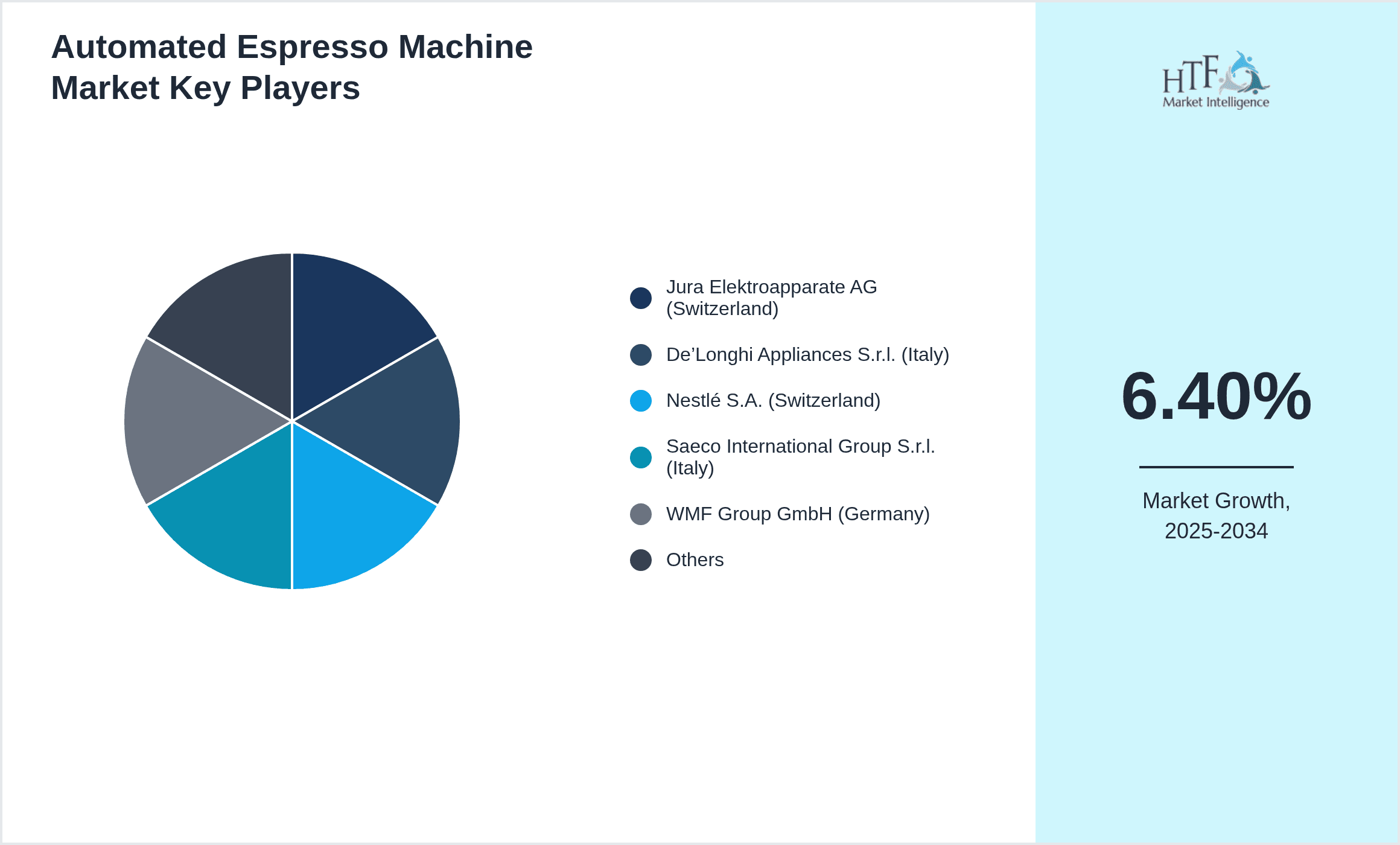
Leading Companies in Automated Espresso Machine Market
- •Jura Elektroapparate AG (Switzerland)
- •De’Longhi Appliances S.r.l. (Italy)
- •Nestlé S.A. (Switzerland)
- •Saeco International Group S.r.l. (Italy)
- •WMF Group GmbH (Germany)
- •Melitta Group (Germany)
- •Krups (France)
- •Breville Group Limited (Australia)
- •Nivona AG (Germany)
- •Schaerer AG (Switzerland)
- •Philips Domestic Appliances (Netherlands)
- •Gaggia S.p.A. (Italy)
- •Rocket Espresso Milano S.r.l. (Italy)
- •BWT Group GmbH (Austria)
- •La Marzocco S.r.l. (Italy)
- •Rancilio Group (Italy)
- •Faema (Italy)
- •Lelit S.r.l. (Italy)
- •Cimbali Group (Italy)
- •Electrolux AB (Sweden)
- •Bonaverde GmbH (Germany)
- •Keurig Dr Pepper Inc. (United States)
- •Ascaso Factory S.L. (Spain)
- •Fetco Home and Office Solutions (United States)
- •Bunn-O-Matic Corporation (United States)
Market Breakdown
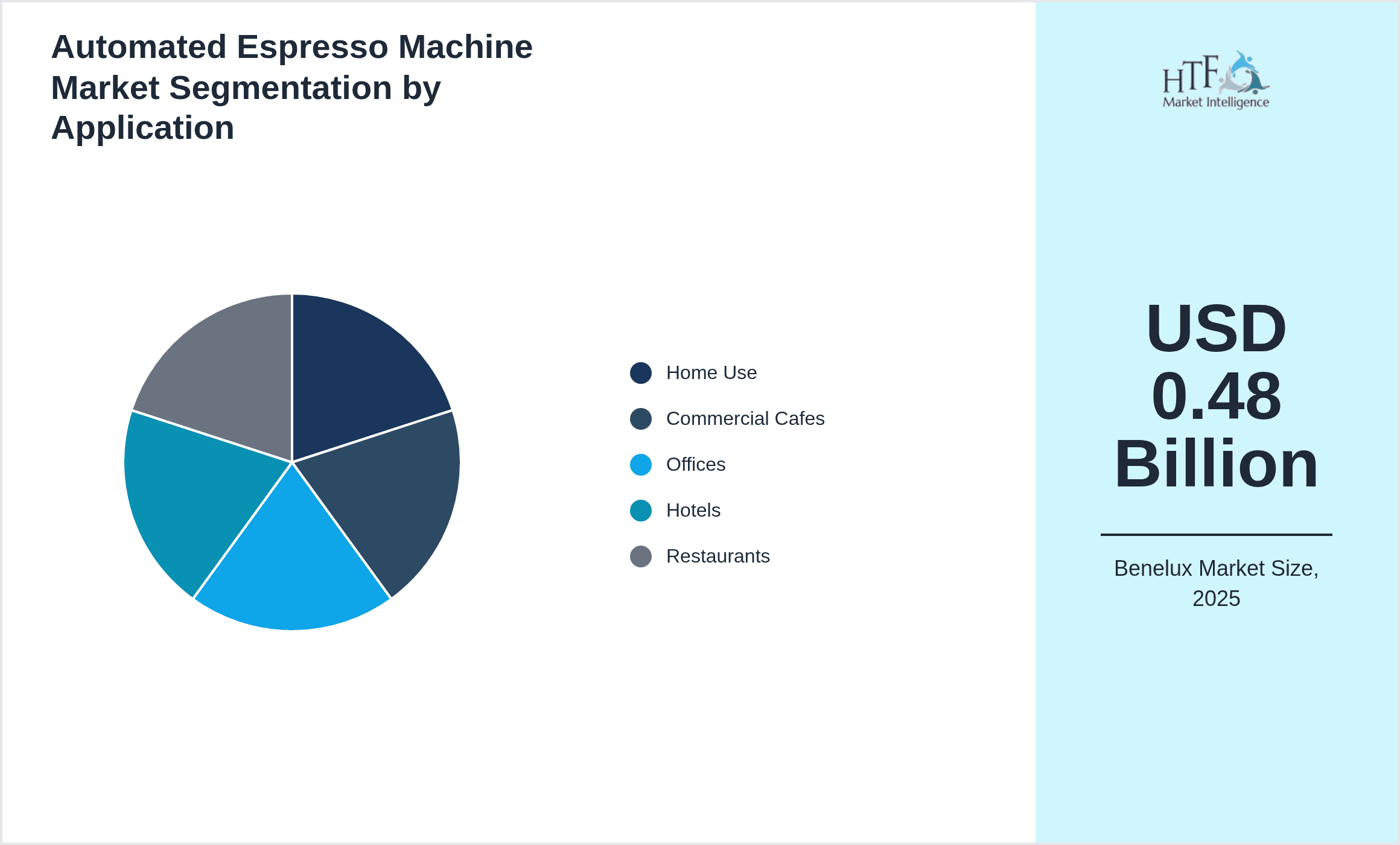
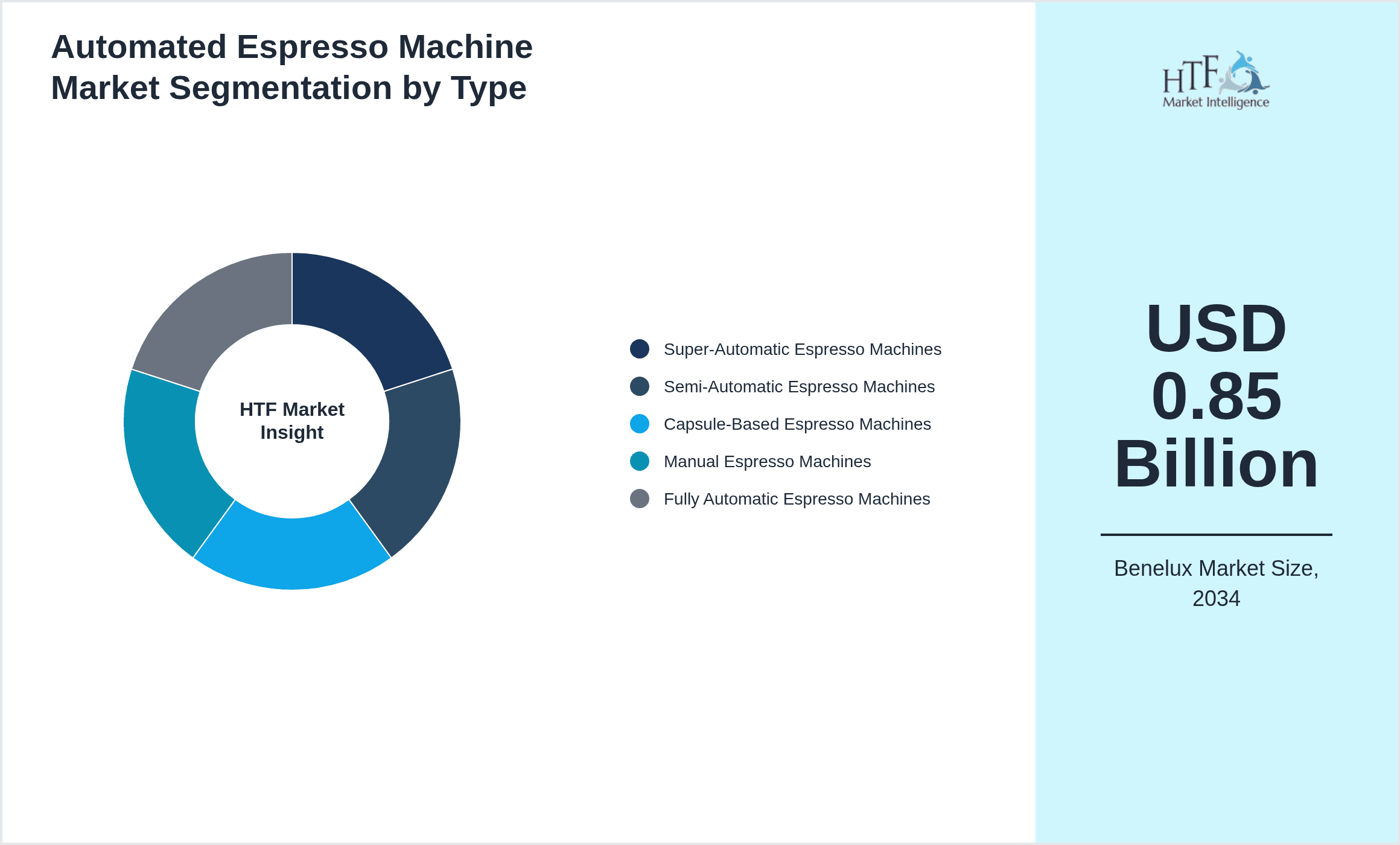
- •By Type
- ◦Super-Automatic Espresso Machines
- ◦Semi-Automatic Espresso Machines
- ◦Capsule-Based Espresso Machines
- ◦Manual Espresso Machines
- ◦Fully Automatic Espresso Machines
- •By Application
- ◦Home Use
- ◦Commercial Cafes
- ◦Offices
- ◦Hotels
- ◦Restaurants
- •By Distribution Channel
- ◦Specialty Retail Stores
- ◦Online Retail
- ◦Direct Sales
- ◦Wholesale Distributors
- •By Technology Integration
- ◦IoT-Enabled Machines
- ◦Programmable Interface Machines
- ◦Energy-Efficient Models
Growth Dynamics
- •Rising coffee culture in Benelux countries is a primary growth driver, with consumers increasingly seeking high-quality espresso experiences at home and in commercial settings, boosting demand for automated espresso machines.
- •Technological advancements such as IoT integration and programmable settings enhance user convenience and product differentiation, attracting tech-savvy consumers and commercial buyers alike.
- •Increasing disposable incomes and urbanization in Belgium, Netherlands, and Luxembourg contribute to higher spending on premium coffee appliances, expanding the market size steadily.
- •Sustainability trends drive manufacturers to develop energy-efficient espresso machines, aligning with regional environmental regulations and consumer preferences, thereby stimulating market growth.
- •Expansion of specialty coffee shops and office coffee services across the Benelux region generates consistent demand for commercial-grade automated espresso machines, reinforcing market expansion.
Market Trends
- •The rise in capsule-based espresso machines reflects consumer demand for convenience and variety, with many users appreciating quick brewing and easy maintenance capabilities.
- •Smart coffee machines featuring app connectivity and remote control capabilities are growing in popularity among both residential and commercial users, signaling a shift towards digitalization.
- •Sustainability initiatives have led to increased use of recyclable materials and energy-saving technologies in machine production, responding to eco-conscious consumers and regulations.
- •The blending of traditional espresso craftsmanship with automation technologies allows for customizable coffee profiles, catering to diverse taste preferences across the Benelux region.
- •Collaborations between coffee machine manufacturers and coffee bean suppliers are enhancing product ecosystems, offering bundled solutions that improve user experience and brand loyalty.
Market Opportunities
- •Untapped residential segments in Luxembourg and Belgium present opportunities for growth through targeted marketing and affordable entry-level automated espresso machines.
- •Integration of AI and machine learning in espresso machines offers potential for personalized brewing and predictive maintenance, creating new value propositions for consumers.
- •Expanding e-commerce channels enable manufacturers to reach a wider customer base across Benelux, reducing dependency on traditional retail and enhancing sales efficiency.
- •Partnerships with hospitality chains and office management firms can drive bulk sales of commercial espresso machines, capitalizing on the growing out-of-home coffee consumption trend.
- •Developing compact and multifunctional machines tailored for small offices and home kitchens aligns with urban living trends, tapping into space-conscious consumer segments.
Market Challenges
- •High initial costs of advanced automated espresso machines may deter price-sensitive consumers, restricting market penetration in certain demographic segments.
- •Technical complexities and maintenance requirements of fully automatic machines pose challenges for end-users, impacting customer satisfaction and repeat purchases.
- •Competitive pressure from traditional coffee machine manufacturers and capsule-only systems creates market fragmentation, complicating brand differentiation efforts.
- •Regulatory compliance related to electrical safety and energy consumption standards necessitates continuous investment from manufacturers, affecting product pricing strategies.
- •Supply chain disruptions and component shortages, exacerbated by global economic uncertainties, can delay production and delivery schedules, impacting market growth.
Regulatory Framework
- •Between 2020 and 2025, the Benelux region implemented stringent energy efficiency regulations requiring espresso machine manufacturers to adhere to minimum energy performance standards, promoting sustainable appliance use.
- •The European Union’s Ecodesign Directive mandates reductions in standby power consumption and encourages use of recyclable materials in coffee machine production, influencing design and manufacturing processes.
- •Safety compliance standards such as IEC 60335-2-15 ensure that automated espresso machines meet electrical and mechanical safety requirements before market entry in Benelux countries.
- •Local regulations in Belgium and the Netherlands require manufacturers to provide clear labeling on energy consumption and water usage, enhancing consumer awareness and supporting regulatory transparency.
- •Government incentives promoting energy-efficient appliances have encouraged manufacturers to innovate and consumers to adopt advanced espresso machines with lower environmental impact.
Market Intelligence
- •15th January 2025, Jura Elektroapparate AG launched the Z10 model in Benelux featuring advanced pulse extraction process technology and smart connectivity to an app for personalized coffee profiles. This machine targets both premium home users and boutique cafes, aiming to elevate coffee quality and user experience in the region. The launch was accompanied by a robust marketing campaign emphasizing sustainability and ease of use, positioning Jura strongly in the expanding Benelux market.
- •20th March 2025, De’Longhi Appliances S.r.l. introduced its latest fully automatic espresso machine, the Magnifica Evo, boasting AI-enabled grinding and brewing adjustments for optimal taste. This innovation caters specifically to the Benelux commercial and residential sectors, promising energy efficiency and minimal maintenance. The product launch was supported by partnerships with local retailers and coffee chains to enhance market penetration and consumer engagement.
- •12th February 2025, Philips Domestic Appliances announced a strategic expansion of its Benelux distribution network, incorporating enhanced after-sales services and extended warranties for automated espresso machines. This move aims to reinforce customer trust and service quality, crucial factors in buying decisions within the region. The company also unveiled plans to integrate IoT features in upcoming models to meet growing digital consumer demands.
- •5th April 2025, Melitta Group launched a new line of capsule-based espresso machines focused on compact design and recyclability, targeting environmentally conscious consumers in the Benelux market. This product line integrates biodegradable capsules and energy-saving modes, aligning with regional sustainability goals. The launch was accompanied by promotional offers through specialty coffee retailers and online platforms.
Regional Outlook
The Netherlands currently holds a significant share of the market, primarily due to several key factors: increasing consumption rates, a burgeoning population, and robust economic momentum. These elements collectively drive demand, positioning this region as a leader in the market. On the other hand, Luxembourg is rapidly emerging as the fastest-growing area within the industry. This remarkable growth can be attributed to swift infrastructure development, the expansion of various industrial sectors, and a marked increase in consumer demand. These dynamics make this region a crucial player in shaping future market growth.
In our report, we cover a comprehensive analysis of the following regions and countries:
- Belgium
- Netherlands
- Luxembourg
| Feature | Details |
|---|---|
| Base Year Market Size | USD 0.48 Billion |
| Forecast Year Market Size | USD 0.85 Billion |
| CAGR | 6.4% |
| Forecast Period | 2026 to 2033 |
| YoY Growth | 6.2% |
| Scope of Report | Market is segmented by Type (Super-Automatic Espresso Machines, Semi-Automatic Espresso Machines, Capsule-Based Espresso Machines, Manual Espresso Machines, Fully Automatic Espresso Machines), Application (Home Use, Commercial Cafes, Offices, Hotels, Restaurants), Distribution Channel (Specialty Retail Stores, Online Retail, Direct Sales, Wholesale Distributors), Technology Integration (IoT-Enabled Machines, Programmable Interface Machines, Energy-Efficient Models) |
| Regions Covered | Belgium, Netherlands, Luxembourg |
| Key Companies | Jura Elektroapparate AG (Switzerland), De’Longhi Appliances S.r.l. (Italy), Nestlé S.A. (Switzerland), Saeco International Group S.r.l. (Italy), WMF Group GmbH (Germany), Melitta Group (Germany), Krups (France), Breville Group Limited (Australia), Nivona AG (Germany), Schaerer AG (Switzerland), Philips Domestic Appliances (Netherlands), Gaggia S.p.A. (Italy), Rocket Espresso Milano S.r.l. (Italy), BWT Group GmbH (Austria), La Marzocco S.r.l. (Italy), Rancilio Group (Italy), Faema (Italy), Lelit S.r.l. (Italy), Cimbali Group (Italy), Electrolux AB (Sweden), Bonaverde GmbH (Germany), Keurig Dr Pepper Inc. (United States), Ascaso Factory S.L. (Spain), Fetco Home and Office Solutions (United States), Bunn-O-Matic Corporation (United States) |
Benelux Automated Espresso Machine Market - Outlook 2025-2034 - Table of Contents
Frequently Asked Questions (FAQ):
The Compact Track Loaders market is projected to grow at a CAGR of 6.8% from 2025 to 2030, driven by increasing demand in construction and agricultural sectors.
North America currently leads the market with approximately 45% market share, followed by Europe at 28% and Asia-Pacific at 22%. The remaining regions account for 5% of the global market.
Key growth drivers include increasing construction activities, rising demand for versatile equipment in agriculture, technological advancements in track loader design, and growing preference for compact equipment in urban construction projects.