
Africa Non Prescription Reading Glasses Market Size, Growth & Revenue 2025-2034
Africa Non Prescription Reading Glasses Market is segmented by Product Type (Full Frame Non Prescription Reading Glasses, Half Frame Reading Glasses, Rimless Reading Glasses, Folding Reading Glasses, Multifocal Non Prescription Glasses), Application (Presbyopia Correction, Fashion & Style, Blue Light Filtering, Outdoor Use, Digital Device Use), Distribution Channel (Optical Retail Stores, E-Commerce Platforms, Pharmacies, Supermarkets), Material Type (Plastic Frames, Metal Frames, Titanium Frames), and Geography (South Africa, Nigeria, Kenya, Algeria, Zambia, Morocco, Ethiopia, Others)
Pricing
Report Overview
Executive Summary
- •The Africa Non Prescription Reading Glasses market involves the production and distribution of eyewear that does not require a medical prescription but serves the purpose of vision correction, primarily for presbyopia and digital eye strain. The market includes various product types such as full frame, half frame, rimless, folding, and multifocal glasses, catering to diverse consumer needs from vision enhancement to fashion and protective functions like blue light filtering. Key applications include presbyopia correction, digital device use, outdoor activity protection, and style enhancement. The value chain spans manufacturers, suppliers, distributors, and retailers, with growing penetration through both traditional optical stores and e-commerce platforms. Increasing urbanization, higher disposable incomes, and rising awareness about eye health are driving demand across major African countries including South Africa, Nigeria, Egypt, Kenya, and Morocco. The market is characterized by moderate competition among local and international players focusing on product innovation and affordability. Strategic investments in lightweight materials and blue light blocking lenses are shaping product development. The market is projected to grow at a CAGR of 11.0% from USD 0.75 Billion in 2025 to USD 1.95 Billion by 2034, reflecting strong consumer demand and expanding distribution networks across the region.
- •Key highlights of the Africa Non Prescription Reading Glasses market include a base market size of USD 0.75 Billion in 2025, expanding to USD 1.95 Billion by 2034, with a consistent CAGR of 11.0%. South Africa currently holds the largest market share of 28%, driven by advanced retail infrastructure and consumer awareness, while Nigeria is the fastest growing market with a CAGR of 14.2% due to increasing urban populations and rising disposable income levels. Full frame glasses are the leading product type, favored for their durability and style, whereas folding glasses represent the fastest growing segment, benefitting from portability and convenience features. The market growth is supported by rising adoption of digital devices and increasing demand for affordable, fashionable eyewear solutions for presbyopia and blue light protection.
- •The strategic importance of the Africa Non Prescription Reading Glasses market lies in its significant potential to address unmet vision correction needs across diverse demographics and geographies. It offers value to manufacturers through innovation in materials and design, to retailers by expanding product ranges, and to consumers by providing affordable and accessible vision solutions. The market also plays a critical role for healthcare stakeholders by contributing to better eye health outcomes and reducing the burden of untreated presbyopia. For investors, the growing middle class, increasing digital penetration, and evolving fashion trends represent lucrative opportunities. Regional governments and regulators are progressively supporting eye care awareness and quality standards, further enabling market expansion.

Competitive Landscape
The competitive environment of the Africa Non Prescription Reading Glasses market is marked by a blend of established multinational eyewear brands and emerging local manufacturers competing through product differentiation, pricing strategies, and distribution channel expansion. Companies focus on innovation in lightweight and durable materials, stylish designs, and blue light filtering technology to gain competitive advantage. Strategic partnerships with optical retailers and e-commerce platforms are common to enhance market reach. Mergers and acquisitions, although not frequent, are used to consolidate market presence and expand product portfolios. Pricing remains competitive due to the presence of low-cost local producers, while premium segments target urban consumers with higher disposable incomes. Market entry barriers include regulatory compliance, distribution network development, and consumer education. Regional competition varies, with South Africa exhibiting a mature market landscape and Nigeria reflecting rapid growth dynamics driven by urbanization and increasing health awareness. Future trends suggest greater adoption of digital marketing and personalized eyewear solutions to strengthen customer engagement and loyalty.
Leading Companies in Non Prescription Reading Glasses Market
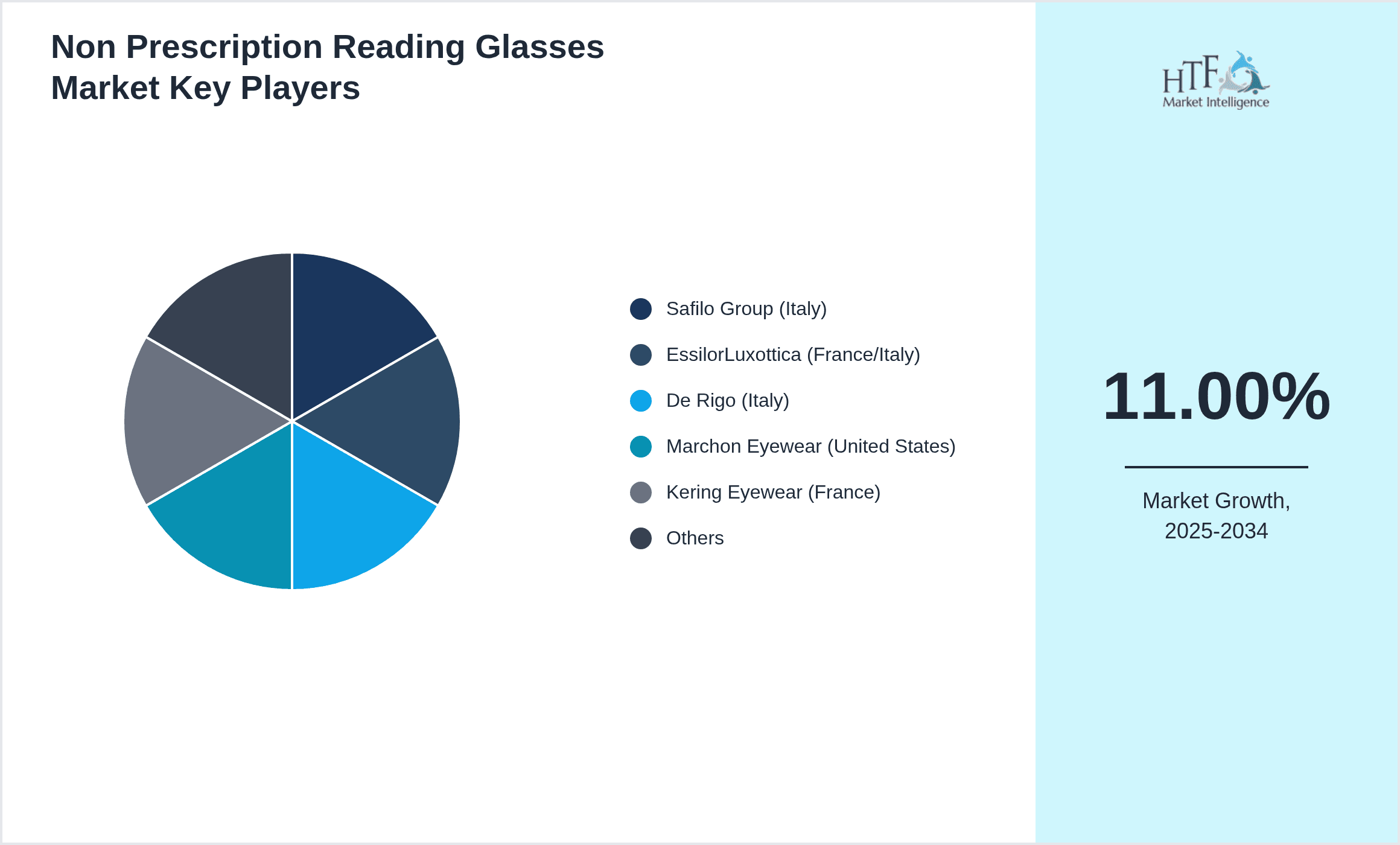
- •Safilo Group (Italy)
- •EssilorLuxottica (France/Italy)
- •De Rigo (Italy)
- •Marchon Eyewear (United States)
- •Kering Eyewear (France)
- •Maui Jim (United States)
- •Marcolin Group (Italy)
- •Charmant Group (Japan)
- •Bolon Eyewear (China)
- •Jinjiang Jiaxing Optical Co., Ltd. (China)
- •Kenmark Eyewear (United States)
- •Luxottica Retail (Italy)
- •Fielmann AG (Germany)
- •GrandVision (Netherlands)
- •Vision Source (United States)
- •GlassesUSA (United States)
- •CooperVision (United States)
- •Hoya Corporation (Japan)
- •Tokyo Optical Co., Ltd. (Japan)
- •Molsion Eyewear (China)
- •Walman Optical Group (United States)
- •Ace & Tate (Netherlands)
- •Specsavers (United Kingdom)
- •Warby Parker (United States)
- •EyeBuyDirect (United States)

Market Breakdown
- •By Product Type
- ◦Full Frame Non Prescription Reading Glasses
- ◦Half Frame Reading Glasses
- ◦Rimless Reading Glasses
- ◦Folding Reading Glasses
- ◦Multifocal Non Prescription Glasses
- •By Application
- ◦Presbyopia Correction
- ◦Fashion & Style
- ◦Blue Light Filtering
- ◦Outdoor Use
- ◦Digital Device Use
- •By Distribution Channel
- ◦Optical Retail Stores
- ◦E-Commerce Platforms
- ◦Pharmacies
- ◦Supermarkets
- •By Material Type
- ◦Plastic Frames
- ◦Metal Frames
- ◦Titanium Frames
Growth Dynamics
- •Rising aging population across Africa is a primary growth driver, fueling demand for presbyopia correction glasses as more individuals experience age-related vision deterioration. Increasing life expectancy and urbanization amplify this trend.
- •Growing digital device penetration has led to increased awareness of digital eye strain, boosting adoption of blue light filtering non prescription reading glasses among professionals and younger demographics.
- •Expansion of e-commerce and optical retail networks across key African markets enhances product accessibility, facilitating higher sales and market penetration in urban and semi-urban regions.
- •Affordable pricing strategies by local manufacturers and importers encourage wider adoption among middle-income consumers, addressing price sensitivity prevalent in many African economies.
- •Increasing consumer focus on fashion and lifestyle eyewear drives demand for stylish and multifunctional reading glasses, integrating blue light protection with trendy designs.
- •Government initiatives promoting eye health awareness and screening programs indirectly stimulate market growth by educating populations on vision correction needs.
- •Growing investments in manufacturing capabilities within Africa reduce import dependence and improve product availability, supporting sustainable market expansion.

Market Trends
- •The rising trend of digital eye strain awareness has led to increasing incorporation of blue light filtering technology in non prescription reading glasses, especially targeting younger consumers engaged in prolonged screen use.
- •E-commerce platforms are increasingly becoming dominant distribution channels, offering consumers extensive product variety, competitive pricing, and convenient delivery options across urban centers.
- •Lightweight and foldable reading glasses are gaining popularity due to their portability and ease of use, particularly appealing to travelers and office workers.
- •There is a growing preference for multifunctional glasses combining presbyopia correction with fashion-forward designs, reflecting consumers’ demand for both utility and style.
- •Local manufacturing initiatives are on the rise, reducing reliance on imports and enabling customization to meet regional preferences and climatic conditions.
- •Retailers are adopting augmented reality (AR) and virtual try-on technologies to enhance the customer shopping experience and reduce return rates.
- •Sustainability considerations are influencing material choices, with eco-friendly frames gaining traction among environmentally conscious consumers.
Market Opportunities
- •Expanding urban middle-class populations in Nigeria, South Africa, and Egypt present significant untapped demand for affordable, stylish non prescription reading glasses catering to presbyopia and digital eye strain.
- •Integration of blue light filtering technology into fashionable eyewear offers lucrative avenues for product differentiation and premium pricing segments.
- •Growth in e-commerce penetration across Africa enables brands to reach remote and underserved markets, expanding overall customer base without heavy investments in physical retail infrastructure.
- •Collaborations with healthcare providers and government eye care programs can enhance market reach by embedding reading glasses distribution within vision screening initiatives.
- •Development of lightweight, foldable, and multipurpose glasses can capture niche segments requiring portability and multifunctionality, such as travelers and outdoor workers.
- •Potential for local manufacturing and assembly to reduce costs and create employment opportunities, supported by favorable government policies and incentives.
- •Emerging markets within Africa, such as Kenya and Morocco, with rising disposable incomes, offer new venues for market expansion and brand establishment.
Market Challenges
- •Limited awareness about eye health and presbyopia in rural and low-income populations restricts market penetration and growth opportunities in these segments.
- •High import duties and taxation in several African countries increase product costs, limiting affordability for price-sensitive consumers.
- •Competition from low-cost unbranded and counterfeit glasses undermines the market share of established brands and impacts consumer trust and safety.
- •Fragmented retail landscape with many small independent sellers poses challenges in standardizing quality and ensuring consistent product availability.
- •Infrastructure limitations, such as poor logistics and distribution networks in remote areas, hamper timely product delivery and after-sales services.
- •Limited skilled professionals for eye care and optical dispensing in some regions affects the quality of customer guidance and product fitting.
- •Regulatory inconsistencies and slow certification processes create barriers to entry and delay product launches.
Regulatory Framework
- •The African Eyewear Quality and Safety Standards Act was progressively implemented between 2020 and 2025, establishing mandatory compliance for materials, lens quality, and manufacturing processes to ensure consumer safety and product reliability across member countries.
- •National health ministries in countries such as South Africa and Nigeria have introduced regulations since 2021 requiring registration and certification of optical products, including non prescription reading glasses, to curb counterfeit products and safeguard public health.
- •The East African Community (EAC) harmonized standards for eyewear products were adopted in 2023, facilitating cross-border trade and standardizing quality control measures among member states, thus promoting regional market integration.
- •Several countries within Africa have implemented environmental regulations since 2022 aimed at encouraging sustainable production practices in eyewear manufacturing, including restrictions on hazardous materials and promotion of recyclable frame materials.
- •Government initiatives launched between 2020 and 2025, such as subsidized eye care programs and public awareness campaigns, have indirectly influenced market growth by increasing demand for quality vision correction products including non prescription reading glasses.
Market Intelligence
- •15th January 2025, EssilorLuxottica announced the launch of a new line of lightweight, foldable non prescription reading glasses designed specifically for the African market, featuring advanced blue light filtering lenses and affordable pricing. The product aims to cater to increasing digital device use and presbyopia correction needs in urban centers such as Lagos, Johannesburg, and Nairobi. The launch includes partnerships with leading optical retailers and e-commerce platforms to maximize distribution reach. Strategic marketing campaigns focus on educating consumers about digital eye strain and fashionable eyewear options. This initiative strengthens EssilorLuxottica’s position as a market leader while addressing rising consumer demand for multifunctional reading glasses. Source: EssilorLuxottica Official Press Release
- •6th March 2025, Safilo Group expanded its manufacturing operations in South Africa by inaugurating a state-of-the-art facility aimed at producing non prescription reading glasses with sustainable materials. This investment supports the company’s goal to reduce import dependence and supply affordable, eco-friendly eyewear products across the African continent. The facility incorporates advanced automation and quality control systems to ensure compliance with regional regulatory standards. This expansion is expected to boost local employment, enhance product availability, and improve turnaround times for key markets. Safilo’s move reflects growing industry focus on sustainability and regional production capabilities. Source: Safilo Group Corporate Announcement
- •20th July 2024, Warby Parker launched an innovative virtual try-on feature for its non prescription reading glasses in select African markets via its mobile application and website. This technology allows consumers to try different frame styles using augmented reality, enhancing customer experience and reducing product return rates. The initiative targets tech-savvy younger consumers and leverages increasing smartphone penetration across urban African regions. Warby Parker also partnered with local optical retailers to provide in-person consultations, blending digital and traditional retail experiences. This strategic move is expected to accelerate market penetration and set new standards for customer engagement in the eyewear segment. Source: Warby Parker Investor Relations
- •3rd October 2024, GrandVision announced a strategic partnership with leading African e-commerce platform Jumia to expand the online distribution of non prescription reading glasses across Nigeria, Kenya, and Egypt. The collaboration aims to improve accessibility and affordability by leveraging Jumia’s extensive logistics network and consumer base. GrandVision plans to introduce exclusive product lines featuring blue light filtering and fashion-forward designs tailored for regional preferences. This partnership aligns with market trends favoring digital retail channels and is anticipated to drive significant sales growth in emerging African markets. Source: GrandVision Press Release
Regional Outlook
The South Africa currently holds a significant share of the market, primarily due to several key factors: increasing consumption rates, a burgeoning population, and robust economic momentum. These elements collectively drive demand, positioning this region as a leader in the market. On the other hand, Nigeria is rapidly emerging as the fastest-growing area within the industry. This remarkable growth can be attributed to swift infrastructure development, the expansion of various industrial sectors, and a marked increase in consumer demand. These dynamics make this region a crucial player in shaping future market growth.
In our report, we cover a comprehensive analysis of the following regions and countries:
- South Africa
- Nigeria
- Kenya
- Algeria
- Zambia
- Morocco
- Ethiopia
- Others
| Feature | Details |
|---|---|
| Base Year Market Size | USD 0.75 Billion |
| Forecast Year Market Size | USD 1.95 Billion |
| CAGR | 11% |
| Forecast Period | 2026 to 2033 |
| YoY Growth | 11% |
| Scope of Report | Market is segmented by Product Type (Full Frame Non Prescription Reading Glasses, Half Frame Reading Glasses, Rimless Reading Glasses, Folding Reading Glasses, Multifocal Non Prescription Glasses), Application (Presbyopia Correction, Fashion & Style, Blue Light Filtering, Outdoor Use, Digital Device Use), Distribution Channel (Optical Retail Stores, E-Commerce Platforms, Pharmacies, Supermarkets), Material Type (Plastic Frames, Metal Frames, Titanium Frames) |
| Regions Covered | South Africa, Nigeria, Kenya, Algeria, Zambia, Morocco, Ethiopia, Others |
| Key Companies | Safilo Group (Italy), EssilorLuxottica (France/Italy), De Rigo (Italy), Marchon Eyewear (United States), Kering Eyewear (France) |
Africa Non Prescription Reading Glasses Market Size, Growth & Revenue 2025-2034 - Table of Contents
Frequently Asked Questions (FAQ):
The Compact Track Loaders market is projected to grow at a CAGR of 6.8% from 2025 to 2030, driven by increasing demand in construction and agricultural sectors.
North America currently leads the market with approximately 45% market share, followed by Europe at 28% and Asia-Pacific at 22%. The remaining regions account for 5% of the global market.
Key growth drivers include increasing construction activities, rising demand for versatile equipment in agriculture, technological advancements in track loader design, and growing preference for compact equipment in urban construction projects.