
Benelux Toddler Bed Rail Market Size, Growth & Revenue 2025-2034
Benelux Toddler Bed Rail Market is segmented by Type (Adjustable Bed Rail, Fixed Bed Rail, Portable Bed Rail, Folding Bed Rail, Other), Application (Home Use, Daycare Centers, Hotels, Hospitals, Travel), Material Type (Plastic, Metal, Wood, Composite), Distribution Channel (Online Retail, Specialty Stores, Supermarkets, Pharmacies), and Geography (Belgium, Netherlands, Luxembourg)
Pricing
Report Overview
Executive Summary
- •The Benelux toddler bed rail market involves the design, manufacture, and distribution of safety rails tailored for toddler beds to enhance protection during sleep. This market covers adjustable, fixed, portable, and folding bed rails utilized in homes, daycare centers, hospitals, hotels, and during travel. Key market drivers include increasing parental focus on child safety, technological innovations in materials and design, and stringent regional safety regulations. The market's importance stems from its role in reducing toddler injury rates, providing peace of mind to caregivers, and driving innovation in child safety products. The growing urban population, increasing dual-income families, and rising disposable incomes in the Benelux countries further fuel demand. Distribution channels span e-commerce, retail chains, and specialty stores, with manufacturers emphasizing product safety certifications and ergonomic features. Overall, the market plays a crucial role in child healthcare and safety, offering ample growth opportunities supported by demographic trends and regulatory frameworks.
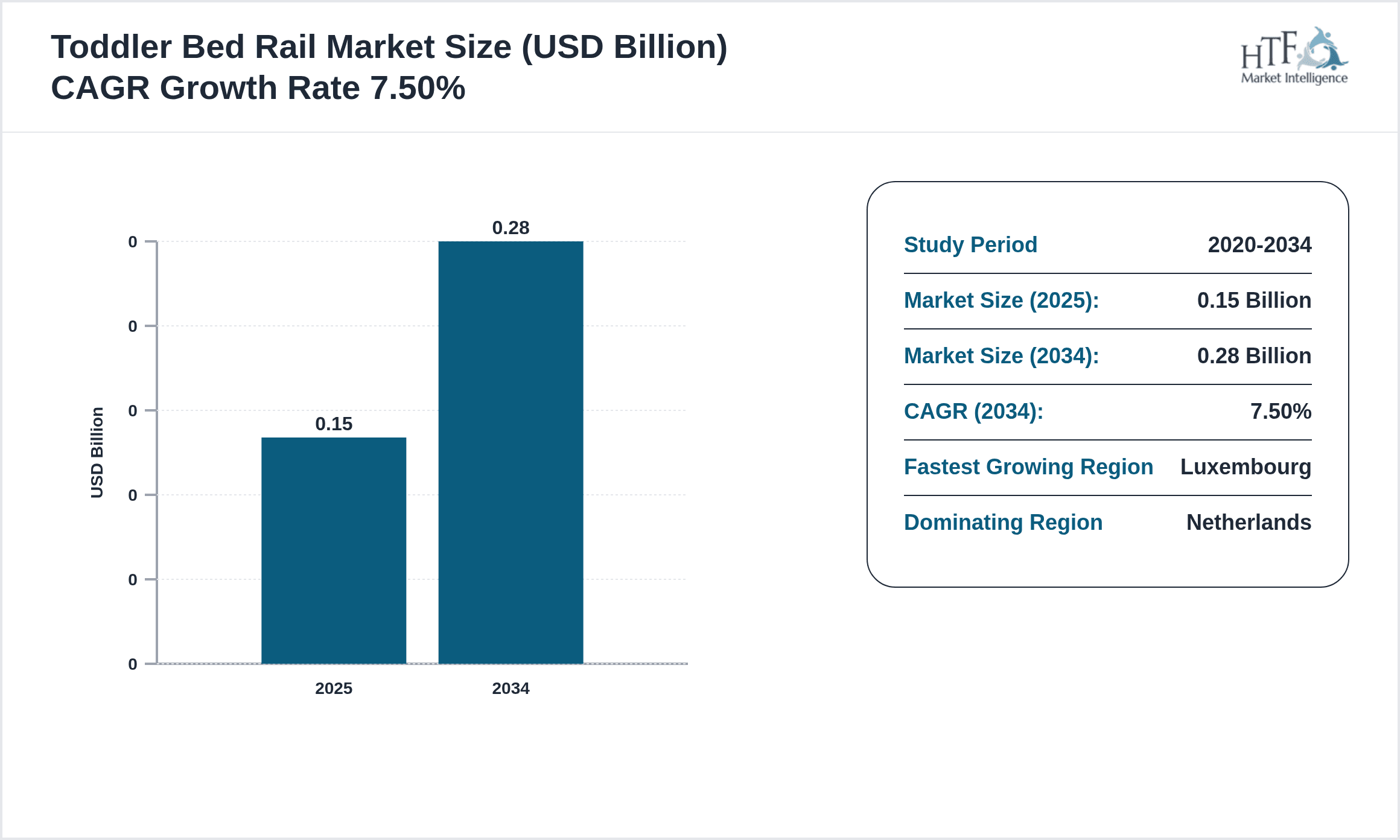
- •The Benelux toddler bed rail market is projected to grow from USD 150 million in 2025 to USD 280 million by 2034, registering a CAGR of 7.5%. The Netherlands dominates the market with a 40% share, supported by strong consumer awareness and established retail networks. Luxembourg exhibits the fastest growth at a CAGR of 9.2%, driven by rising birth rates and increased investment in child safety products. Adjustable bed rails hold the leading product type position, while portable bed rails demonstrate the fastest growth due to demand for travel-friendly solutions. Key applications include home use, daycare centers, and hospitals, with home use dominating the market share. The market benefits from increasing parental safety concerns, innovation in lightweight materials, and expanding online retail penetration across the region. Despite challenges such as regulatory compliance and product standardization, the market outlook remains robust with steady year-over-year growth.
- •The Benelux toddler bed rail market offers significant value to manufacturers, retailers, healthcare providers, and caregivers by enhancing child safety and reducing injury risks. Strategic importance lies in addressing growing safety awareness, regulatory mandates, and evolving consumer preferences for versatile and easy-to-install products. The market's growth supports innovation in design and material science, fostering competitive differentiation and brand loyalty. Moreover, the increasing presence of e-commerce platforms enables wider product accessibility, while daycare and healthcare sectors contribute to steady demand. Key stakeholders benefit from aligning product development with stringent safety standards and consumer expectations, driving sustainable growth. The market's expansion also facilitates job creation in manufacturing and retail sectors within the Benelux region. Overall, the toddler bed rail market plays a vital role in child safety infrastructure, reflecting broader societal commitments to child welfare and wellbeing.
Competitive Landscape
Companies operating in the Benelux toddler bed rail market employ diverse strategies to sustain and expand their market presence. Product innovation remains a critical focus, with firms investing in advanced materials such as lightweight aluminum and reinforced plastics to enhance portability and durability. Strategic partnerships with daycare centers and healthcare providers facilitate trusted product endorsements and expanded distribution. Global expansion efforts target adjacent European markets leveraging established Benelux bases for logistics efficiency. Technological adoption includes integrating antimicrobial coatings and ergonomic designs to meet evolving consumer demands. Pricing strategies balance affordability with quality assurance, while digital marketing and e-commerce platforms drive direct consumer engagement. Mergers and acquisitions enable consolidation, enabling companies to broaden their product portfolios and streamline supply chains. Overall, companies prioritize safety compliance, customer education, and brand differentiation to capture market share amid intensifying competition and regulatory scrutiny.
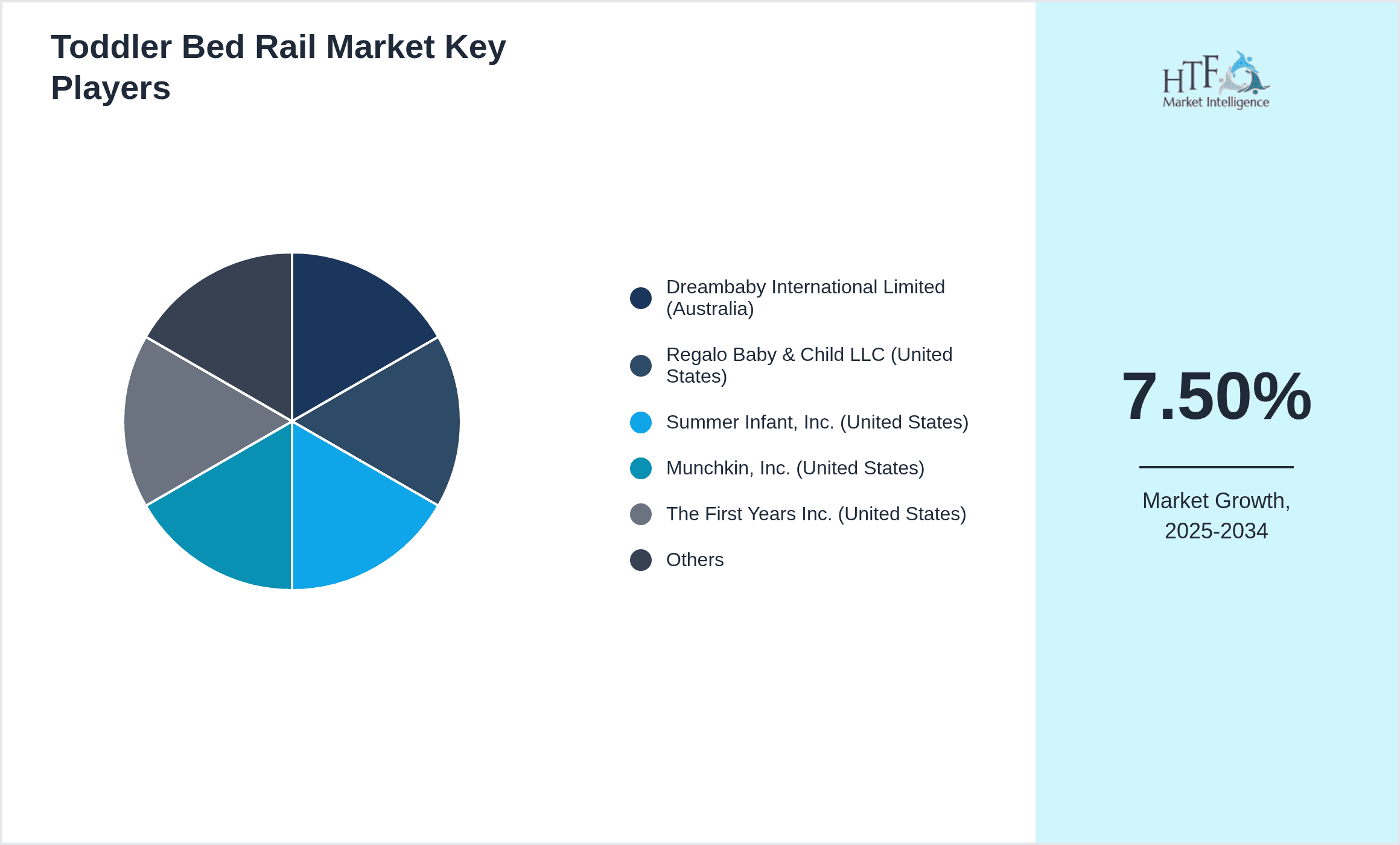
Leading Companies in Toddler Bed Rail Market
- •Dreambaby International Limited (Australia)
- •Regalo Baby & Child LLC (United States)
- •Summer Infant, Inc. (United States)
- •Munchkin, Inc. (United States)
- •The First Years Inc. (United States)
- •KidCo, Inc. (United States)
- •Safety 1st (United States)
- •Baby Dan ApS (Denmark)
- •Hauck GmbH & Co. KG (Germany)
- •Pali S.p.A. (Italy)
- •Summer Infant Ltd. (United Kingdom)
- •Lindam Group Ltd. (United Kingdom)
- •Chicco (Italy)
- •Nuna International B.V. (Netherlands)
- •BabyBjörn AB (Sweden)
- •Bebe Confort (France)
- •Philips Avent (Netherlands)
- •Joovy, Inc. (United States)
- •Graco Children’s Products Inc. (United States)
- •Mothercare plc (United Kingdom)
Market Breakdown
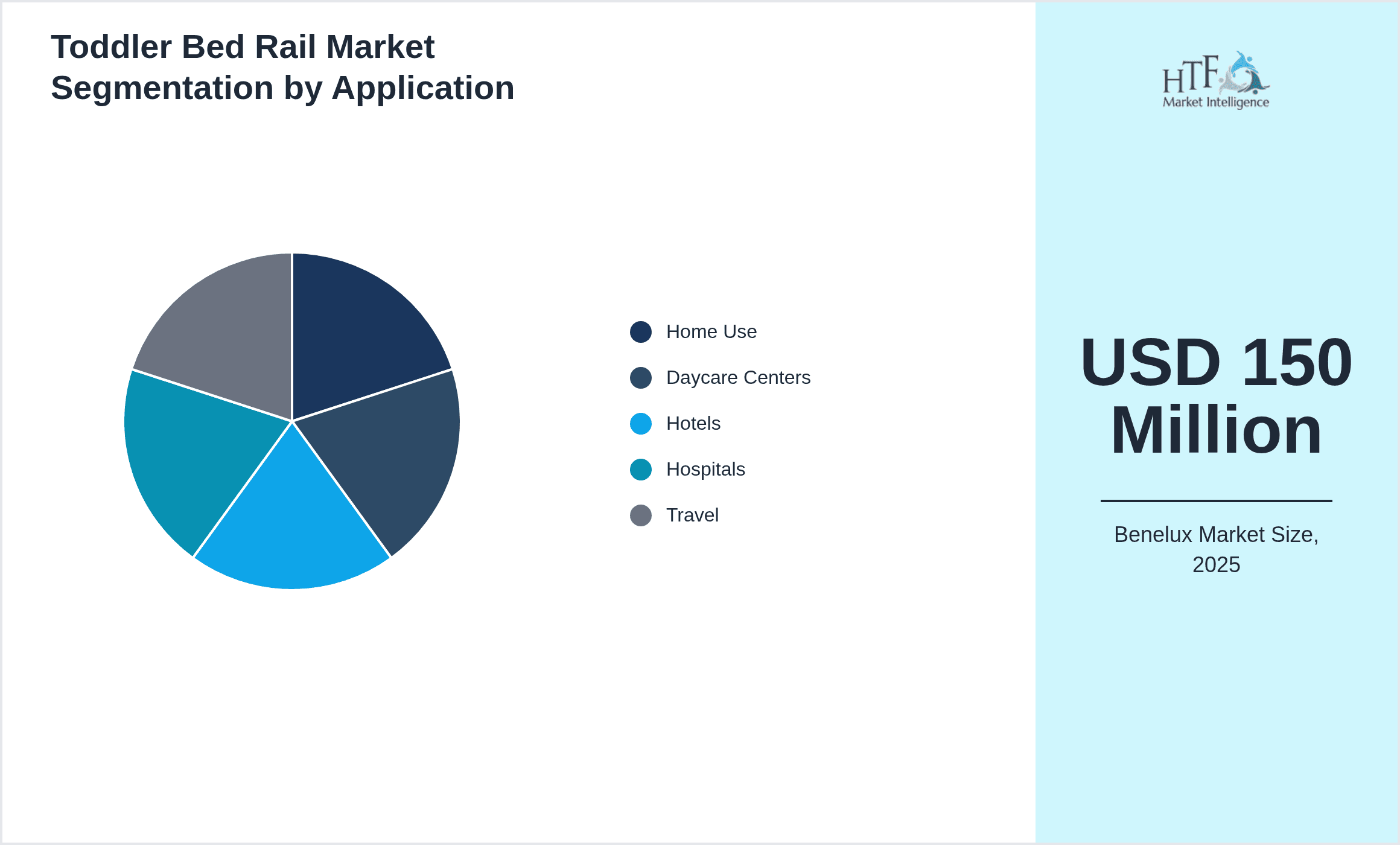
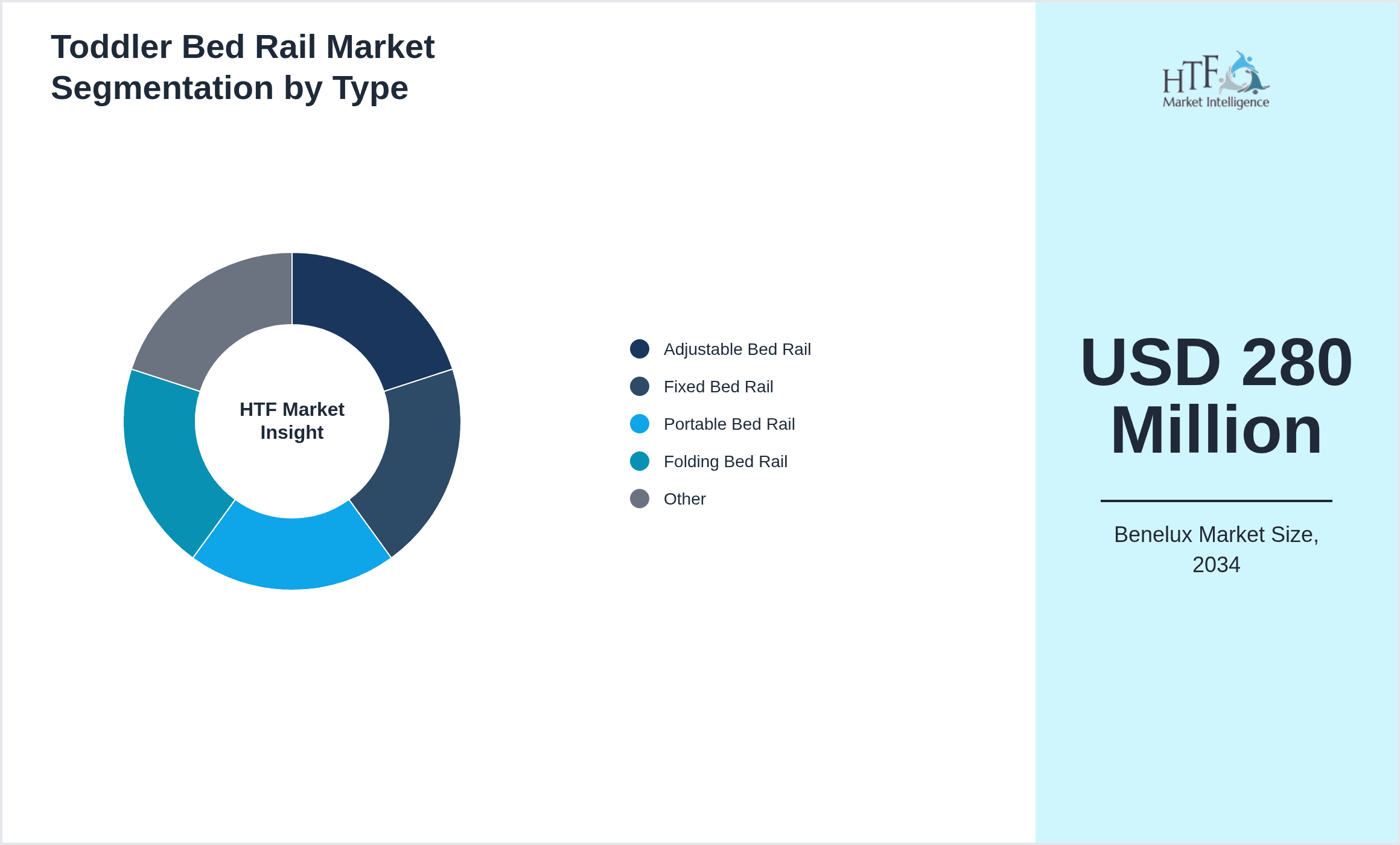
- •By Type
- ◦Adjustable Bed Rail
- ◦Fixed Bed Rail
- ◦Portable Bed Rail
- ◦Folding Bed Rail
- ◦Other
- •By Application
- ◦Home Use
- ◦Daycare Centers
- ◦Hotels
- ◦Hospitals
- ◦Travel
- •By Material Type
- ◦Plastic
- ◦Metal
- ◦Wood
- ◦Composite
- •By Distribution Channel
- ◦Online Retail
- ◦Specialty Stores
- ◦Supermarkets
- ◦Pharmacies
Growth Dynamics
Increasing awareness among parents and caregivers regarding child safety during sleep significantly boosts demand for toddler bed rails in the Benelux region. Government campaigns and pediatrician recommendations enhance consumer education, leading to adoption of safety rails in homes and daycare centers. Recent news highlights collaborations between manufacturers and child safety organizations to promote certified products. Rising disposable incomes and dual-income households enable higher spending on child safety products. Additionally, urbanization trends increase the need for compact, portable bed rails suitable for smaller living spaces. Technological innovations introducing lightweight and foldable designs offer convenience and adaptability, further stimulating market growth. Expansion of e-commerce platforms facilitates easy access to a wide range of toddler bed rail products, increasing market penetration. These factors collectively contribute to a positive growth trajectory, supported by robust consumer demand and evolving safety standards within Benelux.
Market Trends
The Benelux toddler bed rail market is witnessing a shift towards multifunctional and aesthetically appealing products that blend safety with design. Manufacturers increasingly incorporate antimicrobial coatings and hypoallergenic materials, responding to heightened health awareness post-pandemic. Smart bed rails with sensor integration for monitoring toddler movements are emerging, offering added safety features and parental peace of mind. Eco-friendly materials and sustainable manufacturing practices gain traction, aligning with regional environmental policies and consumer preferences. The rise of online marketplaces and direct-to-consumer sales channels accelerates product accessibility and customization options. Recent launches of portable, lightweight bed rails cater to travel and daycare applications, enhancing convenience for modern families. These trends indicate a trajectory towards innovation-driven product development, sustainability, and enhanced user experience shaping the market's future in Benelux.
Market Opportunities
Growing demand for travel-friendly and portable toddler bed rails presents significant opportunities for market expansion in the Benelux region. Increasing number of daycare centers and childcare facilities adopting safety rails creates a growing institutional market segment. Innovation in smart safety features, such as integrated sensors and alerts, offers differentiation potential and technological advancement. Expansion into online retail channels and partnerships with pediatric healthcare providers can enhance market reach and consumer trust. Rising environmental consciousness drives opportunities to develop eco-friendly and recyclable product lines. Additionally, collaborations with hotels and hospitality sectors for child safety solutions during travel offer untapped revenue streams. Emerging consumer segments, including grandparents and caregivers, provide further avenues for targeted marketing and product diversification. These factors collectively create a dynamic growth environment with multiple avenues for revenue generation and brand positioning.
Market Challenges
Strict regulatory compliance and safety certification requirements in the Benelux region present significant challenges for toddler bed rail manufacturers. Variability in standards across Belgium, Netherlands, and Luxembourg complicates product design and approval processes, increasing time to market. Price sensitivity among consumers limits the ability to introduce premium-priced innovative products despite higher manufacturing costs. Supply chain disruptions and raw material price volatility impact production efficiency and profitability. Challenges in educating consumers about product installation and maintenance affect user satisfaction and brand reputation. Additionally, competition from low-cost imports exerts pressure on local manufacturers to maintain quality while controlling costs. Limited awareness in certain segments, such as institutional buyers, restricts market penetration. These challenges necessitate strategic investments in compliance, consumer education, and cost optimization to sustain competitive advantage.
Regulatory Framework
In the last five years, the Benelux toddler bed rail market has been influenced by the European Committee for Standardization (CEN) harmonizing child safety product regulations across member states. The EN 1930:2011 standard for safety barriers and bed rails mandates rigorous testing for durability, toxicity, and mechanical hazards. Belgium and the Netherlands have integrated these standards into national regulations, requiring certification before market entry. Luxembourg enforces additional packaging and labeling requirements emphasizing product traceability and consumer information. Recent updates include stricter chemical safety norms prohibiting certain phthalates in plastic components, reflecting broader EU REACH regulations. Compliance with these evolving standards ensures enhanced safety but increases costs for manufacturers. Regular audits and market surveillance by regional authorities enforce adherence, fostering consumer confidence and reducing injury incidents. This regulatory landscape shapes product design, manufacturing processes, and market access strategies within Benelux.
Market Intelligence
Recent market developments and strategic initiatives are continuously tracked through industry publications, company announcements, and regulatory filings. For the most current information, stakeholders are advised to monitor official corporate communications and recognized market intelligence platforms.
Regional Outlook
The Netherlands currently holds a significant share of the market, primarily due to several key factors: increasing consumption rates, a burgeoning population, and robust economic momentum. These elements collectively drive demand, positioning this region as a leader in the market. On the other hand, Luxembourg is rapidly emerging as the fastest-growing area within the industry. This remarkable growth can be attributed to swift infrastructure development, the expansion of various industrial sectors, and a marked increase in consumer demand. These dynamics make this region a crucial player in shaping future market growth.
In our report, we cover a comprehensive analysis of the following regions and countries:
- Belgium
- Netherlands
- Luxembourg
| Feature | Details |
|---|---|
| Base Year Market Size | USD 150 Million |
| Forecast Year Market Size | USD 280 Million |
| CAGR | 7.5% |
| Forecast Period | 2026 to 2033 |
| YoY Growth | 7.3% |
| Scope of Report | Market is segmented by Type (Adjustable Bed Rail, Fixed Bed Rail, Portable Bed Rail, Folding Bed Rail, Other), Application (Home Use, Daycare Centers, Hotels, Hospitals, Travel), Material Type (Plastic, Metal, Wood, Composite), Distribution Channel (Online Retail, Specialty Stores, Supermarkets, Pharmacies) |
| Regions Covered | Belgium, Netherlands, Luxembourg |
| Key Companies | Dreambaby International Limited (Australia), Regalo Baby & Child LLC (United States), Summer Infant, Inc. (United States), Munchkin, Inc. (United States), The First Years Inc. (United States), KidCo, Inc. (United States), Safety 1st (United States), Baby Dan ApS (Denmark), Hauck GmbH & Co. KG (Germany), Pali S.p.A. (Italy), Summer Infant Ltd. (United Kingdom), Lindam Group Ltd. (United Kingdom), Chicco (Italy), Nuna International B.V. (Netherlands), BabyBjörn AB (Sweden), Bebe Confort (France), Philips Avent (Netherlands), Joovy, Inc. (United States), Graco Children’s Products Inc. (United States), Mothercare plc (United Kingdom) |
Benelux Toddler Bed Rail Market Size, Growth & Revenue 2025-2034 - Table of Contents
Frequently Asked Questions (FAQ):
The Compact Track Loaders market is projected to grow at a CAGR of 6.8% from 2025 to 2030, driven by increasing demand in construction and agricultural sectors.
North America currently leads the market with approximately 45% market share, followed by Europe at 28% and Asia-Pacific at 22%. The remaining regions account for 5% of the global market.
Key growth drivers include increasing construction activities, rising demand for versatile equipment in agriculture, technological advancements in track loader design, and growing preference for compact equipment in urban construction projects.