
DACH Women Garment Manufacturing Market Size, Growth & Revenue 2025-2034
DACH Women Garment Manufacturing Market is segmented by Type (Dresses, Tops & Blouses, Outerwear, Skirts & Pants, Others), Application (Casual Wear, Formal Wear, Sportswear, Ethnic Wear, Loungewear), Manufacturing Process (Cut and Sew, Knitting, Embroidery, Printing), Distribution Channel (Retail Stores, Online Platforms, Wholesale, Specialty Boutiques), and Geography (Germany, Austria, Switzerland)
Pricing
Report Overview
Executive Summary
- •The DACH Women Garment Manufacturing market covers production of women's clothing types such as dresses, tops, outerwear, skirts, and pants, serving applications including casual, formal, sportswear, ethnic, and loungewear. It involves a supply chain from fabric sourcing, textile processing, to garment finishing, mainly across Germany, Austria, and Switzerland. This market is vital for regional economic stability, providing employment and fostering innovation through sustainable and technologically advanced manufacturing processes. Increasing consumer demand for fashion diversity, quality, and eco-friendly garments drives market expansion. The sector benefits from strong export potential and integration with international fashion trends, placing DACH as a key hub in European women’s apparel manufacturing.
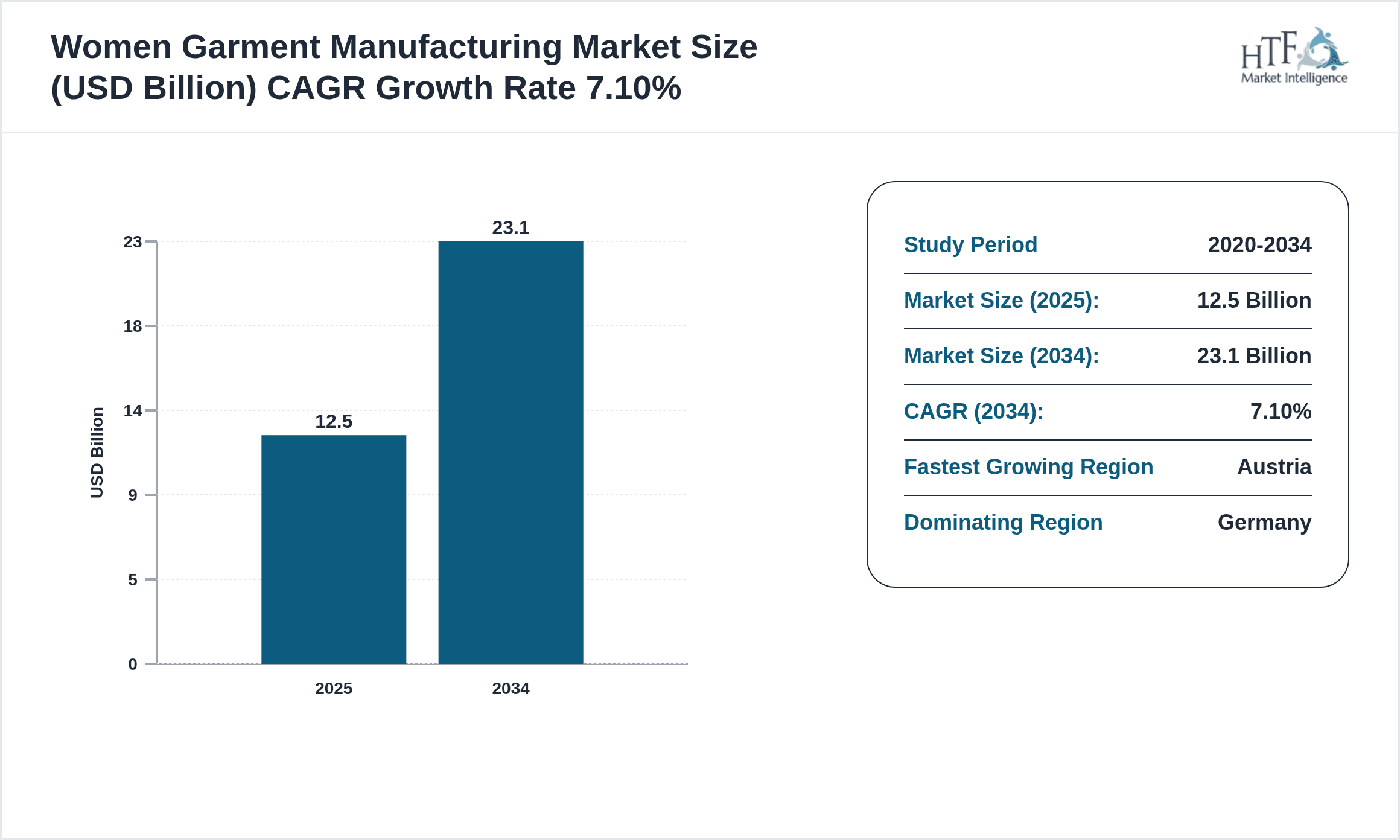
- •Key market highlights include a base market size of USD 12.5 Billion in 2025, projected to reach USD 23.1 Billion by 2034, demonstrating a robust CAGR of 7.1%. Germany dominates with 55% market share, while Austria leads in growth at an 8.2% CAGR. Dresses represent the leading product type, whereas outerwear is the fastest growing segment. Casual wear remains the dominant application with 48% share. The market shows consistent year-on-year growth reflecting rising consumer spending and increased adoption of sustainable manufacturing practices. Strategic investments and technological advancements further bolster market momentum.
- •This market holds significant strategic importance for textile manufacturers, fashion brands, retailers, and investors focusing on the DACH region. It supports the transition towards sustainable fashion with eco-conscious material sourcing and production methods. Enhanced automation and digitalization improve operational efficiency and product customization. Stakeholders gain competitive advantage by aligning with evolving consumer preferences, regulatory frameworks, and regional trade policies. The women garment manufacturing sector acts as a bellwether for broader economic and industrial trends in DACH, influencing labor markets, supply chains, and export dynamics.
Competitive Landscape
The competitive environment within the DACH Women Garment Manufacturing market is shaped by companies focusing on strategic partnerships, product innovation, and technology adoption to sustain market presence. Firms invest heavily in automation and smart manufacturing to enhance productivity and reduce lead times while complying with stringent sustainability regulations prevalent in the region. Many players pursue global expansion through collaborations and joint ventures to diversify product portfolios and access new markets. Emphasis on high-quality design and fabric innovation drives differentiation. Companies also leverage digital platforms for supply chain optimization and customer engagement. Mergers and acquisitions facilitate consolidation and scaling, enabling firms to strengthen competitive advantages in pricing, distribution, and branding. Regional competition is intense, with Germany leading production volumes, Austria driving innovation, and Switzerland focusing on premium segments. Future competitive trends indicate deeper integration of AI-driven manufacturing, circular economy practices, and enhanced customization capabilities to meet evolving consumer demands.
Leading Companies in Women Garment Manufacturing Market
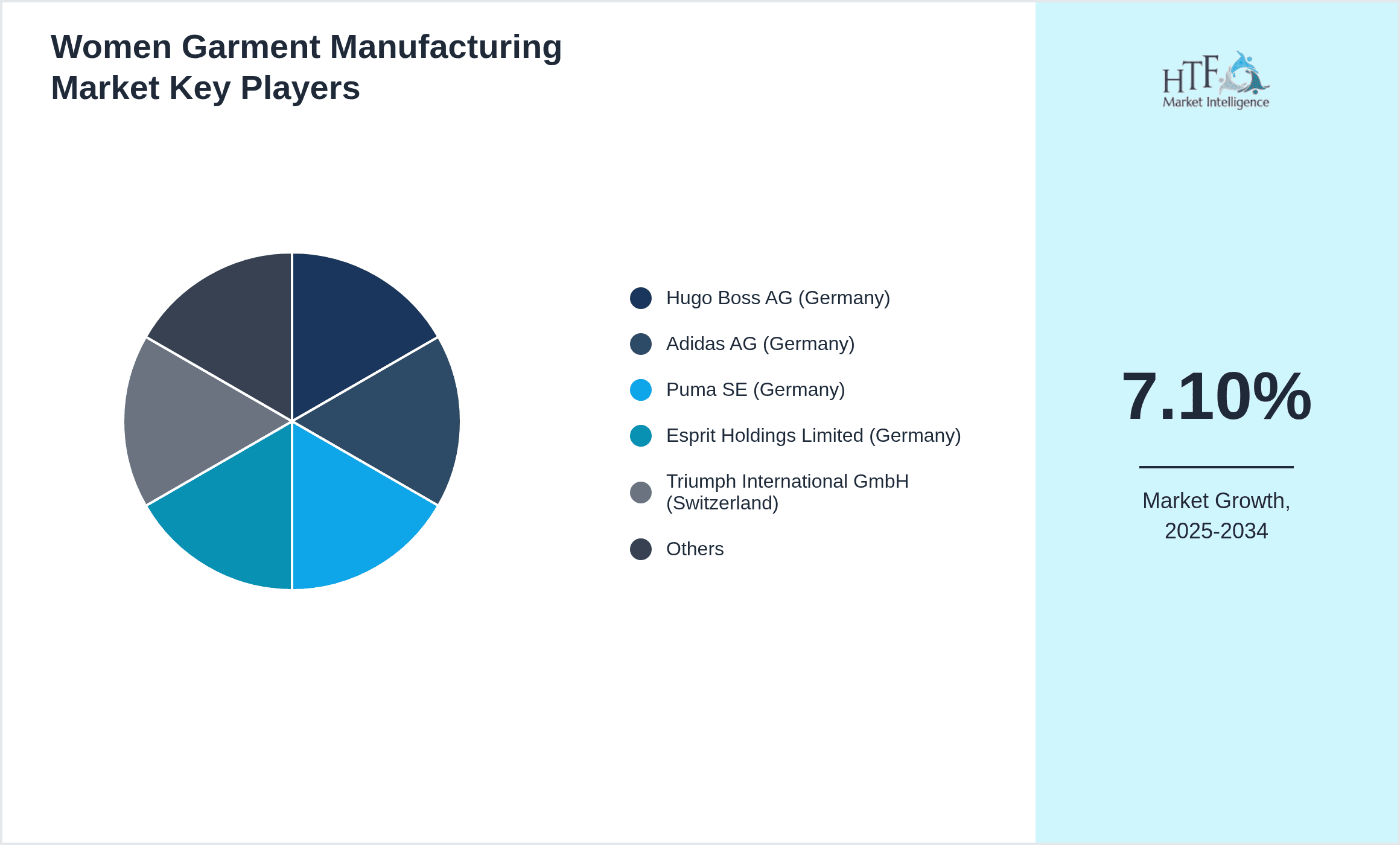
- •Hugo Boss AG (Germany)
- •Adidas AG (Germany)
- •Puma SE (Germany)
- •Esprit Holdings Limited (Germany)
- •Triumph International GmbH (Switzerland)
- •Marc O'Polo International GmbH (Germany)
- •Wolford AG (Austria)
- •Schiesser AG (Germany)
- •Freitag Lab AG (Switzerland)
- •Bogner GmbH & Co. KGaA (Germany)
- •Engelbert Strauss GmbH & Co. KG (Germany)
- •Seidensticker Group (Germany)
- •Lodenfrey GmbH & Co. KG (Germany)
- •Hess Natur-Textilien GmbH & Co. KG (Germany)
- •Brunello Holding AG (Switzerland)
- •Mammut Sports Group AG (Switzerland)
- •Lenzing AG (Austria)
- •Vaude Sport GmbH & Co. KG (Germany)
- •Trigema GmbH & Co. KG (Germany)
- •Falke KGaA (Germany)
Market Breakdown
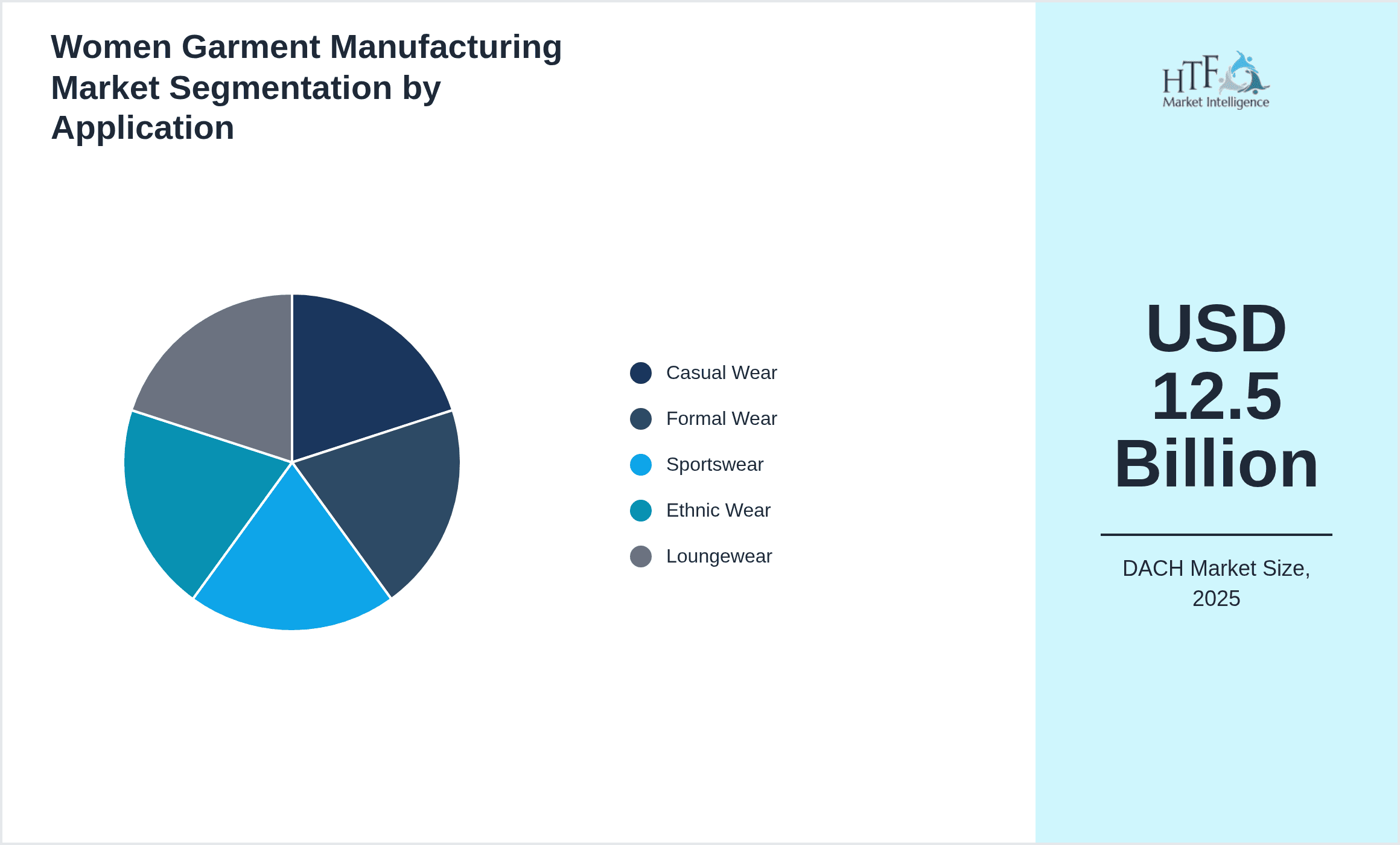
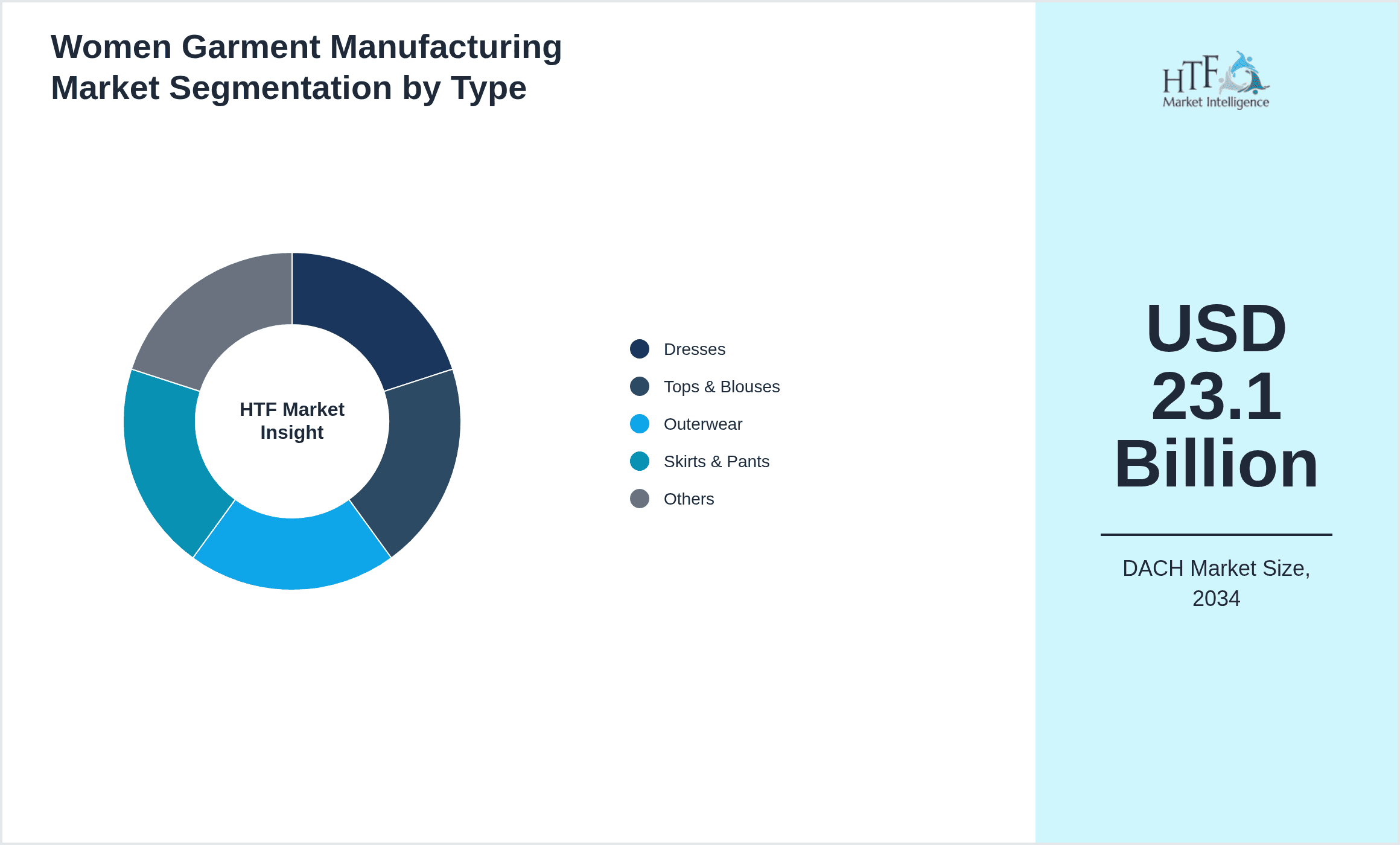
- •By Type
- ◦Dresses
- ◦Tops & Blouses
- ◦Outerwear
- ◦Skirts & Pants
- ◦Others
- •By Application
- ◦Casual Wear
- ◦Formal Wear
- ◦Sportswear
- ◦Ethnic Wear
- ◦Loungewear
- •By Manufacturing Process
- ◦Cut and Sew
- ◦Knitting
- ◦Embroidery
- ◦Printing
- •By Distribution Channel
- ◦Retail Stores
- ◦Online Platforms
- ◦Wholesale
- ◦Specialty Boutiques
Growth Dynamics
The DACH Women Garment Manufacturing market growth is propelled by rising consumer awareness around sustainable fashion, driving manufacturers to adopt eco-friendly materials and processes. Leading firms such as Hugo Boss have integrated recycled fibers and organic cotton in apparel lines, resonating well with environmentally conscious customers. The regional emphasis on high-quality craftsmanship and innovation in textile technology enhances product appeal and value. Digital transformation initiatives including Industry 4.0 implementations optimize production efficiency and supply chain responsiveness. Additionally, growing e-commerce penetration in DACH countries facilitates direct-to-consumer sales and personalized shopping experiences. The COVID-19 pandemic accelerated digital adoption and reshaped consumer behavior towards comfort-oriented and versatile apparel, expanding loungewear and sportswear segments. Government incentives supporting green manufacturing and circular economy models further stimulate investments. These factors collectively enable sustained double-digit growth rates and increased market competitiveness across Germany, Austria, and Switzerland.
Market Trends
The DACH Women Garment Manufacturing market is experiencing a pronounced shift toward digitalization, with companies investing in 3D design software, virtual fitting technologies, and AI-driven demand forecasting to reduce waste and improve consumer satisfaction. Sustainability trends dominate product innovation, leading to the rise of biodegradable fabrics and closed-loop recycling systems. Collaborations between fashion brands and tech startups are fostering new business models such as on-demand manufacturing and rental services, addressing environmental concerns and changing consumption patterns. The integration of smart textiles with wearable technology is gaining traction, offering multifunctional apparel that aligns with active lifestyles prevalent in the DACH region. Additionally, regional brands increasingly focus on niche markets such as adaptive clothing for diverse body types and inclusive fashion. These trends reflect a market poised for transformation, leveraging technology and sustainability to capture emerging consumer segments and strengthen regional leadership in women’s garment manufacturing.
Market Opportunities
Expanding demand for sustainable and ethically produced women’s garments presents substantial opportunities in the DACH region, with consumers prioritizing transparency and environmental impact. Investment in innovative textile materials such as organic fibers, recycled polyester, and low-impact dyes enables manufacturers to differentiate and capture premium market segments. Growth in e-commerce and omnichannel retailing allows companies to access wider customer bases and offer personalized shopping experiences through data analytics and AI. Emerging trends in smart and functional apparel provide avenues for product diversification, catering to health, fitness, and wearable technology markets. Cross-border collaborations within the EU simplify supply chain integration and market entry for regional players. Additionally, government support programs aimed at digital transformation and sustainability adoption incentivize modernization and capacity expansion, enhancing competitiveness. These opportunities support sustained revenue growth and position the DACH women garment manufacturing market as a dynamic hub of innovation and quality.
Market Challenges
The DACH Women Garment Manufacturing market faces challenges from rising raw material costs, particularly due to fluctuations in cotton and synthetic fiber prices, which pressure profit margins. Stringent environmental regulations require costly compliance investments, including waste management and emission controls, increasing operational expenses. Labor shortages and high wage levels in Germany and Austria contribute to elevated manufacturing costs relative to global competitors. Supply chain disruptions and geopolitical uncertainties affect raw material availability and delivery schedules, impacting production timelines. Additionally, intense competition from low-cost producers in Eastern Europe and Asia challenges market share retention. Consumer demand volatility, accelerated by fashion trend cycles and economic conditions, complicates inventory management and forecasting. Companies must also navigate complex sustainability certifications and transparency requirements, which add administrative burdens. These factors collectively constrain growth potential and necessitate strategic agility for market participants.
Regulatory Framework
Between 2020 and 2025, the DACH region implemented several key regulations impacting women garment manufacturing. The German Supply Chain Due Diligence Act mandates companies to ensure human rights and environmental standards across supply chains, compelling manufacturers to enhance transparency and ethical sourcing. Austria and Switzerland have reinforced chemical safety standards aligned with REACH regulations to limit hazardous substances in textiles. The EU Green Deal influences regional policies promoting sustainable production, energy efficiency, and waste reduction within garment manufacturing facilities. Compliance with these regulations requires investments in monitoring systems, certifications, and employee training. These frameworks foster responsible manufacturing practices and enhance consumer trust, while also driving innovation in eco-friendly materials and processes across the DACH women garment manufacturing market.
Market Intelligence
- •Recent market developments and strategic initiatives are continuously tracked through industry publications, company announcements, and regulatory filings. For the most current information, stakeholders are advised to monitor official corporate communications and recognized market intelligence platforms.
- •Recent market developments and strategic initiatives are continuously tracked through industry publications, company announcements, and regulatory filings. For the most current information, stakeholders are advised to monitor official corporate communications and recognized market intelligence platforms.
- •Recent market developments and strategic initiatives are continuously tracked through industry publications, company announcements, and regulatory filings. For the most current information, stakeholders are advised to monitor official corporate communications and recognized market intelligence platforms.
- •Recent market developments and strategic initiatives are continuously tracked through industry publications, company announcements, and regulatory filings. For the most current information, stakeholders are advised to monitor official corporate communications and recognized market intelligence platforms.
- •Source: Industry Publications, Company Websites, Regulatory Reports
Regional Outlook
The Germany currently holds a significant share of the market, primarily due to several key factors: increasing consumption rates, a burgeoning population, and robust economic momentum. These elements collectively drive demand, positioning this region as a leader in the market. On the other hand, Austria is rapidly emerging as the fastest-growing area within the industry. This remarkable growth can be attributed to swift infrastructure development, the expansion of various industrial sectors, and a marked increase in consumer demand. These dynamics make this region a crucial player in shaping future market growth.
In our report, we cover a comprehensive analysis of the following regions and countries:
- Germany
- Austria
- Switzerland
| Feature | Details |
|---|---|
| Base Year Market Size | USD 12.5 Billion |
| Forecast Year Market Size | USD 23.1 Billion |
| CAGR | 7.1% |
| Forecast Period | 2026 to 2033 |
| YoY Growth | 7% |
| Scope of Report | Market is segmented by Type (Dresses, Tops & Blouses, Outerwear, Skirts & Pants, Others), Application (Casual Wear, Formal Wear, Sportswear, Ethnic Wear, Loungewear), Manufacturing Process (Cut and Sew, Knitting, Embroidery, Printing), Distribution Channel (Retail Stores, Online Platforms, Wholesale, Specialty Boutiques) |
| Regions Covered | Germany, Austria, Switzerland |
| Key Companies | Hugo Boss AG (Germany), Adidas AG (Germany), Puma SE (Germany), Esprit Holdings Limited (Germany), Triumph International GmbH (Switzerland), Marc O'Polo International GmbH (Germany), Wolford AG (Austria), Schiesser AG (Germany), Freitag Lab AG (Switzerland), Bogner GmbH & Co. KGaA (Germany), Engelbert Strauss GmbH & Co. KG (Germany), Seidensticker Group (Germany), Lodenfrey GmbH & Co. KG (Germany), Hess Natur-Textilien GmbH & Co. KG (Germany), Brunello Holding AG (Switzerland), Mammut Sports Group AG (Switzerland), Lenzing AG (Austria), Vaude Sport GmbH & Co. KG (Germany), Trigema GmbH & Co. KG (Germany), Falke KGaA (Germany) |
DACH Women Garment Manufacturing Market Size, Growth & Revenue 2025-2034 - Table of Contents
Frequently Asked Questions (FAQ):
The Compact Track Loaders market is expected to see value worth 5.3 Billion in 2025.
North America currently leads the market with approximately 45% market share, followed by Europe at 28% and Asia-Pacific at 22%. The remaining regions account for 5% of the global market.
Key growth drivers include increasing construction activities, rising demand for versatile equipment in agriculture, technological advancements in track loader design, and growing preference for compact equipment in urban construction projects.