
United States Drink & Coffee Flavoring Syrup Market Size, Growth & Revenue 2024-2034
United States Drink & Coffee Flavoring Syrup Market is segmented by Type (Vanilla Syrup, Caramel Syrup, Hazelnut Syrup, Chocolate Syrup, Seasonal/Other Flavors), Application (Coffee Shops, Home Use, Foodservice, Retail, Commercial), Distribution Channel (Supermarkets & Hypermarkets, Online Retail, Specialty Stores, Foodservice Distributors), Regional Zones (Northeast, Southeast, Midwest, Southwest, West Coast), and Geography (Northeast, Southwest, The South, The Midwest)
Pricing
Report Overview
Executive Summary
- •The United States Drink & Coffee Flavoring Syrup Market primarily involves the manufacture and sale of flavored syrups that enhance the sensory attributes of coffee and other beverages. These syrups, available in multiple flavor profiles such as vanilla, caramel, hazelnut, chocolate, and specialty seasonal blends, cater to a diverse customer base that includes coffee shops, households, commercial foodservice providers, and retail consumers. The market's scope covers formulation technologies, ingredient sourcing, packaging innovations, and distribution channels that ensure product freshness and accessibility. The industry thrives on consumer trends favoring personalized beverage experiences, specialty coffee culture, and health-conscious flavoring options. Regulatory oversight ensures compliance with food safety and additive usage standards, shaping product development and market entry strategies. Overall, the market reflects growing demand for premiumization, convenience, and flavor diversity in the U.S. beverage sector, supported by evolving lifestyle patterns and increasing at-home coffee consumption.
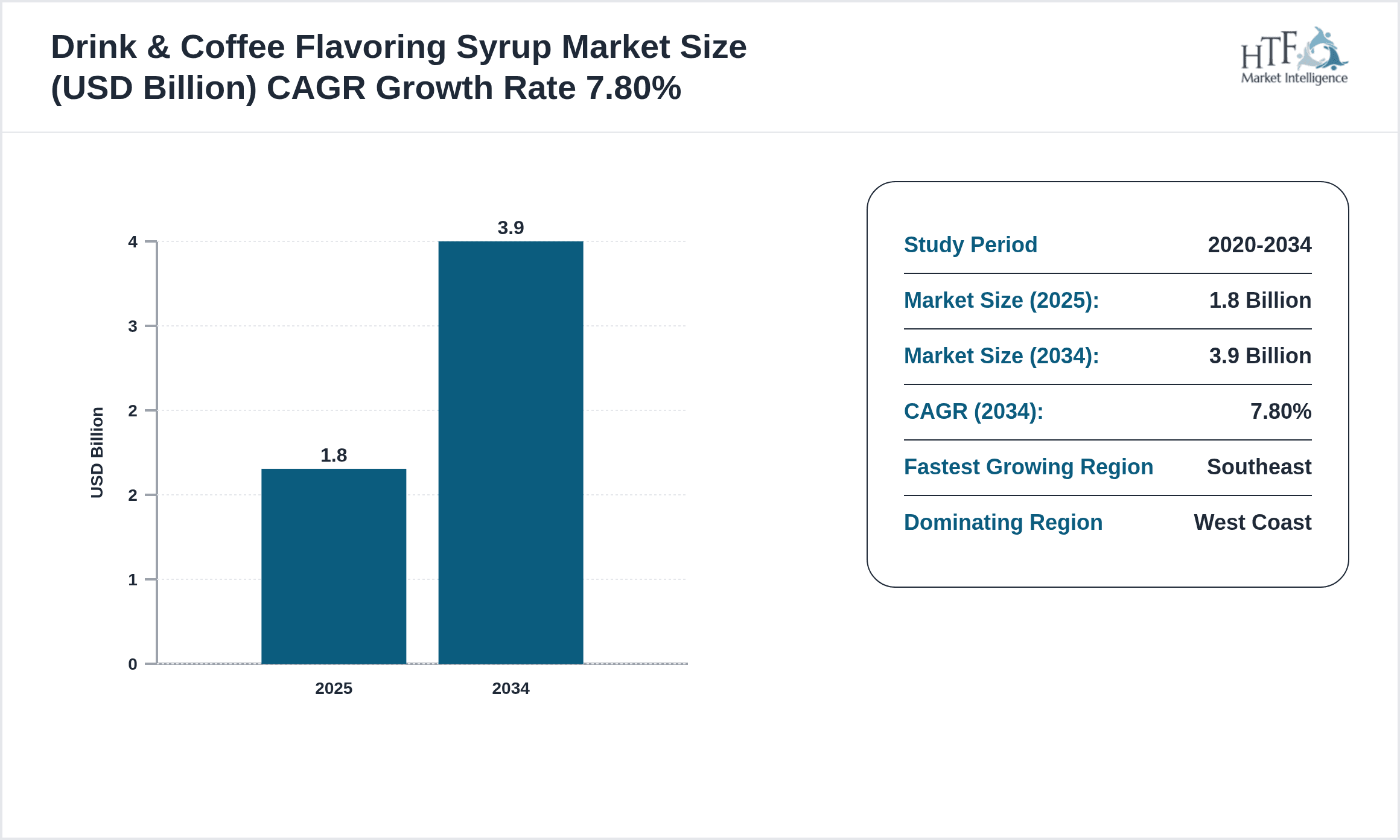
- •Key highlights include a base market size of USD 1.8 billion in 2024 with a projected CAGR of 7.8% to reach USD 3.9 billion by 2034. The West Coast region dominates the market with a 30% share, driven by high coffee shop density and consumer preference for specialty flavors. The Southeast region is the fastest-growing sub-market, expanding at a CAGR of 9.3% due to rising urbanization and café culture proliferation. Vanilla syrup leads product types, while seasonal/other flavors are gaining rapid traction. Applications are diversified across coffee shops, home use, and commercial foodservice, reflecting wide consumer engagement.
- •The market holds strategic importance for beverage manufacturers, coffee chains, and flavoring companies aiming to capitalize on the dynamic U.S. coffee culture and evolving consumer palates. Its growth supports the expansion of specialty coffee outlets, innovation in beverage customization, and enhanced consumer experiences. Stakeholders benefit from trends in premiumization, health-consciousness, and convenience, which drive product innovation and market penetration. The competitive landscape encourages continuous R&D and strategic partnerships, fostering a robust ecosystem for flavored syrup offerings across various channels.
Competitive Landscape
The United States Drink & Coffee Flavoring Syrup Market features intense competition characterized by product innovation, brand differentiation, and strategic collaborations. Market leaders emphasize developing natural and organic syrup variants to cater to health-conscious consumers while maintaining flavor authenticity. Companies leverage efficient distribution networks and strong partnerships with coffee shops and retailers to enhance market presence. Rivalry fosters continuous advancements in packaging technology to improve shelf life and consumer convenience. Pricing strategies balance premium product positioning with value offerings to capture diverse consumer segments. The competitive environment is further shaped by mergers, acquisitions, and entry of niche players focused on specialty and seasonal syrup flavors, contributing to a dynamic and evolving market landscape.
Prominent Players in United States Drink & Coffee Flavoring Syrup Market
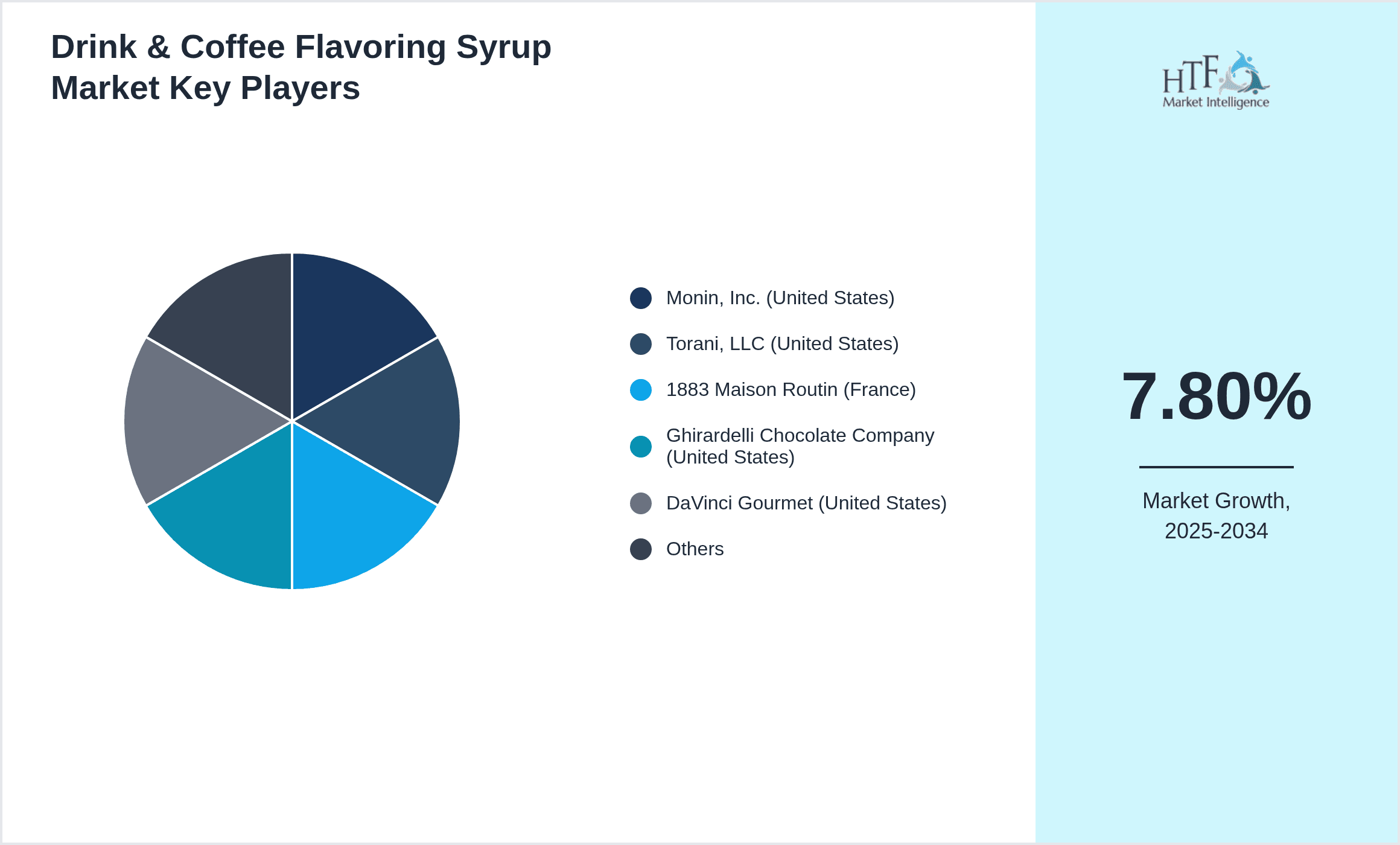
- •Monin, Inc. (United States)
- •Torani, LLC (United States)
- •1883 Maison Routin (France)
- •Ghirardelli Chocolate Company (United States)
- •DaVinci Gourmet (United States)
- •Jordan’s Skinny Syrups (United States)
- •Amoretti (United States)
- •Routin 1883 (France)
- •Daelmans (Netherlands)
- •The F. Gaviña & Sons, Inc. (United States)
- •Finest Call (United States)
- •Bols (Netherlands)
- •Starbucks Corporation (United States)
- •Nestlé S.A. (Switzerland)
- •PepsiCo, Inc. (United States)
- •Coca-Cola Company (United States)
- •Amoretti, Inc. (United States)
- •Monin Flavor Co. (United States)
- •The Hershey Company (United States)
- •Smucker’s (United States)
- •B&G Foods, Inc. (United States)
- •Torani (United States)
- •Laird Superfood (United States)
- •Syrup Inc. (United States)
- •Vita Coco (United States)

Market Breakdown
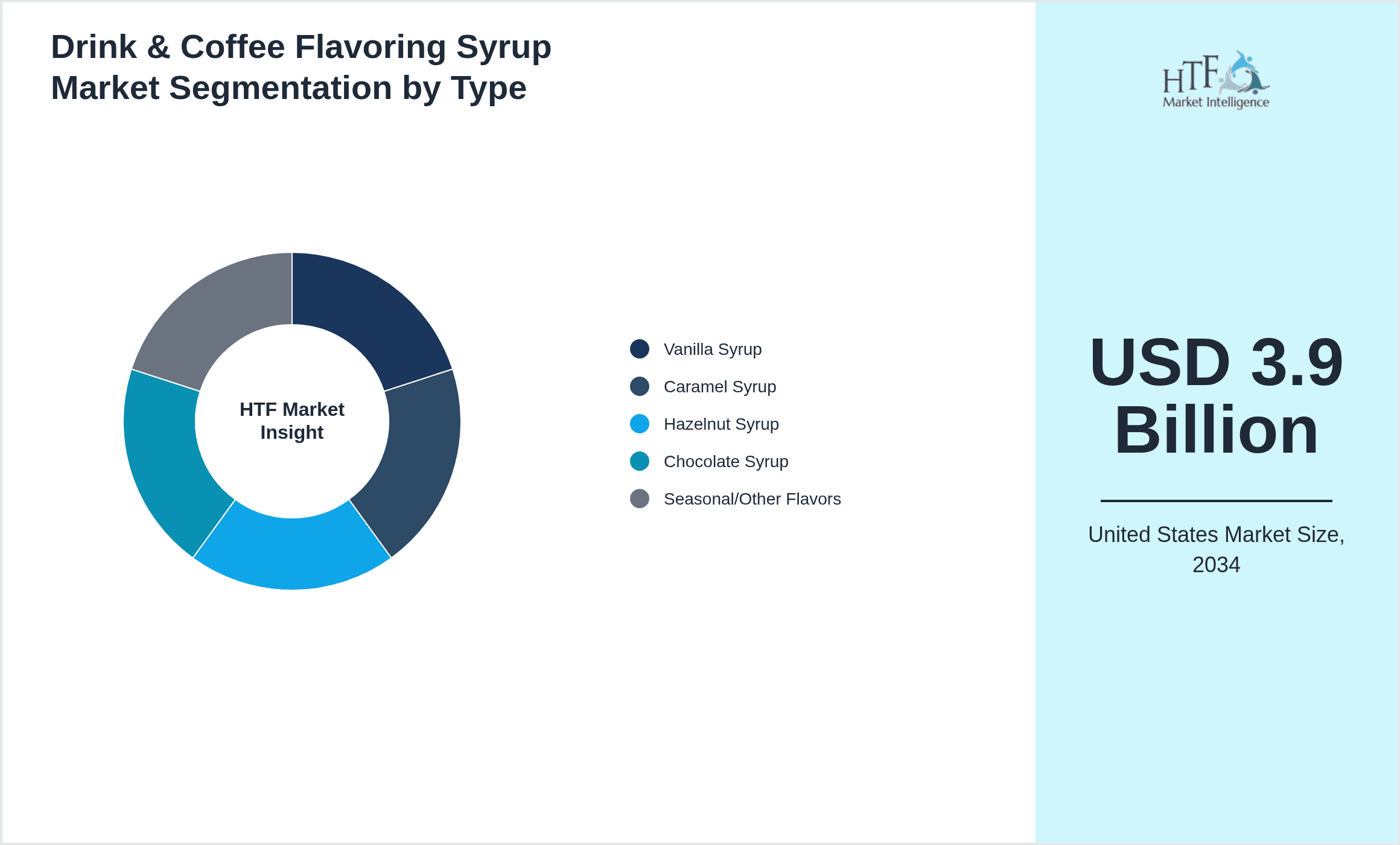
- •By Type
- ◦Vanilla Syrup
- ◦Caramel Syrup
- ◦Hazelnut Syrup
- ◦Chocolate Syrup
- ◦Seasonal/Other Flavors
- •By Application
- ◦Coffee Shops
- ◦Home Use
- ◦Foodservice
- ◦Retail
- ◦Commercial
- •By Distribution Channel
- ◦Supermarkets & Hypermarkets
- ◦Online Retail
- ◦Specialty Stores
- ◦Foodservice Distributors
- •By Regional Zones
- ◦Northeast
- ◦Southeast
- ◦Midwest
- ◦Southwest
- ◦West Coast
Growth Dynamics
- •The rising consumer preference for specialty coffee and customized beverage experiences is a primary growth driver, encouraging widespread adoption of flavored syrups in coffee shops and at home. This trend is supported by increased urbanization and the expanding café culture across urban and suburban areas of the United States.
- •Health-conscious consumers are driving innovation towards natural, organic, and sugar-free syrup formulations, pushing manufacturers to develop cleaner label products that meet dietary preferences without compromising flavor quality.
- •The expansion of online retail channels and e-commerce platforms has improved accessibility and convenience for consumers, fostering market growth by enabling direct-to-consumer sales and subscription models for flavored syrups.
- •Partnerships between syrup manufacturers and major coffeehouse chains enhance product visibility and adoption, creating synergistic growth and brand loyalty through co-branded offerings and limited edition flavors.
- •Innovations in packaging, such as single-serve and recyclable containers, are improving ease of use and sustainability credentials, appealing to environmentally-conscious consumers and reducing product waste.
- •The growing trend of at-home coffee preparation, accelerated by the COVID-19 pandemic, has significantly increased demand for retail syrup products, as consumers seek to replicate café-style beverages in domestic settings.
- •Government initiatives and food safety regulations ensure high-quality standards and ingredient transparency, which in turn boost consumer confidence and market expansion.
Market Trends
- •The surge in demand for plant-based and vegan-friendly syrups reflects a broader shift toward sustainable consumption, with companies developing syrups free from animal-derived ingredients and artificial additives.
- •Seasonal and limited-edition flavors, such as pumpkin spice and holiday blends, are increasingly used as marketing tools to attract consumers and create buzz, contributing to periodic spikes in sales volume.
- •Technological advancements in flavor extraction and preservation have improved the stability and sensory profile of syrups, enabling manufacturers to maintain consistent taste over longer shelf lives.
- •Sustainability initiatives, including the use of organic raw materials and eco-friendly packaging, are becoming integral to brand identity and consumer purchasing decisions in this market segment.
- •Collaborations between beverage companies and culinary chefs have led to innovative syrup flavor blends, enhancing the premiumization trend and expanding the product portfolio.
- •The growing influence of social media and influencer marketing is driving consumer awareness and experimentation with new syrup flavors and brands.
- •Convenience-driven product formats, such as ready-to-use syrup concentrates and pump dispensers, are gaining popularity particularly among foodservice providers and busy consumers.
Market Opportunities
- •There is significant growth potential in expanding the range of natural and organic syrups to capture the health-conscious consumer segment, especially with clean-label certifications and transparent ingredient sourcing.
- •Untapped regional markets within the U.S., particularly in the Southeast and Midwest, offer opportunities for new entrants and established players to increase distribution and brand presence.
- •Innovation in functional syrups enriched with vitamins, antioxidants, or adaptogens presents a lucrative niche that aligns with wellness trends and increasing consumer interest in health-promoting beverages.
- •The rise of online subscriptions and direct-to-consumer sales channels allows for personalized flavor offerings and customer engagement, driving repeat purchases and brand loyalty.
- •Collaborations with coffee chains and foodservice providers to co-create exclusive syrup flavors can differentiate brands and enhance market share through unique value propositions.
- •Sustainable packaging innovation, such as biodegradable bottles and reduced plastic usage, can attract environmentally-conscious consumers and comply with emerging regulations.
- •Expansion into adjacent beverage categories, like iced teas, cocktails, and smoothies, can diversify revenue streams and broaden market applications for flavoring syrups.
Market Challenges
- •High raw material costs, particularly for natural flavors and organic ingredients, pose pressure on profit margins and may limit price competitiveness in certain market segments.
- •Intense competition from private label brands and low-cost manufacturers challenges established players to continuously innovate and maintain brand loyalty.
- •Regulatory compliance related to food safety, labeling, and ingredient restrictions requires significant investment and can delay product launches or reformulations.
- •Consumer skepticism regarding artificial additives and synthetic flavors necessitates transparent marketing and product development aligned with clean-label demands.
- •Supply chain disruptions, including fluctuations in raw material availability and transportation challenges, can impact production schedules and product availability.
- •Balancing innovation with consistency is difficult, as new flavors or formulations must meet consumer expectations without compromising brand heritage or quality standards.
- •Environmental concerns and increasing regulatory scrutiny on packaging waste require companies to invest in sustainable solutions, which may increase operational costs.
Regulatory Framework
- •From 2019 to 2024, the FDA has reinforced regulations on food additives and flavoring agents, mandating comprehensive safety evaluations and labeling transparency to protect consumers and ensure market integrity.
- •The U.S. Department of Agriculture (USDA) has introduced stricter organic certification standards impacting syrup manufacturers aiming for organic product lines, requiring rigorous supply chain audits and ingredient traceability.
- •State-level regulations, such as California's Proposition 65, impose additional compliance requirements concerning exposure to certain chemicals, influencing product formulation and packaging decisions in markets like the West Coast.
- •Recent amendments to the Food Safety Modernization Act (FSMA) have increased preventive controls and hazard analysis mandates for syrup producers, aiming to minimize contamination risks during manufacturing and distribution.
- •Environmental regulations promoting sustainable packaging and waste reduction are increasingly influencing market practices, compelling companies to adopt eco-friendly materials and reduce plastic usage in syrup packaging.
Market Intelligence
- •15th February 2025, Monin, Inc. launched a new line of organic and zero-calorie coffee syrups featuring natural sweeteners and clean-label ingredients, targeting health-conscious consumers and premium coffee shops. This initiative aligns with rising demand for healthier beverage options and aims to capture a larger share of the growing specialty coffee market in the United States. The product launch includes innovative packaging designed for sustainability and convenience, enhancing user experience and brand appeal. Source: Monin Official Press Release.
- •10th July 2025, Torani, LLC introduced a limited-edition seasonal syrup collection inspired by popular U.S. regional flavors, including pumpkin spice, maple pecan, and spiced apple. This launch supports their strategy to capitalize on seasonal demand spikes and consumer interest in localized taste experiences. The company partnered with key coffeehouse chains to roll out exclusive promotions, driving increased customer engagement and sales during peak seasons. Source: Torani Corporate News.
- •20th March 2024, DaVinci Gourmet expanded its product portfolio with the introduction of functional syrups infused with adaptogens and antioxidants aimed at wellness-focused consumers. This innovation responds to trends toward functional beverages and offers coffee shops and retailers new options to differentiate their menus. The launch was supported by targeted marketing campaigns emphasizing health benefits and natural ingredients. Source: DaVinci Gourmet Press Release.
- •5th November 2024, Jordan’s Skinny Syrups announced a strategic partnership with a major U.S. online grocery platform to enhance direct-to-consumer distribution capabilities. This collaboration aims to expand market reach, improve product availability, and provide personalized buying experiences through subscription services. The partnership reflects growing e-commerce importance in the flavored syrup market and positions the brand for accelerated growth. Source: Jordan’s Skinny Syrups Corporate Announcement.
Regional Outlook
The West Coast currently holds a significant share of the market, primarily due to several key factors: increasing consumption rates, a burgeoning population, and robust economic momentum. These elements collectively drive demand, positioning this region as a leader in the market. On the other hand, Southeast is rapidly emerging as the fastest-growing area within the industry. This remarkable growth can be attributed to swift infrastructure development, the expansion of various industrial sectors, and a marked increase in consumer demand. These dynamics make this region a crucial player in shaping future market growth.
In our report, we cover a comprehensive analysis of the following regions and countries:
- Northeast
- Southwest
- The South
- The Midwest
| Feature | Details |
|---|---|
| Base Year Market Size | USD 1.8 Billion |
| Forecast Year Market Size | USD 3.9 Billion |
| CAGR | 7.8% |
| Forecast Period | 2026 to 2033 |
| YoY Growth | 7.55% |
| Scope of Report | Market is segmented by Type (Vanilla Syrup, Caramel Syrup, Hazelnut Syrup, Chocolate Syrup, Seasonal/Other Flavors), Application (Coffee Shops, Home Use, Foodservice, Retail, Commercial), Distribution Channel (Supermarkets & Hypermarkets, Online Retail, Specialty Stores, Foodservice Distributors), Regional Zones (Northeast, Southeast, Midwest, Southwest, West Coast) |
| Regions Covered | Northeast, Southwest, The South, The Midwest |
| Key Companies | Monin, Inc. (United States), Torani, LLC (United States), 1883 Maison Routin (France), Ghirardelli Chocolate Company (United States), DaVinci Gourmet (United States), Jordan’s Skinny Syrups (United States), Amoretti (United States), Routin 1883 (France), Daelmans (Netherlands), The F. Gaviña & Sons, Inc. (United States), Finest Call (United States), Bols (Netherlands), Starbucks Corporation (United States), Nestlé S.A. (Switzerland), PepsiCo, Inc. (United States), Coca-Cola Company (United States), Amoretti, Inc. (United States), Monin Flavor Co. (United States), The Hershey Company (United States), Smucker’s (United States), B&G Foods, Inc. (United States), Torani (United States), Laird Superfood (United States), Syrup Inc. (United States), Vita Coco (United States) |
United States Drink & Coffee Flavoring Syrup Market Size, Growth & Revenue 2024-2034 - Table of Contents
Frequently Asked Questions (FAQ):
The Compact Track Loaders market is expected to see value worth 5.3 Billion in 2025.
North America currently leads the market with approximately 45% market share, followed by Europe at 28% and Asia-Pacific at 22%. The remaining regions account for 5% of the global market.
Key growth drivers include increasing construction activities, rising demand for versatile equipment in agriculture, technological advancements in track loader design, and growing preference for compact equipment in urban construction projects.