
South America Unsecured Prestressed Steel Strand Market Size, Growth & Revenue 2024-2034
South America Unsecured Prestressed Steel Strand Market is segmented by Type (Low Relaxation Strand, High Tensile Strand, Standard Strand, Spiral Strand, Other Types), Application (Bridges, Building Construction, Marine Structures, Industrial Floors, Other Infrastructure), End-User Industry (Public Infrastructure, Commercial Construction, Residential Construction, Industrial Facilities), Distribution Channel (Direct Sales, Distributors, Online Platforms), and Geography (Brazil, Argentina, Chile, Peru, Colombia, Rest of South America)
Pricing
Report Overview
Executive Summary
- •The South America Unsecured Prestressed Steel Strand market focuses on steel strands used in prestressed concrete applications without additional securing mechanisms, vital for infrastructure projects like bridges, marine structures, and industrial flooring. This market includes products such as low relaxation strands, high tensile strands, and spiral strands, designed to enhance structural strength and durability. The industry caters to the growing infrastructure needs of countries including Brazil, Argentina, Chile, Peru, and Colombia, driven by urbanization and government investments. Advancements in manufacturing techniques have improved strand quality, corrosion resistance, and performance under dynamic loads. The market boundaries cover production, supply chain, and end-use applications in civil engineering and construction sectors. Increasing demand for cost-effective, durable construction materials amid growing infrastructure developments in South America underpins market growth. Additionally, regulatory frameworks promoting safety and sustainability are shaping product innovation and adoption, positioning this market as a critical component of regional development strategies.
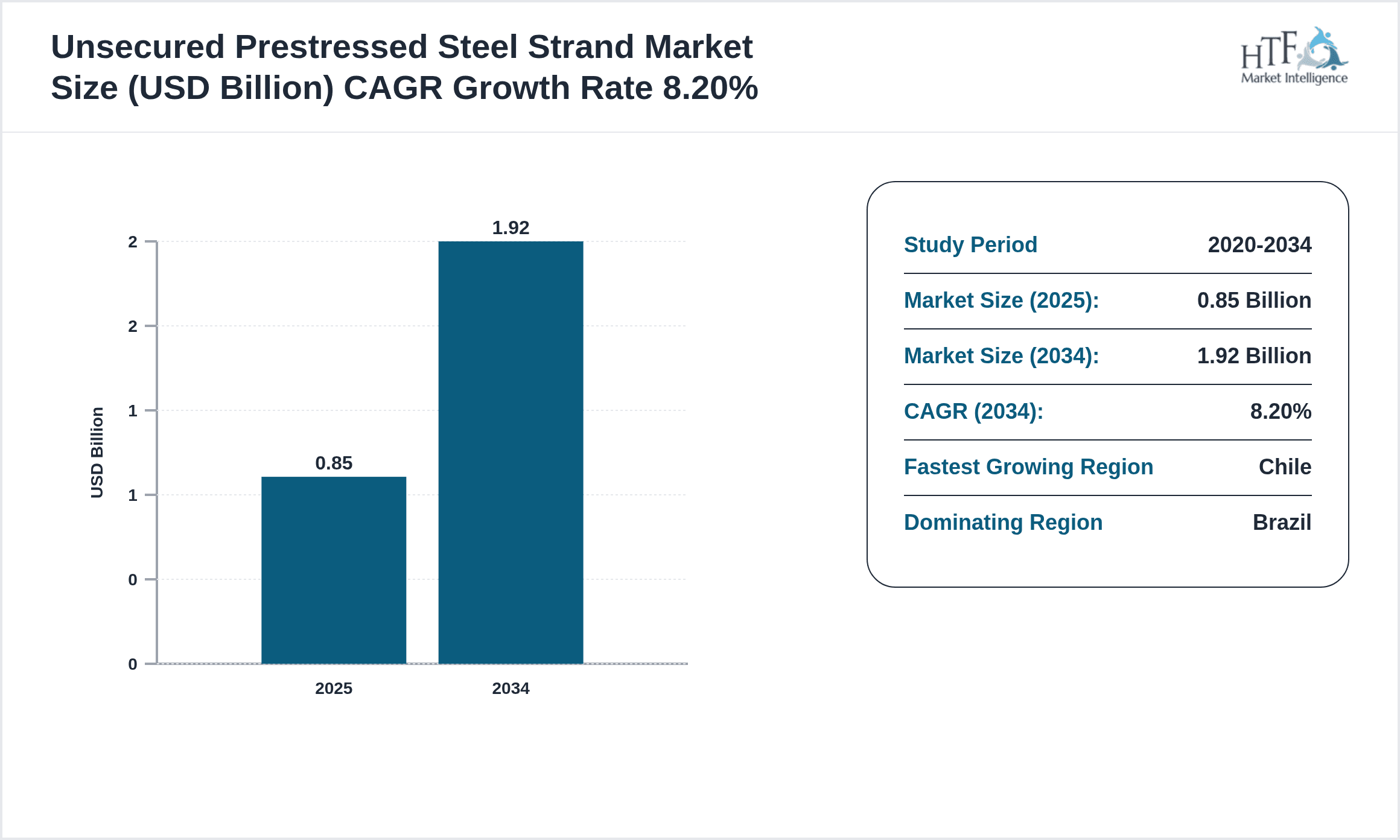
- •Key highlights of the South America unsecured prestressed steel strand market include a base market size of USD 0.85 Billion in 2024, projected to reach USD 1.92 Billion by 2034 with a CAGR of 8.2%. Brazil dominates the market with a 45% share, while Chile is the fastest growing country at an 11.3% CAGR. Low relaxation strands lead product segments, with high tensile strands expanding rapidly due to infrastructure modernization. Applications in bridge construction and building projects hold the largest revenue shares, complemented by growth in marine and industrial flooring sectors. Market dynamics are supported by government infrastructure spending, urban expansion, and technological advances in strand manufacturing. However, challenges such as supply chain complexities and regulatory compliance remain. Overall, the market outlook is positive with sustained growth opportunities fueled by evolving construction demands and environmental considerations.
- •The South America unsecured prestressed steel strand market offers strategic value to stakeholders including construction firms, infrastructure developers, and steel manufacturers by enabling safer, more durable structures. Its importance is amplified by the region's expanding infrastructure and urbanization projects requiring reliable prestressing materials. The market provides opportunities for innovation in strand technology, coating methods, and supply chain optimization to meet demand. It also supports sustainable construction practices through enhanced material longevity and reduced maintenance costs. For investors and policymakers, this market represents a nexus of economic growth, technological advancement, and regulatory evolution, fostering resilience in civil engineering assets across South America. Strategic partnerships and regional expansions are key value drivers, enabling companies to capitalize on infrastructure booms and evolving standards within the construction ecosystem.
Competitive Landscape
The competitive environment of the South America Unsecured Prestressed Steel Strand market is characterized by a mix of multinational steel producers and regional manufacturers striving for market leadership through product innovation, quality enhancement, and strategic collaborations. Companies invest heavily in research and development to improve strand tensile properties, corrosion resistance, and manufacturing efficiency. The rivalry is intensified by the growing demand for durable infrastructure materials and the need to comply with stringent regional standards. Market positioning is often achieved through differentiated product portfolios, competitive pricing strategies, and robust distribution networks. Innovation approaches include advanced coating technologies and proprietary manufacturing processes that cater to specific infrastructure applications. Strategic partnerships, joint ventures, and acquisitions are common tactics to expand geographical reach and technological capabilities. Barriers to entry remain significant due to high capital requirements and established supply chains, reinforcing the dominance of key players while encouraging niche innovation. The market is expected to see increased consolidation and collaboration as demand for high-performance prestressed steel strands grows across South America.
Leading Companies in Unsecured Prestressed Steel Strand Market
- •Gerdau S.A. (Brazil)
- •Ternium S.A. (Argentina)
- •Vallourec (France)
- •Tenaris S.A. (Luxembourg)
- •Nippon Steel Corporation (Japan)
- •US Steel (United States)
- •Aperam (Luxembourg)
- •ArcelorMittal (Luxembourg)
- •Voestalpine AG (Austria)
- •Bekaert (Belgium)
- •Cia Siderurgica Nacional (Brazil)
- •Siderúrgica del Orinoco (Venezuela)
- •Companhia Siderúrgica Paulista (Brazil)
- •Acerinox (Spain)
- •Dongkuk Steel Mill (South Korea)
- •Gerdau Açominas (Brazil)
- •Confab Industrial (Brazil)
- •Metalúrgica Gerdau (Brazil)
- •CSN Mineração (Brazil)
- •Siderúrgica del Orinoco (Venezuela)
- •Usiminas (Brazil)
- •Companhia Siderúrgica Nacional (Brazil)
- •Nucor Corporation (United States)
- •Tata Steel (India)
- •Sims Limited (Australia)
Market Breakdown
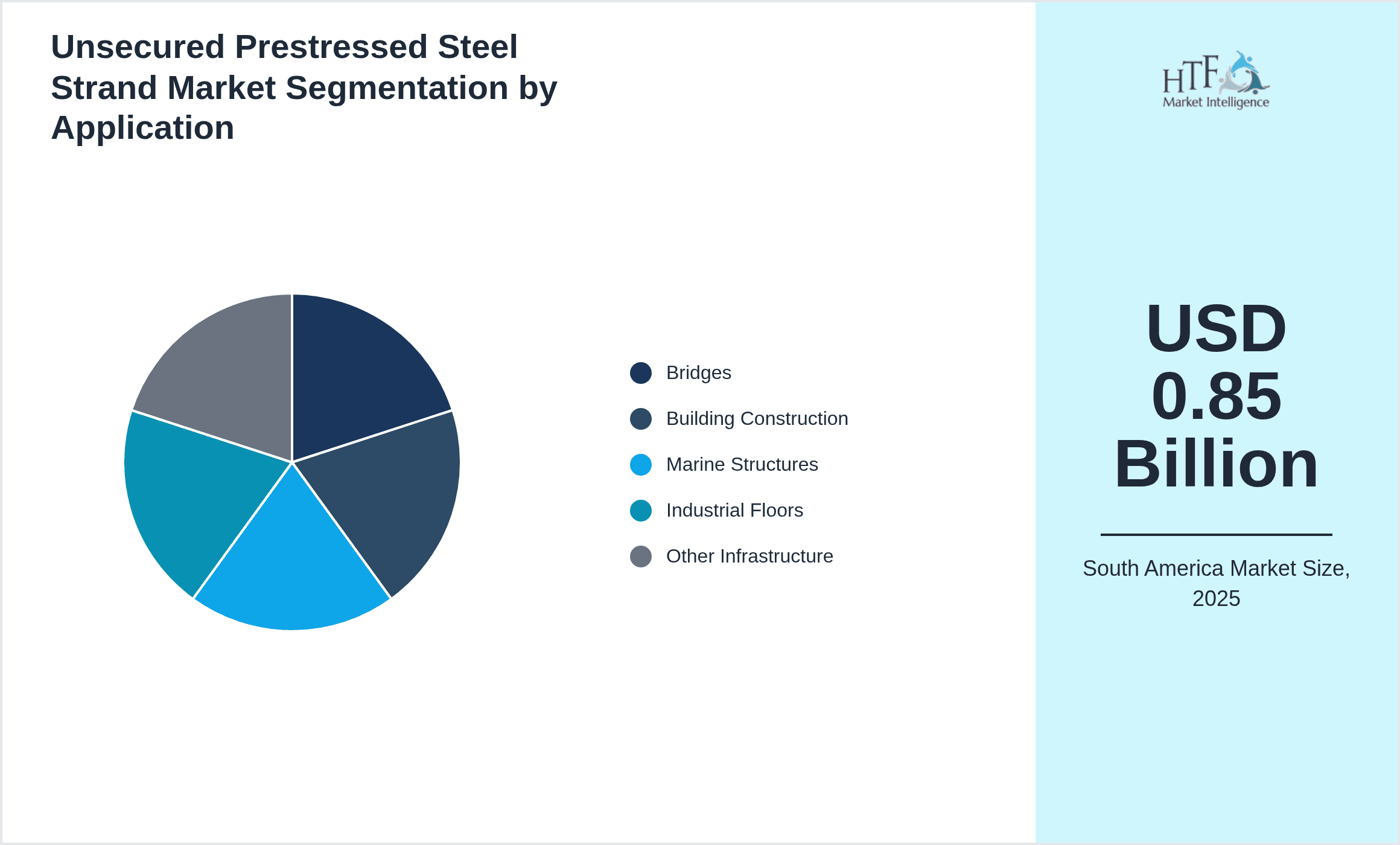
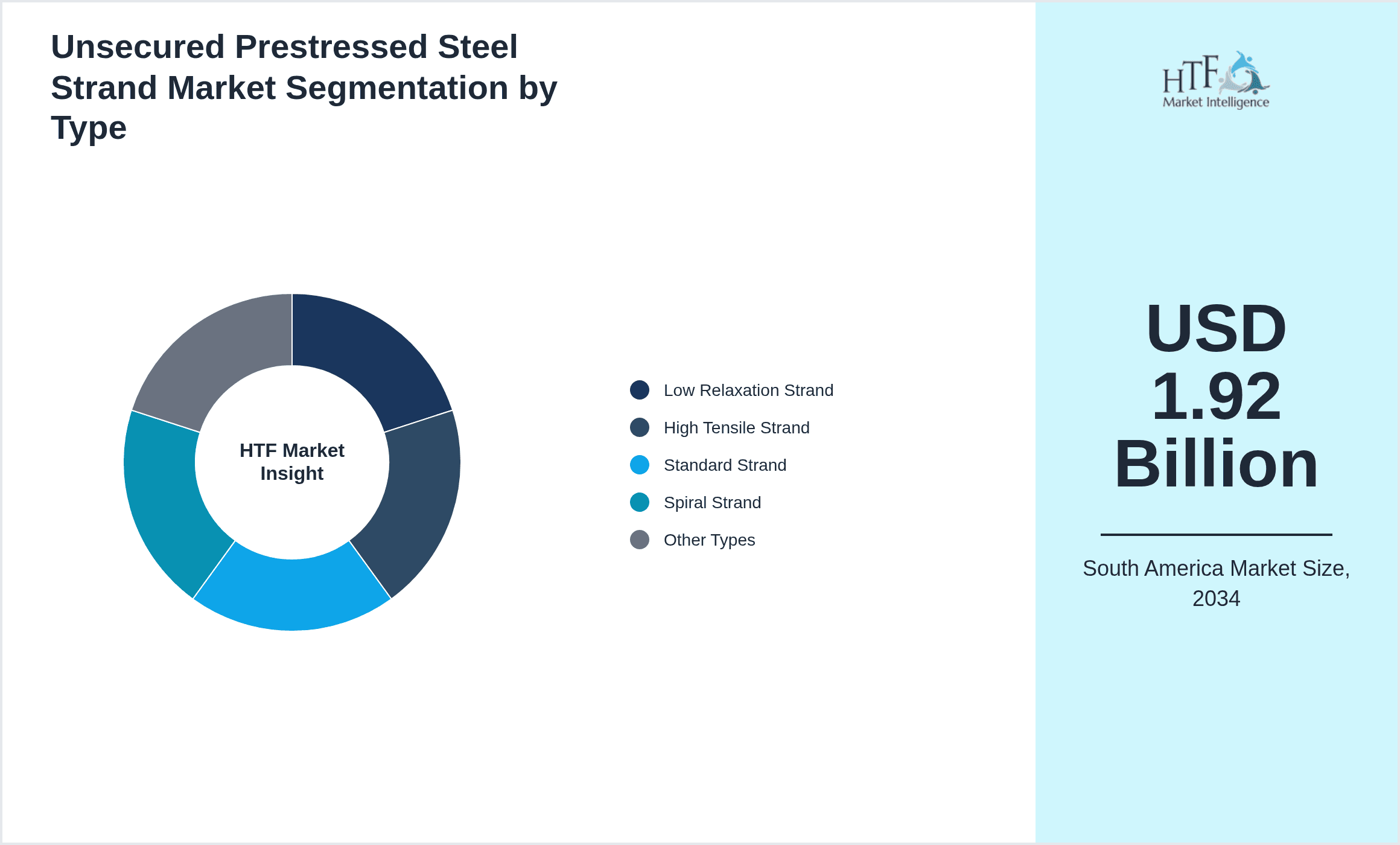
- •By Type
- ◦Low Relaxation Strand
- ◦High Tensile Strand
- ◦Standard Strand
- ◦Spiral Strand
- ◦Other Types
- •By Application
- ◦Bridges
- ◦Building Construction
- ◦Marine Structures
- ◦Industrial Floors
- ◦Other Infrastructure
- •By End-User Industry
- ◦Public Infrastructure
- ◦Commercial Construction
- ◦Residential Construction
- ◦Industrial Facilities
- •By Distribution Channel
- ◦Direct Sales
- ◦Distributors
- ◦Online Platforms
Growth Dynamics
- •Infrastructure expansion across South America, particularly in Brazil and Chile, is a primary growth driver for unsecured prestressed steel strands. Government investments in bridges, highways, and marine structures have intensified demand for high-strength, durable materials capable of supporting heavy loads and harsh environments. Additionally, urbanization and industrialization trends fuel construction activities requiring prestressed concrete solutions. Advances in manufacturing technology have improved strand quality and reduced costs, further promoting adoption. The growing focus on sustainable construction practices also supports market growth by favoring materials with enhanced longevity and reduced maintenance needs. Together, these factors create a robust growth environment for the South America unsecured prestressed steel strand market.
- •The market is witnessing a trend towards the adoption of high tensile and low relaxation strands due to their superior mechanical properties and corrosion resistance. Innovations in coating technologies and strand treatments are increasingly integrated to extend lifespan in marine and industrial applications. Digitalization and automation in manufacturing processes enhance product consistency and reduce production time. Increasing preference for prefabricated construction components utilizing prestressed strands is also notable. Moreover, environmental regulations are encouraging manufacturers to develop eco-friendly production methods, aligning with global sustainability goals. These trends collectively shape the future trajectory of the market, driving technological upgrades and expanding application scopes.
- •Supply chain disruptions and raw material price volatility pose significant restraints to the South America unsecured prestressed steel strand market. Dependence on imported high-grade steel and fluctuations in global steel prices increase production costs and impact profitability. Additionally, stringent regulatory requirements for quality and safety standards necessitate continuous compliance efforts, posing operational challenges. Limited availability of skilled labor and advanced manufacturing infrastructure in some countries further restrict market growth. Environmental concerns related to steel production emissions also generate pressure on manufacturers to adopt cleaner technologies, increasing capital expenditure. These factors collectively constrain market expansion and require strategic adaptation by industry participants.
- •Emerging opportunities in South America’s growing infrastructure sectors, particularly in renewable energy projects and urban transit systems, are creating new demand for unsecured prestressed steel strands. Expansion of port facilities and marine infrastructure in countries like Chile and Peru opens avenues for specialized strand applications. Investments in industrial floor construction driven by manufacturing growth also present significant market potential. Additionally, the rising focus on retrofit and repair of aging infrastructure provides prospects for aftermarket strand solutions. Collaborations between local firms and global technology providers can accelerate product innovation and market penetration. These opportunities offer pathways for manufacturers to diversify offerings and strengthen regional presence.
- •Challenges such as intense competition among established players and new entrants complicate market dynamics in South America. High capital requirements and technological barriers limit market entry and expansion. Variabilities in regional infrastructure funding and political uncertainties affect project pipelines and demand stability. Furthermore, logistical challenges in remote construction sites increase delivery costs and timelines. Environmental regulations impose additional compliance burdens, potentially delaying product approvals and adoption. The need to balance cost-effectiveness with quality and sustainability demands nuanced strategic planning. Addressing these challenges requires continuous innovation, strategic partnerships, and agile supply chain management to maintain competitiveness and capitalize on growth opportunities.
Market Trends
- •An accelerating trend in South America is the integration of advanced corrosion-resistant coatings on prestressed steel strands, enhancing durability in marine and industrial applications. Leading manufacturers are adopting zinc-aluminum alloy coatings and epoxy treatments to improve strand lifespan, reducing maintenance costs and boosting infrastructure resilience. This trend aligns with increasing environmental and operational demands in coastal and high-humidity regions, particularly in Brazil and Chile.
- •Digital transformation in manufacturing, including automation and real-time quality monitoring, is reshaping production processes for prestressed steel strands. Companies are investing in Industry 4.0 technologies to ensure consistency, reduce defects, and optimize resource utilization. This shift improves product reliability and accelerates time-to-market, enhancing competitive positioning within South America.
- •Growing adoption of prefabricated prestressed concrete components in infrastructure projects is a notable strategic trend. Prefabrication reduces onsite construction time and improves quality control, driving demand for standardized strand products. This approach is increasingly favored in urban construction hubs across Argentina and Colombia to meet tight project deadlines and cost constraints.
- •Sustainability initiatives are influencing material selection, with a focus on steel strands produced using environmentally friendly methods and recyclable materials. Market players are aligning product development with green building certifications and regional environmental standards, promoting long-term sustainable construction practices in South America.
- •Collaborative ecosystems involving material suppliers, construction firms, and technology providers are emerging to foster innovation and streamline project execution. Partnerships enable shared expertise in strand design, application techniques, and logistics, enhancing overall market efficiency and customer value propositions.

Market Opportunities
- •Expanding infrastructure budgets in emerging South American economies present significant opportunities for unsecured prestressed steel strand manufacturers. Target segments such as bridge renovation and port expansion projects require advanced strand solutions, enabling companies to broaden their product portfolios. Customized strand designs tailored for seismic resistance and extreme weather conditions offer differentiation potential.
- •The rising industrialization in countries like Peru and Colombia fuels demand for industrial floor applications, creating new market segments. Innovations in strand technology that improve load-bearing capacity and reduce installation complexity can capture this growing niche. Investments in smart infrastructure also open pathways for integrating sensor-enabled strands for structural health monitoring.
- •Collaborations with local construction firms and government bodies to develop region-specific standards and certifications can accelerate strand adoption. Such partnerships enhance trust and facilitate regulatory approvals, expanding market reach. Additionally, leveraging digital platforms for streamlined distribution and customer engagement can boost sales and service efficiency.
- •Geographical expansion into underserved rural and remote areas of South America offers untapped market potential. Developing cost-effective logistics and supply chain solutions tailored for these regions can create competitive advantages and stimulate demand in infrastructure projects outside metropolitan centers.
- •Investment in R&D for eco-friendly production processes and recyclable strand materials aligns with global sustainability trends, attracting environmentally conscious customers and complying with tightening regulations. This focus can differentiate market participants and open access to green financing and incentives.
Market Challenges
- •Volatility in raw material prices, particularly steel billet and wire rod, disrupts production cost stability and complicates pricing strategies for unsecured prestressed steel strand manufacturers. This unpredictability affects profit margins and supply contracts, necessitating agile procurement and financial planning.
- •Inadequate infrastructure in remote and rural areas of South America creates logistical challenges, increasing delivery times and transportation costs. These factors impede timely project completion and constrain market penetration beyond urban centers, limiting overall growth.
- •Compliance with diverse and evolving regional regulations regarding product quality, environmental impact, and workplace safety demands continuous adaptation and resource allocation. Smaller players may find it difficult to meet these standards, restricting competition and innovation.
- •Intense competition from established global steel producers and emerging local manufacturers pressures market share and drives need for continuous product differentiation. Price wars and aggressive marketing efforts can erode profitability and increase customer acquisition costs.
- •Limited availability of skilled workforce and technological infrastructure in certain South American countries hampers manufacturing efficiency and innovation capacity. This constraint affects production scalability and responsiveness to market demands.
Regulatory Framework
- •Between 2019 and 2024, South American countries including Brazil and Argentina have implemented updated construction material standards mandating enhanced tensile strength and corrosion resistance for prestressed steel strands. Compliance with ASTM and ISO certifications is increasingly enforced to ensure safety and quality in infrastructure projects, impacting product design and testing protocols.
- •Environmental regulations focusing on reducing carbon emissions during steel production have led manufacturers to adopt cleaner technologies and energy-efficient processes. Governments offer incentives for eco-friendly manufacturing, encouraging adoption of sustainable practices within the steel strand sector.
- •Safety standards for handling and installation of unsecured prestressed steel strands have been strengthened to reduce workplace accidents. Training and certification requirements for construction workers and suppliers have become mandatory in major South American markets.
- •Regional trade agreements such as Mercosur have facilitated smoother cross-border supply chains but also introduced compliance complexities regarding product origin and quality documentation. Manufacturers must navigate these frameworks to optimize market access.
- •Government initiatives to promote infrastructure resilience, including seismic retrofitting programs in Chile and Peru, have led to regulatory incentives favoring advanced prestressed steel strand technologies. These policies stimulate innovation and adoption of high-performance products.
Market Intelligence
- •15th February 2024, Gerdau S.A. launched a new line of high tensile unsecured prestressed steel strands designed specifically for marine infrastructure projects in Brazil. The product features enhanced corrosion resistance through advanced epoxy coatings, meeting stringent coastal environment requirements. This launch aims to support Brazil's expanding port development initiatives, offering improved durability and lifecycle cost savings for construction firms. Gerdau's strategic focus on sustainable and high-performance materials positions it competitively within the South American market, responding to increasing demand for specialized strand solutions. The product rollout includes technical support and training programs to ensure proper application and maximize infrastructure resilience across the region. Source: Gerdau Official Website
- •30th September 2023, Tenaris S.A. introduced an innovative low relaxation prestressed steel strand product in Argentina, featuring enhanced mechanical properties and reduced relaxation rates. Developed through integrated digital manufacturing processes, this product targets bridge and building construction segments requiring long-term structural stability. Tenaris' innovation reduces maintenance cycles and improves safety margins, aligning with regional infrastructure modernization efforts. The company plans to expand manufacturing capacity and strengthen distribution networks across South America to meet projected demand growth. This launch reinforces Tenaris' commitment to technological leadership and sustainability within the prestressed steel strand market. Source: Tenaris Press Release
- •12th May 2023, Ternium S.A. announced a strategic partnership with regional construction firms in Chile to co-develop customized prestressed steel strand solutions for seismic-resistant infrastructure. The collaboration focuses on optimizing strand design and application techniques to enhance performance in earthquake-prone areas. Ternium's expertise combined with local knowledge aims to accelerate adoption of advanced strands in public and commercial projects. This initiative is expected to drive market growth by addressing specific regional challenges and regulatory requirements, positioning Ternium as a key innovator in South America's prestressed steel sector. Source: Ternium Corporate Communications
- •5th August 2024, ArcelorMittal expanded its manufacturing footprint in Brazil by commissioning a new facility dedicated to producing unsecured prestressed steel strands with advanced coating technologies. The facility leverages automation and Industry 4.0 practices to enhance product quality and reduce lead times. This expansion supports growing infrastructure demands in Brazil and neighboring countries, enabling ArcelorMittal to strengthen its supply chain and market share. The company emphasizes sustainability initiatives integrated into production, aligning with evolving regulatory frameworks and customer expectations. This strategic move is expected to consolidate ArcelorMittal’s position as a leading player in South America’s prestressed steel strand market. Source: ArcelorMittal Annual Report
- •Recent market developments and strategic initiatives are continuously tracked through industry publications, company announcements, and regulatory filings. For the most current information, stakeholders are advised to monitor official corporate communications and recognized market intelligence platforms.
Regional Outlook
The Brazil currently holds a significant share of the market, primarily due to several key factors: increasing consumption rates, a burgeoning population, and robust economic momentum. These elements collectively drive demand, positioning this region as a leader in the market. On the other hand, Chile is rapidly emerging as the fastest-growing area within the industry. This remarkable growth can be attributed to swift infrastructure development, the expansion of various industrial sectors, and a marked increase in consumer demand. These dynamics make this region a crucial player in shaping future market growth.
In our report, we cover a comprehensive analysis of the following regions and countries:
- Brazil
- Argentina
- Chile
- Peru
- Colombia
- Rest of South America
| Feature | Details |
|---|---|
| Base Year Market Size | USD 0.85 Billion |
| Forecast Year Market Size | USD 1.92 Billion |
| CAGR | 8.2% |
| Forecast Period | 2026 to 2033 |
| YoY Growth | 7.9% |
| Scope of Report | Market is segmented by Type (Low Relaxation Strand, High Tensile Strand, Standard Strand, Spiral Strand, Other Types), Application (Bridges, Building Construction, Marine Structures, Industrial Floors, Other Infrastructure), End-User Industry (Public Infrastructure, Commercial Construction, Residential Construction, Industrial Facilities), Distribution Channel (Direct Sales, Distributors, Online Platforms) |
| Regions Covered | Brazil, Argentina, Chile, Peru, Colombia, Rest of South America |
| Key Companies | Gerdau S.A. (Brazil), Ternium S.A. (Argentina), Vallourec (France), Tenaris S.A. (Luxembourg), Nippon Steel Corporation (Japan), US Steel (United States), Aperam (Luxembourg), ArcelorMittal (Luxembourg), Voestalpine AG (Austria), Bekaert (Belgium), Cia Siderurgica Nacional (Brazil), Siderúrgica del Orinoco (Venezuela), Companhia Siderúrgica Paulista (Brazil), Acerinox (Spain), Dongkuk Steel Mill (South Korea), Gerdau Açominas (Brazil), Confab Industrial (Brazil), Metalúrgica Gerdau (Brazil), CSN Mineração (Brazil), Siderúrgica del Orinoco (Venezuela), Usiminas (Brazil), Companhia Siderúrgica Nacional (Brazil), Nucor Corporation (United States), Tata Steel (India), Sims Limited (Australia) |
South America Unsecured Prestressed Steel Strand Market Size, Growth & Revenue 2024-2034 - Table of Contents
Research enthusiast focused on transforming data uncovering into actionable insights through data-driven decision-making.
Frequently Asked Questions (FAQ):
The Compact Track Loaders market is projected to grow at a CAGR of 6.8% from 2025 to 2030, driven by increasing demand in construction and agricultural sectors.
North America currently leads the market with approximately 45% market share, followed by Europe at 28% and Asia-Pacific at 22%. The remaining regions account for 5% of the global market.
Key growth drivers include increasing construction activities, rising demand for versatile equipment in agriculture, technological advancements in track loader design, and growing preference for compact equipment in urban construction projects.