
North America CNC Sewing Machine Market Size, Growth & Revenue 2025-2034
North America CNC Sewing Machine Market is segmented by CNC Sewing Machine Type (Computerized Flatbed Sewing Machines, Computerized Cylinder-bed Sewing Machines, Embroidery Machines, Overlock Machines, Bartack Machines), Application Sector (Apparel Manufacturing, Automotive Interiors, Home Furnishings, Industrial Textiles, Technical Textiles), Service Type (Installation and Integration, Maintenance and Repair, Software Updates and Support, Training and Consulting), Deployment Model (On-Premise, Cloud-Enabled, Hybrid), and Geography (United States, Canada, Mexico)
Pricing
Report Overview
Executive Summary
- •The North America CNC Sewing Machine market is defined by its focus on the integration of computerized control systems with traditional sewing machinery to enable high-precision, automated stitching processes. This market serves critical applications in apparel manufacturing, automotive interiors, home furnishings, industrial textiles, and technical textiles, catering to a broad spectrum of industrial users. The scope includes various machine types such as computerized flatbed and cylinder-bed machines, embroidery machines, overlock machines, and bartack machines, all designed to improve productivity, accuracy, and customization capabilities. The value chain extends from component suppliers and CNC technology developers to manufacturers, distributors, and end-users, supported by maintenance and technical services. The market benefits from ongoing technological advancements including AI-enabled pattern programming and IoT connectivity for real-time monitoring, which drive operational efficiencies and reduce labor dependency. North America’s robust textile and automotive sectors are key markets, with increasing demand for automation and high-quality output fueling growth. The market's strategic importance spans manufacturing efficiency, product innovation, and competitive differentiation across industries.
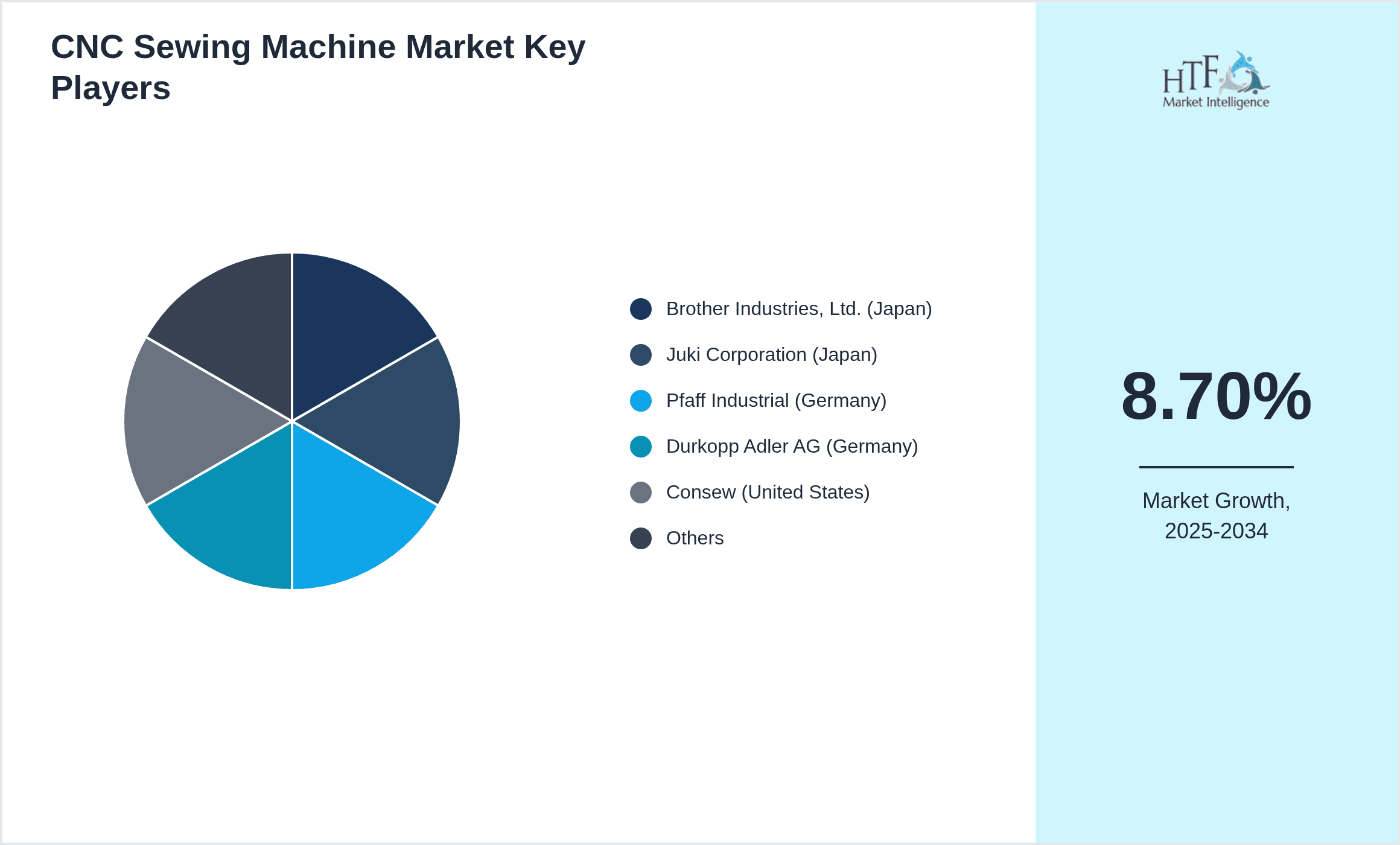
- •Key market highlights include a strong CAGR of 8.7% projected from 2025 to 2034, supported by a base market size of USD 1.85 Billion in 2025 and a forecast reaching USD 3.95 Billion by 2034. The United States dominates market share at 62%, driven by advanced manufacturing infrastructure and high adoption of automation, while Mexico is the fastest growing country with an 11.2% CAGR, fueled by expanding textile manufacturing and growing nearshoring trends. Computerized flatbed sewing machines currently lead product segments, whereas embroidery machines offer the fastest growth prospects due to rising demand for customized textile products. Market growth is bolstered by digital transformation, increasing labor costs, and the push for sustainable, efficient production methods.
- •The North America CNC Sewing Machine market presents significant value propositions by enabling manufacturers to enhance product quality, reduce production time, and cut operational costs through automation. Strategic importance is emphasized for apparel, automotive, and home furnishing sectors, where precision and speed are critical. Businesses investing in CNC technologies gain competitive advantages via scalability, reduced waste, and the ability to meet dynamic consumer preferences. Stakeholders including machine manufacturers, software providers, and end users benefit from evolving industry standards and government incentives supporting automation and advanced manufacturing technology adoption.

Competitive Landscape
The North America CNC Sewing Machine market features a competitive environment characterized by a mix of global manufacturers and regional specialists focused on innovation, quality, and customized solutions. Competitive strategies revolve around technological advancements such as AI-driven stitch pattern recognition and IoT-enabled machine monitoring, which enhance operational efficiency and reduce downtime. Market participants prioritize strategic partnerships with textile manufacturers and software providers to deliver integrated solutions that address evolving customer needs. Mergers and acquisitions serve as a growth tactic to consolidate technological capabilities and expand geographic reach. Pricing strategies balance affordability with advanced features, targeting diverse customer segments from small apparel units to large industrial fabricators. Distribution channels include direct sales, authorized dealers, and online platforms, ensuring broad market access. Barriers to entry include the need for technical expertise and compliance with stringent safety and environmental standards. Regional competition is intensified by localized demand patterns and supply chain dynamics. Future competitive trends indicate increasing adoption of sustainable materials and smart factory integration, fostering continuous innovation and market expansion.
Leading Companies in CNC Sewing Machine Market
- •Brother Industries, Ltd. (Japan)
- •Juki Corporation (Japan)
- •Pfaff Industrial (Germany)
- •Durkopp Adler AG (Germany)
- •Consew (United States)
- •Janome Sewing Machine Co., Ltd. (Japan)
- •Singer Corporation (United States)
- •Union Special (United States)
- •ZOJE Sewing Machine Co., Ltd. (China)
- •Tajima Industries Ltd. (Japan)
- •Barudan Co., Ltd. (Japan)
- •Yamato Sewing Machine Manufacturing Co., Ltd. (Japan)
- •Gemsy Industrial Co., Ltd. (Taiwan)
- •Seiko Sewing Machine Co., Ltd. (Japan)
- •Highlead Industrial Co., Ltd. (Taiwan)
- •Siruba Industrial Co., Ltd. (Taiwan)
- •Jack Sewing Machine Co., Ltd. (China)
- •Mitsubishi Electric Corporation (Japan)
- •Ricoma International Corporation (United States)
- •Melco International Inc. (United States)
- •Singer Vietnam Company (Vietnam)
- •Husqvarna Viking (Sweden)
- •Toyota Industries Corporation (Japan)
- •Simthread (United Kingdom)
- •Newlong Machine Works Co., Ltd. (Japan)
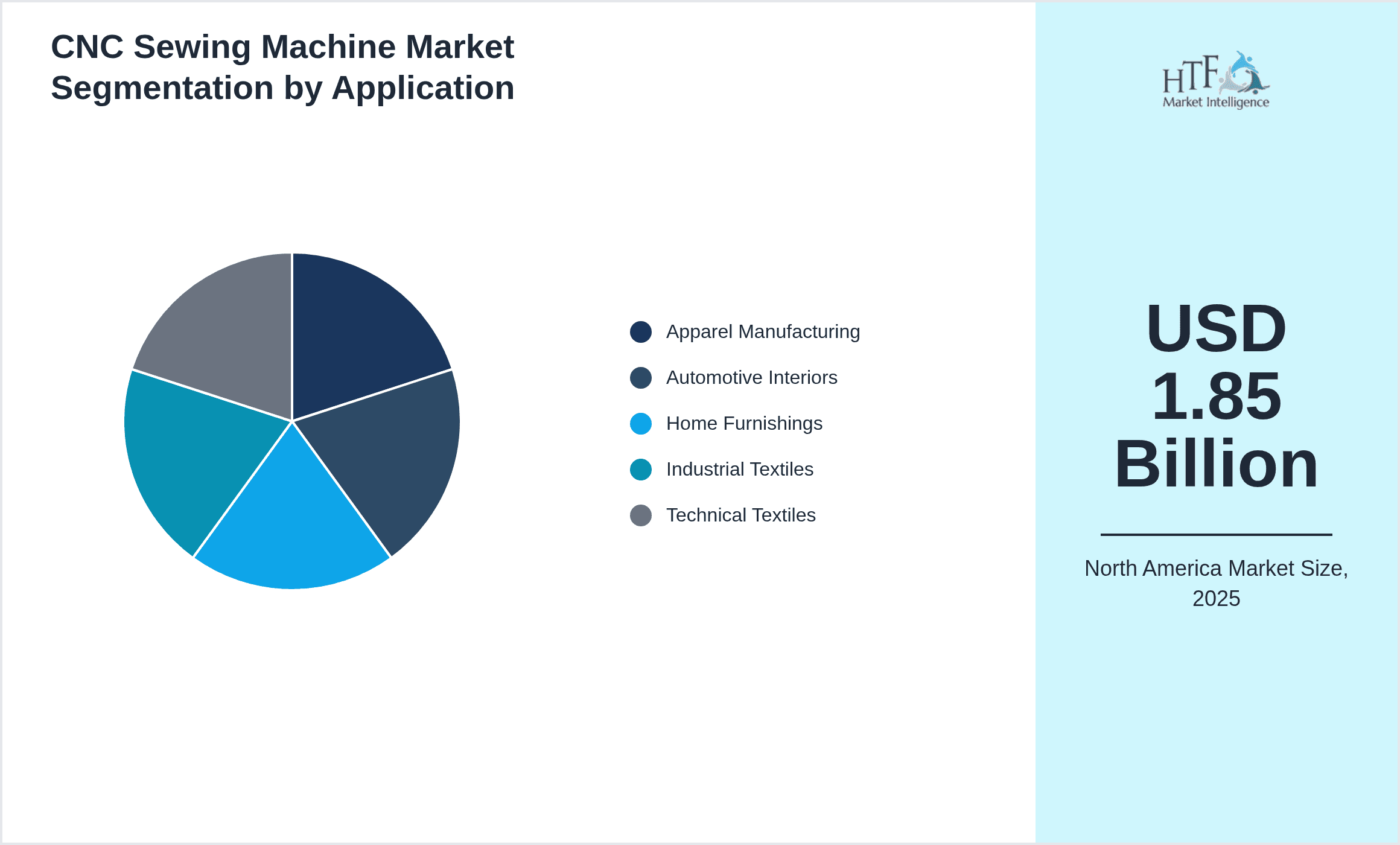
Market Breakdown
- •By CNC Sewing Machine Type
- ◦Computerized Flatbed Sewing Machines
- ◦Computerized Cylinder-bed Sewing Machines
- ◦Embroidery Machines
- ◦Overlock Machines
- ◦Bartack Machines
- •By Application Sector
- ◦Apparel Manufacturing
- ◦Automotive Interiors
- ◦Home Furnishings
- ◦Industrial Textiles
- ◦Technical Textiles
- •By Service Type
- ◦Installation and Integration
- ◦Maintenance and Repair
- ◦Software Updates and Support
- ◦Training and Consulting
- •By Deployment Model
- ◦On-Premise
- ◦Cloud-Enabled
- ◦Hybrid
Growth Dynamics
- •Increasing demand for automation in textile and apparel manufacturing drives the adoption of CNC sewing machines, enabling higher production efficiency and consistent quality. For example, major garment manufacturers in the United States have integrated CNC technology to reduce manual labor and minimize errors.
- •Rising labor costs and shortages in North America are compelling manufacturers to invest in CNC sewing solutions to maintain competitiveness and meet tight production schedules, particularly in the automotive and home furnishing sectors.
- •Technological advancements such as AI-enabled stitching algorithms and IoT-based machine monitoring enhance machine capabilities, providing real-time diagnostics and predictive maintenance, which improves overall equipment effectiveness.
- •Growing consumer preference for customized and high-quality textile products fuels demand for embroidery and bartack CNC machines, which offer intricate designs and reinforced stitching with precision.
- •Government initiatives supporting advanced manufacturing and automation, along with incentives for sustainable production, create a favorable environment for CNC sewing machine market growth in North America.
- •Expansion of nearshoring trends in Mexico attracts investments in textile manufacturing facilities equipped with CNC sewing technologies to serve regional markets efficiently.
- •Collaborations between machine manufacturers and software developers foster innovation, enabling seamless integration of CNC machines into Industry 4.0 frameworks prevalent in North American factories.

Market Trends
- •Integration of AI and machine learning algorithms into CNC sewing machines is becoming mainstream, allowing machines to self-optimize stitching patterns and reduce fabric wastage.
- •There is a growing adoption of cloud-enabled CNC systems that facilitate remote monitoring, diagnostics, and software updates, improving operational agility.
- •Sustainability trends lead manufacturers to seek CNC machines that support eco-friendly threads and reduce energy consumption through optimized stitching cycles.
- •Customization and personalization in fashion drive demand for CNC embroidery machines, enabling small batch production with high design complexity.
- •Collaborative robots (cobots) are increasingly integrated with CNC sewing machines to enhance human-machine interaction and improve workplace safety.
- •Manufacturers are focusing on modular CNC machines that allow easy upgrades and adaptations to changing production requirements.
- •Data analytics derived from CNC machine operations are used to improve production planning and reduce downtime in textile plants.
Market Opportunities
- •The rising demand for technical textiles in automotive and healthcare sectors offers significant growth opportunities for CNC sewing machine manufacturers to develop specialized stitching solutions.
- •Emerging small and medium apparel manufacturers in Mexico seeking automation present market entry potential for cost-effective CNC sewing machine models.
- •Advancements in smart factory technologies open opportunities for integrated CNC sewing machine systems that communicate with other production equipment for seamless workflow.
- •Expansion of e-commerce and direct-to-consumer brands increases the need for flexible, on-demand CNC sewing operations capable of handling custom orders rapidly.
- •Investment in training and development services around CNC technology can help manufacturers optimize utilization and increase customer satisfaction.
- •Partnerships with software firms to develop proprietary stitching software tailored to North American manufacturing needs can create competitive advantages.
- •Growing sustainability mandates encourage the development of CNC machines that support recycled materials and minimize environmental impact.
Market Challenges
- •High initial capital investment for advanced CNC sewing machines limits adoption among small-scale manufacturers despite long-term cost benefits.
- •Technical skill shortages in operating and maintaining CNC equipment present barriers to smooth integration in some North American textile plants.
- •Rapid technological changes require continuous upgrades, leading to concerns over equipment obsolescence and additional costs.
- •Supply chain disruptions and component shortages, exacerbated by global events, impact the timely delivery and servicing of CNC sewing machines.
- •Complex regulatory compliance related to safety and environmental standards increases operational costs for manufacturers and end users.
- •Competition from low-cost imports challenges domestic CNC machine makers to differentiate on quality and service.
- •Integration challenges with legacy systems in established factories slow the adoption of fully automated CNC solutions.
Regulatory Framework
- •Between 2020 and 2025, the Occupational Safety and Health Administration (OSHA) updated machinery safety standards requiring enhanced guarding and emergency stop functions on CNC sewing machines, improving workplace safety compliance across North America.
- •Environmental regulations like the U.S. EPA’s Clean Air Act amendments mandate lower emissions from manufacturing plants, encouraging adoption of energy-efficient CNC sewing machines with reduced power consumption.
- •The North American Free Trade Agreement (NAFTA) and its successor USMCA influence tariff structures and import-export policies, impacting CNC sewing machine component sourcing and pricing strategies between the United States, Canada, and Mexico.
- •State-level regulations, such as California’s Proposition 65, enforce strict chemical and material safety disclosures for textile production equipment, affecting CNC machine manufacturers’ compliance requirements.
- •Government initiatives promoting Industry 4.0 adoption provide incentives and funding support for manufacturers investing in smart CNC sewing technologies, facilitating modernization of North American textile operations.
Market Intelligence
- •15th January 2025, Brother Industries, Ltd. announced the launch of its new generation computerized flatbed CNC sewing machine tailored for North American apparel manufacturers. The machine features AI-powered stitch optimization, energy-efficient motors, and cloud connectivity for real-time performance monitoring. This launch aims to enhance production speed and reduce fabric waste, aligning with sustainability goals. Brother plans to support the product with comprehensive training programs and aftermarket services to strengthen its regional market presence. Source: Brother Industries Official Press Release.
- •3rd March 2025, Juki Corporation introduced an advanced embroidery CNC sewing machine model equipped with multi-head synchronization and enhanced software for intricate design customization. Targeted at high-end fashion and home furnishing manufacturers, this machine supports faster turnaround times and superior stitch accuracy. Juki emphasized its commitment to integrating IoT features that enable predictive maintenance and remote diagnostics, reducing downtime risk. The product launch is expected to strengthen Juki’s competitive positioning in the North American market. Source: Juki Corporation Newsroom.
- •22nd May 2025, Ricoma International Corporation announced a strategic partnership with a leading North American software developer to co-create cloud-based CNC sewing solutions. The collaboration focuses on developing user-friendly interfaces, advanced pattern libraries, and seamless integration with factory management systems. This initiative supports Ricoma’s vision to expand its footprint in small and medium-sized apparel manufacturing sectors by offering scalable and affordable CNC sewing technologies. The partnership underscores growing industry trends toward digital transformation. Source: Ricoma International Press Release.
- •10th September 2024, Singer Corporation completed the acquisition of a regional CNC sewing machine distributor to enhance its direct sales and service capabilities across Canada and Mexico. This strategic move aims to improve customer access to Singer’s product portfolio and reinforce after-sales support infrastructure. The acquisition is expected to accelerate market penetration and provide localized solutions aligned with evolving manufacturing needs. This reflects broader industry consolidation trends driven by competitive pressures and customer demand for integrated service models. Source: Singer Corporation Investor Relations.
Regional Outlook
The United States currently holds a significant share of the market, primarily due to several key factors: increasing consumption rates, a burgeoning population, and robust economic momentum. These elements collectively drive demand, positioning this region as a leader in the market. On the other hand, Mexico is rapidly emerging as the fastest-growing area within the industry. This remarkable growth can be attributed to swift infrastructure development, the expansion of various industrial sectors, and a marked increase in consumer demand. These dynamics make this region a crucial player in shaping future market growth.
In our report, we cover a comprehensive analysis of the following regions and countries:
- United States
- Canada
- Mexico
| Feature | Details |
|---|---|
| Base Year Market Size | USD 1.85 Billion |
| Forecast Year Market Size | USD 3.95 Billion |
| CAGR | 8.7% |
| Forecast Period | 2026 to 2033 |
| YoY Growth | 8.4% |
| Scope of Report | Market is segmented by CNC Sewing Machine Type (Computerized Flatbed Sewing Machines, Computerized Cylinder-bed Sewing Machines, Embroidery Machines, Overlock Machines, Bartack Machines), Application Sector (Apparel Manufacturing, Automotive Interiors, Home Furnishings, Industrial Textiles, Technical Textiles), Service Type (Installation and Integration, Maintenance and Repair, Software Updates and Support, Training and Consulting), Deployment Model (On-Premise, Cloud-Enabled, Hybrid) |
| Regions Covered | United States, Canada, Mexico |
| Key Companies | Brother Industries, Ltd. (Japan), Juki Corporation (Japan), Pfaff Industrial (Germany), Durkopp Adler AG (Germany), Consew (United States), Janome Sewing Machine Co., Ltd. (Japan), Singer Corporation (United States), Union Special (United States), ZOJE Sewing Machine Co., Ltd. (China), Tajima Industries Ltd. (Japan), Barudan Co., Ltd. (Japan), Yamato Sewing Machine Manufacturing Co., Ltd. (Japan), Gemsy Industrial Co., Ltd. (Taiwan), Seiko Sewing Machine Co., Ltd. (Japan), Highlead Industrial Co., Ltd. (Taiwan), Siruba Industrial Co., Ltd. (Taiwan), Jack Sewing Machine Co., Ltd. (China), Mitsubishi Electric Corporation (Japan), Ricoma International Corporation (United States), Melco International Inc. (United States), Singer Vietnam Company (Vietnam), Husqvarna Viking (Sweden), Toyota Industries Corporation (Japan), Simthread (United Kingdom), Newlong Machine Works Co., Ltd. (Japan) |
North America CNC Sewing Machine Market Size, Growth & Revenue 2025-2034 - Table of Contents
Frequently Asked Questions (FAQ):
The Compact Track Loaders market is expected to see value worth 5.3 Billion in 2025.
North America currently leads the market with approximately 45% market share, followed by Europe at 28% and Asia-Pacific at 22%. The remaining regions account for 5% of the global market.
Key growth drivers include increasing construction activities, rising demand for versatile equipment in agriculture, technological advancements in track loader design, and growing preference for compact equipment in urban construction projects.