
Asia-Pacific Cryopreservation Bag Market Scope & Changing Dynamics 2025-2034
Asia-Pacific Cryopreservation Bag Market is segmented by Cryopreservation Bag Type (Sterile Cryopreservation Bags, Non-Sterile Cryopreservation Bags, Single Chamber Bags, Double Chamber Bags, Multi-Chamber Bags), Application Area (Biobanking, Assisted Reproductive Technology, Stem Cell Storage, Blood and Plasma Storage, Tissue Preservation), Service Type (Custom Manufacturing, Standard Off-the-Shelf Products, Contract Packaging, After-Sales Support Services), Packaging and Deployment Model (Cryogenic Liquid Storage Bags, Vapor Phase Storage Bags, Bulk Packaging, Individual Packaging), and Geography (Japan, China, Southeast Asia, India, Australia, South Korea, Others)
Pricing
Report Overview
Executive Summary
- •The Asia-Pacific Cryopreservation Bag market is defined by its role in providing specialized containers that facilitate the storage of biological specimens at cryogenic temperatures, ensuring sample integrity and longevity. These bags are utilized extensively in applications such as biobanking, assisted reproductive technology (ART), stem cell preservation, blood and plasma storage, and tissue preservation. The market scope covers raw material procurement, manufacturing processes emphasizing sterile and multi-chamber designs, distribution networks, and end-user segments including hospitals, fertility clinics, research institutions, and biobanks. With the region's growing emphasis on regenerative medicine, stem cell therapies, and expanding healthcare infrastructure, demand for advanced cryopreservation solutions is surging. The value chain also integrates regulatory compliance to ensure safety and efficacy, influencing product innovation and market penetration. Increasing investments in biotechnology research and rising chronic disease prevalence further propel market growth, making cryopreservation bags a critical component in Asia-Pacific's healthcare and life sciences sectors.
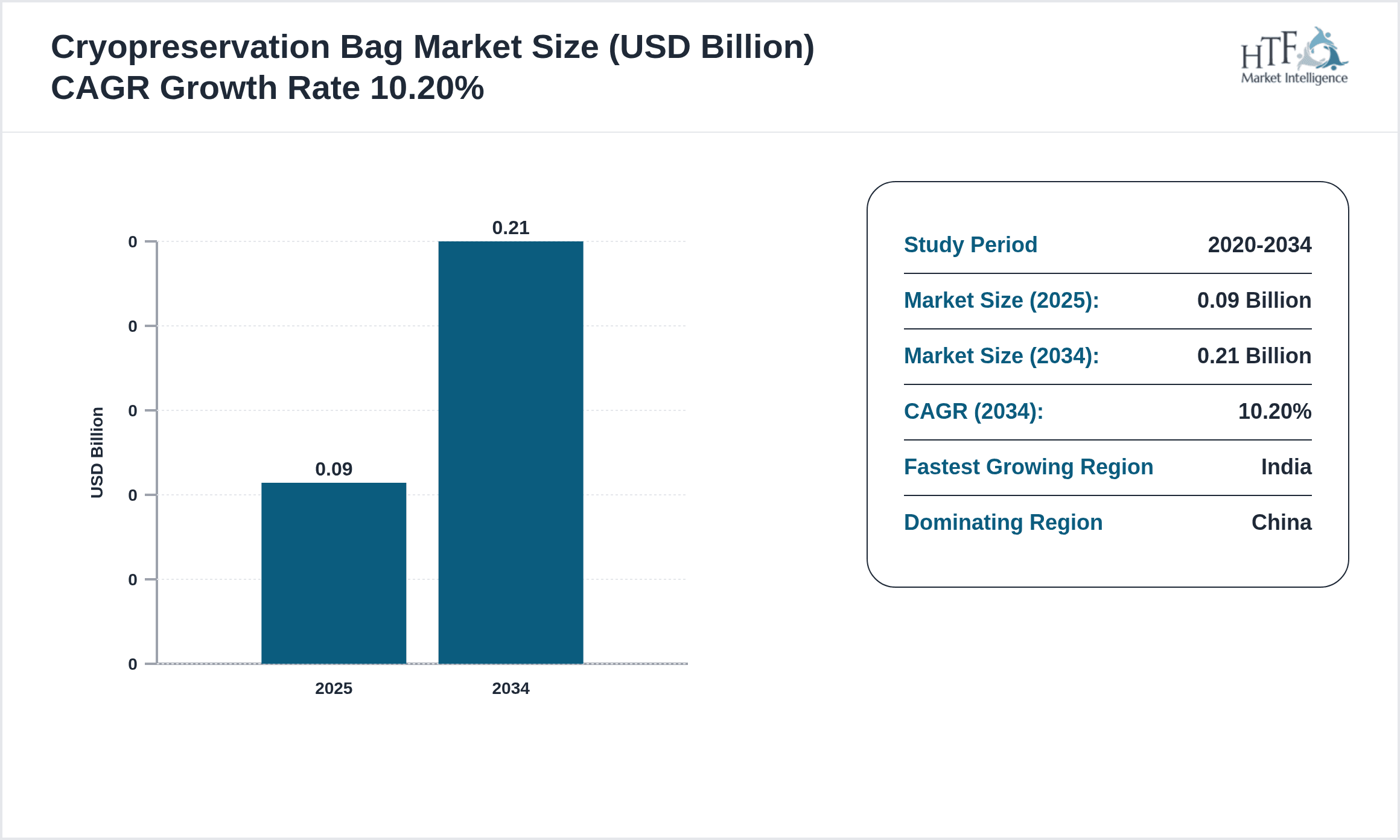
- •Key highlights indicate a robust CAGR of 10.2% from 2025 to 2034, with the market expanding from USD 85.3 million in 2025 to an expected USD 210.7 million by 2034. China dominates the region’s market share at 38%, while India emerges as the fastest growing country with a CAGR of 13.5%. Product innovation focusing on sterile and multi-chamber bags drives competitive advantage. Growth is further fueled by increasing biobanking activities and government initiatives promoting healthcare modernization.
- •This market offers significant strategic value to healthcare providers, biotechnology firms, and research organizations by enabling reliable long-term preservation of biological materials critical for therapeutic and diagnostic applications. Cryopreservation bags facilitate advancements in personalized medicine and cell therapy, supporting Asia-Pacific’s transition towards cutting-edge healthcare technologies. Stakeholders benefit from expanding opportunities in emerging economies alongside mature markets with well-established healthcare frameworks.
Competitive Landscape
The Asia-Pacific Cryopreservation Bag market exhibits a competitive environment characterized by strategic product innovation, expanding manufacturing capacities, and regional partnerships. Leading companies focus on developing sterile, multi-chamber, and customizable bag solutions to meet diverse clinical and research requirements. Market players leverage advanced polymer technologies and stringent quality control to differentiate their offerings. Distribution channels are optimized to ensure timely delivery to hospitals, fertility clinics, and biobanks. Competitive strategies include mergers and acquisitions to consolidate market presence and geographic expansion through local partnerships. Pricing strategies reflect balancing cost-efficiency with premium product quality, particularly in emerging markets. Technology adoption, such as improved sealing and labeling systems, enhances product usability and traceability. Market entry barriers remain moderate due to regulatory compliance demands and capital-intensive production processes. Regional competition is intensified by growing healthcare investments in China, India, and Southeast Asia, fostering innovation and accessibility. Future trends point towards integration of digital tracking and IoT-enabled monitoring to enhance cryopreservation management and supply chain transparency.
Prominent Players in Cryopreservation Bag Market
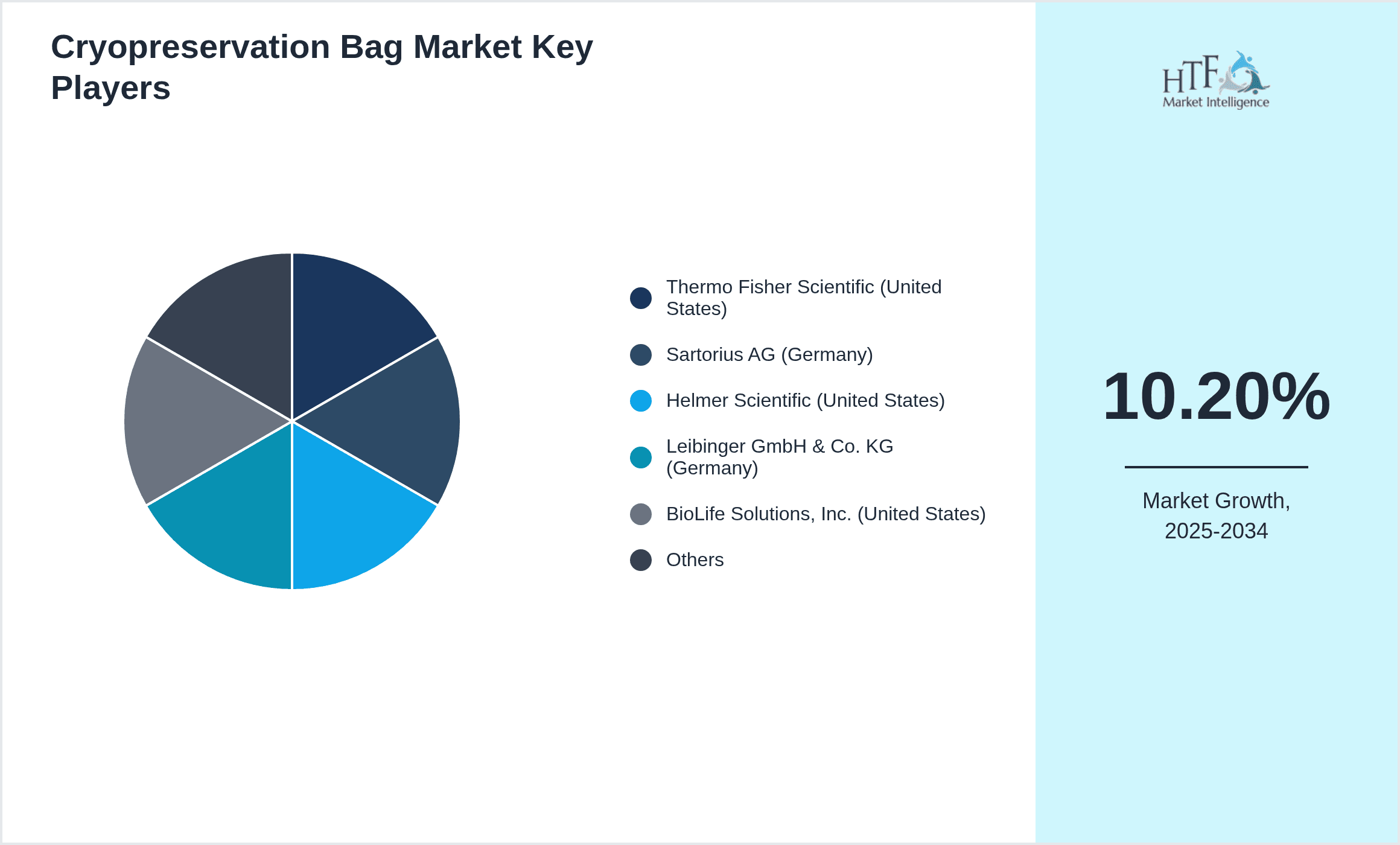
- •Thermo Fisher Scientific (United States)
- •Sartorius AG (Germany)
- •Helmer Scientific (United States)
- •Leibinger GmbH & Co. KG (Germany)
- •BioLife Solutions, Inc. (United States)
- •Cryo Bio System (France)
- •Nunc A/S (Denmark)
- •Corning Incorporated (United States)
- •Greiner Bio-One International GmbH (Austria)
- •Asahi Kasei Corporation (Japan)
- •Becton, Dickinson and Company (United States)
- •CryoMed (South Korea)
- •MacoPharma (France)
- •Simport Scientific Inc. (Canada)
- •Biologix Group Limited (China)
- •SPL Life Sciences (India)
- •Alcor Scientific (United States)
- •Cryoport Systems (United States)
- •Wego Group (China)
- •Nipro Corporation (Japan)
- •Stemcell Technologies Inc. (Canada)
- •Lifefactory (United States)
- •Therapak Corporation (United States)
- •Biosafe SA (Switzerland)
- •CryoLife, Inc. (United States)
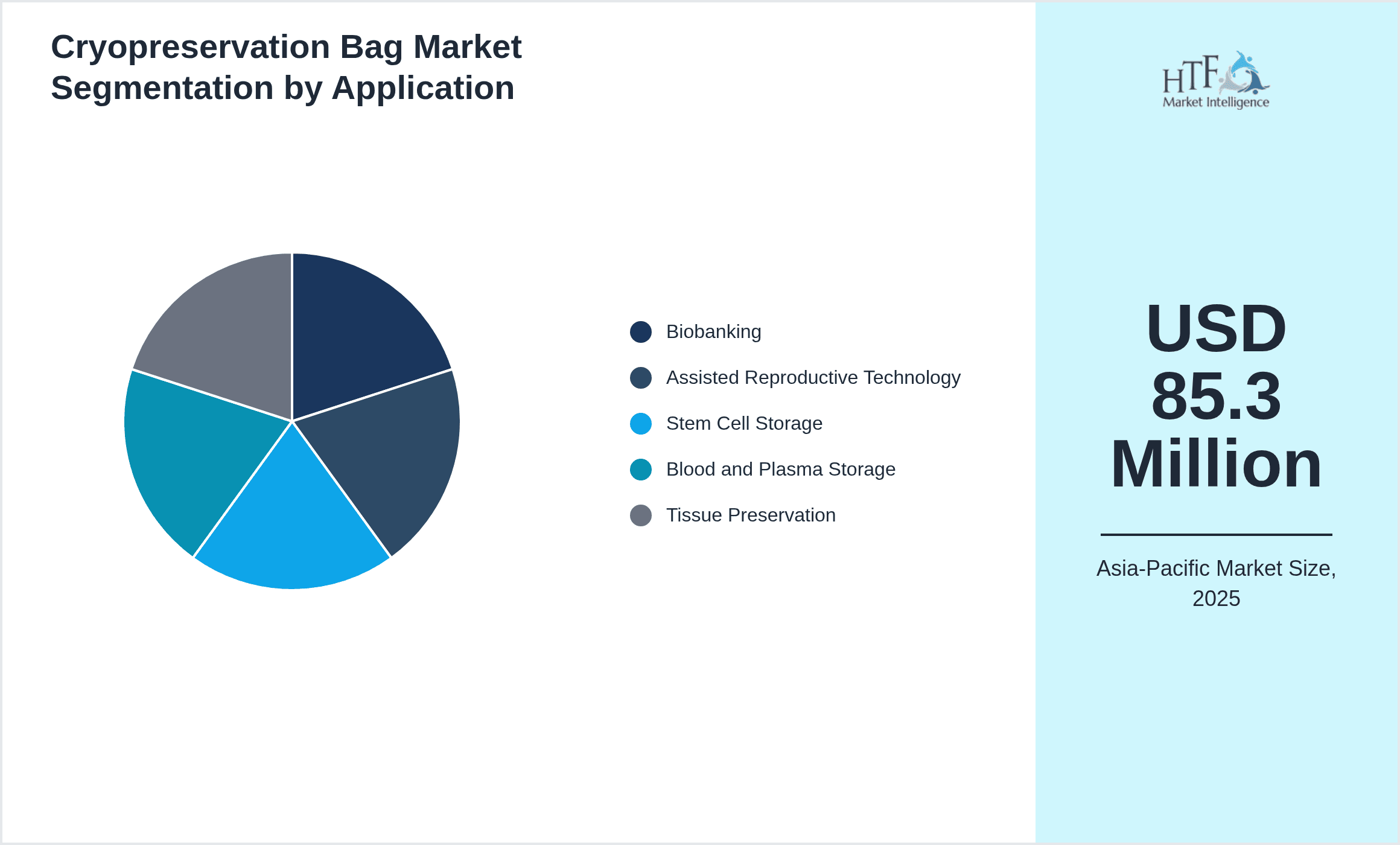
Market Breakdown
- •By Cryopreservation Bag Type
- ◦Sterile Cryopreservation Bags
- ◦Non-Sterile Cryopreservation Bags
- ◦Single Chamber Bags
- ◦Double Chamber Bags
- ◦Multi-Chamber Bags
- •By Application Area
- ◦Biobanking
- ◦Assisted Reproductive Technology
- ◦Stem Cell Storage
- ◦Blood and Plasma Storage
- ◦Tissue Preservation
- •By Service Type
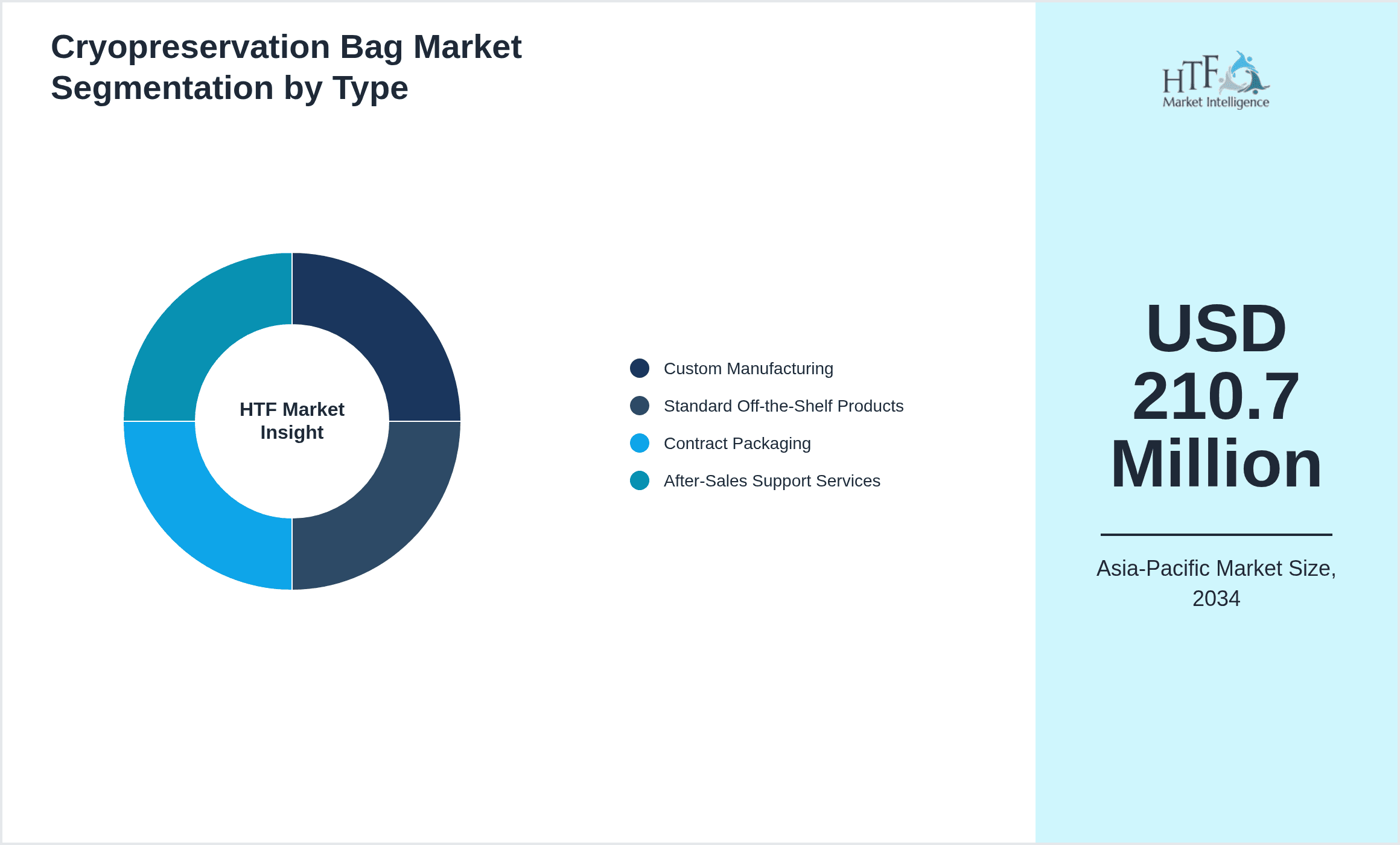
- ◦Custom Manufacturing
- ◦Standard Off-the-Shelf Products
- ◦Contract Packaging
- ◦After-Sales Support Services
- •By Packaging and Deployment Model
- ◦Cryogenic Liquid Storage Bags
- ◦Vapor Phase Storage Bags
- ◦Bulk Packaging
- ◦Individual Packaging
Growth Dynamics
- •The Asia-Pacific Cryopreservation Bag market growth is driven by the expanding biobanking sector, fueled by increasing stem cell research and regenerative medicine initiatives. For example, governments in China and India are investing heavily in biotechnology infrastructure, which enhances demand for reliable cryopreservation solutions.
- •Rising infertility rates and the growing adoption of assisted reproductive technologies (ART) in countries like Japan and South Korea are significantly boosting the demand for sterile and multi-chamber cryopreservation bags designed specifically for gamete and embryo storage.
- •Technological advancements, such as improved polymer materials and enhanced sealing mechanisms, have increased bag durability and reduced contamination risks, thereby encouraging healthcare providers to upgrade existing storage solutions, particularly in well-developed urban centers.
- •The proliferation of personalized medicine and cell therapies requires efficient preservation of patient-specific biological samples, contributing to increased product customization and higher market penetration across Asia-Pacific healthcare facilities.
- •Government regulatory mandates emphasizing safety, sterility, and traceability for cryopreservation products are pushing manufacturers to innovate and comply, which in turn stimulates market growth by assuring end-user confidence.
- •Expanding healthcare infrastructure in emerging Asia-Pacific countries, coupled with increasing awareness about chronic diseases and stem cell banking, is expected to sustain a healthy demand trajectory over the forecast period.
- •Investments by multinational companies to establish local manufacturing and distribution facilities in Asia-Pacific enhance product availability and reduce costs, supporting market expansion particularly in developing economies.
Market Trends
- •Increasing integration of advanced polymers exhibiting ultra-low temperature resistance and biocompatibility is a key trend, improving the performance and reliability of cryopreservation bags across clinical and research applications.
- •The rise of multi-chamber cryopreservation bags that allow simultaneous storage of multiple sample types is gaining traction, offering enhanced operational efficiency and space-saving benefits in biobanking facilities.
- •Digitalization of sample tracking through barcoding and RFID integration within cryopreservation bags is becoming more prevalent, enabling precise sample management and reducing errors in storage and retrieval.
- •Sustainability initiatives promoting eco-friendly materials and reusable cryopreservation systems are influencing product development, reflecting broader healthcare industry efforts to reduce environmental impact.
- •Strategic collaborations between cryopreservation bag manufacturers and biotechnology firms are fostering co-development of customized solutions tailored to emerging therapies, enhancing market differentiation.
- •An increasing number of clinical trials focusing on stem cell and regenerative therapies within the region are driving demand for reliable cryopreservation consumables, including bags with enhanced storage capabilities.
- •Growth in assisted reproductive technology clinics across Asia-Pacific, particularly in India and Southeast Asia, is encouraging adoption of specialized cryopreservation products designed for embryo and gamete preservation.
Market Opportunities
- •Emerging markets in Southeast Asia and India offer substantial growth opportunities due to increasing healthcare expenditure and expanding fertility clinics requiring advanced cryopreservation solutions.
- •Innovations in multi-chamber bag technology provide avenues for product differentiation and entry into niche applications such as simultaneous preservation of multiple cell types or tissues.
- •Collaborations with research institutions and biobanks to co-develop customized bags tailored to specific sample types and storage conditions can open new revenue streams and strengthen market positioning.
- •Growing government initiatives supporting stem cell research and regenerative medicine in countries like China and Japan present opportunities for manufacturers to align product development with regulatory priorities.
- •Expanding after-sales support services and contract manufacturing models can enhance customer loyalty and provide competitive advantages in the Asia-Pacific cryopreservation bag market.
- •Digital integration through smart labeling and traceability technologies is an untapped opportunity to improve sample management and compliance, appealing to sophisticated end-users in advanced healthcare systems.
- •Sustainability-focused product innovation using biodegradable or recyclable materials can attract environmentally conscious buyers and comply with tightening regulatory standards.
Market Challenges
- •Stringent regulatory requirements across diverse Asia-Pacific countries impose challenges in product certification, delaying market entry and increasing compliance costs for manufacturers.
- •High production costs associated with sterile and multi-chamber cryopreservation bags limit affordability in emerging markets, restricting broader adoption among smaller healthcare providers.
- •Lack of standardized protocols for cryopreservation bag usage and handling across different healthcare institutions leads to inconsistent product performance and customer dissatisfaction.
- •Supply chain disruptions caused by geopolitical tensions and logistic complexities in Asia-Pacific can impact timely availability of raw materials and finished products.
- •Limited awareness and training about advanced cryopreservation technologies in rural and semi-urban healthcare facilities constrain market penetration beyond metropolitan areas.
- •Competition from low-cost unbranded products compromises quality assurance, challenging established players to maintain market share without eroding margins.
- •Technological obsolescence risk due to rapid innovation cycles necessitates continuous R&D investment, which can strain smaller manufacturers financially.
Regulatory Framework
- •From 2020 to 2025, several Asia-Pacific countries implemented stringent medical device regulations mandating certification of cryopreservation bags under ISO 13485 and compliance with local health authorities such as China’s NMPA and Japan’s PMDA. These regulations require rigorous sterility validation and biocompatibility testing, ensuring product safety and effectiveness in clinical applications.
- •The ASEAN Medical Device Directive (AMDD) has been progressively enforced across Southeast Asian nations, harmonizing regulatory requirements and facilitating smoother market entry for cryopreservation bag manufacturers within the region.
- •In India, the Medical Device Rules 2017 came into full effect by 2025, requiring manufacturers to register products with the Central Drugs Standard Control Organization (CDSCO), including adherence to Good Manufacturing Practices and post-market surveillance protocols.
- •Environmental regulations addressing disposal of medical waste, including used cryopreservation bags, have been strengthened in Australia and South Korea, compelling manufacturers to incorporate eco-friendly materials and encourage compliant disposal methods.
- •Government initiatives across Asia-Pacific emphasize quality assurance and traceability, resulting in mandatory implementation of unique device identification (UDI) systems to monitor cryopreservation bag distribution and usage, enhancing patient safety and regulatory oversight.
Market Intelligence
- •15th March 2025, Thermo Fisher Scientific announced the launch of a new line of multi-chamber sterile cryopreservation bags specifically designed for the Asia-Pacific market. These bags incorporate advanced polymer technology ensuring enhanced durability at ultra-low temperatures and feature integrated RFID tags for automated sample tracking. The product targets biobanks and fertility clinics, aiming to improve operational efficiency and reduce sample loss risks. This launch aligns with rising demand in key countries such as China and India and is part of the company’s strategy to expand its footprint through innovative, region-specific product offerings. Source: Thermo Fisher Scientific Official Press Release
- •22nd July 2025, Sartorius AG introduced an eco-friendly cryopreservation bag made from biodegradable polymers, addressing increasing sustainability concerns in healthcare consumables. The product, launched initially in Japan and South Korea, meets stringent regulatory standards and offers comparable performance to conventional bags. This innovation is expected to set new benchmarks within the Asia-Pacific cryopreservation market, attracting environmentally conscious healthcare providers and research institutions. Sartorius plans subsequent rollouts across Southeast Asia and Australia by 2026. Source: Sartorius AG Corporate News
- •10th October 2024, Biologix Group Limited, a prominent China-based manufacturer, announced a strategic partnership with SPL Life Sciences of India to co-develop customized cryopreservation bags for stem cell therapy applications. The collaboration focuses on integrating enhanced sealing technologies and digital tracking to meet clinical trial requirements in both countries. This alliance aims to capitalize on the rapid growth of regenerative medicine sectors in Asia-Pacific, offering scalable manufacturing and localized distribution capabilities to improve market responsiveness. Source: Biologix Group Limited Press Release
- •5th January 2025, CryoMed South Korea completed the acquisition of a regional cryogenic packaging supplier to strengthen its supply chain and enhance product portfolio diversity. This acquisition enables CryoMed to streamline logistics and offer customized packaging solutions tailored to ART clinics and biobanks. The move is expected to increase market share and improve competitive positioning within the Asia-Pacific cryopreservation bag market. Source: CryoMed Corporate Announcement
Regional Outlook
The China currently holds a significant share of the market, primarily due to several key factors: increasing consumption rates, a burgeoning population, and robust economic momentum. These elements collectively drive demand, positioning this region as a leader in the market. On the other hand, India is rapidly emerging as the fastest-growing area within the industry. This remarkable growth can be attributed to swift infrastructure development, the expansion of various industrial sectors, and a marked increase in consumer demand. These dynamics make this region a crucial player in shaping future market growth.
In our report, we cover a comprehensive analysis of the following regions and countries:
- Japan
- China
- Southeast Asia
- India
- Australia
- South Korea
- Others
| Feature | Details |
|---|---|
| Base Year Market Size | USD 85.3 Million |
| Forecast Year Market Size | USD 210.7 Million |
| CAGR | 10.2% |
| Forecast Period | 2026 to 2033 |
| YoY Growth | 9.8% |
| Scope of Report | Market is segmented by Cryopreservation Bag Type (Sterile Cryopreservation Bags, Non-Sterile Cryopreservation Bags, Single Chamber Bags, Double Chamber Bags, Multi-Chamber Bags), Application Area (Biobanking, Assisted Reproductive Technology, Stem Cell Storage, Blood and Plasma Storage, Tissue Preservation), Service Type (Custom Manufacturing, Standard Off-the-Shelf Products, Contract Packaging, After-Sales Support Services), Packaging and Deployment Model (Cryogenic Liquid Storage Bags, Vapor Phase Storage Bags, Bulk Packaging, Individual Packaging) |
| Regions Covered | Japan, China, Southeast Asia, India, Australia, South Korea, Others |
| Key Companies | Thermo Fisher Scientific (United States), Sartorius AG (Germany), Helmer Scientific (United States), Leibinger GmbH & Co. KG (Germany), BioLife Solutions, Inc. (United States), Cryo Bio System (France), Nunc A/S (Denmark), Corning Incorporated (United States), Greiner Bio-One International GmbH (Austria), Asahi Kasei Corporation (Japan), Becton, Dickinson and Company (United States), CryoMed (South Korea), MacoPharma (France), Simport Scientific Inc. (Canada), Biologix Group Limited (China), SPL Life Sciences (India), Alcor Scientific (United States), Cryoport Systems (United States), Wego Group (China), Nipro Corporation (Japan), Stemcell Technologies Inc. (Canada), Lifefactory (United States), Therapak Corporation (United States), Biosafe SA (Switzerland), CryoLife, Inc. (United States) |
Asia-Pacific Cryopreservation Bag Market Scope & Changing Dynamics 2025-2034 - Table of Contents
Frequently Asked Questions (FAQ):
The Compact Track Loaders market is expected to see value worth 5.3 Billion in 2025.
North America currently leads the market with approximately 45% market share, followed by Europe at 28% and Asia-Pacific at 22%. The remaining regions account for 5% of the global market.
Key growth drivers include increasing construction activities, rising demand for versatile equipment in agriculture, technological advancements in track loader design, and growing preference for compact equipment in urban construction projects.