
Taxi Dispatch Software Market - Europe Size & Outlook 2020-2034
Europe Taxi Dispatch Software Market is segmented by Application (Ride-Hailing Services, Fleet Management, Corporate Transportation, Airport Transfers, On-Demand Taxi Services), Type (Cloud-Based Solutions, On-Premise Software, Hybrid Solutions, Mobile Dispatch Apps, AI-Enabled Dispatch), and Geography (Germany, France, The United Kingdom, BeNeLux, Spain, Italy, NORDIC, CEE, Others)
Pricing
Report Overview
Executive Summary
- •The Europe Taxi Dispatch Software market serves as a pivotal component in modern urban transportation, leveraging advanced software platforms to streamline taxi dispatch and management. This market includes a diverse range of applications such as ride-hailing services, fleet management, corporate transportation solutions, airport transfer facilitation, and on-demand taxi services. Solutions offered are primarily cloud-based, on-premise, hybrid, or integrated with AI functionalities to optimize dispatch efficiency and customer satisfaction. End users span from individual taxi operators and fleet companies to large corporate clients seeking efficient transportation services. The value chain integrates software developers, technology providers, fleet operators, and regulatory agencies governing the transport sector. Increasing urbanization, demand for real-time dispatch capabilities, and the push for sustainable transportation are significant market drivers. The market showcases robust growth potential, supported by digital transformation initiatives across Europe and growing adoption of AI and mobile technologies. Key regional players focus on innovation, compliance with stringent European regulations, and strategic partnerships to bolster market presence. Overall, the market is set to witness dynamic growth and technological evolution through 2034, driven by consumer demand for seamless mobility and operational efficiency.
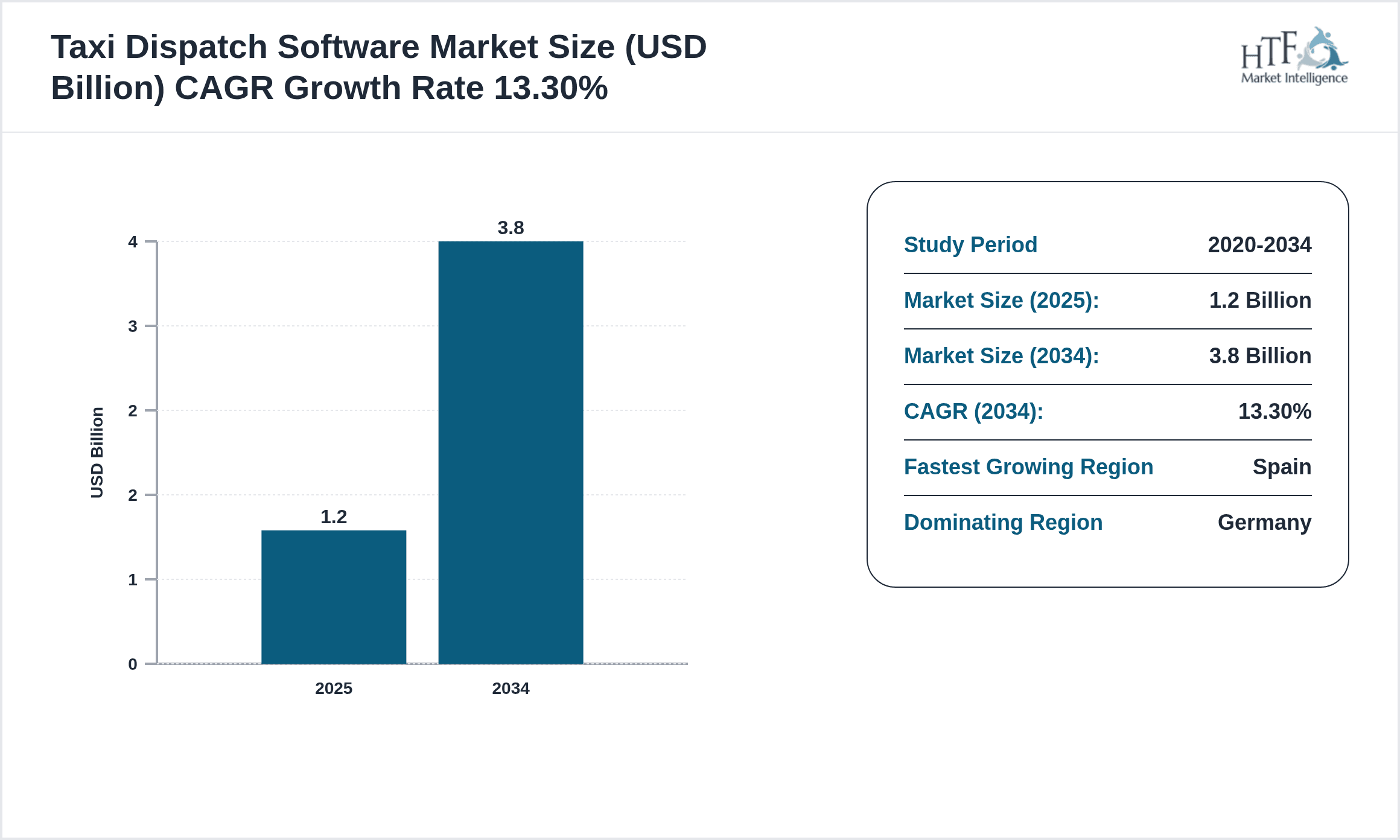
- •Key highlights of the Europe Taxi Dispatch Software market include a base market size of USD 1.2 Billion in 2025, with a forecasted expansion to USD 3.8 Billion by 2034, reflecting a CAGR of 13.3%. Germany dominates the market with a 28% share, while Spain is the fastest-growing country at a CAGR of 16.2%. Cloud-based dispatch solutions lead product adoption, with AI-enabled dispatch systems emerging as the fastest growing product segment. The market is witnessing increased investments in technology and regulatory compliance to cater to evolving customer needs and government mandates.
- •The strategic importance of taxi dispatch software in Europe lies in its ability to enhance urban mobility, reduce congestion, and improve customer experience across multiple transportation sectors. Stakeholders including taxi operators, fleet managers, technology vendors, and regulators benefit from the enhanced operational efficiency, real-time data analytics, and compliance features. This market also supports the transition towards greener transportation by enabling optimized routing and shared mobility solutions. Consequently, taxi dispatch software is integral for smart city initiatives and sustainable transport planning, making it an essential investment focus for industry players and policymakers alike.
Competitive Landscape
The Europe Taxi Dispatch Software market is characterized by intense competition among global and regional players focusing on innovation, strategic partnerships, and customer-centric solutions. Companies employ diverse competitive strategies such as product differentiation through AI integration, cloud migration, and mobile app enhancements to capture market share. Market leaders leverage strong distribution networks and regional compliance expertise to establish dominance, while emerging players focus on niche applications like corporate transport and eco-friendly fleet management. Mergers and acquisitions serve as key growth tactics to consolidate technologies and expand geographical reach. Pricing strategies vary from subscription-based models to customized enterprise solutions, catering to diverse customer segments. Regional competition is influenced by localized regulations, technological adoption rates, and customer preferences. Future trends indicate increased collaboration among technology providers and transport operators to co-create innovative dispatch platforms, enhancing scalability and operational efficiency across Europe.
Leading Companies in Taxi Dispatch Software Market
- •Cabonline Group AB (Sweden)
- •Loyalty Lab Ltd. (United Kingdom)
- •Samsara Networks Ltd. (United Kingdom)
- •Karhoo (United Kingdom)
- •iCabbi (Ireland)
- •Curb Mobility Inc. (United States - European Operations)
- •MyTaxi (Germany)
- •Gett Inc. (Israel - European Division)
- •Ridecell Inc. (United States - European Operations)
- •Zego (United Kingdom)
- •TaxiCaller A/S (Denmark)
- •Cabubble (United Kingdom)
- •Easy Taxi (Brazil - European Operations)
- •Mytaxi GmbH (Germany)
- •SafeTaxi Solutions (France)
- •Taximobility (France)
- •Bolt Technology OÜ (Estonia)
- •Free Now (Germany)
- •Moovit (Israel - European Operations)
- •Yandex.Taxi (Russia)
- •Taxi.eu (Germany)
- •Cabify (Spain)
- •Ola Cabs (India - European Operations)
- •Rideways Ltd. (United Kingdom)
- •Taxify (Estonia)

Market Breakdown
- •By Taxi Dispatch Software Type
- ◦Cloud-Based Solutions
- ◦On-Premise Software
- ◦Hybrid Solutions
- ◦Mobile Dispatch Applications
- ◦AI-Enabled Dispatch Systems
- •By Application Segment in Taxi Dispatch Software
- ◦Ride-Hailing Services
- ◦Fleet Management
- ◦Corporate Transportation
- ◦Airport Transfers
- ◦On-Demand Taxi Services
- •By Deployment Model
- ◦Cloud-Based
- ◦On-Premise
- ◦Hybrid
- •By Service Offering
- ◦Real-Time Dispatch Management
- ◦Route Optimization Services
- ◦Driver and Vehicle Monitoring
- ◦Customer Relationship Management (CRM) Integration
Growth Dynamics
- •Increasing urbanization and demand for efficient public transport systems in Europe drive the adoption of taxi dispatch software, enabling faster ride allocation and improved customer experience across major cities.
- •Technological advancements such as AI and machine learning enhance dispatch accuracy and predictive analytics, allowing companies to reduce idle times and optimize fleet utilization effectively.
- •Government initiatives promoting smart city infrastructure and sustainable transportation support the integration of digital dispatch platforms, fostering green mobility solutions and emission reductions.
- •Rising consumer preference for mobile-based ride-hailing applications has accelerated software adoption, with increasing demand for user-friendly interfaces and real-time tracking capabilities.
- •Strategic partnerships between taxi operators and software vendors are expanding market reach, enabling customized solutions tailored to regional regulatory requirements and operational practices.
- •The COVID-19 pandemic accelerated digital transformation in taxi services, prompting rapid deployment of contactless payment and booking solutions integrated within dispatch software platforms.
- •Investment in cloud infrastructure and data security fosters greater trust among operators and customers, facilitating wider adoption of cloud-based dispatch software across Europe.

Market Trends
- •Integration of artificial intelligence in dispatch algorithms is emerging as a pivotal trend, enabling dynamic pricing, demand forecasting, and enhanced driver-customer matching.
- •Shift towards cloud-native solutions allows scalable, flexible, and cost-efficient taxi dispatch operations, enabling real-time updates and seamless multi-device access.
- •Growing emphasis on sustainability has prompted adoption of electrified and hybrid fleet management features within dispatch software to support greener urban mobility.
- •Collaborations between taxi dispatch software providers and mobility-as-a-service (MaaS) platforms are gaining momentum, integrating multi-modal transport options for end users.
- •Increasing use of big data analytics within dispatch systems helps operators optimize routes, reduce operational costs, and improve regulatory compliance reporting.
- •Mobile-first user experience design is becoming standard, with enhanced app functionalities such as in-app payments, driver ratings, and real-time notifications improving customer retention.
- •Emergence of AI-powered chatbots and voice assistants within taxi dispatch apps is enhancing customer service and booking efficiency across European markets.

Market Opportunities
- •Expanding ride-hailing services in underpenetrated European countries present significant growth prospects for taxi dispatch software providers aiming to capture new customer bases.
- •Development of AI-enabled dispatch platforms offers opportunities for differentiation by improving predictive capabilities and operational automation.
- •Increasing demand for integrated mobility solutions within smart cities creates avenues for dispatch software to partner with public transport and micro-mobility providers.
- •Adoption of eco-friendly fleet management features aligned with European Green Deal objectives opens new market segments for software vendors focusing on sustainability.
- •Customization of software for corporate transportation and logistics sectors offers revenue diversification opportunities beyond traditional taxi services.
- •Rising digital literacy and smartphone penetration among European consumers support the growth of mobile-based dispatch applications, driving higher user engagement.
- •Strategic acquisitions and collaborations with regional transport authorities can help software vendors navigate regulatory complexities and expand market share.
Market Challenges
- •Stringent data privacy regulations like GDPR impose compliance challenges that require continuous software updates and increased operational costs for dispatch providers.
- •Fragmented regulatory frameworks across European countries complicate market entry and necessitate tailored software adaptations to meet local legal requirements.
- •High competition from established global and regional players leads to pricing pressures and necessitates continual innovation to maintain market relevance.
- •Integration complexities with legacy fleet management systems and varied vehicle telematics pose technical challenges for software deployment and scalability.
- •Resistance among traditional taxi operators to digital transformation and new technology adoption can slow market penetration in certain regions.
- •Cybersecurity risks and potential data breaches threaten operator and customer trust, requiring robust security protocols and ongoing vigilance.
- •Variability in internet connectivity and digital infrastructure quality in rural areas limits software effectiveness and market expansion outside urban centers.
Regulatory Framework
- •From 2020 to 2025, the implementation of the European Union’s General Data Protection Regulation (GDPR) mandated stringent data privacy and protection standards for taxi dispatch software providers, necessitating compliance with user data handling, storage, and processing protocols. This regulation significantly shaped market operations by enforcing transparency and accountability, compelling companies to invest in secure technology infrastructure.
- •The Passenger Rights Regulation introduced uniform minimum standards for passenger safety and service quality across European transport services, including taxis, effective since 2021. This framework requires dispatch software to incorporate features ensuring compliance with safety guidelines, timely service delivery, and accessible passenger information.
- •National transport authorities in major markets such as Germany, France, and the UK have enacted localized mandates requiring electronic logging and real-time vehicle tracking, impacting taxi dispatch software functionality and integration capabilities. These regulations promote accountability and operational transparency within the taxi industry.
- •Environmental regulations aligned with the European Green Deal incentivize adoption of eco-friendly fleet practices, indirectly influencing taxi dispatch software to support electric vehicle integration, emissions monitoring, and optimized routing for reduced carbon footprints.
- •EU Digital Services Act (DSA), effective from 2023, introduces obligations for digital platforms including taxi dispatch software to combat illegal content and ensure platform accountability, affecting operational policies and compliance requirements in this market segment.
Market Intelligence
- •15th February 2025, Cabonline Group AB announced the launch of an advanced AI-powered dispatch platform tailored for the European market, featuring real-time demand forecasting, dynamic pricing algorithms, and enhanced driver allocation capabilities. This platform integrates seamlessly with existing fleet management systems and complies with GDPR standards. The launch aims to improve operational efficiency for taxi operators and elevate passenger service quality across urban centers in Germany, Sweden, and neighboring countries. Strategic objectives include expanding market share by addressing growing demand for intelligent dispatch solutions and supporting sustainable urban mobility initiatives. Source: Cabonline Group AB Official Press Release.
- •10th March 2025, iCabbi introduced a cloud-based taxi dispatch solution optimized for multi-city operations within Europe. The solution incorporates AI-driven route optimization and mobile driver app enhancements, enabling operators to reduce idle times and improve customer engagement. Targeted at fleet operators in the UK, Ireland, and Benelux, the platform supports real-time tracking, automated billing, and compliance with local transport regulations. This innovation positions iCabbi as a key player in the evolving European taxi dispatch software market and underscores the shift towards SaaS models. Source: iCabbi Corporate Announcement.
- •25th April 2025, Free Now (a joint venture between BMW and Daimler) announced a strategic partnership with Yandex.Taxi to expand AI-based dispatch services across Central and Eastern Europe. The collaboration aims to leverage Yandex’s expertise in machine learning with Free Now’s extensive European network to deliver superior ride-hailing experiences. Planned initiatives include joint technology development, data-sharing agreements, and coordinated regulatory compliance efforts. This partnership accelerates innovation in AI-enabled dispatch and enhances competitive positioning in the region. Source: Free Now Press Release.
- •30th May 2025, TaxiCaller A/S completed the acquisition of a regional fleet management startup in France, expanding its footprint and enhancing its service portfolio with integrated CRM and analytics capabilities. The acquisition strengthens TaxiCaller’s position in the European market by broadening its client base and technology stack. It also aligns with broader industry consolidation trends aimed at delivering comprehensive dispatch and fleet solutions. The move is expected to accelerate growth and innovation in the French and wider European taxi dispatch software sectors. Source: TaxiCaller Investor Relations.
Regional Outlook
The Germany currently holds a significant share of the market, primarily due to several key factors: increasing consumption rates, a burgeoning population, and robust economic momentum. These elements collectively drive demand, positioning this region as a leader in the market. On the other hand, Spain is rapidly emerging as the fastest-growing area within the industry. This remarkable growth can be attributed to swift infrastructure development, the expansion of various industrial sectors, and a marked increase in consumer demand. These dynamics make this region a crucial player in shaping future market growth.
In our report, we cover a comprehensive analysis of the following regions and countries:
- Germany
- France
- The United Kingdom
- BeNeLux
- Spain
- Italy
- NORDIC
- CEE
- Others
| Feature | Details |
|---|---|
| Base Year Market Size | USD 1.2 Billion |
| Forecast Year Market Size | USD 3.8 Billion |
| CAGR | 13.3% |
| Forecast Period | 2026 to 2033 |
| YoY Growth | 12.7% |
| Regions Covered | Germany, France, The United Kingdom, BeNeLux, Spain, Italy, NORDIC, CEE, Others |
| Key Companies | Cabonline Group AB (Sweden), Loyalty Lab Ltd. (United Kingdom), Samsara Networks Ltd. (United Kingdom), Karhoo (United Kingdom), iCabbi (Ireland), Curb Mobility Inc. (United States - European Operations), MyTaxi (Germany), Gett Inc. (Israel - European Division), Ridecell Inc. (United States - European Operations), Zego (United Kingdom), TaxiCaller A/S (Denmark), Cabubble (United Kingdom), Easy Taxi (Brazil - European Operations), Mytaxi GmbH (Germany), SafeTaxi Solutions (France), Taximobility (France), Bolt Technology OÜ (Estonia), Free Now (Germany), Moovit (Israel - European Operations), Yandex.Taxi (Russia), Taxi.eu (Germany), Cabify (Spain), Ola Cabs (India - European Operations), Rideways Ltd. (United Kingdom), Taxify (Estonia) |
Taxi Dispatch Software Market - Europe Size & Outlook 2020-2034 - Table of Contents
Frequently Asked Questions (FAQ):
The Compact Track Loaders market is expected to see value worth 5.3 Billion in 2025.
North America currently leads the market with approximately 45% market share, followed by Europe at 28% and Asia-Pacific at 22%. The remaining regions account for 5% of the global market.
Key growth drivers include increasing construction activities, rising demand for versatile equipment in agriculture, technological advancements in track loader design, and growing preference for compact equipment in urban construction projects.