
Global Compression Lugs Market Size, Growth & Revenue 2025-2034
Global Compression Lugs Market is segmented by Product Type (Copper Compression Lugs, Aluminum Compression Lugs, Bi-metallic Compression Lugs, Stainless Steel Compression Lugs, Tin-plated Compression Lugs), Application (Electrical Power Systems, Telecommunications, Automotive, Construction, Industrial Machinery), Service Type (Custom Fabrication Services, Standard Compression Lugs, Pre-insulated Compression Lugs, Non-insulated Compression Lugs), Installation Method (Hydraulic Compression, Mechanical Compression, Crimping, Soldering), and Geography (North America, LATAM, West Europe, Central & Eastern Europe, Northern Europe, Southern Europe, East Asia, Southeast Asia, South Asia, Central Asia, Oceania, MEA)
Pricing
Report Overview
Executive Summary
- •Compression lugs serve as critical components in electrical connection systems, providing reliable termination and conductivity for cables in diverse industries such as power generation, automotive, telecommunications, and industrial manufacturing. These components are primarily constructed from materials like copper, aluminum, and bi-metallic alloys, each offering unique electrical and mechanical properties suited for specific applications. The global market for compression lugs has experienced consistent growth driven by rising demand for electrification, infrastructure development, and modernization of power grids worldwide. Technological advancements have led to improved lug designs that enhance ease of installation, corrosion resistance, and mechanical durability, thereby expanding their utility across emerging sectors. The market is characterized by a diverse product portfolio catering to various voltage levels, cable sizes, and environmental conditions. Key applications include electrical power systems, automotive wiring harnesses, construction projects, telecommunications networks, and heavy industrial machinery, reflecting the versatile nature of compression lugs. Regional dynamics show North America dominating due to mature electrical infrastructure and stringent safety standards, while Asia-Pacific is the fastest growing region fueled by rapid industrialization, urbanization, and expanding renewable energy projects. Market challenges include raw material price volatility and stringent regulatory compliance, while opportunities arise from growing electric vehicle adoption and smart grid implementations. Overall, the compression lugs market is poised for robust expansion through 2034, supported by technological innovation, increasing demand for energy-efficient connectivity solutions, and strategic regional investments.
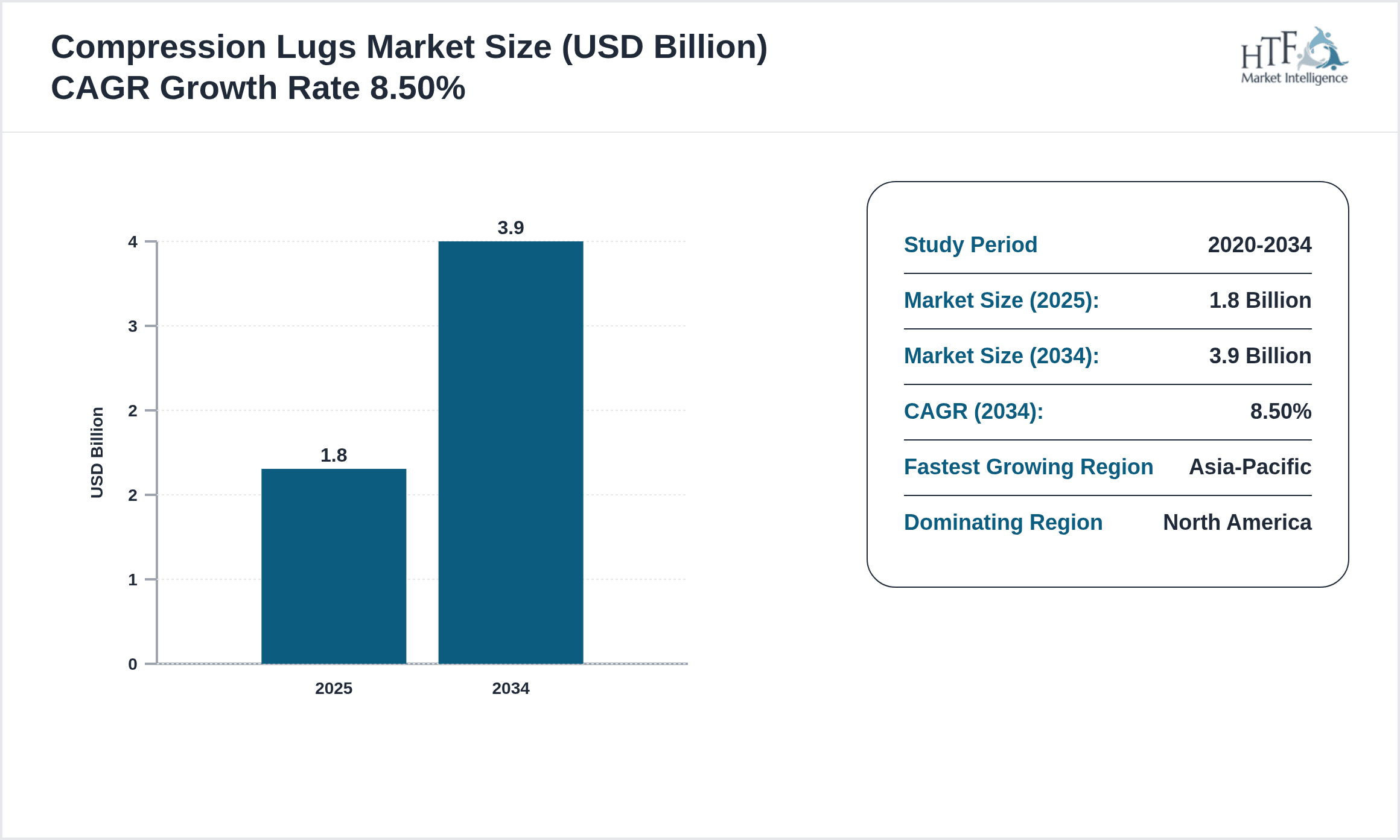
- •The global compression lugs market is projected to grow from USD 1.2 Billion in 2020 to USD 1.8 Billion in 2025, reaching USD 3.9 Billion by 2034 at a CAGR of 8.5%. This growth trajectory is supported by increased infrastructure spending, rising electrification in emerging economies, and demand for reliable electrical connections across sectors. North America holds the largest market share at 35%, attributed to advanced industrialization and stringent electrical codes. Asia-Pacific exhibits the fastest CAGR of 11.2%, driven by expanding construction and automotive sectors. Key product types leading the market include copper compression lugs due to excellent conductivity and bi-metallic lugs as the fastest growing segment owing to their hybrid material benefits. Market dynamics also reflect growing investments in electric vehicle infrastructure and renewable energy grids, which require specialized connector solutions. However, challenges such as fluctuating copper and aluminum prices and regulatory complexities pose risks. The market outlook remains positive with increasing adoption of smart technologies and rising government initiatives to upgrade electrical infrastructure globally.
- •Compression lugs represent a strategic component for multiple industries aiming to ensure electrical safety, efficiency, and durability in power distribution and signal transmission applications. Their value proposition lies in providing secure mechanical and electrical connections that withstand environmental stresses and electrical load variations. Stakeholders including manufacturers, electrical contractors, and end-users benefit from innovations in lug designs that reduce installation time and maintenance costs. The market's strategic importance is underscored by the accelerating transition to electrification in transportation, renewable energy, and smart infrastructure development, all of which rely heavily on robust electrical connection components. Furthermore, regulatory compliance and sustainability considerations drive demand for advanced, corrosion-resistant lug materials and eco-friendly manufacturing processes. As global energy demands grow and infrastructure modernizes, compression lugs will continue to play a crucial role in enabling reliable, high-performance electrical systems worldwide.
Competitive Landscape
The global compression lugs market is highly competitive and fragmented, featuring numerous players ranging from multinational corporations to regional manufacturers. Market dynamics are shaped by continuous innovation in product design, materials, and manufacturing processes aimed at improving performance, durability, and ease of installation. Companies compete on multiple fronts including pricing strategies, quality certifications, and supply chain efficiencies to capture diverse end-user segments. Strategic collaborations, joint ventures, and mergers & acquisitions are common approaches to consolidate market presence and expand geographic reach. The competitive environment also involves investment in advanced technologies such as automation in production and digital tools for product customization. Regional competition varies with North America and Europe emphasizing compliance and quality, while Asia-Pacific players focus on cost competitiveness and rapid product development. Distribution channel expansion, including e-commerce and direct sales, further intensifies competition. Future trends indicate increasing emphasis on sustainable materials and smart connector integration, which will differentiate market leaders. Overall, the competitive landscape is dynamic, with companies leveraging innovation and strategic partnerships to maintain and enhance their market positions globally.
Leading Companies in Compression Lugs Market
- •3M Company (United States)
- •TE Connectivity Ltd. (Switzerland)
- •Panduit Corp. (United States)
- •nVent Electric plc (United Kingdom)
- •Hubbell Incorporated (United States)
- •Thomas & Betts Corporation (United States)
- •Schneider Electric SE (France)
- •Eaton Corporation plc (Ireland)
- •Phoenix Contact GmbH & Co. KG (Germany)
- •Lapp Group (Germany)
- •Amphenol Corporation (United States)
- •Burndy LLC (United States)
- •Ideal Industries, Inc. (United States)
- •Mersen Group (France)
- •Altech Corporation (Australia)
- •Cembre S.p.A. (Italy)
- •Raychem RPG Pvt. Ltd. (India)
- •Nexans S.A. (France)
- •HellermannTyton GmbH (Germany)
- •ABB Ltd. (Switzerland)
- •Corning Incorporated (United States)
- •WAGO Kontakttechnik GmbH & Co. KG (Germany)
- •Thomas & Betts Corporation (United States)
- •Panduit Corp. (United States)
- •Littelfuse, Inc. (United States)
Market Breakdown
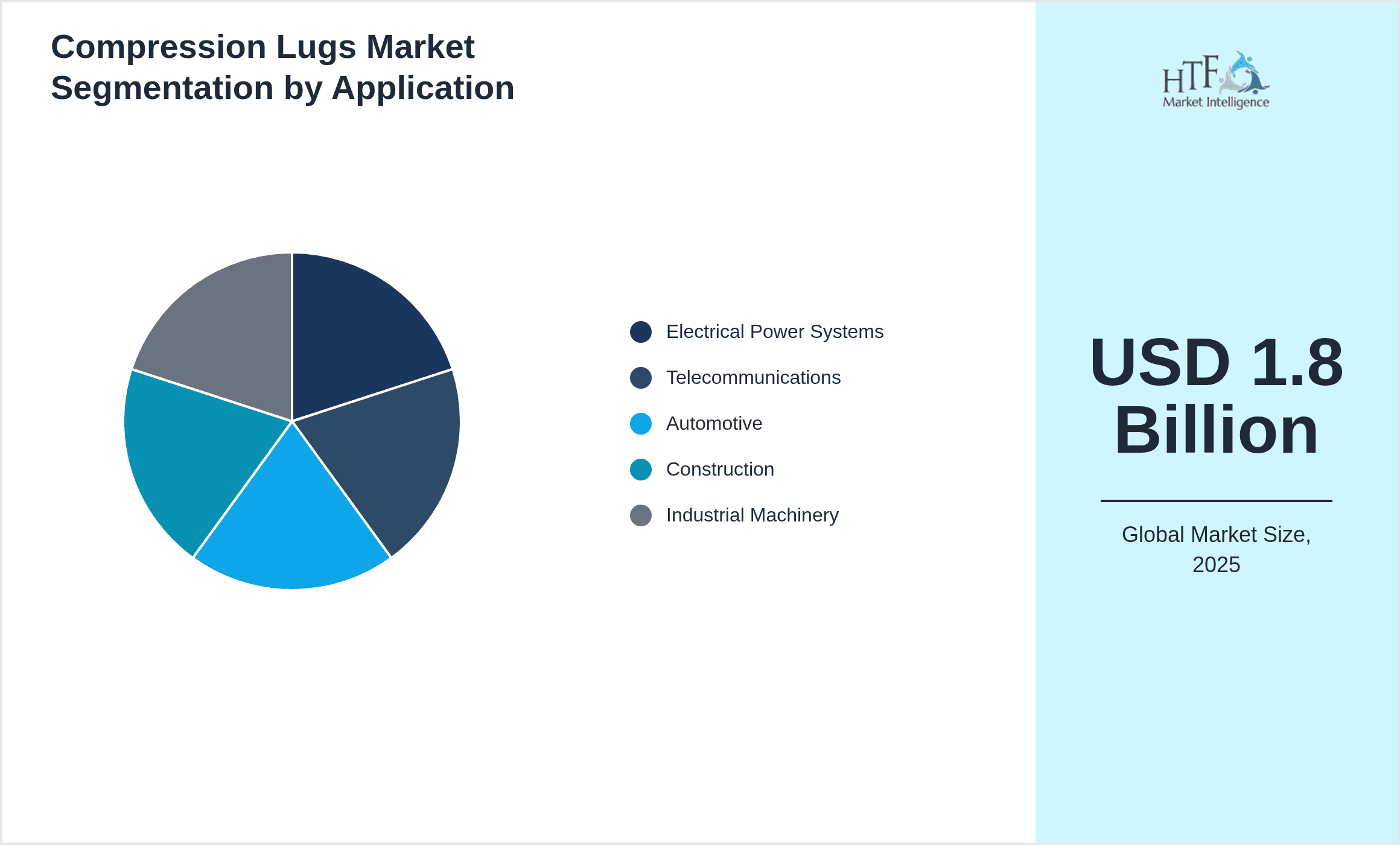
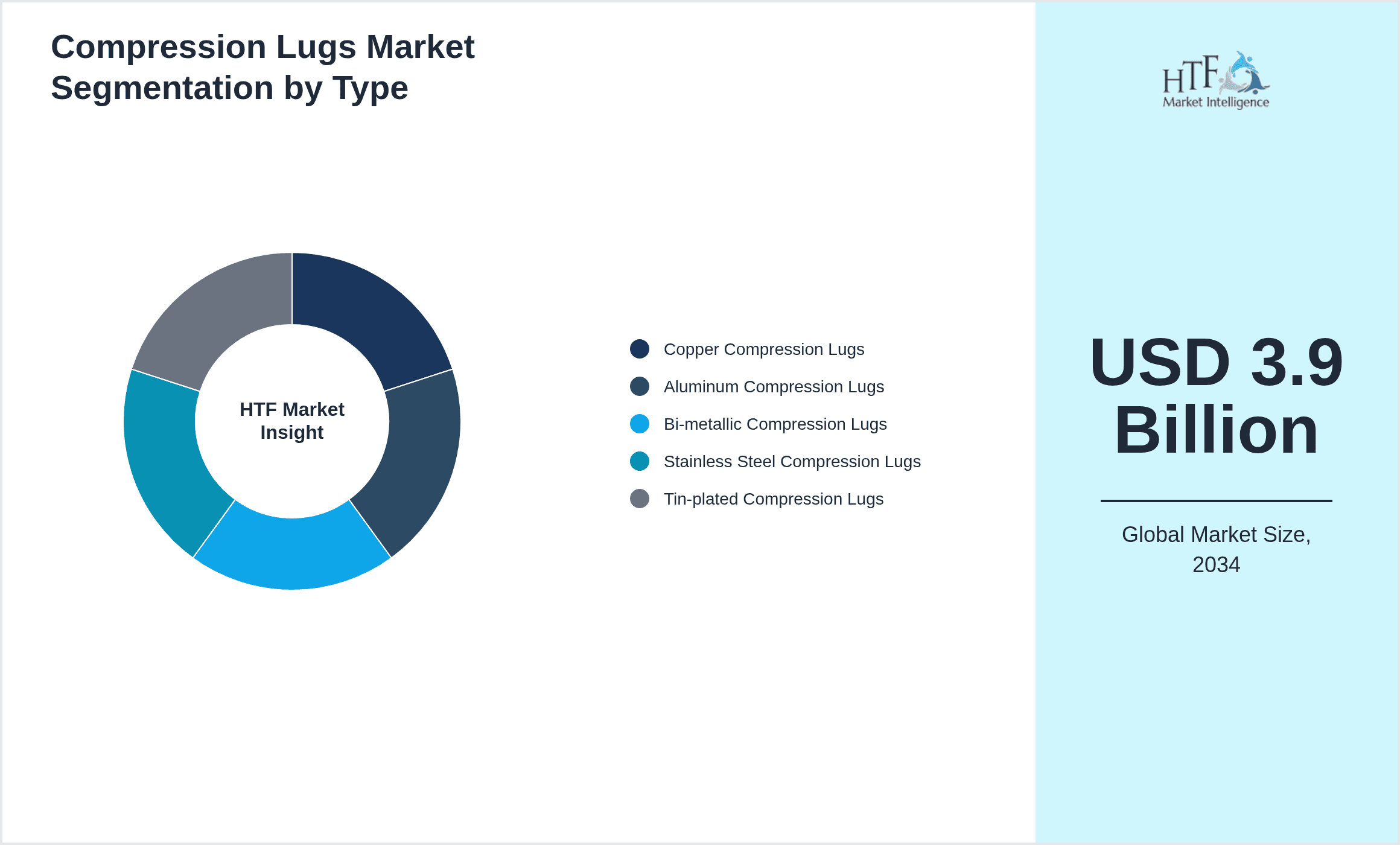
- •By Product Type
- ◦Copper Compression Lugs
- ◦Aluminum Compression Lugs
- ◦Bi-metallic Compression Lugs
- ◦Stainless Steel Compression Lugs
- ◦Tin-plated Compression Lugs
- •By Application
- ◦Electrical Power Systems
- ◦Telecommunications
- ◦Automotive
- ◦Construction
- ◦Industrial Machinery
- •By Service Type
- ◦Custom Fabrication Services
- ◦Standard Compression Lugs
- ◦Pre-insulated Compression Lugs
- ◦Non-insulated Compression Lugs
- •By Installation Method
- ◦Hydraulic Compression
- ◦Mechanical Compression
- ◦Crimping
- ◦Soldering
Growth Dynamics
- •The global compression lugs market growth is primarily driven by rapid electrification across industries, including renewable energy projects, automotive electrification, and expanding telecommunications infrastructure. Increasing demand for efficient and reliable electrical connections in power transmission and distribution networks propels market expansion. Technological advancements in lug materials and design are enhancing performance, leading to broader adoption in harsh and demanding environments. Government infrastructure investments and stringent safety regulations further stimulate demand. Additionally, growth in electric vehicle production necessitates specialized compression lugs, offering significant market opportunities.
- •Rising urbanization and industrialization in emerging economies, particularly in Asia-Pacific, are fueling demand for compression lugs in construction and heavy machinery applications. Enhanced focus on energy efficiency and electrical safety is prompting end-users to upgrade existing electrical systems with advanced compression lug solutions. The automotive sector's shift toward electric vehicles and hybrid models increases the requirement for high-quality electrical connectors, supporting the market's upward trajectory. Moreover, the telecommunications industry's expansion and 5G rollout demand robust cabling and connection components like compression lugs.
- •Raw material price fluctuations, particularly copper and aluminum, present a significant challenge by impacting production costs and pricing stability. Regulatory complexities and compliance requirements across different regions also pose barriers to market entry and growth. However, increasing adoption of automation and digital tools in manufacturing processes is helping companies optimize production efficiency and reduce costs. Strategic partnerships and innovation in multi-metallic lug technologies are opening new avenues for product differentiation and market penetration.
- •The global push towards sustainable and eco-friendly electrical components is driving innovation in corrosion-resistant and recyclable materials for compression lugs. This trend aligns with broader environmental regulations and corporate social responsibility initiatives, encouraging manufacturers to develop greener products. Growing investments in smart grids and intelligent electrical systems further create demand for advanced lugs with integrated monitoring capabilities. These developments signal a transformative phase for the compression lugs market, emphasizing durability, efficiency, and environmental compliance.
- •Emerging markets in Latin America and the Middle East & Africa offer untapped potential due to ongoing infrastructure development and electrification projects. Expansion of renewable energy installations in these regions requires robust electrical connection solutions, including compression lugs. Companies focusing on localized production and tailored products can capitalize on these growth opportunities. Furthermore, increasing government incentives and public-private partnerships aimed at infrastructure modernization are expected to boost market demand in the forecast period.
- •Investment trends indicate growing funding in research and development to enhance compression lug technologies, including improved conductivity, mechanical strength, and ease of installation. The integration of smart connectors with IoT capabilities is gaining attention, enabling real-time monitoring and predictive maintenance. These innovations are anticipated to drive competitive advantages and market differentiation. Additionally, strategic mergers and acquisitions are expected to consolidate market players, enhance product portfolios, and expand global reach.
- •Forward-looking insights suggest that the compression lugs market will increasingly align with digital transformation and sustainability goals. Development of lightweight, high-performance materials and modular lug designs will cater to evolving industry requirements. The shift toward electrification in transportation and energy sectors will continue to create robust demand. Companies investing in advanced manufacturing technologies and global supply chain optimization are poised to lead the market. Overall, the market is expected to witness sustained growth driven by technological innovation, regulatory support, and expanding application areas.
Market Trends
- •The compression lugs market is witnessing significant adoption of bi-metallic lugs that combine copper and aluminum, providing enhanced conductivity and mechanical strength while reducing costs. This trend caters to the growing demand for hybrid materials balancing performance and affordability. Manufacturers are also incorporating advanced coatings to improve corrosion resistance and longevity in harsh environments. Furthermore, increased automation in production processes is enabling higher precision and customization, meeting specific client requirements efficiently. These advancements reflect the broader industry movement towards smarter, more durable electrical connectors.
- •Sustainability and environmental compliance are becoming central to product development strategies, with companies focusing on recyclable materials and reducing carbon footprints. The shift towards green energy and smart grid technologies is driving demand for compression lugs compatible with renewable energy systems. Digitalization trends include the integration of sensors and monitoring devices within connection components, enabling predictive maintenance and reducing downtime. These technological shifts are reshaping market dynamics and enhancing end-user value propositions.
- •Strategic collaborations between component manufacturers and electrical equipment producers are fostering innovation ecosystems, accelerating product development cycles. For example, partnerships focusing on electric vehicle charging infrastructure have led to specialized lug designs optimized for high current loads and safety. Industry players are also expanding their global footprints via acquisitions and joint ventures, particularly targeting fast-growing markets in Asia-Pacific and Latin America. These strategic moves are enhancing competitive positioning and driving market growth.
- •Digital distribution channels and e-commerce platforms are gaining traction in the compression lugs market, offering customers streamlined access to product catalogs and technical support. This trend improves market reach and customer engagement, especially among small and medium enterprises. Additionally, customization services enabled by digital tools allow for precise specification matching, reducing installation errors and improving system reliability. The evolving buyer behavior towards online sourcing is influencing supply chain and marketing strategies.
- •Growing demand for miniaturized electrical components in compact devices and electric vehicles is influencing lug design trends towards smaller, yet highly efficient connectors. This shift requires advanced manufacturing techniques and quality control to maintain performance standards. Additionally, increasing use of renewable energy sources is prompting development of lugs resistant to variable environmental conditions and electrical loads. These market trends highlight the importance of innovation in meeting evolving technical and regulatory requirements.
- •The market is also observing a rise in demand for pre-insulated compression lugs that simplify installation and improve safety by minimizing exposure to live conductors. This trend is particularly prominent in construction and industrial sectors where rapid deployment and compliance with safety standards are critical. Enhanced focus on worker safety and regulatory adherence is driving adoption of such advanced lug types. Overall, the trend landscape indicates a progressive move towards user-friendly, high-performance electrical connection solutions.
- •Future trends suggest increasing integration of smart technologies within compression lugs for real-time monitoring of electrical parameters and condition diagnostics. This innovation supports predictive maintenance and operational efficiency in complex electrical systems. Additionally, modular designs allowing quick replacement and scalability are expected to gain prominence. These developments align with digital transformation initiatives across industries, positioning compression lugs as key enablers of intelligent electrical infrastructure.

Market Opportunities
- •Expanding electrification in emerging economies presents significant opportunities for compression lug manufacturers to tap into growing infrastructure and industrial sectors. The increasing installation of renewable energy projects such as solar and wind farms requires specialized electrical connectors, creating demand for durable and efficient compression lugs. Targeting these sectors with customized solutions can drive market penetration and revenue growth.
- •The rapid growth of electric vehicles globally offers a lucrative opportunity to develop compression lugs tailored for high-voltage battery connections and charging stations. Innovations in lightweight and high-conductivity materials can enhance vehicle efficiency and safety, meeting stringent automotive standards. Collaborations with automotive OEMs can accelerate product adoption and market share.
- •Smart grid modernization initiatives across major regions are creating demand for advanced compression lugs integrated with monitoring sensors and digital connectivity. This evolution facilitates predictive maintenance and energy management, opening avenues for technology-driven product development. Companies investing in IoT-enabled connectors can capitalize on this growing niche.
- •Geographical expansion into underpenetrated markets in Latin America and the Middle East & Africa provides opportunities to leverage infrastructure spending and urbanization trends. Establishing local manufacturing and distribution networks can improve cost efficiencies and customer responsiveness. Tailoring products to regional standards and environmental conditions further enhances market acceptance.
- •Investment in research and development focusing on eco-friendly materials and sustainable manufacturing processes offers differentiation in a competitive market. Regulatory incentives promoting green products can support premium pricing and brand reputation. Companies adopting circular economy principles in product lifecycle management are positioned favorably for future growth.
- •Strategic mergers and acquisitions enable portfolio diversification and access to new technologies, accelerating innovation and market reach. Acquiring regional players with established customer bases can ease entry into new markets and fortify competitive advantage. These consolidation activities present pathways for rapid scaling and resource optimization.
- •Digitalization of sales and distribution channels, including e-commerce and configurator tools, allows improved customer engagement and streamlined supply chains. Offering customization and technical support online enhances user experience and supports long-term client relationships. Embracing digital platforms can unlock new revenue streams and operational efficiencies.
Market Challenges
- •Fluctuating prices of copper and aluminum raw materials significantly impact production costs of compression lugs, leading to pricing pressures and margin volatility for manufacturers. This unpredictability complicates long-term planning and contract negotiations with buyers. Companies must adopt strategic sourcing and inventory management to mitigate these risks.
- •Compliance with diverse and evolving electrical safety standards and environmental regulations across different regions poses a challenge for global manufacturers. Navigating certification processes and ensuring product adaptability to local requirements increase time-to-market and costs. Maintaining regulatory compliance demands continuous monitoring and agile product development.
- •Intense competition from low-cost regional manufacturers, particularly in Asia-Pacific, pressures pricing and market share of established global players. Balancing cost competitiveness with quality and innovation is critical to sustaining leadership. Additionally, counterfeit and substandard products pose risks to brand reputation and customer trust.
- •Technological complexity in integrating smart features such as sensors and IoT connectivity within compression lugs adds to design and manufacturing challenges. Ensuring reliability and durability of electronic components in harsh electrical environments requires advanced R&D capabilities and testing. This complexity may slow adoption and increase costs.
- •Supply chain disruptions, as evidenced during global events like the COVID-19 pandemic, expose vulnerabilities in raw material sourcing and logistics. Delays and increased freight costs affect timely delivery and customer satisfaction. Building resilient, diversified supply chains is essential but resource-intensive.
- •Limited awareness and technical expertise among end-users regarding the benefits of advanced compression lug technologies can hinder market penetration. Educational and training initiatives are necessary to promote adoption of innovative products, requiring investment in marketing and support services.
- •High capital expenditure required for automation and advanced manufacturing technologies may restrict smaller companies from scaling operations efficiently. Access to funding and technological partnerships becomes crucial to remain competitive in a rapidly evolving market. Addressing this challenge is key to sustaining innovation and growth.
Regulatory Framework
- •Between 2020 and 2025, key regulations such as IEC 61238-1 for compression and mechanical connectors were reinforced globally, mandating stringent testing protocols to ensure product safety and performance. Compliance with these standards impacts design and manufacturing processes, requiring manufacturers to implement rigorous quality control systems. This regulation has driven industry-wide adoption of certified compression lug solutions.
- •The European Union's REACH regulation, updated in 2022, imposes restrictions on hazardous substances used in electrical components including compression lugs. Manufacturers must adapt their material sourcing and chemical usage to meet these environmental safety requirements, impacting product formulations and supply chains. Enforcement mechanisms include periodic audits and penalties for non-compliance.
- •North American regulations, including UL 486A-486B covering wire connectors and soldering lugs, have been updated during this period to incorporate enhanced fire resistance and electrical load requirements. These regulations affect product certification and market entry strategies, compelling manufacturers to innovate for compliance and safety.
- •Country-specific mandates, such as China's GB/T standards for electrical connectors, introduced between 2020 and 2025, emphasize quality assurance and environmental sustainability. These mandates require local manufacturers and importers to align with national standards, influencing regional production and import dynamics. Timelines for implementation have been phased, allowing gradual compliance.
- •Government initiatives worldwide, including incentives for green manufacturing and energy-efficient electrical components, have supported the adoption of sustainable compression lugs. Funding programs and tax benefits encourage research into recyclable materials and low-impact production methods. These policy frameworks are shaping product development priorities and competitive strategies.
Market Intelligence
- •15th January 2025, TE Connectivity Ltd. launched a new range of bi-metallic compression lugs designed specifically for electric vehicle battery connections. These lugs feature enhanced conductivity and corrosion resistance, optimized for high current applications and thermal stability. The product launch aims to support the growing EV market with reliable and lightweight electrical connectors, reinforcing TE Connectivity’s position as an innovation leader. The initiative also includes comprehensive technical support and training programs to facilitate adoption by automotive manufacturers. Source: TE Connectivity Official Press Release
- •10th March 2025, 3M Company introduced a pre-insulated compression lug product line incorporating advanced polymer coatings that improve safety and ease of installation in industrial and construction applications. This innovation reduces installation time by 20% and enhances protection against moisture and environmental contaminants. The product addresses increasing demand for safer and more efficient electrical connection solutions in harsh environments. 3M’s strategic objective is to expand its market share in the industrial electrical components segment through this launch. Source: 3M Company Newsroom
- •22nd May 2024, Panduit Corp. announced a strategic partnership with a leading renewable energy developer to supply customized compression lugs for large-scale solar farm projects. This collaboration includes joint R&D efforts to optimize lug design for high-voltage applications and environmental durability. The partnership is expected to enhance Panduit's presence in the renewable energy sector and contribute to sustainable infrastructure development. Additionally, it supports the growing market trend of integrating green technologies with advanced electrical components. Source: Panduit Corporate Announcement
- •5th February 2024, Schneider Electric SE completed the acquisition of a regional compression lug manufacturer in Asia-Pacific to strengthen its product portfolio and local manufacturing capabilities. This strategic move enables Schneider Electric to meet increasing demand in emerging markets with faster delivery and tailored solutions. The acquisition complements Schneider’s global growth strategy focused on electrification and smart infrastructure. It also fosters innovation by combining global technology with regional expertise. Source: Schneider Electric Press Release
- •Recent market developments and strategic initiatives are continuously tracked through industry publications, company announcements, and regulatory filings. For the most current information, stakeholders are advised to monitor official corporate communications and recognized market intelligence platforms.
Regional Outlook
The North America currently holds a significant share of the market, primarily due to several key factors: increasing consumption rates, a burgeoning population, and robust economic momentum. These elements collectively drive demand, positioning this region as a leader in the market. On the other hand, Asia-Pacific is rapidly emerging as the fastest-growing area within the industry. This remarkable growth can be attributed to swift infrastructure development, the expansion of various industrial sectors, and a marked increase in consumer demand. These dynamics make this region a crucial player in shaping future market growth.
In our report, we cover a comprehensive analysis of the following regions and countries:
- North America
- LATAM
- West Europe
- Central & Eastern Europe
- Northern Europe
- Southern Europe
- East Asia
- Southeast Asia
- South Asia
- Central Asia
- Oceania
- MEA
| Feature | Details |
|---|---|
| Base Year Market Size | USD 1.8 Billion |
| Forecast Year Market Size | USD 3.9 Billion |
| CAGR | 8.5% |
| Forecast Period | 2026 to 2033 |
| YoY Growth | 8.2% |
| Scope of Report | Market is segmented by Product Type (Copper Compression Lugs, Aluminum Compression Lugs, Bi-metallic Compression Lugs, Stainless Steel Compression Lugs, Tin-plated Compression Lugs), Application (Electrical Power Systems, Telecommunications, Automotive, Construction, Industrial Machinery), Service Type (Custom Fabrication Services, Standard Compression Lugs, Pre-insulated Compression Lugs, Non-insulated Compression Lugs), Installation Method (Hydraulic Compression, Mechanical Compression, Crimping, Soldering) |
| Regions Covered | North America, LATAM, West Europe, Central & Eastern Europe, Northern Europe, Southern Europe, East Asia, Southeast Asia, South Asia, Central Asia, Oceania, MEA |
| Key Companies | 3M Company (United States), TE Connectivity Ltd. (Switzerland), Panduit Corp. (United States), nVent Electric plc (United Kingdom), Hubbell Incorporated (United States), Thomas & Betts Corporation (United States), Schneider Electric SE (France), Eaton Corporation plc (Ireland), Phoenix Contact GmbH & Co. KG (Germany), Lapp Group (Germany), Amphenol Corporation (United States), Burndy LLC (United States), Ideal Industries, Inc. (United States), Mersen Group (France), Altech Corporation (Australia), Cembre S.p.A. (Italy), Raychem RPG Pvt. Ltd. (India), Nexans S.A. (France), HellermannTyton GmbH (Germany), ABB Ltd. (Switzerland), Corning Incorporated (United States), WAGO Kontakttechnik GmbH & Co. KG (Germany), Thomas & Betts Corporation (United States), Panduit Corp. (United States), Littelfuse, Inc. (United States) |
Global Compression Lugs Market Size, Growth & Revenue 2025-2034 - Table of Contents
Research enthusiast focused on transforming data uncovering into actionable insights through data-driven decision-making.
Frequently Asked Questions (FAQ):
The Compact Track Loaders market is expected to see value worth 5.3 Billion in 2025.
North America currently leads the market with approximately 45% market share, followed by Europe at 28% and Asia-Pacific at 22%. The remaining regions account for 5% of the global market.
Key growth drivers include increasing construction activities, rising demand for versatile equipment in agriculture, technological advancements in track loader design, and growing preference for compact equipment in urban construction projects.